Showing posts with label George Saunders. Show all posts

Saturday, May 22, 2021

A Swim in the Pond in the Rain -In Which Four Russians Give a Master Class in Writing, Reading and Life - by George Saunders - 2021 - 416 pages


A Swim in the Pond in the Rain -In Which Four Russians Give a Master Class in Writing, Reading and Life - by George Saunders - 2021 - 416 pages 


This is a truly wonderful book.  Anyone who wants to become a better reader, short story writer or maybe even a better person will profit from A

Swim in the Pond in the Rain.


Saunders has taught a course in the Russian short story in translation for twenty years as part of the University of Syracuse’s creative writing program.  Every year about six hundred apply to join the program but only six are admitted.  The students are all very eager to learn, very talented and not afraid of speaking up.  


Seven stories by the great Russian masters are analyzed, taken apart (searching for right terms).


The stories in order (with the full text so we have no excuse not to read along) are


  1. In the Cart by Anton Chekov - 1897
  2. The Singers by Ivan Turgenev - 1852
  3. The Darling by Anton Chekhov - 1899
  4. Master and Man by Leo Tolstoy - 1895 longest work
  5. The Nose by Nikolai Gogol - 1836
  6. Gooseberries by Anton Chekhov - 1898
  7. Alyosha the Pot by Leo Tolstoy - 1905 - briefest story


I suggest you read this one chapter, including the story and Saunders comments per day leaving a day for the conclusion and exercises and the at the end.  Adding in a day for the marvelous opening chapter you are in for a very illuminating nine days plus you might end up reading the best short stories you have ever encountered.  Many serious readers reject short stories as lacking the substance they need.  People say they want something that can deeply draw them into the world evoked.  To such persons, of whom I was one long ago, read these stories and the book and you will see how wrong yau are.  


Saunders loves the reading life and talks profoundly about it.  He explores how fiction works, why reading can be of tremendous life enhancing value.


Saunders starts each chapter as if he were trying to get his students to say why the story works or does not work.  I good story makes us want to keep reading.  He shows us how these stories work.  The big question is why are these stories great.


“The basic drill I’m proposing here is: read the story, then turn your mind to the experience you’ve just had. Was there a place you found particularly moving? Something you resisted or that confused you? A moment when you found yourself tearing up, getting annoyed, thinking anew? Any lingering questions about the story? Any answer is acceptable.”


He makes a lot of in passing remarks on other writers, Russian culture, his own efforts as a writer and much more.


“And let’s be even more honest: those of us who read and write do it because we love it and because doing it makes us feel more alive and we would likely keep doing it even if it could be demonstrated that its overall net effect was zero”


“Over the last ten years I’ve had a chance to give readings and talks all over the world and meet thousands of dedicated readers. Their passion for literature (evident in their questions from the floor, our talks at the signing table, the conversations I’ve had with book clubs) has convinced me that there’s a vast underground network for goodness at work in the world—a web of people who’ve put reading at the center of their lives because they know from experience that reading makes them more expansive, generous people and makes their lives more interesting. As I wrote this book, I had those people in mind. Their generosity with my work and their curiosity about literature, and their faith in it, made me feel I could swing for the fences a little here—be as technical, nerdy, and frank as needed, as we try to explore the way the creative process really works.”


Long ago in a post on The Lonely Crowd- A study in the Short Story by Frank O’Connor I said it was the only book worth reading on the short story.  Now there are two such books and for me Saunders book is superior.


From https://www.georgesaundersbooks.com/about-george-saunders


George Saunders is the author of eleven books, including Lincoln in the Bardo, which won the 2017 Man Booker Prize for best work of fiction in English, and was a finalist for the Golden Man Booker, in which one Booker winner was selected to represent each decade, from the fifty years since the Prize’s inception. The audiobook for Lincoln in the Bardo, which featured a cast of 166 actors, was the 2018 Audie Award for best audiobook. ­ 


His stories have appeared regularly in The New Yorker since 1992. The short story collection Tenth of Decemberwas a finalist for the National Book Award, and won the inaugural Folio Prize in 2013 (for the best work of fiction in English) and the Story Prize (best short story collection). 


He has received MacArthur and Guggenheim Fellowships, the PEN/Malamud Prize for excellence in the short story, and is a member of the American Academy of Arts and Letters, and the American Academy of Arts and Sciences. In 2013, he was named one of the world’s 100 most influential people in the world by Time magazine. In support of his work, he has appeared on The Colbert ReportLate Night with David LettermanAll Things Considered, and The Diane Rehm Show


He was born in Amarillo, Texas and raised in Oak Forest, Illinois. He has a degree in Geophysics from the Colorado School of Mines and has worked as a geophysical prospector in Indonesia, a roofer in Chicago, a doorman in Beverly Hills, and a technical writer in Rochester, New York. He has taught, since 1997, in the Creative Writing Program at Syracuse University


Mel u


Monday, December 4, 2017

“The Red Bow” - A Short Story by George Saunders - April 21, 2009, in Esquire


Click here to read “The Red Bow” by George Saunders

Webpage of George Saunders


In December we plan to post on at least four 21st Century American Short Stories and four Yiddish Stories.  In January we are planning to pair Bolivian and Iraqi stories.  If this works we will continue this through 2018, maybe from now on.  

This morning’s story is by George Saunders, author of Lincoln in the Bardo, Booker Prize Winner for 2017 and several collections of short stories.  (You can find lots of information on his webpage, linked above.) There are a number of very interesting conversations and talks with him on YouTube, I especially enjoyed his conversations with Karen Russell.  

“Kill every dog, every cat, she said very slowly. Kill every mouse, every bird. Kill every fish. Anyone objects, kill them too.” -  from “The Red Bow”

“The Red Bow” is set in a vilage, we don’t learn where.  We know it is close to now as one of The characters checks their E Mail.  

A vilage child has been killed by a dog.  Panic spreads and in the very moving opening scene the Family whose daughter was killed shoots their other four dogs, animals like Family to them.  They are not rabid, no one knows how they got sick and really there is no evidence they are.  In a vilage meeting they vote to kill all The dogs and for extra safety the cats also.  This is all caused by the death of the one girl, based only on an irrational fear.

To me this seemed like a fable about predjudice, if one of millions of a race is a criminal, then they all are.  We see this attitude sadly spreading in American and Europe now.  If you look back to what happened to Yiddish speakers this story may have a deeper impact.  

You can read this story at the link above.  

Ruffington Bousweau, IV, Intern
The Reading Life 


Sunday, October 22, 2017

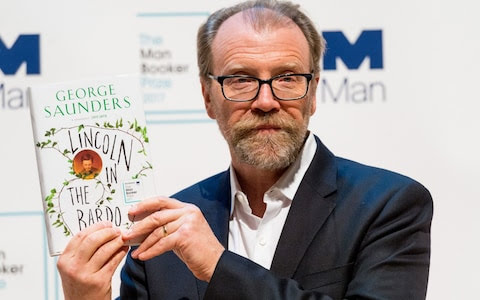
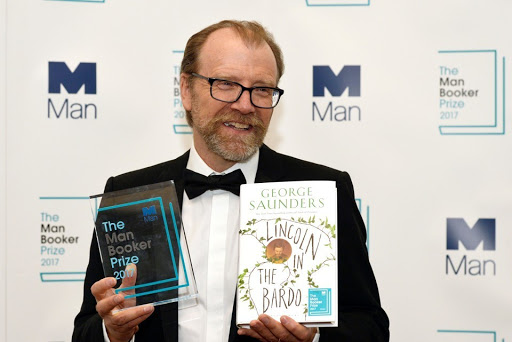
Lincoln in the Bardo by Gerorge Saunders (2017 Booker Prize Winner)


I offer my great thanks to Max u for providing me with an Amazon Gift Card that allowed me to read this book.  

Winner of the 2017 Booker Prize 

“Used loosely, "bardo" is the state of existence intermediate between two lives on earth. According to Tibetan tradition, after death and before one's next birth, when one's consciousness is not connected with a physical body, one experiences a variety of phenomena. These usually follow a particular sequence of degeneration from, just after death, the clearest experiences of reality of which one is spiritually capable, and then proceeding to terrifying hallucinations that arise from the impulses of one's previous unskillful”. From Wikipedia 

I was very excited when I began reading Lincoln in the Bardo by George Saunders, his debut novel and the 2017 Booker Prize Winning novel.  I knew it was being proclaimed in the literary press as a work of great originality. Here are a few of the reactions:

“A masterpiece” –  Zadie Smith, New York Times

An incredible work of art. Deeply moral, heartfelt, hilarious, and wildly imaginative” –  Buzzfeed

“A strange and haunting novel – his highly anticipated first, after decades of short-story wizardry – about the effect the dead have on the living, and the living on the dead” –  Economist

“The story canters along ... The writing constantly surprises” –  Mail on Sunday

Lincoln in the Bardo has great matters on its mind: freedom and slavery, the spirit and the body. But it is, finally, “about” Abraham Lincoln, that great spectral presence in a whole subgenre of American fiction” –  New Yorker

The novel takes place largely in the cemetery where President Abraham Lincoln’s eleven year old son Willie was recently buried.  The novel is only peripherally about Lincoln but we can see the incredible strength and wisdom of Lincoln, leading the nation during the terrible civil war years while dealing with the death of his son and the mental illness of his wife.  “Bardo” is a concept derived from Tibetan Buddhism which refers to a kind of limbo like state in which the recently deceased linger until they are prepared for the next step.  The metaphysical aspects of this are left largely unexplained, as it should be. 

At first the souls in the cemetery do not realise they are dead.  Saunders does a simply brilliant job creating a community of highly individualistic voices in the cemetery.  Somehow Saunders has produced a wonderful picture of the state of American society through all these voices.  He also makes very creative use of sources on the era, some real, some who knows.  His depiction of the life of a slave woman, in the Bardo but not buried too  near the whites was a true master work, in just two pages he brings vividly to life the horror story that was American slavery.  Just this alone makes the book a great experience.

There are many more wonders in Lincoln on the Bardo than I can describe.  In a way, it forces the reader to ponder the conduct of Lincoln through profound grief and a horrible near  nation destroying war versus the conduct of the current president, thrown into a frenzy by the pettiest things.  

All lovers of the novel should read Lincoln in the Bardo.  It is a work that will repay, I think, numerous rereading.

I advise all interested in learning about George Saunders to visit 


Mel u


Saturday, July 26, 2014

"Jon" by George Saunders (January 27, 2013 The New Yorker)

I

The New Yorker, the premier destination for short stories, has given lovers of the form a great summer gift through opening up the archives of ninety years of short stories by posting every week more of the best of their stories.   I am not yet sure exactly how this will work but yesterday I was able to read a short story by Roberto Bolano, "Clara" and today I read my first work by George Saunders.

"Jon" is a dystopia whose great great grandfather is Aldous Huxley.  It opens in some sort of youth education center where children are encouraged to fondle their own sexual organs as much as they like.  We don't learn what has happened to the old world but there are refrences to MTV, mom baking an apple pie, Lysol and such so we know it is set in America.  The center seems designed to produce happy workers.  

Girls and boys live in proximity in units separated by Velcro.  One night our central character slips into the container of the girl next door and she ends up pregnant.  At first he fears he will be in trouble but the pregnancy seems welcomed by the authorities.  They get a joint dwelling.  

Part of the fun of this story is trying to figure what is really going on, filtered through the brainwashed perceptions of the young narrator.  

I greatly enjoyed this story and will, I hope, read many more stories by George Saunders.

newyorker.com

Mel 

Featured Post

Imperial Reckoning: The Untold Story of Britain’s Gulag in Kenya by Caroline Elkins - 2005 - 701 Pages

  Imperial Reckoning:     The Untold Story of Britain’s Gulag in Kenya by Caroline Elkins - 2005 - 701 Pages 2006 Pulitzer Prize Winner From...