Showing posts with label Short Stories by South Asian Women. Show all posts

Wednesday, May 8, 2019

"Leave, Gentle Magic" - A Short Story by Neera Kashyap - Spring, 2018 - Paper Cuts Magazine


"Leave, Gentle Spirit" by Neera Kashyap is a fascinating story narrated by an American ethnographer living in a small village in the Himalayas. Her mission there is to develop an in-depth understanding of the culture, folkways, religious beliefs and customs of women in the village, she learned to speak Hindi, widely spoken in the area.  As much as possible she lives like the women she is researching..

(Ethnographic research is an approach that looks at: people in their cultural setting; ... their language, and the symbols, rituals and shared meanings that populate their world, with the object of producing a narrative account of that particular culture, against a theoretical backdrop.)

We can see how she preceives her mission:

"Like many ethnographers, I had learnt to live like the women I researched, becoming a part of their lives and their seasons. A year and a half and I could walk long distances like them, use the sickle and carry headloads of grass like the younger girls, even a bucket of water on my head without getting splashed. I learnt to dress like them, to cook the way they did, and to joke in between chores. Early on, I felt it was my white skin that kept me from belonging, but then I saw it was my reserve. I had been ready to leave in three months, at first, but not anymore after I began to relax. Now my life in the US felt more like a chimera. And this despite the fact that there was no heating, no running water, no TV, no reliable electricity, no entertainment, and food utterly different from what I was used to."

Ethnographers are not aloof observers studying their subjects from a blind.  Ellen lives among the women she was researching.  Slowly the women begin to make observation on Ellen.  They wonder why she wears no gold. I loved this segment:

"Just as I would observe and record my target group — women — I had to submit to being observed and recorded as well. It was from our landlady Mansa Devi’s verandah upstairs that most of the laughter resonated. Sometimes, I was made to sit on a low stool so my hair could be massaged with mustard oil as it had been pronounced “too dry.” There was genuine astonishment that I wore no gold. One evening, some of the women put their own ornaments on me — necklaces of varying length, dangling earrings, bracelets, armlets, toe-rings, revealing my “beauty” to me in a cracked discoloured mirror.
Mansa Devi was struck by a thunderous thought. “But why are you not married still? Is there no one to arrange a match for you?” she asked.
“Maybe she is not marriageable,” Panna slyly suggested. Neema flew at her for her rudeness and tried to calm my ‘ruffled feathers’, but Mansa Devi came up with a solution: “Maybe we should find you a match. Not like us. Someone like you who is always writing, writing, writing… also who can talk like you in English… chutter putter chutter putter… there are men like that in our bigger towns… we will see.”

Kashyap elegantly individuates the personalities of the women.  The region has few economic opportunities so most of the husbands are working in big cities or in the army, coming home maybe for two weeks of the year.  The women run the households, take care of a few animals and usually a small plot of ground.

As the women begin to become comfortable with Ellen, she is able to learn more about their culture.  Here is a beautiful story about a song:

"“It’s a nyoli — a forest song,” she finally offered. “A sad song, like when you miss somebody, no? Ghughuteeis a sort of bird. She sits on the branch of a mango tree. The singer feels sad when the ghughuteesings because the singing reminds her of her husband. He is in the army and posted far away in snowy Ladakh. There is war and she worries. It is the season of chait — you know chait? Spring! She misses him more because it is spring and everything looks beautiful. She wishes she had the ghughutee’swings to fly to him, to look at his face to her heart’s content. She knows she can’t… so she tells the ghughutee to do her a favor… to fly to her husband and tell him all that she feels for him.”


The women are all going tommorow to a religious ritual designed to drive what we can call evil spirits from a woman.  They tell Ellen she may attend as long as she is not mensursting, if so she would poison the ritual.

There is a long account of the jagar:


"The story behind this jagar had done the rounds, so I was familiar with it. In Mansa Devi’s natal village in the valley below, an eighteen-year-old girl, Phula, had been possessed by the spirit of an old female relative who had died even before Phula was born. For two months, Phula acted increasingly crazy. While working in the fields, she would take off into the forest and disappear for hours together, only to return home looking wild, with no memory of the events of the day. She had eating disorders and often felt that an old woman was reaching for her. When she began to babble incoherently, her mother forced Phula to articulate what she could about what was going on with her.
Phula said it was an old woman, related to them through marriage, who’d possessed her. This woman had two daughters and no son. The daughters had married and moved away. The old woman had died both a widow and alone and had been unhappy at death. By the time one of her daughters could reach the village, the deceased woman’s house and land had been appropriated by her husband’s male relatives — Phula’s ancestors. The ghost wanted justice for her daughters who were still alive. Until then, she would stay in possession of Phula’s body and mind."

As the story closes Ellen is back in her apartment in the city, speaking with
a founder of an NGO devoted to helping the women Ellen studied:

"I stared at my desk – a flurry of papers, clothbound notebooks, writing pads, and stacks of red spiral notebooks. I read and re-read my session with Kamla Behnwhose name was underlined in my notebook in red: founder of NGO Sahaj, activist for livelihoods and health rights, my guide and mentor. At first, I had spent months with her and her staff, trying to understand the issues that affected the women.

Kamla Behnhad dismissed ghost-possession as superstition, not to be encouraged. She reeled off statistics on how this increased mortality rates especially in villages, as people simply would not take the sick to scientifically trained doctors or hospitals without the express permission of the family priest. Their spirit possession theory is not limited to cases of mental illness but extends to physical illness as well, she had said, her face warm with passion."

As I read this I thought of my wife's stories of native faith healers in very rural Zambales able to cure illnesses highly educated physicians could not.  I know mapped over western science and Catholicism is something much older which gives strength.  To discount it is a mistake I don't make.

"Leave, Gentle Spirit" is a wonderful work, deeply informed and wise.  It deals with cultural divisions and gives us a look at life within the Himilayan region. 


Neera Kashyap has worked as a newspaper journalist, as researcher and editor on environment and health, and as social and health communications specialist. She has published a book for young adults with Rupa & Co. titled Daring to Dream, 2003. Her stories for children have been included in five prize-winning anthologies published by Children’s Book Trust. As a literary writer of creative essays, poems and short fiction, her work has appeared in various online and print literary journals including Out of Print journal & Blog, Earthen Lamp Journal, The Bombay Literary Magazine, Muse India, Reading Hour and are forthcoming in Indian Literature and Papercuts. She lives in Delhi.

Next month we plan to post upon another of her short stories, "Quiet as a Feather", from India Review, 2018.  The link is below


We hope to feature Neera Kashyap many more times.

Oleander Bouswesu
Mel u


Tuesday, April 23, 2019

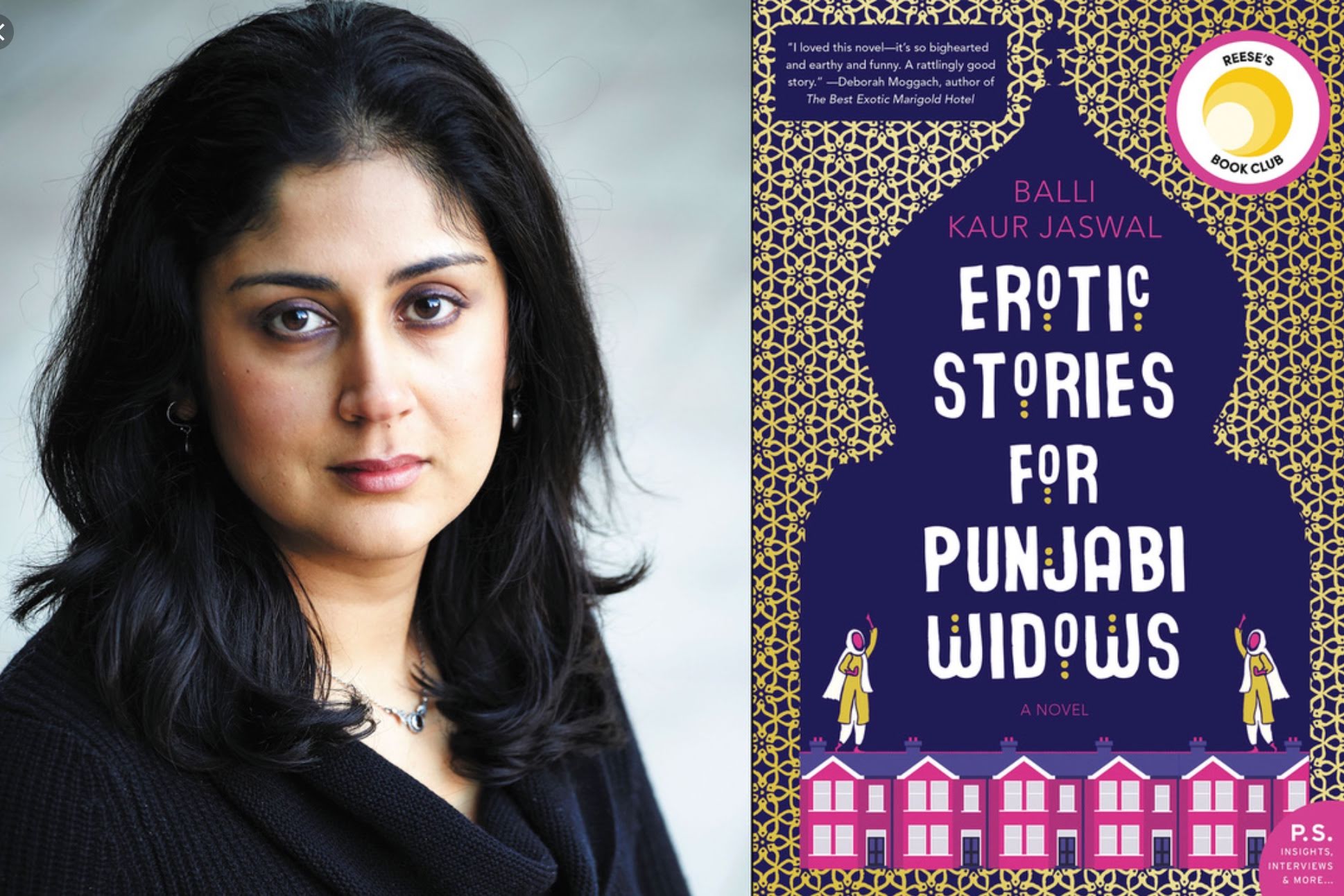
Erotic Stories for Punjabi Widows by Balli Kaur Jaswal - 2017


Erotic Stories of Punjabi Widows by Balli Kaur Jaswal


Be warned, this novel might shock you, might leave you feeling the need for your own erotic encounters.  For sure I did not at first quite believe what I was reading.

The plot centers around Nikki, born in London to Punjabi immigrants.  Her parents are Sikhs. The lives of women are very much still defined by traditions imported from India.  Nikki, about twenty, is trying to find a way to live in harmony with the very judgemental Sikh community (there is even group of young men who monitor unmarried women for improper dress and such).  Nikki's father recently died, she is a law school drop out, currently working as a bartender. After talking to her more traditional sister and her mother about the direction of her life, she decides to try to earn extra money, some of which will go to her mother, by starting a class in creative writing for women at the London Punjabi center.  The family conversations revolve around Nikki's lack of direction.

As Jaswal wonderfully shows us, marriages were still often  arranged and had to be with another Sikh.  Nikki scorns ads placed on a match making board at the center.  Her venture into internet matchmaking websites was just hilarious, a marvelous satrical  segment.

When her class begins the students are all Widows, it seems married or single women are not supposed to go out to classes.  Nikki plans on teaching creative writing, through a workshop like approach.  She is surprised to learn some of the women cannot write in English or Punjabi.   Most of the students thought they were signing up to learn to write English.  Nikki at first does not know how to begin.  One of the students finds a collection of erotic stories and shares them with the class.  Soon Nikki realizes the women can be drawn out by having those who can write, produce stories of erotic encounters.  They end up producing very sensual most would say X-rated stories about sexual encounters. Most of the women have been with only their late husbands. We see the women begin to rise above their cultural restrictions.  We learn one is not a widow but was abandoned by her husband.

Nikki does have her own romance.  It runs most of the course of the novel and was very integral to the novel.

Jaswal is a very talented writer.  The conversations are perfect, the characters real and she gives us a very good feel for the London Punjabi community.  I liked Nikki and her family.  The erotic stories are a lot of fun.

I really enjoyed Erotic Stories of Punjabi Widows by Balli Kaur Jaswal.  
This is a very perceptive totally fun to read work.  


BALLI KAUR JASWAL . From ballijaswal.com

is the author of Inheritance, which won the Sydney Morning Herald’s Best Young Australian Novelist Award in 2014 and was adapted into a film at the Singapore International Festival of the Arts in 2017.Her second novel Sugarbread was a finalist for the 2015 inaugural Epigram Books Fiction Prize and the 2018 Singapore Literature Prize. 

Her third novel Erotic Stories for Punjabi Widows (Harper Collins/William Morrow) was released internationally to critical acclaim in March 2017. Translation rights to this novel have been sold in France, Spain, Italy, Israel, Poland, Germany, Sweden, Greece, China, Brazil and Estonia. Film rights to Erotic Stories for Punjabi Widows have been acquired by Ridley Scott’s production company, Scott Free Productions and Film Four in the UK. Erotic Stories for Punjabi Widows was also picked by Reese Witherspoon’s book club and The Girly Book Club in 2018.
Jaswal’s short fiction and non-fiction writing have appeared in the UK Sunday Express, Cosmopolitan Magazine, The New York Times, Harpers Bazaar, Conde Nast Traveller and Best Australian Short Stories, among other publications and periodicals. She has travelled widely to appear in international writers festivals to conduct workshops and lectures on creative writing, pursuing an artistic career, the power of storytelling, global citizenship and social justice advocacy through literature. A former writing fellow at the University of East Anglia, Jaswal has taught creative writing at Yale-NUS College and Nanyang Technological University where she is currently pursuing a PhD. 
Jaswal’s new novel, The Unlikely Adventures of the Shergill Sisters, will be released in April 2019. The novel is a dark comedy following the travels of three British-Indian sisters on a pilgrimage in India to fulfil their late mother’s final wishes.

I really want to read her latest novel, The Unlikely Adventures of the Shergill Sisters.

Mel u


Monday, April 22, 2019

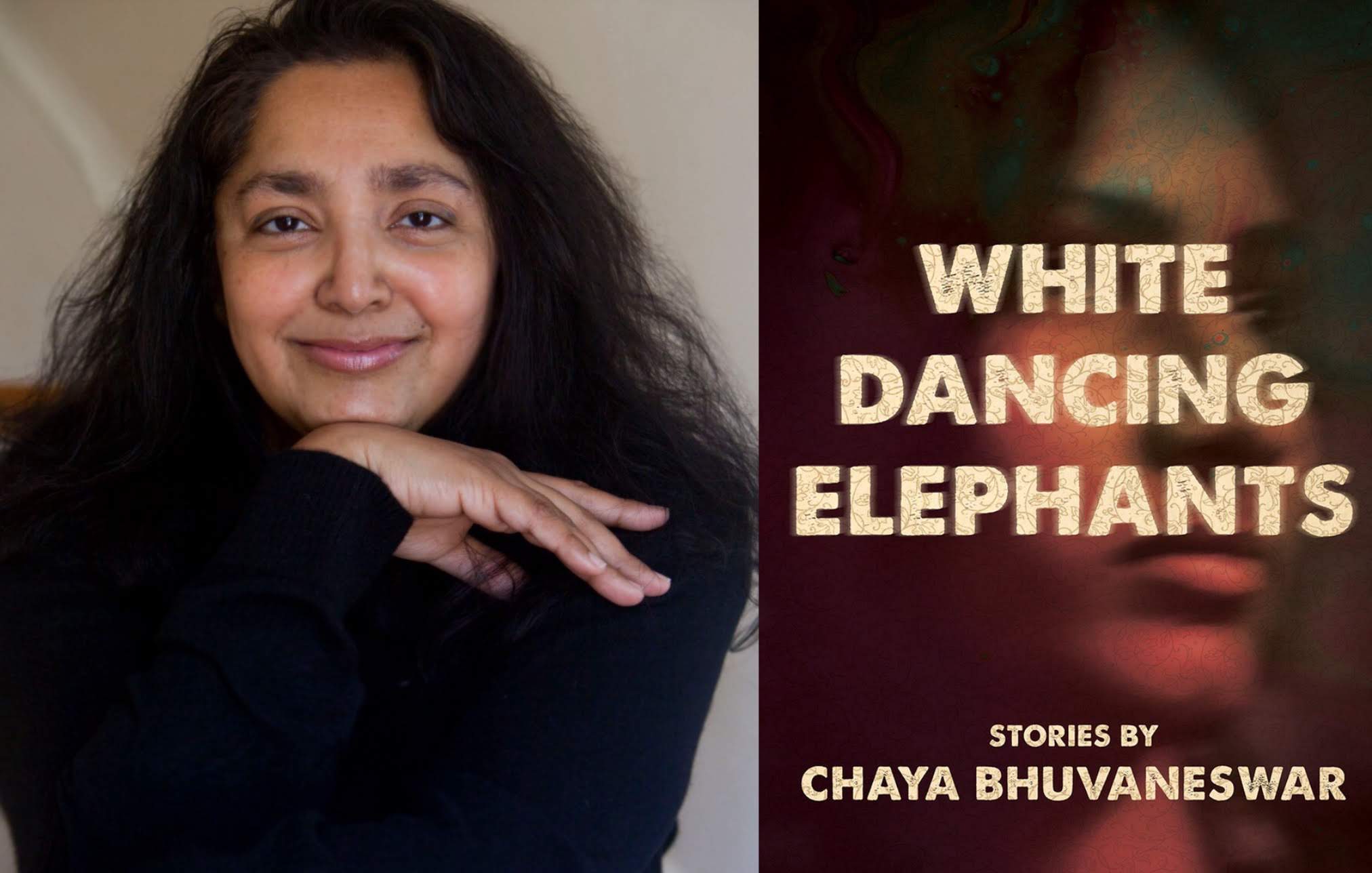
Heitor - A Short Story by Chaya Bhuvaneswar - From White Dancing. Elephants- 2018


In the nearly ten years in which i have maintained The Reading Life i have never seen as much attention given to a debut Short story collection as that given to White Dancing Elephants by Chaya Bhuvaneswar.  So far i have posted on four of her marvelous very creative stories, all have death as a core factor and deal with the interaction of persons of Indian background with western countries.  

I have just finished Reading The Anatomy of Criticism by Northrup Frye.  He talks extensively and very learnedly about the various ways in which myths are used to structure literary works. In all three of the stories I read prior today we can see Bhuvaneswar very profoundly use ancient Indian myths not only as part of the rhetoric structure of her stories but she shows us how people retreat into deeply rooted ancient archetypal myths to help with the otherwise unfathomable aspects of their lives.  She overlays the ancient myths with modern reality.  

Early European commercial ventures into South and South East Asia societies by England were fronted by The British East India company.  The Portuguese and the Dutch also gave near sovereign power to trading companies.  Human beings were among the items traded.  John Bull was a slaver and a rapist.  Most colonial explorers and traders were single men.  Of course, as the narrator of this story tells us, they wanted women,either as wives or slaves.  Slaves from India were regarded differently from African:

"Small for his age then, easily bound, Heitor was brought by ship and force, by sons of spice traders, by members of large prosperous companies, brothers of men who had settled in Goa, the place in India where the first human remains of the Old World were found. Those traders had married the most beautiful Indian women they could find, converting them to Christianity with jewels stolen from their own ancestors. Heitor was sold for an elite price to work for the nuns of Evora, and their novitiates. Indian, Chinese, Japanese slaves were bought and sold in Portuguese as males, than African slaves, and thus allowed to work in the convents. As a child, he was striking for his quietude, forming a graceful harmony with the aggressive potential of his prematurely hard and strong limbs. Beginning at the quick, observant, diligent age of eight, Heitor was saved from harder labor, given to the convent’s Indian gardener and its cook. They were nowhere to be found on his last night. The men, lovers, were hiding for fear of being chained. They were both drunk and in despair that they had not foreseen his fate."

Heitor was sentenced to death for sexual contact with Portuguese nuns.  There is an interesting plot in the story.  It also turns on sexual relations between enslaved persons and Europeans.


Chaya Bhuvaneswar studied Indian poetic traditions with the support of an NEH Younger Scholars grant and as a Rhodes Scholar at Oxford, concentrating in Sanskrit. She has received a Time-Life Writing Award as well as a Yale Elmore Willetts Prize for Fiction. Her short stories have been anthologized in Her Mother’s Ashes 2,and featured on the Other Storiespodcast. An Affiliated Fellow in Writing at the Boston University Center for the Study of Asia, she lives in Newton, Massachusetts.She is a practicing physician.

This story is part of our Stories by South Asian Women Project.

Oleander Bousweau 
Mel u

Thursday, April 18, 2019

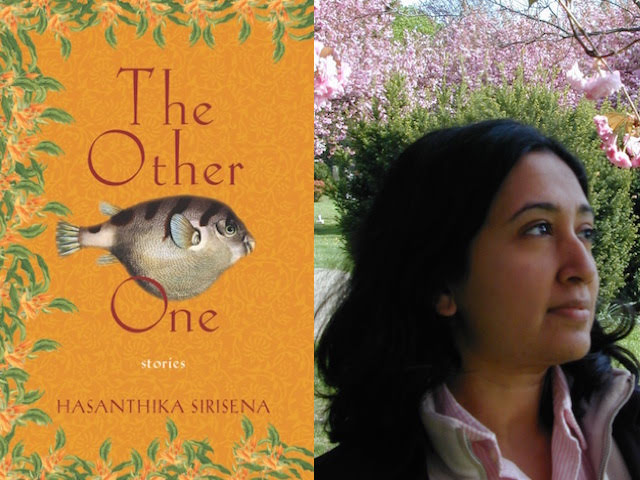
The Chief Inspector’s Daughter - A Short Story by Hasantika Sirisena - 2016


A Very Good Background Article on the causes of ethnic violence in Sri Lanka

I found this article very helpful in understanding The historical basis for the conlict in Sri Lanka between those of Singalese heritage and Tamils which has resulted in over 100,000 deaths.  This is the legacy of British Colonialism, 
going back over 200 years. Today's story arises from this history.


“Sri Lanka is a paranoid country. Twenty years of civil war makes us jump at our own shadows. Everyone has stories like Siva’s. Stories of cars and vans that come in the day or in the middle of the night." - from The Chief Inspector's Daughter


Today's story is set in the capital city of Sri Lanka, Columbo.  Narrated by a nineteen year old Singalese woman, a medical student and the only child of the chief inspector of the police department.  He was a widower who has seemingly no interest in remarrying.  They are very close and it expected she will take care of him in his old age.  Her boyfriend, also a medical student is from a wealthy Tamil family, a relationship unacceptable to both their families.


“We speak English to each other because I do not know Tamil, and he does not speak Sinhala unless he must. There are other things that divide us—different gods, different history—but Siva and I also have at least one thing in common. I want to urge him to find somewhere else we can drive to. I want nothing more than to ease the burning I feel whenever I am near him. The pure physical need that overcomes me too often these days


One night they are parked in a secluded area. Four Tamil men and a prostitute are found the next morning murdered execution style near the spot where they parked.  The woman asks her father if this could be the work of the Singalese Army or the police. She knows people have been tortured at the station where her father has an important job.  Her boyfriend begins to fear his family will be targeted, maybe murdered.  The daughter leaves the house one night, just walking around.  Two of her father's police officers find her and bring her home.

Things go terribly wrong between her and her father.  

I will leave the rest of the plot untold.  Hasanthika Sirisena brings out the impact of the ethnic hatred on a personal level.  A family is badly damaged.  Maybe the two medical students could have made a good marriage, bringing grandchildren for the widower.  His daughter tells him she hopes he dies alone.

This story appears in the debut collection of Sirisena, The Other One. This is a powerful story and for sure more of her work will be featured on The Reading Life.


Hasanthika Sirisena’s essays and stories have appeared in The Globe and Mail, WSQ, Narrative, The Kenyon Review, Glimmer Train, Epoch, StoryQuarterly, Narrative and other magazines. Her work has been anthologized in Best New American Voices, and named a distinguished story by Best American Short Stories in 2011 and 2012. She is a recipient of fellowships from the MacDowell Colony and Yaddo. In 2008 she received a Rona Jaffe Writers’ Award. She is currently an associate fiction editor at West Branch magazine and a Visiting Assistant Professor at Susquehanna University...from her website

This story is part of The Short Stories by South Asian Women Project.

From the author's Website

"Set in Sri Lanka and America, the ten short stories in this debut collection feature characters struggling to contend with the brutality of a decades-long civil war while also seeking security, love, and hope. The characters are students, accountants, soldiers, servants. They are immigrants and strivers. They are each forced to make sometimes comic, sometimes tragic, choices. What they share, despite what they’ve endured, is the sustaining power of human connection."

Oleander Bousweau


Thursday, March 28, 2019

Richard the English - A Short Story by Selma Carvalho - 2018


“Richard the English” by Selma Carvalho 

Franz Fanon in his groundbreaking works on post colonialism, The Wretched of the Earth and Black Skin, White Masks helped me see how writers from once colonial societies often define their characters against  the culture of their former masters.  I first learned to see this through the work of Edward Said and saw how to use this point of view in deeping  my reading in Inventing Ireland by Declan Kiberd.  For sure we can see this at work in Selma Carvalho’s delightful story, “Richard the English”.

We never learn the narrator’s nationality, age, name or even for sure that the narrator is a woman, though it seems so.  All we know for sure is she lives in England and is not English. She moved to England ten years ago.  She has never been inside the home of an English person.  She personifies it with the term “English home”.  

She decides to completely remodel her house, to convert the insides to her vision of an English house.  We know she seems to live on Mulberry Parade Street, located in the heart of central London.  As we can see in the quote below she has a vision of the English home based on literary and historical remembrances.


“I’ve never been inside an English home. Ten years I’ve lived here but I’ve never been invited to an English home. Of course, I’ve had glimpses of it, like today, whenever doors have opened in my presence. Left ajar so that I can have a quick look inside whilst walking down Mulberry Parade Street. Sometimes at night, light pours out from these half-open doors, onto the street, drawing me in. I’ve seen narrow hallways leading to stairwells, with boots lined against walls and brollies stuck in stands, but beyond that I have no idea what exists in an English home. I imagine the smell of scented baths and packet potpourri, of roasting lamb and wood fires. I imagine Tudor beams holding up history, the anguish of two World Wars staring from tables stacked with photographs, Dickens’s ghost wandering in the study, Constable’s pigmented browns gracing bedrooms, and William Morris’s return to innocence plastered over walls. But that’s just my imagination, isn’t it? I’ve got no evidence. Ah to be English. Jolly good.”

She hires Richard, to her the very embodiment of an English man, strong, reliable, capable.  He says he and his crew of three men can completely redo the inside of her house in three months.  They totally rip out the inside of the house.  As the job approaches completion, Richard stays late to get things done.  She is moved back in and begins to suffer anxiety over him leaving.  We don’t sense a romance or sexual feeling just a kind of longing to shore up her alliance to the English by keeping Richard around. He seems to make her feel secure.

The ending is interesting, puzzling, thought provoking and in a strange way funny.   

On a personal observation, I live in the Philippines, an American colony up until 1946.  There are appalling to me advertisements on TV aimed at young women (we have three daughters 20, 23, and 25) which claim their products will make your skin lighter.  The obvious suggestion is lighter is better, more desirable.  This is a sad legacy of colonialism.  All of the media stars have much lighter than typical complexions.

"Richard the English" can be read in just a few minutes.  I highly recommend this story.

I hope to read more of Selma Carvalho going forward, especially her works on the Goan immigration to British East Africa.  

Selma Carvalho is a British-Asian writer, columnist and author of three books documenting the Goan presence in British East Africa. Between 2011-2014, she led the Oral Histories of British-Goans Project funded by the Heritage Lottery Fund UK. Her short fiction and poetry have been published by Litro,  Lighthouse and online Mechanics’ Institute Review (Birkbeck) among others. Her work appears in several print anthologies including the London Short Story Prize 2017 Anthology (Kingston University Press, 2018) for which she was a shortlist finalist. Her short stories have been placed in numerous competitions, most recently highly commended for the University of Winchester Writers Festival SS Prize 2018. She is the winner of the Leicester Writes Short Story Prize 2018.

From Amazon

Selma Carvalho grew up in Dubai when the place was just an arid patch of land with a few houses huddled around the Creek to attest to the presence of life. After marriage, she lived for seven years in Minnesota, USA, which she describes as a natural berth for the liberal that she has always been. Although she has lived in the Diaspora for most part of her life, she feels she has never been anything other than a Goan.


Mel u

Wednesday, March 27, 2019

The Thief - A Short Story by Shakti Bhatt - 2006


My post on Necropolis by Jeet Thayil - Short Listed for the 2012 Booker Prize - Husband of Shakti Bhatt


“The Thief” - A Short Story by Shakti Bhatt - 2006

Born 1981 Delhi

Passes 2007 - Delhi

Shaki Bhatt was a writer and editor.  Her early death was a shock to the Indian literary world.  A foundation set up in her memory has since 2008 presented an annual best debut work award for writers of the subcontinent.  

“Bloggers in India have been mourning the untimely death of Shakti Bhatt, who passed away in Delhi last Saturday night after a sudden and unexpected illness. Shakti – who was in her mid-twenties – was the editor of Indian publishing house IBD’s newly launched Bracket Books and the wife of well-known Indian poet Jeet Thayil.” From Global Voices - April 5, 2007

I found several website memorializing her but I could find nothing by her for sale or online.

In 2012 I posted on Necropolis by Jeet Thayil, short listed for the Booker Price.  He was the husband of Shakti Bhatt.  His book is a brilliantly dark account of the underside of Mumbai.  I reread my old blog post and the book came vividly back to me.  

“The Thief” is set in an affluent multi generation family home in Delhi.  The household is run by the grandmother. As we meet her she is negotiating with an applicant for a job as a maid as to what she will and will not do. The maid agrees to cook, wash dishes, answer the phones, do personal errands but not clean.  We learn this is a matter of caste.  The grandmother tells the young narrator that Maids often hire lower caste maids to clean their own rooms.

I really enjoyed the descriptions of the many tradespeople who call on the house.  Reading the food descriptions was a lot of fun.  Bhatt brings the family environment to life.  This is a very good short story.  There is a dramatic turn when a valuable ring of the grandfather shows up missing.

I read this in a worthwhile anthology Kasha: Short Stories by Indian Women

If anyone knows of more works by Shakti Bhatt, please let me know.

I would love to read more of her work.


This is part of our Short Stories by South Asian Women project.  

Oleander Bousweau 
Mel u


Featured Post

Imperial Reckoning: The Untold Story of Britain’s Gulag in Kenya by Caroline Elkins - 2005 - 701 Pages

  Imperial Reckoning:     The Untold Story of Britain’s Gulag in Kenya by Caroline Elkins - 2005 - 701 Pages 2006 Pulitzer Prize Winner From...