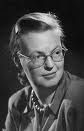
Showing posts with label Shirley Jackson. Show all posts

Friday, May 3, 2024

The House of Haunting Hill by Shirley Jackson- 1959 - 208 Pages


 The House of Haunting Hill by Shirley Jackson- 1959 - 208 

The House of Haunting Hill, a gothic horror novel is considered a masterpiece of thiscgenre. It tells the story of Dr. Montague, an occult scholar, who brings a group of people to investigate Hill House, a notoriously haunted mansion. The house itself is described as being almost sentient, and it begins to prey on the vulnerabilities of each visitor.

The novel is known for its ambiguous ending and its exploration of psychological horror. It is not entirely clear whether the house is truly haunted or if the events are all happening in the mind of Eleanor Vance, one of the guests. This ambiguity is part of what makes the novel so unsettling.


Friday, June 3, 2016

"The Lottery" by Shirley Jackson (first published June 26, 1948 in The New Yorker)


Shirley Jackson's Most Famous Work


Shirley Jackson's Best Know Works are the novels The House on Haunted HillWe Have Always Lived in the Castle, and her famous short story, "The Lottery".

She was born in San Francisco in 1916 and died in North Bennington, Vermont in 1965

She was married to Stanley Edgar Hyman, a well know literary critic and cultural historian, from 1940 to 1965.  They had four children.


"The Lottery" is the most famous work of Shirley Jsckson.  After initial publication in The New Yorker June 26, 1948 more letters were received about it by any other story in the history of the magazine.   Everyone  wanted to know what the story meant and nearly seventy years later that was my reaction after reading this amazing, seemingly simple story.  It is one of the most anthlozied American short stories.  

The story has a Hawthorne like feel.  I don't want to at all spoil the story for first time readers.  The story can be seen in a multitude of fashions as a commentary on religious beliefs, plotical structures and societies.

This a great story, deeply intriguing.   

I am glad I have at last read "The Lottery".

I learned in Ruth Franklin's very good biography of Jackson that she got to almost hate the story from so many people demanding she explain the meaning behind the work.


Please share with us your reaction to "The Lottery".

Mel u

Thursday, October 31, 2013

"The Intoxicated" by Shirley Jackson 1949


Shirley Jackson was an influential American author. A popular writer in her time, her work has received increasing attention from literary critics in recent years. She has influenced such writers as Stephen King, Nigel Kneale, and Richard Matheson.

She is best known for her dystopian short story, "The Lottery" (1948), which suggests there is a deeply unsettling underside to bucolic, smalltown America. In her critical biography of Shirley Jackson, Lenemaja Friedman notes that when Shirley Jackson's story "The Lottery" was published in the June 28, 1948, issue of The New Yorker, it received a response that "no New Yorker story had ever received." Hundreds of letters poured in that were characterized by, as Jackson put it, "bewilderment, speculation and old-fashioned abuse." -Goodreads 

Most people, including me up until today, have never read more of Shirley Jackson's work than her ultra-famous short story, "The Lottery".   (I admit I love the old pulp art covers for classic books, before they became classics, the one for the  collection where "The Intoxicated" first appears is a great one).  Anyway,  I have now read a second story by Jackson, "The Intoxicated" and it was very delightful.  It is set an a party, a man knows he is a bit drunk so he leaves the party and goes into the kitchen.  The party is pure American post War suburbia.  He meets the daughter of the family, seventeen, in the kitchen.  They start a conversation which takes a startling turn.  The girl begins to give a vivid account of the destruction of civilization, we wonder from what dark recesses of American society this comes from.  

The style is almost like a parable in its prose style. I will read more of her stories, I hope.

If you Google it you can find this story online or read it in the sample edition of the Kindle edition of  The Lottery and Other Stories.  


Monday, May 24, 2010

"The Lottery" by Shirley Jackson

"The Lottery" by Shirley Jackson (1948, 8 pages-originally published in The New Yorker)

Recently I have been studying a number of different "Best Short Stories" lists.    Most lists overlap a lot with your standard canon writers like Poe, Gogol,  Chekhov, Woolf, Mansfield, Joyce etc.    When I see a new to me story on a list I do not take it seriously until I see it on several lists.    One new to me writer that I have seen on numerous lists is Shirley Jackson for her story "The Lottery".   

After a bit of research I found Jackson (1916 to 1965-San Francisco, California) was a very influential writer of Gothic horror  style stories.    Her work is greatly admired by Stephen King and Neil Gaiman.   She was married to a well known literary critic, Stanley Hyman.   She wrote six novels with titles like Hangsaman and The House on Haunted Hill.    According to several on line biographies, she and her husband had a personal library of over 100,000 volumes.    Among lovers of Gothic Horror fiction she is highly regarded.    It seems for sure "The Lottery" is her most famous work.

"The Lottery" is set in a small village environment where everyone knows everyone.   As the story open you got a sense of foreboding and I admit I visualized the residents of the village walking around with glassy eyes and pitchforks in their hands.   Her style is simple and straightforward.   It is a story anyone can enjoy and after reading think "Ok that was cute and quirky and clever and did not strain my mind a whole lot".

Here are the opening lines which give a clear picture of her style:
The morning of June 27th was clear and sunny, with the fresh warmth of a full-summer day; the flowers were blossoming profusely and the grass was richly green. The people of the village began to gather in the square, between the post office and the bank, around ten o'clock; in some towns there were so many people that the lottery took two days and had to be started on June 2th. but in this village, where there were only about three hundred people, the whole lottery took less than two hours, so it could begin at ten o'clock in the morning and still be through in time to allow the villagers to get home for noon dinner.

We learn that the lottery is a ritual that has been around a long time.   It has deep cultural meaning to the older residents who decry that the young do not really correctly observe the forms of the ritual.   We do not learn what the lottery is for until the very end of the story.   It is fully in the tradition of a story that depends on a surprise ending to work.    I will let you discover the ending for yourself but maybe you will see it coming.

I enjoyed reading this story.  It just took a few minutes.  It is not a literary classic just a well written enjoyable story that makes us think a bit.   It is not near the level of  Katherine Mansfield, Kate Chopin, or Flannery O'Conner.   The writing style is what I would call bland.   I think it maybe listed on so many lists as a classic short story as I think it could easily be taught in a class aimed at students 12 and above.   I would say it is worth reading as a fun diversion.    You can read it on line here.

Please leave in a comment any short stories you can endorse -

Mel u

Featured Post

Imperial Reckoning: The Untold Story of Britain’s Gulag in Kenya by Caroline Elkins - 2005 - 701 Pages

  Imperial Reckoning:     The Untold Story of Britain’s Gulag in Kenya by Caroline Elkins - 2005 - 701 Pages 2006 Pulitzer Prize Winner From...