Friday, February 4, 2011

"Babes in the Jungle" by O Henry

"Babes in the Jungle" by O Henry (1903, 7 pages)

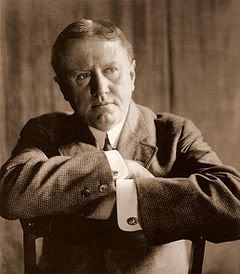
O Henry (1862 to 1910 USA-aka William Porter) is famous for his surprise or twist ending short stories.    Just as Saki is a very English writer of Edwardian England, O Henry is a very American writer of the 1910s.   The Wikipedia article on O Henry gives a good account of his life and career.    He lived a very interesting life.     He was a popular writer who wrote his stories for sale to mass market magazines, not elite literary journals.  

One of the themes of O Henry's stories seem to be tricksters getting tricked.   The stories also seem to deal with issues of supposedly smart city dwellers versus country hicks or recent immigrants.    Imagine the setting of the recent cable TV series show Broadway Empire and you will get an idea of his settings.  

As "Babes in the Jungle" opens we have two hucksters or confidence men talking about how easy it is to take advantage of residents of New York City.    They go on and on about how they even feel bad about taking their money through sales of phony gold mines and such.   They have just recently met and they are each trying to impress the other.    Then the fun begins when they meet J. P. Morgan, hyper wealthy banker.

The twist ending here is really well done.   This is to me a fun and funny story.

You can read this story  in just a few minutes at East of the Web:Short Stories.      Of Saki and O Henry, I guess I like Saki a bit more.    They are both good writers who make us smile and maybe reflect on our lives a bit.  

Mel u

"How Much Land Does A Man Need" by Leo Tolstoy Debut Publication of Calypso Editions

"How Much Land Does a Man Need" by Leo Tolstoy (1886, translated by Boris Dralyuk, 2010, Calypso Editions)


Tolstoy at 20


Not long ago Calypso Publishing  invited me to a reception to celebrate the publication of their first book, How Much Land Does A Man Need, a translation of  the Tolstoy (1828 to 1910) story by Boris Dralyuk.


When I read the mission statement of Calypso Publishing I was reminded somehow of Virginia and Leonard Woolf working at Hogarth Press, producing books notable not only for their content but books that are works of art themselves.  


Calypso Editions is an artist-run, cooperative press dedicated to publishing quality literary books of poetry and fiction with a global perspective. We believe that literature is essential to building an international community of readers and writers and that books can serve as a physical artifact of beauty and wonder in a world of digital saturation.


When I advised them I could not come they kindly  offered to send me an e-book.     The translator, Boris Dralyuk studies Russian Language and literature at UCLA.     In his well written very informative introduction to the work Brian Evenson places the story in the context of the work and life of Tolstoy and in the tradition of  folk tales and fables.    "How Much Land Does A Man Need" was written seventeen  years after War and Peace and nine years after Anna Karenina.      I do not have the ability to say if this is a good translation or not but I did read in addition to this translation an old now in the public domain translation and Dralyuk's version was much better written and more direct.     There is also a Russian text of the work and that makes the book a great class room or language learning tool.


Fables go way back to the very start of literature.    Much of the wisdom of world has been transmitted down the ages in fables and fairy tales.    Speaking in a purely secular fashion, the great religious texts of the world can be seen a collections of fables.    In a fable the characters represent types or are used to teach a moral lesson.    This is what Tolstoy does in "How Much Land Does a Man Need" but he brings the characters to life.   I felt I was walking the land and enjoying the company of  tribal peoples while feeling concern for what was going to happen to our lead character.    Unlike in a simple Fable, the characters are real people with great details that make us feel we know them.   James Joyce  said it was "the greatest story that the literature of the world knows".   I really felt like I was there.    As we are meant to, I wondered what I would do were I the main character of this story.    


"How Much Land Does a Man Need" has the power to make us rethink our values and our lives.   I commend Calypso Editions for this great first publication and expect great things from them.


Their webpage is here

Mel u


"Quail Seed" by Saki- A Really Funny Story

"Quail Seed" by Saki (1911, 7 pages)

Every morning almost I check the web page East of the Web: Short Stories to see what they have selected as their story of the day.      I would suggest anyone interested in reading more short stories and for sure anyone just getting into short stories who might not know what to read to check it out.   "Quail Seed" by Saki (1870 to 1916-Hector Munro-UK) is the story of the day this morning.  

Saki is one of the most popular of all short story writers.   He is famous for his great twist or surprise endings.   So far I have posted on nine of his stories.       I would say his stories are very well written in a prose style that will make you smile.    All that I have read  so far have been good natured satires set in comfortably middle class or above Edwardian England.    

This story is set in a small grocery store trying to compete against new much bigger stores.    The next time you go into a giant super market type grocery store think back on these lines from Saki in 1911:

"The outlook is not encouraging for us smaller businesses," said Mr. Scarrick to the artist and his sister, who had taken rooms over his suburban grocery store. "These big concerns are offering all sorts of attractions to the shopping public which we couldn't afford to imitate, even on a small scale -- reading-rooms and play-rooms and gramophones and Heaven knows what. People don't care to buy half a pound of sugar nowadays unless they can listen to Harry Lauder and have the latest Australian cricket scores ticked off before their eyes.

What happens next is really funny.   This might be the funniest of his stories I have read so far.   I do not want to spoil any of the story for you.     The ending is a very well done surprise.    

"Quail Seed" can be read online.      Give Saki a chance and he just might get to be a habit.  

If anyone has any suggestions as to short stories I can read online, please leave a comment.

Thursday, February 3, 2011

The Bacchae by Euripides-True Blood and Greek Drama

The Bacchae by Euripides (405 BC, translated 1911 by Gilbert Murray)

This is my post for the Classics Circuit Ancient Greece Tour  (The full schedule can be found at the tour web page).


"And deep beneath the Maenad cry
His proud voice rings:
"Come, O ye Bacchae, come!"
As I read this work by one of the "big three" ancient Greek Dramatists (the other two being Sophocles and Aeschylus)   I knew it was a very high canon status work.    My reading of older literature in translation is largely done online and this limits me in most cases to older public domain translations.   There are no public libraries here in Manila and I need to keep some control on my book buying expenses.        I know in cases of translations of Greek dramas I am missing out on great new translations.  

My comments here will not be at all a general summing up of the play just a few sort of random observations stimulated by my reading.   (Wikipedia has good articles on Euripides (480 to 406-Athens) and The Bacchae.)

My first question as I read the play (read via Dailylit.com) was am I really having a reading experience anything like that of reading it in the original or am I reading an early 20th century English drama inspired by a Greek Drama?     The translator, Gilbert Murray (1866 to 1957) was born and spent his early years in New South Wales Australia.    At age 11 Murray's father died and he and his mother emigrated to the UK.   Murray studied the classics at Oxford.      He translated many classic Greek Dramas.    Most English speaking non Ancient Greek readers up until 1965 or so got there Greek Drama from Murray.     Sometimes people used to say that Constant Garnett made all of the great Russian writers sound the same.  Some say Murray did did the same thing to Greek Drama.     My conclusion here is I read more a early post-Victorian drama based on Greek roots than a Greek Drama.    My feeling on this is hard to explain or justify.   When I read the translations of Homer by Robert Fagles I felt I was reading a very old work.   I did not feel that way when I read this work.

Another Maiden_
Then streams the earth with milk, yea, streams
With wine and nectar of the bee,
And through the air dim perfume steams
Of Syrian frankincense; and He,
Our leader, from his thyrsus spray
A torchlight tosses high and higher,
A torchlight like a beacon-fire,
To waken all that faint and stray;
And sets them leaping as he sings,
His tresses rippling to the sky,
And deep beneath the Maenad cry
His proud voice rings:
"Come, O ye Bacchae, come!"

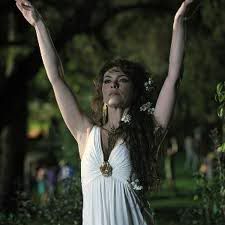
Are you a fan of the cable TV series True Blood?    I admit I am  and  I am looking forward to the next season.      The character in the series "Mary Anne" was a Maenad.   Maenads were the hand maidens of the God Dionysus.     In Euripides play Dionysus is a God who allows us to celebrate our irrational side, to give play to our darker less civilized instincts.    He is surrounded by a group of female followers who worship him.    Of course there are themes here suggesting Dionysus is to be taken as an eastern cult religion attempting to subvert the rational codes of the Greek and that the Maenads represent a latent fear of uncontrolled female impulses.

I thank Rebecca for her hard work in hosting the classics circuit.  I know my post is a bit unorthodox.

Mel u

Wednesday, February 2, 2011

Welcome all Literary Book Blog Hoppers-Feb 3 to Feb 5


To me the Literary Book Blog Hop is a great event. I read and post on mostly classics, short stories, Asian Fiction and what I see as literary novels.     

"Greetings to All Hoppers" Charles-coeditor of The Reading Life
I will follow back all who follow me and return all visits.   Please leave a comment if you decide to follow my blog so I can return the follow.-thanks


 Every week the Literary Book Blog asks that participants answer a question-here is the very interesting  question for this week.

What setting (time or place) from a book or story would you most like to visit? Eudora Welty said that, "Being shown how to locate, to place, any account is what does most toward making us believe it...," so in what location would you most like to hang out?

(Eudora Welty is on my collage!)

This is a very interesting question.    If I could visit anywhere in history and be safe and such I think I would visit Rome around 50 BC.     This period of history fascinates me.    I would step out of the satires of Horace and Juvenal and prepare to be amazed.     Or maybe I could take the place of Richard Savage and walk the dark night streets of London with Samuel Johnson.   

Mel u

Tuesday, February 1, 2011

"Shock Tactics" by Saki

"Shock Tactics" by Saki (1913, 6 pages)

I am developing a fondness for Saki's short stories (Hector Munro-1870 to 1916-UK).    Whenever East of the Web:  Short Stories selects one of his stories as the story of the day, I read it.    This will be the 9th story by Saki I have posted on.     I have posted some biographical data in earlier posts on Saki you can read if you want.  

Yesterday I read Angus Wilson's  introduction to Collected Stories by Elizabeth Bowen and was very taken by a passing remark he makes about Saki.  He says  Saki's central characters or tricksters (he is the epitome of a trick ending short story writer)are malicious excessively refined  near but not quite adult children just learning that the adults in their world can be made objects of fun with a bit of ingenuity.    Maybe they have not seen the irony in the fact that they are utterly dependent on those the mock or have not thought through what they will be come one day.  

"Shock Tactics" is another very well written (I think once you read a few of his stories you could pick one out of a literary line up) satire on the moneyed class in Edwardian England.     Our central male character, a man about 20, is complaining to his friend that his mother reads all of his incoming mail.  (No E Mail, no phones  and even no Face Book in this era so letters were very important).    He has told her over and over not to but she persists in reading his mail, insisting he is too young to go be allowed to receive letters on his own.    His friend basically says what kind of man lets his mother read all of his mail and taunts him for it.

One day the two young men are conversing over the fact that a young lady wants to send the first man a letter but he does not feel comfortable doing that as his mother may not approve the content of the letter.    The world of Saki is also a world where people have plenty of time on their hands to debate such matters.   The friend comes up with a great way to break the mother of her habit of reading her son's mail.   I will let you learn the plot on your own if you wish.

I know Saki's stories are not considered great art.   I have not seen his work listed on any top short story lists.     To me his stories are fun, well written and  gentle satires of the human condition.     His stories are maybe a little predictable.   I will continue to read and post on them.  

"Shock Tactics" can be read online

if any have suggestions as to other short stories I might like, please leave a comment

Mel u


January Reading Life Reading and Blogging Review

"Welcome to the Jan. 2010  Review" -Charles u-coeditor


Blog Notes for January 2010


January was a good blogging month for me.   It seems the longer I am a book blogger the more it means to me but I understand why some burn out on it and take breaks.       (The notes below are in large part so I will have a reference on what happened in my blog when I look back.)

In January the most visited old post on my blog was:

Living With the Enemy:   A Diary of the Japanese Occupation of Manila by Pacita Jacinto.   I discovered the book is required reading in Freshman English at a number of colleges here in the Philippines.    

My most viewed new post for the month of January was:

"Thank You M'am" by Langston Hughes.    This post is only five days old and I expect it to enter the "top ten" list soon (out of 430 posts to date).    I am assuming most of the traffic is driven from school reading assignments.     

My most read post of all time continues to be on "Miss Brill" by Katherine Mansfield.

The blog had a new high in readership for the month.    About 48 percent of readers were from the USA and the rest were from all over the world.      I am happy to have any and all visitors.   I know many visitors are students looking for homework help on a novel or short story.    I am most thankful to those who take the time and trouble to comment on my posts.


Reading Notes for January 2010

Novels
  1. Lolita by Vladimir Nabokov -great book-some canon lists already include it-
  2. One Hundred Years of Solitude by Gabriel Marquez-a very good book-might be over hyped
  3. The Belly of Paris by Emile Zola-very much worth reading
  4. Spring Snow by Yukio Mishima -brilliant work-I will be reading more of his work in 2011
  5. In Pursuit by Joanne FitzPatrick -a very good novel based on the life of Katherine Mansfield
  6. The Voyage Out by Virginia Woolf-VW's first novel-read on line via Dailylit.com
Short Stories

I read and posted on 26 short stories in January.    Almost all of them can be read online.     

The top five short stories (selected only from new to the blog writers) were

  1. "Babylon Revisited" by F Scott Fitzgerald 1930-beautiful story
  2. "The Farthest Edge of  the Island" by Shimao Toshio 1956-WWII story 
  3. "Why I Live at the P. O." by Eudora Welty-my first of her works-loved it
  4. "Runaway" by Alice Munro-I hope to read seven more of her stories by mid-year
  5. "Thank You, M'am" by Langston Hughes-an iconic cultural figure

In February I will pass the two hundred  short stories posted on mark.   I might do an over view post on short stories and The Reading Life then.


As always please leave any comments or suggestions you may have.


Mel u


Featured Post

Imperial Reckoning: The Untold Story of Britain’s Gulag in Kenya by Caroline Elkins - 2005 - 701 Pages

  Imperial Reckoning:     The Untold Story of Britain’s Gulag in Kenya by Caroline Elkins - 2005 - 701 Pages 2006 Pulitzer Prize Winner From...