Tuesday, February 18, 2014

"Sweat" by Zora Neal Hurston (1926, 8 pages)


Zora Hurston (1881 to 1960-Alabama, USA) was one of the leading writers of the  Harlem Renaissance.   Hurston had a very interesting life.     Born in relative poverty she attended   Howard University until she was offered a scholarship  to attend Barnard college, an elite women's college at which she was the only person of color in attendance at the time.    She graduated, along with her very famous co-student Margaret Mead, with a degree in anthropology.     Her anthropological focus was on  the customs and speech of African-Americans living in the rural south of the USA.    Hurston studied and wrote about people from small towns in the Alabama and Florida very much as her mentor and former professor, Ruth Benedict did in her famous studies of the customs of the people of Polynesia.    Hurston wrote and published a number of short stories and novels.    Her most famous work was her novel, Their Eyes Were Watching God. ( Halle Barry played the lead character in a recent movie based on this novel.    It is too bad Hurston who died in poverty did not live to see this movie made!)   

I have previously posted on several of Hurston's short stories and her marvelous novel, set in south Florida, Their Eyes Were Watching God.  I know from my blog stats there is a significant world wide interest in her short stories.   There has been controversary concerning her portrayal of African Americans, the men in her work come across really bad.  Done by a Caucasian author in 1926, I think they might seem racist.   Hurston was trained as an anthropologist and that is how she approached the people in her stories, mostly set in small towns in Florida in the 1920s.  

There are two main characters in "Sweat", a married couple in a small town not far from Orlando.  They have been married fifteen years.  Two months into the marriage, the man gave her his first beating and he has now beaten much of the love and spirit out of her.  She works as a washer woman, washing the clothes of white people.  Her husband spends all the money he makes on drinking and a long list of other women.  No mention is made of any children.  One day her husband tells her he does not want "the white folks" dirty laundry in his house.  His wife tells him it is this dirty laundry that bought the house and kept him fed for years.  In a rage, he stomps his muddy feet all over the laundry.  

I hope you will take the time to read this story, you can easily find it online.  I don't want to tell more of the story other than to say events turn very dramatic when her husband brings home a six foot rattle snake and keeps it in the house in a cage.

I greatly enjoyed this story. The dialect required me to slow down a bit.  I am not sure if it could be taught in American schools.  

Please share your experience with Hurston with us.


Mel u


They Were Counted by Miklos Banffy Part One of The Transylvania Trilogy (1934, translated by Patrick Thrusfield and Katalin Banffy-Jolen), 1999)


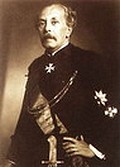
The Transylvania Trilogy by Count Miklos Banffy (1873 to 1950, Hungary) should be counted among the greatest literary works of the European tradition.  I find it hard to do an adequate blog post on it that will not seem like hyperbole.   At the start of the book the publisher includes quotations from reviews in major publications which compare the scope and power of Banffy's work to that of Tolstoy. My first reaction was, as yours should be also, skepticism but having completed part one of the trilogy, I see this as a very apt comparison.  It is as least as good as the works in the post Austro-Hungarian Empire tradition of great writers like Joseph Roth, Gregor Von Rozzi, and Stephan Zweig.  The scope of Banffy's work is greater than these writers and the cultural depth is on a par with Proust.  

The story of how The Transylvania Trilogy came to be written and then finally translated into English by the great scholar Patrick Thrusfield in collaboration with Bannfy's granddaughter, Katalin Banffy-Jolen is itself fascinating and is explained beautifully in the introduction and preface. The work fully deserves to be called "among the greatest rediscovered European masterworks of the twentieth century".  It was a best seller in Hungary in the 1930s but lost all readership, and many of its potential readers, in WW Two.   


They Were Counted is a very richly detailed book long enough to be generous with the book's readers and characters.  The trilogy is set from 1904 to 1914 in what was then Transylvania.  (The translators 
down play the use of the name The Transylvania Trilogy to avoid potential readers thinking it is about vampires.)  The principal characters are all old Nobel lineage Hungarian families.  The trilogy can be seen as a brilliant portrayal of a society in a decadent close.  It gives us a grand look at the life of Hungarian aristocrats.  Banffy centers the narrative on two cousins.  Life in elite military regiments, angling for rich brides and toadying up to wealthy old relatives are important activities.  Of course there is a star crossed romance with a married woman.  I was surprised by how sexually explicit parts of the book were. Gambling and the code of honor plays a big role in the lives of the young men.   Banffy does a very good job of letting us see into the mindset of the gambler and his role in Hungarian society.

Bannfy clearly loved Transylvania and we can see that in his many lyrical descriptions of the beauty of the country.  I gained a lot of knowledge of Hungarian politics and the economics of the society from this book.  There are great descriptions of banquets, social events and there is an Upstairs, Down Stairs flavor as Bannfy deals with the servants.  There is a simply amazing segment concerning a maid turned out of the great house when it is discovered she is pregnant.  They Were Counted is full of wonderful set pieces and small details.  I loved the segment where a society lady goes to a money lender to use her pearls to obtain a loan to pay the gambling debt of her lover.  It was so brilliant that I gasped aloud as I read it. 

The trilogy is over 1500 pages.  I have already started book two.  This is epic historical fiction on a grand scale fully the equal of a book covering similar people and much the same time period in England, Ford Madox Ford's Parade's End.    One society triumphed and the other collapsed. 


The book can also be seen as a study in the European dandy, a figure I am coming to see as of great cultural import in the period.

The Transylvania Trilogy needs to be on the too be read list of anyone into European fiction.  It will take a while to read but upon completion I will be hoping to reread it in 2016 at the latest.

Miklos Banffy


Family Castle.


,

The trilogy, which was actually out of print even in Hungarian until 1980, was published by Arcadia Books, Britain's leading publisher of works in translation.  They Were Counted won the Weidenfeld Prize for translation, presented by Umberto Eco.  


Sunday, February 16, 2014

"The Chair" by Lamed Shapiro (1934, translated by Rueben Barcovithch)


Nicola Sacco (April 22, 1891 – August 23, 1927) and Bartolomeo Vanzetti(June 11, 1888 – August 23, 1927) were Italian-born anarchists who were convicted of murdering two men during the robbery of a shoe factory in Massachusetts,  United States in 1920.  They were electrocuted.  There was and still is a lot of controversy surrounding their executions.  They became iconic figures to those on the left wing of American politics who felt they were falsely convicted due to their political beliefs.  Joan Baez recorded a song about them.  


"The Ballad of Sacco and Vanzetti" by Joan Baez

Father, yes, I am a prisoner
Fear not to relay my crime
The crime is loving the forsaken
Only silence is shame

And now I'll tell you what's against us
An art that's lived for centuries
Go through the years and you will find
What's blackened all of history

Against us is the law
With its immensity of strength and power
Against us is the law
Police know how to make a man
A guilty or an innocent

Against us is the power of police
The shameless lies that men have told
Will ever more be paid in gold
Against us is the power of the gold
Against us is racial hatred
And the simple fact that we are poor

My father dear, I am a prisoner
Don't be ashamed to tell my crime
The crime of love and brotherhood
And only silence is shame

With me I have my love, my innocence
The workers and the poor
For all of this I'm safe and strong
And hope is mine

Rebellion, revolution don't need dollars
They need this instead
Imagination, suffering, light and love
And care for every human being

You never steal, you never kill
You are a part of hope and life
The revolution goes from man to man
And heart to heart
And I sense when I look at the stars
That we are children of life, death is small


"The Flight" takes place right after the execution of Sacco and Vanzetti.  It begins in a cafeteria in Boston, a place where all sorts of strongly left oriented men of all sorts spent their time.  Many identified themselves as communists or socialists.  As Yiddish socialists and communists began to feel at home in America, they became involved with left wing zealots from many different countries.  We see this in the cast of characters in the cafeteria.  One of the more interesting characters is Jake, an African American.  His dream that he is being executed in the electric chair by the governor of Massachusetts was disturbingly real.  Shapiro made me feel I was there in the cafeteria.   

I am finding strong similarities in the work of Saadat Hasan Manto and Lamed Shapiro.  I will try to talk about this more as I read on in their short stories.


Mel u

"The Flight" by Kerala Das (1962, Nine Pages)


Flight" is the second story by Kerala Das which I have read.  Prior to this I read and posted on her "Sweet Milk", which, as does "Flight", focuses on a marriage.  (My post on "Sweet Milk" contains a link to the story.)

"Flight" is a very interesting story, told from the point of view of the wife, of a marriage between a very well known and successful sculptures and her older, now nearly paralyzed with illness husband.  The woman moves the family, no children are mentioned, to a rural a bit rundown house.  She now has to be the primary breadwinner in the family and her work becomes very much in demand.  In her heart she is glad her husband is paralyses as she hated his continual demand for sex.  She also enjoyed being the dominant partner.  There are interesting thoughts expressed about the dynamics of power within a marriage.  She hires a beautiful seventeen year old woman to pose for her work.  It seems, as her husband observers, that she is sucking the life blood out of the model as she sculpts her.  As the story closes, she walks in on her seemingly paralyzed husband and the model locked in a passionate embrace.   


Kerala Das (1934 to 2009-Punnayurklam, Malabar District, India) was born  into a sucessful and prominent family.   Her mother was a famous poet, her father was  involved in the marketing of Rolls Royces and Bentleys in all of India.    Her native language was Malayalam, spoken by about 35 million people in southern India.   She also wrote in English but her short stories, which will be her lasting legacy, were in Malayalam.    She also had a weekly newspaper column for many years in which she discussed issues relating to the lives and rights of women.   She wrote about,  at the time,  near forbidden topics such as the sexuality of women.   She was socially and politically active.   At one time she was director of the forestry commission for the Malabar district.  She ran for Parliament and lost.  In 1989 she converted from Hinduisms to Islam.   She changed her name to "Kamala  Suraiyya


Friday, February 14, 2014

"Khushiya" by Saadat Hasan Mamto (1949, 15 pages)


In his very interesting afterward to a forthcoming collection of short stories by Saadat  Hasan Manto (1912 to 1955) Matt Reeck credits Manto as the first author to focus on the dark side of Bombay (now known as Mumbai) in his stories about thugs, prostitutes, slum dwellers, Bollywood writers, and the rural immigrants who made up eighty percent of the populace of Bombay in 1948.  He also wrote extensively on the catastrophic results of the partition of the Indian subcontinent into two countries.  Novels about the reality behind the glitter of modern India mega-cities have won or been short listed for the Booker Prize.  His work reminds me of the great Yiddish language writer Lamed Shapiro who wrote stories of the pogroms against Eastern European Jews.  It is almost as if Manto broke the ice and a great out flow of pain resulted in literature of great depth.  On a side note, in my post on Manto's short story "Mozelle" I was in a quandary as to why Manto choice to make the central figure in the story a Jewish woman.  From Reeck I learned that there were extensive Jewish communities in the Bombay area since 1600.

One side effect of the migration of poverty stricken people to Bombay, the majority of immigrants were men, was a great expansion in the number of prostitutes.  Whole areas of the city were given over to prostitutes and many women did it as a side line.  For various complicated reasons, prostitutes were often from the Dalit (Untouchable) castes and their pimps and gangster overlords were from higher castes.  There is no sense of condemnation in Manto's story.  He is just portraying life.  

Khushiya is a pimp.  However, he personally at age twenty eight had had it seems no sexual contact with women.  Religious and caste taboos kept him from touching the prostitutes.  In fact before the day of the story, he last saw a naked woman when he accidentally got a glimpse of a woman in the shower at age ten. Today he decides to go check on one of his charges.  He does not think she is home so he walks into her apartment.  To his shock, she is all but naked.  He is grossly insulted when she makes no effort to cover herself, as if her were a cat, not a man.  He takes an extreme step to prove his manhood, nothing violent but actually I liked how it ended a lot and thought Khushiya had for sure resurrected his manhood.

For sure Manto's stories are very powerful, the best can stand with the greatest of short stories.

There are fifteen stories collected in Bombay Stories (I was given this book by Viking International and offer my thanks.)  For sure I will read them all.  

Please share your experience with Manto with us. (There is background information on him in my prior posts on his stories)

Mel u


Thursday, February 13, 2014

"The Woman at the Bus Stop" by Mohan Rakesh (मोहन राकेश) 1965 -first published in The Hindu Times


Mohan Rakesh (1925 to 1972) was one of the pioneers of the Nai Kahani literary movement of the Hindi literature in the 1950s.   He was born in Armistar, India.  Much of his work deals with the consequences of the partition of Indian and Pakistan.   He was educated at the University of Punjab.

"The Woman at the Bus Stop" is a very interesting story that takes us into the dynamics of a marriage.  The husband is a bus driver.  We meet his wife as she is waiting, as she does every day, to give her husband his lunch at one of his route stops.  Only today there was a family crisis that made her late and she missed him at the stop.  She fears he will be mad, he has a temper.  Her fourteen year old sister lives with them and her husband, somewhat begrudgingly, supports her. The village strong man with a bad reputation regarding women, tried to lure the girl into his house.  The woman debates with herself should she tell her husband, she fears he may try to kill the other man.  When her husband does show up, she has waited hours for him, he tells her she is a fool to wait and he can get food somewhere else if she is not a good wife to him.   It turns out most of his food spilled out on the ground. As he leaves on his route, after ringing down verbal abuse on her, he softens a bit and asks her if she wants him to bring her anything from town.  

This story was translated from Hindi by M. Jain.


Tuesday, February 11, 2014

Collecting Shakespeare - The Story of Henry and Emily Folger by Stephen H. Grant (forthcoming 2014)


Stephen H. Grant in Collecting Shakespeare -  The Story of Henry and Emily Folger has done all lovers of the reading life and especially of Shakespeare a great service.  The theoretical theme of my blog is to explore literary and historic treatments of people who lead reading centered lives.  Grant's delightful book tells the story of Henry Folger (1857 to 1930) and his wife Emily Folger (1858 to 1936) and lets us see how their joint 
love of Shakespeare, they met shortly after they graduated from Amherst and Vassar, led to a seemingly wonderful marriage and ultimately to the world's greatest collection of books, manuscripts, and treasures related to Shakespeare and his age.  (Here in Manila, my college student daughters have been assigned Folger Library Editions of his plays.)

The book is not just just about the marriage of the Folgers or their developing collection of Shakespeare.  It gives us an insight into college education of men and women in New England around 1879 or so. We can see their relationship begin, they never had any children, and how a mutual love of Shakespeare deepened their bond.  A love of reading and a love of books share common grounds and many love both but they are not at all the same thing.   

Henry Folger worked for Standard Oil for forty years and was President of Standard Oil of New York for many years.  He used the fortune he made there to build up the collection.  Grant shows us how the rare book trade worked in the days of the Folgers.  In one very telling incident John D. Rockefeller heard that Folger had paid $100,000 for a book. He confronted Folger with this and he says he hopes word will not get out about this foolish purchase and Folger prevaricated and told him no it was only $10,000!  Now that book is worth millions of dollars.

Grant tells us how the world famous Folger Library came to be and how it has developed  over the years into the world's foremost library devoted to Shakespeare. It now has over 275,000 books and 60,000 manuscripts plus numerous other treasures.  Scholars come from all over the world to read there, many on fellowships.  It is located in Washington, D.C. and administered by Amherst College.    

This book really is a very interesting fact rich work from which I learned a lot.  I think all public libraries should make this a priority purchase.  

Collecting Shakespeare - The Story of Henry and Emily Folger  by Stephen H. Grant is the very epitome of a reading life book.


ABOUT THE AUTHOR - from his web page


Son of a book publisher, I was born in Boston with New England roots from both parents. After attending Noble & Greenough School and graduating from Amherst College, I earned a doctorate in Education from the University of Massachusetts. As a teenager, I took an avid interest in things foreign. My first experiences abroad were as exchange student in Germany with the American Field Service, earning a Middlebury College master’s degree in French at the Sorbonne in Paris, and teaching as Peace Corps Volunteer in Ivory Coast, West Africa.

Familiarity living in the developing world, enjoyment in learning languages, and interest in foreign cultures and peoples led me to obtain a job as a Foreign Service officer with the U.S. Agency for International Development. Long-term assignments in the field of education included Ivory Coast and Guinea, Egypt, Indonesia, and El Salvador.

Shifting largely from a diplomatic career to a writing life, I serve as Senior Fellow at the Association for Diplomatic Studies and Training in Arlington, Virginia, where I help retired diplomats prepare their manuscripts for publication.

Forthcoming with the Johns Hopkins University Press is "COLLECTING SHAKESPEARE: The Story of Henry and Emily Folger." The couple founded the Folger Shakespeare Library on Capitol Hill in 1932. Publication of the dual biography is scheduled for March 2014, prior to the the celebration the following month of the 450th anniversary of the Bard's birth.


Mel u


.


Featured Post

Imperial Reckoning: The Untold Story of Britain’s Gulag in Kenya by Caroline Elkins - 2005 - 701 Pages

  Imperial Reckoning:     The Untold Story of Britain’s Gulag in Kenya by Caroline Elkins - 2005 - 701 Pages 2006 Pulitzer Prize Winner From...