Wednesday, August 9, 2017

"Maria" - A Short Story by Dacia Maraini (1963, in Translation 1989)


Works I have read so far for Women In Translation Month - August, 2017

1.  "Happy New Year" by Ajaat Cour - Translated from Punjabi
2. "The Floating Forest" by Natsuo Kirino- Translated from Japanese
3. " A Home Near the Sea" by Kamala Das - Translated from Malayalam
4. "Maria" by Dacia Maraini- Translated from Italian


"Maria", translated by Martha King, is a very moving deftly done story that in just a few pages shows us the prejudices faced by a lesbian couple in Italy in the early 1960 while making us feel they are anchored in particularized reality.

Maria is still sleeping when the narrator quietly slips out of bed to go to her office job at an automobile factory.  The noise at the job is so loud she has to shout to speak to other office workers.  In just a few paragraphs we come to understand her very harsh work environment, we feel her eyes lingering on a young factory woman whose legs remind her of Maria.  When she returns home the apartment is a total mess.  In these beautiful lines we can feel the power of Maraini in her rendering of Maria's thoughts on their then socially unacceptable relationship:

"Maria has a very nice voice. Sometimes, while I wash, clean, put the house in order, she sits on a stool in the bedroom next to the window so she can get the sun on her back, and she talks to me like I wasn’t there. Often I can’t even follow her reasoning, which is deep and complicated, but I lose myself in her voice, which is clear and light and musical like a bird’s. We eat in the kitchen. Maria sits across from me and greedily eats everything I put on her plate. But she doesn’t look at what she eats, because she is thinking; then her face acquires that distracted and worried look so familiar to me. “Have you ever thought what love is between two women?” “No.” “There must be a reason, don’t you think?”   “Why should I love you instead of a man? Why should I make love to you instead of a man?” “I don’t know. Because you like to.” “But why do I like to?” “I don’t know. Because you love me.” “Oh, fine, you fool. But why?” “I really don’t know.” “I think that men and women don’t want to make love together any more so they won’t make children. There are too many of us.” “Do you want some more cod?” She nods yes. She brings to her mouth a big piece of cod –the most economical kind and therefore fatter and more thready –without paying any attention to its taste."

As was very common in Italy in the time, Maria is very left wing.  She lectures the narrator about how her bosses are getting rich from her work.

Normally I'm disinclined to tell the close of the stories upon which I post but as this story cannot be read online and the ending is so powerful I will proceed.

Maria's ultra conservative father, a farmer, has her locked up in a mental hospital because of her sexuality.  We feel the great sadness and pain of the narrator as she goes about the now empty routine of her existence.  After a week she takes a bus ride to the mental hospital:

"A week later I return to visit her. They tell me she has gone away. I’m happy and get ready to go back home when a fat blond girl comes up to tell me that Maria has killed herself. Immediately after she bursts into a gloomy, stupid laugh. I don’t know whether to believe her or not. Then, when the sister takes her by the wrist and drags her away screaming, I know that it’s true."


I read this story in anthology perfect for Women in Translation Month, New Italian: A Collection of Short Fiction, edited and introduced by Martha King.


Dacia Maraini

Born
in Fiesole, Tuscany, Italy
November 13, 1936

Dacia Maraini is an Italian writer. She is the daughter of Sicilian Princess Topazia Alliata di Salaparuta, an artist and art dealer, and of Fosco Maraini, a Florentine ethnologist and mountaineer of mixed Ticinese, English and Polish background who wrote in particular on Tibet and Japan. Maraini's work focuses on women’s issues, and she has written numerous plays and novels.

Alberto Moravia was her partner from 1962 until 1983.

Mel u


Tuesday, August 8, 2017

"A Home Near the Sea" - A Short Story by Kamala Das


Works I have read so far for Women In Translation Month - August, 2017

1.  "Happy New Year" by Ajaat Cour - Translated from Punjabi
2. "The Floating Forest" by Natsuo Kirino- Translated from Japanese
3. " A Home Near the Sea" by Kamala Das - Translated from Malayalam


"A Home Near the Sea" is the third short story by Kamala Das upon which I have posted.  In 2011 I read her "Flight", in 2015 I read "Sweet Milk", which can be read online in Little Magazine.  (My post has a link.) Both of these stories center on a marriage, as does today's story.  "A Home Near the Sea" was translated by Khushwant Singh from the Malayalam language, one of the official languages of India, spoken by 35 million in Southern India.

As the story opens Arumgugham's wife, during a frequent quarrel brought on by him losing a decent job because he was drunk at work, has just hit him in the head.  This has happened before and he has learned to suppress his anger. Because of this they have been homeless for a year or so:

"They had been homeless for nearly a year. He liked the languor of this life but feared the monsoons and the days when no edible food would be found in the garbage heap outside the Ritz Hotel. Hunger always picked up quarrels with him and abused him again and again for having got drunk enough to lose a fine lucrative job. True, he had been irresponsible. Why, on paydays he used to stop at Anna’s paan shop and drink five glasses of hooch which went down like a sword of fire and made him confident. To remove the smell from his mouth, he ate two paans filled with brown chunam and tobacco bits...."

The wife is telling her story to a young beggar man.  She tells him she was once young and comely, with a rich suitor but because of her husband she had lost her youth and beauty.  The man suggests she should look for a job as an Ayah, a helper for the children of a rich family.  He tells her she would get four meals a day and the work would be light.  Of course she longs for this but feels it is beyond her reach.
She begins to almost flirt with the younger man. Such jobs were most often done by women from a Dalit Caste (Untouchable).  Their membership such a caste is confirmed below:

"‘Whose fault is it that I do not own a house?’ continued the wife shrilly. ‘You sold my ornaments. You lost your job. And we were pushed out of our hut. Who was at fault? You or I? Was I not always a dutiful wife to you? I have not slept around with other men like other women of the slum who waited for their husbands to leave for work to begin waving out to passengers on the slow train. I did not want to earn that kind of money. This good-for-nothing man of mine brought me nothing. Not even on Diwali day did he get me a new sari! I suffered in silence. But now I have turned bitter. I talk back to him. I even hit him when he irritates me.’"

Inexpensive prostitutes in India were normally Dalits.  The woman suggests the man stay with them, they know where to find food from the garbage of nice hotels.

The young man begins to talk to her of music, he can sing beautifully.  She begins to cry.  As the story ends, the woman gives their only blanket to the departing man. Her husband is very mad.

One of the stated goals of this Women in Translation Month for 2017 is to focus on literature about marginalized women, short stories about Dalit women are the epitome of such works.


Kerala Das (1934 to 2009-Punnayurklam, Malabar District, India) was born  into a sucessful and prominent family.   Her mother was a famous poet, her father was  involved in the marketing of Rolls Royces and Bentleys in all of India. She also wrote in English but her short stories, which will be her lasting legacy, were in Malayalam.    She also had a weekly newspaper column for many years in which she discussed issues relating to the lives and rights of women.   She wrote about,  at the time,  near forbidden topics such as the sexuality of women.   She was socially and politically active.   At one time she was director of the forestry commission for the Malabar district.  She ran for Parliament and lost.  In 1989 she converted from Hinduisms to Islam.   She changed her name to "Kamala  Suraiyya.     Her work has been translated into French, English, Spanish, Russian, Japanese and several other South Asian Languages.

Mel u


Monday, August 7, 2017

"The Floating Forest" - A Short Story by Natsuo Kirino - the Author of Out, Grotesque and Real World. (Translated by Jonathan Lawless, 2011)


Japanese Literature Challenge - Year 11 - Hosted by Dolce Bellezza


Natsuo Kirino's novels are about the darker side of life in modern Tokyo.  Several years have passed since I read her Award Winning works, Out, Grotesque and Real World.  These works are classics, about those left out by prosperity of post war Japan, about violence, criminals, prostitution, corruption.  I highly recommend them all.  They focus largely on the response of women to these issues.

"The Floating Forest" has nothing at all in common with the world of her novels.  (It was first published in a very good anthology Digital Geishas and Talking Frogs: The Best of 21th Century Short Stories from Japan, edited by Helen  Mitsios).  The characters are affluent and cultured.

"The Floating Forest" is the story of the teenage daughter of a famous Japanese writer who years ago abandoned the girl and her mother to marry another woman.  She is being pressured by literary agents to write a memoir about her childhood.  The literary world is fascinated by her connection to the great writer, whom she has came to hate.  Nevertheless she cannot avoid seeing her resemblance to her father when she looks in the mirror, she knows what she sees as his "evil blood" flows through her. 

One of the common themes of post WW II Japanese literature is that of generational conflict.  We can see this strongly in "The Floating Forest".


From the author's webpage

NATSUO KIRINO, born in 1951in Kanazawa (Ishikawa Prefecture) was an active and spirited child brought up between her two brothers, one being six years older and the other five years younger than her. Kirino's father, being an architect, took the family to many cities, and Kirino spent her youth in Sendai, Sapporo, and finally settled in Tokyo when she was fourteen, which is where she has been residing since. Kirino showed glimpses of her talent as a writer in her early stages-- she was a child with great deal of curiosity, and also a child who could completely immerse herself in her own unique world of imagination.

After completing her law degree, Kirino worked in various fields before becoming a fictional writer; including scheduling and organizing films to be shown in a movie theater, and working as an editor and writer for a magazine publication. She got married to her present husband when she turned twenty-four, and began writing professionally, after giving birth to her daughter, at age thirty. However, it was not until Kirino was forty-one that she made her major debut. Since then, she has written thirteen full-length novels and three volumes of collective short stories, which are highly acclaimed for her intriguingly intelligent plot development and character portrayal, and her unique perspective of Japanese society after the collapse of the economic bubble.

Today, Kirino continues to enthusiastically write in a range of interesting genres. Her smash hit novel OUT (Kodansha, 1997) became the first work to be translated into English and other languages. OUT was also nominated for the 2004 MWA Edgar Allan Poe Award in the Best Novel Category, which made Kirino the first Japanese writer to be nominated for this major literary award. Her other works are now under way to be translated and published around the world. 

Mel u

Sunday, August 6, 2017

J. D. Salinger: A Life by Kenneth Slawenski (2015)


Born - January 1, 1919 - New York City

Catcher in the Rye - published 1951, Over 65,000,000 copies sold

Died -  January 27, 2010, Cornish, New Hampshire 

I read Catcher in the Rye by J. D. Salinger probably around fifty years ago.  A few months ago my youngest daughter, 19, said one of her friends advised her she must read the book so I bought her a copy.  All I knew about Salinger before I read the best selling biography by Kenneth Slawenski J. D. Salinger: A Life was that he became a recluse, shielding himself from the public in a country house in rural New Hampshire.  

Slawenski does a wonderful job bringing the legend to life.  His biography was a delight to read, with an elegant prose style.  I throughly enjoyed this book.

We see Salinger was born  into an affluent New York City family.  His mother totally doted on him and he got pretty much anything he wanted.  When he told his parents he wanted to be a professional writer, his father was skeptical but his mother supported the idea.  Salinger never finished college.  He had some limited early success selling a couple of stories.  After the United States entered World War II, Salinger joined the army.  He scored high on various tests and tried to become an officer but did not succeed.  After about a year on various American bases in training Salinger was part of the invasion force that went ashore in France on D Day. Salinger spent three years in the army, conducting himself with great fortitude.  He experienced massive death rates among his comrades.  He was designated as  an intelligence official.  His job was to question captured German troops and citizens in towns the Americans occupied.  He was in Paris after the liberation, where he made a life time friend, Ernest Hemingway who helped him deal with the horrors of war.  Perhaps the most traumatic of his experiences was at the liberation of concentration camps.  Slawenski lets us see how all this death, cruelty and violence impacted the raised in a pampered way Salinger.  He often received gift baskets from his mother and he wrote a few short stories about his war experiences.

Salinger was so happy to return home, he was kept for about six months in Germany as his intelligence skills were needed.  Salinger was what would have in 1946 been called "a ladies man".  He had numerous girl friends and like to hang out at elite places in NYC.  He began writing again and Slawenski lets us follow closely the career
Path of Salinger.  He knew he had succeeded when after numerous rejections the super prestigious New Yorker offered him a $30,000 yearly contract to have first refusal rights on all his work.  Salinger struggled with editors and mentors but The New Yorker became his literary home and the editorial staff a second family.

Slawenski shows us the very long genesis of The Catcher in the Rye.  We see Salinger becoming more demanding about the way his work was published and more difficult personally.  He became interested in Zen Buddhism and later was very influenced by the teachings of Sri Ramakrishna, a Hindu religious teacher.  

Slawenski devotes a great deal of space to explicating Salinger's short stories, letting us she the impact of Salinger's experiences and his spiritual beliefs.  Along the way we learn a lot about the business side of Salinger's career.  We are there for his three marriages and a late life affair.  As he became more famous reporters sought him out.  I was surprised to learn that the man who murdered John Lennon was reading calmly a copy of Catcher in the Rye when the police arrested him.  He said he was inspired by the lead character Holden Caulfield to kill Lennon.  Also the attempted assassin of Ronald Reagan had a copy of the book in his back pack.  The book in spite of being a great commercial and literary success began to be banned in schools.  

There is much more in this book.  We see Salinger settle in on his 90 acre property in New Hampshire, follow decline of his second marriage, his first was a one year fiasco with a French woman he met while in Europe who some say was a gestapo agent, we admire what a devoted father he became.  We see him become more and more private. His third  marriage was the best.  He had a strange late life affair that Slawenski details.  

This is a first rate literary biography. Slawenski totally knows the work of Salinger.  I for sure want to reread Catcher in the Rye and read the rest of his work.  

Kenneth Slawenski is the author of J. D. Salinger: A Life, on which he worked for eight years, and the creator of the New York Times recommended Web site DeadCaulfields.com.


.

Saturday, August 5, 2017

Women in Translation Month - August 2017 - My post on a short story by a highly regarded Punjabe woman writer, Ajeet Cour


Frequently Asked Questions For Women in Translation Month


Women in Translation Month (WITMonth) is an event held every August devoted to spotlighting and promoting English language translations of literary works by women.  Now in year four, this will be my first year of participation.  (All you need to know to join in can be found on The Frequently Asked Questions link above.)


I do not have a count of how many of my 3100 posts on The Reading Life are devoted to translations of works by women writers.  In part I think I am drawn to reading works by women authors to help me understand my three daughters, 24, 22, and 19, growing up at times to fast in a world very different from my time.  I discovered the work of two of the writers depicted in my sidebar, Clarice Lispector and Irene Nemirovsky, through Prize winning translations.  Last month I posted upon two wonderful short stories by Colette, translated from French, a collection of Holocaust poems and letters by Ilse Weber from Czechoslovakia, a newly translated work by Magda Szabo, from Hungary and Japan's Hiromi Kawakami, a multi award winning author.  

I don't have any real fixed plans yet for my participation in WITMonth.  I looked over some of the collections of Indian Subcontinent short stories on my E-Reader and decided to start with a post on a short story by Ajeet Cour, among the highest regarded  of Punjabi writers.  


"Happy New Year", set in Bombay, was translated from Punjabi by Khushwant Singh.  It appears in a very good anthology Our Favorite Indian Short Stories edited by Singh and Neelem Kumar.  There are two central characters, Kupoor and his wife.  Kupoor, a long time government clerk, has just received promotion to the coveted position of personal assistant to the Honorable Minister.  He is no longer just Kupoor, he is Sahib Kupoor.  He received his first "gift" from a businessman seeking a favor from the minister, an expensive bottle of scotch.  His coworkers suggests he should have a New Years Party at his house, to celebrate the promotion.  When he comes home his wife is infuriated by the bottle of scotch, even more she is angered because she will have to prepare a meal for the guests and their wives.  She also castigated him by telling him New Years Day is an English holiday, suggesting he is giving up his heritage.  

As the dinner proceeds his coworkers tell him a story of another sahib who used his contacts to become wealthy through "gifts".  We learn nothing much happens without a proper gift.  Kupoor tries to explain this to his wife but she is mad over the expense of the meal.  This is a very well done story about a marriage.  I enjoyed it a lot.

I hope to participate more in Women in Translation Month 

Mel u


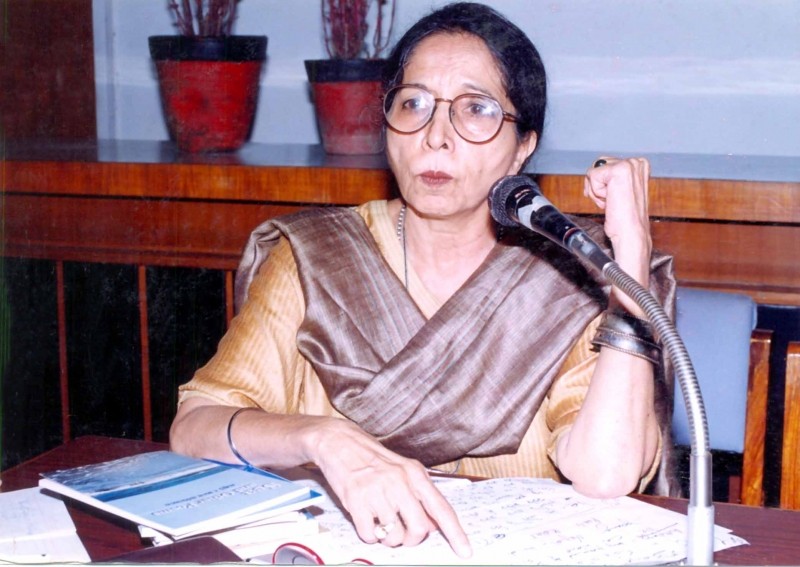
AJEET COUR Born in 1934, Ajeet Cour is one of the better known Punjabi writers. Some of her important collections of short stories are Gulbano, Mahik Di Maut, But Shikan, Saviyan and Churiyan. And among her novelletes are Postmortem, Dhup Wala Sheher, Khana Badosh and Kachche Ranga de Sheher. She is the recipient of Punjabi Academy Award (1984) and Sahitya Akademi Award (1986) for Khana Badosh.


Thursday, August 3, 2017

Paris at War 1939 to 1944 by David Drake (2015)


Paris at War 1939 to 1944 by David Drake is a perfect accompaniment to literary works about Paris during the Nazi occupation such as Suite Francais by Irene Nemirovsky and The Occupation Trilogy by Patrick Modiano.  Even though I knew how things would turn out, Drake fashioned an exciting story.

Drake focuses on telling the story of the lives of ordinary Parisians from France's entry into World War Two in September to 1939 up to liberation of Paris in August 1944, prompting a joyous celebration, one I was very ready for when it came.

Drake does a very good job detailing the panic that overtook Paris as the Germans hung banners on the Eiffel Tower.  Huge numbers fled the city.  Those with country relatives or the rich with second homes were lucky.

The Germans were initially ordered not to molest obedient to the rule Parisians.  Drake explains the political dynamics between Vichy France and the occupied region.  We learn of De Gaulle's efforts by radio broadcasts from London to inspire hope and resistance.  The French did not for a long time know who would win the war, some wanted to be on the winning side.  Drake spends a lot of time talking about collaboration with the Nazis and the slow growth of resistance.

Drake lets us understand the infighting between the force of the Gaullists and the allies lead by General Eisenhower.  The American lead allies at first wanted to by pass Paris and march into Germany but eventually the free French brigade and an American division entered the city.  Hitler had ordered the city be totally destroyed but the German general in charge saw the pointlessness of this and surrendered.

We learn of the extreme hardships brought on by food and other shortages, how the Parisians coped.

Much of the story is based on diaries and reminiscences to which Drake had access.  He details very clearly the fate of Jews in Paris.

Paris at War 1939 to 1944 is a very well written fully accessible by non academics history.

I received a review copy of this book.  At $19.95 I would not be a buyer of the digital edition.

Mel u


David Drake has taught at universities in London and Paris and has published widely on French intellectual and cultural history.

Tuesday, August 1, 2017

The Reading Life Review - Paris in July Edition - July, 2017


In July I posted on 5 living and 14 deceased authors, 14 men and five women.
Seven are from France, four Japan, two are Americans. One is from Chile, one Kenya, another Is Hungarian, one was born in Czechoslovakia, another the Ukraine.  I featured one Noble Prize Winner.  Three of the French authors belong on any list of greatest writers of all time.  Two were murdered in Nazi concentration camps and sadly two of my featured writers were in favor of the removal by any means necessary of all Jews from France.  One of the Americans is climbing toward huge commercial success with a forthcoming H B O series based on one of her works of speculative fiction.  James Baldwin becomes more relevant as America enters an era of hatred and ignorance.  Of the living writers, four have achieved great literary success, I fully expect the fifth to join this group.  

Top Row from the left
1.  Guy de Maupassant- a father of the short story
2. Hiromi Kawakami (read but no post this month)
3. Farah Ahamed.  - Prize Winning Short Story Writer
4. Francois Coppée- I like his perhaps overly sentimental short stories
5. Roberto Bolano -  a huge influence on contemporary literature

Second Row from Top

6. Louis-Ferdinand Celine- a chronicler of the dark side
7. Ilse Weber- Holocaust Poet, murdered at Auschwitz
8. Magda Szabo, author of The Door, Hungarian
9. Jean-Philippe Blondel - contemporary French writer
10. Patrick Modiano - Noble Prize Winner

Third Row

11. Irene Nemirovsky- Love her work, image on my sidebar, murdered at Auschwitz 
12. Colette.  Just the name invokes a world
13. Ryu Murakami- Huge best seller in Japan. Close to X-rated works 
14. Nnedi Okorafor- American author of wonderful science fiction and fantasy works 
15. Kobo Abe. Author of The Woman in the Dunes

Bottom Row

16.  Honore de Balzac
17. James Baldwin.  
18. Emile Zola
19. Junichiro Tanizaki-one of my favorite writers 

Blog Stats for July 2017

The most viewed posts were all on short stories by authors from the Philippines 

The top home countries for blog visitors

1. The Philippines 
2. U S A
3. India
4. France
5. U. K.

Since inception on July 9, 2009 there has been 4,714,223 page views 

There are 3103 posts online as of today

My reading in July was dominated by posts relating to Paris, as my participation in Paris in July, hosted by Thyme for Tea.  The Paris related works I read, including short stories, novels and nonfiction were

1.  Colette- Two Early Short Stories
2. The Black Notebook by Patrick Modiano 
3. "A Duel" by Guy de Maupassant ( A Franco-Prussian War Story)
4. Life, Death, and Betrayal at The Hotel Ritz in Paris by Tilar Mazzeo (non fiction)
5. How the French Invented Love by Marilyn Yolem (literary history)
6. "The Lost Child" by Francois Coppée 
7. "The Juggler of Norte Dame" by Anatole France- no post
8. A Very French Christmas- A Collection of the Greatest Holiday Stories of France
9. "The Illustrious Gaudissart" by Honore de Balzac
10. After the Circus by Patrick Modiano
11. "Gaudissart II" by Honore de Balzac
12. 6:41 to Paris by Jean-Phillipe Blondel
13. "Noel" by Irene Nemirovsky 
14. Giovanni's Room by James Baldwin
15. The Madeleine Project by Clara Beaudoux
16. Nais Micoulin by Emile Zola
17. The Occupation Trilogy by Patrick Modiano 
18. Journey to the End of the Night by Louis-Ferdinand Celine

Review Policy.

I am very open to looking at all sorts of new books, including self published 

I offer my great thanks to those who take the time to leave comments.  You help keep me going.  

Spam question.  Much of my spam comments are all on one particular work, Pigeon 
Pie by Nancy Mitford.  Most of the spam comments are generic praise that could apply to any post by anyone.  They are not written as a native speaker of English might and they contain no links or ads.  What can the purpose of these comments be?  None ever make it online but they have persisted for months 

To my fellow book bloggers, the world's greatest readers, keep blogging.  

Mel u


Featured Post

Imperial Reckoning: The Untold Story of Britain’s Gulag in Kenya by Caroline Elkins - 2005 - 701 Pages

  Imperial Reckoning:     The Untold Story of Britain’s Gulag in Kenya by Caroline Elkins - 2005 - 701 Pages 2006 Pulitzer Prize Winner From...