Tuesday, January 18, 2011

"Mrs Peckletide's Tiger" by Saki-UK/USA 1910 Short Story Shoot Out-Round One

Saki-UK-1870 to 1916
Round One- Trans-Atlantic Battle of the Twist Ending Short Stories from the 1910s
O Henry-USA-1862-1910

The U.K. is represented by the elegant  Edwardian, Saki

The USA is championed by a writer of the common man, O Henry


"Mrs Peckletide's Tiger" by Saki (1913, 6 pages)


Almost by accident this is the seventh story by Saki I have read and posted on in the last few months.  
Hector Munro (1870 to 1916)  writing under the pen name of Saki is considered a master of the very short story (under 5 pages)and is often mentioned as an English O Henry.   Saki was born in Burma (I prefer the old name) in 1870 where his father was serving as inspector general for the Burmese police.   Burma was part of the British Empire at that time.   At age two Saki is sent back to England to be raised by his grandmother when his mother died as a result of an incident with a cow.   His father later retired to England and he and Saki appeared to have had an amiable relationship as perhaps indicated by Saki also joining the office of the Burmese police inspector at age 23.   Saki caught malaria at age 25 and returned to England where he would become journalist.   He worked for a couple of years as foreign correspondent in Russia where he witnessed the infamous bloody Sunday episode.   He also gave that up and for about the last ten years of his life he was not formally employed on a regular basis  and was supported by family wealth.   It is during this period that he wrote most of his work. 


I am reading this story based on a suggestion of Risa of Bread Crum Reads that we read and both post in the same time frame on this story of Saki and "Ransom of Red Chief", one of the most read short stories by the very famous American writer, O Henry.     Both writers wrote brief stories for popular magazines and both are famous for twist endings.    I hope to explore a bit more their similarities and differences in my next post.


As the story opens we meet Mrs Peckletide  on a trip in India.  She is in a dither because her arch-rival and close friend Loona Bemberton was written up in newspapers all around the world  because she rode eleven miles in a plane with an Algerian aviator.   Mrs Peckletide has decided that if she shoots a tiger and lots of pictures of the event get in the Texas newspapersshe will be over Mrs Bemberton in status.  It  is never made real clear why she decided on this.   .    How the tiger hunt is arranged and what happens next is really a lot of fun so I will not reveal more of the plot.   Like the other Saki stories I have read, it is entertaining and the ending will make you smile and maybe even think a bit.    


The story can be read online here

Mel u


Monday, January 17, 2011

The Voyage Out by Virginia Woolf-Her First Novel

The Voyage Out by Virginia Woolf (1915, 384 pages)

The Reading Life Virginia Woolf Project


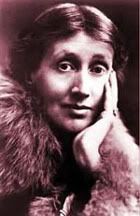
I have  had Virginia Woolf (1882 to 1941-UK))  on my must read soon list for a very long time but it seems I kept getting sidetracked from reading her.    When I won a copy of The Waves from a very gracious blogger  (links to all my posts on Virginia Woolf can be found at The Reading Life Virginia Woolf Project link above) I decided this was my push to at last read one of her masterworks.   I had just completed Ford Madox Ford's Parade's End and this helped put me in a mind set for reading The Waves.     I really enjoyed  The Waves a lot.     I took the approach  of just letting the prose go over me in waves (lots of water images in the work) and did not stress over achieving what some would call an intellectualized understanding of the book.    I knew then I wanted to read a lot more Woolf.    I decided to first read Hermione Lee's wonderful biography Virginia Woolf  to expand my background knowledge.     By then I knew Woolf has four consensus masterworks,   The Waves, Orlando, Mrs Dalloway, and To the Lighthouse.    I decided to read the other three of these works next.    My thinking was that by doing this if I end up only reading four of her works I will have experienced her best novels and if I do go on to read all of them I could go back and reread the major ones.  I have now read the Woolf "big four".

I also decided to read some short fiction along the way.     In addition to this I read Flush,her biography of Elizabeth Barrett Browning's dog, a really fun book and easy to follow.    I also read Jacob's Room.    I read her very famous A Room of One's Own, a few short stories and some essays.    

I am still pondering how to proceed on with Woolf.    I think for now the best course of action for me is to read her books in the order she wrote them.   That way I can see her develop as a writer.    

Woolf's very first novel, The Voyage Out, is not an experimental ground breaking work.     As the novel opens young Rachael Vinrace is embarking on a voyage to South America on a cruise ship owned by her father.   There is a nice mix of passengers on the ship so we are treated to some satire of the pretenses of the passengers.    On a cruise trip people tend to over  state their station in life and take the attitude that they will probably never see their fellow passengers again so there is little risk in being "found out" in an exaggeration.

The voyage is Rachael's first real taste of freedom.    Like Woolf herself she was raised in an intellectual family with a dominating father.    One can feel Rachael starting to come into her own as person as the cruise advances.  

It is not my plan to do much more than brief posts on Woolf's early works.   I will say that the South America that Rachael arrives at is unlike any part of South America that actually ever existed.    The logical ports of debarkation at the times were in Brazil or Columbia.     I would love to read Woolf's reaction  to Brazil in 1915 but this is not to be here.  

The best parts of The Voyage Out were,  to me, the conversations.    I not  know it for a fact but I think a lot, maybe most, of the readers of The Voyage Out are in a "doing Woolf" mode.    The Voyage Out is, leaving aside its historical interest, an interesting beautifully written book of its period.

   If someone asked me based on my experience so far what their first Woolf should be, I think I would suggest Flush.  From there  I would say dive into which ever of the "big four" that seems most interesting to you.

My next Woolf novel will be Night and Day, a story of the romantic and personal attachments of two women. (1919)

For those who have read The Voyage Out, do you think it would still be read or even in print if Woolf never wrote her four masterworks or never became a cultural icon?

Mel u


Saturday, January 15, 2011

The Belly of Paris by Emile Zola

The Belly of Paris by Emile Zola (1873, 275 pages, translated by Brian Nelson)


In April I read and posted on Nana by Emile Zola (1840-1902, Paris) as part of the Classics Circuit Zola month.     Nana is a near photo-realistic look at prostitution in Paris during the middle of  the 19th century.    In Nana men are treated as if their only motive for economic activity was to have enough money to hire prostitutes.   Women are seen as nearly all prostitutes of one form or another.   It does not depict a pretty world and it in no way glamorises the lives of prostitutes. their clients or those who are parasites on them.   Zola's descriptions of the lead character, Nana, preforming in the brothel/theater where she works, had a strong visual and visceral impact.

The Belly of Paris is set in a giant recently developed food market in Paris known as , " Les Halles".    Zola goes into great detail describing the foods in the market.   Some of the descriptions of the food makes you appreciate the beauty of the bounty of fruits and vegetables and some of the descriptions of the slaughter houses are very horrific.    It is said that you will enjoy a great French sausage much more if you know nothing about how it is made and Zola for sure drives that point home.    

The food market is so huge it is like a small town.  I kept in mind  as I was reading that in 1873 people shopped everyday.    People, or their servants, had a butcher, a baker, a seller of poultry, a fish monger and a vegetable stall that they saw  every day.    The merchants and their customers knew each other.    There were always a tremendous amount of gossip and scandalous going ons among workers and patrons of the market.

I thought the best thing about The Belly of Paris were Zola's marvelous descriptions of some of the people of the market.   When Zola wrote about a well off man who took a stall in the market to sell vegetables but really just wanted to hear all the gossip it was completely real to me.   I admit I laughed out loud when I first heard his story.   The man goes on to become a successful merchant.   There is also about ten pages devoted to a relationship between a boy and girl, near orphan  children living in the food market that is simply wonderful.  When Zola is at his best he is nearly as good as it gets.    There also numerous social themes and satires in the book.   Being fat is equated with being rich, thin poor.  (That has really changed in the 21th century!)

 The people in The Belly of Paris are not quite as nasty as those in Nana.     ( Both novels are part of Zola's series of 20 novels Les-Rougon-Macquart.   The Belly of Paris is work number three in the series   These works depict the underside of life in Paris in the middle of the 19th century.    Reading these novels would be a great reading project, assuming all have been translated.)    I am not sure which of these two I like best.    If one wanted you could stop by the part of Paris depicted in Nana for some entertainment and then take a carriage over to the markets of  The Belly of Paris   to gossip a bit with the butchers, bakers, and the fish mongers while picking out the ingredients for a great meal.   As I was reading The Belly of Paris  I noticed there were dozens and dozens of references to large breasts.     One has to see this as tying up sexuality and food together.  

I really liked The Belly of Paris.    I recommend it without reservations of any kind.  

I want to read more Zola.   I do not know if I can fit in his 20 volume cycle in my reading plans in the years to come or not so if anyone has any suggestions as to a third Zola, please leave a comment.   Also let us know if you think Zola belongs in the canon of world literature.

Mel u

Friday, January 14, 2011

Welcome Book Blog Hoppers-Jan 14 to Jan 17


Welcome to all Book Blog Hoppers


Every Friday Jennifer of Crazy For Books hosts The Book Blogger Hop-The Book Blogger Hop is a great chance to meet new to you bloggers, find some new blogs to follow and gain some great readers for your own blog.   Every week about 275 or so bloggers from all over the world participate.    I have found some excellent new blogs this way and gained some wonderful readers.    I follow about 500 book blogs  and am always happy to find more.   If you follow me I will follow you.


   My blog for the last few months has been one third Asian literature, one third classics and one third short stories but I do read contemporary fiction also and even some YA once in a while.    I have various reading projects I am working on also.    My latest one is short stories by Australian writers of the 19th century and I also recently read  five stories by African writers in competition for the Caine Prize.    I am very into Katherine Mansfield and Virginia Woolf.  

If you visit me please leave  a comment so I can return the visit-

Every week Jennifer asks participants in the Book Blogger hop to answer a question-here is this week's question-

"Why do you read the genre that you do?  What draws you to it?"

I read a mix of classics, short stories and Asian fiction.   I read classics for what may seem like an elitist reason.  If I am going to take the trouble and time to read I want to read the best books out there.   I know there are issues out there in the world on this but I like to read canon status literature because I seek in the end to experience the best of world literature.   I read short stories a lot now as it is a genre I neglected for many years.    I read Asian fictions, mainly Japanese and Indian, as it is a new to world.   I also do read modern fiction sometimes.    I am open to new to me authors and am always happy to find a wonderful author I have not yet read.   


Mel u

"The Sphinx Without a Secret" by Oscar Wilde

"The Sphinx Without a Secret" by Oscar Wilde (1891, 6 pages)

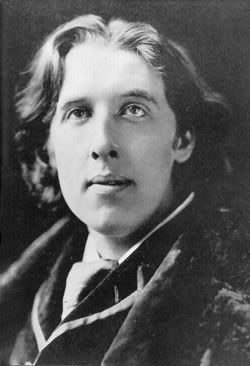
 Oscar Wilde (1854-1900, Dublin, Ireland) is best known for The Portrait of Dorian Gray.   He also wrote a number of delightful short stories. I have already posted on three of Wilde's short works  so I will keep this post quite brief

 "The Sphinx Without a Secret" was first published in a collection of Wilde's stories that he edited in 1891, Lord Saville's Crimes and Other Stories.    Most of Wilde's work seems to focus on lower level members of British aristocracy.   His prose style is pleasant  and a bit unique.


As the story opens Lord Murchison's friend asks him what is troubling him.   It turns out he he disturbed by something he found out about a woman he loved and intended to marry but who is now, alas, dead.    The woman was always very secretive about how she spent her days  (No one seems to work in the world of Wilde, which is OK!)    He follows her one day and sees her go into a boarding house and stay there several hours.    Of course he wants to know what she is doing in there but before he can really ask her she dies.  

I think this story is kind of a satire of short stories that rely on a big shock surprise at the end.   As I discovered along with Lord Murchinson why she went to the boarding house I was at first befuddled then delighted by the sheer cleverness of Wilde.  

"The Sphinx Without a Secret" can be read online .

If you like the prose style of Wilde then I think you will like this story.


Mel u


Thursday, January 13, 2011

Two Short Stories by Gabriel Garcia Marquez

"One of These Days" (1984, 4 pages) and "Eyes of a Blue Dog" (6 pages, 1986) both by Gabriel Garcia Marquez

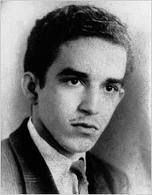
I recently read and posted on two short stories by Gabriel Garcia Marquez (author of One Hundred Years of Solitude, Love in the Time of Cholera and numerous other novels).   As I mentioned in my prior posts, I have read most of the translated novels of Marquez but I still have not yet read his most famous work, One Hundred Years of Solitude.  His collection of short stories has about 40 works.    "Eyes of a Blue Dog" was first published in English in The New Yorker magazine in 1984.    "One of These Days" was first published in English in 1972.    They were translated by Gregory Rabbassa.    I have done longish posts on  two prior stories by Marquez  so these posts will just be brief notes on the stories.

"One of These Days" is set in a nameless and timeless little town somewhere in a place where everyone is corrupt.   It seems a an ugly place.    There are two characters in the story, the town mayor and the town dentist.     This is a purely realistic story.    Some of it is almost painful.

"One of These Days" can be read online 

"The Eyes of the Blue Dog" is a strange story with a haunting quality.   It is about dreams.    It seems to be about a man dreaming of a woman he sleeps with all the time.    His relationship in dreams is very different from his one in real life.     The woman has a strange obsession with a blue dog and his eyes.   There is more to the story than this but I am keeping these posts short.

"Eyes of a Blue Dog" can be read online

I will start Hundred Years of Solitude in a few days.    

Mel u

"A Very Old Man With Enormous Wings: A Tale for Children" by Gabriel Garcia Marquez

"A Very Old Man With Enormous Wings:    A Tale For Children" by Gabriel Garcia Marquez (1968, 7 pages)


A few years ago I read most of the translated novels of the Gabriel Garcia Marquez (1927, Columbia).   I was just about ready to read his most famous work, One Hundred Years of Solitude and some how I got side tracked and never got around to reading it.        ( In my post on his great short story "Eva is Inside Her Cat" I posted a bit about the immense important and influence of Marquez.)    It was translated by Gregory Rabassa.


I am planning to read and post on four of Marquez's short story as a kind of getting ready for One Hundred Years of Solitude exercise.    Recently on one of  the blogs I follow Your Move Dickens by Darlyn I read a very interesting post on a short story by Marquez, "A Very Old Man With Enormous Wings: A Tale for Children".     Darlyn said the story was a great introduction to Marquez's use of "magic realism" so I decided to read it.  (There is no translation credit given)


The story is set among simple people on a seacoast some where in Latin America.   The opening paragraph does a very good job of getting me interested in the story and also shows us how Marquez makes use of magic realism:


 The light was so weak at noon that when Pelayo was coming back to the house after throwing away the crabs, it was hard for him to see what it was that was moving and groaning in the rear of the courtyard. He had to go very close to see that it was an old man, a very old man, lying face down in the mud, who, in spite of his tremendous efforts, couldn't get up, impeded by his enormous wings.


The villagers put the man, who they think must be a very old angel, in a cage made of chicken wire.    They are at first nervous around him and even a bit afraid of him.     Soon the couple who found and imprisoned him begin to notice lots of people were coming by to see their captive.   They began to charge people to see him and made enough to build a two story house.   The local priest comes stops in to inspect the possible angel and ends up sending a letter to advise Rome of his findings and to ask for counsel in understanding what the being in fact was.    All of this is relayed in a completely straightforward way.    I was very much reminded of the great influence of  "The Metamorphosis" by Franz Kafka over post colonial South American literature  as I read this story.    As I was reading Marquez's story I was also reminded of "Prize Stock"  by Kenzaburo Oe, another story about a mysterious man who fell from the sky.     


I do not wish to tell anymore of the plot of this story as it is really well done and a lot of fun to discover on your own.    


"A Very Old Man With Enormous Wings:  A Tale for Children" can be read online .   I did not personally post this story online.     I plan to post on two more stories by Gabriel Garcia Marquez soon and then I will begin One Hundred Years of Solitude.     


Mel u


Featured Post

Imperial Reckoning: The Untold Story of Britain’s Gulag in Kenya by Caroline Elkins - 2005 - 701 Pages

  Imperial Reckoning:     The Untold Story of Britain’s Gulag in Kenya by Caroline Elkins - 2005 - 701 Pages 2006 Pulitzer Prize Winner From...