Saturday, February 1, 2020

The Reading Life Review - January, 2020

January Authors 


Row 1

1. Chava Rosenfarb- Poland to Canada, highly prolific multi-genre Yiddish writer
2. Cynthia Ozick - U S A
3. Tadeusz Borowski - Poland - classic stories of Auschwitz 
4. Patrick K. O’Donnell - U.S.A distinquished historian of The American Revolution - 
5. Ida Fink - Poland to Israel - Holocaust Era Short Stories
6. Sholom Asch - Poland to U.S.A - muti-genre Yiddish writer
7. Nada Kavoosifor, M.D. - Iran - Short stories and novels set in Tehran

Row 2

1. Samuel Johnson - UK
2. Rabin Alameddine - Lebanon - author of A Difficult Woman
3. Marian Karpilove - Russia to U.S.A (NYC) Yiddish writer, author of Diary of a Lonely Girl, hundreds of short stories
4. Elaine Chiew - Malaysia to Singapore- author The Heartsick Diaspora- I hope to follow her work for a long time
5. San Lin Tun - Myanmar- novels and short stories set in Yangon. I anticipate more posts on his work
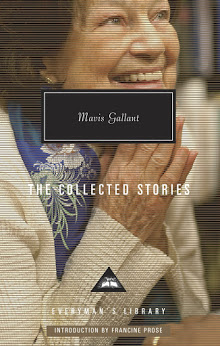
6. Mavis  Gallant- Canada to France 


Row 3

1. Kathleen Keyembe - USA-award winning author of occult and fantasy stories, LGTBQ author, We hope to feature more of her work soon
2. Isiah Spiegel- Poland to Israel- Yiddish Holocaust stories
3. Ruth Reich - USA - highly regarded food writer
4. Marjorie Rawlings- USA - author The Yearling- Pulitzer Prize Winner
5. Natsuko Kuroda - Japan. Multi-Award winning writer

Home Countries of Authors

1. Poland - 6
2. U.S.A - 5
3. UK - 1
4. Myanmar - 1
5. Lebanon - 1
6. Canada - 1
7. Japan - 1
8. Mayalsia - 1
9. Iran - 1

In January we featured eleven works by women, seven by men.  Writers are equally split between the living and the deceased.
Six writers were featured for the first time in January.

We observed Holocaust Remberance Day on January 27 and 28 with postings on six Short Stories

For 11th year we are participating in The Japanese Literature Challenge.

We are following along as we can with Buried in Print’s read through of the Short Stories of Mavis Gallant.

We continued on with our Revolutionary Readings Project and The Yiddish Literature Project began six years ago.

Blog Stats for January 

Since inception there has been 5,932,173 page views

The top home countries for visitors were 

1. USA
2. The Philippines 
3. India
4. Russia
5. UK
6. Germany
7. Indonesia 
8. France

The most viewed post for the month was:

“The Century Carver" a short story by Oka Rusmini-An Indonesian Short Story.  This was posted August 10,2010

The next four most viewed posts were on short stories by authors from the Philippines.

Books I read in January that i have so far not posted upon.

1. The Fifth Season by N. K.Jemisin. Part one of The Hugo Award winning Broken Earth trilogy.  I hope to post on this when i complete the trilogy.
2. The 42nd Parallel by John Dos Passos. Part One of his U.S.A trilogy, if i complete trilogy i hope to post on it.
3. Baba Dunja’s Last Love by Alina Bronsky
4. The Audacity of Inez Burns by Stephen Bloom
5. Brothers at arms : American independence and the men of France and Spain Who  Saved It by Larrie D. Ferreiro. A great work . I Will post on this soon

Blog Changes, with Help  of Arfington B. Tachenzard , Design  Consultant, joining us for the first Quarter of 2020, we made a few  modifications to the layout.

My thanks to Max u for kind Amazon Gift Cards.


1.

Thursday, January 30, 2020

“Face” - A Short Story by Elaine Chiew - 2020, from her collection The Heartsick Diaspora


“Face” - A Short Story by Elaine Chiew - from her debut collection, The Heartsick Diaspora- 2020

“Face” is the fifth story from Elaine Chiew’s Collection The Heartsick Diaspora upon which I have posted.  Four of the stories are about people from Singapore living outside the country, in London or New York City.

Singapore is a city built on diasporas of Chinese, Malays, and Indians.  When my wife and I visited Singapore, coming from Manila, it almost seemed like a city from the future.  Both cities were devastated by World War Two.  We had to wonder why Singapore is now a model of what a big city should be 
(I read somewhere it is the only city of over a million with a positive greenhouse impact) while, love it as I do, Manila is a hot chaotic mess.  Somewhere in the diasporas that built Singapore may be found a clue.  The stories in The Heartsick Diaspora are a
about two different sides to Singapore’s Diaspora.  One side is older people wishing they were back in Malaysia and their children now living in London and New York City.  The stories are very much about generational conflict, mostly so far of mothers versus their adult daughters and daughter in laws, the  fathers have passed on.  
Some of the daughters have or once had caucasian husbands, not much is made of this but for sure the mothers at the very best might  grudgingly accept this.


In “Face” an older Mayalsian 
widow, with Malay Chinese roots, is living with her son and daughter-in- law in London. His wife, of Chinese ancestry, was born in San Francisco (another City built on multifarious forms of diaspora).  Their daughter  barely speaks Chinese.  Besides the opening story “Coffin Maker” set in Singapore during World War Two, for the first time we see exhibited vicious bigotry.

As the story opens, the daughter-in-law rejects the gifts the older woman has brought from Singapore for her granddaughter Lulu:


“When she first arrived, Yun had brought White Rabbit Candy and haw flakes for Lulu. One look and Karen snatched away the candy and said it’d give Lulu cavities, her granddaughter’s bereft

expression notwithstanding. Haw flakes? Look at the nutrition label. Full of processed sugar. Yun doubts she has anything else Lulu will want to have.”

The older woman feels useless and hates the idea of being a burden.  She knows her son and daughter-in-law have argued about her.  To be dominated by a daughter-in-law is deeply contrary to her culture.  She has medical issues and wants to go back to Malaysia.  Something terrible happens to her on a train, hurting her very deeply.  

The story deals with concept of Face in a very revlatory fashion.

I have talked about Brexit with a number of my UK based friends.  Most think the rising level of racial bigorty in the UK is a legacy of colonialism. I think that is part of depth at the dark core of this story.

I look forward to posting upon the other nine stories in The Heartsick Diaspora.  

I give the collection my highest endorsement. 

Elaine Chiew
Elaine is a writer and a visual arts researcher, and editor of Cooked Up: Food Fiction From Around the World (New Internationalist, 2015).
Twice winner of the Bridport Short Story Competition, she has published numerous stories in anthologies in the UK, US and Singapore.

Originally from Malaysia, Chiew graduated from Stanford Law School and worked as a corporate securities lawyer in New York and Hong Kong before studying for an MA in Asian Art History at Lasalle College of the Arts Singapore, a degree conferred by Goldsmiths, University of London.

Elaine lives in Singapore and her book, The Heartsick Diaspora, and other stories, will be published by Myriad in 2020..from epchiew.com

Mel u


Wednesday, January 29, 2020

Diary of a Lonely Girl, or The Battle against Free Love by Mariam Karpilove, first 1918 - translated from the Yiddish and with an Introduction by Jessica Kirzane - 2019


Diary of a Lonely Girl, or The Battle against Free Love by Mariam Karpilove, first 1918 - translated from the Yiddish and with an Introduction by Jessica Kirzane - 2019  is a  valuable edition to Yiddish Literature in Translation, set in New York City in the second decade of the 20th century.

The narrator moved to New York City from Minsk, she is fluent in Yiddish, Russian and is advancing rapidly in her English. She is single and there alone with no relatives.  She faces a lot of challenges from numerous categories of people she encounters.  She rents a series of rooms, some landladies are suspicious of single female renters and some act as substitute mothers. Most landlords seem to prefer men renters.  She has to move several times because of issues.  Every move means new people in her circle.

In this sort of Sex in The NYC Yiddish community circa 1913 or so things are changing.  Emma Goldman is speaking out on Women’s rights, the oppresiveness of conventional marriages and political anarchism.  Our diarist is approached by several suitors.  Men use the notion of “free love”, meaning sex outside of marriage, to suggest she is hiding from life when she declines their propositions, trying emotional manipulation to get her in bed.  Landladies don’t normally approve male visitors.  Birth control methods are being openly talked about, a forbidden topic back in Russia.  One of her suitors, she meets him at a library, is very intellectual and they have interesting conversations.

One of her landladies in a very entertaining interlude decides to find her a husband.  She tells her she needs to “take herself off the market”.

Diary of a Lonely Girl, or The Battle against Free Love by Mariam Karpilove conveys the life of a single woman marvelously.  You can see all the different directions in which tradition versus modernization and assimilation are pulling her. 

I greatly enjoyed this novel.  I hope a collection of her short stories, she wrote  hundreds, will be published soon.


From The Encyclopedia of Jewish Women


Miriam Karpilove was one of the most prolific 
widely published women writers of Yiddish prose. Her short stories and novels explore issues important in the lives of Jewish women of her generation. Frequent themes are the upbringing of girls and women in Eastern Europe, the barriers they encounter when they seek secular education, and the conflicts they experience upon immigration to North America... Born in a small town near Minsk in 1888, to Elijah and Hannah Karpilov, Miriam Karpilove and her nine siblings were raised in an observant home. Her father was a lumber merchant and builder. Karpilove was given a traditional Jewish and secular education, and was trained as a photographer and retoucher. After immigrating to the United States in 1905, she became active in the Labor Zionist movement and spent the latter part of the 1920s in Palestine. She resided in New York City and in Bridgeport, Connecticut, where several of her brothers had settled.
One of a handful of women who made their living as Yiddish writers, Karpilove debuted in 1906, publishing dramas, feuilletons, criticism, sketches, short stories, and novellas in a variety of important Yiddish periodicals during her fifty-year career.


Jessica Kirzane.

https://jessicakirzane.com/

Jessica Kirzane teaches Yiddish language as well as courses in Yiddish literature and culture.  She received her PhD in Yiddish Studies from Columbia University in 2017. Kirzane is the Editor-in-Chief of  In geveb: A Journal of Yiddish Studies. In addition, she has held several positions at the Yiddish Book Center:  Translation Fellow in 2017-18, Pedagogy Fellow in 2018-19, and as an editor and contributor to the Teach Great Jewish Books site of the Yiddish Book Center.  Her research interests include race, sex, gender, and regionalism in American Jewish and Yiddish literature.

The publisher is Syracuse University Press 


Mel u
Ambrosia Bousweau 


Tuesday, January 28, 2020

In Observation of International Holocaust Day - part two - Short Stories by Ida Fink, Cynthia Ozick, and Sholem Asch


January 27 is International Holocaust Remembrance Day.  Auschwitz-Birkenau, the largest concentration camp was liberated on January 27, 1945.  The United Nations General Assembly in 2005 designated this as a day of remembrance for the six millions Jews and eleven milllon other innocent victims of the Nazis.

This is the second part of our observation of Holocaust Day.

Since 2016 this has day has been observed on The Reading Life.

This year I am sharing with you six short stories set in the Holocaust, four by Holocaust survivors.  Several of the stories can be read or heard online. Where I can, I have included links.

I am breaking  this up into two posts

Two of today's three stories can be experienced online.


“The Key” by Ida Fink - A Short Story set in the Zbarazh Ghetto


Ida Fink

Born November 1, 1921 -  Poland

Her father was a physician, her mother a music teacher.  She grew up speaking Polish and German. 

1941 to 1942- Confined to the 
  Zbarazh. Ghetto, she escaped with forged papers

1948 - Marries Bruno Fink, an engineer.  He was a Survivor of four concentration camps, all of his extended family died in The Holocaust

1957- Immigrated with husband and son to Israel

1971 - publishes her first short story

2008 - receives the Israel Prize, the nations highest cultural award.

September 27, 2011 - dies in Israel, age 89


Luckily I was able to find one of her stories online


Click here to read “The Key Game”


 In just a few pages we see how hiding in fear of the knock on the door from the Nazis impacted the lives of Jewish children.  The young son in a family of Jews has been taught what to do when someone knocks.  He has been taught a routine of noises he can make and things he can say through the door that will give his Father Time to hide and he has been given a hard role to play if the Germans ask him about his father.

I don’t know much about the publication data on this story.  I would guess around 1985 and I do not have information on who translated it from Polish.  


“The Shawl” by Cynthia Ozick - 1980 - Winner of The O. Henry Prize 


" The Shawl”, described in The New Yorker as “a miniature masterpiece”, is available in the open archives of the magazine and also as a podcast on YouTube, read with great feeling and elegance by the multi-awarded British actress Claire Bloom.   I first listened to Bloom read it, then the next day I read it, then this morning, far from feeling I’m close to the full depth of this story I listened to Bloom’s Reading again.  

I listened then to Ozick talk about how she came to write the story.  (She also talks about growing up loving to read and how the Holocaust impacted her thinking.  This podcast is only eight minutes but it is glorious).


Still feeling I must go deeper, I was delighted to find a New Yorker Fiction Podcast in which Joyce Carrol Oates reads the story and talks about the story with the fiction editor of The New Yorker, Deborah Treisman.

As the story opens, Rose  is  being marched to a concentration camp, to be interned.   The woman’s age is indeterminate, she is carrying her baby, Magda, wrapped it in a shawl to hide it from the Germans who killed all babies of Jewish Women.  Babies have no labour value to the Germans.  With  her is her niece Stella, in her teens.  Rose tells us both women are suffering terribly from malnutrition, months ago they stopped menstruating, their legs are like “tuber  covered sticks”.  They can barely walk but if they falter they know the Germans will shoot them.  Rose has no milk to feed her baby.  She wants to give Magda to a woman in a Village they pass through but how does she know if a stranger will accept her baby. She also fears if she steps out of line the guards will shoot her and the baby.  

Once they are in the concentration camp the level of terror, fear and madness becomes incredible.  Rose descends to madness, she fears her niece wants the baby to die so she can eat her.  The ending is the stuff of pure evil.  How do people become this horrible, so full of hate.  

In just a few masterful pages Ozick has evoked the Holocaust.  

This is a deeply disturbing story.  In an interview Ozick, normally a very methodical writer, said she felt almost as if a spirit inhabited her and helped her convey the story of Rose, Magda, and Stella.  

“She wrote it, she says, in a way she has never written anything, before or since. "I'm not a mystic, I don't believe in any of that. I've been on the side of rationalism. I had an experience, just the first five pages – I hate to say it, it's the kind of absurd thing that I mock – that I wasn't writing it, that it was dictated. Just for those five pages." - from The Guardian 


Jewish Eyes - A Short Story by Sholem Ash


Sholem Asch was one of the great novelists in Yiddish or any other language. He was extremely popular among the Jewish readership till he began writing his “Christian” novels, starting with The Nazarene. These were deeply unpopular among the Jews, and Ash was virtually “excommunicated” during the latter part of his life.  ..from Yiddish Literature in America 1870 to 2000, Vol. One

“You look, we didn’t use chemical weapons in World War II. You had someone as despicable as Hitler who didn’t even sink to using chemical weapons,” Said at a conference by the press secretary for the president of the USA, apparently unaware of the use of chemical weapons in the Holocaust


Normally I refrain from posting on short stories that cannot be read online.  Today I read a story by Sholem Asch (last name sometimes spelled as "Ash", 1980 to 1957, born Kunto, Poland, died London, England), "Jews Eyes" so heartbreaking, that it almost moved me to tears.  I think the supreme ignorance embodied in the remark I quote above motivated me to post on this story.  I have said numerous times that the Holocaust was, among many things, an attack on a people as dedicated as any culture has been, to the reading life, to study, to knowledge for the beauty of knowing.

I will tell a bit of the plot (reading time under 15 minutes).  A woman from the Warsaw Ghetto smuggled her child into the Buchenwald concentration camp, after hiding her for a long time in an attic.  The woman was assigned to a work group that prepared the clothes of those murdered in the camp for distribution to German citizens.  The girl was the only child packed in with eighty women, almost all of their children were dead.  The women hid her, gave her food from their very sparse rations and mothered her as much as she could.  In repairing the clothes of the dead, one of the
women found a doll and gave it to the girl.  One day the Nazi woman in charge of the group make a surprise inspection tour, she saw the doll which had been left out and  thought there must be a child hidden.  Accompanied by two SS men and German dogs, they find the girl. The woman is amazed by the eyes of the girl.  In a  scene chilling to the bone,  which hurts to read, the full inhumanity of the German ideology comes through

"Mirele’s gaze fell upon the eyes of Fräulein Gertruda, and it was as if some unknown, previously unfelt sensation animated Gertruda. Mirele’s pitch-black pupils moved down to the horizons of her large, watery eye-pools, and from beneath the thinned-out, emaciated corneas they shone out with a moist, heartbreaking, pleading look. The pupils changed color with the speed of a waterfall as she gazed: now they took on the hue of a pitch-black abyss and now their borders quickly changed and manifested an orange glow, then a violet glow, and then turned to a deep blue like two large, otherworldly, water-clear sapphires. “What eyes!” Fräulein Gertruda couldn’t restrain herself and exclaimed to the two S.S. men who were standing behind her.....Her face even changed for a second —creases appeared in her smooth, white, creamed cheeks, near the corners of her mouth. Even her cool, feline, steely-sharp blue eyes shone with light. The flash of light in Fräulein Gertruda’s eyes, together with the creases around her mouth, ignited a ray of hope in the women’s hearts. “Real sapphires! I’ve never seen anything like them,” exclaimed one of the Gestapo men. “Ach, what earrings you could make out of them,” the second one said. “What?” “Jews’ eyes, of course.” “How?” “If one can petrify animal’s eyes, it must be possible to do the same with human eyes.”  “Jews’ eyes.” “It’s a thought.” The entire conversation between Fräulein Gertruda and the S.S. men lasted only a minute. They conducted it quietly, as if the women couldn’t hear them. Suddenly Fraulein Gertruda shook herself, grabbed the girl that the dogs had dragged out by the feet, and turned the child’s head toward her. “A knife!” she called out to the S.S. men. And immediately the blade of a knife that one of the S.S. men had drawn from its sheath, on which the words “Blood and Honor” were engraved, glinted in the air like a sacrificial knife. “Cut with a lot of flesh,” one of the S.S. men, who was holding the child’s hand and turned her on her back, advised in a loud, indifferent tone.  A shriek like the roar of an animal was heard from the women. Immediately, however, they choked back their outcry. Several of the women threw Mirele’s mother onto a shelf and stopped up her mouth with their fists."


Excuse the long quote, but as it cannot be read, as far as I know, online, I wanted to share this with you. 

Gertruda makes earrings from the eyes, having them preserved by a famous taxidermist, and wears them to a German Cultural Festival where all admire the earrings made from a Jew's Eyes.


Believe it or not, the story has almost a happy ending.  I think it might make a good class room story though many will find this story very intense.


This story was first published in Yiddish, in New York City, in 1948 in a collection of short stories, Tales of my People. 

I read it in Volume I of Yiddish Literature in America, a great contribution to Yiddish literature, indeed to the world.

Mel u

Monday, January 27, 2020

In Observation of International Holocaust Day - Short Stories by Three Survivors of Auschwitz - Thadeus Borowski, Chava Rosenfarb, and Isaiah Spiegel


January 27 is International Holocaust Remembrance Day.  Auschwitz-Birkenau, the largest concentration camp was liberated on January 27, 1945.  The United Nations General Assembly in 2005 designated this as a day of remembrance for the six millions Jews and eleven milllon other innocent victims of the Nazis.

Since 2016 this has day has been observed on The Reading Life.

This year I am sharing with you six short stories set in the Holocaust, four by Holocaust survivors.  Several of the stories can be read or heard online. Where I can, I have included links.

I am breaking  this up into two posts

“This Way to the Gas, Ladies and Gentlemen” - A Short Story by Tadeusz Borowski


You may read the story here. 


Tadeusz Borowski was born 1922 in Zhytonyr, Ukraine, died 1951 in Warsaw, Poland.  He was arrested by the Gestapo in February of 1943, he was not Jewish, as a political prisoner.  His girl friend had recently been arrested and when he went to find her, he was arrested also.  His recently published collection of poetry was labeled as subversive.  He was ultimately sent to Auschwitz as a slave labourer.  Non-Jewish prisoners were often treated better than Jews and Borowski was made a “Kapo”, an inmate with authority over others.  He was assigned to work the rail road receiving docks when a train of new inmates arrived.

“This Way to the Gas, Ladies and Gentlemen” is the title story of the collection of his stories based on his time in Auschwitz, he was there for two years. As of now I do not have a clear understanding of the pre-translation publication history of the stories.  It was first translated into English in 1959 and the very dark humour in his stories is said to have had a large influence on Central European Literature.

Just the title to the story has kind of a ghoulish feel as we imagine a demented evil resort flunky telling that to new arrivals to Auschwitz.  The story is narrated by a Kapo, working train arrivals.  One of the rules was that arrivals were not told they were being sent directly to the gas chamber, if they were sent right.  The narrator sees terrible things as the trains unload. It is a lot of work just to pile up the bodies of those who died on the train, to be burned on the spot.  In one seen relayed as if commonplace a three year old child with only one leg is burned with the dead, to save the work of carrying her to the gas chamber.  

Working the arriving trains was a plumb assignment.  The S S was there to supervise and take the gold and jewels from the suitcases.  The inmate workers got to keep any food found in the luggage which is why they liked the assignments.  They judge each arriving train based on how much food they score.

The arriving prisoners are in a state of extreme panic.  The job of the Kapos is to keep them under control.  There is no empathy, the worker inmates focus on their own survival.  They have no hesitation to beat arrivals to keep order.  Over it all young Germans stand guard with machine guns, ready almost eager to shoot arrivals.  

Everyone’s humanity is destroyed.  

This story and the full collection is considered a classic of Polish and Holocaust Literature.  

When I learned that at age 28 Borowski committed suicide by breathing in the fumes from a gas oven, it chilled me.

You can read this story and a few other Holocaust short stories at the link above.

Elgia’s Revenge” - A Short Story by Chava Rosenfarb - 1981- translated from Yiddish


First  published in 1981, Elgia’s Revenge is the most famous work by Chava Rosenfarb. (With an estimated reading time of 65 minutes, some would see it as a novella.) It is included in her collection, Survivors and in a very good anthology, Found Treasures:Stories by Yiddish Women Writers edited by Sarah Swartz, Ethel Raicus, and Maggie Wolfe. 

The story is told by a woman, now living in Montreal, who was a Kapo at a concentration camp.  Kapos were Jewish inmates who were in charge of other Jews. They acted as police for the Nazis, often beating other Jews and even helped select those to be executed.  They did the cruelest jobs.  By doing this they received preferential treatment.  They were totally hated by all.  We first meet our narrator as her camp has been liberated.  She is riding with other ex-internees on an American trucks. One of the men on the truck is identified as an ex-kapo.  He is beaten to death.  Our narrator once preformed an act of kindness for a woman on the truck and she begs her not to tell others she was a kapo.  We learn of the horrible sexual abuse the narrator took just to stay alive.  She tells us many in the camps lost their faith in God.

Eventually both women now move  to Montreal, where many Holocaust survivors were accepted.  We follow the lives of the two women for years.  We see how the camp years impacts their close relationships.  As I learned in a nonfiction book this month, the survivors were often highly cultured people who were so happy to be able to read again.  The narrator and Elgia are part of a social group of Holocaust survivors.  Most do very well in Montreal, moving from their initial small apartments to elegant houses as they succeeded professionally.  The narrator herself becomes affluent by founding a high end women’s clothing store.  Rosenfarb does a wonderful job creating the characters, we meet their husbands, observe their affairs.  Always the narrator fears Elgia will reveal to the others she was a kapo.

“Elgia’s Revenge” was a pure delight.  It is not just a story of The impact of The Holocaust on survivors but on The Jewish Canadian Imigrant Experience.  


CHAVA ROSENFARB (1923 - 2011)Prize-winning writer of fiction, poetry and drama, Chava Rosenfarb was born February 9, 1923 in Lodz, the industrial centre of Poland before the Second World War. She completed Jewish secular school and gymnasium in this community where several hundred thousand Jews lived —nearly half the population of the area. The Holocaust put an end to one of the richest centres of Judaism in all of Europe. Like many Jews of the city, Rosenfarb was incarcerated in the infamous Lodz ghetto. She survived there from 1940 to 1944, when she and her sister Henia became inmates of the concentration camps of Auschwitz, then Sasel and Bergen-Belsen. Even in the ghetto Rosenfarb wrote, and she hasn’t stopped since. Her first collection of ghetto poems, Di balade fun nekhtikn vald [The Ballad of Yesterday’s Forest] was published in London in 1947. After the liberation Rosenfarb moved to Belgium. She remained in Belgium until 1950, when she immigrated immigrated to Montreal. In Montreal, Rosenfarb obtained a diploma at the Jewish Teachers’ Seminary in 1954. Rosenfarb has produced a prolific body of writing, all of which speaks from her experience during the Holocaust. Her work has been translated into both Hebrew and English. Rosenfarb has been widely anthologized and has had her work appear in journals in Israel, England, the United States, Canada and Australia in Yiddish and in English and Hebrew translation. Among the many prizes awarded her work, she has received the I.J. Segal Prize (Montreal, 1993), the Sholom Aleichem Prize (Tel-Aviv, 1990) and the Niger Prize (Buenos Aires, 1972). She has travelled extensively, lecturing on Yiddish literature in Australia, Europe and South America as well as in Israel and the United States..  From Found Treasures: Stories by Yiddish Women Writers..  from Found Treasures: Stories by Yiddish Women.

The Ghetto Dog - A Short Story by Isaiah Spiegel- 1942 -set in the Łódź Ghetto

On the Link below you will discover a beautiful reading by Laureen Becall


Prussia, the ruler of Germany, was always an enemy of the intellect, of books, of the Book of Books—that is, the Bible—of Jews and Christians, of humanism and Europe. Hitler’s Third Reich is only so alarming to the rest of Europe because it sets itself to put into action what was always the Prussian project anyway: to burn the books, to murder the Jews, and to revise Christianity."  Joseph Roth, 1933"


 There is, for me at least, a huge elephant in the room when one talks of the very real glories of German Culture, from Goethe, the great novels and music and Ulm Cathedral.  That elephant is the Holocaust.  Some will say. every culture has a dark side and try to rationalise things.  Others, as does Joseph Roth and I, see it as more than that.  There are strange connections in history.  Not long ago I read a very scholarly biography of the German Emperor Frederick the Great, worshiped by the Nazis for his military bravado.   The main thesis of the book was that Frederick became a warrior king to prove his father, who rightly saw that Frederick was  a homosexual, was wrong.  From this the Prussian ethic developed and the Nazis state was derivative from Frederick’s trying to show his father  he was wrong.  Jews were treated as sexual deviants and homosexuality was criminal, though of course many Nazis were homosexuals.  Hitler raved about the decadence of the Weimar Republic.  

Yiddish literature derives from a thousand year old culture based in Eastern Europe and Russia.    No culture that I’m familiar with cherished the Reading Life more.  The Holocaust was in part a war on those who loved books, knowledge and Reading.  Germans tried very hard to destroy this culture, it was not an aberation.  Joseph Roth is right.  

Today’s story, “The Ghetto Dog” by Isaiah Spegel, written when he was confined in The Lodz Ghetto in Poland, takes us inside the Ghetto.  He was there from 1941 to 1944, when he was shipped out to Auschwitz.  He survived and wrote wonderful stories focusing on the small details of life in Łódź under the Germans.

Laureen Bacall reads this story at the link above.  She does  a wonderful job.


I must warn you that this is very much a story of deep pain, heart breaking in the cruelty and subhuman behavior of the Germans.  Some will be disturbed by this but that is ok, you should be disturbed. I listened to it once last night and again this morning.  It is The most powerful literary work I have read this month for sheer depth of feeling and insight.  

As “The Ghetto Dog” opens an elderly Jewish woman, living with her beloved old dog Nicki, is ordered out of her home of decades, one she shared with her late husband, by a uniformed armed German.  When her normally completely placid dog prepares to go for the throat of the German she restrains him, begging the German not to shoot him.  She is moved into the part of Łódź, 
Poland, where Jews are allowed to live.  The Germans place her and Nicki in a room with a prostitute, called Big Bertha.  This alone is a shock to the widow. At first Bertha is very upset over having to share her quarters, she says Nicki is scaring her clients and tells the widow to go out on the balcony while she services a visitor.  

In a very moving perfectly done scene, something happens that bonds the two women, Bertha comes to love Nicki.   They sleep on the couch together.  Then the Germans issue a cruel vicious degree, all animals owned by Jews must be turned over to the Germans.  Many in the ghetto survive with the help of the animals.  Spegel,shows us whole families leading “Jewish Cows, Jewish Horses and Jewish Dogs” to be turned over.  They weep, kiss the animals as they part.  The horses and cows are taken away by German farmers.  The dogs are shot.

Bertha goes with the widow to turn Nicki over, there is no hiding him.  The close of the story is so moving, with almost a supernatural beauty and wisdom. It is perfect, so visual.

It takes thirty minutes to listen to “The Ghetto Dog”, Leonard Nimoy, deeply into Yiddish literature introduces the story and gives background information.  

This is a masterwork, deeply felt and moving.


This is a great story, I know I sound hyperbolic, but that is how I feel.  

From Northwest University Press 

Ghetto Kingdom
Tales of the Lodz Ghetto
ISAIAH SPIEGEL

Isaiah Spiegel was an inmate of the Lodz Ghetto from its inception in 1940 until its liquidation in 1944. While there, he wrote short stories depicting Jewish life in the ghetto and managed to hide them before he was deported to Auschwitz. After being freed, he returned to Lodz to retrieve and publish his stories.


The stories examine the relationship between inmates and their families, their friends, their Christian former neighbors, the German soldiers, and, ultimately, the world of hopelessness and desperation that surrounded them. In using his creative powers to transform the suffering and death of his people into stories that preserve their memory, Spiegel succeeds in affirming the humanity and dignity the Germans were so intent on destroying.

About the Author

Isaiah Spiegel was born in the industrial city of Lódz in 1906. After surviving Auschwitz, he immigrated to Israel, where he continued to write stories, novels, poems, and essays. He died in Israel in 1990.


Saturday, January 25, 2020

Our Plans and Hopes for The Reading Life in 2020 - The Year of the Rat


Happy New Year to all

With the start of the year of The Rat, 
this seems a good time talk about our hopes and plans for 2020 and beyond.

Reading projects help us keep organized and provides a sense of direction for The Reading Life.  The two first  projects were on Japanese Literature and on Katherine Mansfield.


 These ten year old projects are still very much active.  The newest project is focused on  nonfiction on political revolutions.

Going forward we will be focusing a good bit on Yiddish Literature and related history.  


For a long time Mel has been reading his way through Balzac's La Comedie Humaine.  He has completed 83 of the 91 components. Hopefully this will be completed in 2020.  


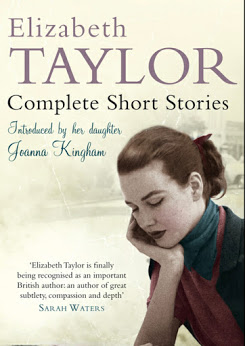
We will keep reading along in the short stories of Mavis Gallant with Buried in Print.  This project will finish in September.  Read throughs of short stories by Elizabeth Taylor and Alice Adams are under consideration.


March will once again be Irish Short Story Month.


We hope to expand our reading of short stories from the Indian Subcontinent.  


Mel is always looking for quality literary biographies.

Contemporary Writers followed in the past will be followed into the future.  

In July we hope to focus on works of all sorts set in Paris, in November on German literature.

Mel is open to posting on the work of brand new writers as long as they have a short story online.

Right now there are 155 collections of short stories and about 3050 books on Mel's iPad.  Inspite of this he still gladly receives new books for review consideration.

We are very proud of our readership.  

We offer our great thanks to all who leave comments.

This is the start of the second full decade of The Reading Life.

Ambrosia Bousweau, European Director

Oleander Bousweau, from the Bousweau Foundation

Arfington B. Tachenzard , Design  Consultant


Thursday, January 23, 2020

The History of Rasselas, Prince of Abissinia by Samuel Johnson - April 1759


Samuel Johnson  


Rasselas, Prince of Abyssinia 1759

Born September 18, 1709 - Litchfield, England

1735 - Marries Elizabeth Porter  


December 13, 1738, published his first work, "London", a poem

1744 -publishes The Life of Richard Savage, a revolutionary biography

1746 - begins work on The Dictionary of the English language, published April 1755

1759 - Rasselas, Prince of Abyssinia
 is published, written in a week to help pay his mother's funeral costs (this is the accepted view but some scholars don't agree) 

1759 - Voltaire published Candide

May 16, 1763 - Meets James Boswell. 


Dies December 13, 1778

1791 - The Life of Samuel Johnson by James Boswell is published.

My guess is I first read Rasselas Prince of Abyssinia about fifty years ago, about the same time I read Boswell's biography for the first time.  Over the years I have read a number, far from all Johnson's essays, some of his lives of the poets and thirty volumes in the Yale Edition of The Journals of James Boswell.

I reread his Rasselas this week.  About the journey of a young prince seeking to find the way to happiness, it was published in the same year as Candide by Voltaire, also about a young prince on a journey.  As much as I admire Johnson as a patron saint of the reading life, 90 percent of readers will enjoy Candide much more, as do I.  I would predict most who out of curiosity started Johnson's work would not finish it.  I would endorse Candide to bright young adults.  As to Johnson the prose is too elevated for many highly educated modern readers.  That being said, there is profound wisdom in the conversations in this book.  Johnson is the sort of person who could have written the wisdom books of the major religions of the world.


Featured Post

Imperial Reckoning: The Untold Story of Britain’s Gulag in Kenya by Caroline Elkins - 2005 - 701 Pages

  Imperial Reckoning:     The Untold Story of Britain’s Gulag in Kenya by Caroline Elkins - 2005 - 701 Pages 2006 Pulitzer Prize Winner From...