Saturday, July 11, 2020

Observations on The 11th birthday of The Reading Life

When I began The Reading Life on July 9, 2009 I never dreamed I would keep it going for 11 years.  Now in the midst of a worldwide pandemic I am writing my 3765 post, looking back on over six million page views.


Short Stories, Irish literature, Classics, Modern Fiction, Contemporary Literary Fiction, Yiddish culture, The Japanese Novel, Post Colonial Asian Fiction, The Legacy of the Austro-Hungarian Empire and quality Historical Novels are Among my Interests

The Reading Life is a multi-cultural book blog devoted to the goals of literary globalism.


My blog has helped me get through some dark times.  I have become acquainted with lots of wonderful people, from many countries. Some very talented  writers, some fellow book bloggers and some avid readers. Many visitors are students on assignment.

Of late I have been focusing on short stories.  This will continue.


It is harder to write a post on a short story than a novel.  Those who have written both say short stories are more challenging to create.

I am now avidly reading in areas I knew nothing about years ago.  I love discovering new to me writers.

The Reading Life is one of the few book blogs that post on non-fiction, mostly history, literary biographies and literary theory.

Though my Blog I have been given sbout 2500 hundred Review books.  I look at all I am given.   It is still hard for me to turn down a free book!  I only accept E books.

Blog Stats

Eight of the ten most viewed posts of all time are about Short Stories by writers from the Philippines

The top five home lands of visitors are The USA, The Philippines,India, Russia and The UK.

Hopes for The future.

To read more great books, stay connected to my writer friends, to do what I can to oppose xenophobia and turn others on to The joy of Reading. Rich, poor or in between Reading Will enrich your Life, keep you from being bored or lonely.  Almost no Life long readers suffer cognitive declines.  Reading protects your mind.

I offer my thanks to Max u.

To my wife Lyn u.


I Thank Ambrosia Bousweau as well as Oleander Bousweau.  The Bousweau Foundation is ever faithful to The Reading Life. Should I need a break, The Blog Will be left in their hands.

To my fellow book bloggers, among the greatest readers in the world, keep blogging.  The world needs you in these dark times

Mel u


Friday, July 10, 2020

Sisters - A Short Story by Elizabeth Taylor - first published in The New Yorker June 21, 1969


Sisters - A Short Story by Elizabeth Taylor - first published in The New Yorker June 21, 1969

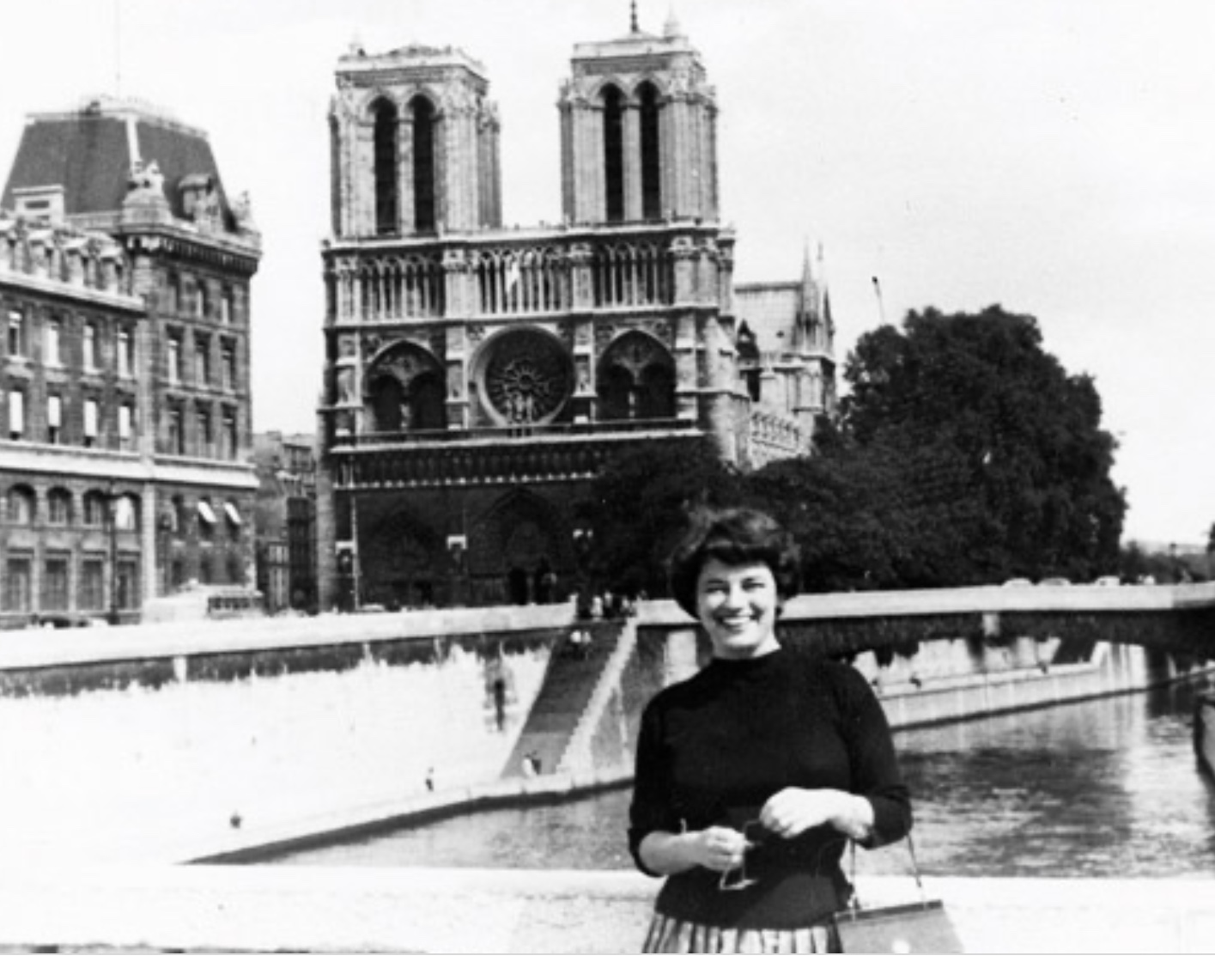
Paris in The Thirties as seen from a small town in England about 1960

My readings so far for July in Paris 2020


1. Forain” - a set in Paris Short Story by Mavis Gallant
2. “Winter Rain” - a Short story by Alice Adams about an American woman living in Paris after World War Two
3. Marc Chagall by Jonathan Wilson
4. Missing Person by Patrick Modiano
5. “Sisters” by Elizabeth Taylor.


“Sisters” is Included in The Complete Short Stories of Elizabeth Taylor 


Elizabeth Taylor


July 3, 1912 - Reading, England

November 19, 1975 -Penn, England


"Taylor’s sentences are like Renaissance jewelry, intricate, composed, flawless." Roxana Robinson

“Sisters is my third venture into the work of Elizabeth Taylor.  On November 21, 2013 I posted on “The Blush”, one of her short stories.  Then on June 16, 2015 I posted on one of her eleven novels, A  View from the Harbour”.


Now I am five years later posting on another of her short stories, “Sisters”.

I feel a need to share the start of my post on A View from the Harbour”:


"‘A man,’ she thought suddenly, ‘would consider this a business outing. But, then, a man would not have to cook the meals for the day overnight, nor consign his child to a friend, nor leave half-done the ironing, nor forget the grocery order as I now discover I have forgotten it. The artfulness of men,’ she thought. ‘They implant in us, foster in us, instincts which it is to their advantage for us to have, and which, in the end, we feel shame at not possessing.’ She opened her eyes and glared with scorn at a middle-aged man reading a newspaper. ‘A man like that,’ she thought, ‘a worthless creature, yet so long has his kind lorded it that I (who, if only I could have been ruthless and single-minded about my work as men are, could have been a good writer) feel slightly guilty at not being back at the kitchen-sink.’ ". From A View of the Harbour

I completely agree with Roxana Robinson's assessment of the sentences of Elizabeth Taylor, "Taylor’s sentences are like Renaissance jewelry, intricate, composed, flawless."  My first experience with Elixabeth Taylor (1912 to 1975, England) was last year when I read her delightful story about infidelity, "Blush".  I was very grateful when The New York Review of Books offered me a review copy of her 1947 novel, A View from the Harbour.  The novel is set in a run town coastal town in England.  It is a very gossipy novel that focuses on the lives of the residents.  

Taylor is a very acute observer of small details.  I think her remark, from a female novelist who is one of the book's characters, that I quote above will ring painfully true to legions of writers.  

The characters in the story are all connected in one way or another.  Several are working through the consequences of recently failed relationships.

It is the exquiste sentences and the many wonderful observations that made A View of the Harbour such a delight to read.  

I not too long ago acquired The Complete Short Stories of Elizabeth Taylor. (Very much a value at $3.95 for The Kindle Edition.). I was so happy to find at least two Short Stories that tie in with Paris in July.

“Sisters” is wonderful short story.  Set in a smallish English town around 1965, the most important on stage character is Mrs Mason, a widow of a dentist. The plot begins when a young man pays her a visit, he is writing a biography on her sister, a famous writer,  who died about thirty years ago in Paris.

“On a Thursday morning, soon after Mrs Mason returned from shopping – in fact she had not yet taken off her hat – a neat young man wearing a dark suit and spectacles, half-gold, half-mock tortoiseshell, and carrying a rolled umbrella, called at the house, and brought her to the edge of ruin. He gave a name, which meant nothing to her, and she invited him in, thinking he was about insurance, or someone from her solicitor. He stood in the sitting-room, looking keenly about him, until she asked him to sit down and tell her his business. ‘Your sister,’ he began. ‘Your sister Marion,’ and Mrs Mason’s hand flew up to her cheek. She gazed at him in alarmed astonishment, then closed her eyes. In this town, where she had lived all her married life, Mrs Mason was respected, even mildly loved. No one had a word to say against her, so it followed there were no strong feelings either way. She seemed to have been made for widowhood, and had her own little set, for bridge and coffee mornings, and her committee-meetings..”


Her sister Marion lived in Paris in the twenties and thirties.  She wrote stories about her childhood, exposing things deeply repressed by Mrs Mason.  To make it worse she was involved with numerous other writers and artists of time, leading scandalous lives, swapping bed bed mates and seeking sexual experiences way beyond what was acceptable to Mrs Mason.  Her husband refused to have Marion in the house he was so offended by his sister in law’s Life Style.

The story follows conversation of the biographer and Mrs Mason.  He tries hard to draw her out but at first she resists him.

“‘Were you and Marion close to one another?’ ‘We were sisters,’ she said primly. ‘And you kept in touch? I should think that you enjoyed basking in the reflected glory.’ He knew that she had not kept in touch, and was sure by now that she had done no basking. ‘She went to live in Paris, as no doubt you know.’”

Finally she begins to open up:


‘Did you ever meet Godwin? Or any of that set?’ ‘Of course not. My husband wouldn’t have had them in the house.’ The young man nodded. Oh, that dreadful clique. She was ashamed to have it mentioned to her by someone of the opposite sex, a complete stranger. She had been embarrassed to speak of it to her own husband, who had been so extraordinarily kind and forgiving about everything connected with Marion. But that raffish life in Paris in the thirties! Her sister living with the man Godwin, or turn and turn about with others of her set. They all had switched from one partner to the other; sometimes – she clasped her hands together so tightly that her rings hurt her fingers – to others of the same sex. She knew about it; the world knew; no doubt her friends knew, although it was not the sort of thing they would have discussed. Books had been written about that Paris lot, as Mrs Mason thought of them, and their correspondence published. Godwin, and Miranda Braun, the painter, and Grant Opie, the American, who wrote obscene books; and many of the others”.

Finally at the end just before she tells him to leave Mrs. Mason shocks The biographer.

I hope this Month to read her story about a Middle Class English couple on vacation in France.   

Today for $0.99 i acquired one of her novels, Mrs Pelfrey at The Claremont.  I hope to read it soon.


Wednesday, July 8, 2020

Missing Person by Patrick Modiano - 1978 - 2005 - translated from French by Daniel Weissbort


Missing Person by Patrick Modiano - 1978 - 2005 - translated from French by Daniel Weissbort

His sixth published work, it was awarded the Prix Goncourt Prize


Paris in July 2020 - Thyme for Tea

My Posts for Paris in July 2020

1. “Forain” - a set in Paris Short Story by Mavis Gallant
2. “Winter Rain” - a Short story by Alice Adams about an American woman living in Paris after World War Two
3. Marc Chagall by Jonathan Wilson
4. Missing Person by Patrick Modiano

My Prior Posts on Patrick Modiano


Born July 25, 1945

2014 - Awarded Nobel Prize (prior to then he had won all of France’s most prestigious literary awards).

He has written thirty novels, a memoir and as well as several film scripts.

Missing Person is the sixth novel I have read by Patrick Modiano.
During July in Paris 2017 I posted on The Black Note Book, After the Circus, and The Occupation Trilogy.

Occupation Trilogy is a work of a much higher order than the other three novels, it is a sublimely brilliant almost surreal recreation of what it was like to be a French Jew during the occupation of Paris by the Nazis.  It is why he won the Nobel Prize.  My bottom line is any one interested in this period will be glad they read the trilogy. The other three works are interesting well done works but one would have to say first read the trilogy.

Missing Person is kind of a detective story. In this story a man has lost all memory of his past prior to 1955.


Ten  years ago, Guy Roland lost all memories of his life prior to 1955.  He worked  as a private detective in Paris
until the owner of the agency retired.  He decides to use his detective skills to try to uncover his past. He finds some clues to his past but the trail seems to stop during World War Two. Then he goes deeper.

 It does appear he is a Greek Jew, Jimmy Stern from Solonica.  He lived in Paris under the assumed name Pedro McEvoy.  He worked for the legate of the Dominican Republic.  He was involved with a network of non- French nationals seeking to leave France.

As he seems to recover his memory, he goes to French Polynesia to look for an old girl friend.

The novel goes into lots of detail about the city of Paris.


Tuesday, July 7, 2020

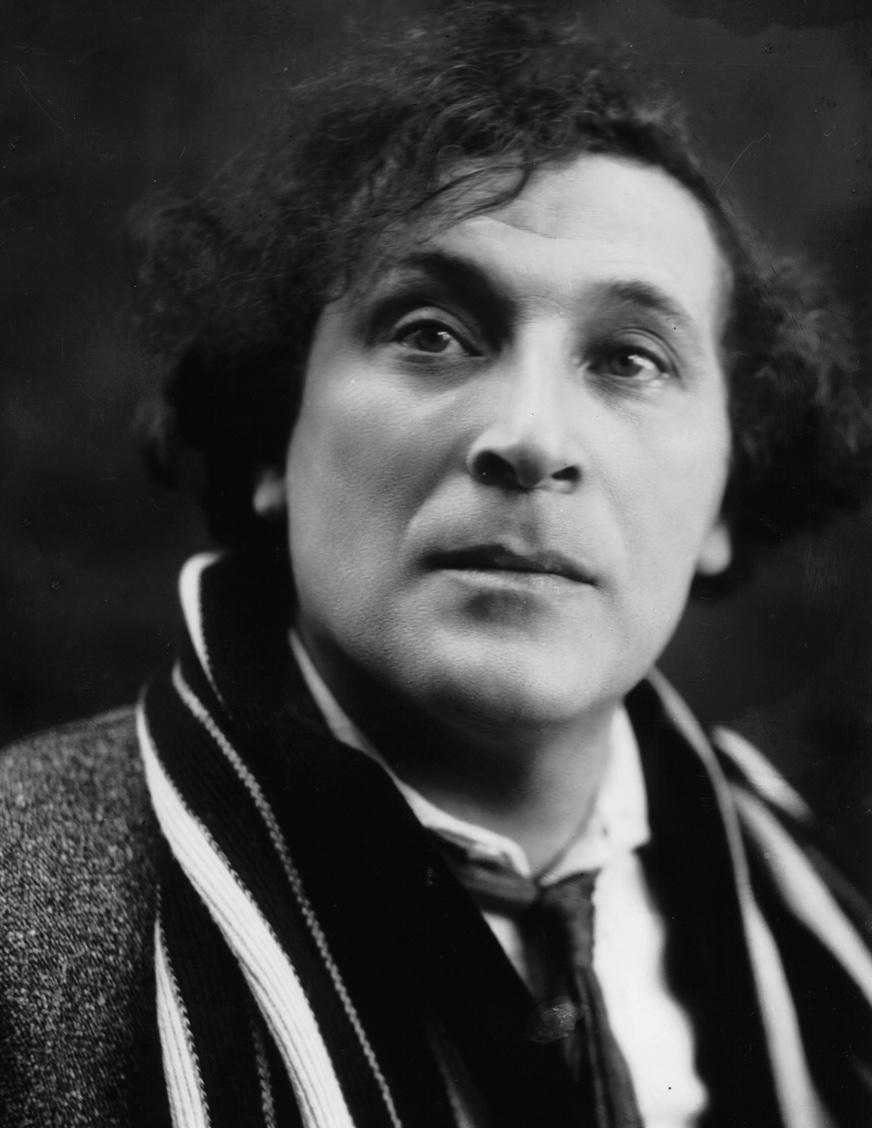
Marc Chagall by Jonathan Wilson - 2007


Marc Chagall by Jonathan Wilson - 2007


Today is the 133rd birth anniversary of one of the greatest artists of the 20th Century,Marc Chagall.  He lived 55 of his 97 years in France, almost always in or close to Paris. Much of his art was inspired by Paris.

Website of Paris in July 2020 - Thyme for Tea


My Posts for Paris in July 2020

1. “Forain” - a set in Paris Short Story by Mavis Gallant
2. “Winter Rain” - a Short story by Alice Adams about an American woman living in Paris after World War Two
3. Marc Chagall by Jonathan Wilson

Marc Chagall,


July 6, 1887 born Vitebsk, now in Belarus, then part of the Russian Empire.

1910 to 1914 - resides in Paris

1915 - he Marries Bella Rosenfeld - The marriages endures until her passing in 1944.  They had a very deep relationship.  Wilson goes into detail on their Life together in Belarus, Paris and New York City.


1914 to 1922 resides in Russian Belarus.  He intended to only stay long enough to marry his childhood sweetheart but was trapped there by World War One and the consequences of the Russian Revolution.  Wilson goes into lots of details about Chagall involvements in developing matters in Soviet Belarus


1923 to 1941.  He and his wife Bella reside in Paris, they escape to New York City in 1941 to avoid the Nazis round up of non-French Jews going starting in Paris.

1941 to 1948.  New York City.  He has celebrity status as an artist accompanied by great financial success as detailed by Wilson.

1948 to 1985 . He lives in Paris

From 1952 to 1985 he was married to Valentine Brodsky
March 28, 1985 - he dies in Saint-Paul-de-Vence, France. His wife died there in 1993.  Wilson spends a lot of time on Chagall’s relationships with his wives.

Jonathan Wilson has given us a very comprehensive biography of Marc Chagall, often regarded as greatest Jewish artist of the 20th century.  He gave me an understanding of how Chagall recreated
Paris as a huge shtetl, using animals and persons those familiar with Fiddler on The Roof will recognize easily.  He also uses the figure of Jesus on the Cross.  Wilson elegantly explains  the artistic  Development of Chagall from his early schooling in Belarus to the profound influence Paris had on his work.  Chagall met and became friends with now famous artists and developed valuable business contacts in Paris.


In 1941, Vishy authorities were starting to turn over foreign born Jews like Chagall and his wife to the Nazis.  They moved to New York City in 1941.  Wilson shows us How Chagall adjusted to his celebrity artist status. They returned to Paris in 1948.  By now Chagall had obtained significant commercial success.

Chagall spoke Russian, French and some English but Yiddish was his real language.  We can assume he and Bella spoke in Yiddish.

Anyone into modern art, Yiddish culture, French artistic developments in the 20th century will enjoy this wonderful biography.

Paris was very important as a place of refuge for Eastern European Jews.  Most were at least tri-lingual, some escaped in time, some did not.

Jonathan Wilson's work has appeared in The New Yorker, Esquire, The New York Times Magazine and Best American Short Stories, among other publications. In 1994 he received a John Simon Guggenheim Fellowship. His fiction has been translated into many languages including Dutch, Hebrew, Italian, Polish, Portuguese, Russian, Chinese and Uyghur.
Wilson is the author of seven previous books: the novels The Hiding Room (Viking 1994), runner up for the JQ Wingate Prize, and A Palestine Affair (Pantheon 2003), a New York Times Notable Book of the Year, Barnes and Noble Discovery finalist and runner up for the 2004 National Jewish Book Award; two collections of short stories, Schoom (Penguin 1993) and An Ambulance is on the Way: Stories of Men in Trouble (Pantheon 2004); two critical works on the fiction of Saul Bellow; and a biography, Marc Chagall (Nextbook/Schocken 2007), runner-up for the 2007 National Jewish Book Award. Kick and Run is his eighth book and his first work of memoir.
Wilson lives in Newton, Massachusetts. He is Fletcher Professor of Rhetoric and Debate, Professor of English and Director of the Center for the Humanities at Tufts University. .from jonathanwilson.com


Sunday, July 5, 2020

Winter Rain - A Short Story by Alice Adams - Set in Paris - 1959


My Posts for Paris in July 2020

1. “Forain” - a set in Paris Short Story by Mavis Gallant
2. “Winter Rain” - a Short story by Alice Adams about an American woman living in Paris after World War Two


“Winter Rain” was her first published stories- 1959 in The New Yorker, and is included in The Short Stories of Alice Adams, 2002

Alice Adams

Born - August 14, 1926 - Fredericksburg, Virginia

She lived in Paris in most of 1947 and 1948 after graduating from Radcliffe.
Like many a Young writer and Artist, her time in Paris was a transformative period.


Died - May 27, 1999 - San Francisco, California

“Whenever in the final unendurable weeks of winter, I am stricken, as now, to the bone with cold—it is raining, the furnace has somehow failed—I remember that winter of 1947–1948 in Paris, when I was colder than ever in my life, when it always headlines. And everyone struck: Métro, garbage, water, electricity, mail—all these daily necessities were at one time or another with difficulty forgone. Also, that was the first winter of American students—boys on the G.I. bill and girls with money from home, Bennington meeting Princeton in the Montana Bar. There were cellar clubs to which French friends guided one mysteriously: on the Rue Dauphine the Tabu, with a band; the Mephisto, just off the Boulevard Saint-Germain; and further out on Rue Blomet the wicked Bal Nègre, where one danced all night to West Indian music, danced with everyone and drank Pernod. It was a crowded, wild, excited year. “

Up until a few months  ago I had never heard of Alice Adams, now i am close to starting a read through of The Short Stories of Alice Adams, 800 pages with fifty one stories, most first published in The New Yorker.

After graduating from Ratcliff College at 19, Adams and her husband spent some time in Post War Paris.  Perhaps drawing a bit on that experience, “Winter Rain” is narrated from Paris by a young American woman studying at the Sorbonne.

The story is told after narrator has returned to the United States, it appears years have gone by, she has not kept up with anyone she knew in Paris.  Her most interesting relationship was with Mme. Frenaye, an older woman, from whom she rented a room.  Mme. Frenaye overcharges her while somehow representing French sophtication to an American ingenue.  I found this a charming and elegant story.

This story is included in sample of the Kindle edition of The  Short Stories of Alice Adams, along with two other stories  and a Forward  by  Victoria Wilson her long time editor at The New Yorker.


Friday, July 3, 2020

“Forain” - A Set in Paris Short Story by Mavis Gallant - 1993


“Forain” - A Set in Paris Short Story by Mavis Gallant - 1993

“Forain took in the likeness of the man who had fought a war for nothing.”

“Forain” is included in The Collected Short Stories of Mavis Gallant and her collection, Across The Bridge

Website of July in Paris - Thyme for Tea

 Buried in Print’s Mavis Gallant’s Mavis Gallant Project.

Mavis Gallant loved Paris.  I decided to begin my sixth year of
participation in July in Paris with one of her Paris  stories.

Mavis Gallant


April 11, 1922 - Montreal

1950 - moves to Paris

September 1, 1951- publishes, in The New Yorker, her first short story.  She would publish 116 stories in The New Yorker.

February 18, 2014 - passes away in her beloved Paris

Buried in Print began her read through of the short stories of Mavis Gallant in March of 2017. (It is projected to reach completion in September of this year.) Lots of the short stories are set in
Paris, often among expatriates who have cut most of their ties.  There are stories about American women who came seeking romance after the war ended, ex-French and German soldiers and several centering on emigrates from Poland, as is today’s story.

There are leitmotifs that emerge in Gallant’s stories if you read enough of them.  Among them are people who seem old before their time, a sense that the best days of European culture maybe passed, a preoccupation of emigrates with their compatriots to the exclusion of the French, a feeling life passes the people in the story by as they await a remittance of some sort.  Forain came to Paris after the war, he runs a publishing house specializing in translations of Central and Eastern European literature into French.
“He ran his business with a staff of loyal, worn-out women, connected to him by a belief in what he was doing, or some lapsed personal tie, or because it was too late and they had nowhere to go.”  This is a vision of Gallant’s Paris.

At thirty eight he is characterized as old.  He is very involved with
 the Polish community, rife with intrigue and gossip.

Gallant perfectly sets the stage in the opening sentences:

“ABOUT AN HOUR before the funeral service for Adam Tremski, snow mixed with rain began to fall, and by the time the first of the mourners arrived the stone steps of the church were dangerously wet. Blaise Forain, Tremski’s French publisher, now his literary executor, was not surprised when, later, an elderly woman slipped and fell and had to be carried by ambulance to the Hôtel-Dieu hospital.”

Of course a funeral often launches interior monolugues and involuntary memories about things that might have been or never again will be. We learn about his history with Tremski, a figure very much in accord with Gallant’s vision of expatriates in Paris.

Later on we learn Tremski’s work has attracted interest of young scholars:

“The chronicle of two generations, displaced and dispossessed, had come to a stop. The evaluation could begin; had already started. Scholars who looked dismayingly youthful, speaking the same language, but with a new, jarring vocabulary, were trekking to Western capitals – taping reminiscences, copying old letters. History turned out to be a plodding science. What most émigrés settled for now was the haphazard accuracy of a memory like Tremski’s. In the end it was always a poem that ran through the mind – not a string of dates.”

This is a great short story, I will close with these lines:

“Season after season, his stomach eaten up with anxiety, his heart pounding out hope, hope, hope, he produced a satirical novella set in Odessa; a dense, sober private journal, translated from the Rumanian, best understood by the author and his friends; or another wry glance at the harebrained makers of history. (There were few women. In that particular part of Europe they seemed to figure as brusque flirtatious mistresses or uncomplaining wives.) At least once a year he committed the near suicide of short stories and poetry. There were rewards, none financial.”

I hope very much to return to Mavis Gallant this month.


Thursday, July 2, 2020

My Plans and Hopes for Paris in July 2020


My Plans and Hopes for Paris in July 2020

Website for Paris in July 2020 - Hosted by Thyme for Tea

Thyme for Tea has hosted Paris in July for ten years, this is our sixth year as a participant.  This is a great event. It is a good way to meet bloggers outside the book Blog World.  Maybe most of us figure we don’t have a  Paris trip coming up soon but we can still visit  one of Cultural capitals of the World thanks to Paris in July.

Every year I design my own image for the event (The official one is really perfect).  This year I found a lovely post card created by Picasso.


I even have have an official song for The Event, The Summer I Read Colette by Rossane Cash.


“Welcome to the first week of Paris in July 2020, the 10th anniversary of sharing our love of Paris, and all things French through our blogging community. There are so many ways to celebrate Paris - literature, food, wine, theatre, language, history, holidays, and of course music”.  From Thyme for Tea’s opening statement.

I have some no doubt  overly ambitious plans for Paris in July but here is what I hope to read.


Non-fiction


RITUALS FOR THE DEAD Religion and Community in the Medieval University of Paris WILLIAM J. COURTENAY

Ambition and Desire: The Dangerous Life of Josephine Bonaparte by Kate Williams

James Joyce and The Question of Paris by Catherine Flynn

Marie Antoinette’s World by Will Bashir

Marc Chagall by Jonathan Wilson

The Flaneur: A Stroll Through Paris by Edmund White

PROUST’S DUCHESS how three celebrated women captured the imagination of fin-de-siècle paris by Caroline Weber


Novels

Fear by Gabriel Chevallier.  A classic account of France during WW One

Missing Person by Patrick Modiano . A Paris detective story by a Nobel Laureatte

The Parisian by Isabella Hammad

The Memoirs of Two Young Wives  by Honore de Balzac
.
Short Stories 

For sure I Will post on at least one set in Paris Short Story by Mavis Gallant, hopefully several.


I have selected Short Stories by two of France’s greatest writers, Emile Zola and Guy de Maupassant

I have hopes to read Paris based Short Stories by 20th century English language writers i admire such
As Alice Adams, Shirley Hazzard, Paul Boules, and Hortense Callisher. We also have collections of Short Stories by Colette, Marcelle Ayme and Emanuel Bove, in translation.

I hope to get to Short Stories by two of my favourite writers, translated from Yiddish, Chava Rosenfarb and Blume Lempel, both lived in Paris for several years.


I look Forward to Reading the marvelous posts by participants and offer my thanks to Thyme for Tea for giving us this oppurtunity

Mel u
Ambrosia Bousweau.


Featured Post

Imperial Reckoning: The Untold Story of Britain’s Gulag in Kenya by Caroline Elkins - 2005 - 701 Pages

  Imperial Reckoning:     The Untold Story of Britain’s Gulag in Kenya by Caroline Elkins - 2005 - 701 Pages 2006 Pulitzer Prize Winner From...