Tuesday, October 10, 2017

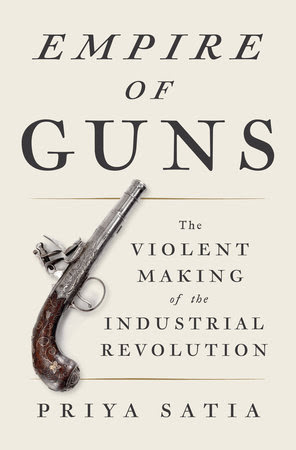
Empire of Guns: The Violent Making of the Industrial Revolution by Priya Satia (Forthcoming 2018)


Empire of Guns: The Violent Making of the Industrial Revolution by Priya Satia is an extremely informative fact rich book that anyone at all interested in the 18th century, The Industrial Revolution in England, the history and social implications of mass production of guns will find fascinating and may well change your entire overview of the period, as it did mine.  I have been an on and off again amateur student of 18th century world history for over fifty years.  I was amazed and humbled by this book.  

Satia structures her narrative around an 18th century Birmingham England Quaker family, The Galtons, heavily involved in all aspects of the gun trade, from manufacturing to sales.  The family came under severe criticism in the Quaker community, with an ethos of peace and nonviolence for their involvement in the Gun Trade.  The Galton’s responded by saying the English economy and the empire is founded on violence and almost anyone involved in large scale manufacturing was involved the trade supporting violence.  Birmingham England was the Center of gun manufacturing.

England needed many thousands of guns to fight her almost nonstop colonial and European wars.  In the old days, going back to about 1400, guns were made by individual gun makers, by order of elite customers, as near works of art. A single craftsman did all the work.  In order to produce guns on a grand scale The Galtons set up factories where parts were made by different workers, then assembled.  They developed supply lines for the metal and coal needed for the mass manufacturing of firearms.

Satia goes into great detail about the day to day operations of the gun business, describing the work routines of craftsman up to the finances of the business.  The gun trade was international, it was fascinating to learn that intentionally inferior guns were sold to traditional European enemies.  

We see how the mass availability of guns changed English society.  Now anyone could kill anyone.  

There is just a wealth of wonderful information in this book.  I was particularly fascinated by her interlude chapter in which she talks about the role guns played in The African Slave trade.  Guns were highly valued by tribal leaders who would trade war captives for guns.  The guns used in the slave trade were more for show than killing.  The British had no intention of arming Africans with guns they could turn on them.  The mass availability of guns in the hands of Europeans made the slave trade possible. 

Empire of Guns: The Violent Making of the Industrial Revolution by Priya Satia covers an amazing amount of material, it was many years in the making.  

All teachers of history should read this wonderful book.  All libraries that can should purchase this book.  If you are at all interested in world history, you will be glad you read this book.


Priya Satia
Author; Professor of history, Stanford University
Priya Satia is Associate Professor of modern British and British empire history at Stanford University. Her first book Spies in Arabia: The Great War and the Cultural Foundations of Britain's Covert Empire in the Middle East (OUP, 2008) won the 2009 AHA-Herbert Baxter Adams Book Prize, the 2009 AHA-Pacific Coast Branch Book Award, and the 2010 Pacific Coast Conference on British Studies Book Prize. Her work on the British empire and the way it continues to shape our present has appeared in a range of scholarly and popular media. She is currently finishing her second book, Empire of Guns: The British State, the Industrial Revolution, and the Conscience of a Quaker Gun-Manufacturer. Prof. Satia also plans a future work on the Partition of British India in 1947.

Mel u


Monday, October 9, 2017

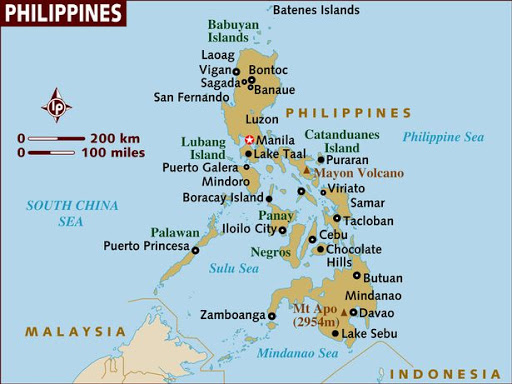
In Observation of One Million Visits to The Reading Life from Residents of the Philippines 🇵🇭


The Philippines 🇵🇭 On The Reading Life - Literature and History


When I began The Reading Life on July 7, 2009 I would never have believed then that one day I will be the welcoming more than one million visitors from the Philippines to my blog.  At that time I would have thought it amazing if I just kept blogging until January 1, 2010, given my track record in life.  

Most of the visits are focused on a few posts on older stories by authors from the Philippines.  These stories are a great way for readers to keep their cultural memories of a way of life now largely forgotten awake in a society dominated by social media and huge malls.  These stories are  a great treasure for students of post-colonial Asian Literature.  

This means a lot to me.  

Sa Lahat Ng Aking Mambabsasa sa Pilipinas, Maraming Salamat


Mel u

Sunday, October 8, 2017

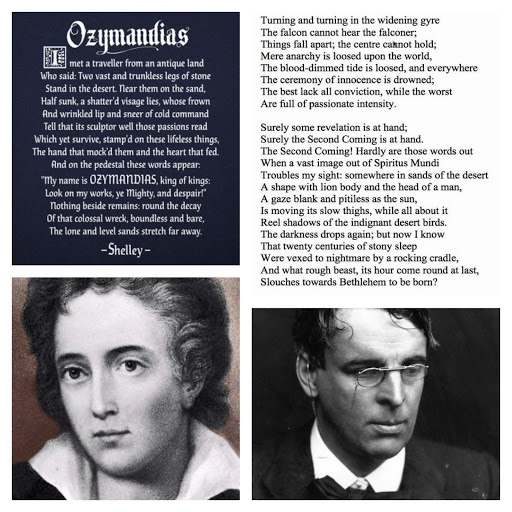
“Ozymandias” by Percy Shelly and “The Second Coming” by William Butler Yeats


Poetry can help us understand history and our feelings to contemporary events.  In my recent readings of classic poems I have found two poems that seem almost a prophecy of political events in America, “Ozymandias” by Percy Shelley an “The Second Coming” by William Butler Yeats.  

“Ozymandias” (first published January 11,1818), The Greek name for the Egyptian Pharaoh Rameses II, struck me deeply in the perception the sculptor had of arrogant strutting buffonary of Ozymandias.  I wonder How long America’s fourth rate imitation will be remembered, will he 
cause great destruction before his end comes?  This is probably Shelly’s most read and taught  poem.  I hope to read more of his work and read Richard Holme’s highly regarded biography.


After the terrible results of the American Presidential election of November 2015 horrified all in the book Blog World, numerous posts quoting “The Second Coming”  (first published November 23, 1920) by William Butler Yeats were made on social media websites, suggesting, of course, the incomimg president was to be seen as The Rough Beast.  Like “The Wasteland”, this poem is partialy a vision of The post WW One world. Like that work,it makes use of ancient references.

 Of course other Ozymandias figures and other rough beasts will emerge.

Mel u


IMG_2778.jpeg

Saturday, October 7, 2017

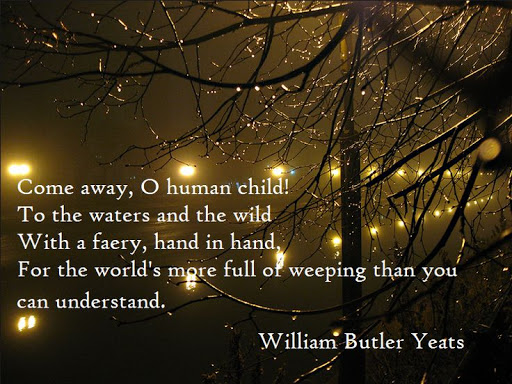
“The Stolen Child” by William Butler Yeats (1889, in The Wanderings of Oisin and other Poems)


an Elegant reading, includes scrolling text


William Butler Yeats (1865 To 1939) was the first poet I read.  At age thirteen or so I was captivated by his “Sailing to Byzantium”, it took me to a world far from the mundanity of my childhood.  I have been reading in his poetry on and off for the decades that have passed.  I recently heard a YouTube lecture on Yeats in which he was described as the greatest poet of old age.  I see it now.  Yeats was highly influenced and deeply steeped in Irish history and folk beliefs.  He also as he aged became involved with what most would call occult theories.  Yeats created a mythology out of his life and from that created some of the most sublimely beautiful poetry ever written.  

“The Stolen Child”, reading time under three minutes, is one of his more popular works.  I love it.  In part this is a poem arisen from the famine days in which dead children were described as taken by Fairies.  Sheridan le Fanu has written about this.  Fairies are not pure beings, they are stealing children for their own world.  Images of water abound in the poem, the faery is presenting a powerful temptation to the child.

Is there a poet you return to over and over? 

Do you have a favourite poem by Yeats?

Mel u


Friday, October 6, 2017

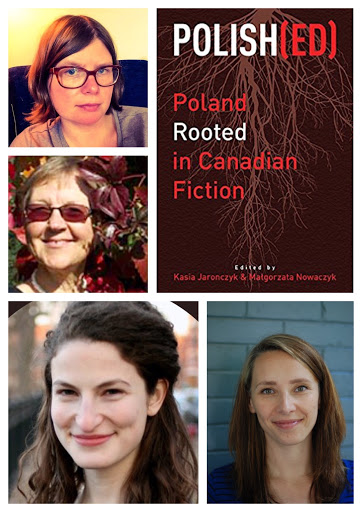
Polish (Ed) Poland Rooted in Canadian Fiction edited by Kasia Jaronczyk and Malgortza Nowaczyk, 2017)


In The collage are, from The TOP left, Kaisa Jaronczyk, then Anna Milduchawsks, Zoe Greenberg, and at the right Anna Mioduchowska


I just finished reading a brand new collection of short stories ,Polish (Ed) Poland Rooted in Canada, edited by Kasia Jaronczyk and Malgortza Nowaczyk.  All of the stories deal with the Immigration of persons from Poland to Canada.
.

This is the first Polish diaspora collection published in Canada.  There are twelve stories, about an equal mix of men and women.  Some of The writers settled in The big cities, others in rural areas.  All struggled with a new language, some are great successes, others struggle to get by.

“We have found a wonderful community of writers who, although they write in different styles and on different subjects, support each other and are proud to represent Poland on the Canadian literary map. We have received an astonishing number of submissions, many more that we were able to accept. In the process we have discovered emerging and established Canadian authors Edited by Kasia Jaronczyk and Małgorzata Nowaczyk [xi] who include being Polish as part of their identity.”  From The introduction

I will post briefly on four of the stories, each one giving the reader a perspective about life experiences of Polish immigrants to Canada.

Iceburg” by Aga Maksimowska at first seems to have nothing to do with being an immigrant.   The woman this story centers on is not at all obviously an immigrant, her language gives nothing away, her appearance neither does.  Sometimes an immigrant can only be at once recognized by a countrymen, PR in this case by another woman from Poland.  The central character is having an Affair with a married man.  When he is hurt, the attending nurse at the hospital at first refuses her access then everything changed when the nurse realized they were both Polish.

“I say my name and she shoots me a look of recognition and glances down at her nametag, her own first name full of consonants. She smiles and tells me the Bruns are on the seventh floor, in Imaging. Why do I only now think of how strange it is that Dianne never changed her last name back? Olivier would say that’s because Milosevic is a mouthful, and that he’s been convicted of war crimes. And I would agree that it would be unfortunate to share a surname with a genocidal maniac.”

The two women have a link that bonds them, in a last names difficult to others


Aga Maksimowska emigrated from Poland in 1988. She studied Journalism at Ryerson University and Education at the University of Toronto. In 2010, she completed a Master of Fine Arts degree in Creative Writing at the University of Guelph. Her debut novel, GIANT (Pedlar Press) was a Toronto Book Award finalist and a CBC Readers' Choice Top 5 book in 2012. Aga's short fiction and nonfiction has been published in print and online in Canada and Australia, most notably in Rhubarb Magazine, Soliloquies Anthology, The Globe and Mail, and Kurungabaa. She lives in Toronto with her husband and two daughters, where she is teaching high-school English and working on her second novel.. from the author’s webpage


“A Temporary Pinprick” by Anna Mioduchowska centers on a woman, Ziutta, now fiftysix, who immigrated from Warsaw to Hudson Bay Canada twenty years ago, during a time unrest.  Friends advised her the Canadian winters were harsher than the Polish so she had made before she left, paying a bribe to get the fleece, a very warm jacket.  She is still wearing it today.  We are not told a lot about her life in Canada, she has a Family and works long hours in a garmet factory.  She wonders why everything is “on her”.  Her life is very well comveyed.  We sense her struggle.


Anna Mioduchowska, born in Poland, came to Canada in 1961 and has lived in the lovely city of Edmonton ever since. She started writing stories about 12 years ago.  Active in Edmonton's literary community from the moment she began writing, she is completing a two-year stint as President of the Stroll of Poets Society.
She has a B.A. (1969) and a B.Ed. (1979) from the University of Alberta. She received a Diplome de Langue et Lettres Françaises from d'Universite d'Aix-Marseille in 1970. Course work towards an MA in Comparative Literature, University of Alberta 


“The God of Baby Birds”  by Zoe C. Greenberg is set in Beilsk, Poland, is the story of the friendship of two young girls during the early 1960s, when the country is dominated by the People’s Workers Party.  Their fathers are engineers on the same project.  One of the girls is Jewish and in the anti-Semitic climate of the times this puts a cloud over the families relationship to each other.  There is one side benefit to being Jewish.  The party has ordered all Jews out of the country, hence only Jewish engineers can get visas to Canada.  There is a very interesting surprise as the story closes, I will leave it untold.  The relationship between the two girls was very subtly done, especially showing how anti-Semitism impacted their relationship. 

Poet and actor Zoe C. Greenberg’s experimental films have been shown in New York, Dublin, and St. Petersburg. She lives in Montreal with her husband, a painter, and their son.


“Lessons in Translation” by Kasia Jaroncsyk is perhaps my favourite story in the collection.  It begins, I think, in 1945 when the Communist Party comes to power in Poland.  The narrator, a  late teenage woman,  of the story lives with her affluent family.  Her fsther’s textile Family is seized by soldiers, their servants steal anything of value.  The Family, used to a life of comfort, is sent to labor in Siberia.  The narrator works for a Russian Family in exchange for Russian lessons.  From Siberia she and her parents are taken Tanganyika, now The Congo.  She learns Swahili, has a mixed race Child and ultimately from there moves to Canada, she does not want her Child kidnapped by his father.  In Canada she becomes a government interpertator, translating between Canadian officials and new immigrants.  She alsa reflects in a very interesting way about the meaning of the act of translation.


Kasia came to Canada from Poland in 1992 in her teens. She now lives in Guelph, Ontario, Canada with her husband, two children and two cats.
She has published poetry, short stories, and reviews in The Bristol Prize Anthology, The Prairie Journal, Room, Carousel Magazine, The Nashwaak Review, and Postscripts to Darkness. Her work won first place in the Eden Mills Contest in 2010; second place in the GritLit Hamilton festival in 2015; and was longlisted for the CBC Radio Short Story contest in 2010. She has co-edited an anthology of Polish-Canadian short stories (Guernica Editions, forthcoming 2017), and has written a collection of short stories, Lemons (Mansfield Press, forthcoming 2017).
She is currently working on a novel that features the art world, manipulative muses, controlling doctors, psychiatric photography and hysteria.

This is a very worth reading  collection.  I strongly endorse it to all Canadian libraries.  

Mel u


Tuesday, October 3, 2017

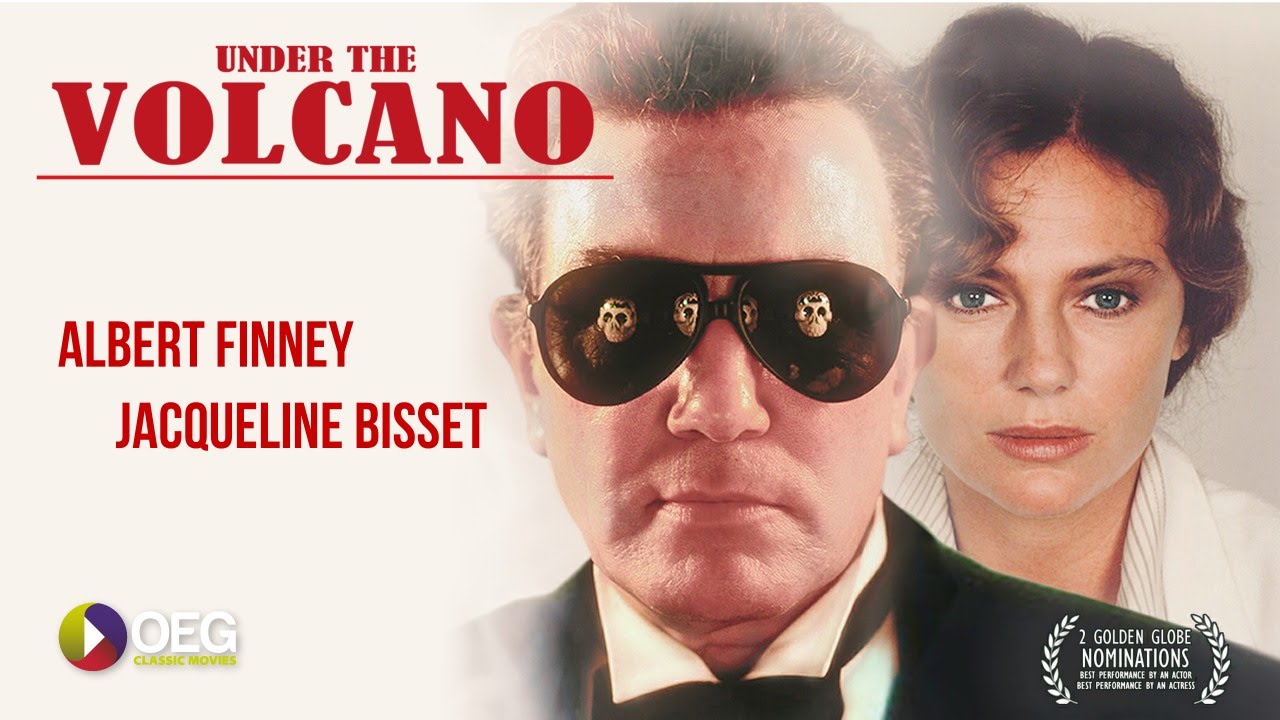
Under the Volcano by Malcolm Lowry (1947)


Under the Volcano by Malcolm Lowry (1907 to 1957, England) is a great work of art, an incredible depiction of one day in the life, November 2, 1938, The Day of the Dead in Mexican culture, of a very alcoholic British counsel in a small backwater Mexican town.  Ten years in the making, it draws on everything from Greek drama, Shakespeare, James Joyce, Mexican Mythology, popular movies and music.  Above all it is an alcohol driven work, featuring strongly the local drinks of tequila and mescal.  These cactus based drinks produce a different state of mind than the grain based drinks the counsel and other Europeans and Americans experienced before moving to Mexico, more psychedelic than just a depressive drink. This is the Mexico of noir westerns, of D. H. Lawrence.  Everybody in the story is pretty much drunk most of the time.  Indians and colonialism play a large part in the novel.  


The story line, told in twelve chapters, from the prospective of alternative narrators, focuses on the personal life of the British Counsel, who has no official work, his relationships with his ex- wife, his half-brother, others in the town, people in the bars but most of all with his true love, alcohol.  

To me much of the great pleasure in the book is in the exquisite prose, beautiful almost to the point of pain.  It was not easy for me to follow at all times the plot action, but it is fun to try.  I thought who cares if the plot makes full sense if the writing is so amazing.  Lowry paints a picture of a dark world, a town under the shadow of two volcanoes.  

After reading recently “The Wasteland” I am seeing more and more literary treatments of ruined worlds, wasted lives.  

Under the Volcano is considered one of the greatest post WW Two novels.  This book cries out to be reread as I plan next year.

The edition I have has an introduction by Stephen Spender, read it after finishing the book.  William Vollmann provides an afterward.

Mel u


Monday, October 2, 2017

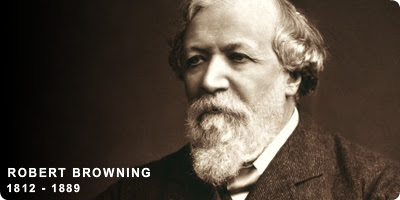
“Porphyria’s Lover” by Robert Browning (1836, his first dramatic monologue)


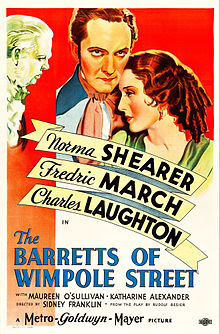
Robert Browning is considered one of the greatest of Victorian poets.  For many  knowledge of him begins and ends with the story presented in the classic 1938 movie, 

The Barretts of Wimpole Street concerning his courtship and eventual marriage to Elizabeth Barrett, author of Love Sonnets of the Portuguese.  

“Porphyria’s Lover” is my first venture into vast oeuvre of Browning.  I was surprised by the violence in the poem and the deranged persona of the male narrator.  The poem begins with a traditional rhapsody to the beauty of the speaker’ love, Porphyria.  He speaks of his Love for her as futile and pointless, thwarted by unrevealed by the narrator causes.  Perhaps he hints that she may be forbidden to him do to her higher social rank.  I was totally startled when The narrator tells us that he has murdered Porphyria by strangling her with her long blond hair.  


With a reading or listening time under five minutes, this might be a good introduction to Browning.  

Please share your experiences with Browning or Elizabeth Barrett Browning.


Mel u


Featured Post

Imperial Reckoning: The Untold Story of Britain’s Gulag in Kenya by Caroline Elkins - 2005 - 701 Pages

  Imperial Reckoning:     The Untold Story of Britain’s Gulag in Kenya by Caroline Elkins - 2005 - 701 Pages 2006 Pulitzer Prize Winner From...