Showing posts sorted by relevance for query Micha Josef Berdyczewski. Sort by date Show all posts

Thursday, June 14, 2018

“The Smith: Or A Tale of a Man that Poisoned His Wife” - A Short Story by M. J. Berdcyzewski - 1902,translated from Yiddish 2018 by James Adam Redfield


L


A detailed biographical article


“The birds, real and imagined, speak Yiddish, and the wind at my window speaks Yiddish —because I speak Yiddish, think in Yiddish. My father and mother, my sisters and brothers, my murdered people seek revenge in Yiddish. No world language is comparable to Yiddish, with its unique sighs, its unmatched sense of humor. After the melody has died away and the tears have ebbed, there remains an echo that travels on the wind. Do not wipe out the language that accompanied your people to the mass grave, the echo says. Do not take up the murderers’ sword with your own hand. Do not allow the word that bloomed in bitter climes to wither. Remember Amalek. Remember Hitler. Do not extinguish the spark that smolders in the ashes. Those who deny the past can have no future. Remember”. Blume Lempel

Today’s story is very dark, a story of murder, of hatred of women, including a vivid description of death by poison.  Like many a short story, it is a tale told on a train trip by a very dispicable man to a trapped listener.  

The narrator relays to us the story.  A man was more or less forced by his family into a marriage.  He described his wife as a woman with no good qualities, nasty, ugly and a terrible housekeeper.  He grew to hate her but it got much worse when his younger brother married a beautiful, kind, and loving woman devoted to being a good wife. His jealousy drove him to poison his wife.  As she is dying he cries out trying to make his neighbors think he does not know why his wife is dying.  He ends up sentenced to six years in prison.  He is back now.


This story is an important edition to my expanding admiration for Yiddish Literature.


I read this story in The 2018 Pakn Treger Translation Issue from The Yiddish Book Center.


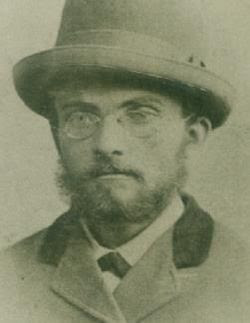
Micha Josef Berdyczewski, born in Ukraine, died in Berlin (1865–1921); Micha Josef Bin-Gorion from 1911 on) was a prodigious man of letters in multiple languages (Hebrew, German, Yiddish) and literary forms. He is remembered as an innovative prose stylist and polemicist on Zionism and Jewish identity; as the “Jewish Nietzsche” (Y. L. Peretz’s epithet); as an essayist and scholar on Jewish history and religion through the ages; as an anthologizer of Jewish folklore; and as a pioneer in Jewish autobiography. His Yiddish writing, however, remains obscure and disconnected from this vast corpus due to its short period (1902–1906), spare idiom, and restricted set of themes—themes inspired by a return to the shtetl and the language of his youth, through which he hoped to reanimate the spirit of the Jewish people. And yet (as Sholem Aleichem was among the first to note) there is a remarkable emotional range and realistic depth in this collection of stories, one acts, character sketches, and rewritten folktales.


Mel u

Sunday, October 29, 2017

“Tainted” - A Short Story by Micha Josef Berdyczewsi (1899, translated by James Redfield)


Very good biographical article- from The Yivo Encyclopaedia of Eastern European Jews


You may read this story and two others by the author at The Yiddish Book Center Website

Very good lecture on the history of the Yiddish Language and literature


Micha Berdyczewski (born in the Ukraine in 1865, died in Berlin in 1921) was a journalist, a scholar, a political writer but is now best remembered for his Yiddish language stories about life in Jewish shtetls in the Pale in the Ukraine (“shtetl” means “town” but has become in the parlance to refer to 
a small Eastern European largely Jewish community)

He was born into a very scholarly family, he was destined to be a rabbi but an ideological conflict with his father in law lead to divorce and his moving to Berlin, with studies at Bern also, where he obtained a PhD, focusing on German philosophy.  

There are three stories on the link to the Yiddish Book Center, “Tainted” about a Very highly regarded Kosher butcher is my favourite.  The kosher butcher is a very important personage, it takes serious study to master the rituals.  A lot of butchers take short cuts to maximise profit but not our butcher

“Yonosn was the deeply learned one, the God-fearing one, and above all, he was skilled at his craft. He would remove the worst adhesion from an animal’s lungs like plucking off a hair, and never once did he happen to make an ox unkosher or, heaven forbid, not to fully slaughter a cow, large or small. Other butchers in Drazhne would have cut off their own fingers for him, yet he never took a thing from them. Not one of them could say that he ever accepted a pound of free meat or a foot for Shabbat like most kosher butchers do. When he was called upon to slaughter he didn’t hesitate; he didn’t waste his time or keep anyone else waiting or make a poor lady stand there holding a chicken while he slaughtered a goose that some fancy customer’s servant had brought over—to him, rich and poor were no different. He didn’t fight with the other butchers or slander them or argue with the cantor about the donation from this or that Torah reading.” 

He has a very high standing in the community.  Some terrible, an uncontrolled moment, send him into disgrace.  He wanders homeless and alone for 13 years then dies.  If you want to know why, you should read the story.  

All these stories are a delight to read.  

Mel u 


.


Featured Post

Imperial Reckoning: The Untold Story of Britain’s Gulag in Kenya by Caroline Elkins - 2005 - 701 Pages

  Imperial Reckoning:     The Untold Story of Britain’s Gulag in Kenya by Caroline Elkins - 2005 - 701 Pages 2006 Pulitzer Prize Winner From...