Showing posts sorted by relevance for query elizabeth bowen. Sort by date Show all posts

Wednesday, February 27, 2013

Elizabeth Bowen and Irish Short Story Month-News About a Read Along

Elizabeth Bowen and Irish Short Story Month


Irish Short Story Month will be from March 1 to March 31-please consider participating-you can e-mail me   should you have any questions or suggestions.


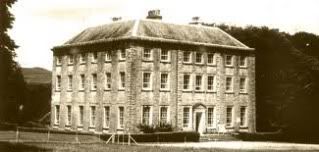
The main purpose of this post is to let all of my readers know that Caroline of Beauty is a Sleeping Cat is hosting in March a read-a-long of Elizabeth Bowen's novel The Heat of the Day.   The novel is set in London during World War II.   Ireland was neutral during the war but Elizabeth Bowen (1899 to 1973-28 Books) was strongly loyal to England.   She spent the war living in London and worked as an air-raid warden, walking the streets getting people into shelters and making sure black out rules were observed.    This put her in harms way as she had to be among the very last to take shelter.  Many air raid warders lost their lives saving others.   Bowen said after the war that she never felt more alive than she did during the Blitz in London. She acknowledged, and did many others, that she felt a sense of liberation by the eminence of death.  Caroline will also be reading Victoria Glendinning's excellent biography of Bowen.   Bowen had a very exciting and varied life, not at all like the one that the pictures of her on the internet might suggest.  She delighted in being the "wild Irish girl" in London but back at home in Bowen's Court (her family was given land by Cromwell) she was very Anglo-Irish, the lady of the manor and most of her Irish contacts were servants.   Caroline's blog is one of the best book blogs and I have been following it for a long time.


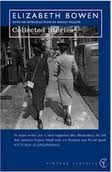
One of the most worth buying short story collections I am aware of is The Collected Short Stories of Elizabeth Bowen.  Any of the short stories in here (or a secondary work on her) would be perfect for Irish Short Story Month.   Many consider her World War II short stories her very best work.   Another Mini-project one could do is to post on the short stories by Bowen set in Ireland.  Most of her stories are set in England or have no clear for sure location.  Declan Kiberd in Inventing Ireland:  The Literature of the Modern Nation talks about Bowen's relationship to Ireland and how it changed based on where she was.   Bowen lived life to the full, she loved parties, drank a good bit, entertained lavishly,  smoked, and even though in a long term marriage to a very decent man who loved her, had a number of short and long term affairs which she made little effort to hide.   It is a shame the only pictures one can find of her make her appear to be a sternly prim school mistress who would be appalled at the idea of any non-Victorian behavior.   Kiberd says Bowen has six short stories set in Ireland but he does not list them.  I have been only able to find three of them but I am sure he is right.

The link to sign up for Caroline's Read A Long-part of the year long Literature and War Event, is here.

Any post on an Elizabeth Bowen short story is very welcome for Irish Short Story Month.

Mel u


Sunday, February 13, 2011

The Collected Stories of Elizabeth Bowen with an Introduction by Angus Wilson-14 Early Stories

The Collected Stories of Elizabeth Bowen -(with an introduction by Angus Wilson, 1980, 781 pages)

Fourteen Early Stories-(written when Bowen was in her late teens and early 20s)

The Elizabeth Bowen Reading Life Project


The Collected Stories of Elizabeth Bowen  (1899 to 1973-Dublin) is just a beautiful book.    The 88 stories in the collection cover a fifty year range, enough to see a very long process of literary development.   Angus Wilson has written a very interesting and instructive introduction.    


Bowen was born in a 300 year old 30 room Irish manor house that Cromwell gave her lordly ancestors for meritorious service.    Her family had lived in Ireland for 300 years by the time she was born but they were still not considered Irish.   They were Anglo-Irish.   Bowen was born into financial comfort and security but not great wealth.   Her father was confined to a mental hospital when she was seven and her mother died when she was 13.    The upbringing of Bowen was turned over to what she would later call a "committee of Aunts".   Bowen ending up being sent against her wishes to an exclusive girls residential school.   I mention these matters as I think the early death of her parents had a big effect on her writings.    


The Collected Stories of Elizabeth Bowen is divided into five sections.   First stories included works written prior to age 23.    The twenties and the thirties sections included stories from those decades.  The War Years section contains the highest regarded of the short stories of Bowen.    Victoria Glendinning, author of a wonderful biography of Bowen, lists the six quintessential Bowen stories, four of them are 
from the War Years.   Both Glendinning and Wilson say they think  in time to come Bowen will be most read for her short stories.   I was happy to see Harold Bloom has her short stories on his list of canon status works.   The final section of The Collected Stories of Elizabeth Bowen  consists of five post war stories.   


In this post I will talk briefly about the 14 early stories as a group.   I will talk briefly about the story from this group I like the most, "Daffodils".  I plan to post individually for sure on the six stories Glendinning says are essential Bowen.   I will read all of them in sequence published.   One of my reasons for not posting on all of them is that these stories are not, as far as I can see, available online.  (Only one of them "Demon Lover" can be found online.)      I will probably also do a "group post" on the 23 stories in The Twenties section.   I  estimate I will do around ten posts on this collection, with a concluding post on  three to six "recommended starter stories".    

In the 14 early stories I saw of the same themes as I have in the two of her novels I have read so far, The Last September and The House in Paris.   Much of the early stories are taken up with descriptions of domestic details, interior rooms of comfortable people.   The relationships of the people in the stories seem all to be just beginning and full of young hope or ending with a sense of false early perceptions on the parts of both parties.   The conversations are about the people in the stories or those off stage.   The lead characters are nearly all women.    There are shadowy figures in the background of some of the stories.    The stories are also about loneliness and abandonment.    

Bowen believed in ghosts, not normally as dark sinister forces just presences of the departed (but they could be).   These lines really struck me deeply:

"I think", she said, "not to want a person must be a sort, a sort of murder.   I think a person who was done out of their life like that would be brought back by the injustice much more than anybody who had been shot or stabbed".
"Daffodils", maybe the best early story, is about a young school teacher, a woman in her early twenties.  Of course to her pupils she seems already ancient.   She at once reminded me of a young "Miss Brill".    She invites three of the girls in her class to room for tea.    She imagines the girls will be somehow thrilled and honored by this invitation.   The fun and power in this story is seeing how her role in life has made the young teacher prematurely old and she how the girls really feel about her.

Bowen does a very good job in the development of these stories for one at the very start of a long career.   None of the early stories is more than ten pages long.   I am very excited to
 have embarked on this mini-project.    If anybody wants to read along etc they are more than welcome.

Mel u

Wednesday, February 23, 2011

Elizabeth Bowen-23 Stories from the 1930s (More on Irish Short Stories Week)

Collected Short Stories by Elizabeth Bowen (1980, 784 pages, with an introduction by Angus Wilson)


Please consider joining Elizabeth Bowen for Irish Short Story Week March 14 to March 20, St Patrick's Day is March 17


There are 88 short stories in Collected Stories by Elizabeth Bowen.    The stories are divided into five sections, First Stories (on which I have already posted), The Twenties , The Thirties (the section this post spotlights)  , The War Years, and Post-War Stories.  

Bowen (1899 to 1973-Dublin)  was born in a 300 year old 30 room Irish manor house that Cromwell gave her lordly ancestors for meritorious service.    Her family had lived in Ireland for 300 years by the time she was born but they were still not considered Irish.   They were Anglo-Irish.   Bowen was born into financial comfort and security but not truly great wealth.   Her father was confined to a mental hospital when she was seven and her mother died when she was 13.    The upbringing of Bowen was turned over to what she would later call a "committee of Aunts".   Bowen ending up being sent against her wishes to an exclusive girl's residential school.   I mention these matters as I think the early death of her parents had a big effect on her writings. 

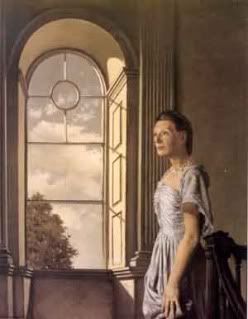
The personality of Elizabeth Bowen is not reflected well in the few photographs of her that are on the Internet.   She seems like your very prim and proper head mistress of a very expensive girl's school who perhaps smiles once a week, laughs once a decade, never has tried whiskey or cigarettes and would die of mortification at the thought she might have any romantic contact with a man to whom she was not married.    Nothing could be further from the truth.   She loved a good party, was hilarious herself, chain smoked (not so look down on in her day), loved her Irish whiskey and had as many romances as Katherine Mansfield, Jean Rhys or Colette but unlike them Bowen's  romances were with distinguished  men who treated her very well.   Bowen visited the United Nations when one of her romantic partners was the Canadian Representative to the General Assembly.    When people at the UN met Bowen they felt they were in the presence of Irish Nobility before they even knew anything about her.   Bowen also had a long lasting marriage which, though it was a strange one, was loving and harmonious.    Another was a famous author who will be featured during Irish Short Story Week.   She also had a same sex relationship with the author May Sarton.   According to Victoria Glendinning, Sarton had an extreme crush on Bowen and pressured her into a one night encounter which was Bowen's only same sex experiment.   Glendinning basically says Bowen was open to try it but concluded in the morning that she will stick with men.   Bowen is also said to have been very beautiful in her youth and to have an incredible body.   I go into these details as I do not want people to see her as boring, from her pictures.   

You can see the stories improve as she passes from her 20s into her 30s.   One of these stories, "The Disinherited" is considered by one of her very best works.    I will just spotlight a couple of the stories.   

"The Good Girl" (1934, 8 pages) is a strange read between the lines tale of a perverted "uncle".    It is in spite  perhaps of the subject matter a really entertaining story.    As I read on in the stories of Bowen, I  she enjoyed writing about  sexual encounters and within the limits of her cultural world writes pretty openly about them. 

"The Cat Jumps" (1934, 9 pages)-This story is about a murder and its after effects.   It is also a satire of academic intellectuals.    I found it quite funny.

"The Little Girl's Room" (1939, 8 pages) relies on a Saki like twist ending for full power (very few of her stories make use of surprise endings).    Angus Wilson in his very interesting introduction says in Bowen as in Saki you can sometimes see the malicious very bright child playing a joke on the adult world.    This joke is kind of an evil one!     I hope people will read her stories so I will not spoil it but my guess you will have to read the ending two or three times to be sure you got it right.   The story also makes gentle fun of the fascination of the English with European royalty of any rank.   

I will next post on the World War II era stories of Bowen.   Both Glendinning and Angus Wilson think the best of Bowen's work (she wrote about 20 books all of which are still in print) is her short stories set in London during WWII.     In fact I already read the first story in this section "Unwelcome Ideas" and it is just a wonderful work.   It makes you in just a few pages feel you are living in London in 1941 dealing with the Blitz and the fear of imminent German invasion.   When these stories were written it was by no means sure who would win the war.

If you would like to participate in Irish Short Stories Week all you have to do is post on a short story by an Irish author during this week.   The author can be Anglo-Irish like Bowen or if you like first or second generation immigrants like the great Australian short story writer Barbara Baynton .   You can post on living authors famous or promote a new writer you like.   There are really a lot of options from James Joyce and Oscar Wilde and before them Oliver Goldsmith down to William Trevor today.   Just Google "Irish Literature" if you need any ideas.   I will do a link to all the posts for the week (assuming there are some besides mine!) and comment on each one.    I have done similar events on Indonesian and on Malaysian short stories but Irish Short stories is something anyone can join in.   Any way if you are interested please leave a comment.   If this works out at all I hope to make it an annual event on my blog-

Mel u


Friday, February 11, 2011

"The House in Paris" by Elizabeth Bowen-New Reading Project

The House in Paris by Elizabeth Bowen  (1935, 239 pages)


I first read the work of Elizabeth Bowen (1889 to 1973, Dublin) after reading about her in Hermione Lee's great Virginia Woolf.   There are no public libraries here in Manila so I looked online for something by Bowen to read before I made any purchases.    I found a short story I really enjoyed,  "Demon Lover", that could be read online.    I then contacted the best book store in Manila and bought all the Bowen titles they had in stock.    I have already posted on Last September.    I additionally obtained  The House in Paris,  Eva Trout, The Heat of the Day  and a beautiful 800 page collection of her short stories.     After reading Victoria Glendinning's wonderful literary biography, Elizabeth Bowen, I think it would be hard not to like, admire and want to read a lot of the work of Bowen.   (There is no shortage of titles-Vintage Classics has about 25 in print.)    

The House in Paris is a great book about children and what they do and do not understand about adult relationships.   (There is an excellent introduction to the book from A. S. Byatt.)        As the book opens we are in a house in Paris in the 1930s.   Two children, though they have family ties, have been sent there to stay because of turmoil in their  own families.     Leopold is waiting to meet his own mother for the first time and Henrietta is waiting to take a train ride to meet her primary family.   There are twists and turns to the plot and lots of great conversations.    Bowen deeply understands the feelings of women and why they fall in love with who they do.   There is an amazing conversation about why young women fall for "bad boys" and why some women never grow out of this. . My guess is many will learn something about themselves from these lines.   I would say just to read those three or four lines makes the book worth reading.   You will know them when you read them.   I read them about five times and thought to myself "how could I pass this wisdom on to my three daughters, 12, 14 and 17?"      

When Bowen is at her best, her prose and diction is just to be marveled at.   

It is to early for me to make any  conclusions on Bowen.    I am really looking forward to reading more of her novels.    I am now 50 pages into The Heat of the Day which many consider among the very best novels set in WWII in London.   So far I admit I like it more than the The House in Paris and Last September.   

I think I will create an Elizabeth Bowen Reading Life Project to give myself an excuse to put her picture in my sidebar!      As a person and a writer Bowen was a "class act".    


I am going to read all of her 88 short stories but I will post only on the 10 to 15 consensus best works.   Harold Bloom, I was happy to see, lists the short stories of Bowen on his canon list.     


Please let us know of your experience with Bowen.   


Mel u

Wednesday, February 9, 2011

Elizabeth Bowen by Victoria Glendinning

Elizabeth Bowen by Victoria Glendinning (1977, 330 pages)


Elizabeth Bowen (1899 to 1973, Dublin) is a great writer.   So far I have read and posted on "Demon Lover" which I think is her most popular short story and one of her novels The Last September.  I really enjoyed both of these works.   I was very happy to discover that Victoria Glendinning had written a biography of Bowen.  I have already read and posted on her biography of Leonard Woolf and her biography of Vita Sackville-West, Vita, the role model for the central character in Virgina Woolf's Orlando.     

I like this  book best of the three works by Glendinning I have read so far and I liked the other two a really lot.   I like Elizabeth Bowen so much as a person and a writer.  Bowen was brought up in a castle in Ireland, Bowen court.   She was Anglo-Irish.   Even though her family had been Lords there for 300 plus years she was not Irish.   If you look at the pictures of Bowen you can find on the Internet she looks like a very serious very severe head mistress of a terribly expensive girl's academy.   She looks very intimidating.    You picture a woman who never took a drink or smoked a cigarette and would rather die than ever even kiss a man to whom she was not married. A woman devoid of humor of any kind  I was a bit shocked to learn she chain smoked (in this time smoking was not as looked down on as it is now), loved her Irish Whiskey and carried on a very passionate 30 year extra marital  relationship with a man some ten years younger than her.    She had a vast network of friends of all sorts.  She was a acquainted with many Bloomsbury figures but in simple terms pretty much out classed them all. 


    As we see from reading the biography, Bowen was very much pampered growing up and there is a sense in which she maintained a childlike quality in someways throughout her life.   This is not to be seen in a negative way, but in a way Wordsworth or maybe even Bob Dylan would approve.     She was a friend of Virginia Woolf and numerous other well known literary figures.   She was acquainted with Katherine  Mansfield and was good friends with Virginia Woolf.  Bowen is not the towering genius that Woolf is or the ground breaking artist that Mansfield was but in the end she just might be a writer from whom we can learn more and her stories all seem a lot of fun.    She had her ups and downs in life.  She had a strange marriage to man she very much loved.   She was a great spender of money and loved to host big parties and have guests  come stay a long time at the castle, Bowen Court.  I think the scene in the book I loved the most was the one describing the visit of Eudora Welty to Bowen Court.  Welty worked on one of her short stories while she was there.   I know we all would have loved to been allowed to sit in tea time!


This is a rich book.  Bowen did a lot and wrote a lot of very good books.   Long term Glendinning says she may be most remembered for her short stories.   She traveled all over Europe and the USA giving talks and workshops.   At times she needed money and she wrote well paid magazine articles.  


I got the feeling Glendinning really loves Bowen.  She definitely deepened my understanding and appreciation for Bowen and her works.  I liked this book so much I delayed reading the last few pages for three days.   


Elizabeth Bowen was a class act pure and simple. 

  I like to imagine groups of writers conversing with each other in a real way, not just in the Great Conversation.  I imagined Bowen having tea with Colette, Jean Rhys, Virginia Woolf and Katherine Mansfield and saying "ladies don't give the air to the men in your life that your are desperate for their company."   When Virginia Woolf tells everyone they need a room of their own to write in, Bowen responds, "oh if you like you can come write in a room in my castle like Eudora did."   


Mel u


Sunday, March 20, 2011

Elizabeth Bowen Day-"The Jungle"-Irish Short Story Week-3 Day Extension

"The Jungle" by Elizabeth Bowen  (11 pages, 33 minutes as Podcast, 1929)


Resources For the Week

I have decided to keep Irish Short Story Week open for 3 more days, to close out on March 23.  I will be adding two more "theme days".     Day Eight will be dedicated to popular stories by authors best selling books of what can be called "Irish Chick Lit".   (I find the term "Chick Lit" a bit offensive but it is used all over the book blog world so I guess it is an OK term.)    The consensus is that Irish Chick Lit tends to be a bit "darker" than American or British.   Ghost Stories are very big in Ireland and day nine will be dedicated to them.   For sure day ten will be a closeout post of my experiences during the week and there will be a party at Bowen Court!

"Please Join me at Bowen Court March 23, for the
party-always plenty of room for guests-stay a
month if you like"-Elizabeth Bowen

Two or three days later I will do a master post linking up all the posts by the participants.    I give my greatest thanks to those whose who have joined in so far.    I will keep the week open for participants until March 24.
Providence willing, Irish Short Story week will be an annual event.


Irish Short Story Week
Day Seven
Elizabeth Bowen Day

Elizabeth Bowen was born in Dublin Ireland in 1899.   Her ancestors had lived there since about 1651.   Her ancestors moved to Ireland because one of them was a high ranking officer in  the army that Oliver Cromwell sent to reconquer Ireland.   This was a bloody and horrible war for the Irish; death tolls from the war and famines are estimated at between 20 and 50 percent of the people.   Bowen's ancestor was given an Irish manor home and about 5000 acres (and the people on them basically) by Cromwell as a reward for his services.    This makes Bowen the descendant of  people totally hated by  many to this day, the Anglo Irish.   Bowen faced discrimination from the Irish literary community.   Maeve Brennan would not even read her work, for example.

"The Jungle" is considered one of Bowen's essential short stories by Victoria Glendinning.   It is a brilliant story about teenage girls at an exclusive girl's boarding school.   (Bowen went to such schools.)    Bowen just does a wonderful job capturing the mind of Rachael, one of the girls living there.   We see her develop and shed "best friends forever".   Bowen's account of Rachael's comments on her friends is just perfect.   The undercurrent of sexual attraction between the girls is masterfully done and pretty daring for 1929.

You can listen to a podcast of  this story HERE.   The story is perfectly read by Tessa Hadley, a well known short story writer.   I laughed out loud when she said she thought Bowen a better writer than Woolf.  I do not agree with this but it was so much fun to hear it.

I still have, post Irish Short Story Week, one more post to do on Bowen's short stories.    At that time I may give my thoughts on how and who should read Bowen.  

It is not to late to participate in Irish Short Story Week-there are plenty of stories online and you can even listen to Pod casts if you like-all you have to do is by March 23 post on one Irish Short Story and leave me a comment with the link.   

Mel u

Monday, May 17, 2021

The Last Day at Bowen’s Court - A Novel by Eibhear Walshe - 2020 - 197 Pages


 The Last Day at Bowen’s Court - A Novel by Eibhear Walshe - 2020 - 197 Pages 


Elizabeth Bowen


June 7, 1899 - Dublin, Ireland


February 22, 1973 - London, England 


This novel is based on the relationships of Elizabeth Bowen, her husband Alan Cameron, Charles  Ritchie and his wife Sylvia.


Bowen and Ritchie met in London in 1940, during the worst of the blitz years. They formed a relationship that would endure, in various transformations, until Bowen’s death in 1973.  One of her most famous novels, The Heat of the Day, was based on their relationship.


I first began to read Elizabeth Bowen in February 2011 with a read through of her Short stories.  I then read a few of her novels. My sense of her as a person comes from Elizabeth Bowen by Victoria Glendinning.


To me the best of Bowen are her World War Two stories and I was glad to see Walshe drawing on these stories a good bit.


Of course as I read The Last Day at Bowen Court I, as will almost all readers of this book asked myself, is this close to my image of Bowen?  Bowen did say her libido was stimulated by The Blitz, knowing death could come at any moment.  The consensus, Glendinning supports this, was that Bowen had a strong enotional connection to her husband but there was no sex between them.  Walshe in a very interesting scene portrays Bowen’s aunts, to whom she was very close, telling Cameron on meeting him that Bowen is not emotionally equipped to have children. Meaning no sex.  One wonders how 

Cameron reconcliled this with her several Affairs.  


We see a jealous Bowen, hating the woman Ritchie Will marry, his cousin Sylvia. Ritchie is a high ranking Canadian diplomat.


We spend time at the ancestral home of Bowen in North Cork, Bowen’s Court. Cameron and Ritchie becomes friend, of a sort.  We see Bowen struggle with a writer’s block.


I did wonder did men in England in the 1940s call their girl friends “old girl” as Ritchie does in the novel.


I enjoyed reading this.  I think most fans of Bowen will.


Eibhear Walshe was born in Waterford, studied in Dublin, and now lives in Cork, where he lectures in the School of English at University College Cork and is Director of Creative Writing. He has published in the area of memoir, literary criticism and biography, and his books include 


Kate O’Brien: a Writing Life (2006), Oscar’s Shadow: Wilde and Ireland (2012), and A Different Story: The Writings of Colm Tóbín (2013). His childhood memoir, Cissie’s Abattoir (2009) was broadcast on RTE’s Book on One. His novel, The Diary of Mary Travers (2014) was shortlisted for the Kerry Group Novel of the Year in 2015 and longlisted for the 2016 International Dublin Literary Award. 


Friday, March 16, 2012

"Her Table Spread" by Elizabeth Bowen

"Her Table Spread" by Elizabeth Bowen (1938, 8 pages)

Elizabeth Bowen Day


Resources and Ideas for Irish Short Story Week
March 12 to March 22


The home of Irish women writers on the web

Link to "My Demon Lover" by Elizabeth Bowen-only Bowen story you can probably read online- a good story but not her best.

Please consider joining us for Irish Short Story Week Year Two, March 12 to March 22.   All you need do is post on one short story by an Irish author and send me a comment or and e mail and I will include it in the master post at the end of the challenge.  


My Prior Posts on Elizabeth Bowen


I love the short stories of Elizabeth Bowen.   I have posted on a number of times on her short stories and read her full collection and two of her novels and I refer you to those posts for general background information on Bowen.   Bowen's short stories about London during WWII are wonderful world class  treasures.

"Her Table Spread" was included by William Trevor in his great anthology, The Oxford Book of Irish Short Stories and it was on this basis that I decided to post on the story.   William Trevor credits Bowen and James Joyce as establishing the Irish Short Story in its prominent place in world literature.

"Her Table Spread" is set in Ireland in a castle on an island just off the cost of Ireland,  on a fjord.  The castle and the island are owned by the twenty five year old Miss Cuffee.  Miss Valerie  Cuffee was a beautiful statuesque single woman with a healthy interest in men.   Miss Coffee has several aunts and uncles and others relatives living with her.  Sadly she is also learning disabled and not really able to take care of herself.  A man named Alban, about 40 and never been married with only it seems a marginal interest in women and none in Valerie has been invited there by her aunts for the purpose of courting Valerie in marriage.  The aunts feel that without a husband Valerie could do something crazy that might risk their comfortable positions.  

Then something exciting happens.  A British Navy destroyer docks very near the island.   This happened once before and at a dance at the country club on the mainland some how Valerie got infatuated with a Navy officer and hopes he is on the ship.  She goes running down to the edge of the island hoping he will be coming ashore to see her.  We do not know exactly what happened the last time a navy ship docked but  Valerie is just too excited for her own good, as her aunts see it.  They want her to marry the nice safe perhaps dull Alban.   Valerie is now so excited she mixes up Alban with the Navy Officer.   A lot happens in  just a few pages and I will tell no more of the plot.


Please share your experiences with Elizabeth Bowen with us.

For Irish Short Story Week Year Three (if this event does not take place, something has happened to me) I will post on the short story Frank O'Connor selected for his anthology Classic Irish Short Stories.


Monday, March 11, 2013

"Oh, Madam" by Elizabeth Bowen

"Oh, Madam" by Elizabeth Bowen  (1941, 5 pages)


March 1 to March 31

Elizabeth Bowen
1899 to 1973


Ireland was neutral during the war but Elizabeth Bowen (1899 to 1973-28 Books) was strongly loyal to England.    She spent the war living in London and worked as an air-raid warden, walking the streets getting people into shelters and making sure black out rules were observed.    This put her in harms way as she had to be among the very last to take shelter.  Many air raid warders lost their lives saving others.   Bowen said after the war that she never felt more alive than she did during the Blitz in London. She acknowledged, and did many others, that she felt a sense of liberation by the eminence of death.     Bowen had a very exciting and varied life, not at all like the one that the pictures of her on the internet might suggest.  She delighted in being the "wild Irish girl" in London but back at home in Bowen's Court in Ireland (her family was given land by Cromwell) she was very Anglo-Irish, the lady of the manor and most of her Irish contacts were servants or trades people. 


One of the most worth buying short story collections I am aware of is The Collected Short Stories of Elizabeth Bowen with 88 wonderful works.     Bowen lived life to the full, she loved parties, drank a good bit, entertained lavishly,  smoked, and even though in a long term marriage to a very decent man who loved her, had a number of short and long term affairs which she made little effort to hide.   It is a shame the only pictures one can find of her make her appear to be a sternly prim school mistress who would be appalled at the idea of any non-Victorian behavior.  

Many consider her stories set during WWII her very best work.  They were written when London, her home, was under vicious attacks by the Germans and in a time when it was very possible England might be invaded by the Nazis.  "Oh, Madam" shows what happens when an upper class woman returns to find her house partially destroyed by a German bomb.  She is accompanied by her maid, who worked in the house for ten years, and the story is completely couched as if it were the maid trying to console her employer as they walk though the house surveying what is left of it.  There are some very interesting class marks in the story, one of the hall marks of the work of Bowen.   We also see the maid take the opportunity to besmirch the name of a male servant, maybe the butler, my suggesting he deserted the house for fear of the attack, but then she tries to pretend she is nice by saying "Oh, Madam, you know how nervous men are, he probably went to his wife".  The ending kind of reveals the true feelings of the maid toward her employer.  


Bowen does have better stories than this but for sure this is worth reading.  I really would suggest one simply read all of her collected short stories (under 800 pages).  


Mel u

Thursday, April 14, 2011

Elizabeth Bowen-The Collected Stories-Some Final Thoughts

Elizabeth Bowen:   Collected Stories (introduction by Angus Wilson, 1999, 784 pages)


The Reading Life Elizabeth Bowen Project 

In February  I began reading the collected short stories of Elizabeth Bowen  (1899 to 1973-Dublin.)    Angus Wilson divided the short stories up into sections based on the time frame in which they were first published.    Wilson and Victoria Glendinning both see the stories set in WWII in London as the best of her stories and in fact as best of her work as a whole.    After having read the full collection (it is not all of her stories) I see no reason to disagree.    (There is some background information on Bowen in my other posts.)


I did not do individual posts on the stories of Bowen as I did on Katherine Mansfield primarily because almost none of Bowen's work can be found online for others to read.

I really loved this collection of short stories.   I liked it so much I stopped reading it for about ten days when I came to the final four stories as I really hated to finish it.   I will reread the best of her stories maybe next year and might post on them then.

I really recommend that anyone who likes well written short stories to read the full collection.  
Angus Wilson does list 12 or so stories he thinks are best and Victoria Glendinning lists six stories she considers essential reading.    Wilson's introduction is interesting and I really recommend highly Glendinning's biography of Bowen.

One pleasant way to start with Bowen would be The Manchester Guardian podcast of "The Jungle".   "The Jungle" is a very good story about life in an upper class boarding school for teenage girls.   I admit I loved it when the reader of this story, Tessa Hadley, said that Bowen was above Virginia Woolf in important ways.

Bowen's stories depict a rich subtle world worth living in.    Her stories are not hard to follow.    On the cover of the collection, Glendinning is quoted as saying Bowen is the link that connects Virginia Woolf  with Iris Murdoch and Muriel Spark.    Bowen knew and was friends with many of those in  the Bloomsbury set but she was not a member herself.   (I almost want to say she had too much class!)

There will always be a picture of Elizabeth Bowen on my blog somewhere.    (I wish I could find pictures of her in her early years as the only ones I can find online depict someone who looks like a very strict rigidly proper headmistress at  an elite girl's school.

I have now begun reading The Collected Short Stories of Colette.   I am not sure yet how I will post on this but my guess I will probably do three or four posts on the 600 page, 100 story collection.    I am sure it will end up as another great Reading Life experience for me.

If anyone has a favorite Colette short story, please leave a comment.  

Mel u


Saturday, April 21, 2012

Elizabeth Bowen Three Ghost Stories

"The Cat Jumps" (1934, 8 pages)
"The Happy Autumn Fields (1941, 15 pages)
"Green Holly" (1941, 11 pages)


Irish Short Story Week Year Two
March 11 to July 1
Ghost and Gothic Week


Posts by Participants

My Prior Posts on Elizabeth Bowen

Please consider joining us for Irish Short Story Week.   All of the resources you need to participate, including links to 1000s of stories,  is in the Event Resources.

April Prize for a Participant- I am happy to announce that a randomly selected participant in ISSW2 will receive a copy of the Frank O'Connor Prize listed work, Somewhere in Minnesota through the kindness of the author. Orfhlaith Foyle.  If you are a participant in the event please email me to be in the drawing for this wonderful collection of short stories.


For sometime now I have had a serious literary crush on Elizabeth Bowen (1899 to 1973-Dublin).   Bowen believed in ghosts and all manner of occult matter.     Her stories set in England during World War Two are world class treasures.   Bowen was not just a passive observer of the war.   She was an air raid warden and walked her assignment while the bombs fell, making sure people were in shelters and had their lights out.   During the period she wrote her stories it was by no means clear who would win the war.  Bowen said afterwards that she never felt more alive than in the times of the blitz.  


Today I want to post on three of her ghost stories.   All of the stories are in Elizabeth Bowen: Collected Stories, a wonderful book.  


"The Cat Jumps" is set in a country house where a murder took place two years ago.  Most of the people in an Elizabeth Bowen short story are sort of upper class, leisured people living in country houses, the sort Saki had so much fun with.   After the murder the owners listed it for sale and it took two years to find somebody who was not afraid to move into the house for  fear it would be haunted.   The new owners are oh so educated and rational and do not give truck to any occult ideas.   Of course we know they will be subject to some serious terror before they story is over and we are not disappointed.   The story is, among other things, a satire of British intelligentsia of the period.  

"The Happy Autumn Fields" is one of Bowen's WWII Stories written during one of the darkest periods of the war for England.  (A Work in Progress has already done a marvelous post on this story so I will just be very brief).   London was under heavy bombardment during the this period.  If your house was destroyed, there was no compensation programs.  Many people stayed in partially destroyed house out of a determination not to let the Germans drive them out.  The house in this story is near collapse from close bomb hits.   It is feared the next raid will cause the house to collapse so the owners have to move out.   Only there is another family living there, one who knows nothing of bombs or Germans, a family whose biggest issue is what to have the cook fix for dinner.  The woman in the story begins to live in the world of these people, old long ago occupants of the house.  Maybe it is all fantasy wish projections or maybe they are real.  This is considered one of the very best of Bowen's Stories.  

"Green Holly"  is a very interesting story as we see things from the point of view of the ghost of  woman who died in the prime of life.  As the story opens we meet the typical upper class English couple found in many of Bowen's Stories.   Right at the midpoint of the story Bowen somehow steps it up from a good story to a great one when we enter the mind of the ghost.  It seems she has a problem.  She has fallen in love with the man in the story, married of course.    Seeing her trying to seduce the man is simply brilliant and there are some very deep themes about the paranormal and sexuality at work here,  


Bowen has other ghost stories but these will get you started.  


semi-fictional has done a great post on "Mysterious Kor",  a story about a young woman who projects another, more ancient city on London, during the darkest days of the blitz.  


Beauty is a Sleeping Cat has done a very insightful post on "Summer Night", one of Bowen's Irish setting short stories.

Mel u

Friday, February 18, 2011

The Heat of the Day by Elizabeth Bowen

The Heat of the Day by Elizabeth Bowen (1948, 330 pages)

The Reading Life Elizabeth Bowen Project

The Heat of the Day by Elizabeth Bowen (1899 to 1973-Dublin) is considered one of the best literary treatments of London during the periods of the bombing raids from the Germans during WWII (from Sept 1940 to May 1941-for 76 days straight London was bombed during this period.)    So far I have read and posted on two of her novels,  The House in Paris and Last September.  I have also posted on some of her short stories as well as the excellent biography of Bowen by Victoria Glendinning.   (Links to all of my post on Bowen can be found here).

I really like Elizabeth Bowen as a writer and as a person.    I accept that  she is not the genius that Woolf was and maybe she did not create groundbreaking art like Mansfield  but I think there are things to be learned from Bowen that Woolf and Mansfield cannot teach us.    You can also simply read and enjoy a Bowen work without having to first learn how to read it.     The plots of her novels might just be ordinary but some of the conversations and the narrative are just stunning.  

In my post-read research it seems the general feeling is at best mixed on  In the Heat of the Night   as a novel.  Some found it boring and if you want non-stop action then maybe you will also.   I do not agree with this assessment at all (no a big surprise!).    The plot of the book involves a grown woman at least 37 or so and a man she meets and begins an affair with during the blitz.   It was wonderful to hear the narrator of the novel explain the way the blitz tended to make women more approachable by unknown to them men to at least make their acquaintanceship .   We saw how the bombs affected peoples libidos.  We can almost feel the bombs hitting.     We see London as a city more and more inhabited by ghosts (Bowen believed in ghosts and I respect this belief from her).     We sense the fear of the citizens along with their fearlessness.   As the book nears it close we hear for the first time of the broader war and even though of course I knew how the war ends I still found the telling of it exciting.   It as if the narrator was afraid to even mention the broader war until it could be said with confidence the British will win.

I thought the depiction of the relationship of the central female character (whose lover is possibly a spy) to her adult son really exceptionally brilliant, just perfect in its subtle nuances of perception.   There is also, as is common to all of her work, a preoccupation with houses, rooms and furniture.  

I will next read her very last novel, Eva Trout as well as continue on in her short stories.   I expect to do about ten more posts in all on Bowen near term.  

Please share your thoughts and comments on Bowen with us-

Mel u

Tuesday, March 1, 2011

Elizabeth Bowen-The WWII Era Short Stories


See you  3/14 to 3/20!

The Collected Stories of Elizabeth Bowen (1980, 784 pages, edited by Angus Wilson)-The WWII Stories

The Reading Life Elizabeth Bowen Project

Before I begin my post on what are the best of the short stories of  Elizabeth Bowen (1899 to 1973-Ireland)I want to invite everyone to consider participating in Irish Short Stories Week.    From March 14 to March 20 (March 17 is St Patrick's Day)   I will be posting every day on at least one short story by an Irish author.    I hope others may join in by posting on an Irish short story that week and leaving a comment on my blog about their post.   I will create a master post and link up to everyone.    I am hoping there will be posts on Irish female authors as it is a very male dominated genre.   Most of the stories I will personally post on will be stories in the public domain that can be read online.   This gives others the opportunity to read along if they wish.   I am working on prizes by authors of books set in Ireland but nothing concrete yet.   The real prize is the chance to sample world class authors like James Joyce and Samuel Beckett (he wrote some short stories in his early years), read some horror stories by Bram Stoker (the author of Dracula),   or the wonderful short stories of Oscar Wilde.   This just gets you started.     I will post more reading ideas soon.      To be part of what I hope will be an annual Reading Life event all you have to do is read and post on one short story.   Lots and lots of online options-you do not need to go to the library or buy a book.


Victoria Glendinning and Angus Wilson both say the WWII era stories of Elizabeth Bowen (16 in the collection from 1941 to 1944) are the parts of her work that will be highest regarded in posterity.   I do not feel I have found a way to explain why I like the short stories of Bowen so much.   Part of it, I admit, is my admiration for her as a person.   I know she is not as great an artist as her acquaintance Katherine Mansfield was or as brilliant as  her good friend Virginia Woolf.      I know why I like her so much I just have not found a reason I can articulate clearly yet.    As a person, Bowen had a  broader group of friends than Woolf or Mansfield and a wider experience of life.      On a personal level, I could see Woolf or Mansfield asking Bowen for advise but not the reverse.     If I had the option of asking one of these three great authors for advise on a serious relationship issue, I would for sure ask Bowen for her advise.   This does not mean I think she is the greater writer because I know she is not.  


Elizabeth Bowen spent much of the WWII years (1941 to 1945) in London.   She and her husband were there for the worst of the Blitz when London was bombed night after night.   Bowen became an Air Raid Warden and would walk the streets in a uniform making sure everyone was seeking shelter and that there were no exposed lights.    Many  wardens were killed during raids and it took a great courage to do this work.     Many of her friends had their houses destroyed and everyone in her set had relatives in the war and many had  lost friends or loved ones.   In the opening years of the war there was a real concern about German invasion (remember the Germans did take some of the Channel Islands) and the possibility that the English would lose had to be faced.    Bowen said and expressed it in her short stories that she never felt so alive as during the Blitz in London.    She acknowledges it expanded her libido 


Part of the fun of these stories is seeing how ordinary people coped.   In a wonderful so funny story "An Unwelcome Idea" (the unwelcome idea is Hitler ruling England) we see a married for a long time couple talking about Hitler and the war.   The man is complaining about how he not had a real tea for a long time and the wife says "Oh you just think Hitler is bombing us just to annoy you, I suppose".    You can tell they have had this conversation before and you can also see the war  has brought them closer and these quarrels are part of how they cope with day to day life.   In "Oh Madame" a woman of means and her maid walk through her nearly bomb destroyed house.   The entire story is a monologue by the maid.   It is simply brilliant and brings so much to life.   I do not think there is anything close to this in Woolf and I know there is not in Mansfield.    I felt the immense pain of the woman whose home was destroyed even though she never said a word.    There are other much better than these stories among the WWII stories of Bowen but I do not want to post just a line or two on them.


I think the best way to read the Bowen stories is simply to read all of the stories straight through so you can see the full scope of her work. If you think about it, 800 pages is shorter than many a Victorian novel.    It will not be hard work, you will not be confused or made to feel you are not quite smart enough to follow  her but I think you well might have found a new very favorite writer.      


Please do not judge her by "The Demon Lover" which seems the only one of her stories most have read.  (I think it is included in a lot of classes).   This is a good story but there are others so much better.  I am reading now her last novel, Eva Trout and hope to post on it soon.    

The collections closes with four post WWII stories.   I plan to post on them during Irish Short Stories Week.

Again, please consider joining participating in Irish Short Stories Week-March 14 to the 20th-please leave me a comment if you are interested or have any questions or suggestions.   If you know what you might read for the week please let me know.  


Mel u

Featured Post

Imperial Reckoning: The Untold Story of Britain’s Gulag in Kenya by Caroline Elkins - 2005 - 701 Pages

  Imperial Reckoning:     The Untold Story of Britain’s Gulag in Kenya by Caroline Elkins - 2005 - 701 Pages 2006 Pulitzer Prize Winner From...