Showing posts with label Catherine Hewitt. Show all posts
Tuesday, July 21, 2020
The Mistress of Paris- The 19th Century Courtesan Who Built an Empire on a Secret by Catherine Hewitt - 2015
Paris in July 2020 - Hosted by Thyme for Tea
During Paris in July 2018 I had the pleasure of reading a very good biography of a fascinating French woman from the 19th century,
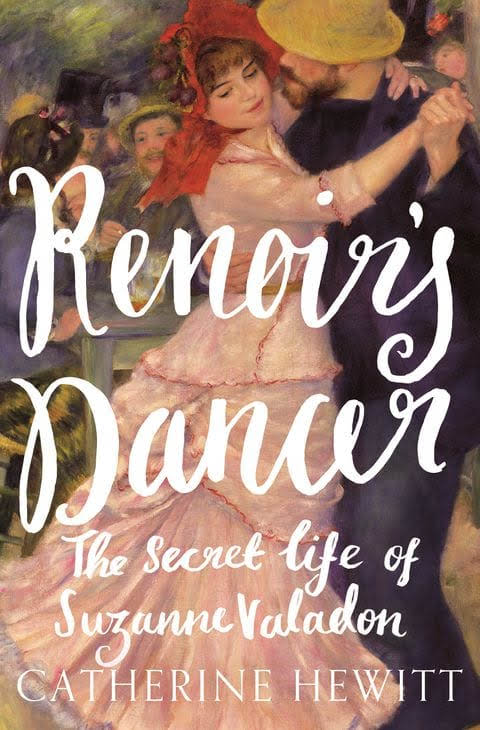
Renoir’s Dancer - The Secret Life of Suzanne Valadon by Catherine Hewitt- 2018.
Starting from her early teens, an illegitimate daughter of a Parisian laundress, she progressed from prostitute, to artist’s model, mistress of Renoir and other famous artists, to a highly regarded painter. Hewitt explained her career marvelously.
This year I am very glad to have the opportunity to read a second biography by Catherine Hewitt.
The Mistress of Paris- The 19th Century Courtesan Who Built an Empire on a Secret
Émilie-Louise Delabigne, known as countess Valtesse de La Bigne is a classic rags to riches story.
Born 1848 - Paris
Died July 29, 1910 - Villa-de-Avray, France
Her father was an abusive alchoholic, her mother a laundress who was also a prostitute. At age 13, while working in a sweet shop in Paris, she was raped by an older man.
Hewitt shows us how pervasive prostitution was in Paris in 1860s. In addition to women registered with the Police there were many thousands of part time anateurs supplementing the meager income of their families. Many were following the only profession open to young women besides household helper, laundry person or miliner. In then very Catholic France, a woman was supposed to be a virgin until married and a man to be experienced. Hewitt details the various sorts or levels of prostitutes.
At the bottom were street walkers, often having sex in doorways.
Valtesse started out one step above this as a lorette. Lorettes were mistresses of trade men and had regular clients. She did when
Short of money, walk the streets. The wealthier
a woman’s regular clients were, the higher her status. Hewitt’s biograohy is an account of how Valtesse used her striking redhaired Beauty, high intelligence and drive to become the most highly compensated courtesan in France.Valtesse seems to have consistently charged her clients for sex. She never wanted just to be a kept woman. She never fell in love after her affair with the father of her children. She never had a pimp of any sort. At her highest fame, she was given a Chateau for a night. Others paid her huge slums just to see her naked.
Émilie-Louise Delabigne took the pseudonym "Valtesse" due to its similarity to "Votre Altesse”, meaning “your highness”.
At age 20 she fell in Love with an army Officer with whom she had two daughters. He promised to marry her but never did. She never loved again. She placed the girls with her mother and supported them fjnancally.
Hewitt shows us the eventual disaster this produced. Valtesse found out her mother was pushing her daughter, one died very young, into prostitution at 16, planning to keep her earnings. This resulted in a court fight for custody, Valtesse won. Her mother later ran into a long time maid of Valtesse in the streets and assulted her.
Valtesse moved upward rapidly, she was evidently very skilled at sex and stroking the egos of men. An overweight sixty year old was made to feel like her greatest lover as she swooned in delight for two minutes.
She did while getting rich still entertain some old clients for low fees, saying if she is just doing nothing why not.
High level courtesans were celebrities. Hewitt tells us about some of the other famous courtesans of the period. She became a friend and bedmate of numerous top artists Valtesse. Edward Manet among others painted her.
Hewitt shows us How Valtesse educated herself through her clients, from artists she became an expert in contemporary art, she was painted numerous times. From politicians she learned about national and international affairs. She became the mistress of a famous composer and playright, Jacques Offenbach. Through him she began to dine in the best resturants in Paris. From this she met Flaubert, Zola, and Guy de Maupassant. Both Flaubert and de Maupassant were frequent visitors to brothels and clients of prostitutes. Neither could afford Valtesse.
I was fascinated to learn of her relationship to Emile Zola. Zola wanted to include a novel about prostitution in Paris in his cycle of novels, Les Rougon-Marquart, about a French family in Second Empire France. Zola had no first hand knowledge of prostitution and Valtesse shared her life story with him. L’Assomoir was loosely based on her younger days and the central Character in Nana was based on her. Nana was a huge best seller. Valtesse was wriiten up in the press as the model for Nana. Valtesse became ever more famous, higher priced and richer and richer. A Polish prince built a magnificient chateau for which she stocked with works of famous artists, most of whom she had slept with. She bankrupted Charles Guillaume Frédéric Boson de Talleyrand-Périgord (16 May 1832 – 21 February 1910), prince of Sagan by insisting he buy her a very expensive town House in the most elite part of Paris. When the son of Alexander Dumas asked for sex, she told him he could not afford her and laughed in his face.
Napolean the Third made her a comtesse. Her advise was listened to by high ranking poiticians.
Hewitt presents a very vivid picture of the time. She shows us The great draw Paris for country girls, how the railroads changed French Society.
As Valtesse aged she worried about losing her looks and her clients to younger girls. She, using her very high intelligence saved a lot of money. She sold The very expensive townhouse.She became a mentor to up and coming courtesans. Perhaps, as Hewitt shows, she did have some same sex encounters . She wrote a novel based on her life, hiding very little.
In her final years she ran a kind of School for aspiring courtesans.
She died at sixty two when a blood vessel burst.
The Mistress of Paris- The 19th Century Courtesan Who Built an Empire on a Secret by Catherine Hewitt - 2015 is a first rate work of narrative non-fiction. Readers of Balzac and Zola will, I think, love this book.
“Catherine Hewitt’s academic career began with a passion for 19th-century French art, literature and social history.
Having been awarded a first-class honours degree in BA French from Royal Holloway, University of London, she went on to attend the prestigious Courtauld Institute of Art where she took a Masters in the History of 19th-Century French Art and was awarded a distinction. In 2012, she completed her PhD on The Formation of the Family in 19th-Century French Literature and Art, with joint supervision from Royal Holloway and the Courtauld Institute. Throughout her academic career, she has regularly presented papers at conferences, published work in academic journals and was awarded numerous university prizes.” Further details can be found on her web site http://catherinehewitt.co.uk/
Mel u
Oleander Bousweau
Thursday, August 2, 2018
Renoir’s Dancer - The Secret Life of Suzanne Valadon by Catherine Hewitt- 2018
Paris in July hosted by Thyme for Tea, great event, will end on August 4th.
I Focus on literary works and nonfiction but you are invited to share your thoughts and experience on anything Paris related, from a great recipe, a favourite movie set in Paris, mine is Ninotchka, an account of your stay in Paris. I hope lots of people join in. Just be sure to link you post on The event home page.
There is still time to join us.
There are lots of very interesting posts from food bloggers, Francophiles, travel bloggers, as well as book bloggers. Normally I don’t venture far from the international book blog community so for me this event is an excellent way to expand my horizons.
So far I read for Paris in July 2018
- “A Yiddish Poet in Paris” by Blume Lempel, 1978
- Vagabond by Colette, 1904
- Lost Times - Lectures on Proust in a Soviet Prison Camp by Józef Czafski -translated and introduced. by Eric Karpeles - 2018
- “Her Last Dance” by Blume Lempel -
- Gerorge Sand by Martine Reid 2017
THE ARCHIVE THIEF The Man Who Salvaged French Jewish History in the Wake of the Holocaust LISA MOSES LEFF
- “Cousin Claude” by Blume Lempel
- Taste of Paris:A History of the Parisian Love Affair with Food by David Downie
- “The Beggar” by Gaito Gazdanov, 1962
- “Image on a Blank Canvas” by Blume Lempel
- Foreign Bodies by Cynthia Ozick. 2004,Kind of a rewrite of The Ambassadors by Henry James with a female lead. No post planned
- “Salmon Rushdie at the Louvre” - an essay by Cynthia Ozick. No post planned.
- In Another Country by James Baldwin. 1960, Partially set in Paris. No post planned.
- Renoir’s Dancer - The Secret Life of Suzanne Valadon by Catherine Hewitt- 2018
Suzanne Valadon
Born 1865
Died 1938
1883- begins to model for Renoir and others
Became a full time painter in 1896, mentored by Degas.
She is widely considered France’s greatest female painter.
I was completely fascinated and very involved on several levels by Renoir’s Dancer - The Secret Life of Suzanne Valadon by Catherine Hewitt- it is biography elevated to high art. I knew nothing about Suzanne Valadon when I began the book, by the close I felt I knew her with near intimate vermisilitude.
Valadon’s mother was a laundress in the provinces. Hewitt offers a lot of interesting details about life and folkways in rural France. Valadon was a bit of a wild child, by age fifteen the nuns at her school felt it was time for her to go to work. She tried washing dishes, doing laundry, and hat maker. It seemed for a while she might succeed as a circus acrobat but she injured herself in a fall.
Now 17, very attractive and outgoing, she went to the Paris Model’s market. I was unaware of this and greatly enjoyed learning how artists hired their models. A model had to have lots of stamina which Valadon had and for many assignments be willing to pose nude. The job paid a good bit more than her prior work. Models were seen by polite society as part demi-monde but Valadon liked to party, drinking and couldn’t care less. Men clearly were drawn to her.
Soon, with her mother, she was living in the Montmarte district, infamous for nightlife. She was introduced to Pierre-Auguste Renoir and became his favourite model and mistress. She also modeled for other elite impressionists. The Paris art scene was very intertwined, with gossip, swapping models and artistic cross pollination. Hewitt description of the art scene is very informative and fun to read.
Valadon was now pregnant, having numerous lovers, she did not name a father but a minor artist took responsibility. In time her son, her only child, was became difficult. Soon Valadon married and began to live with an older affluent businessman, her mother and son lived with him also. Hewitt lets us see what a devoted mother Valadon was to her son whose severe drinking binges kept him in and out of sanatoriums the rest of his life. The death of her mother is very movingly depicted. Her mother was very important to her and helped her with her son.
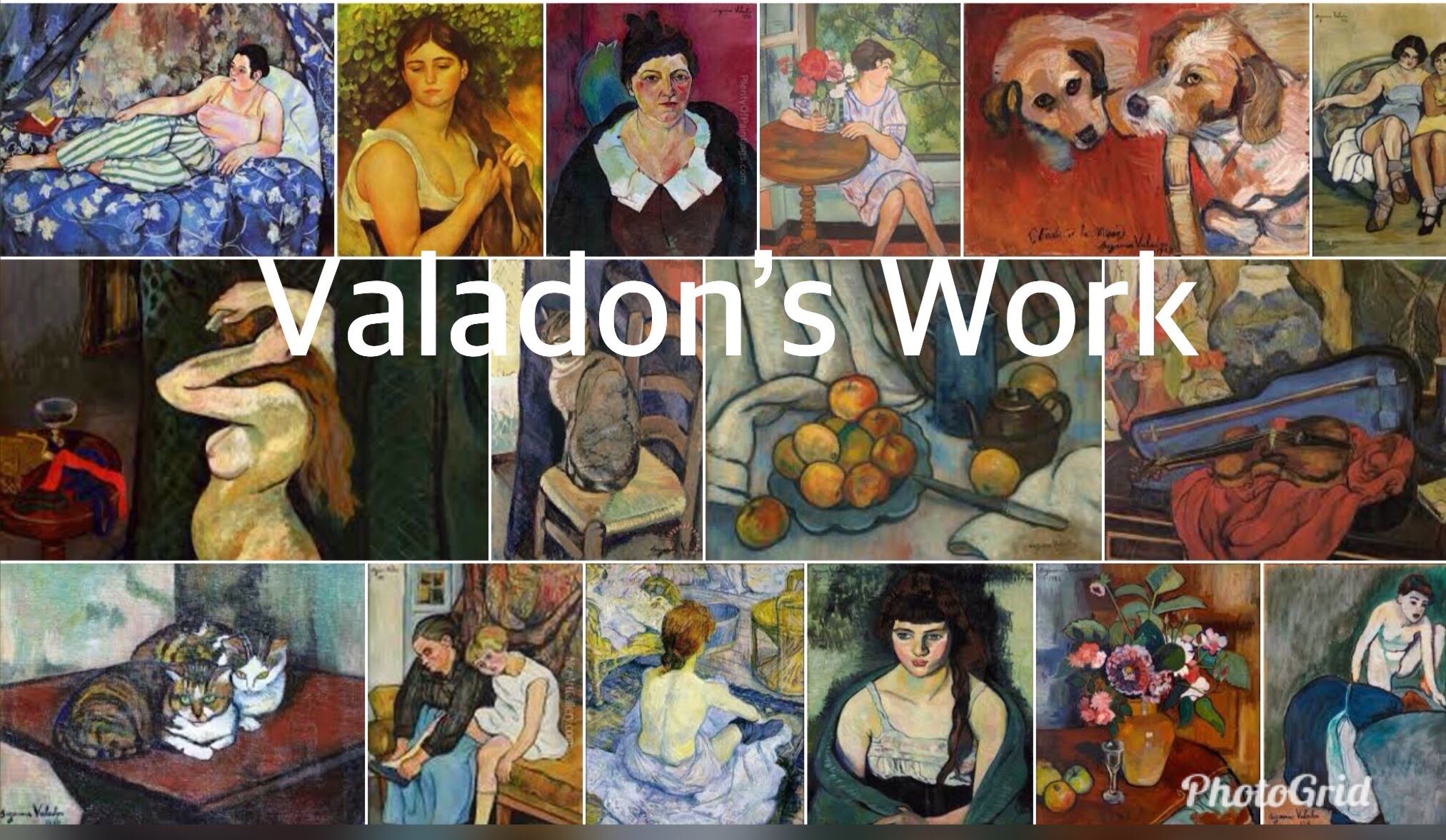
The most exciting part of the biography for me was Valadon’s progress from model to highly acclaimed artist.
She had shown an aptitude for drawing since a child. She learned a lot about artistic techniques from observing those who painted her. She began to paint in an impressionistic style. Toulouse-Lautrec, one of her clients, introduced her to high end art markets. At 28 she had an exhibition and sale at a top venue. For the rest of her life she produced and sold hundreds of works of art. A fun for me segment of the biography was Hewitt’s treatment of Toulouse-Lautrec.
At around age 45 she divorced her first husband and married a younger man, also an artist. Her troubled son had also become a serious commercial success as a painter and was to become a bigger earner than his mother. Mother and son were very close, the destructive behavior of her son, including several arrests, was a life long trial for her, one she bore as well as she could. She was a very devoted mother and her son worshipped her. Eventually he married and stabilized somewhat.
There is much more in this wonderful biography, it is a potrait of the life among The Impressionists of Paris, I think anyone interested in this era will like this book. One thing it brought out was how the railroad connected the provinces to Paris.
Valadon is considered an early feminist icon by msny, supporting herself, flaunting conventional moral restraits on women.
Maybe she was to French painting what Colette was to literature.
I give my total endorsement to Renoir’s Dancer - The Secret Life of Suzanne Valadon by Catherine Hewitt. I look forward to reading more of her work.
From The author’s website
Having been awarded a first-class honours degree in BA French from Royal Holloway, University of London, she went on to attend the prestigious Courtauld Institute of Art where she took a Masters in the History of 19th-Century French Art and was awarded a distinction. In 2012, she completed her PhD on The Formation of the Family in 19th-Century French Literature and Art, with joint supervision from Royal Holloway and the Courtauld Institute. Throughout her academic career, she has regularly presented papers at conferences, published work in academic journals and was awarded numerous university prizes.
After being awarded her PhD, she set out on her career in biography. Based on meticulous research, Catherine’s writing seeks to lift history out of the dusty annals of academia and bring its characters and events to life for the 21st-century reader. Her writing introduces real people, telling their stories in intimate detail and enabling readers to share their successes and frustrations. As well as writing, Catherine lectures and runs workshops on 19th-century French art, literature and social history, always seeking to share her enthusiasm for French history and culture. She also works as a freelance translator, and her portfolio includes a translation of a permanent exhibition of the work of the radical French female painter Suzanne Valadon for a gallery near Limoges in France.
Catherine lives in a village in Hampshire, UK. When she is not writing, she can be found helping restore her family’s house in the middle of rural France, cooking, reading and enjoying country walks with her little black cockerpoo, Alfie.
Mel u
Subscribe to:
Posts (Atom)
Featured Post
Imperial Reckoning: The Untold Story of Britain’s Gulag in Kenya by Caroline Elkins - 2005 - 701 Pages
Imperial Reckoning: The Untold Story of Britain’s Gulag in Kenya by Caroline Elkins - 2005 - 701 Pages 2006 Pulitzer Prize Winner From...
-
Book Blogger Appreciation Week Sept 13 to Sept 17-2010-Giveaway- Katherine Wish by Linda Lappin Leave a comment to win! Open to all f...
-
The Reading Life Guide to Getting Started in the Indian Short Story One of my reading hopes for this year is to read a large number of the s...
-
My blog is two years old today. To the readers of my blog I can say only . My blog is a very big part of my life no...