Showing posts with label F W Murnau. Show all posts

Wednesday, December 6, 2023

City Girl is a 1930 American silent film directed by F. W. Murnau, and starring Charles Farrell and Mary Duncan. It is based upon the play "The Mud Turtle" by Elliot Lester. Though shot as a silent feature, the film was refitted with some sound elements and released in 1930


 Available on YouTube 


Edit City Girl is a 1930 American silent film directed by F. W. Murnau, and starring Charles Farrell and Mary Duncan. It is based upon the play "The Mud Turtle" by Elliot Lester. Though shot as a silent feature, the film was refitted with some sound elements and released in 1930.


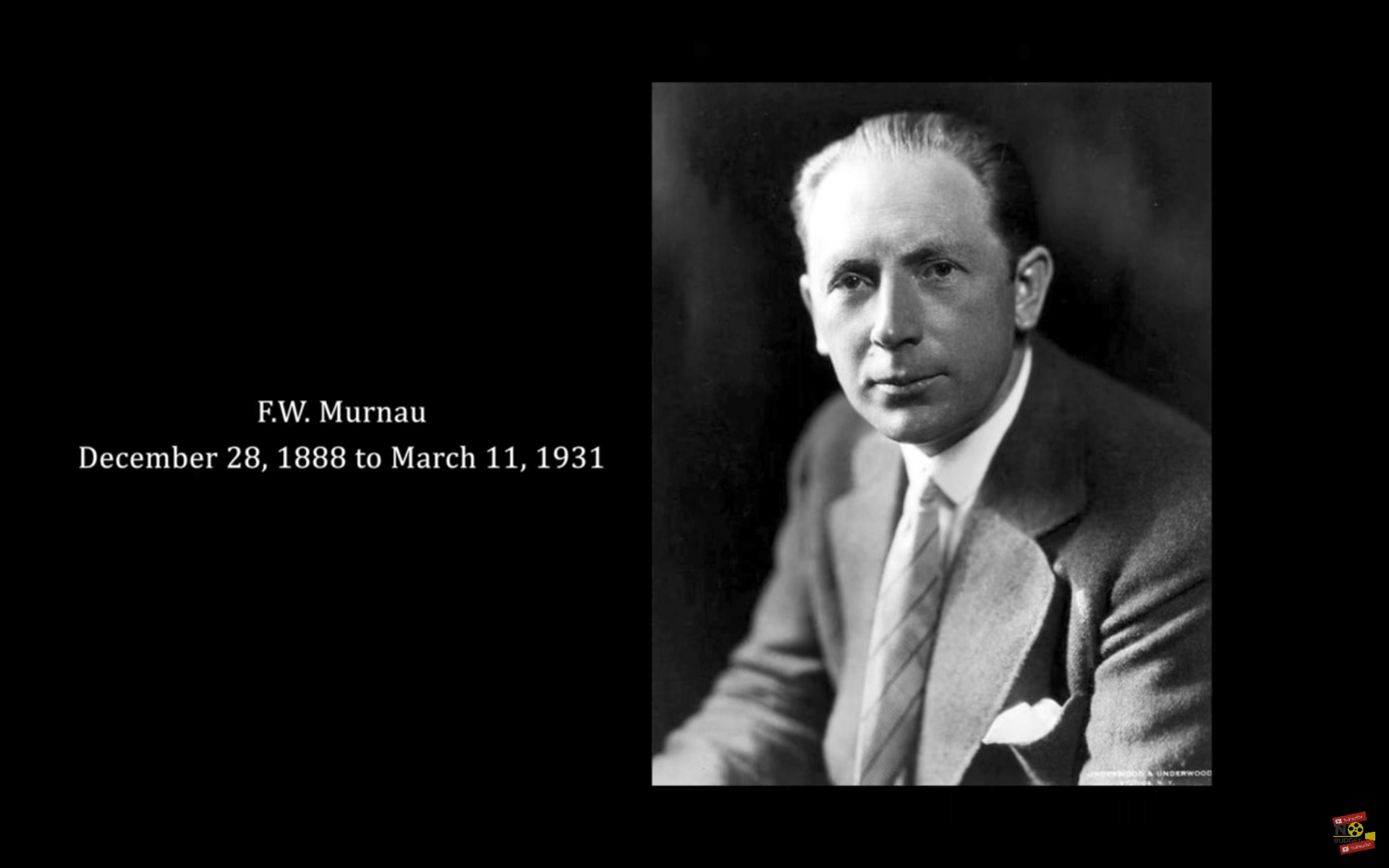
F.W. Murnau, (born December 28, 1889, Bielefeld, Germany)


Moved to California in 1926 - he made three silent films for Fox Studios before forming his own company 


—died March 11, 1931, Hollywood, California, - from injuries in an Automobile accident 


City Girl was shot on location in Athena and Pendleton, Oregon, and was Murnau's third and final Hollywood production. It was released shortly after the introduction of sound films, and was quickly shelved. As a result, the film is relatively unknown today.


However, City Girl is a beautiful and moving film that deserves to be rediscovered. It is a simple story, but it is told with great skill and sensitivity. The film's performances are excellent, and Murnau's direction is masterful.


The acting is emotional and effective, and the cinematography is breathtaking. In spite of the exceptionality of the film, it wasn't a success at the time of its release. However, that can likely be explained by the fact that the version we are seeing today is as director F.W. Murnau intended - a gloriously beautiful silent narrative. Unfortunately, what the audiences saw in 1930 was a bastardized version that had talkie sequences added and comedy inserted -- all after Murnau refused to make any changes to his silent creation. 


There is an excellent plot summary on the link below 

https://www.silentsaregolden.com/featurefolder10/citygirlcommentary.html


Films by German directors are an important part of post World War One German Culture, from the groundbreaking silent classics of the Weimar Republic to the movies of Leni Reisenthal in celebration of Nazi rule, beloved by Goebels, to modern Oscar winners, I am pleased to see German Literature Month XIII now welcomes posts on Films by German Directors


This is a post for German Literature Month XIII 2023 November 1 to December 7


German Literature Month is hosted by Lizzy’s Literary Life


https://lizzysiddal2.wordpress.com/2023/09/22/announcing-german-literature-month-xiii/


Sunday, November 26, 2023

Faust- A 1926 Silent Film Directed by F. W. Murnau- 1 Hour 46 minutes


 Available on YouTube In 4 k Restoration with a soundtrack 

Roger Ebert's remarks on Faust

https://www.rogerebert.com/reviews/great-movie-faust-1926

"Silent films like this deal more in broad concepts than in the subtleties of personality. Like Greek myth and comic books, they present characters clearly defined by their strengths and weaknesses. There's no small talk. Ekman creates an elderly Faust in anguish over his inability to cure plague victims and too proud to admit defeat. The young Faust is led astray by the stirrings in his loins, and the function of Gretchen, I am afraid, is to be the innocent victim of his lust; she wanders through a blizzard with her innocent infant and burns at the stake, all because of her love for the unworthy Faust"  Roger Ebert. 


Faust is an adaptation of the Faust legend, based primarily on the play Faust by Johann Wolfgang von Goethe. 

The film stars Gösta Ekman as Faust, an aging alchemist who sells his soul to the devil Mephistopheles (Emil Jannings) in exchange for youth, love, and knowledge. Camilla Horn plays Gretchen, a young woman who is seduced and abandoned by 


Faust is a 1926 German silent fantasy film directed by F. W. Murnau. It is an adaptation of the Faust legend, based primarily on the play Faust by Johann Wolfgang von Goethe.

The film stars Gösta Ekman as Faust, an aging alchemist who sells his soul to the devil Mephistopheles (Emil Jannings) in exchange for youth, love, and knowledge. Camilla Horn plays Gretchen, a young woman who is seduced and abandoned by Faust 

Faust was a critical and commercial success upon its release. It is now considered one of the greatest films of all time, and is praised for its innovative use of special effects, its Expressionist style, and its powerful performances. 


Here are some of the reasons why Faust is considered such a great film:

Its innovative use of special effects. Murnau was a pioneer in the use of special effects, and he used them to create some of the most stunning visuals in cinema history. For example, he used double exposure to create the illusion of Faust flying through the air, and he used miniatures to create the illusion of a giant city

Its Expressionist style. Expressionism was a German art movement that was characterized by its use of distorted shapes, exaggerated features, and bold colors. Murnau used Expressionist techniques to create a visually stunning and emotionally charged film

Its powerful performances. The film features some of the best performances of the silent era. Gösta Ekman is heartbreaking as the tortured Faust, and Emil Jannings is chilling as the devilish Mephistopheles


F. W. Murnau 

Born December 28, 1888

Moved to California in 1926 - he made three silent films for Fox Studios before forming his own company 


—died March 11, 1931, Hollywood, California, - from injuries in an Automobile accident 

His most famous film is Nosferatu, which was featured earlier this month.


Films by German directors are an important part of post World War One German Culture, from the groundbreaking silent classics of the Weimar Republic to the movies of Leni Reisenthal in celebration of Nazi rule, beloved by Goebels, to modern Oscar winners, I am pleased to see German Literature Month XIII now welcomes posts on Films by German Directors

This is a post for German Literature Month XIII 

German Literature Month is hosted by Lizzy’s Literary Life


https://lizzysiddal2.wordpress.com/2023/09/22/announcing-german-literature-month-xiii/


Saturday, November 25, 2023

Journey into the Night (Der Gang in die Nacht) - A 1921 German Silent Film Directed by F. W. Murnau - 1 Hour 9 minutes- His Oldest Surviving Film


available on YouTube 

In each of my posts each posts, hopefully ten, on F. W. Murnau I plan to share a documentary I found edifying 


A Post in Participation in German Literature Month XIII- November 2023


F.W. Murnau, born December 28, 1889, Bielefeld, Germany


Moved to California in 1926 - he made three silent films for Fox Studios before forming his own company 


—died March 11, 1931, Hollywood, California, - from injuries in an Automobile accident 


His most famous film is Nosferatu, which was featured earlier this month.


Films by German directors are an important part of post World War One German Culture, from the groundbreaking silent classics of the Weimar Republic to the movies of Leni Reisenthal in celebration of Nazi rule, beloved by Goebels, to modern Oscar winners, I am pleased to see German Literature Month XIII now welcomes posts on Films by German Directors


German Literature Month is hosted by Lizzy’s Literary Life


https://lizzysiddal2.wordpress.com/2023/09/22/announcing-german-literature-month-xiii/


F.W. Murnau's 1921 silent film Journey into the Night (German: Der Gang in die Nacht) is a captivating drama that delves into the complexities of love, betrayal, and redemption. The film follows Dr. Eigil Börne, a respectable physician engaged to the devoted Hélène. However, their tranquil life takes an unexpected turn when Börne encounters the captivating cabaret dancer Lily.

Mesmerized by Lily's allure, Börne breaks his engagement to Hélène and pursues a passionate relationship with Lily. Their union is initially filled with euphoria, but their contrasting personalities and Lily's reckless behavior soon lead to turmoil. Börne's finances crumble, forcing him to abandon his city life and seek refuge as a country doctor.

In the tranquil countryside, Börne encounters a blind painter, restoring his sight and rekindling his own sense of purpose. However, news of Hélène's deteriorating health due to heartbreak shatters Börne, causing him to confront the consequences of his choices.

Journey into the Night masterfully blends captivating visuals and poignant storytelling. Murnau's expressive use of shadows, light, and close-ups creates a haunting atmosphere, reflecting the characters' inner struggles and the film's exploration of themes like love, loss, and the pursuit of happiness.

The film's enduring legacy lies in its exploration of human nature's complexities, the consequences of our actions, and the possibility of redemption. It serves as a poignant reminder of the fragility of love and the enduring impact of our choices.

Journey into the Night is considered a seminal work of German Expressionist cinema, captivating audiences with its masterful storytelling and timeless themes. 

Mel u


Thursday, November 23, 2023

The Last Laugh (German: Der letzte Mann,) is a 1924 German silent film directed by German director F. W. Murnau from a screenplay written by Carl Mayer. The film stars Emil Jannings and Maly Delschaft.


A very informative presentation on the early films of F. W. Murnau 


In each of my posts each  posts, hopefully ten, on F. W. Murnau I plan to share a documentary I found edifying 


A Post in Participation in German Literature Month XIII- November 2023


F.W. Murnau, (born December 28, 1889, Bielefeld, Germany


Moved to California in 1926 - he made three silent films for Fox Studios before forming his own company 


—died March 11, 1931, Hollywood, California, - from injuries in an Automobile accident 


His most famous film is Nosferatu, which was featured earlier this month.


Films by German directors are an important part of post World War One German Culture, from the groundbreaking silent classics of the Weimar Republic to the movies of Leni Reisenthal in celebration of Nazi rule, beloved by Goebels, to modern Oscar winners, I am pleased to see German Literature Month XIII now welcomes posts on Films by German Directors


German Literature Month is hosted by Lizzy’s Literary Life


https://lizzysiddal2.wordpress.com/2023/09/22/announcing-german-literature-month-xiii/


The Last Laugh is a poignant story of an aging hotel doorman who is demoted to a lowly lavatory attendant. The film stars Emil Jannings, who gives a masterful performance as the proud doorman who is stripped of his identity and dignity when he is forced to take on a menial job. 

Murnau's innovative use of cinematography and editing helps to convey the doorman's emotional turmoil. The film's use of shadows and close-ups create a sense of isolation and despair, while the rapid editing of scenes reflects the doorman's frantic attempts to maintain his composure. 


Despite its somber tone, The Last Laugh is ultimately a hopeful film. The doorman's resilience and compassion shine through, even in his darkest moments. And the film's ending, while somewhat ambiguous, suggests that there is always the possibility of redemption.


The Last Laugh is a classic of silent cinema and a must-see for anyone interested in the history of film

Mel u


Featured Post

Imperial Reckoning: The Untold Story of Britain’s Gulag in Kenya by Caroline Elkins - 2005 - 701 Pages

  Imperial Reckoning:     The Untold Story of Britain’s Gulag in Kenya by Caroline Elkins - 2005 - 701 Pages 2006 Pulitzer Prize Winner From...