Showing posts with label Horacio Quiroga. Show all posts

Tuesday, May 10, 2016

"In the Middle of the Night" a short story by Horacio Quirico (1919)

A Short Story by the Edgar Alan Poe of the Amazon

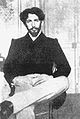
           Horacio Quiroga and his first wife.


Horacio Quiroga (1878 to 1937-Salto Uruguay) is considered the first modern South American short story writer.    He called Edgar Allen Poe his greatest teacher (and he lead a life at least as tragic as Poe)    He has been called "The Edgar Allen Poe of the Amazon" as he is most famous for his horror stories set in the jungles of the Amazon.   His stories are about people at the end of their rope, people driven mad by the isolation of the jungle,  the borders between hallucinations and reality and above all, death.   

Quiroga's father accidentally shot himself  before he was three months old.   Quiroga accidentally killed a close friend while cleaning a gun.    His best friend, also an author, shot himself after a bad review.   He had several very doomed from the start love affairs and marriages    When he was 22 his step father shot himself.   

At about twenty two Quiroga  discovered Edgar Allen Poe and knew he must become  a short story writer.   He also wrote several novels but his 200 or so short stories are his legacy to the world.   At about this same time he went along as official photographer on a trip with the famous Argentine poet, Leopoldo  Lugones, to  visit Jesuit missions in the Amazon region.    Quiroga fell in love with the jungle areas of the Amazon.   He was enthralled by the lush danger, the feeling of unlimited fecundity, the strangeness to him of the native people, and one must admit the cheapness with which land could then be bought there.   He set up a farm there and did many experimental things no one else had tried before.   Most of them were failures (I sense he was best at starting things!) but they show he had a great practical intelligence not just literary.   (There is a very interesting article on him HERE that details his numerous romances.)


"Drifting" The last story by Quiroga upon which I posted was about a man bitten by a poisoness snake trying to make it by river where he hopes a doctor living there could save him.  "In the Middle of the Night", set on a tributary of the Amazon, centers on the efforts of a wife to get her husband, stung by a sting ray and in terrible pain, to a medical facility down river.  The narrator is on a journey on the river and stops in a modest shop they run on the river, which is also offers bed and board for travelers.  He begins to speak with the woman who, along with her husband, try to eak out a living trading goods from their store. The wife tells him the story of the horrible journey to get her husband up river to a doctor.  He as in extreme pain.  

In just a few pages, Quiroga made me feel I was there on an Amazon tributary.   I really should read more of the 12 stories in the collection in which this appears.  

Mel u


Monday, July 27, 2015

"A Slap in the Face" by Horacio Quiroga (1916, translated by Margaret Sayers Peden)


Spanish Literature Month (now extended through September) is an annual event hosted by Richard of Caravana de Recverdos and Stu of Winstondad's Blog.  Any work originally in Spanish can be posted on for the event.  There are lots of suggestions and links to participant posts on the link above.


The First South American Master of the Short Story

Horacio Quiroga (1878 to 1937-Salto, Uruguay) is considered the first modern South American short story writer.    He called Edgar Allen Poe his greatest teacher (and he lead a life at least as tragic as Poe's).    He has been called "The Edgar Allen Poe of the Amazon" as he is most famous for his horror stories set in the jungles of the Amazon.   His stories are about people at the end of their rope, people driven mad by the isolation of the jungle,  the borders between hallucinations and reality and above all, death.   

Quiroga's father accidentally shot himself  before he was three months old.   Quiroga accidentally killed his best friend while cleaning a gun.    His best friend, also an author, shot himself after a bad review.   He had several very doomed from the start love affairs and marriages    When he was 22 his step father shot himself.   

At about twenty two Quiroga  discovered Edgar Allen Poe and knew he must become  a short story writer.   He also wrote several novels but his 200 or so short stories are his legacy to the world.   At about this same time he went along as official photographer on a trip with the famous Argentine poet, Leopoldo  Lugones, to  visit Jesuit missions in the Amazon region.    Quiroga fell in love with the jungle areas of the Amazon.   He was enthralled by the lush danger, the feeling of unlimited fecundity, the strangeness to him of the native people, and one must admit the cheapness with which land could then be bought there.   He set up a farm there and did many experimental things no one else had tried before.   Most of them were failures (I sense he was best at starting things!) but they show he had a great practical intelligence not just literary.   (There is a very interesting article HERE that details his numerous romances)


I have posted in the past on five of his short stories.  Probably the most convenient way to read his stories in English is in the two volumes of his short stories published by the University of Texas Press.

"A Slap in the Face" is set in a logging camp in the Amazon.  The workers travel by boat to the remote camps. They are not allowed any alcohol, especially their home brewed sugar based drink, as they lose control and can become violent.  The labor bosses pay for their passage and pay them for their two months work at the end of the period.  They transport them home and most workers spend all their money in a few days drinking and whoring.  Or their wives take all their money.  The cycle begins and they soon are back on the boat to the camp.  One of the workers on the boat is returning from a camp where the owner had banned him for drunkeness.

The bosses are very abusuve, seeing the Indian workers as little more than slaves and use a whip on slackers.  The banned worker  dares to speak back when he is cursed at as a lazy stupid drunken Indian.  The foreman slaps him in the face.  The man raises his machete to his boss who then points his pistol at him.  The worker uses his machete to take the gun out of the bosses hand, taking some of his fingers at the same time.  A life time of suppressing rage overwhelmes the worker.  He grabs the whip and begins to beat his oppressor.  

The descriptions of the beatings are very graphic.  The worker places the boss on a raft.  He whips him  repeatedly, stripping his clothes and skin and leaving a bloody mess.  He then launches the raft on a course headed for a fall, with the unconscious foreman headed for sure death.  The worker laughed and says he has been slapped for the last time. 

I will leave the close untold.

"A Slap in the Face" was an expose of the abuses heaped on Indian loggers.  

I hope to read more of the short stories of Horacio Quiroga soon.  

Spanish literature month has been extended through September so maybe I can post again.

Mel u


Saturday, September 28, 2013

"Drifting" by Horacio Quiroga (1912).


The First South American Master of the Short Story- The Edgar Allan Poe of the Amazon Basin 

Horacio Quiroga (1878 to 1937-Salto Uruguay) is considered the first modern South American short story writer.    He called Edgar Allen Poe his greatest teacher (and he lead a life at least as tragic as Poe's).    He has been called "The Edgar Allen Poe of the Amazon" as he is most famous for his horror stories set in the jungles of the Amazon.   His stories are about people at the end of their rope, people driven mad by the isolation of the jungle,  the borders between hallucinations and reality and above all, death.   

Quiroga's father accidentally shot himself  before he was three months old.   Quiroga accidentally killed his best friend while cleaning a gun.    His best friend, also an author, shot himself after a bad review.   He had several very doomed from the start love affairs and marriages    When he was 22 his step father shot himself.   

At about twenty two Quiroga  discovered Edgar Allen Poe and knew he must become  a short story writer.   He also wrote several novels but his 200 or so short stories are his legacy to the world.   At about this same time he went along as official photographer on a trip with the famous Argentine poet, Leopoldo  Lugones, to  visit Jesuit missions in the Amazon region.    Quiroga fell in love with the jungle areas of the Amazon.   He was enthralled by the lush danger, the feeling of unlimited fecundity, the strangeness to him of the native people, and one must admit the cheapness with which land could then be bought there.   He set up a farm there and did many experimental things no one else had tried before.   Most of them were failures (I sense he was best at starting things!) but they show he had a great practical intelligence not just literary.   (There is a very interesting article on him HERE that details his numerous romances.   

Quiroga is as death obsessed a writer as you are likely to find.  Roberto Bolano greatly admired his work.  "Drifting" is a painfully vivid account of what it was like to die from snake bite in the Amazon basin in 1910, hours from any medical care.  Quiroga's description of the impact of the bite is really brilliant.  It hurt to see the victim's leg swell up to double size.   The man perceived his only hope for surviving was by taking a five hour canoe ride to the nearest bigger town where medical help is available and where he has a friend.  The beauty of the river is almost that of an hallucination.  We see the man become increasingly unable to tell reality from his snake vermin induced perceptions.  The riverine journey becomes a passage to another world.   I don't know what dying from a snake bite feels like but now I can imagine it.

This story was translated by Margaret Pedar.


Sunday, September 22, 2013

"Sunstroke" by Horacio Quiroga (1908).


The First South American Master of the Short Story- The Edgar Allan Poe of the Amazon Basin 

Horacio Quiroga (1878 to 1937-Salto Uruguay) is considered the first modern South American short story writer.    He called Edgar Allen Poe his greatest teacher (and he lead a life at least as tragic as Poe's).    He has been called "The Edgar Allen Poe of the Amazon" as he is most famous for his horror stories set in the jungles of the Amazon.   His stories are about people at the end of their rope, people driven mad by the isolation of the jungle,  the borders between hallucinations and reality and above all, death.   

Quiroga's father accidentally shot himself  before he was three months old.   Quiroga accidentally killed his best friend while cleaning a gun.    His best friend, also an author, shot himself after a bad review.   He had several very doomed from the start love affairs and marriages    When he was 22 his step father shot himself.   

At about twenty two Quiroga  discovered Edgar Allen Poe and knew he must become  a short story writer.   He also wrote several novels but his 200 or so short stories are his legacy to the world.   At about this same time he went along as official photographer on a trip with the famous Argentine poet, Leopoldo  Lugones, to  visit Jesuit missions in the Amazon region.    Quiroga fell in love with the jungle areas of the Amazon.   He was enthralled by the lush danger, the feeling of unlimited fecundity, the strangeness to him of the native people, and one must admit the cheapness with which land could then be bought there.   He set up a farm there and did many experimental things no one else had tried before.   Most of them were failures (I sense he was best at starting things!) but they show he had a great practical intelligence not just literary.   (There is a very interesting article on him HERE that details his numerous romances.   

Yesterday I acquired a collection of short stories by Horacio Quiroga.  He was one of Roberto Bolano's favorite writers.   I have read and posted prior today on seven of his stories.   His best known stories are "The Decapitated Chicken" and "The Feather Pillow".  Like these two stories "Sunstroke" deals with death, making use of belief's about death of people of Uruguay.  There are interesting similarities between some of the views of Irish country people in the same period.  

Quiroga wrote a lot of children's stories.  The protagonists of this story are a group of dogs who all belong to the local patron.  They talk to each other.  They know they have a good master and a better life than most of the dogs in the area.  He does not beat them and they are well fed.  One morning one of the dogs see death approaching their master.  All of the dogs fear his passing will mean the end of their comfortable existence.  It was a lot of fun to listen to the dogs talk and running the field with the pack.  Death does not seem to come back and the dogs hope it was all a false alarm.

Quiroga masterfully describes the countryside, plantation life, the world of the dogs, and their relationship to each other and the patron.  The story does not end happily, few of his seem to have one.  The story was translated by Margaret Paden.


Saturday, January 12, 2013

"The Flamingo's Stockings" by Horacio Quiroga -Project 196 Uruguay

"The Flamingo's Stockings" by Horacio Quiroga (1918, 5 pages)

Project 196
Uruguay

22 of 196 Countries
Horacio Quiroga


  1. Georgia 
  2. Canada
  3. U. S. A.
  4. The Republic of Korea
  5. Antigua and Barbuda 
  6. Haiti
  7. Trinidad and Tobago 
  8. Ukraine
  9. Cameroon
  10. Botswana
  11. Sudan
  12. Dominica 
  13. Israel
  14. Syria
  15. Ethiopia
  16. Zimbabwe
  17. Peru
  18. Chile
  19. South Africa
  20. Turkey
  21. Peru
  22. Uruguay 
"The Feather Pillow" a truly horrifying story set deep in the Amazon basin

"The Decapitated Chicken" (If this story does not give you chills, have yourself checked over-the post also contains links to three other of his stories.)


Uruguay was home to the great Horacio Quiroga.   I have read and posted on several of his stories and I would say if you like horror stories you will love the stories I have posted on (there are links in my posts to his stories in English).  Read one and you will seek out others!

In a list of "must read short story writers" Roberto Bolano listed him first.  

Horacio Quiroga (1878 to 1937-Salto, Uruguay) is considered the first modern South American short story writer.    He called Edgar Allen Poe his greatest teacher (and he lead a life at least as tragic as Poe's).    He has been called "The Edgar Allen Poe of the Amazon" as he is most famous for his horror stories set in the jungles of the Amazon.   His stories are about people at the end of their rope, people driven mad by the isolation of the jungle,  the borders between hallucinations and reality and above all, death.   

Quiroga's father accidentally shot himself  before he was three months old.   Quiroga accidentally killed his best friend while cleaning a gun.    His best friend, also an author, shot himself after a bad review.   He had several very doomed from the start love affairs and marriages    When he was 22 his step father shot himself.   

At about twenty two Quiroga  discovered Edgar Allen Poe and knew he must become  a short story writer.   He also wrote several novels but his 200 or so short stories are his legacy to the world.   At about this same time he went along as official photographer on a trip with the famous Argentine poet, Leopoldo  Lugones, to  visit Jesuit missions in the Amazon region.    Quiroga fell in love with the jungle areas of the Amazon.   He was enthralled by the lush danger, the feeling of unlimited fecundity, the strangeness to him of the native people, and one must admit the cheapness with which land could then be bought there.   He set up a farm there and did many experimental things no one else had tried before.   Most of them were failures (I sense he was best at starting things!) but they show he had a great practical intelligence not just literary.   


In addition to his horror stories, he wrote a number of children's stories, collected in the book Jungle Tales, 1918.   His children's stories were written with the market place in mind, while his short stories were written to express his passion for the art form.   Saying that "The Flamingo's Stockings" is a pretty scary children's story.  I somehow do not think you will find its like in the children's section of any big chain book store now.  I am sure any editor of children's books would tell the author he was crazy to think they will print the story.  


The story is set at a party given by the vipers.   All of the animals of the Amazon were invited, frogs, alligators, coral snakes, toads, turtles and fish.   "The alligators to adorn themselves, slung garlands of bananas around their necks and smoked huge Paraguayan cigars".  The toads are decked out in their best, the frogs are perfumed from head to tail and each one carried a small torch.   The most splendid of all were the coral snakes, dressed in long satin gowns.   "Prettiest of all were the vipers.  Each one, without exception, was wearing a dancers costume matching the color of its skin".   The flamingos are the only ones not enjoying themselves.  They had white legs at that time and were jealous of everyone else's outfits.   They device a plan to take the outfits of the coral snakes.  Which, as you will discover if you give yourself the pleasure of reading this delightful story, a very big mistake.


Tuesday, December 20, 2011

"Three Letters and a Footnote" by Horacio Quiroga

"Three Letters and a Footnote" by Horacio Quiroga (1925, Podcast, 14.5 minutes)

Quiroga and second wife
 Horacio Quiroga (1878 to 1937-Uruguay) is often called the Edgar Allan Poe of the Amazon.   I have previously posted on four of his short stories, each of them very much in the Gothic horror genre.   There is additional background information on Quiroga in my prior posts on him.   I think most who read one of his stories, will want to read more.   My favorite of his stories so far is "The Decapitated Chicken", I almost can guarantee it will "creep you out".     His stories are short and can be read in just a few minutes.

I was looking around yesterday at Miette's Bedtime Story Podcast for something to listen to and was very happy to find a story by Quiroga that was new to me.   Miette in her description of "Three Letters and a Footnote" said it was totally unlike most of his other stories and also is told from the point of view of a young woman so I decided to experience it.  

Basically the story begins with a  twenty year old woman writing the editor of a magazine.    She encloses a story about her commute to work on a street car (the setting for the story has not been given but based on the text and the life of the author I am guessing it is meant to be seen as Buenos Aires, Argentina or Montevideo, Uruguay.)    The woman tells the editor she wants him to publish the story but change the author to himself as people will not believe a woman could have written it.   It is about her experiences over the last five years riding the street car to work.   It is really all about how she sizes up the men who ride the street car in terms of their interest in her.   There are special commuter train cars for women here in Manila (and elsewhere) for women only because of "train perverts" who use the crowded conditions to press up against women and I guess this is not a new thing based on this story.

Quiroga does a good job projecting the thoughts of the young female narrator as she described her five years twice a day rides on the street cars, packed with mostly men.    There is a kind of interesting surprise twist to the story but it is just incidental to the pleasure of the story.

I experience podcasts very differently from a written work.  I am sure most people do also.  I listened to the story three times.

For sure read his "The Decapitated Chicken" first then try some of his other works if you like that.     My guess it will be your first read by an author from Uruguay so you will also add another country to your list if you are trying to read with a lot of diversity, not a bad goal at all.  

The main purpose of this post is to spotlight for a second time Miette's Bedtime Story Podcast.


Mel u


Sunday, June 12, 2011

Horacio Quiroga-Four Stories From The Edgar Alan Poe of the Amazon

"The Decapitated Chicken" (1908, 5 pages, translated by Margaret Peden)
"The Son" (1917, 5 pages, )
"The Canoe"  (1921, 4 pages, )
"The Lazy Bee"  (1918, 3 pages )

Four Stories from Horacio Quiroga
Uruguay's Master of the Horror Story
The Edgar Alan Poe of the Amazon

I first discovered Horacio Quiroga (1878 to 1937-Salto, Uruguay) quite by  accident in April when I found one of his more famous short stories, "The Feather Pillow" on a short story web page I like.  (There is some background information on Quiroga in my prior post.    Today I will just  say that Edgar Alan Poe was his literary hero and Quiroga led a life as least as tragic as Poe's).    At the time I read "The Feather Pillow", which I see as near must reading, I found some collections of his work for sale at Amazon but could not find anymore of his stories online.   I looked a little deeper yesterday and was happy to find four of them, one of the stories, "The Decapitated Chicken" would make even Poe cringe, I think.   One of the stories is a child's story (of which he wrote a number), the other two are in the horror story, death obsessed vein.   I will talk briefly about each story and will give you a link where you can read the stories if you like.

"The Decapitated Chicken", by far the most powerful of these four stories, is a truly horrifying story about a cursed family.   If it does not make you cringe, check your pulse.   I do not think I will forget this family.    A couple marry, they are very much in love and their passion for each other is strong.   Fourteen months into the marriage, the wife gives birth to a son.   At age 18 months he has a terrible illness which he survives but he has been reduced in intelligence.   This story does not use any kind of polite language to talk about the son.   The narrator calls him an "idiot" over and over and we feel, even though we do not want to, how horrible this must be.   Quiroga describes the son so we feel he is a beast more than person. Of course the couple if crushed but in time they have another son but at age 18 months the same thing happens.   They begin to have vicious fights over whose heredity is causing this.    The fights end but the early spirit of the marriage is destroyed.   They consult a doctor and he does tell him it is probably hereditary but as each parent has issues in their background they cannot fix the blame for this.   They do come to nearly hate each other through the horrible fights the boys bring on.    The boys are described in terms to make them seem revolting.    In time they have twin boys (OK can anyone say "planned parenthood?"), to their great horror at age 18 months they are both reduced to the level of idiots (I know this is cold and cruel but it is the term used over and over in the story.)    Finally they have a daughter who reaches age five and shows no sign of the family curse.    The parents soon forget all about their four boys and give all their love to their daughter.   She becomes totally spoiled while the boys are treated more and more like defective animals of some kind.    The parents regain a measure of love for each other in the love for their daughter.    One day the four boys are in the kitchen observing the cook decapitate a chicken....(You can read the story and find out the ending-it is worse than you think! HERE)

"The Son" is another story of a cursed family.   The family is just a man and his thirteen year old son.   His wife has passed away.    The man is a wonderful loving father who has raised his son to be a fine young man.   They live in a very forested Amazonian area (there is a lot of good detail in this story) and get a lot of their food by hunting.   The boy is already an expert with the rifle.      (you can read this heart breaking story HERE-there is no translator credit given for any but the first of these three stories)

"The Canoe" is another death obsessed story (If you read the Wikipedia article on him you will see how he came by his obsession with  death).   It is an interesting  story  but falls below the level of "The Feather Pillow" and  the first two stories of today's post.   You can read it HERE.

"The Lazy Bee" is just a standard children's tale about the value of hard work and such.   Quiroga wrote his children's story with an eye on what parents would approve.    He loved his horror/Poe like stories and his large output of children's stories were pretty much just for money.     I read it as it was only three pages long.   It was Ok and sort of a curiosity read.  You can read it HERE

Of these stories, "The Decpaitated Chicken" is the best (some will not like the way it describes the handicapped sons and find it to brutal).  

If you have not yet read any work by writers from Uruguay (and my bet is you have not!) Quiroga would be a great starting point.   I think his influence on Latin American Literature is quite high.

As always, I am seeking suggestions for short stories I can read online.

Mel u

Friday, April 29, 2011

Horacio Quiroga-"The Feather Pillow"-a story by the Edgar Allan Poe of the Amazon Jungle

"The Feather Pillow"  by Horacio Quiroga (1907, 5 pages)


The First South American Master of the Short Story

Horacio Quiroga (1878 to 1937-Salto Uruguay) is considered the first modern South American short story writer.    He called Edgar Allen Poe his greatest teacher (and he lead a life at least as tragic as Poe's).    He has been called "The Edgar Allen Poe of the Amazon" as he is most famous for his horror stories set in the jungles of the Amazon.   His stories are about people at the end of their rope, people driven mad by the isolation of the jungle,  the borders between hallucinations and reality and above all, death.   

Quiroga's father accidentally shot himself  before he was three months old.   Quiroga accidentally killed his best friend while cleaning a gun.    His best friend, also an author, shot himself after a bad review.   He had several very doomed from the start love affairs and marriages    When he was 22 his step father shot himself.   

At about twenty two Quiroga  discovered Edgar Allen Poe and knew he must become  a short story writer.   He also wrote several novels but his 200 or so short stories are his legacy to the world.   At about this same time he went along as official photographer on a trip with the famous Argentine poet, Leopoldo  Lugones, to  visit Jesuit missions in the Amazon region.    Quiroga fell in love with the jungle areas of the Amazon.   He was enthralled by the lush danger, the feeling of unlimited fecundity, the strangeness to him of the native people, and one must admit the cheapness with which land could then be bought there.   He set up a farm there and did many experimental things no one else had tried before.   Most of them were failures (I sense he was best at starting things!) but they show he had a great practical intelligence not just literary.   (There is a very interesting article on him HERE that details his numerous romances.   What is important to know for understanding the background of "The Feather Pillow" is that he took his greatest love (who he married-several of women died on him), a city girl , to live on his jungle farm totally against her parents wishes who thought it far to dangerous.   His in laws ended up moving to the same jungle area to keep and eye on their daughter.)

"The Feather Pillow" (translator unknown) does sound a bit like  Edgar Allan Poe set in the jungles of the Amazon.   There are only two characters in the story, a man and his new bride.   I wanted to quote from the story to give you the feel of his work but when I attempted to make a selection I found I could not really leave anything out.   I will relay the outlines of the first half of the plot.   

The bride, for whom the honeymoon was "three months of hot and cold shivers" begins to become ill.   She is left alone all day in an old semi-mansion in the jungle while her husband works.   She loves him but he is "rough".   He loves her deeply but it is not in his nature to express it.     She begins to become ill.   The doctors say it is influenza.   Her health never really returns after this.   She gets weaker and paler every day.   She begins to hallucinate and scream in fear of creatures no one else can see.   Her most persistent fear was of "an anthropoid poised on his finger on the carpet next to her bed staring at her".   The illness gets worse only at night.   When ever she awoke she always had the sensation of a million pound weight on top of her.   When she would drag herself out of the bed in morning now she refused to allow the bed to be made or disturbed in anyway.  She now spoke of monsters that dragged themselves into her bed at night.   She gets worse and worse.   The doctors say they do not understand at all.   Her husband paces the floor for the last two days of her life as she screams out.    After she is dead a servant comes to her husband and tells him there is blood on the pillow.  That is all I will say as I really hope some will read this story.

The ending is not inferior to any horror type story I have read.    There are all sorts of ways to look at the meaning of the ending.   I think it might be a great class room story as for sure the ending will get people talking about the story

Quiroga is said to have had a large influence on the South American short story.     There are collections of his short stories in English and Spanish on Amazon.com (I wondered what he would make of that name?)    "The Feather Pillow" is his most famous story.   As far as I can find (please correct me if I am wrong) it is his only work in English you can read online.   


You can read it HERE.


"The Feather Pillow" seems a near must read to me.  It is super atmospheric (you can feel the jungle), it has a deep insight into something or other ( please don't laugh here  until you have   read it an can explain the meaning -if there is one-of the ending), it is fun and scary and I bet you have never, I know I had not, read any thing by an author from Uruguay.     He helped begin the tradition of magic realism in South America.   It is also fun to read.   

Featured Post

Imperial Reckoning: The Untold Story of Britain’s Gulag in Kenya by Caroline Elkins - 2005 - 701 Pages

  Imperial Reckoning:     The Untold Story of Britain’s Gulag in Kenya by Caroline Elkins - 2005 - 701 Pages 2006 Pulitzer Prize Winner From...