Wednesday, May 26, 2010

Harp of Burma by Michio Takeyama

Harp of Burma by Michio Takeyama (1948, tran.  from the Japanese 1966 by Howard Hibbett, 132 pages)

Michio Takeyama (1903 to 1984-Osaka, Japan) was a professor of German and translated works by Goethe, Nietzsche, and Albert Schweitzer into Japanese.  After graduating from Tokyo Imperial University he was sent by the Imperial Ministry of Education to study in Paris and Berlin.   He was not a supporter of the alliance of Japan with Italy and Germany and wrote a newspaper article opposing the Tripartite Alliance of the three countries prior to the start of WWII.   After the war he wrote The Burmese Harp (his only translated work) which made him world famous.  It was made into a very successful movie.  The translation of his work was sponsored by UNESCO.   The Burmese Harp tells the story of a group of Japanese soldiers in Burma who know the war is lost and who do not want to die for nothing.   The standard image of the Japanese soldier is that of a mindless fanatic who wishes to do nothing more than die for his Imperial God.     The soldiers in The Burmese Harp have been through hell.   They have been through years of constant fear from the British troops who are successfully taking back Burma (I decline for my own reasons to call it Myanmar) and from the Gurkhas whose knives they fear even worse.   They have been hungry for years, many have tropical diseases, they know somehow that Japan has been nearly destroyed by Allied Bombing and they do not know how their family and loved ones are doing back in Japan.

The soldiers in this unit do have something special.   They have a captain who encourages them to sing and a wonderfully strong corporal who plays the Burmese harp to keep up their spirits.   Compared to other units, the morale of the men in this group is very high.    The Captain gets word that the war is over and they surrender to the British.   As was normal, his unit was placed in a POW camp where they were told they would stay for a few months before being sent back to Japan.   The British Captain treats them with respect.   One day he approaches the Japanese captain and tells him he wants him to send a man into the jungle to advise a Japanese unit there that the war is over.    This is a very dangerous mission.    The harp player volunteers knowing he may well be killed as a coward by the men he will approach.    The harp player never returns from the mission.   He was sort of the heart of the unit.    The story is narrated in the first person by one of the soldiers and he often talks about the Burmese monks.   One day they see a Burmese monk who looks just like the harp player.     Some of the men in the unit ask him if he is their missing comrade but he denies it.    As the story goes on the narrator talks of how the culture of the Japanese lead them into a horrible war which devastated their country and took them to a terrible defeat while the much simpler almost primitive seeming Burmese want only to live in peace.   It does turn out the monk is the missing harp player.   He admits his identity when he finds out his old unit is being released and sent back to Japan.   He had been observing them the whole time and longed to be with them.     While in the jungle he had undergone a kind of conversion to the core values of Buddhism.    He had lived for months as a Burmese monk wandering the jungle and supported by the offerings of the Burmese.   Everywhere he went in the jungle he was increasingly horrified to see 1000s of unburied bodies of fallen Japanese.   He had committed to make his life mission to bury as many of these bodies as he could.    He sent a long letter to his friends to explain his decision:

We Japanese have not cared to make strenuous spiritual efforts.   We have not even recognized their value.  What we stressed was a man's abilities, the things he could do-not what kind of man he was, how he lived, or the depth of his understanding.   Of perfection as a human being, of humility, stoicism, holiness, the capacity to gain salvation and to help others to it-of all these virtues we were left ignorant.   I hope to spend the rest of my life seeking them as a monk in this foreign land...Our country has waged a war and lost it and is now suffering.   That is because we were greedy, because we were so arrogant that we forgot human values.  
Harp of Burma is an amazing book.    It affirms the deepest values of Buddhism and makes us see the horrors of war.    For western readers, it lets us see the humanity of the Japanese soldier.   You can read it in a few hours but I do not think you will soon forget the sound of the Burmese harp echoing a message of peace and faith through the Burmese jungle.    We can all learn a lot from the attitude of the Burmese people as depicted in this marvelous tale.   I recommend this book without reservation.   I think it is the first post WWII Japanese novel to harshly condemn the role of the Japanese in causing the horrors of WWII.    UNESCO was right to treat this book as a world class cultural treasure.

"German Meat" by Katherine Mansfield-Background for her first collection of short stories-The German Pension


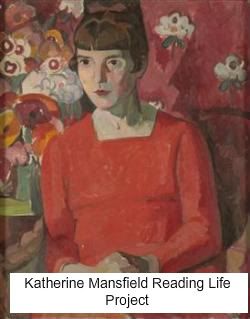
"German Meat" by Katherine Mansfield (8 pages, 1911) is the lead story in her first collection of short stories, In A German Pension.   All of the stories in this collection center on the experiences of a young English woman staying at a boarding house in Germany.  ("Pension" is an old fashioned word for boarding house).   

Katherine Mansfield (1988 to 1923-New Zealand) was born into a wealthy highly educated New Zealand family.   (I have posted on her background in my prior Mansfield posts.)   At age 20 she made the 6 weeks plus steam ship trip to London to attend Queen's college, living with her two sisters initially.   Long story short she fell in love with the big city, had some flings with theatrical and literary bad boy types as well as romantic encounters with other women.   Mansfield's parents appear to have been very supportive of her (for sure they were financially) and when they got a letter from some old  New Zealand family friends that Mansfield lived with for a while in London and who seemed to have kicked her out due to her romance with their son describing her life style in particular her relationships with other women (in her late teen age years  while still in Wellington she had a relationship with a Maori woman) they were very worried.    Mansfield also in 1909 married a man she had known only a month and annulled the marriage after one day.   She also had a miscarriage about this time  although it is not clear to me from what I have read if her parents knew about all this.   Her parents were so alarmed that her mother made the very long steam ship voyage to London to check on her daughter.     At that time homosexuality was considered a disease and was a crime so after some investigation her mother sent her to the  Bavarian spa of Bad Wörishofen which purported to be able to cure a woman of lesbian tendencies through a series of baths in the mineral hot springs.   The treatment (I would love to know details I admit) also involved soaking  the women down with high pressure hoses!  During this six week or so period Mansfield stayed in a pension, all the other guests were Germans.   The stories in her first collection (edited by her) "In a German Pension" all center around the interactions of a young English woman with the other guests.    At the time most short stories were of the O Henry/Saki pattern with a surprise or a twist at the end.   Mansfield  disdained this as a cheap trick.    In defense of other story writers,  Mansfield did not need to sell her stories to magazine editors to have money to live.   The allowance she received all her life from her parents gave her the artistic freedom to follow her muse where it lead her.   


There are 13 stories included with In A German Pension.   "German Meat" is the first story.   (The spa also treated gout.)    Here is a conversation at the boarding house table when a German guest learns the English woman is a vegetarian:


“Is it true,” asked the Widow, picking her teeth with a hairpin as she spoke, “that you are a vegetarian?”
“Why, yes; I have not eaten meat for three years.”
“Im—possible! Have you any family?”
“No.”
“There now, you see, that's what you're coming to! Who ever heard of having children upon vegetables? It is not possible. But you never have 


h

large families in England now; I suppose you are too busy with your suffragetting. Now I have had nine children, and they are all alive, thank God. Fine, healthy babies—though after the first one was born I had to—”
“How wonderful!” I cried.
“Wonderful,” said the Widow contemptuously, replacing the hairpin in the knob which was balanced on the top of her head. “Not at all! A friend of mine had four at the same time. Her husband was so pleased he gave a supperparty and had them placed on the table. Of course she was very proud.”
“Germany,” boomed the Traveller, biting round a potato which he had speared with his knife, “is the home of the Family.”
The English woman and the Germans talk about the possibility of war and both sides says it will not happen as neither has any desire for the country of the other. The story ends with the German widow asking the English woman about her husband's eating habits.


What is your husband's favourite meat?” asked the Widow.
“I really do not know,” I answered.
“You really do not know? How long have you been married?”
“Three years.”
“But you cannot be in earnest! You would not have kept house as his wife for a week without knowing that fact.”
“I really never asked him; he is not at all particular about his food.”
"German Meat" is not a mature marvel like some of her more famous stories but is really a great pleasure to read (maybe not so much if you are German!)

The full text of In A German Pension is on line at the New Zealand Text Center along with a lot of great background information.   There is also a great article   detailing the New Zealand era reading life of Mansfield and literary culture in New Zealand.    This web page is a wonderful resource and a model of its type.


There are 12 other stories in In A German Pension.   I plan to read them all.   I have not decided yet if I will post on each one individually but I will for sure at least comment on all of them.   Mansfield also wrote some wonderful poems (they are on the New Zealand Texts web page).    Google books also has most of her stories on line.   


I again request that anyone who has any suggestion as to short stories I can read online please leave them in a comment.    Thanks

Mel u


Tuesday, May 25, 2010

Five Modern No Plays by Yukio Mishima


Five  Modern No Plays by Yukio Mishima (1957, trans. and introduced by Donald Keene, 199 pages)


I am becoming increasingly convinced that one of the defining characteristics of the Japanese novel (and I think there is more to this concept than just the language) is an assumption that the audience for the novels will be familiar with the conventions of various types of Japanese theater.   One of the first Japanese novels I read was Yukio Mishima's The Sailor Who Fell From Grace with  the Sea.    If you merely look at this as purely European novel the plot line is cliched and the characters are not fully developed.    When I stepped back and came to see this as a novel that assumes the ritualized and representational features of classical Japanese theater I was able to see the brilliance in the work.    After reading Kenzaburo Oe's Somersault I read a number of the Amazon and Goodreads reviews.    Many said the characters are not well developed and seem almost like cartoon figures.  Somersault is also, in part, a theatrical novel which assumes a familiarity with the conventions of Japanese theater.   This knowledge is not something arcane that only professors would understand , it is (or maybe better said now was) part of the common culture of the Japanese novel reader.

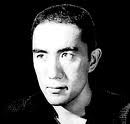
A year ago or so when I read my first Japanese novel I was just looking for some new to me good books.   Then I moved on to looking for the best of  the Japanese novel.  Now I am trying to understand the Japanese novel as a cultural entity.  That is why I was very happy when I saw this book in a local bookstore.   Donald Keene, the translator  and author of the very informative and well written introduction,  deserves much of the credit for opening up Japanese literature to the English language world through his translations of many books and through the scholars and translators he educated and inspired in nearly 50 years as a professor.    Yukio Mishima (1925 to 1970)   is on all lists of best five Japanese novelists.   One of the themes of his work is the destruction of traditional Japanese culture through the defeat in WWII and the subsequent total adoption of the values of consumerism by most Japanese.    Mishima felt deeply enough about his views to commit ritual suicide in support of them.

Each of the five plays in this book could be performed or read in an hour or so.   The plays have from three to ten characters.    The actors' lines in the plays range from one line to paragraph long dissertations.    Some of the plays border on the drama of the absurd (they probably owe a lot to  the post WWII French theater) and others are simple encounters.   The essential action in the first drama in the collection comes from the conversation of a man who claims to be a poet and a very old woman (she claims to be 99) who says she was once a great beauty.  It is up to the reader to decide if they are what they say they are.  Some of the lines have a brilliant epigrammatic quality that made me read them several times.    I would love to see these performed though the odds of that are pretty low.

I recommend this book to devotees of Mishima (which I have now become also), those who want to acquire a bit of the cultural background to more deeply appreciate the Japanese novel  and to those interested in modern drama.   I am grateful to Vintage International Press for keeping in print so many of  Mishima's works.     There is convincing biographical evidence in the form of reports from multiple sources that Mishima can be listed as a GLBT author.   There are it appears 13 novels in print from Vintage and three collections of plays.   One of  the plays is entitled "My Friend Hitler".    I hope to eventually read all of his translated works.

Here is a link to some more Japanese posts

Mel u

"The Enormous Radio" by John Cheever

"The Enormous Radio" by John Cheever (8 pages, 1953, originally published in The New Yorker)

John Cheever (1912 to 1982-Quincy, Massachusetts) is probably most highly regarded now for his short stories which were mostly set in New York City and the American North East region.   He received a Pulitzer Price in 1979.   His two most famous novels are The Falconer and The Wapshot Scandal.   I have never read his work before now nor have I see his novels posted about on any of the blogs I follow.  The last time I heard a reference to John Cheever was, I admit, in an episode of the Seinfled show.

"The Enormous Radio" is often  mentioned as one of Cheever's best short stories.   It is set in a big American city which I think we are to take as New York City.   The time frame is not given but as radios occupy the place TVs do now in American lives I think it set in the 1940s.   It centers on a married couple, a quite ordinary couple with nothing it seems remarkable about them.   The prose of Cheever is pleasant and easy to read.   He starts the story out with a description of the couple it is about.

Jim and Irene Wescott were the kind of people who seem to strike that satisfactory average of income, endeavor, and respectability that is reached by the statistical reports in college alumni bulletins.  They were the parents of two young children, they had been married nine years, they lived on the twelfth floor of an apartment house near Sutton Place, they went to the theater on an average of 10.3 times a year, and they hoped someday  to live in Westchester.  

Their big passion was listening to the radio,   especially Irene who stayed at home with the children  while Jim worked.   This was in the day when radios were big and had beautiful wood cabinets.   Their old radio was not working well at all so Jim bought a new one for his wife.  (To relate, imagine a super hot computer being delivered to replace  to replace a five year old one and we can sense what this means to the family.)

The wife is at first intimidated by the many dials and knobs on the radio.   Then Irene begins to notice something very odd.   She can hear voices coming out of the radio.   After a while they realize the voices belong to other people who live in the same building they do.

The Westcotts overheard that evening a monologue on salmon fishing in Canada, a bridge game, running comments on home movies of what had apparently been a fortnight at Sea Island, and a bitter family quarrel about an overdraft at the bank.

Irene at first enjoys her eavesdropping  but soon she begins to be overwhelmed by the sadness in the conversations she hears and the shocking things she learns about her neighbors.    Irene begins to tell her husband how shocked she is by what she has learned about the other wives in the building:  one woman is having an affair with the hideous apartment maintenance man, one woman who seems so nice appears to be a prostitute, and one had an abortion behind her husband's back, etc.   Everyday she tells her husband what she hears.   I will not tell any more of the plot.   It is in the tradition that suggests a short story needs a surprise or twist at the end.

To me, "The Enormous Radio" was an enjoyable read.     It is not comparable to Katherine Mansfield, Kate Chopin,  or Flannery O'Conner but it was fun, easy to read and made me think a bit and did do a good job of building up a world in a few pages.   Ok is is not high art etc but sometimes you would rather watch the Seinfeld show than the highest rated BBC or PBS drama!


Please leave your suggestions as to good short stories (that I can read online) in a comment and my great thanks for the many very good ideasI have already gotten.

Mel u

Monday, May 24, 2010

The Waves by Virginia Woolf

The Waves by Virginia Woolf (1931, 297 pages)

I want firstly to thank Nicole of  Bibliographing (whose blog I have been following for a long time) for sending me this book.   I have been intending to  read Woolf   for a long time (I read her short story "The Mark on the Wall" and posted on it while I was reading The Waves) and I will now always be grateful to Nicole for giving me the nudge I needed. 

Woolf (1882 to 1941) is for sure the most influential female literary artist of the 20th century.   She really seems to have no competition for this title.   Her literary output was tremendous.   In addition to numerous novels now in the canon she wrote essays that are still treasured and  wonderful short stories.   She was born into a wealthy highly cultured English family.    She was a member of the Bloomsbury group.    In her literary style she experimented with different techniques for conveying the stream of consciousness of the people in her novels.   

The Waves, based on my brief research,  is considered her most experimental novel.   In it she combines the interior monologues of three men and three women.   There is a seventh major character off stage, Percival, who passes away half way through the book.   Each of the characters emerge from the stream of soliloquies as a personality with their own needs.   They also all blend into one and help create each other.   I am glad I read Ford Madox Ford's incredible Parade's End (the final section of which was published in 1928) shortly before I began The Waves.    Both books are about the construction of reality out of the fragments of experience.    Making use of the Wikipedia definition,  I sort of see both works as "Cubist novels":


In cubist artworks, objects are broken up, analyzed, and re-assembled in an abstracted form—instead of depicting objects from one viewpoint, the artist depicts the subject from a multitude of viewpoints to represent the subject in a greater context. Often the surfaces intersect at seemingly random angles, removing a coherent sense of depth. The background and object planes interpenetrate one another to create the shallow ambiguous space, one of cubism's distinct characteristics.


Both also make prolific use of cultural references though perhaps Ford's are more diverse.   Much of the prose of The Waves feels like a wave is going over us.   There are sections of the novel where there are some transitional scenes as we move from sunrise to sunset all of which take place by the shore.   As I read the work I knew I would   just have to accept I would not fully understand it and just sort of let the beauty of the prose take me under its power.  I think trying to arrive at a neat intellectualized account of the meaning of the novel is a perversion of the wonder of it.    I had marked numerous passages I wanted to quote but decided I could not really pick out just a few quotes.  I did learn something from this passage about the lingering sadness caused by the death too young of friends and loved ones I wanted to share:


Among the tortures and devastations of life then is this -our friends are not able to finish their stories.
There is much wisdom in this work.    Many passages to marvel at and savor abound in The Waves.  The Waves can be read  as poetry started and stopped at any section.   


I would like to read the three or four best of her novels-if you have any suggestions please leave a comment.


Virginia Woolf is one of the icons of twentieth century literature admired by many for her life style as much as her work.  


The Cage by Kenzo Kitakata-Japanese Crime Novel

The Cage by Kenzo Kitakata (1983, translated from the Japanese by Paul Warham, 2006, 231 pages)

The Cage by Kenzo Kitakata (1947-) is the first Japanese novel I have read that focuses on the world of the yakuza gangsters.     It is the first novel that centers on a professional criminal and the police officers who combat him.   I have posted on the much better than this novels of  Natsuo Kirino which also have a crime as their central focus but in her case they are sort of accidental crimes committed by ordinary if socially marginal  people at the end of their ropes.     One of my goals in reading Japanese novels is not just to get to know individual writers (I have now placed four Japanese novelists on my "read all I can list" and I think there are numerous more that will be added as Japanese Literature 4 gets underway soon) but to come to at least a partial understanding of the Japanese novel as a whole.   So I thought I should read this new to me type of crime novel plus I figured it might be fun to learn about the yakuza.   

The Cage is about a former yakuza member now trying to lead a respectable life as the manager of a super-  market.   He is having problems with sabotage in the store.   Red dye is being put in the milk and rats are being mixed into his meat display.   Soon he finds out a big supermarket chain that wants his store to be closed down or sold to them is behind all this and finds they are employing a yakuza gang to force his store to sell out at a low cost.    The supermarket manager confronts an enforcer for the gang and is soon drawn into a conflict with local yakuza.  The plot moves on from here to show the role of the police in fighting the yakuza etc.   I was disappointed in this book as it really does not give us much of a look at the world of the yakuza.

The only people I would recommend this book to are those really into crime novels.   If you just want a look at the lower depths of Japanese society, there are better options such as Kirino.   I found this novel a bit boring and ended up speed reading my way through it.   If you check some of my other posts on the Japanese novel you will find at least 50 books better than this one.   Still I am glad I read it as every book broadens my understanding of the Japanese novel as a whole.   


Mel u

"The Lottery" by Shirley Jackson

"The Lottery" by Shirley Jackson (1948, 8 pages-originally published in The New Yorker)

Recently I have been studying a number of different "Best Short Stories" lists.    Most lists overlap a lot with your standard canon writers like Poe, Gogol,  Chekhov, Woolf, Mansfield, Joyce etc.    When I see a new to me story on a list I do not take it seriously until I see it on several lists.    One new to me writer that I have seen on numerous lists is Shirley Jackson for her story "The Lottery".   

After a bit of research I found Jackson (1916 to 1965-San Francisco, California) was a very influential writer of Gothic horror  style stories.    Her work is greatly admired by Stephen King and Neil Gaiman.   She was married to a well known literary critic, Stanley Hyman.   She wrote six novels with titles like Hangsaman and The House on Haunted Hill.    According to several on line biographies, she and her husband had a personal library of over 100,000 volumes.    Among lovers of Gothic Horror fiction she is highly regarded.    It seems for sure "The Lottery" is her most famous work.

"The Lottery" is set in a small village environment where everyone knows everyone.   As the story open you got a sense of foreboding and I admit I visualized the residents of the village walking around with glassy eyes and pitchforks in their hands.   Her style is simple and straightforward.   It is a story anyone can enjoy and after reading think "Ok that was cute and quirky and clever and did not strain my mind a whole lot".

Here are the opening lines which give a clear picture of her style:
The morning of June 27th was clear and sunny, with the fresh warmth of a full-summer day; the flowers were blossoming profusely and the grass was richly green. The people of the village began to gather in the square, between the post office and the bank, around ten o'clock; in some towns there were so many people that the lottery took two days and had to be started on June 2th. but in this village, where there were only about three hundred people, the whole lottery took less than two hours, so it could begin at ten o'clock in the morning and still be through in time to allow the villagers to get home for noon dinner.

We learn that the lottery is a ritual that has been around a long time.   It has deep cultural meaning to the older residents who decry that the young do not really correctly observe the forms of the ritual.   We do not learn what the lottery is for until the very end of the story.   It is fully in the tradition of a story that depends on a surprise ending to work.    I will let you discover the ending for yourself but maybe you will see it coming.

I enjoyed reading this story.  It just took a few minutes.  It is not a literary classic just a well written enjoyable story that makes us think a bit.   It is not near the level of  Katherine Mansfield, Kate Chopin, or Flannery O'Conner.   The writing style is what I would call bland.   I think it maybe listed on so many lists as a classic short story as I think it could easily be taught in a class aimed at students 12 and above.   I would say it is worth reading as a fun diversion.    You can read it on line here.

Please leave in a comment any short stories you can endorse -

Mel u

Featured Post

Imperial Reckoning: The Untold Story of Britain’s Gulag in Kenya by Caroline Elkins - 2005 - 701 Pages

  Imperial Reckoning:     The Untold Story of Britain’s Gulag in Kenya by Caroline Elkins - 2005 - 701 Pages 2006 Pulitzer Prize Winner From...