Friday, May 27, 2011

Anton Chekhov-Two Stories from 1886-Virginia Woolf-"The Russian Point of View"

"The Husband" by Anton Chekhov (1886, 4 pages)
"The Chorus Girl" by Anton Chekhov (1886, 5 pages)
"The Russian Point of View" by Virginia Woolf (1925, 4 pages-essay)


The Reading Life Virginia Woolf Project
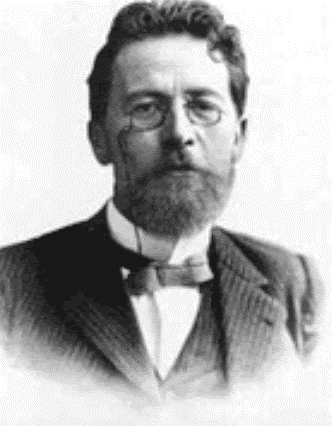


Every time I read a work by Anton Chekhov (1860 to 1904-Russia) I tell myself I need to read more of his work.    (So far I have posted on two of his short stories and one of his short novels, My Life.)    He has a good claim to the title "world's best short story author".    Frank O'Connor devotes a chapter to Chekhov in his The Lonely Voice-A Study of the Short Story.     I plan to return to Chekhov soon and look at the stories O'Connor talks about.  Today I just want to talk briefly about two of his short stories from 1886 and an essay by Virginia Woolf on  the major Russian writers.

"The Husband" and "The Chorus Girl" have some important similarities.   Both stories are about marital infidelity and the reactions of the victimized spouses.   In "The Husband" a wife may not actually commit adultery but she clearly behaves in a way that it outside the bounds of proper wifely behavior.    In "The Chorus Girl" a husband does commit adultery with a chorus girl.   In both stories Chekhov shows us how guilt is used to punish straying spouses.

"The Husband" is centered in a small town in Czarist Russia.   Something very exciting is going to happen soon.   A military regiment will be staying in the town for a while.   The tavern owners, food suppliers, drink merchants, and brothels all know they will make a lot of money.   All of the women of the town (single and married) are very excited over a big party  that has been announced.    The wife in the story has been married a few years but she still feels she is attractive.   She goes to the party with no intention but to have a good time and one must admit have her sense of self worth validated by having the young soldiers show interest in her. On the dance floor she feels more beautiful than she has for years.   Her husband goes to the party looking for her.   He drags her out and we see the terrible consequences that the husband's condemnation has on the wife.   The wife is not a fully innocent party.   As the story closes we know she will pay a life long price for one evening of good times.

You can read "The Husband"  HERE

"The Chorus Girl" is a very interesting study in the uses of guilt to manipulate people and the penalties the wronged can extract from those who stray from conventional morality.   Chorus girls in the 1880s were sort of the exotic dancers of their day.   Even if nothing happens, no husband wants to have to explain to his wife what his relationship with a chorus girl might be.    Married women assume chorus girls are gold diggers if not out right prostitutes and treat them that way.    This is really a brilliantly told story.   In just a few pages it has clear exposition of the lives of the characters, it has drama (a married man is having an affair with a chorus girl) and it has a big development  when his wife confronts the chorus girl.   The wife demands to know what presents he has given her and how much money she has received from her husband.   The wife will not allow herself to believe it when the chorus girl tells her she has real feelings for the husband and has  never been paid at all.   Maybe what happens next is sad or maybe it is poetic justice but you will have to read this great story to find out.

"The Chorus Girl" can be read HERE

In her 1925 essay included in her The Common Reader, "The Russian Point of View" Virginia Woolf talks about Tolstoy,  Dostoevsky,  and Chekhov.  (She does not mention Turgenev.)   I really do not feel comfortable paraphrasing Woolf.    She gives us a brilliant account of the power of each of the three great Russian writers. Dostoevsky for his capture of the soul, Tolstoy for his panoramic creations and his great sanity and Chekhov (she spells it Tchekov") for his minute observations and incredibility subtle observations and his creation of whole worlds in a few pages.

You can read her essay HERE

Both of these stories center on guilt.   In just a few pages they bring marriages in the provinces of Czarist Russia to life for us.  More than this, even if you have no idea when or where the stories take place, you will still feel their power.

No translated by credit is given for the stories but I think  it is Constance Garnett.

Do you have a favorite Chekhov story?

Mel u


Thursday, May 26, 2011

Rebindranath Tagore-Three Stories -First Asian Nobel Prize Winner

"The Parrot's Tale" (1918, 4 pages)
"My Lord Baby" (1917, 5 pages)
"The Babus of Nayanjore" (1915, 5 pages)


Three Wonderful Works by 
Rabindranath Tagore

On an impulse in July of last year I pulled up a list of all the Nobel Prize winners for literature.   The prize was first awarded to a person from Asian when, in 1913, Rabindranath Tagore ( Kolkata-fka Calcutta-India 1861 to 1941) received the award.    Tagore was a prolific writer of short stories.   I read and posted on one of his better known stories "Hungry Stones"  (There is some background information on  Tagore in that post.)   Since then I have posted on two more of his short stories.  

Tagore was a man of great learning and wisdom.        The short story is a relatively new literary form but the stories of  Tagore have their roots in a tradition that goes back to the ancient religious texts of South Asia.    Some of his shorter works may fit more into the category of parable than short story.   If you think about it, a parable is a reservoir of wisdom and the production of an original one strikes me as a greater accomplishment than most short stories.   I think a part of the source of the real greatness of the South Asian Short Story lies in the precedents set by Tagore.    Most of the authors I have read in this period are deeply into the reading life, both in Euro-centered texts as well as South Asian.   Of course up until the last few decades, only those born into wealth had a real opportunity to produce literary works.   Today I will just post briefly in three more of his shorter works.   (I read them all online and will provide links at the end of the post.   They are all translated from Bengali.)

"The Parrot's Tale" is closer to a parable than a short story.    By parable I mean a simple story told to illustrate a moral purpose, though the parables of Tagore I have read, including "The Parrot's Tale" contain strong elements of social criticsm also.
Here is how the story opens:

"Once there was a bird. It was an utterly foolish bird. It sang songs, but did not read the scriptures. It flew, it jumped, but did not have the faintest sense of etiquette.
The King said, ``Such birds! They are of no use at all. They only eat the fruits in the orchards and the royal fruit-market runs a deficit.''
He called the minister, and commanded, ``Educate it.''


The project of education the bird is turned over to one of the nephews of the king.   He assembles a blue ribbon committee of highly thought of personages and after some time they conclude that as a very first step the bird needs a bigger cage as his current cage is just so small the bird will not be able to focus on his education.   A goldsmith is brought in and he makes a very beautiful cage for the bird.   He leaves with a large bag of coins.    Then  it is decided the bird needs books to read.    Scribes are hired to produce for the bird all of the great texts of the land.   The scribes are so well paid that there families are enriched for future generations.   A large staff was hired to maintain and clean the gold bird cage.   Soon nay sayers arise and tell the king that the bird is not being educated, he is just an excuse for others to get rich.    The king forms another committee to study the issue, all of whose members are very well paid.  The king goes to visit the bird himself.   At first the king is distracted by the huge reception he receives (at great public expense) and almost forgets to even see the bird.   Then he goes to the cage.   There is no food, no water in  cage but there are many shreds of books.   The method of education is to tear off a piece of a book and force it down the mouth of the bird.   The king is advised this is a brilliant method and he gives everyone extra gold.  It is noticed the bird does not seem interested in his lessons and even wants to leave his cage.   The goldsmith fashions a chain for the bird and a surgeon clips his wings.   The ending of  the story is very brilliant and I will tell no more.   I think we can say Tagore was not very impressed with the educational system in the India of the British Raj as administered by its Indian employees.  


"The Babus of Nayanjore" (the title refers to a family) is a very well done social satire.    I see it as clearly a short story by modern definitions.   It centers on an older man from a once wealthy family living now reduced to close economic terms but still trying to seem wealthy.    His friends and neighbors know he is no longer rich but they act toward him as if he is still wealthy.    The fun of the stories begin when a brash young man decided to make fun of the man.    He learns a valuable lesson and his life ends up being changed forever.   I liked this story very much.


"My Lord Baby" is my favorite Tagore story so far.   Like many South Asian stories it deals with the rich and their servants.     I really think anyone who reads it will want to read more Tagore.   I know I do.    As the story opens we meet a man whose job is to take care of the baby son of a wealthy family.     The man totally loves the boy, he calls him "My Lord Baby" .   Even though he has a wife (who has never had a child) his life is totally wrapped up in the boy.   As the boy grows so grows the man's love for him.    Then something terrible happens.   I will leave the rest of the plot untold.    The story perfectly fits the form of a short story as set out in Frank O'Connor's The Lonely Voice-A Study of the Short Story.   It begins with a very clear exposition of the circumstances of the people in the story,   there is a powerful development in the story which produces great drama.   "My Lord Baby" is  about a man from  a submerged population group (servants of children-we have them here in the Philippines-the Yaya) and  deals directly with the causes and consequences of  loneliness.    I found this story deeply moving.  

"My Lord Baby" and "The Babus of Nayanjore" can be read HERE (along with a number of other works by Tagore.)


All of these stories are translated from Bengali.

The stories of Tagore are a great world  class cultural treasure.  They should be considered part of the canon.


Mel u  

Wednesday, May 25, 2011

The Master by Colm Toibin

The Master by Colm Toibin (2004, 338 pages)

The Master by Colm Toibin (1955-Enniscorthy, Ireland) is a wonderful novel based on a portion of the life of the great American author, Henry James.   We first meet James in 1895 in London, we part company with him in 1899.   James was born in 1843 and died in 1916.   The period made use of in  The Master was the start of the "final phase" of James works where he created his most highly regarded and by most standards his most difficult works.  

There have been a number of recent very well done posts on The Master.   Ready When You are C. B. has an excellent post comparing the work to a 19th century novel.

I will just mention a few of the things I really like about this book.   I like its depiction of the relationship of Henry James to his brother William.   Toibin shows great subtly in showing us how that relationship was shaped by James relationship to their father.    James was very close to his sister Alice and we see that James gave himself a rare emotional permission to feel deeply about her.    He never comes close to recovering from her death.

Toibin also treats the question, though he ventures no answers, of the sexuality of James.    James has two emotional relationships in The Master but neither passes beyond barely acknowledged feelings.   I really felt the happiness of James when one of the two men stayed with him for a while in his apartment in London.

I really somehow loved the book when James began shopping to furnish his apartment under the guidance of  Lady Louise Wolseley who may or may not be having an affair and using her time with James as her cover story.   I could almost feel the confusion of James is trying to sort through his self analysis of his emotions toward her.   (Her husband was Garnet Wolseley, who had a long career of military service.    He was often gone for very long periods and his wife had great resources to do as she wished while the Viscount served the Empire in India, Burma, Ireland and Canada.)

I think you can enjoy this book even if you have not read any Henry James but you will for sure like the book more if you have read and appreciated some his work.   Portrait of a Lady and Daisy Miller are two of the most mentioned works in The Master.    If you do not like Henry James, I am not sure how you will react to this novel.   It is beautifully written.    There is not a lot of plot drama, no exciting events.

Toibin lets us see into the creative process of James.   We feel the pain of his doldrum periods.   I liked the references to Ireland scattered throughout the book.

I really hoped that James would encounter Flaubert, Turgenev and de Maupassant but it did not happen.  Toibin does show us some of the reading life of James and I liked that a lot.

I am very glad I read The Master.   I think most everyone will like this novel, the exception  being those who do not like the work of Henry James.

There is a very perceptive review of The Master at The Book Nook.

Mel u

Tuesday, May 24, 2011

Two Older Short Stories by Authors from Bangladesh

"The Bait" by Narayan Gangopadhyay-নারায়ণ গঙ্গোপাধ্যায়-(1958, 6 pages)
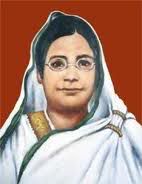
"Boligarto" by Roquia Sakawat Hussain (aka Begum Rokeyo)-বেগম রোকেয়া (1920, 5 pages)


Two Older Stories from Bangladesh
A Passage to The British Raj


Bangladesh became an independent country in 1971 after a terrible conflict with West Pakistan.    Prior to 1947 both counties were under the rule of the British Raj as part of the Crown colony of India.   One of the stories I will post on today, "Boligarto",  is a colonial era short story, the other a story from the time when Bangladesh was part of a Pakistan.    The human costs of the 1971 war for the Independence of Bangladesh was, in large part,  though not entirely, a long term consequence of the era of the British Raj.

"The Bait" by Narayan Gangopadhyay (1918 to 1970-Dinajpur,Bangladesh)
opens with an ordinary man getting a parcel in the mail from a Maharajah (the ruler of a princely estate-a semi-sovereign political entity who ruled over his people but had no power to conduct out of his territory relationships other than as directed by the British-most such rulers accepted great personal wealth in exchange for total subservience to the Raj) with some fancy slippers inside as a gift for him.   The man recalls that eight months ago a poem he had written had pleased the Maharajah and he had been invited to the man's opulent estate.   While there he was amazed by the great wealth of art and exquisite furniture on display in the man's palace.   He is especially nearly overwhelmed by the wonderful food.   At first he is in awe of the ruler and sees him as such a great man he is deeply honored he even speaks to him and is completely dumbfounded when the man treats him almost as a friend.   Then he sees the man sometimes drinks heavily (which is against the religious strictures of both men), he sees the men has all sorts of guns and expensive swords on display, and in the back of his mind he realizes his new found "friend" can kill him with impunity should he annoy him.   Still he goes on and on about  how wonderful the food is and how he loves it so much.   ("The Bait" was first published in a period in which millions of South Asians were near or actually starving to death.)    The Bait it the story metaphorically would then be the trapping of the people of Bangladesh by their rulers control of the food supply.   In the starkest of terms, they had to submit or starve.   In actual story line terms (spoiler alert) the Maharajah ties up a local boy (one of many who come to his estate every day looking for food scraps from his kitchen) and uses him as bait to attract a tiger so he can shoot him.   The man in the story never really understands he is little more than an animal to the Maharajah and the British.   

Narayan Gangopadhyay was a college professor with a PhD from the University of Calcutta.    His field of research was The Short Story.   He wrote many novels, essays, dramas, short stories and children's books.

"Boligarto" by Roquia Sakawat Hussain (she wrote some of her stories under the name Begum Rokeyo-1880 to 1932-Rangpur, Bangladesh) is one of the very first short stories by an Islamic woman from what is now Bangladesh that can be seen as in defense of the rights of women.    She was married at 16 (normal at the time) through an arranged marriage.    Her husband encouraged her to continue reading in English and Bengali and urged her to begin writing in Bengali (even though he was an Urdu speaker by birth).   After his death she started a school for girls which still exists today.    In her essays and other writings she suggested that it was the ultra-conservative Islamic policies of the rulers that served at the pleasure of the British Raj that caused the Muslim portions of South Asian to lag behind other areas in development.   


"Boligarto"   (a region of Bangladesh)  is told in the first person by a young woman.    As the story opens she is sitting on the veranda of her house when a friend of hers approaches the house.    The woman is very active in the Congress Party and is traveling spreading the use of the spinning wheel.   This identifies the woman as an advocate of Independence for India and as  standing up to the monopoly of the British Raj on cloth.   The woman tells her is OK for them to go to Boligarto as one of her cousins is the local ruler there.   The only way the British could rule a huge territory such as India  (especially one in which they shared in most cases no common language with their subjects) was through local puppet rulers.     The fun of this story is seeing all of the near crazy goings on at the house of the Khan.   For example one day the woman of the family had asked to go on a car ride through the town.   The Khan reluctantly agreed but then he put a giant black cloth over the car with holes just for the driver, so no one could see the women, Of course they can see nothing also.   When the women complain, he tells them they are shamefully wanting to go against the teaching of their religion.    The Khan acts as a money lender, also against their religion.    He justifies charging a very high rate of interest by saying he is risking damnation in his efforts to help his people and this entitles him to charge a high rate.


Kals of At Pemberly-Life Between Pages has recently begun a very interesting project,  A Passage to the Raj which will focus on literature from and about India circa 1858 to 1947.   My now life time project on the South Asian Short story will inevitability touch a lot on this era.   We have decided to, where applicable,  cross link our projects.    I know that my project will take me into all sorts of totally new to me places.   Just the history of the era and places is delightfully complicated and intricate.    Both of the stories I posted on today deal directly with issues related to how the British controlled South Asia through puppet rulers who were willing to act as slave masters for the British in exchange for personal wealth and power.   I have noticed a fascination with the trappings of wealth in the stories I have read.    Kals blog has a lot of good information on Indian Literature.   I look forward to learning from her posts and hope this will be a long term collaboration.   I have in the past participated in her event, Tagore Thursday.   Anyone who wants to link up to our project is very welcome to join in.    Kals has historical background information in her introductory post.   


"Boligarto"  can be read HERE

"The Bait"  can be read HERE


Mel u

Monday, May 23, 2011

"The Blind Dog" by R. K. Narayan and "Magudi Days-Rereading the Master" by Jhumpa Lahiri


"The Blind Dog" by R. K. Narayan (1947, 6 pages)
"Malgudi Days-Rereading the Master" by Jhumpa Lahiri (2008, 5 pages)


A Wonderful Short Story
and
A deeply felt appreciation for R. K. Narayan

In his brilliant (if flawed)  The Lonely Voice-A Study of the Short Story Frank O'Connor tells us that a short story should have exposition, development, drama, focus on people from "submerged groups" and express the central loneliness of the human experience.     If we observe for the sake of discussion these criterion then "The Blind Dog" by  R. K. Narayan (1906 to 2001-Chennai, India) is a perfect short story.   In just as few pages in beautiful prose Narayan creates a complete world.    In the opening paragraph the basics of the story are laid out  for us.   

A blind beggar sits in his spot collecting alms from passer just as he has done for years.    Everyday a woman drops him off at his spot and takes him home.    We also meet a very undistinguished masterless village dog who lives from garbage and roams free. 


Now both story lines come together in two interrelated
dramatic developments.  


The woman that takes care  of the beggar 
dies.    The dog is captured or takes up
with the beggar and learns to help him increase his
earnings.   If someone passes the beggar by without
giving a donation the dog chases them down and barks and threatens them until they give the beggar something.   The beggar begins to do  much better and his neighbors in the market become jealous.   The Dog begins to long for the "good old days".
  

 A second dramatic development occurs when the 
 dog either escapes or is released by someone with
malicious intent.  Narayan masterfully completes the 
story with developments in the lives of both central 
persons in the story, the dog and the beggar.   
O'Connor felt that the best authors stories arose from their own experiences.   Narayan would for years take
a three hour daily walk, stopping to talk to the
people he met.   There is no feel   at all of the
inauthentic in Narayan's stories.  

Jumpa Lahia (I have posted on five of her wonderful
short stories) has supplied the introduction for a
collection of Narayan's short stories, Malgudi Days.  Her essay was first published in The Boston Review. 


I urge anyone at all interested in Narayan or the short story to read her essay.

Here are her some of her thoughts on the place of
Narayan in the short story genre:

"Setting aside his plentiful and remarkable novels, Narayan firmly occupies a seat in the pantheon of 19th- and 20th-century short-story geniuses, a group that includes Chekhov, O. Henry, Frank O’Connor, and Flannery O’Connor.  Another kindred spirit is Maupassant, whose tightly coiled narratives share with Narayan’s a mastery of compression, of events quickly unfolding and lives radically changing in paragraphs that can be numbered on two hands.  With Narayan as with Maupassant there is that purity of voice, the realism and constraint. Both explore the frustrations of the middle class, the precariousness of fate, the inevitable longings that so often lead to ruin. Both create portraits of everyday life and share a vision that is unyielding  and unpitying."
(Maybe I should read a bit more O. Henry based on this.)

"The Blind Beggar" was included by Narayan in his 1947 collection

The Astrologer's Tale and other Stories which can be read HERE
Lahiri's essay can be read HERE.   I really recommend it highly.
I plan to read all 30 stories in this collection.    I have already  read and loved six of them.
  
Mel u


Sunday, May 22, 2011

Zora Neale Hurston: Two Stories-"Black Death" and "A Story in Harlem Slang"

"Black Death"  (1928, 4 pages)
"A Story in Harlem Slang"  (1930, 2 pages)


Two Stories by Zora Neale Hurston
Harlem Renaissance 

Zora Hurston (1881 to 1960-Alabama, USA) was one of the leading writers of the  Harlem Renaissance.   Hurston had a very interesting life.     Born in relative poverty she attended   Howard University until she was offered a scholarship  to attend Barnard college, an elite women's college at which she was the only person of color in attendance at the time.    She graduated, along with her very famous co-student Margaret Mead, with a degree in anthropology.     Her anthropological focus was on  the customs and speech of African-Americans living in the rural south of the USA.    Hurston studied and wrote about people from small towns in the Alabama and Florida very much as her mentor and former professor, Ruth Benedict did in her famous studies of the customs of the people of Polynesia.    Hurston also wrote and published a number of short stories, and novels.    Her most famous work was her novel, Their Eyes Were Watching God. ( Halle Barry played the lead character in a recent movie based on this novel.    It is too bad Hurston who died in poverty did not live to see this movie made!)   She co-wrote a play with Langston Hughes.  

In February of this year I read and posted on "Spunk", my first reading of Zora Hurston.   Yesterday I read two more of her short stories.   

If "A Story in Slang Harlem" was written by a writer who was not of African-American background it would be seen as a racist story playing up standard stereotypes.   In my post read research I found that Hurston was the subject of criticism for her treatment of rural impoverished African Americans.     I have said before I do not normally like attempts to recreate  rural or "country" dialects in the literature I read.    I find it breaks  the rhythm of my reading and it very often comes across as patronizing on the part of the author.   Here is a sample of what I mean from "A Story in Harlem"

""Who? Me? Long as you been knowing me, Sweet Back, you ain't never seen me with nothing but pe-olas. I can get any frail eel I want to. How come I'm up here in New York? You don't know, do you? Since youse dumb to the fact, I reckon I'll have to make you hep. I had to leave from down south'cause Miss Anne used to worry me so bad to go with me. Who, me? Man, I don't deal in no coal. Know what I tell 'em? If they's white, they's right! If they's yellow, they's mellow! If they's brown, they can stick around. But if they come black, they better git way back! Tell 'em bout me!"

I found this story of interest mainly to see if I could figure out what the characters in the story were saying.   

Hurston studied the customs of African Americans in rural Florida in much the same way her Bernard Professor Ruth Benedict studied the customs of Polynesians.     "Black Death" is about beliefs in witch doctors and such among African Americans.   (I found it kind of interesting that the story is set in the area of Orlando Florida now the home of Disney World.)   It is about much feared man who can, for a fee, place curses on your enemies.    


"In the swamp at the head of the lake, she saw Jack-O-Lanterns darting here and there and three hundred years of America passed like the mist of morning. Africa reached out its dark hand and claimed its own. Drums, tom,tom,tom,tom,tom,beat in her ears. Strange demons seized her. Witch doctors danced before her, laid hands upon her alternately freezing and burning her flesh. She cried out in formless terror more than once before she found herself within the house of Morgan."


This story could be seen as respecting the origins of African Americans or it could also be seen as reducing them to caricatures right out of the play book of racists.


Both of these stories can be read HERE.


These stories can be read in just a few minutes.   I am glad I read these stories even though I am made a bit uneasy by them.   They could easily be seen as pandering to the prejudices of the time.    I would sort of characterize the stories as "curiosity reads".


Mel u

Saturday, May 21, 2011

Dorothy Parker-Three Short Stories-

"Travelogue" (1928, 4 pages)
"The Last Tea" (1933, 5 pages)
"You Were Perfectly Fine" (1935, 4 pages)

From the Pen of Dorothy Parker
Three Smart Funny Stories

""It's a funny thing about me," she said. "It just makes me feel sort of sick to see a girl drink. It's just something in me, I guess. I don't mind a man so much, but it makes me feel perfectly terrible to see a girl get intoxicated. It's just the way I am, I suppose."- from "The Last Tea"


I have now read and very much enjoyed six short stories by Dorothy Parker (1893 to 1967-USA)  Parker may have been born in new Jersey but she was not a bridges and tunnels person and for sure not a Jersey Shores Girl.    She came to epitomize New York City , sophisticated, smart and witty, given to late nights and serious drinking and not above laughing at people who seem a bit backwards to her.    (There is a bit of background information on her in this post)

Of the five stories I have read (The exception being "Big Blond" which so far I see as her only truly great story) they all sort of follow a pattern.   Two people are talking to each other.   One of the people does most of the talking and they are the one who has the least of value to say.    That speaker could by an uncharitable person be described as babbling on while not hearing a thing the other person is saying.   

"Travelogue" is about a man who has just returned from a long trip to the Middle East and his female friend  who is very interested in hearing about it, or so it seems.   She asks such astute questions as "do they have Arabs there?".   She will ask the man a question and then immediately say what she thinks the answer must be.   She also tells the man what she things her husband (or boyfriend) would think the answer is.   Then she tells the man not to be surprised when he hears she has left on a long trip to the middle east herself!   The woman leaves the conversation thinking she has learned a lot about the middle east when in fact she learned nothing at all.

"You Were Perfectly Fine" fits the same pattern.   One person is talking on and on and you quickly learn they do not have very good listening skills.    Drinking plays a big role in the stories of Parker (as it did in her life) and this story is about a conversation between a husband and wife (or some sort of relationship) about how the man acted at a party the night before.    He fears he might have made a fool of himself due to heavy drinking (it sounds like they have had this conversation numerous times) and offended some of the people at the party.    The man asks the woman if he was out of line and she tells him over and over "You were perfectly fine" while describing his really rude and drunken actions.   What makes the story fun is the descriptions of the crazy behavior of the man followed by his wife telling him "You Were Perfectly Fine".

" The Last Tea" is set in a cafe where a man and a woman are keeping a date they made the night before at a party.    It is very much about drinking.     As I said before, drinking is very important in the stories of Parker.    Not drinking at all marks you out as a bore, too much a clown.    The story is about their conversations on their hangovers.  

All three of the stories can be read HERE.

Parker's attitude to other women is hard to set out in a brief space.   I can hear her and her female characters saying "all of my friends are men".  

All these stories are fun and easy to read.  

Mel u

Featured Post

Imperial Reckoning: The Untold Story of Britain’s Gulag in Kenya by Caroline Elkins - 2005 - 701 Pages

  Imperial Reckoning:     The Untold Story of Britain’s Gulag in Kenya by Caroline Elkins - 2005 - 701 Pages 2006 Pulitzer Prize Winner From...