
Wednesday, August 8, 2018

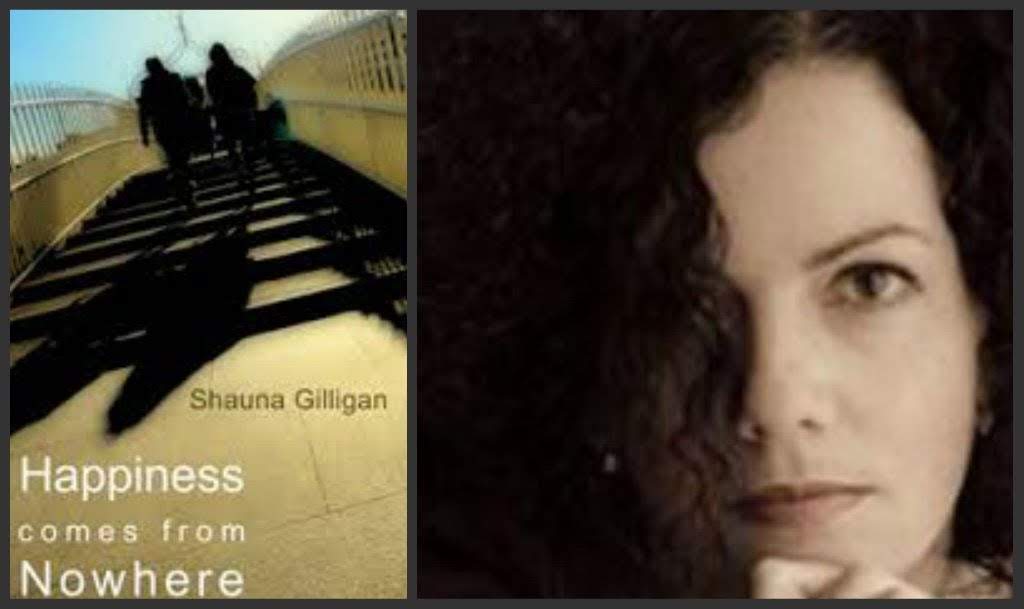
Shauna Gilligan - A Wide Ranging Q and A Session with the author of Happiness Comes From Nowhere


Shauna Gilligan, author of Happiness Comes From Nowhere has done a great deal to increase my understanding of Irish literature.  She has contributed several guests posts  including a very recent interview with Patrick Samples.  She wrote a very illuminating introductory post for The Reading Life Desmond Hogan Project and has given me lots of good advise on Irish literature and culture.  I am very happy she has consented to do a Q and A for Irish Short Story Week.  I have been following her work for almost seven years now.  You will find links to online short stories by Gilligan on The Reading Life


Shauna Gilligan is a member of the Threshold Short Story Forum.


Author Data

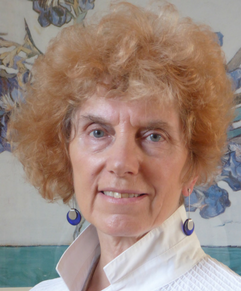
Shauna Gilligan is a novelist and short story writer from Dublin, Ireland.  She has lived and worked in Mexico, Spain, and the UK, and now lives in County Kildare with her family and a black and white cat called Lucky.
She holds a PhD in Creative Writing from the University of South Wales, is a registered teacher with the Teaching Council of Ireland, an active member of the Arts Council of Ireland Writers-in-Prisons Panel and a Professional Mentor with Irish Writers’ Centre. Shauna facilitates creative writing workshops with people of all ages. She teaches students in universities, in the community, and in prison settings.

Shauna enjoys collaborating with visual artists and is particularly interested in exploring the crossover of art and literature in storytelling, the depiction of historical events in fiction, and creative processes.

Her debut novel Happiness Comes from Nowhere was a critical success and the Sunday Independent review declared it to be a “thoroughly enjoyable and refreshingly challenging debut novel.” 

Shauna is represented by Charlotte Seymour at Andrew Nurnberg Associates International Literary Agency... from Shauna Gilligan’s Website


1. Who are some of the contemporary short story writers you admire? If you had to say, who do you regard as the three best ever short story writers? The best woman?

Contemporary writers? Alice Munro, Desmond Hogan, Colm Tóibín, Nuala Ní Chonchúir, Kevin Barry, Carol Shields, Edna O’Brien, Anne Enright. Others would be Maeve Brennan, Ernest Hemingway, Seán O’Faolain, Katherine Mansfield, Raymond Carver, James Joyce. Three best ever short story writers? It’s a hard one as there are so many but top would be Alice Munro (the best woman).

2. I have read lots of Indian and American short stories in addition to Irish and alcohol plays a much bigger part in the Irish stories. How should an outsider take this and what does it say about Irish culture.

I think that is because alcohol is part of Irish culture – or more precisely, part of the way the Irish socialise, especially in rural areas. The church and the pub have always gone hand in hand. Even these days, socialising revolves around drinking, but increasingly, it also involves eating (or dining) like on the European continent, though the chat and the craic (fun in Irish) over a pint will never cease. The flip side of this, of course, is that there are high rates of abuse of alcohol and from that, increases in certain social problems such as suicide can also be linked back to the relationship with alcohol, using it to mask emotions, and sometimes not being able to socialise without a few (alcoholic) drinks. 


3. Declan Kiberd has said the dominant theme of modern Irish literature is that of the weak or missing father? Do you think he is right and how does this, if it does, reveal itself in your work.

I do think this is one of the themes though not necessarily the dominant theme of modern Irish literature. In my novel, Happiness Comes from Nowhere, the father, Sepp, is largely absent though not entirely. His presence is still felt. This was deliberate as the focus was on the mother-son relationship. 

4. When did you start writing?

I can’t remember a time when I was not writing. I’ve always written. But I started to take my writing and the notion of myself as a writer seriously in 2008.

5. A character in an Ali Smith short story, asks in a conversation on the merits of short stories versus novels ""Is the short story a goddess and nymph and is the novel an old whore?" Does this make a bit of sense to you?

It’s a funny line, and a good one, but I don’t agree.  I always think of the short story as a small lawn, perfectly manicured, you perfect it time and time again whereas the novel is like a big field, filled with wild flowers, chaotic and beautiful and you’re trying your best to tame it, put a shape on it. 


6. (Ok this may seem like a silly question but I pose it anyway-do you believe in Fairies?-this quote from Declain Kiberd sort of explains why I am asking this:
" One 1916 veteran recalled, in old age, his youthful conviction that the rebellion would “put an end to the rule of the fairies in Ireland”. In this it was notably unsuccessful: during the 1920s, a young student named Samuel Beckett reported seeing a fairy-man in the New Square of Trinity College Dublin; and two decades later a Galway woman, when asked by an American anthropologist whether she really believed in the “little people”, replied with terse sophistication: “I do not, sir – but they’re there." 

Yes, I do believe in faries. I grew up with stories of them, notions of their existence as part and parcel of my childhood – walks in the woods, looking for them, leaving my teeth for the fairies, visiting fairy forts, knowing the look and feel of the bark of the oak tree where they might have their homes. The sense of something other being present with us. 

7. Do you think the very large amount of remains from neolithic periods (the highest in the world) in Ireland has shaped in the literature and psyche of the country?

Interesting question. I don’t know that they have influenced the psyche at a conscious level. But I do know that we (governments over time) have been very lax in appreciating them – exceptions are Newgrange, for example, which you should try and visit when you’re here. 

8. Do you like the Stories of an Irish R. M.? either the stories or the TV show? are the stories of Edith Somerville and Martin Ross mocking or celebrating Irish heritage?

Again, something I remember from my childhood. A different Ireland, or a different picture to the Ireland in which I grew up and in which I now live. I would have to revisit these stories again to answer the question properly. 

9. How important are the famines to the modern Irish psyche? 

I think the notion of ownership and responsibility, as something the famine times might be seen to represent is, in today’s Ireland, very much present. 

10. Does the character of the "stage Irishman" live on still in the heavy drinking, violent, on the dole characters one finds in many contemporary Irish novels?

It seems this question alludes to the notion of taking something real and exaggerating it for the sake of fiction. I don’t know that the colonial question haunts us as much as it used to – I think we’ve burdened and repressed ourselves well enough in the last (almost 100) years of independence to stop the finger pointing. We have enough to be writing about without having to create stage personas. 
The Irish writer has always been confronted with a choice. This is the dilemma of whether to write for the native audience – a risky, often thankless task – or to produce texts for consumption in Britain and North America. Through most of the nineteenth century, artists tended to exploit far more of Ireland than they expressed. Cruder performers resorted to stage-Irish effects, to the rollicking note and to “paddy-whackery”, but even those who sought a subtler portraiture often failed, not so much through want of talent as through lack of a native audience. Most of these writers came, inevitably, from the upper classes and their commerce with the full range of Irish society was very limited.

Kiberd, Declan (2009-05-04). Inventing Ireland (p. 136). Random House UK. Kindle Edition. 

I think the notion of choice for the Irish writer - as outlined by Kiberd in your quote - is an interesting notion. It has, in a less obvious way than in previous eras, carried through to the 21st century. Writers such as Julian Gough claim (and somewhat rightly) that many of us are still stuck in the dilemma that Kiberd refers to, thus writing about the same subject matter (the weak fathers, emigration etc) that Irish writers have been writing about for centuries. But I think there is a wave of writers who are not interested in or who do not want to engage with this so-called choice of audiences or, indeed, are not prepared to limit their subject matter - and why should they? I'm thinking of writers such as Kevin Barry with his gritty prose, or poets Noel Duffy and Dave Lordon who have their own very individualistic take on what it means to be Irish and a poet writing and performing in the recession-riddled Ireland of today. I think we should not be restricted in viewing writers through the polarised lens of colonialism or indeed, post-colonialism. I'd be inclined to agree with sociologist Tom Ingles who, at a conference in NUI Maynooth in the summer of 2012, talked about how much Irish identity is tied to the relationship we have and have had with the body. This relationship has been dictated by Church and State (think of the recent reports on the Magdalene Laundries, for example) and we are now in a period - as we all know - of enormous change. And these changes are reflected in and will continue to be seen in how we identify ourselves as Irish, particularly in relation to the body, and more particularly, the female body. This is something, I believe, that can be seen in the writing of many of my contemporary female writers, such as Nuala Ní Chonchúir or Órfhlaith Foyle. So to respond to that first line of the quotation, for me when it comes to writing, the inclination is to write from the gut rather than with a "choice" (of) audience in mind.

11. William Butler Yeats said in "The Literary Movement"-- "“The popular poetry of England celebrates her victories, but the popular poetry of Ireland remembers only defeats and defeated persons”. I see a similarity of this to the heroes of the Philippines. American heroes were all victors, they won wars and achieved independence. The natioonal heroes of the Philippines were almost all ultimately failures, most executed by the Spanish or American rulers. How do you think the fact Yeats is alluding too, assuming you agree, has shaped Irish literature?

It seems Yeats is alluding to the notion – again – of the colonial power asserting its authority and might and the underdog, the colonised left with nothing but its woes. Martyrs make great national heroes; the living generally disappoint. There is something to be said, here, I think, for the number of Irish writers (Joyce, Beckett etc) who have left Ireland and never returned – and wrote kindly and unkindly about the country and its people. 

12. Who was the first great Irish writer who was not at all Anglo/Irish? 

I’d need this question clarified – when you say “Anglo/Irish” are you talking about linguistically, racially, thematically or something else? 

13. Do you think poets have a social role to play in contemporary Ireland or are they pure artists writing for themselves and a few peers?
Why single out poets? I think art as a whole – be it fiction, poetry, visual art or whatever – has a function to play in society. I agree with the function Victor Shklovsky assigned to art in Art as Technique whereby “Art…exists that one may recover the sensation of life; it exists to make one feel things, to make the stone stony…the technique of art is to make objects ‘unfamiliar’. I also believe that writing – especially literary fiction – both explores the absurd and also tries to experience it by examining themes or actions in great detail, so that we can find our place in the world, where we belong, where art itself belongs. Writing for me is an act of extreme curiosity. 

18. "To creative artists may have fallen the task of explaining what no historian has fully illuminated – the reason why the English came to regard the Irish as inferior and barbarous, on the one hand, and, on the other, poetic and magical."-is this right? Kiberd, Declan (2009-05-04). Inventing Ireland (p. 646).

For me this description is that of humanity – the ultimate in contrasts, in contradictions. The oppressor always needs to place the oppressed into a box that is labelled other. In other words, the oppressed must be defined by what the oppressor is not. The wonderful play by George Bernard Shaw, John Bull’s Other Island is a classic example of this. 

19. OK to ignore this question- Do you think Irish Travelers should be granted the status of a distinct ethnic group and be given special rights to make up for past mistreatment? are the Travelers to the Irish what the Irish were once to the English? I became interested in this question partially through reading the short stories of Desmond Hogan.

This is a very loaded political question. Desmond Hogan – in his fiction - portrays a particular view of the Travellers which is not necessarily representative of the Travellers as a group or indeed as individuals. 

20. Where is the best place in Dublin and Galway to get a real Irish breakfast? Fish and Chips and Irish Stew. 

In Dublin - I’d try Johnnie Fox’s pub (http://www.jfp.ie/) up the mountains and then for fish and chips Burdocks. 

21. What is the best book store in Dublin to buy collections of Short Stories?

Books Upstairs (just opposite Trinity College) or the Winding Stair Bookshop (in front of the Ha’penny Bridge).

22. Do you prefer ereading or traditional books?

Traditional books by far. However, I do read books on my Kindle.


19.What is your response to these lines from a famous Irish Poet? 

I was born to the stink of whiskey and failure 
And the scattered corpse of the real. 
This is my childhood and country: 
The cynical knowing smile 
Plastered onto ignorance 
Ideals untarnished and deadly 
Because never translated to action 
And everywhere 
The sick glorification of failure. 
Our white marble statues were draped in purple 
The bars of the prison were born in our eyes 
And if reality ever existed 
It was a rotten tooth 
That couldn't be removed. Michael O'Loughlin 

My response is – how miserable. It captures the creeping menace that the great Patrick McCabe has in all his novels. 

 20. (you can ignore this and I know I asked u before but American readers will have this come to mind ) "How do you feel about or has the TV show Gilligan's Island ever been shown on TV in Ireland

The first time I heard of Gilligan’s Island was when I was in Mexico and people had seen it. Now that you mention it, I’ve looked it up online. It seems like it was (is?) a very successful TV show. I don’t watch TV (apart from occasional documentaries for research reasons) but as far as I know it hasn’t been shown on TV in Ireland. 

21. Once you knew your novel, Happiness Comes from Nowhere" was going to be published, how long until you had a copy?

It was a quick lead in from contract to publication – 13 months  - but the lead up to contract was longer than that. 

22. Can you describe the feelings when you first saw your book in the store and/or when you read the first reviews of your work?

My reaction was one of detachment like it wasn’t anything to do with me. I experienced this also when I had finished my masters and PhD thesis. I think when you’re so close to a piece of work and then you let it go out into the world, in a way you abandon it, it is as it is. Yes, it is something I have written, but it is quite detached from me and me from it. I’m already (and was already) into my next work(s). However, I can’t deny that I’m not thrilled and honoured both to see it on the shelves and to read the reviews. 

23. What do you miss most about Ireland when you are out of the country? what are you glad to be away from?
I’ve lived in many other countries and what I missed most about Ireland was the ability to chat to random strangers on trains, at bus stops, in queues. There is a lovely warmth about this chattiness.
What I was glad to be away from was the narrow mindedness, the constant backward glance and the moaning. We’re great at moaning.

24. quick picks?

Cats or Dogs? 
Cats. Mine is called Lucky, the same name, I recently discovered, the American poet Weldon Kees called his cat.

Irish Fish and Chips or English 

Have to say Irish.

Dublin or London best city for neophyte writers

What about Paris? Or Berlin? 
I think writers shouldn’t need to pay too much attention to where they are, really. 
But in terms of agents, publishers, then it’s London by far. My publisher is based in London. 

RTE or The BBC
BBC

Monday, August 6, 2018

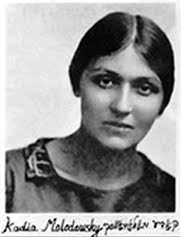
“A HOUSE WITH SEVEN WINDOWS” - A Short Story by Kadia Molodowsky


“The story of Kadia Molodowsky’s proud, strong heroine is played out against the background of the Khibat Tsion period. A mid-19th century movement, it embraced and expressed the age-old dream of Messianic redemption and the desire to “normalize” Jewish life through a return to, and settlement of the ancestral land of Israel.” . From the introduction 


We first meet Bashke as a young girl:

“BASHKE WAS THE ONLY GIRL in Grodno county who could sit a horse as well as any lord. Her father was a wealthy tenant farmer who rented fields and meadows from the lord of the manor and kept a hundred head of cattle. When she rode out to nearby Brisk, it was in a chaise, no less, drawn by two fine horses. Yankl, her coachman, sat on the upholstered seat, holding the red-tasseled whip, as straight and as proud as if he were coachman to the daughters of the czar. He would polish his boots for half an hour before driving out with Bashke.”

Everyone was excited to see who she would marry, she did well.

“She married a young lumber merchant, a scholar, and she loved him. In Brisk, where she had moved with her husband, Bashke ran her house with great generosity: she had taken Yanki and the chaise with her and never went to town on foot except on Shabes. On Shabes, Bashke could be seen walking to shul or visiting her husband’s family. When she stepped out with her husband, Reb Iser Paperno, it was all substance and status: she was Bashke Shapiro and he, a golden scion of Brisk already shaping his own rich future. There were always guests at Bashke’s table: merchants conducting business with her husband, emissaries soliciting for a yeshive, visiting rabbis, preachers, paupers and random travellers. Bashke greeted every stranger with respect. In the city her house was renowned; Jews called it “Jerusalem.” Once a Warsaw merchant came to Iser Paperno on business.  Bashke served tea with cherry syrup and cookies. As the merchant prepared to leave, she said to him, “You’ve brought us glad tidings; may they come to fruition.” Her husband, Reb Iser, gave her a puzzled glance but out of respect added, “And may there always be good tidings among Jews.” The business transaction with the Warsaw merchant was
highly successful. In one year Iser Paperno doubled his worth but he took no joy in it. Bashke had been transformed. She frequently alluded to the group that was purchasing land in Israel. One Saturday night, immediately after sundown, Bashke lit the lamps as if it were a holiday and sat down to write a letter to the group. The next morning she went off in the chaise to have it promptly mailed by Yakev Rabinovitch, the postmaster. Yakev Rabjuovitch knew all the town’s secrets. When he was curious about the contents of any letter, he’d open it, read it, reseal it and then mail it; his curiosity, God forbid, harmed no-one. He read Bashke’s letter as well. It pleased him greatly that Jews were buying land in Israel. “Just imagine! They’ll overtake the Messiah –no joke!”

By now Bashke and her husband, with several children, were affluent scions of the community.  Bashke had one dominant passion now, she wanted to buy land in Israel, build a house and move the family there.  Her husband sees it as to unsettlingly.  The ending, where she moves leaving him behind alone is sad but she does great in her new home where her husband will join soon starting a business there.

This story reflects a growing support of Zionism, the founding of an entitled Jewish homeland in Palestine in Warsaw as far back as the late 19th century.


From the Yivo Encyclopaedia of Eastern European Jews

1894–1975), Yiddish poet, writer, teacher of Yiddish and Hebrew, and editor. Kadia Molodowsky (in Yiddish, Kadye Molodovski) was one of the most prolific and public of the Yiddish poets, editors, and teachers in Warsaw and New York. Her life and works were characterized by paradoxes: she advocated both Yiddishism and Zionism; she believed that poetry should be engaged, yet not political, and should reflect both the poet’s individuality and her connection to the Jewish people as a whole; and she wrote powerfully about the struggles of women, yet argued against being categorized as a “woman poet” writing “women’s poetry.”

Molodowsky was born in the shtetl Bereze (Bereza Kartuska), in Grodno province, to a family steeped in tradition, yet influenced by the Jewish Enlightenment. Her paternal grandmother taught her to read Yiddish, and her father instructed her in Jewish history and modern Hebrew, as well as in the Pentateuch and the Gemara. Tutored in secular subjects, she passed gymnasium exams and earned a teaching certificate. During her early travels, she encountered both the Yiddish cultural and the Hebrew revivalist movements. She studied Hebrew pedagogy in Yeḥi’el Halperin’s Froebel Courses in Warsaw in 1913–1914 and then, uprooted by World War I, worked in homes for refugee children in Ukraine. In Odessa in 1916–1917, Molodowsky continued her studies with Halperin. Trapped in Kiev after the Bolshevik Revolution, she tutored privately and worked in a home for displaced children. She survived the Kiev pogrom and, in 1920, published her first poems in the journal Eygns. That same year, she married Simkhe Lev, who became a journalist and printer. In 1921, the couple settled in Warsaw, where Molodowsky lived until 1935, except for brief sojourns in Brest-Litovsk (1923) and Paris (1929). In Warsaw, Molodowsky taught Yiddish by day in the secular elementary schools of Central Yiddish Schools Organization (CYSHO; in Yiddish TSYSHO), and Hebrew by night at a Jewish community school. Active in the Yiddish Writers Union, she published extensively in the leading Warsaw literary journal, Literarishe bleter (1925–1935), and edited the literary page in Fraynd (1934–1936). Four books of her poetry came out in Warsaw in 1927, 1930, 1933, and 1935.

I read this story in Found Treasures: Stories by Yiddish Women, TRANSLATED BY ETHEL RAICUS

This story is part of my participation in Women in Translation Month, August, 2018.


Mel,u

Sunday, August 5, 2018

“JAZAL THE PURIM PLAYER” - A Short Story by Rikudah Potash, translated by Shirley Kumove


“Nothing fits a ghost better than a dying language. Ghosts love Yid­dish — they all speak it”.  Issac Singer.


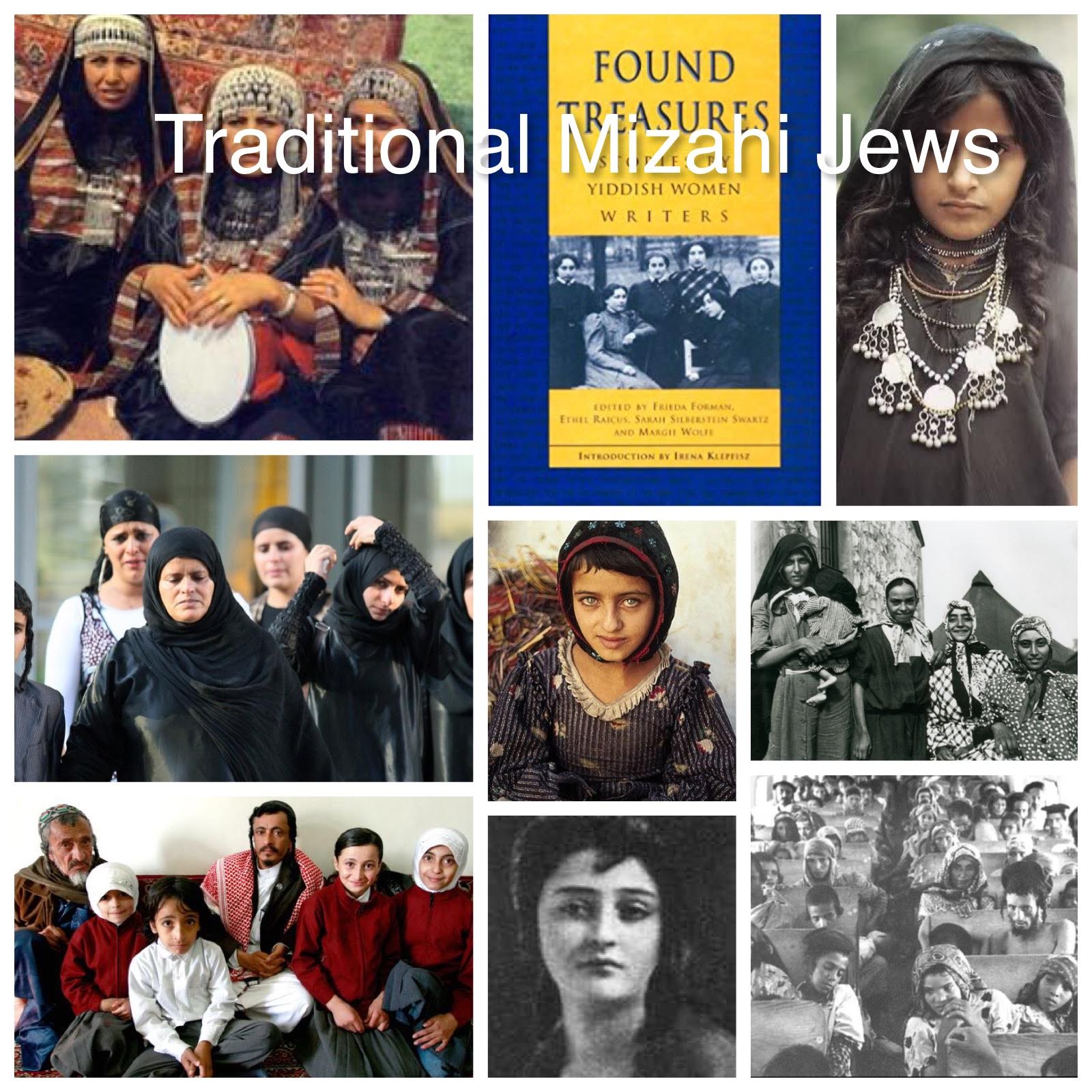
So far I have posted upon stories by Yiddish writers about Eastern European and Russian communities of Jews, immigrants in Paris, New York City and Toronto.  The stories of Rikudah Potash  focus on Mizahi Jewish women living in Israel.  Their ancestral homes were in Yemen (by far the most),Turkey and Iran.  Their customs  go back to very old traditions, older than Eastern European Jews, commonly called Yiddish.  In common parlance they are often called “Oriental Jews”.  Girls were considered ready for marriage at thirteen. 

Part of my fascination with Yiddish Short stories lies in expanding into history, areas of knowledge and literature far from my time in academies.


Wikepdedia has a good summery of Mizahi people’s place in Israeli Society:

“After the establishment of the State of Israel and subsequent 1948 Arab–Israeli War, most Mizrahi Jews were either expelled by their Arab rulers or chose to leave and emigrated to Israel. According to the 2009 Statistical Abstract of Israel, 50.2% of Israeli Jews are of Mizrahi or Sephardic origin.
Anti-Jewish actions by Arab governments in the 1950s and 1960s, in the context of the founding of the State of Israel, led to the departure of large numbers of Mizrahi Jews from the Middle East.


25,000 Mizrahi Jews from Egypt left after the 1956 Suez Crisis, led to the overwhelming majority of Mizrahim leaving Arab countries. They became refugees and most went to Israel.
Today, as many as 40,000 Mizrahim still remain in communities scattered throughout the non-Arab Muslim world, primarily in Iran, but also Uzbekistan, Azerbaijan, and Turkey.

Refuge in Israel was not without its tragedies: "in a generation or two, millennia of rooted Oriental civilization, unified even in its diversity," had been wiped out, writes Mizrahi scholar Ella Shohat.[6] The trauma of rupture from their countries of origin was further complicated by the difficulty of the transition upon arrival in Israel; Mizrahi immigrants and refugees were placed in rudimentary and hastily erected tent cities (Ma'abarot) often in development towns on the peripheries of Israel. Settlement in Moshavim (cooperative farming villages) was only partially successful, because Mizrahim had historically filled a niche as craftsmen and merchants and most did not traditionally engage in farmwork. As the majority left their property behind in their home countries as they journeyed to Israel, many suffered a severe decrease in their socio-economic status aggravated by their cultural and political differences with the dominant Ashkenazi community. Furthermore, a policy of austerity was enforced at that time due to economic hardships.
Mizrahi immigrants arrived with many mother tongues. Many, especially those from North Africa and the fertile crescent, spoke Arabic dialects; those from Iran spoke Persian; Mountain Jews from Azerbaijan arrived with Azerbaijani; Baghdadi Jews from India arrived with English; Bukharan Jews from Uzbekistan and Tajikistan arrived with Tajiki; the Bene Israel from Maharashtra, India arrived with Marathi, Mizrahim from elsewhere brought Georgian, Judaeo-Georgian, Juhuri and various other languages with them. Hebrew had historically been a language only of prayer for most Jews not living in Israel, including the Mizrahim. Thus, with their arrival in Israel, the Mizrahim retained culture, customs and language distinct from their Ashkenazi counterparts.”

The marvelous anthology, Found Treasures: Stories by Yiddish Women happily contains five set in Israel stories about Mizahi women living in Jerusalem, Potash adopted home, a city she dearly loved. 

As the story opens we learn that Jezbel is an old Yeminite woman, a widow who had her first child at thirteen.  Her neighbors are mostly Bukharan Jews originally from Uzbekistan.  She has been there a long time and despite occssional Cultural conflicts with the Bukharan, she is happy where she lives.

“Down below behind the great house, in the low road almost level with her window, Jazal had lived many a long year. Jazal didn’t like to talk about herself. She lived her life according to her own view of the world. But somewhere lost within her was a classic among Eastern types, capable of performing theatre but not quite aware of it. Jazal remembered that when she was a young girl in Sanaa, in old Yemen, she had loved to mimic different types of people, to copy their expressions and sing their songs. Songs which sometimes told of drunkards, sometimes for no reason at all, of lunatics and also of buffoons. But that was long past, shadows really, like paper cut-outs wandering in her memory just as they do in everyone when they grow old. For Jazal, there was no great distance between her girlhood and the present. When she added it all up, by thirteen years of age she had already become a mother; it seemed to her that everything that had happened to her had been but a dream. Her husband the shoykbet believed that all the fowl he’d slaughtered would return during the slikhes period, shrieking and carrying on, demanding to know why he’d killed them. He himself was now in the “true world.” Sometimes the megile of a wasted life would unroll before Jazal. It was, she thought, a life in which her years now returned to her, as the fowl had returned to her husband, crying, “Why did you slaughter us?” Not a single line of bitterness, God forbid, had been etched on Jazal face. The very opposite was true. Her face was smooth, dark-skinned and full of charm, with huge green eyes. Perhaps they were not green at all but their depth changed in the daylight. Perhaps she had chameleon coloured eyes which changed with her wisdom, becoming two deep reflecting wells containing the great mystery of the source of life which ebbs and flows, ebbs and flows, welling from unknown distances and depths. Alone, like a straw fallen into the sea that cannot escape the waves and is tossed about in the swirling waters. Year after year, Jazal swam within the enclosed borders of the Bukharan quarter. Her colourful clothing lay hidden in the carved Bukharan trunk, dreaming dreams about Jazal once young and beautiful, who had sacrificed her youth to the old sboykhet; he, who had taken her poor and barefoot and made her his wife. He, who suffered from lethargy, had nonetheless picked out as wife the most capable, the most beautiful.”

Excuse long quote but few will be able to read the story.  She and her husband had three sons but they have all passed.  A match maker approached her with an offer from a Yeminite man, Jazal screams at him to leave her House.

“Since then, everyone knew that Jazal chased away all the matchmakers and lived a strange, reclusive life. She would often stroll about, hands on hips, especially in early springtime, but in fact she was strolling through her own wellsprings which bubbled with silent wisdom within her. But when the trees began to blossom and the mimosas donned their yellow earrings, Jazal was filled with a fantastic yearning. She wanted to play the role of Queen Ester going before the king to plead for the Jews. Jazal took out the antique, wondrously embroidered Yemenite clothes and put them on.”

The ending is very dramatic. 

I admit a fondness for the closing line, spoken by Jazal.

““So will all the enemies of Israel lie at my feet!”


RIKUDAH
POTASH
1906 – 1965


From The Encyclopedia of Jewish Women Website


Crowned “the Poetess of Jerusalem” by Sholem Asch (1880–1957), Rikudah Potash wrote in Yiddish about the landscape of her beloved city and its diverse ethnic communities. She brought to Yiddish readers the rarely seen Middle Eastern Jewish woman. Potash’s Jerusalem, both the heavenly and the earthly, was a capacious universe which she inhabited body and soul for thirty years.
Potash was born into a prosperous and enlightened family from Tshenstokhov (Czestochowa), Poland. In 1904 the family moved to Skale-bay-Oytsov (Ojców, 16 km nnw of Cracow), the “Switzerland of Poland,” where Rikudah was born in 1906 and which inspired her early nature poetry. Her father, Yekutiel Potash, was a correspondent for Unzer Lebn; her older brother, Mordekhai Narkiss (1898–1957), a curator and art historian, was director of the Bezalel Museum in Jerusalem from 1932. Potash was raised in the traditional Jewish spirit but became enamored of Polish culture, which was reflected in her early writing.


Saturday, August 4, 2018

“The Trouble with Mangoes” - A Short Story by Janet H Swinney - July 20, 2018


“The Trouble With Mangoes” by Janet H Swinney - Indian Review

Janet H Swinney on The Reading Life


“The Trouble with Mangoes” is the fourth Short Story by Janet H Swinney which I have had the great pleasure of reading.  Obviously I would not make a point of reading all her work did I not hold it in high esteem.

The title intrigued me for personal reasons.  Our family owns a  propery in rural Phillippines in a small town of five thousand people.  The town claims to be “The Mangoe Capital of The World”.  There are several giant very old mango trees on the estate, both apple and my favourite carabao mangoes. In season the area produces so many mangoes they are used to feed pigs!  My wife gives away lots of big boxes of mangoes.  In season there is annual mango festival culimated by the selection of The Mango Queen.  Mangoes are used in lots of ways in the cuisine of the Phillipines.  By contrast in The United States and the UK mangoes are seen as exotic fruit and are relatively expensive.

There are two groups of characters in the novel, very different from each other.

Charanjit is an older man, his son recently died and he stays with his daughter in law and her young son:

“Charanjit would have liked nothing better at his time of life than to take things easy, but his daughter-in-law’s dilemma meant that he had to reconsider the situation. Everything had been turned upside down the night his elder son had been killed.
The very next day, they got the news that his small grandson had passed the entrance test for one of the most prestigious private schools in the district (English medium), and was due to be admitted in the monsoon semester. The question was how to get him there. The school was on the far side of town, the boy was obviously too young to travel on his own and his daughter-in-law now had other matters to attend to. The easiest thing would have been to turn the place down. But his grandson was the eldest son of the eldest son. When he grew up, he would be the head of the family, and would definitely need to know his prick from a broom handle. ‘No’, Charanjit concluded, ‘the boy must go to school and I am the one to take him…’

The first morning, after he had delivered his grandson to the school gate, he spent some time poking around, looking for somewhere suitable to sit. Eventually, he found a spot outside the Hindu temple, shaded by a peepul tree, where he felt he would not be disturbed. He had sat in many worse places in his youth, as a cobbler.
On the days that followed, he brought with him a piece of sacking which he carefully set out at the base of the wall, and an umbrella with a broken spoke and the handle missing. For hours at a time, he sat contemplating the starlings strutting about with their yellow beaks gaping, or a woman from a scheduled caste involved in some desultory sweeping. And when sitting got too much, he stretched himself out along the sacking, propping his head up on one arm, and keeping his rheumatic knee pointed at the sky.”

I love this beautiful evocative description.  Charanjit is so devoted to his grandson that he waits outside the school all day to escort him home.

Near the school lives and upper class family, consisting of a married couple being visited by the husband’s brother and his English wife.  It is her first visit to India.  Swinney lets us see the the two women struggle to bond.  The wife from Indian wants to open a beauty parlour but her very dominant husband says her doing this would shame him as unable to support his family on his own.  You won’t like him!

The English woman notices that everyday an old man waits outside in the heat for his grandson.  She suggests to her sister in law they give him some drinks and a snack.  The other woman sees the man as obviously very lower class and not worth bother with.  

I don’t want to tell to much, you should read this story to learn how mangoes cause trouble.

Swinney in prior stories I have read deals with former caste distinctions and the huge gap in perceptions from Indians to most from Europe, the UK, and such. 
This is acutely dealt with in “The Trouble with Mangoes”

I highly recommend this this story to all lovers of the form.
Author data

“Janet is a repentant education inspector who grew up in the North East of England, gained her political education in Scotland and now lives in London. For over forty years, she shared her life with the composer, Naresh Sohal. Her experience of life in India has influenced her work.
Eleven of her stories have appeared in print anthologies. The most recent of these is ‘Political Events Have Taken a Turn,’ which appeared in the 2018 anthology of Earlyworks Press. ‘The Map of Bihar’ was published both in the UK (Earlyworks Press) and in the USA (Hopewell Publications), where it was included in ‘Best New Writing 2013’ and was nominated for the Eric Hoffer prize for prose. ‘The Work of Lesser-Known Artists’ was a runner-up in the London Short Story Competition 2014, and appeared in ‘Flamingo Land’ (Flight Press, 2015).
Other stories have been published by online literary journals based in India, including the Bombay Literary Magazine, Out of Print, Joao Roque and the Indian Review.
Janet has had commendations and listings in a number of competitions including the Fish International short story competition. ‘A Tadge to Your Left’ was shortlisted in the Ilkley Festival competition in 2017, and was selected by Cathy Galvin for publication on the website of London’s ‘The Word Factory.’
Janet’s first collection of stories will be published shortly by Circaidy Gregory Press.”

Her website


I am very much looking forward to reading her forthcoming collection of short stories.  She also will soon publish a story in the highly regarded Lakeview Journal of Literature and the Arts.

Mel u


Thursday, August 2, 2018

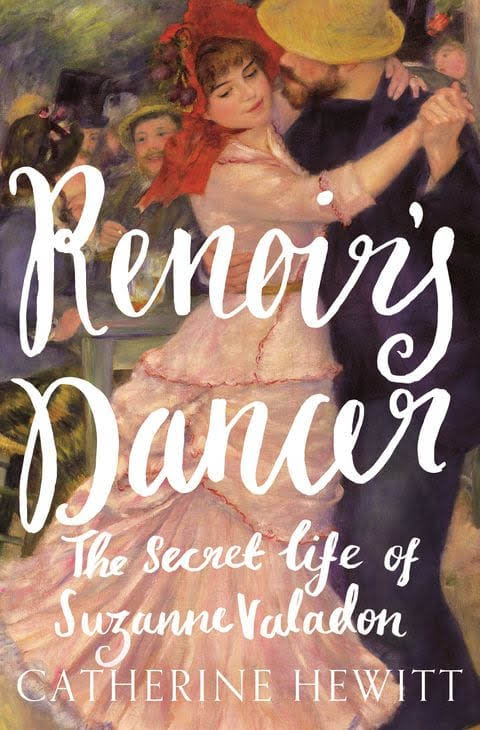
Renoir’s Dancer - The Secret Life of Suzanne Valadon by Catherine Hewitt- 2018


Renoir’s Dancer - The Secret Life of Suzanne Valadon by Catherine Hewitt- 2018

Paris in July hosted by Thyme for Tea, great event, will end on August 4th. 

I Focus on literary works and nonfiction but you are invited to share your thoughts and experience on anything Paris related, from a great recipe, a favourite movie set in Paris, mine is Ninotchka, an account of your stay in Paris.  I hope lots of people join in.  Just be sure to  link you post on The event home page.  

There is still time to join us.


 There are lots of very interesting posts from food bloggers, Francophiles, travel bloggers, as well as book bloggers.  Normally I don’t venture far from the international book blog community so for me this event is an excellent way to expand my horizons. 

So far I read for Paris in July 2018

  1. “A Yiddish Poet in Paris” by Blume Lempel, 1978
  2. Vagabond by Colette, 1904
  3. Lost Times - Lectures on Proust in a Soviet Prison Camp by Józef Czafski -translated and introduced. by Eric Karpeles - 2018
  4. “Her Last Dance” by Blume Lempel - 
  5. Gerorge Sand by Martine Reid 2017
THE ARCHIVE THIEF The Man Who Salvaged French Jewish History in the Wake of the Holocaust LISA MOSES LEFF
  1. “Cousin Claude” by Blume Lempel
  2. Taste of Paris:A History of the Parisian Love Affair with Food by David Downie
  3. “The Beggar” by Gaito Gazdanov, 1962
  4. “Image on a Blank Canvas” by Blume Lempel
  5. Foreign Bodies by Cynthia Ozick.  2004,Kind of a rewrite of The Ambassadors by Henry James with a female lead.  No post planned
  6. “Salmon Rushdie at the Louvre” - an essay by Cynthia Ozick. No post planned.
  7. In Another Country by James Baldwin.  1960, Partially set in Paris. No post planned.  
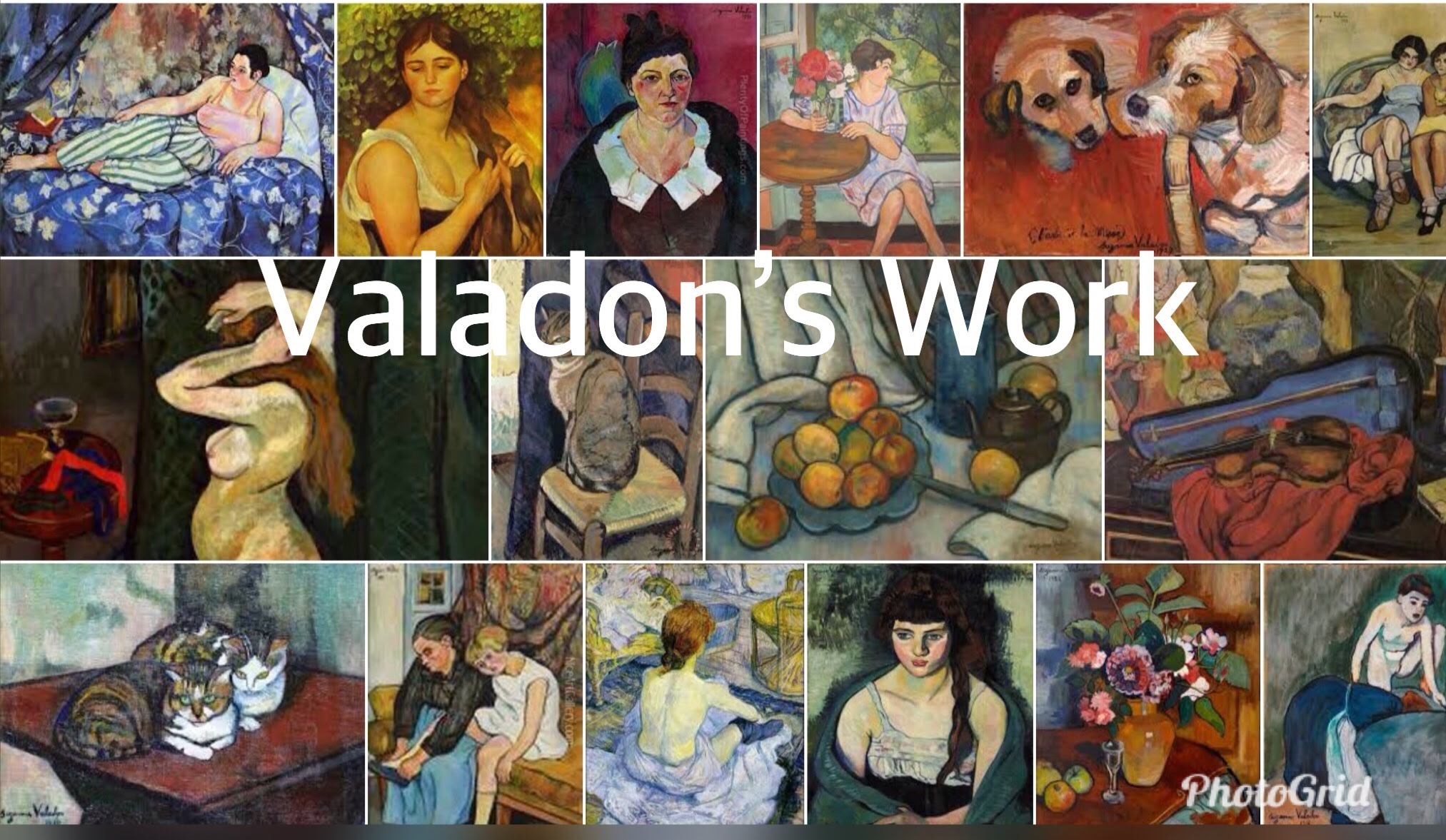
  8. Renoir’s Dancer - The Secret Life of Suzanne Valadon by Catherine Hewitt- 2018

Suzanne Valadon

Born 1865

Died 1938

1883- begins to model for Renoir and others

Became a full time painter in 1896, mentored by Degas.

She is widely considered France’s greatest female painter.


I was completely fascinated and very involved on several levels by Renoir’s Dancer - The Secret Life of Suzanne Valadon by Catherine Hewitt- it is biography elevated to high art.  I knew nothing about Suzanne Valadon when I began the book, by the close I felt I knew her with near intimate vermisilitude.  

Valadon’s mother was a laundress in the provinces.  Hewitt offers a lot of interesting details about life and folkways in rural France. Valadon was a bit of a wild child, by age fifteen the nuns at her school felt it was time for her to go to work.  She tried washing dishes, doing laundry, and hat maker.  It seemed for a while she might succeed as a circus acrobat but she injured herself in a fall.  

Now 17, very attractive and outgoing, she went to the Paris Model’s market.  I was unaware of this and greatly enjoyed learning how artists hired their models.  A model had to have lots of stamina which Valadon had and for many assignments be willing to pose nude.  The job paid a good bit more than her prior work.  Models were seen by polite society as part demi-monde but Valadon liked to party, drinking and couldn’t care less. Men clearly were drawn to her.

Soon, with her mother, she was living in the Montmarte district, infamous for nightlife.  She was introduced to Pierre-Auguste Renoir and became his favourite model and mistress.  She also modeled for other elite impressionists.  The Paris art scene was very intertwined, with gossip, swapping models and artistic cross pollination.  Hewitt description of the art scene is very informative and fun to read.

Valadon was now pregnant, having numerous lovers, she did not name a father but a minor artist took responsibility.  In time  her son, her only child, was became difficult.  Soon Valadon married and  began to live with an older affluent businessman, her mother and son lived with him also. Hewitt lets us see what a devoted mother Valadon was to her son whose severe drinking binges kept him in and out of sanatoriums the rest of his life. The death of her mother is very movingly depicted. Her mother was very important to her and helped her with her son.

The most exciting part of the biography for me was Valadon’s progress from model to highly acclaimed artist.

She had shown an aptitude for drawing since a child.  She learned a lot about artistic techniques from observing those who painted her.  She began to paint in an impressionistic style.  Toulouse-Lautrec, one of her clients, introduced her to high end art markets.  At 28 she had an exhibition and sale at a top venue.  For the rest of her life she produced and sold hundreds of works of art.  A fun for me segment of the biography was Hewitt’s treatment of Toulouse-Lautrec.

At around age 45 she divorced her first husband and married a younger man, also an artist.  Her troubled son had also become a serious commercial success as a painter and was to become a bigger earner than his mother.  Mother and son were very close, the destructive behavior of her son, including several arrests, was a life long trial for her, one she bore as well as she could.  She was a very devoted mother and her son worshipped her.  Eventually he married and stabilized somewhat.

There is much more in this wonderful biography, it is a potrait of the life among The Impressionists of Paris, I think anyone interested in this era will like this book.  One thing it brought out was how the railroad connected the provinces to Paris.  

Valadon is considered an early feminist icon by msny, supporting herself, flaunting conventional moral restraits on women.

Maybe she was to French painting what Colette was to literature.  

I give my total endorsement to Renoir’s Dancer - The Secret Life of Suzanne Valadon by Catherine Hewitt.  I look forward to reading more of her work.

From The author’s website 


Having been awarded a first-class honours degree in BA French from Royal Holloway, University of London, she went on to attend the prestigious Courtauld Institute of Art where she took a Masters in the History of 19th-Century French Art and was awarded a distinction. In 2012, she completed her PhD on The Formation of the Family in 19th-Century French Literature and Art, with joint supervision from Royal Holloway and the Courtauld Institute. Throughout her academic career, she has regularly presented papers at conferences, published work in academic journals and was awarded numerous university prizes.

After being awarded her PhD, she set out on her career in biography. Based on meticulous research, Catherine’s writing seeks to lift history out of the dusty annals of academia and bring its characters and events to life for the 21st-century reader. Her writing introduces real people, telling their stories in intimate detail and enabling readers to share their successes and frustrations. As well as writing, Catherine lectures and runs workshops on 19th-century French art, literature and social history, always seeking to share her enthusiasm for French history and culture. She also works as a freelance translator, and her portfolio includes a translation of a permanent exhibition of the work of the radical French female painter Suzanne Valadon for a gallery near Limoges in France.
Catherine lives in a village in Hampshire, UK. When she is not writing, she can be found helping restore her family’s house in the middle of rural France, cooking, reading and enjoying country walks with her little black cockerpoo, Alfie.

Mel u


Featured Post

Imperial Reckoning: The Untold Story of Britain’s Gulag in Kenya by Caroline Elkins - 2005 - 701 Pages

  Imperial Reckoning:     The Untold Story of Britain’s Gulag in Kenya by Caroline Elkins - 2005 - 701 Pages 2006 Pulitzer Prize Winner From...