Monday, April 5, 2010

Parade's End -is it an Encyclopedic Narrative?-a question for readers


 Is Parade's End an Encyclopedic Narrative? -a question for readers-


Conspiracy of Commodities: Postmodern Encyclopedic Narrative and Crowdedness Alan Clinton


[1] In 1976, Edward Mendelson used the novel Gravity's Rainbow in order to introduce a genre that had "never previously been identified"(161), the "encyclopedic narrative." A cynical reading of his essay (published in a volume on Thomas Pynchon entitled Mindful Pleasures)  would view the new genre as Mendelson's excuse to glorify his favorite novelist, for his definition of "encyclopedic authors" is extremely exclusive: Dante, Rabelais, Cervantes, Goethe, Melville, Joyce, and of course, Pynchon. Yet, Mendelson does provide a set of criteria for encyclopedic narratives which extends beyond their exceptional authors: 1) they all include an extensive account of at least one technology or science; 2) they are an encyclodedia of literary styles; 3) they all provide a history of language (are metalinguistic); 4) they all propose a theory of social organization.  From  


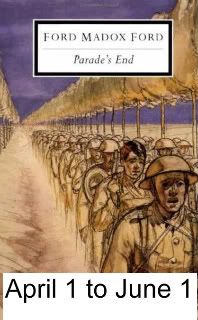
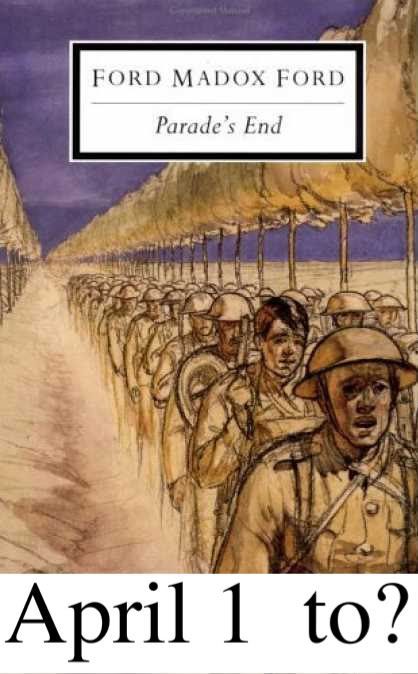
In a very famous and still highly regarded early essay on Gravity's Rainbow by Thomas Pynchon, Professor Edward Mendelson (Columbia University) coined the term "Encyclopedic Narrative" as given an informative name to what he said were seven master literary works of western civilization.   (listed in the quote above)-All these works sort of sum up a culture at its apex.    I know this concept is very useful in unraveling the mysteries of Gravity's Rainbow.   One of the incidental characteristics of an encyclopedic narrative is simply that it is a long book.   I began to wonder if maybe Mendleson had overlooked a very obvious encyclopedic narrative.   Most of the narratives are also about a culture in decline or at its apex.    Parade's End does use a variety of literary styles (not as wide a variety as Gravity's Rainbow maybe but as wide a variety as would be credible in the structure of the work).   It also makes reference to ancient literature and makes wide use of slang of an era just like Moby Dick uses whaling slang.    The extensive literary references can maybe be seen as part of a metalinguistic theory.   The lead character is both a man of extensive literary culture (some of which he has wrong-this is no accident of course) and a skilled statistician and versed in higher mathematics.   Parade's End does show us Tietjens explaining these functions in his various conversations.   There are a lot of obscure references in Parade's End just like in Gravity's Rainbow and Moby Dick.   Also do not forget one of the hobbies of our lead character is correcting the Encyclopedia Britannica.   There are extensive comments about the structure and nature of society in Parade's End also.   Parade's End is for sure a book about social structure and class construction through artifacts and literature.  

My question to readers of Parade's End is then should the work be treated as an encyclopedic narrative of  England in the 1910s?    Parade's End seems to be many things.   One of its  deeper themes seems to me to be the nature of culture and deeper still the nature of knowledge.     

Parade's End is also fun.   The conversations are marvelous and the relationships of the characters are really interesting.  Even the 3rd party style narrator is really a character in the story.   I will say it is not a work that you should lollipop your way through.    As you can see I am quite baldheaded over it and do run to the magpie on its marvels.  (ok no more slang from the 1910s!)


"The Dormitory" by Yoko Ogawa

"The Dormitory" by Yoko Ogawa (in a collection of three novellas, The Diving Pool-1991, translated from Japanese by Stephen Snyder, 55 pages-Picador Publishing)

"The Dormitory" is the third novella by Yoko Ogawa I have blogged on.    Prior to this I read the title piece, "The Diving Pool" about a strange obsession of a young woman, then "Pregnancy Diary", a very odd work in a diary format about the pregnancy of the diary keeper's sister.   Both of these stories have a fey, near otherworldly feel to them.    I liked them both a lot.    I think the last story in the collection, "The Dormitory" is the best of the three.    

The narrator of "The Dormitory" is a woman, about age 28, living by herself in Tokyo.   Her engineer husband is working on a big long term project in Sweden and his wife is preparing to join him,  it seems.   We learn a lot about her day to day routine.   To me it seems she enjoys being alone and is in no rush to go to Sweden.   Sweden is to her a very far away very exotic place.    One of the themes of Ogawa's work seems to be about being alone-the sadness and the pleasures of being alone.   One day the soon to  start college male cousin of the narrator comes for a visit.   He will be going to the same college his cousin graduated from.   He asks her if she knows a good place he could live.   She suggests he live in the same private dormitory that she lived in during her college days.    She contacts the owner of the dorm to be sure he is still in business and has room for her cousin.   Yes he does but he advises her that things have some how changed in a \way that feels a bit sinister to the narrator though she cannot articulate it.   She advised her cousin that the two of them will go visit the dorm and tells him do not be shocked when you see the dorm owner has both legs and one arm amputated.   The dorm has for sure gone downhill in its appearance and looks a bit shabby.   It is nearly vacant compared to the old days.   I do not want to give away any more of the story.   It reads like the build up of an old fashioned horror story.   The personality of the narrator is a bit strange and quite interesting.

 The best known work of Yoko Ogawa (1932)    is The Professor and The Housekeeper which I hope to read soon.   

I am in the process of expanding my appreciation for the short story as a literary art form.   If any one has any suggestions as to "the world's best short stories" please leave a comment-

Mel u

Sunday, April 4, 2010

"Pregnancy Diary" by Yoko Ogawa

"Pregnancy Diary" by Yoko Ogawa from her collection of three novellas, The Diving Pool (1991, translated from Japanese by Stephen Snyder -49 pages)

I have already posted on the title piece from the collection from which this story is taken, "The Diving Pool", a strange and beautiful tale of a young woman and her obsession with watching her step brother dive.   The most famous work of Yoko Ogawa (1962) is The Professor and the Housekeeper which was loved by all who blogged on it.   

The diary in "Pregnancy Diary" refers to a diary kept by the sister of a pregnant woman who lives with her sister and brother in law in Tokyo.    The  diary begins the day before the sister makes her first visit to the maternity clinic she has chosen, The M Clinic.    The details of the visit are set out in the diary.    The clinic offers a full range of services from prenatal care to in house birthing facilities.    The diary keeper has her own unique perceptions and attitudes.    Like the central character in "The Diving Pool" she may never be physically alone but she is lonely and isolated and does not understand human relationships as people commonly do:

In, fact I don't really understand couples at all.   They seem like some sort of inexplicable gaseous body to me, a shapeless, colorless, unintelligible thing, trapped in a laboratory beaker.

Her observations on her sister are very interesting:

She seems to sleep a lot these days;   and she seems quite peaceful, as if she has wandered off into a deep, cold swamp.

Soon the pregnant sister begins to find food smells make her nauseous.    The other sister begins to do her cooking not in the kitchen but out in the yard.   The pregnant sister loves part of the prenatal examination procedures in which a clear gel is spread all over her body from her lower stomach on down.  The purpose of the gel is said to be to improve the quality of the ultrasound scans.    To me the reaction of the pregnant woman to this procedure is more than a little strange:

When they are finished, one of the nurses wipes my stomach with a piece of gauze.   I always want it to go on a little longer, so that makes me sad..When they are done, the first thing I do is go to the restroom and pull up my blouse again to look at my stomach.   I always hope there's some gel left, but there never is.  It is not even smooth when I rub it-I feel so let down.

The pregnant woman goes through different phrases.   For a while she will barely eat and loses weight then she begins to eat all the time.   The doctor tells her she must stop her weight gain.  

Nothing really amazing happens (this is not a remake of Rosemary's Baby! )    Both sisters seem a bit odd and the brother in law seems disconnected somehow.    The pleasure of "Pregnancy Diary" is in the   observations of the diary keeper and in our efforts to figure out what is really going on in the lives of the pregnant  sister and the brother in law.   Ogawa for sure lets us feel as if we are their and we believe in and care about the diary keeper and her sister.   (The sisters almost felt with a bit of a push they could be characters in a work by Emily Bronte if she had lived in post world war II Tokyo).    "Pregnancy Diary" is easy to read.   It may not be a master work of the art of the short story but I am glad I took the time to read it and I think most readers will also.   I enjoyed the diary format a lot.

I am getting more into the short story now and would love to have suggestions as to other works.

Mel U

Parade's End Read Along some notes and observations on chapters 4, 5, 6, and 7

Parade's End read along notes inspired by chapters four through seven of Some Do Not (part one of the tetralogy)


Cultural Creation in Parade's End

Normally when I read a novel and I do not feel I fully understand the cultural references or some of the words used I simply go past it hoping I will figure it out latter and not wanting to stop my reading to look things up I do not worry too much about what I do not understand.   In reading the first 140 pages of Some Do Not, the first novel in the tetralogy that makes up Parade's End,  I think you cannot really do that as I think one of the very basic themes of the work is the construction of culture and identity through things understood the right way.   Parade's End is in part about effects of knowledge and the lack of it and the faking of it.    In the opening chapters you cannot, I think, but help be impressed and intimidated a bit by the depth and width of the apparent culture of our central character Christopher Tietjens.   After all, he corrects  the Encyclopedia Britannica for fun.    Another way culture is created, and I think this is also a theme of Parade's End, is through slang.   Slang also defines class structures, it includes and excludes.

Saturday, April 3, 2010

"South of the Border, West of the Sun" by Haruki Murakami


South of the Border, West of the Sun by Haruki Murakami (1992, translated from Japanese by Philip Gabriel, 1999,    213 pages  Vintage Books)

First I want to express my thanks to Dolce Bellezza for hosting the contest in which I was lucky enough to win a copy of South of the Border, West of the Sun and being generous enough to send the book internationally.   

I have so far read and posted on two other novels by Murakami.    After Dark was the first Japanese novel I had ever read.    I think it is a good selection as a first Japanese novel. (Since then I have read works by over 50 works by Japanese authors.   The more I read the more I appreciate the incredible richness of the Japanese novel.)      My second work by Murakami was Dance, Dance, Dance.   Dance Dance Dance is a middle book in a three part series which I read in part because I got it in a book swap.    I enjoyed it but would probably have gotten more into it had I read the other book in the series, Wild Sheep Chase first.  I also read about half of the short stories in his collection Blind Willow, Sleeping Woman.    I liked these three books but I did not become a real fan of Murakami until reading South of the Border, West of the Sun which I think is a much better book than the first two novels I read.   

One of the things I personally appreciated about South of the Border, West of Sun was that the narrator and one of the central female characters were very much into the reading life.   Some depictions of characters with a love of reading are convincing, some are not and Murakami's were very well done and quite convincing.  

Basically, the novel is the story of the life of Hajime, a man who we first meet in his adolescence.   He is your typical awkward bookish young man but that does not stop him from being obsessed with girls!   In Dance Dance Dance it seemed to me that the protagonist had an immature fantasy based relationship with the women in his life.   I even referred to the book as "Bookish boys lit".   In South of the Border, West of the Moon we see Hajime have his first sexual encounter (described in a very erotic fashion-this is an erotic book).   We see him get his first job, a boring drone type of job he has and dislikes for years.   He grows out of his social awkward stage but he stays pretty much of a loner.   He meets a girl while in high school, Shimamoto who is like him, an only child.   She had polio as a child so she drags one leg behind her.   She is very beautiful and also a reader.   In Japan at the time, only children were considered to have a weak character brought on by over pampering, or so Hajime tells us.   Nothing ever happens with his infatuation with Shimamoto and after high school he loses track of her.   He has some other adventures but one day in a fix up date he meets the woman he will marry.    This changes his life in many ways and does lead to him being a prosperous owner of two very trendy bars in Tokyo.   One day nearly 20 years since he saw her last Shimamoto walks into his bar.   I will not relay what happens as the plot twists are a lot of fun (and as I said there is some very  clearly  described erotic encounters).    We get a good look at Hajime's marriage.  He is a good father and over all was a pretty good husband.   We learn something about how big business works in Japan.   And for sure there are unsolved mysteries and marvelous happenings.    South of the Border, West of the Sun is above all else a lot of fun to read.

This was the first Murakami novel that really worked for me.   I am now a convert to the Murakami camp even though Kenzaburo Oe has been critical of the content of his work, not his talent.  (Basically it seems to be that  Murakami is considered "Too American" in his cultural frame of reference but this has zero to do with literary quality).    

Friday, April 2, 2010

"Parade's End" by Ford Madox Ford-Chapter Two and Three in Which we meet Sylvia Tietjens

     Parade's End Read Along-Chapter 2 and 3-do we like or hate Sylvia Tietjens, wife of Christopher Tietjens

2nd entry in my Parade's End reading notes

In writing reading notes on a work like Parade's End before you have completed the novel you run the risk of not fully understanding events, characters and themes that are fully illuminated only with the further unfolding of the story.   If one had done posts as you read The Good Soldier you would see your first perceptions of things were not quite right.   You learn as you go on that things are far from simple.   Ford Madox Ford (FMF) is as subtle  and one must say as slippery a literary artist as anyone.    In doing reading notes on one of his works without first finishing it I think I will for sure end up learning from my mistakes.   

In Chapter One we met Christopher Tietjens.   He comes from a very well off family and works a statistician for the government.    He is a man of great culture and wide knowledge as evidenced by his hobby of correcting errors in The Encyclopedia Britannica (in the time of the opening of the book-early 1910s-in England-I think the Encyclopedia Britannica was the ultimate authority.   It was also quite expensive so the possession of it is another of the many many class indicators in Parade's End).    Tietjens is traveling on a train with his good friend Macmaster (from Scotland )    The friendship of Tietjens and Macmaster is not a relationship of equals and Macmaster defers to Tietjens as a superior man.   We do not yet know how important Macmaster will be in the story and if his deference to Tietjens is justified but it is there for sure as we start our story.

In Chapter Two we meet Sylvia Tietjens, the wife of Tietjens.   It is from her we learn that his  first name is Christopher and  his nickname is "Chrissie".    There are no accidents I can already see in the work of FMF.   Why "Christopher"?    Is it as obvious as an equation of Tietjens to Jesus or Columbus?   In the 21th century, "Chrissie" is a nickname appropriate for a woman, not a man.    I do not know if the same was true in 1912 so I cannot tell if this is to indicate the wife is mocking him for a lack of masculinity.   We learn first about Sylvia through the conversations of Mrs Satterwaite  (I loved the description of her) and a priest concerning her.  They are talking about Sylvia's attitude toward her husband:

"There are times when a woman hates a man-as Sylvia hates her husband..I tell you I have walked behind a man's back and nearly screamed because of my desire to put my nails into the veins of  his neck.  It was a fascination.   And it is worse with Sylvia.   It's a natural antipathy."
I left chapter one being in awe of the brilliance and cultural depth of Tietjens but wait, his wife seems to see him as a near idiot and an insufferable know it all and bore.   She seems to say she stays married to him only so she can torture him.   She has had numerous affairs, it seems, and seemingly  Tietjens does not have any clue he is not the father of his wife's child.   Here is a  description of Sylvia (we do not yet know how much we can rely on the narrator even though it is told in the 3rd person):

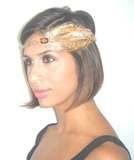
Immensely tall, slight, and slow in her movements, Sylvia Tietjens wore her reddish very fair hair in great bandeaux down over her ears.   Her oval, regular face had an expression of virginal lack of interest such as used to be worn by fashionable Paris courtesans a decade before that time.   
 We are still left a bit to ourselves to figure out from this description what Sylvia looked like.   We know she had red hair for sure.   "Immensely tall"?   well a six foot five woman is immensely tall.   We can guess she was not that tall so we really do not know what this means-does it just mean two or three inches taller than average?  then why call her immense.   I confess I had to look up the meaning of "bandeaux"  and this image appears to be it.   (My knowledge of expressions for fashion accessories of the 1910 is not great.)    I guess we are to assume that either the narrator was familiar enough with fashionable courtesans of ten years prior to the start of the story that he would at once compare Sylvia's expression to theirs or that is the in fact logical way to describe her..   Of course this begs the question as to whether this is an accurate picture of French courtesans or the projection on Sylvia of the sort of images the narrator can relate to.

Here is Sylvia's description of her husband:

I call my husband the Ox.   He is repulsive, like a swollen animal.
Sylvia's mother loves Christopher, she calls him one of her "best boys"  while Sylvia tells us her husband cannot bear her.   We know already our perceptions of these people and relationships are on shifting sand.

One of the pleasure of this work is the many epigram like remarks and sentences that I already have found in abundance in the first 3 chapters.   Here is one from Sylvia  "To know everything about a person is to be bored...bored....bored".   We know already Sylvia is talking for effect, in part.

The chapters two and three have interesting conversations about the nature of marriage, about religion, and relationships and sexual morality.   I was about ready to decide ok Sylvia is a bad person married to a wonderful man until we meet "The General"  in Chapter III who seems not a fool and he goes on an on about how wonderful Sylvia is.


I see Parade's End as totally worth reading for the many marvelous turns of phrase in the book alone and there is so much more in it.   I am really looking forward to going on in this book.    I may write a good number of these reading notes type of posts and then as I finish each section of the tetralogy  I will probably do a sort of summing post or two and then on finishing the work  I will probably do two or three over all posts on the work as a whole.     Because I do not know what is coming next some of  what I say will be in error as i go along but the errors are part of my reading experience.     I may end up doing 20 or more posts as I go along.  (I keep telling myself to make shorter posts on the books I read!)    To those  the read along I will link your posts in here and comment on them if I am able.    


To readers of my blog, I read normally several things at one time and will be posting next on a great super fun  Japanese novel.   I will say the Junichiro Tanizaki is the Japanese novelist that FMF seems most like to me, so far.   

There is a very telling post on Bibliographing that echos my remarks about the wonderful phrases that about so far in Parade's End.


Thursday, April 1, 2010

March 2010 Month End Reading Life Review-Books Read and Progress in Reading Challenges

March 2010 was a very good reading month for me-here is what I read in March-with a newly added
comment


  1. The Name of the Rose by Umberto Eco-very knowledge packed-my first Eco but not last
  2. Snow Flower and the Secret Fan by Lisa See-good historical novel of 19th cent. China
  3. The Key by Junichiro Tanizaki-must read Japanese classic
  4. A Personal Matter by Kenzaburo Oe-a world treasure of a writer and thinker
  5. The Tenant of Wildfell Hall by Anne Bronte-more than just little sister's best book of two
  6. The Street of a Thousand Blossoms by Gail Tsukiyama -good WWII historical novel-
  7. The Broken Tower:   The Life of Hart Crane by Paul Mariani-great literary biography
  8. Blind Willow, Sleeping Woman by Haruki Marakami-good solid collection of short stories
  9. Villette by Charlotte Bronte-parts of this are for sure best written of her books
  10. "The Overcoat"  by Nikolai Gogol (short story)-Nabakov says great work-
  11. The Aspern Papers  by Henry James-a small master work as one would expect
  12. Wuthering Heights by  Emily Bronte  -deepest and darkest of the Brontes
  13. The Death March:  A Documentary Novel by Jiro Netti-set just before the Russian-Japanese War
  14. "The Diving Pool" by Yoko Ogawa (short story)-masterful short story by author of The Professor and the House Keeper
  15. Living with the Enemy:  A Diary of the Japanese Occupation by Pacita Pestano-Jacinto-deserves to be a best seller
  16. Peony in Love by Lisa See-good 17th century set in China historical novel
  17. "Bartleby, The Scrivener" By Herman Melville (short story)-best of Melville's Short Stories?


    In March I discovered two new to me  authors that I will for sure read read again, Umberto Eco and Yoko Ogawa.   I continued reading more of the Brontes.   I read two more historical novels by Lisa See.  I see her as a good solid writer if a bit predictable.    I am nearing my goal to read all the (in English) works of Junichiro Tanizaki and well past the mid-point for Kenzaburo Oe.   I discovered two new to me Japanese authors.  I began to get into short stories a bit.


    44 Reading Challenges So far for 2010
So far this year I have completed 21 challenges
I have read at least one book for 19 still to be completed challenges
I have not yet started 5 challenges

I thank all the challenge hosts for their efforts.   I expect to complete all these challenges by year end and most by mid-year.   I have explained my reasons for joining so many challenges here if anyone is curious.    

Since I began my blog eight months ago I have received visits from readers from 107 countries. I know a lot of these are by students.   When ever I think about my blog I recall as I was writing my first post my wife asked me "Who will read these posts you are doing?".  My only response was "I do not know, maybe nobody will but at least I will have records of what I read".   I was so thrilled when I got my first comment and am in fact still thrilled when I get a comment.  ( I moderate my comments as I have been subject to spam attacks.)

If any one in the Manila area wants to do a book swap please leave a comment or E-Mail me at rereadinglives@gmail.com

I also completely redid the look of my blog using the new template -designer from Blogger in Draft


    Featured Post

    Imperial Reckoning: The Untold Story of Britain’s Gulag in Kenya by Caroline Elkins - 2005 - 701 Pages

      Imperial Reckoning:     The Untold Story of Britain’s Gulag in Kenya by Caroline Elkins - 2005 - 701 Pages 2006 Pulitzer Prize Winner From...