Wednesday, June 9, 2010

Coin Locker Babies by Ryu Murakami


Japanese Literature 4

Coin Locker Babies by Ryu Murakami (1980, trans.  from the Japanese, 1985 by Stephen Synder, 392 pages)

Ryu Murakami (1952-not related to Haruki Murakami) has played in a rock band and had his own talk show on Japanese TV.    He is best known for several novels that depict alienated people in their teens and twenties from the darker side of life in Tokyo.    Many have the image of the Japanese novel as depicting a world of extreme refinement and high culture in which hours are spent talking about the color patterns in a favorite kimono, the old days before WWII, the nuances of puppet theater and family ties that go back a thousand years.   There are a lot of beautiful wonderful novels that do just that in a masterful way.    If a man in one of these books has an extra-marital encounter it is with a geisha of the highest standing.   In Coin Locker Babies it is with an unknown woman in an alley with no names exchanged while they are observed by the denizens of Toxic Town who yell out their comments on the looks of the woman.   A lot of people have read some of the novels of Natsuo Kirino such as Real World, Out or Grotesque that depict live among those left out by the prosperity of contemporary Japan.   Many say they find the world depicted in her novels almost too hard to take at times.   Well, life in her works is High Tea at the Peninsula Hotel Tokyo in comparison to life in the world of Coin Locker Babies.     Coin Locker Babies has one of the most jarring attention grabbing first lines I have read in a while.   I think some people might be so offended by it (either because they find it offensive or because they will see it as basically cheap sensationalism) that they will stop reading the novel.   I had to read it three times to be sure I was getting it right in my mind!  


The  two male central characters were left in a coin locker in a transit station in Tokyo by their mother shortly after their birth.   They spend their growing up years in an orphanage and with a series of foster parents.   As they get older their thinking becomes dominated by a desire to get revenge on the mother who abandoned them.  From there they move on to trying to figure out how to destroy all of Tokyo.    Along the way to find their mother the boys have a lot of adventures.   One services the sexual needs of other males in Toxic Town and becomes a champion pole vaulter.   One becomes a well known rock star.   They each fall in love.    All sorts of sexual encounters are described (expect one between two people who care about each other), every body is corrupt, really ugly looking, crazy,  perverted  etc.    One of the boys falls in love with a woman who keeps a two meter alligator as a pet in her small apartment that she has turned into a swamp.   There is unpredictable violence everywhere.

This is a funny book.   It is not high culture and some would say  it is shock literature that you read just to see what crazy thing will happen next.      It does seem written for readers who need constant action and stimulation.   I enjoyed this book.   There is a dark beauty in the world in depicts.   It has a lot to say about the life of people who do not quite fit in perfectly with society.   There are deep themes in this work.

I liked this book.   It is kind of escapist reading in part. Some will see it as not worth their time as there are much better Japanese authors including one who shares Ryu's last name.     I  would endorse it  for those like a wild ride and can shrug off  some scenes that would make a faithful movie of the book X rated and some real violence and harsh treatment of women.  I will note personally that I was annoyed  by references in the novel to women from the Philippines as all being prostitutes (the book uses another word).   I will read other books by Ryu Murakami but I do not really suggest it for someone just getting into the Japanese novel.   If you want a look at the dark side of modern Japan read the works of Kirino first.

I most note the print is very small.  I know small print saves publishers money but I may avoid other books by  the publisher, Kodansha International, as they all seem to have quite small print.

Mel u

Tuesday, June 8, 2010

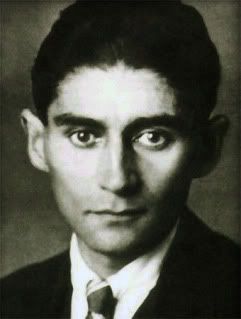
"The Metamorphosis" by Franz Kafka and "Lectures on Literature-The Metamorphosis" by Vladimir Nabokov

"The Metamorphosis" by Franz Kafka (1915, 45 pages, read on Dailylit.com-trans. not given)

"Franz Kafka's -The Metamorphosis"-lecture by Vladimir Nabokov-in his Lectures on Literature (published 1980 but from lectures written around 1953, 32 pages)

As I was finishing up "The Metamorphosis" by Franz Kafka (1883 to 1924-Prague) I found to my great surprise both volumes of Lectures on Literature by Vladimir Nabokov (1899 to 1978-St Petersburg, Russia)  on sale in a mall near me.   These volumes are based on lectures given by Nabokov during his teaching career (1940 to 1958) at various American universities.   Volume one covers works by Dickens, Joyce, Austin, Stevenson, Proust and Franz's Kafka's "The Metamorphosis".  Volume two covers Russian Literature.   The sale of his books came to liberate him from the need to teach.   (Lolita, Pale Fire, etc).  


When I began to explore the world of the short story I began to do numerous searches on Google relating to "world's best, most famous, most important short story, etc".    On every list "The Metamorphosis" was near the top.   It well might be the most important or influential short story of the 20th century (at most I think it is second to James Joyce"s "The Dead"-I will post on that soon).       I see no need to repeat the plot.

    What I was very struck with in this story is how much it is about the entrapment of family life.    As I got into the story I began to feel more sympathy for Gregor for the dreadful life he lived than for the transformation that over took him.   I began to wonder if it was a strange wish fulfilment dream.    Maybe turning into a giant insect was preferable to him than continuing on with a meaningless life.     I also noted that somehow Gregor in his willingness to support his parasitic family had taken the meaning from their lives.    The interpretations one could put on this story are near endless.   "The Metamorphosis" is  really a holy text of modernism.

As I read Nabokov's lecture on the story I tried to imagine how terribly intimidating he must have seemed to   college students in America in the 1940s and 1950s.   (There is a really good video on YouTube of  the actor Christopher Plummer playing Nabokov lecturing in one of his classes).    I do not presume to paraphrase him-he still intimidates!  One of his central points to his students is to open yourself up to respond to the work you are reading.   To look at it with your own eyes.   He tells us do not assume what you heard about a famous work is right.   He used his extensive entomological background to proof that the common as taught in school notion that Gregor was transformed into a roach is wrong.   He even included detailed drawings to show us just what type of insect Gregor had become.    As I knew it would be, the lecture is beautifully written and totally brilliant.   He does make use of some dubious rhetorical style in his treatment of views he opposes or writers he looks down on.   He states his own view magnificently then he simply declares from Olympus that anyone who thinks other than he does is a tasteless unintelligent bore.   I laughed out loud when he said Thomas Mann was like a dwarf in comparison to Kafka without any justification at all (as I thought about it I wondered if the college students in his class had even heard of Thomas Mann).   His teaching style was evidently quite theatrical.     I think many who read his lectures (or watch  the video which I hope you will) will wish as I did that they could have had such a great  teacher so into the reading life.   I loved it in his opening lecture when he said literature is superior to all other art forms and requires more of the full human capacity to respond to than music or painting.

"The Metamorphosis" is really a "must read" literary work.     There are numerous places you can reads it for free online.   It is not hard or difficult to read.    Everyday we see reviews of writers who are described as "Kafkaesque".    The next time you read such a description stop there and read the original.   I will read two other of his short stories and post on them soon, "The Hunger Artist" and "The Penal Colony".   I hope to read Pale Fire soon.

If anyone has any suggestion as to short stories I might like please leave them in  comment.   Thanks

Mel u

Sunday, June 6, 2010

Roberto Bolano-Two Short Stories

"William Burns" by Roberto Bolano ( in The New Yorker, Feb 2010-3 pages)
"The Prefiguration of Lalo Cura" by Roberto Bolano ( in The New Yorker, June 2010, 5 pages)-both translated by Cris Andrews from the Spanish.   


In the first half of 2009, before I began my blog, I read four of Roberto Bolano's (1953 to 2003-Chile) novels.   First I read Savage Detectives, then 2666, then the hilarious Nazi Literature in the Americas and lastly By Night in Chile.   Obviously I greatly admire his work and along with the rest of the literary world I wonder what he might have done with another twenty years.    Many think his writings will become part of the canon.   His literary output was huge, much is still untranslated but it is coming out soon, I think.   

I was very happy when I found that The New Yorker had recently published and placed on their web pages for all to read two newly translated short stories by Bolano.   (I do not know when they were first written.)    Both of these stories are very much in the style of Savage Detectives and 2666.

"William Burns" is about a man staying in a shack in the mountains somewhere with his two girlfriends.   Both of the women are convinced that a man is stalking the two of them and intends to kills them.   They do not know why.   Like his big novels, this story is about people at the edge caught up in meaningless violence.   The ending is a surprise but it is well done and fits with the themes of the story.   I see this as for sure worth reading.   It will just take a few minutes.    


"The Prefiguration of Lalo Cura" is very much a miniature Bolano novel.    I was totally take up into the world of the narrator by the brilliant opening lines.
I’ll tell you everything, naturally. My father was a renegade priest. I don’t know if he was Colombian or from some other country. But he was Latin American. He turned up one night in Medellin, stone broke, preaching sermons in bars and whorehouses. Some thought he was working for the secret police, but my mother kept him from getting killed and took him to her penthouse in the neighborhood. They lived together for four months, I’ve been told, and then my father vanished into the Gospels. Latin America was calling him, and he kept slipping away into the sacrificial words until he vanished, gone without a trace. Whether he was Catholic or Protestant is something I’ll never find out now. I know that he was alone and that he moved among the masses, fevered and loveless, full of passion and empty of hope

Besides the male narrator, the story centers on three young women he gets to know. .    They lived in New York city and they dreamed of being dancers on Broadway.   That happens for them but along the way they clean hotels, work as prostitutes, sell their blood, etc. This is how women are depicted in the world of Bolano.  The narrator says in a purely off hand way that they are  typical Broadway chorus girls.    Along the way we meet a minor male star of pornographic movies, watch the girls star in an x rated movie about Latin America after WWIII, and we get to know a  professional killer.   In other words just your standard Bolano cast of characters and happenings.     I think this story is a  very good way for someone who has not yet read any of his work to sample Bolano.   If you like this story then I would say either jump right into the massive 2666 or if you have more reading time start with Savage Detectives then read 2666.      Both of these books have wonderful sections on the reading life  and lots of literary references.

I salute The New Yorker for its commitment to quality fiction and for putting these two stories on their public web page.

Mel u

Saturday, June 5, 2010

Virginia Woolf-"The New Dress" and "A Common Reader"


"The New Dress" by Virginia Woolf (1924, short story)
"The Common Reader" by Virginia Woolf (1925, essay)

I have decided to begin another short story reading project.   I am hoping to read all of the shorter fiction of Virginia Woolf.    The volume is not huge, maybe 400 pages or so over about 50 stories.   All the stories can be read online.    I have already blogged on one of them, "The Mark on the Wall"  as well as her great novel, The Waves.    I also want to read some of her essays and will do some joint posts on an essay and a short story.    Suko suggested I read as my next Woolf story "The New Dress".     I think reading Woolf's shorter  fiction will help me to get more out of reading her longer works.    I also have on order Hermione Lee's long biography of  Woolf.    I sort of acquired my interest in Woolf through her relationship to my latest literary crush, Katherine Mansfield.   I will, I guess, read her stories from the earliest to the latest.    Some I will do an individual post on, some I will post on in groups and some I will merely list for my own references as read.  

"My New Dress" was written at the same time Woolf was working on one of her most admired novels, Mrs Dalloway and this story may have been a stylistic experimentation for the novel.     It is told in a stream of consciousness fashion by Mabel  Waring as she gets ready to go to a party given by one Mrs Dalloway.    As I read it I was somehow brought to mind T. S. Eliot's "The Love Song of Alfred Prufrock" (1917).

Mabel is in a state of high anxiety over a new dress she plans to wear to the party:

What a fright she looks! What a hideous new dress!”—their eyelids flickering as they came up and then their lids shutting rather tight. It was her own appalling inadequacy; her cowardice; her mean, water–sprinkled blood that depressed her.
I have already come to observe Woolf likes to make use of insects in her work:

But she could not see them like that, not other people. She saw herself like that—she was a fly, but the others were dragonflies, butterflies, beautiful insects, dancing, fluttering, skimming, while she alone dragged herself up out of the saucer. (Envy and spite, the most detestable of the vices, were her chief faults.
The story gives us a close up look at the anxieties of Mabel as she attends the party.   "The New Dress" is so beautifully written I have to resist the urge to quote more of it.   It is not a hard to follow story at all but we can see Woolf's ability to get deep into the consciousness of her subjects well displayed in this miniature masterpiece.

The short essay, "A Common Reader" is one of Woolf best known essays about the reading life.    I hope no one minds but here is the whole essay:


The Common Reader
here is a sentence in Dr. Johnson’s Life of Gray which might well be written up in all those rooms, too humble to be called libraries, yet full of books, where the pursuit of reading is carried on by private people. “. . . I rejoice to concur with the common reader; for by the common sense of readers, uncorrupted by literary prejudices, after all the refinements of subtilty and the dogmatism of learning, must be finally decided all claim to poetical honours.” It defines their qualities; it dignifies their aims; it bestows upon a pursuit which devours a great deal of time, and is yet apt to leave behind it nothing very substantial, the sanction of the great man’s approval.
The common reader, as Dr. Johnson implies, differs from the critic and the scholar. He is worse educated, and nature has not gifted him so generously. He reads for his own pleasure rather than to impart knowledge or correct the opinions of others. Above all, he is guided by an instinct to create for himself, out of whatever odds and ends he can come by, some kind of whole — a portrait of a man, a sketch of an age, a theory of the art of writing. He never ceases, as he reads, to run up some rickety and ramshackle fabric which shall give him the temporary satisfaction of looking sufficiently like the real object to allow of affection, laughter, and argument. Hasty, inaccurate, and superficial, snatching now this poem, now that scrap of old furniture, without caring where he finds it or of what nature it may be so long as it serves his purpose and rounds his structure, his deficiencies as a critic are too obvious to be pointed out; but if he has, as Dr. Johnson maintained, some say in the final distribution of poetical honours, then, perhaps, it may be worth while to write down a few of the ideas and opinions which, insignificant in themselves, yet contribute to so mighty a result.

If anyone has any suggestions as to short stories I might like please leave a comment.

Mel u


Friday, June 4, 2010

Virginia Woolf-"Kew Gardens" and "How Should One Read a Book"


Two short works by Virginia Woolf (1889 to 1941)

"How Should One Read a Book"-essay-12 pages 1932
"Kew Gardens" -short story-10 pages-1921


I recently read a short story, "The Mark on the Wall" and a novel, The Waves by Virginia Woolf.    These were the first two works by Woolf I have read.   Woolf  was connected socially to my new literary love, Katherine Mansfield and to Ford Madox Ford who I spent some time with in April and May on my read along on Parade's End.     I hope now to read three or four of her major novels, all of her shorter fiction and some of her essays within a year.   I am currently getting to know the short story as a literary art form after a very long  avoidance.   

I decided to read "Kew Gardens" for two reasons.    One is that it is considered one of her best short stories and secondly because I have been there so I thought I could visualize the setting as I read.    The story is set in the famous London Botanical Gardens, Kew Gardens.    There is no action, no traditional plot.   We get  a brief look at four sets of two people that pass in front of a garden bed.     Woolf begins the story describing vividly a snail in the garden:

The snail had now considered every possible method of reaching his goal without going round the dead leaf or climbing over it. Let alone the effort needed for climbing a leaf, he was doubtful whether the thin texture which vibrated with such an alarming crackle when touched even by the tip of his horns would bear his weight; and this determined him finally to creep beneath it, for there was a point where the leaf curved high enough from the ground to admit him

The first couple to pass in front of our observant snail are a married couple.   Their marriage seems way past the first bloom of ardor and the man talks to his wife about another day 15 years ago in Kew Gardens when another woman refused his marriage proposal.    The wife flashes further back to memories of a first kiss received in the garden long before she met her husband.

Next we meet two men, one old and one young.   We are not told what their relationship is but we see they have a long and deep connection.    I just loved this passage in which Woolf conveys to us as only she really can part of the stream of consciousness of the older man:
He began talking about the forests of Uruguay which he had visited hundreds of years ago in company with the most beautiful young woman in Europe. He could be heard murmuring about forests of Uruguay blanketed with the wax petals of tropical roses, nightingales, sea beaches, mermaids, and women drowned at sea, as he suffered himself to be moved on by William, upon whose face the look of stoical patience grew slowly deeper and deeper.

We meet two other sets of garden visitors also but I will give no more of the story away.    We do see in this story the Bloomsbury condescension toward the poor (the lower classes)  in its treatment of two older simply dressed women.    "Kew Gardens" is a wonderfully realized short story I greatly enjoyed.   Her short stories can also be seen as kind of a way of learning to read Woolf  so we can appreciate her masterworks more.

Woolf is also famous for her essays on literary topics.    I was browsing through one her essay collections,   The Common Reader, Second Series (1932), and I saw one essay that I wanted to read right away.   It is the last essay in the collection, "How Should One Read a Book".   The essay is simply brilliant as one would expect.    I decline the fool's errand of paraphrasing her essay but there is one passage that caught my eye.   I follow a lot of book blogs.    I often see debates about whether or not it is mean spirited to due a negative review on a book by a living author or on a book that others like.   Here is what I think we should keep in mind when blogging on any book or story:

We are no longer the friends of the writer, but his judges; and just as we cannot be too sympathetic as friends, so as judges we cannot be too severe. Are they not criminals, books that have wasted our time and sympathy; are they not the most insidious enemies of society, corrupters, defilers, the writers of false books, faked books, books that fill the air with decay and disease? Let us then be severe in our judgments; let us compare each book with the greatest of its kind. There they hang in the mind the shapes of the books we have read solidified by the judgments we have passed on them — Robinson Crusoe, Emma, The Return of the Native. Compare the novels with these — even the latest and least of novels has a right to be judged with the best.  


If anyone has any suggestions for additional short stories I might read (preferably ones I can read online) please leave a comment-thanks


Mel u 

Thursday, June 3, 2010

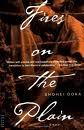
Fires On The Plain by Shohei Ooka

Fires On The Plain by Shohei Ooka (1951, translated from the Japanese by Ivan Morris, 1957, 246 pages)

Shohei Ooka (1909 to 1988-Tokyo) is know for one  famous book, Fires On The Plain.   He was one of the first Japanese authors to write fiction based on the Japanese experience in WWII.   Ooka was a French scholar and translator.    He translated The Red and the Black and  The Charter House of Parma both by Stendhal into Japanese.   In January of 1944 he was drafted into the Japanese Imperial Army and after a brief training was sent to the southern Philippines to fight the Americans and Filipino resistance forces.   In January 1945 he became a prisoner of war of the Americans.

I decided I wanted to read this book as soon as I saw it was about a Japanese soldier's experience in the Philippines in WWII.    A few members of my family still have living memories of the Japanese occupation of the Philippines.    

Fires in the Plains is the narrative of Private Tumura.    At the start of the story Tumura has a respiratory illness and is told to leave his company and go a field hospital.    One thing I learned in this novel was just how little regard the Japanese Army officers and leaders had for their men.   If you went to a hospital you had to bring with you enough food to hold you for the projected time of your treatment.   You had to find the food somehow in the countryside.    If you had no food on arrival or were expected not to recover you were not admitted to the hospital.     Tumura has no food and in the eyes of the doctors will not recover so he is denied admission.      Tumura returns to his unit.   His captain, as was the custom, tells him he does not want him in the unit any more as he is ill.   He gives him a grenade to kill himself if he wants and suggests he try to make his way to the coast to see if he can find a ship to take him home.    Tumura, a big city boy, proceeds through the lush and terrifying to him  jungles of the southern Philippines.   He sees  fires in the distance  and he tries to decide if they are signal fires from resistance units or just cooking fires.    As the book proceeds he meets other Japanese soldiers that no longer are attached to a unit.   Some are deserters and some are,  like him, cast outs.    We see his brilliantly depicted descent into madness.    The western media image of the Japanese soldier in WWII is a maniac who cares nothing for his own survival and wants only to die in service to his Imperial God.   Ooka succeeds well in showing that there were many sorts of men in the Japanese army.    Some had been reduced to savages by the war and some carried Stendhal's The Red and the Black  in their rucksack.    The real artistry of this book comes through in showing us a man can be both sorts of persons at the same time.   I will not tell how the book ends but it is very interesting and well done.

I recommend this book to anyone interested in seeing the war through the eyes of a Japanese soldier.   I would say it is near must reading for anyone like myself interested in increasing their understanding of WWII in the Philippines.    However, if someone wants to read just one or a first novel told from the point of view of a Japanese soldier in WWII  then I recommend One Man's Justice by Akira Yoshimura instead.  

I am very happy Dolce Bellezza's Japanese Literature Challenge 4 has begun.

Here is a link to some of my  other reviews of Japanese literature

Mel u

Wednesday, June 2, 2010

Katherine Mansfield-Five stories from In A German Pension

In this post I will talk about the last five stories in Katherine Mansfield's first collection of short stories, In A German Pension (1911).    There are 13 interconnected stories in this book.   I have already posted on the first eight.    All of these stories are set in a boarding house in Germany with an affluent collection of clients who stay there while they take cures for various matters at a nearby health spa famous for its waters.   (Katherine Mansfield was sent to a German health spa by her mother in the hope she could be cured of her romantic interest in other women.   I have not been able to find any details on this treatment but it did involve hosing the subjects down with the healing waters!)

The stories in this collection are really funny, really bright, detached and knowing.    Perhaps they  do show a prejudice against Germans-WWI was on the horizon.    In each story we get to know a bit more about life at the pension (old fashioned word for boarding house).   There is a lead character in the collection, a young detached English woman who attracts a lot of attention from the seemingly all German guests.   

In "A Birthday Party" we meet the male owner of the pension as sits down stairs waiting for his wife to give birth to a child.     We see how he viewed the servants servants who did the hard work at the pension:

The servant girl came out of their back door into the yard, carrying his boots. She threw one down on the ground, thrust her hand into the other, and stared at it, sucking in her cheeks. Suddenly she bent forward, spat on the toecap, and started polishing with a brush rooted out of her apron pocket. … “Slut of a girl! Heaven kn what infectious disease may be breeding


In "The Child Who Was Tired" we see what it was like to be a child servant in the boarding house.     Mansfield is very subtle in her conveyance of the waking of the child servant from a dream:

She was just beginning to walk along a little white road with tall black trees on either side, a little road that led to nowhere, and where nobody walked at all, when a hand gripped her shoulder, shook her, slapped her ear.
“Oh, oh, don't stop me,” cried the Child-Who-Was-Tired. “Let me go.”


“Get up, you good-for-nothing brat,” said a voice; “get up and light the oven or I'll shake every bone out of your body.” 

The pension owner's wife seems very abusive:
“Swine of a day—swine's life,” mumbled the Man, sitting by the table and staring out of the window at the bruised sky, which seemed to bulge heavily over the dull land. He stuffed his mouth with bread and then swilled it down with the coffee.   The Frau seemed to be as big as a giant, and there was a certain heaviness in all her movements that was terrifying to anyone so small.    "The Frau seemed to be as big as a giant, and there was a certain heaviness in all her movements that was terrifying to anyone so small."

As the story closes it is left for us to wonder if the serving girl really murders the baby or if it all part of her dream.   In this short story Mansfield shows her ability to convey a life history in a few lines.    

In "The Advanced Lady" we learn a bit more about the young lady from England.     Her name is Violet.   The other people staying at the boarding house and taking the waters at the spa call her "The Advanced Lady".   By this they mean she  was an advocate of women's rights (women could not vote then) and was unmarried and not worried about it!.   For sure they is an undercurrent of nastiness in the nick name.   Remember in an earlier story the English woman had told the other ladies she was married to a ship captain just to keep them from asking her too many questions.

Do you think we might ask her to come with us,” said Fräulein Elsa, retying her pink sash ribbon before my mirror. “You know, although she is so intellectual, I cannot help feeling convinced that she has some secret sorrow. And Lisa told me this morning, as she was turning out my room, that she remains hours and hours by herself, writing; in fact Lisa says she is writing a book! I suppose that is why she never cares to mingle with us, and has so little time for her husband and the child.”

Mansfield cannot help but take a swipe at the patronizing attitudes of German intellectuals toward English culture:
“I think you are English?” said she. I acknowledged the fact. “I am reading a great many English books just now—rather, I am studying them.”
From what I have read,” she said, “I do not think they are very deep wells.”
“No,” he answered, “so I have heard. … But do not let us embitter our

In "The Swing of the Pendulum"   the lead female character meets what seems to be a charming and certainly good looking young man but then after getting to know him decides he is but a vapid pretty boy.   He ends up try to basically rape her without success.   One ends this story knowing in the conventions of the time the woman would have been blamed for it by the other guests in the spa had she raised a complaint.

In "A Blaze", the final story in the collection, we meet two other guests at the pension.   One is an unmarried man and the other is a married woman.   They have been carrying on a flirtation that has never advanced beyond the opening stages.    The man accuses the woman of toying with him.   The woman advises him that he must check himself as he is talking to a married woman:

I keeping up the farce—do you suppose that now you have finally lighted your bonfire you are going to find it a peaceful and pleasant thing—you are going to prevent the whole house from burning?”
She suddenly turned white and drew in her breath sharply.
“Don't talk to me like that. You have no right to talk to me like that. I am another man's wife.”
“Hum,” he sneered, throwing back his head, “that's rather late in the game, and that's been your trump card all along. You only love Victor on the cat-and-cream principle— 

I love that line-cat and cream principle.

I read all these stories on line at the New Zealand Electronic Text Center

In A German Pension (1911) was Mansfield's first collection of short stories.   She edited and arranged publication herself.  

If anyone has any suggestion as to short stories I might like please leave a comment.

Mel u


Featured Post

Imperial Reckoning: The Untold Story of Britain’s Gulag in Kenya by Caroline Elkins - 2005 - 701 Pages

  Imperial Reckoning:     The Untold Story of Britain’s Gulag in Kenya by Caroline Elkins - 2005 - 701 Pages 2006 Pulitzer Prize Winner From...