"The Legacy" (1944, 6 pages)
"The Man Who Loved His Own Kind" (1944, 5 pages)
The Reading Life Virginia Woolf Project
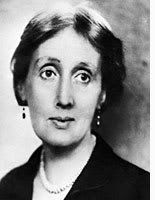
One of the Reading Life projects I am working on is the complete fiction of Virginia Woolf (1882 to 1941-England). In addition to the major novels, Woolf published around 25 shorter works of fiction. Both of these stories are included in her anthology (1944) The Haunted House and other Stories. I have previously posted on nine of her short stories.
"The Legacy" is a very powerful work about love, marriage, vanity and legacies. As the story opens Angela Clandon, wife of a very prominent politician, has just passed away and her husband, Gilbert, is reading a list of legacies she has left to the people that were important to her. One of the first legacies is to her secretary, Sissy Miller. Gilbert thinks to himself that his wife was so considerate she has left a legacy to everyone that mattered to her. All of their married life of many years (they never had any children) his wife kept a diary. Whenever he tried to look at the diary, she hid it from him. There was one diary notebook for each of the fifteen years of their marriage. Angela obviously knew she was dying and left legacies for everyone.
"To him, of course, she had left nothing in particular, unless it were her diary. Fifteen little volumes, bound in green leather, stood behind him on her writing table. Ever since they were married, she had kept a diary. Some of their very few — he could not call them quarrels, say tiffs — had been about that diary. When he came in and found her writing, she always shut it or put her hand over it. “No, no, no,” he could hear her say, “After I’m dead — perhaps.” So she had left it him, as her legacy."
Gilbert begins to slowly read these diaries. As the diaries begin in the first year she mentions often how handsome he is and how she loves him. As the years go by she mentions him less and less. His vanity is offended by this. He begins to find an increasing number of references to "B.M.". He soon knows he is a man but he is puzzled by what role she played in Angela's life and is troubled by the fact that he has never heard of him. Then in one shocking entry he finds out that B.M. was in their house while he was on a business trip. He discovers that B.M. is introducing her to political ideas that the very conservative Gilbert finds shocking. B.M. seems to be a radical Marxist of some kind. As the years of the diary goes by Gilbert is hardly mentioned at all. "The Legacy" is another beautifully written work by Woolf. I know you think you know the meaning of the legacy now but there is a surprise that deepens our understanding of the blindness of Gilbert.
"The Man Who Loved His Own Kind" is about two old friends who run into each other after a 20 year hiatus. Mr Dalloway (the husband of Mrs Dalloway) invites Prickett Ellis to a party. Both men practice law. Ellis accepts the invitation knowing he finds parties a bore and is inept at small talk. This is a very subtle story about class differences. The class difference between the two men is not a huge gap, just a small one and that make the story much more interesting. At the party Ellis is not really able to comfortably converse and Dalloway sees this and bring over to him a woman he feels he will get along well with. I will leave the rest of the plot untold.
Frank O'Connor in The Lonely Voice-A Study of the Short Story says that short stories (or at least the best of them) are typically about members of "submerged groups", people that need someone to speak for them because of their marginal social status. The short stories of Woolf i have read so far do not all answer to this description. Her central characters are normally well educated, well off people. Of course, O'Connor could simply say the stories of Woolf are below the quality of the writers he covers in his book.
Both stories can be read HERE
Woolf's short stories are a very important part of her own legacy to the world.
Do you think if it were not for the novels, that we would still be reading the short stories of Woolf?
Mel u
Saturday, May 21, 2011
Friday, May 20, 2011
Bangladesh: Two Wonderful Contemporary Short Stories
"The Mango Belle (2002, 3 pages) by Paritosh Sen-পরিতোষ সেন
"Nishikanata in the Rain" (1999, 4 pages) by Sirshendu Mukhopadhyay
Mel u
"Nishikanata in the Rain" (1999, 4 pages) by Sirshendu Mukhopadhyay
Two Very Interesting Stories by
Contemporary Authors from
Bangladesh
Bangladesh was created in 1971 when East Pakistan declared its independence from West Pakistan. A terrible war broke out in which the materially advantaged West Pakistan caused terrible suffering to the common people of what is now Bangladesh. To compound the suffering one of the worse typhoons in history struck the area in the same period killing upwards of 300,000 people. Estimates for the death tolls for the war very widely, the best estimate appears to be around one million either directly by conflict or from resulting famines and disease. The army of West Pakistan made a systematic effort to kill intellectuals and writers. (There is a good article about the 1971 Bangladesh War for Independence HERE)
"Nishikanata in the Rain" by Sirshendu Mukhopadhyay reminded me of the long term human costs of war in terms of its effect on forgotten people who will suffer effects all their lives and eventually live out their days among people who may no longer even recall the war. The central character in this short story is a seemingly mentally challenged man in his early twenties. No one really quite knows what is wrong with him or who his family might be. Most people in Bangladesh now have been born long after the war ended and have only partially heard of it or know much about what happened. We see the man wishes he could have a wife and is told by someone who takes gross advantage of him that even a beggar can easily find a wife. In a terrible scene we see into the nightmares of the young man as he remembers a long ago riot in which 1000s were killed, maybe including his parents. He was very young when this happened and was thrown out on his own. One of the most terrible long term human consequences of events like the 1971 war is the massive long term undernourishment of infants and toddlers which can result in a significant lowering of mental development for 1000s and 1000s of people.
Mukhopadhyay (1935-Birrampur, Bangladesh) wrote numerous adult and children's books. Severall of his novels have been made into movies. He is one of the most popular writers in Bangladesh.
"The Mango Belle" by Paritosh Sen is a very different kind of story. It centers on a successful artist and an extremely rich patron of the arts. I have noticed in the South Asian Short Stories I have read that a number of them deal with super rich people. I think it may be that such stories sell well in a place of terrible poverty and they evoke a treasured half mythical history. The artist is famous for his very beautiful erotic paintings of women. Beautiful women are treated as part of the "entitlements" of the rich. The artist constantly compares the women he paints to various kinds of fruit. He receives a very large offer from the wealthy patron to paint a woman who will remind all of the beauty and sweetness of the mango. (Mangoes are a fruit of the tropics and little eaten outside the very warm parts of the world which kind of localizes this story a bit. The mango is the sweetest and most luscious of fruits. The world's best Mangoes are grown in Zambales!) The artist goes into detail how different women are like different kinds of fruit. A lot of the fun of this story is in fantasying what it would be like to live like a prince in a country of terrible poverty. This is not a real profound or heavy story and does not pretend to be one but for sure it is a fun read and gives us a look at a world very different from the one most of live in.
Sen (1918 to 2008-Dhaka, Bangladesh) was a leading artist who also produced a number of highly regarded literary works.
Both of these stories were translated from Bengali.
You can find both of the stories Here
Mel u
The Lake by Banana Yoshimoto-A New Release I hope to read soon
One of the very first novels by a Japanese author I read was Goodbye Tsugumi by Banana Yoshimoto. I liked it so much that I read four of her other books. I still, though I think most people prefer her Kitchen, think it is the best of her work. I was very excited to recently learn that Melville House has now released an English language translation of her newest novel, The Lake. Parts of the proceeds from the sale of this novel will go to relief funds for victims of the recent earthquake in Japan. I am really looking forward to reading this book, hopefully for Japanese Literature V which should be starting soon.
Here is what Melville House tells us The Lake is about
"The Lake is a hypnotic, delicate, and suspenseful tale about a young painter named Chihiro and her relationship with a brilliant but troubled young man named Nakajima who has a mysterious trauma in his past."
Mel u
Thursday, May 19, 2011
"Misery" by Anton Chekhov versus "The Life of Ma Parker" by Katherine Mansfield
"Misery" by Anton Chekhov (1886, 5 pages, translated by Constant Garnett)
"The Life of Ma Parker" by Katherine Mansfield (1921, 4 pages)-a second look
A Look at One of Tolstoy's Favorite Chekhov Stories
and
How wrong is Frank O'Connor
about Katherine Mansfield?
How wrong is Frank O'Connor
about Katherine Mansfield?
Frank O'Connor in The Lonely Voice: A Study of the Short Story says some things about Katherine Mansfield that seem, I read them a second time, very nasty, homophobic, sexist and just flat out stupid. Ordinarily I just dismiss such views but O'Connor is too brilliant to really allow me to do that. O'Connor writing in his 1960 lectures (published in 1961) says of Mansfield
"Most of her work seems to me to be that of a clever, spoiled, malicious woman. Though I know nothing that would suggest she had any homosexual experiences, the assertiveness, malice, and even destructiveness in her life and work make me wonder whether she hadn't"
Speaking of Mansfield's numerous relationships with men he says "but the idea of experience by which she justified them is a typical expedient of a woman with a homosexual streak who envies men and attributes their imagined superiority to the greater freedom with which they satisfy their sexual appetites".
He says Mansfield has the worldliness of permanent adolescence...that she is always writing about her amorous orgies..there is one quality that is always missing in almost everything she wrote and that is "heart". He says Mansfield has no more a feel for the poor than Dickens does. He says to Mansfield the lower classes are merely people with improper pronunciations.
Frank O'Connor says, and no one would argue with this, that Mansfield was heavily influenced by Chekhov (1860 to 1904-Russia.) Mansfield may well have in one case taken the plot of an at the time untranslated Chekhov story and used the plot lines to create her own story without giving Chekhov credit. Mansfield scholars say there is proof of this and I accept it. I do not see it as a "big deal" though in a perfect world such things should not happen. O'Connor jumps from this one fact to assuming that any Mansfield story that in any way resembled a Chekhov story is basically a lifted plot.
"Misery" was one of Leo Tolstoy's favorite Chekhov stories. O'Connor says it is among his very best stories. I really found it a powerful look at the very deep sadness in the life of a Russian horse cab driver. As the story opens the cab driver has just picked up a fare. As he drives he tries to tell his customer (being able to afford a horse cab already sets you out as having a bit of money) that his son, all he had in life, has very recently died. His passenger basically says :"Oh too bad but watch how you are driving". His next passengers are three young men out for a night on the town. In a really masterful scene which helped me see a bit of the greatness of Chekhov, the young men knowingly offer him an unfair fee for their proposed cab ride and he accepts it. The young men are abusive to him throughout the ride. We know he has always been abused by his customers. He needs badly to talk to someone about his son's death. The three men, death is so remote to the young, could not care less and basically tell him to mind the road and not to blather on. At the end of the story, he tells his horse what has happened.
"The Life of Ma Parker" by Katherine Mansfield (1888 to 1923-New Zealand) (I posted on it in October, 2010) is about a seemingly ancient maid doing her once a week cleaning job in the house of a what is called a "literary gentlemen". (I am sure this gentlemen is probably meant as a jibe at someone in Mansfield's life but I do not know who-If you do please leave a comment or e mail me.) Ma Parker (as everyone calls her) her was sent into service at 14 as scullery maid to a cruel cook, had 12 children half of whom died as children, and a life of hard work cleaning up after others. I do not see how O'Connor can say Mansfield knew nothing or felt nothing for the poor. (Maybe O'Connor knew her father was the chairmen of the Bank of New Zealand and just saw Mansfield as poor little rich girl playing at artistic poverty-maybe he was jealous of her as by 1960 her readership far exceeded his own). After reading the story for a second time I would now change my post on it a bit but basically I stand by what I said last year. There are other stories like "A Cup of Tea" that amply show that Mansfield could portray the poor without condescension. As to O'Connor's claim that the stories of Mansfield do not at all deal with members of "submerged groups" this seems almost blind. Many of Mansfield's stories are about a single woman without great means trying to live in a country or a place that is not her home. The fact that Mansfield had a way out of her poverty if she wanted it is probably why O'Connor feels her stories are inauthentic. I think O'Connor goes too far in wanting an author to somehow earn the right to produce their stories by their own life. It is as if one cannot write a story set in a war if one has not been in a war.
O'Connor also makes the common mistake of seeing her work as somehow reaching an artistic peak just before she died. This is just reverse literary engineering. It was interesting to learn from O'Connor how the literary world viewed Mansfield's husband John Middleton Murry. O'Connor does love some of Mansfield's work (I know I am myself going to be prejudiced against anyone who says anything bad about Katherine Mansfield so I try to discount my feelings) and says "The Prelude" is among the best short stories ever written.
I totally endorse both of these stories. You can ponder the claim that Mansfield lifted her plot from "Misery".
You can read "Misery" HERE
There is a link to "The Life of Ma Parker" in my post on it.
I know I need to read much more Chekhov and I hope to over the next 12 months.
Please feel free to leave a comment about my opening question.
O'Connor is a brilliant expositor of the short story, especially when it is by a writer of the type he is comfortable with. It is kind of a sad irony to me that O'Connor focuses so much on "submerged groups" in his analysis of the short story but so full of prejudice against Jews and women who dare to assert themselves
People are a product of their times. Still I find it hard to imagine in 1960 in Stanford University in California people did not feel inclined to walk out on him.
I still endorse the reading of The Lonely Voice-A Study in the Short Story. Parts of it are really brilliant and inspired me to read on and on in the short story. I learned a lot from his book even though I think he is very wrong about much of what he says about Mansfield. I think O'Connor even though he was lecturing in 1960 was thinking in 1930.
OK enough bashing-if anyone has read this far please say hello!
Mel u
O'Connor also makes the common mistake of seeing her work as somehow reaching an artistic peak just before she died. This is just reverse literary engineering. It was interesting to learn from O'Connor how the literary world viewed Mansfield's husband John Middleton Murry. O'Connor does love some of Mansfield's work (I know I am myself going to be prejudiced against anyone who says anything bad about Katherine Mansfield so I try to discount my feelings) and says "The Prelude" is among the best short stories ever written.
I totally endorse both of these stories. You can ponder the claim that Mansfield lifted her plot from "Misery".
You can read "Misery" HERE
There is a link to "The Life of Ma Parker" in my post on it.
I know I need to read much more Chekhov and I hope to over the next 12 months.
Please feel free to leave a comment about my opening question.
O'Connor is a brilliant expositor of the short story, especially when it is by a writer of the type he is comfortable with. It is kind of a sad irony to me that O'Connor focuses so much on "submerged groups" in his analysis of the short story but so full of prejudice against Jews and women who dare to assert themselves
People are a product of their times. Still I find it hard to imagine in 1960 in Stanford University in California people did not feel inclined to walk out on him.
I still endorse the reading of The Lonely Voice-A Study in the Short Story. Parts of it are really brilliant and inspired me to read on and on in the short story. I learned a lot from his book even though I think he is very wrong about much of what he says about Mansfield. I think O'Connor even though he was lecturing in 1960 was thinking in 1930.
OK enough bashing-if anyone has read this far please say hello!
Mel u
Wednesday, May 18, 2011
Building the Barricade and Other Poems by Anna Swir
Building the Barricade and Other Poems Anne Swir(2011, translated from the Polish by Piotr Florczyk with an introduction by Jericho Brown)
"“I can’t die, madam,
my sister won’t manage without me.
She’s a hunchback, lying by that door.”
Each died
from the wounds of her sister,
the death of her hunchback sister"-
In February of this year, I was privileged to read and post on the very first book of a new publishing house, Calypso Editions, a brand new wonderful translation of Leo Tolstoy's "How Much Land Does a Man Need".
"Building the Barricade and Other Poems" is a collection of translations of poems written by Anna Swir (Anna Swirszczynska-1909 to 1984-Poland) concerning her experiences during WWII in Warsaw. She served as nurse in Resistance medical facilities. (There is an excellent article about life in Poland during WWII HERE. For readers of my blog in Manila where I am located, the destruction of Warsaw was even worse that of Manila.)
These poems are powerful, not because they condemn the actions of the Germans (anyone would do that) but because they make us feel what Swir felt. Swir's formal education was in Slavic Medieval Studies.
One of the saddest paradoxes one will find shown to us in literature from Homer to Elizabeth Bowen's WWII Short Stories is that living in a war makes people feel more alive. Bowen said her senses never really were so alive as during the Blitz of London. She worked as fire warden and patrolled the streets to be sure everyone's lights were out.
The poems of Swir are about what she felt and experienced during the worst of WWII. It is very telling that it took thirty years for her to be able to begin writing poems about her experiences during the war. Perhaps she could write a poem in thirty minutes after thinking about it for thirty years.
Localized literature is interesting mainly to those who know the locality. Real literature transcends locality. In The Lonely Voice: A Study of the Short Story by Frank O'Connor says when ever he would teach a class in creative writing, he would tell the students a story W. B. Yeats had told him. He said Yeats told him when you first get an idea for a story, set it in 10th century Byzantium, then rewrite it set in Florence in the 14th century, and if it makes sense in those contexts rewrite it as a current day story. The Poems of Swir pass these tests of universality.
Her poem "I Carried a Bed Pan" belongs next to Walt Whitman's poems about his experiences as an orderly in the military hospitals of the American Civil War.
"I worked as an orderly at the hospital
without medicine and water.
I carried bedpans
filled with pus, blood and feces.
I loved pus, blood and feces—
they were alive like life,
and there was less and less
life around.
When the world was dying,
I was only two hands, handing
the wounded a bedpan."
I really do not know what I can say about this but I do not think I will forget it. It might make even mighty Achilles weep. In a way, the assault of the Nazi's on Europe was a war on the reading life, the beauty of 1000 years was destroyed in just a few weeks in Warsaw. I have to share one more poem that powerfully resonated in my mind.
"An old man
leaves the house, carrying books.
A German soldier grabs the books
and throws them in the mud.
The old man picks up the books,
the soldier hits him in the face.
The old man falls,
the soldier kicks him and walks away.
The old man
lies in mud and blood.
Underneath, he feels
books."
Where ever in the world there is war on the reading life the goose step will soon heard.
I loved all the poems. If the work were ten times as long as it is, I would be ten times as happy.
There is a very good introduction to the poems by Jericho Brown, a Professor at the University of San Diego. The poems also appear in Polish next to the English translations, just like in a Loeb classic text. It should be a very good language learning vehicle for those wishing to achieve a poetic fluency.
After reading the second work of Calypso Editions, I have even more now confidence in what I said of them in my review of "How Much Land Does a Man Need".
When I read the mission statement of Calypso Publishing I was reminded somehow of Virginia and Leonard Woolf working at Hogarth Press, producing books notable not only for their content but books that are works of art themselves.
Calypso Editions is an artist-run, cooperative press dedicated to publishing quality literary books of poetry and fiction with a global perspective. We believe that literature is essential to building an international community of readers and writers and that books can serve as a physical artifact of beauty and wonder in a world of digital saturation.
I read the poems in this work three times, some of them five times.
Building the Barricade and Other Poems is a beautiful deeply moving collection that I hope will get the very large readership it deserves.
Mel u
"“I can’t die, madam,
my sister won’t manage without me.
She’s a hunchback, lying by that door.”
Each died
from the wounds of her sister,
the death of her hunchback sister"-
In February of this year, I was privileged to read and post on the very first book of a new publishing house, Calypso Editions, a brand new wonderful translation of Leo Tolstoy's "How Much Land Does a Man Need".
"Building the Barricade and Other Poems" is a collection of translations of poems written by Anna Swir (Anna Swirszczynska-1909 to 1984-Poland) concerning her experiences during WWII in Warsaw. She served as nurse in Resistance medical facilities. (There is an excellent article about life in Poland during WWII HERE. For readers of my blog in Manila where I am located, the destruction of Warsaw was even worse that of Manila.)
These poems are powerful, not because they condemn the actions of the Germans (anyone would do that) but because they make us feel what Swir felt. Swir's formal education was in Slavic Medieval Studies.
One of the saddest paradoxes one will find shown to us in literature from Homer to Elizabeth Bowen's WWII Short Stories is that living in a war makes people feel more alive. Bowen said her senses never really were so alive as during the Blitz of London. She worked as fire warden and patrolled the streets to be sure everyone's lights were out.
The poems of Swir are about what she felt and experienced during the worst of WWII. It is very telling that it took thirty years for her to be able to begin writing poems about her experiences during the war. Perhaps she could write a poem in thirty minutes after thinking about it for thirty years.
Localized literature is interesting mainly to those who know the locality. Real literature transcends locality. In The Lonely Voice: A Study of the Short Story by Frank O'Connor says when ever he would teach a class in creative writing, he would tell the students a story W. B. Yeats had told him. He said Yeats told him when you first get an idea for a story, set it in 10th century Byzantium, then rewrite it set in Florence in the 14th century, and if it makes sense in those contexts rewrite it as a current day story. The Poems of Swir pass these tests of universality.
Her poem "I Carried a Bed Pan" belongs next to Walt Whitman's poems about his experiences as an orderly in the military hospitals of the American Civil War.
"I worked as an orderly at the hospital
without medicine and water.
I carried bedpans
filled with pus, blood and feces.
I loved pus, blood and feces—
they were alive like life,
and there was less and less
life around.
When the world was dying,
I was only two hands, handing
the wounded a bedpan."
I really do not know what I can say about this but I do not think I will forget it. It might make even mighty Achilles weep. In a way, the assault of the Nazi's on Europe was a war on the reading life, the beauty of 1000 years was destroyed in just a few weeks in Warsaw. I have to share one more poem that powerfully resonated in my mind.
"An old man
leaves the house, carrying books.
A German soldier grabs the books
and throws them in the mud.
The old man picks up the books,
the soldier hits him in the face.
The old man falls,
the soldier kicks him and walks away.
The old man
lies in mud and blood.
Underneath, he feels
books."
Where ever in the world there is war on the reading life the goose step will soon heard.
I loved all the poems. If the work were ten times as long as it is, I would be ten times as happy.
There is a very good introduction to the poems by Jericho Brown, a Professor at the University of San Diego. The poems also appear in Polish next to the English translations, just like in a Loeb classic text. It should be a very good language learning vehicle for those wishing to achieve a poetic fluency.
After reading the second work of Calypso Editions, I have even more now confidence in what I said of them in my review of "How Much Land Does a Man Need".
When I read the mission statement of Calypso Publishing I was reminded somehow of Virginia and Leonard Woolf working at Hogarth Press, producing books notable not only for their content but books that are works of art themselves.
Calypso Editions is an artist-run, cooperative press dedicated to publishing quality literary books of poetry and fiction with a global perspective. We believe that literature is essential to building an international community of readers and writers and that books can serve as a physical artifact of beauty and wonder in a world of digital saturation.
I read the poems in this work three times, some of them five times.
Building the Barricade and Other Poems is a beautiful deeply moving collection that I hope will get the very large readership it deserves.
Mel u
Tuesday, May 17, 2011
Three of the Best Stories from Sherwood Anderson's Winesburg, Ohio
"Adventure" (1919, 7 pages)
"The Untold Lie" (1919, 6 pages)
"Death" (1919, 6 pages)
"The Untold Lie" (1919, 6 pages)
"Death" (1919, 6 pages)
Three of the Best Short Stories of
In the opening chapter of his book of lectures on the short story, The Lonely Voice-A Study of the Short Story Frank O'Connor first talks about Nikolai Gogol's "The Overcoat". Shortly after that he turns to the stories in Sherwood Anderson's Winesburg, Ohio. He says Winesburg, Ohio is the most influential American collection of interrelated short stories. Ford Madox Ford in his The March of Literature listed it as one of the essential works of American literature. I think somehow many potential readers find it hard to accept that a collection of short stories set in a small town in Ohio in 1919 can look so deeply into the hidden despair in the lives of ordinary people. (I have previously posted on Anderson's amazing short story "Hands" and there is some background information in my post on it.) It almost seems like you walk into a small town cafe in a little town in Ohio and you find out one of the patrons has looked as deeply into the dark as Conrad or Dostoevsky. Yesterday I read the three short stories of Anderson that O'Connor said were his best work. I will post briefly on them. (His work is in the public domain now and can be easily found online-I will list a link where you can read them at the bottom of this post.)
"Adventure" is O'Connor's and my choice for best Anderson short story. It is about a woman driven to despair and near madness by loneliness. I cannot really summarize the story in a way that does not lose the power of the story but I will say a bit. It is about a woman who we meet in her early 20s. She is a nice well mannered well brought up young woman. I will not tell you how it happens but ends up running naked through the streets and offers herself to the first man she sees.
"Death" is a very sad story about steps never taken. As it opens we meet the owner of the town hotel in Winesburg (an imaginary community) and his daughter. The daughter seems to be in her early twenties. She wants to get married because it is what women in that age bracket do, not because she feels any great love for the man she marries. There is nothing really wrong with him, she just does not feel a lot for her husband. As the father is on his death bed he tells his daughter he knows he has not made much of his life. The hotel is mortgaged so he will not be leaving her a lot. Suddenly he tells her he has some money set aside that he was going to use to escape his life in Winesburg. He was already planning to do it soon. He gives the money to his daughter with and makes her promise that she will not tell her husband about the money. He wants to at least be able to die knowing that his daughter has her "escape money". I think there will be few people who cannot relate to the heart break at the end of this story.
The Untold Lie" appeals to me the less of the three stories. It is about the price people pay for what they thing is living the right way a person in Winesburg, Ohio is supposed to live.
All of these stories are about people from what O'Connor called submerged population groups. All of the three stories I posted on today are about being trapped, about being in a society where you are supposed
to do certain things but no one really tells you what to do or why to do it.
All of these stories and more of Anderson can be read HERE
Mel u
"Adventure" is O'Connor's and my choice for best Anderson short story. It is about a woman driven to despair and near madness by loneliness. I cannot really summarize the story in a way that does not lose the power of the story but I will say a bit. It is about a woman who we meet in her early 20s. She is a nice well mannered well brought up young woman. I will not tell you how it happens but ends up running naked through the streets and offers herself to the first man she sees.
"Death" is a very sad story about steps never taken. As it opens we meet the owner of the town hotel in Winesburg (an imaginary community) and his daughter. The daughter seems to be in her early twenties. She wants to get married because it is what women in that age bracket do, not because she feels any great love for the man she marries. There is nothing really wrong with him, she just does not feel a lot for her husband. As the father is on his death bed he tells his daughter he knows he has not made much of his life. The hotel is mortgaged so he will not be leaving her a lot. Suddenly he tells her he has some money set aside that he was going to use to escape his life in Winesburg. He was already planning to do it soon. He gives the money to his daughter with and makes her promise that she will not tell her husband about the money. He wants to at least be able to die knowing that his daughter has her "escape money". I think there will be few people who cannot relate to the heart break at the end of this story.
The Untold Lie" appeals to me the less of the three stories. It is about the price people pay for what they thing is living the right way a person in Winesburg, Ohio is supposed to live.
All of these stories are about people from what O'Connor called submerged population groups. All of the three stories I posted on today are about being trapped, about being in a society where you are supposed
to do certain things but no one really tells you what to do or why to do it.
All of these stories and more of Anderson can be read HERE
Mel u
Monday, May 16, 2011
The Lonely Voice-A Study of the Short Story by Frank O'Connor
The Lonely Voice-A Study of the Short Story by Frank O'Connor (1963, 211 pages)
As my interest in the Short Story genre has grown over the last year, I began to wonder about books about short stories that I might enjoy reading. There seems to be only one widely endorsed book on the short story and that is Frank O'Connor's (1906-1966-Cork City, Ireland) The Lonely Voice-A Study of the Short Story. Frank O'Connor is considered one of the best short story writers of the 20th century and was also a scholar in the field. (I first read Frank O'Connor during Irish Short Story Week I and there is some additional background information on O'Connor in my post on him for that week.)
O'Connor devotes a lot of time (the book originated as a series of lectures at Stanford University in 1961) to Chekhov, de Maupassant, Joyce, Turgenev, Hemingway, D. H. Lawrence, Katherine Mansfield, Issac Babel, Mary Levin, Kipling and A. E. Coppard. He begins his opening chapter with a discussion of Gogol's "The Overcoat" which he sees as the well spring of the modern short story. He also talks about the stories in Sherwood Anderson's Winesburg, Ohio. He gives a lot of reading suggestions and is not at all shy telling us what we should read and what not to bother with. He says if he had to give an answer he would say the greatest short story ever written is Turgenev's "Punin and Baburin" and the greatest book of short stories is his Sketches of a Sportsman. He loves the best of Anderson and lists his top three. He also helped me see the importance of George Moore, a writer I wanted to read for Irish Short Story Week I but never got to.
O'Connor's main thesis in his lectures is that the short story is uniquely about what he called "submerged groups". By "submerged groups" he means marginalized people belonging to occupations, social groups, or ethic backgrounds that leave them with little voice in society. In Chekhov it is his doctors (at the time a tradesman's type of position), in de Maupassant it is prostitutes, in Mansfield it is displaced young female travelers, in Turgenev it is the second or third sons of Russian nobles and peasants. O'Connor loves the short story and his readings of the stories he talks about are often very inspiring. He for sure made me want to keep reading on and on in the genre. He also states that the short story at its best is deeply focused on loneliness. Anyone can become or make him or herself a member of a submerged group. O'Connor does not consider any counter examples to his claim and pretty much has a dismissive attitude toward contrary views.
Two parts of this book really bothered me. As much as I wanted to love this book based on the first half, when I got to the chapter on Katherine Mansfield, "An Author in Search of a Subject" I was shocked to see him describe her as "a brash young shop girl" (maybe he did not know how rich her father was?) and says when he reads her stories he likes them a lot but finds he cannot remember them. He does include her story "The Prelude" as one of the greatest Short Stories of all times. I tried to imagine a lecturer in a major university like Stanford telling a class full of eager young would be authors that Katherine Mansfield was a "brash shop girl" and I cringed. Of course Mansfield's current readership is much wider than O'Connor's. It was as though O'Connor was dumb founded that a mere "girl" could write so well. O'Connor makes some very ignorant homophobic conjectures about Mansfield that are beyond merely offensive. O'Connor seems to have a hateful attitude toward any form of homosexual behaviour. Mansfield had been dead for almost 40 years when O'Connor lectured about her. O'Connor is a far from stupid person but much of what he says about Mansfield is stupid. I will do a more detailed post on this chapter the next time I do a post on one of Mansfield's short stories. I wish O'Connor had an editor that cut this chapter out of the book.
When I got to the section on Issac Babel (1894-1940-Russian-famous for Odessa Tales-he was killed at the orders of Stalin) I was really pretty shocked. My reaction was "No Frank, please do not ruin your wonderful book" when I read his comments about Babel being an exemplifier of the character of the Jew. Here is a quote: "Babel would have been a very queer Jewish boy-an indeed a very queer boy-if he had not imagined himself as the avenger with the gun....the Jewish character--an instinctive apprehension that though money is excellent and power is good, books are in some way better:a conviction of the supremacy of the mind over matter, of the word over the deed." This is just flat out ugly and I felt ashamed of O'Connor when I read it. If the chapter on Babel had been the first chapter in the book I might have stopped reading it.
I felt sad as I finished this book. Much of what O'Connor says shows such a deep love for the reading life and the short story but that does not excuse some of what he says. I learned a lot from this book and I wish I could just say "it is great, go read it" but parts of it are just too ugly for that. I will take the reading suggestions of O'Connor seriously and will be posting on a number of his reading suggestions. I think one could learn a very lot about the short story by reading the stories O'Connor talks about and pondering whether or not you agree with him.
I think this book is probably not suited for class room usage. This is really a shame because one could make a very good class on the short story out of the works he talks about and his commentary.
I would endorse this book for anyone who wants to learn more about the short story as long as you know in advance parts of the book are offensive. I know students of the history of the short story and academics could probably tear much of the book apart but it gave me a lot of reading ideas I am excited about and it increased my understanding of the short story. I really liked his chapters on Chekhov, de Maupassant (he was really illuminating on him, to me), and Turgenev. I will be reading for the first time stories by A. E. Coppard thanks to O'Connor.
O'Connor knew nothing of the Japanese Short Story (not his fault as it was not much at all translated in his life time) so I will also be sort of testing the stories in this reading area against the thoughts of O'Connor. I cam already see that just as the best of the short stories of de Maupassant, as seen by O'Connor deal with prostitutes and their world the same can be said of the many Japanese short stories devoted to the so called "water world" of geishas, tea houses, and such.
Mel u
O'Connor's main thesis in his lectures is that the short story is uniquely about what he called "submerged groups". By "submerged groups" he means marginalized people belonging to occupations, social groups, or ethic backgrounds that leave them with little voice in society. In Chekhov it is his doctors (at the time a tradesman's type of position), in de Maupassant it is prostitutes, in Mansfield it is displaced young female travelers, in Turgenev it is the second or third sons of Russian nobles and peasants. O'Connor loves the short story and his readings of the stories he talks about are often very inspiring. He for sure made me want to keep reading on and on in the genre. He also states that the short story at its best is deeply focused on loneliness. Anyone can become or make him or herself a member of a submerged group. O'Connor does not consider any counter examples to his claim and pretty much has a dismissive attitude toward contrary views.
Two parts of this book really bothered me. As much as I wanted to love this book based on the first half, when I got to the chapter on Katherine Mansfield, "An Author in Search of a Subject" I was shocked to see him describe her as "a brash young shop girl" (maybe he did not know how rich her father was?) and says when he reads her stories he likes them a lot but finds he cannot remember them. He does include her story "The Prelude" as one of the greatest Short Stories of all times. I tried to imagine a lecturer in a major university like Stanford telling a class full of eager young would be authors that Katherine Mansfield was a "brash shop girl" and I cringed. Of course Mansfield's current readership is much wider than O'Connor's. It was as though O'Connor was dumb founded that a mere "girl" could write so well. O'Connor makes some very ignorant homophobic conjectures about Mansfield that are beyond merely offensive. O'Connor seems to have a hateful attitude toward any form of homosexual behaviour. Mansfield had been dead for almost 40 years when O'Connor lectured about her. O'Connor is a far from stupid person but much of what he says about Mansfield is stupid. I will do a more detailed post on this chapter the next time I do a post on one of Mansfield's short stories. I wish O'Connor had an editor that cut this chapter out of the book.
When I got to the section on Issac Babel (1894-1940-Russian-famous for Odessa Tales-he was killed at the orders of Stalin) I was really pretty shocked. My reaction was "No Frank, please do not ruin your wonderful book" when I read his comments about Babel being an exemplifier of the character of the Jew. Here is a quote: "Babel would have been a very queer Jewish boy-an indeed a very queer boy-if he had not imagined himself as the avenger with the gun....the Jewish character--an instinctive apprehension that though money is excellent and power is good, books are in some way better:a conviction of the supremacy of the mind over matter, of the word over the deed." This is just flat out ugly and I felt ashamed of O'Connor when I read it. If the chapter on Babel had been the first chapter in the book I might have stopped reading it.
I felt sad as I finished this book. Much of what O'Connor says shows such a deep love for the reading life and the short story but that does not excuse some of what he says. I learned a lot from this book and I wish I could just say "it is great, go read it" but parts of it are just too ugly for that. I will take the reading suggestions of O'Connor seriously and will be posting on a number of his reading suggestions. I think one could learn a very lot about the short story by reading the stories O'Connor talks about and pondering whether or not you agree with him.
I think this book is probably not suited for class room usage. This is really a shame because one could make a very good class on the short story out of the works he talks about and his commentary.
I would endorse this book for anyone who wants to learn more about the short story as long as you know in advance parts of the book are offensive. I know students of the history of the short story and academics could probably tear much of the book apart but it gave me a lot of reading ideas I am excited about and it increased my understanding of the short story. I really liked his chapters on Chekhov, de Maupassant (he was really illuminating on him, to me), and Turgenev. I will be reading for the first time stories by A. E. Coppard thanks to O'Connor.
O'Connor knew nothing of the Japanese Short Story (not his fault as it was not much at all translated in his life time) so I will also be sort of testing the stories in this reading area against the thoughts of O'Connor. I cam already see that just as the best of the short stories of de Maupassant, as seen by O'Connor deal with prostitutes and their world the same can be said of the many Japanese short stories devoted to the so called "water world" of geishas, tea houses, and such.
When I post on writers he covers I will, in the near future at least, be pondering the remarks of O'Connor. I will also be sort of "test reading" his main thesis about submerged groups.
If you know of any other books I might enjoy about short stories, please leave a comment.
I closed this book thinking O'Connor has something of value to say about the short story but found my respect for him as a person diminished by his Homophobic and anti-Semitic attitudes.
Mel u
Subscribe to:
Posts (Atom)
Featured Post
Imperial Reckoning: The Untold Story of Britain’s Gulag in Kenya by Caroline Elkins - 2005 - 701 Pages
Imperial Reckoning: The Untold Story of Britain’s Gulag in Kenya by Caroline Elkins - 2005 - 701 Pages 2006 Pulitzer Prize Winner From...
-
Book Blogger Appreciation Week Sept 13 to Sept 17-2010-Giveaway- Katherine Wish by Linda Lappin Leave a comment to win! Open to all f...
-
Nothing Can Destroy the Faith and Strength of the people of the Philippines -Mel u, November 10, 2013- comments welcome. "How My B...
-
The Reading Life Guide to Getting Started in the Indian Short Story One of my reading hopes for this year is to read a large number of the s...