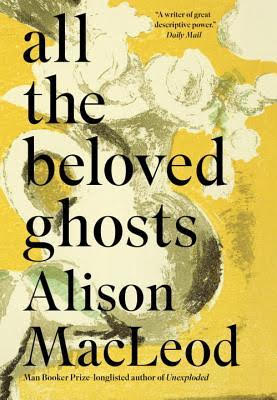
Showing posts with label Alison MacLeod. Show all posts

Tuesday, December 28, 2021

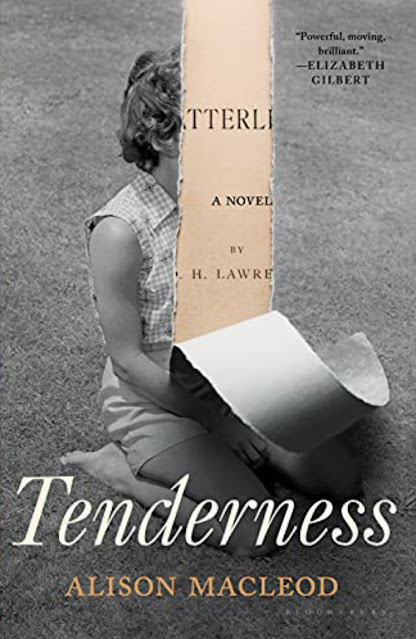
Tenderness by Alison MacLeod-2021. - 619 pages


Tenderness by Alison MacLeod-2021. - 619 pages


Alison MacLeod’s Website includes a list of her works and a bio.


Gateway to Alison MacLeod on The Reading Life


D. H. Lawrence 


September 11, 1885 - Eastwood, England


1928 - Lady Chatterley’s Lover first published 


March 2, 1930 - Vence, France


 loved this book.  Earlier in 2021 I read two novels I regarded as great works of art, Lolita by Vladimir Nabokov and The Master and Margarita by Mikhail Bulgakov. I am very glad to close 2021 adding Tenderness by Alison MacLeod to this list


Experiencing Tenderness by Alison MacLeod was for me a very elevating life affirming way to close out a year most will be glad to see over.


The central focus of Tenderness develops out of the struggles of D. H. Lawrence to turn his life experiences into Lady Chatterly’s Lover and the long fight to get the novel published in England where the publisher, Penguin Press,was  criminally charged with publishing an obscene book.  This occurred in 1960 when Penquin  had printed 200,000 copies of an affordable paperback edition.  The government prosecutors claimed the book would potentially corrupt young readers, especially women and servants, a throw back to an older time from the Lordly Prosecutors.


There are several intertwined plot lines. MacLeod brings us deeply into the soul of Lawrence.  He knows he is very sick with probably little time left.  We see his struggles with his wife Frieda, the friends who provide them shelter and his own inner demons.  


MacLeod made me feel I was at the London trial.  The defense brings in numerous expert witnesses including E. M. Forester, at 85 the best known then living English novelist, to testify in defense of the novel.  The diverse defense witnesses portray the novel not as an attack on the  solemnity of marriage but as a defense of true love.  Hoover did his best to bring in witnesses favorable to prosecution.


J. Edgar Hoover was director of the Federal Bureau of Investigation from 1935 until his death in 1972.  Hoover kept extensive secret files documenting sexual improprieties of highly placed Americans he could use as political blackmail should his position ever be threatened. At the time of the English trial, homosexuality was against the law in America.  Extra marital sex was treated as a horrible scandal.  In a deep irony, history has shown us that Hoover was a closeted gay in long term relationship with his second in command at the FBI.  He was very concerned that American communists, backed by Russia, were trying to destroy the moral fiber of Americans by helping bringing back into print Lady Chatterly’s Lover.  Hoover was appalled by the language and the open depiction of sex between Lady Chatterly and the estate gardener. Her husband had been crippled from the waist down in World War One.  The novel presents an England itself crippled in spirit by the war.


MacLeod treats Hoover as  very against the presidential candidate John F. Kennedy, running against Richard Nixon in 1960. He had extensive documentation on the sex life of Kennedy and Kennedy’s wealthy father.  He dispatched an agent to spy on Jacqueline Kennedy. He photographed her with a copy of Lady Chatterly’s Lover. Hoover thought the American Public would be horrified by this and planned to leak the pictures to pro-Nixon newspapers.  The agent involved has a significant plot line dedicated to his career at the FBI.  Included is a fascinating creation of a conversation between Lionel Trilling, author of The Liberal Imagination, and Mrs. Kennedy


The prose is exquiste, there are so many delighful minors characters.  As I read this segment I wished so much I could have been Sir Stephen in another Life.


“Sir Stephen had been a first-rate classicist at Cambridge, and was a distinguished eccentric. He was known, for example, to wear a hair-net when he played tennis, and he hosted a dining club to which all members – men, naturally – were required to wear purple dinner jackets with lilac silk lining. He owned numerous Siamese cats; it was difficult, by all accounts, to keep them off the table or out of his guests’

laps when they dined. He was mad about bridge and shooting, and had tutored Queen Victoria’s grandson. Sir Stephen was, in short, an editor, a bibliographer, a renowned librarian, a speaker of ancient Coptic, and a lover of church vestments, rare books – and vodka. Crucially, he was also Keeper of the Papers at the Foreign Office. That was crucial because, in 1929, he ‘transported’ two copies of Lady Chatterley out of Italy.”


Mel Ulm

The Reading Life


Tuesday, June 16, 2020

“There are Precious Things” - A Short Story by “Alison MacLeod from All the Beloved Ghosts- 2017


“There are Precious Things” - A Short Story by “Alison MacLeod from All the Beloved Ghosts- 2017

Gateway to Alison MacLeod on The Reading Life


This is the ninth Short Story by Alison MacLeod upon which I have posted.  I highly recommend the purchase of her collection, All The Beloved Ghosts.

Like many others in book blog and literary world I have been brought to ponder my priviledged position in the world.  Long ago, almost ten years ago, I stated that The Reading Life was a multicultural book blog dedicated to the goals of literary globalism.  “Literary Globalism”, an expression I made up, has now come to mean doing what little I can to let my readers know about literature that deals with the human consequences of racism, nationalism, anti LGTBQ ideology, sexism, class hatred, religious based hatred and more.  Much of this is a legacy of colonialism and its servant slavery.  Today’s story, set in contemporary London, “There Are Precious Things” shows us the cruel consequences of this in the life of Tanisha, a Nigerian woman living in London.

As the story opens, Tanisha is taking a seat on the 4.38 train out of Mile End Station.  She is running late.  Her mother comes every day to take care of her young son, Obi, but today she got there late.

“Each afternoon, when Obi comes home from school, she looks at his new drawings or marvels over the words in English he has learned to spell. Then her mother comes – today bearing electric Christmas candles from the Pound Shop – and Tanisha sprints from her door to the Underground. Sometimes she wonders that so much of her life can pass below ground. Each day, she travels from her basement flat to the Central Line, from the Central Line to the Victoria Line and from the Victoria Line to the ladies’ toilets beneath Victoria Station, where she is the evening attendant.”.


MacLeod populates the crowded car Tanisha is in with a cross section of tube riding London
society, of course the posh do not take the tube.  Across from her is Edgar, a  very well mannered man.  When Sister Kate, sixty years old comes in he gives her his seat.  MacLeod gives us a glimpse of her forty years as a nun.  Some Polish construction workers ride for a short time.
Then Lionel gets on. “Lionel feels odd sitting across from a nun with a semen sample in his shirt pocket.”.  Lionel and his wife have been trying with no luck for a while to have children so he is getting himself tested.  There seems an irony in our nun who day dreams of the children she might have add combined with burden of Obi.

We learn more about Edgar:

“He’s one of the nine soloists, and in the fifth verse, the intervals must be perfect. He tries to remember where syllables cluster intricately over a note; where the breath is divided into semibreves. He thought James, their conductor, pompous when he said it, but now he understands: the polyphonic antiphon is, literally, breathtaking.”

Great art saves us even in ugliness of the tube car.

Clifton enters car, he is a retired history teacher, his memory comes and goes.  During his working days he rode the train many times but now he carries a note from his wife telling him at what station
he should leave the train.

The close shows the depth of race based hatred in elements of London society.  The  exit from the train of Tanisha was deeply moving.


Alison MacLeod is a novelist and short story writer. Her most recent book, the story collection 'All the Beloved Ghosts', was shortlisted for The 2018 Edge Hill Prize for best story collection in the UK and Ireland. It was a 'Best Book of 2017' for the Guardian, and a finalist for Canada’s 2017 Governor General’s Award for Fiction.
Her website has a detailed bio.    http://www.alison-macleod.com/


Mel u


Tuesday, May 26, 2020

Imagining Chekhov - three short stories by Alison MacLeod from her collection, All The Beloved Ghosts - 2017

Imagining Chekhov - three short stories by Alison MacLeod from her collection, All The Beloved Ghosts - 2017

“Woman With Little Pug”

“Chekhov’s Telescope”

“The Death of Anton Chekhov by Anton Chekhov”

Anton  Chekhov

January 29, 1860. Taganrog, Russia

July 15, 1904. Badweller, Germany

“Lady with a Dog” by Anton Chekhov - 1899


I first read Anton Chekhov’s “Lady With a Dog” very long ago, in days before the fall of Atlantis.  I just read it again.  It id a very acute account of the motivations for and perils of adultery.  We see how, at least in 1898, adultery was very different for men versus  women. (I wonder if the current pandemic is lowering rates of adultery, it certainly makes intimate contact with near strangers not  a good idea.). The man in Chekhov’s story is a serial philander.  He is skilled at finding vulnerable women and in past has avoided emotional entanglements. Chekhov shows us what happens when he loses control.  In the process we learn about the privlidged
lives of affluent late Romanov Era Russians”

“Woman With a Pug” is set in modern Brighton, a seaside resort in England.  Never having been there, i believe Brighton would be preceived as a bit tacky and downscale if the man and woman from   Chekhov’s story were to visit there as Ghosts.  Like the lady in Chekhov’s story, the woman in this story has (maybe?) a little pug.  Pursuing the theme of down scaling, she won a week in the hotel where she meets her lover.  In 1898 it meant considerable to call a woman a lady, this is also now a ghost of the past.  We learn about the life of both parties, like the man in Chekhov’s story, he is motivated as much by boredom as sexual need.  Something very perplexing happens with her dog.  Certainly we are provided with a mystery.

As I read this story, and if I had not read Chekhov’s just before i read MacLeod’s my focus would have been different but I was haunted by the ghost of Chekhov.

“Chekhov’s Telescope”

Olga Knipper - married to Anton Chekhov from 1901 to 1904, when he dies of Tuberculosis.

Born 1868 in Glaszov, Russia

Died 1959 in Moscow

She was a very succesful actress, preforming in three of Chekhov’s plays, The Seagull, Uncle Vanya, and The Cherry Orchard.  She met Chekhov while in The Cherry Orchard.


“Chekhov’s Telescope” begins on a passenger yacht headed for Yalta.  Russia’s most famous literary writer and a celebrated actress  , Olga Knipperare, they are not yet married but very much in love are heading for a visit to a  resort.  The water is choppy
as Chekhov tells Olga to look through his Telescope at Yalta.  His return to Yalta is being covered by the media.  A reporter has been told to get details on the famous writer and the actress.  They do stay in different hotels to avoid scandal.  The reporter has been told, as modern tabloid writer might be,to get “The Goods” on the famous couple, even in 1898 scandal sales papers.

He shows Olga in the Telescope the reporter who is stalking them,
“Sergei Rogov had a ruthless eye, long legs and his quarry in view.”

In the conversation of Olga and Chekhov she teases him about other women attracted to a famous writer.  Chekhov enjoys the clean air of Yalta over Moscow.

The reporter resents the good life of the couple, compared to his edge of starvation existence:

“He followed the Great Writer, first to the genteel home of Dr Sredin, where Chekhov had arranged lodgings for Olga, so that she, an actress, might appear respectable during her stay in Yalta. Such hypocrisy, thought Sergei. Nearby, Chekhov booked himself into a balcony room on the third floor of the Hotel Marino. The youth had waited on a bench opposite the hotel for five hours, sustaining himself on cured sturgeon and day-old bread, when his efforts were at last rewarded. A carriage drew up and Olga stepped out, her head bowed. Oh, the elaborate ruses of the middle-aged, thought Sergei, spitting out his crusts.”

It was great fun to listen in on the conversations of Olga and Chekhov.  Olga makes a prediction of the great story he will be inspired to write.  We get a look at Life of Chekhov, MacLeod’s desciption of a visit to The Imperial Palace was a wonderful interlude.  We also get to read letters exchanged between Olga and Chekhov, copied by reporter who bribed a courier to read them.


There is a foreshadowing the closing lines of the story:

“And when Chekhov doubled over in Olga’s arms, racked with coughing, Sergei felt too the shock of it: of the wide world telescoping into a blot of blood on the white beach.”


“The Death of Anton Chekhov by Anton Chekhov”


This story is told in the first person by Anton Chekhov.  It truly is a story of a beloved Ghost, a masterful work, chilling.

Olga and Chekhov, now married,  are checking into the very grand (and still open) Hotel Römerbad. It is  just a 5 minutes’ walk from the Spa Park in Bad Salzuflen, Germany where on the advise of his
doctor, Chekhov will be treated in hopes it will defeat the tuberculois  that Chekhov himself knows will soon kill him.

Chekhov begins to see Ghosts from this youth:


“But Olga and my physician agree a German spa is what I need, not the wilderness of the Steppe – and I suppose I am no longer fit for sleeping in gullies or in the lee of ancient burial mounds. When I was fifteen, my brother and I spent one last summer there, lodging with the family of a long-standing tenant of my father’s. They were Cossacks and owned a ranch, and were as wild and uncouth as my family were pious and fearful. The floor was earthen, the roof was made of straw, their goat shared the rug on which we slept and the walls of the house were covered in sabres, pistols and whips.”

The hotel tells Olga that she and her husband must leave, his coughing and sickly appearance are bad for business.

As his illness increases so does his love for and dependence on Olga:

“In the mornings, Olga finds me the Russian papers, and translates the German ones. In the afternoon, I play patience, and she narrates the daily dramas that unfold outside the Badenweiler post office. I tell her that Germany is incapable of drama. Everyone is far too well-behaved. But she assures me that a man is hurriedly posting a letter, that a dog truly does lift its leg against a lamp post and that a child falls down and scrapes its knee. I tell her the tedium of Badenweiler will kill me even if the TB does not. How I long for the dirt and commotion of Moscow. Later, we sit in the park until the sun goes down. Then, in our room, Olga injects me with morphia and rubs my feet. Sometimes I sleep.”

The relationship of Olga and Chekhov is just so real, it reminded me a bit of that of my wife and I.  I see from this how lucky I am.

We see how Russians in 1904 viewed Germans.


I do not want to tell more of this story.  It takes an artist of great skill to speak in voice of a master, MacLeod stunned me with this work.

There was recently a BBC production based on these stories. I am geographically blocked from The BBC so I do not know if it is still online.

Alison MacLeod is a novelist and short story writer. Her most recent book, the story collection 'All the Beloved Ghosts', was shortlisted for The 2018 Edge Hill Prize for best story collection in the UK and Ireland. It was a 'Best Book of 2017' for the Guardian, and a finalist for Canada’s 2017 Governor General’s Award for Fiction.
Her website has a detailed bio.

http://www.alison-macleod.com/

Mel u


Sunday, May 10, 2020

“In Praise of Radical Fish” - A Short Story by Alison Macleod - From her collection All the Beloved Ghosts - 2018


“In Praise of Radical Fish” - A Short Story by Alison Macleod - From her collection All the Beloved Ghosts - 2018

Gateway to Alison Macleod on The Reading Life 


To anyone looking for a collection of short stories to help get you through quarantine, I highly recommend All the Beloved Ghosts by Alison Macleod.  

It is often said reading fiction helps develops empathy, allowing us to see the world as those different in important ways from us.In this story I developed empathy for three young men who were planning a terrorist attack killing people at random in support of their version of radical Islamic ideology.  

The story is set in Brighton Beach, an English beach
 front resort town.  Our narrator, a young man born in the UK to Middle Eastern parents, fancies him self as radicalized.  He and two friends of similar backgrounds are waiting on a phone call to preform a suicide mission.  He admits he is having a problem keep his friends focused. 

“It was the Bank Holiday weekend, and I had coaxed Omar and Hamid to Brighton from Peterborough on the promise of a pre-jihad team-building weekend. If we could maintain our anger there, I told them, we could maintain it anywhere. Except I was the weak link. I still had to find the flame within. On Brighton Pier, while Omar and Hamid brooded like ayatollahs, I struggled with an embarrassing excess of good cheer. The day was bright, the tide was high. At the shooting gallery I managed to take out an entire row of ducks – only to spoil everything by returning to my brothers bearing cuddly toys.”

His friend Hassid, all are 19, is a student of Islamic philosophy.  He is the one the recruiter will contact and instruct.  Their other friend Omar is mad at his father, a dealer in dried fruit.  None of them have a sound reason to become terrorists.  Their degree of commitment varies but they would lose face to each other if they backed out.  There is very entertaining encounter between our narrator and a young English woman working in a food place in a mall.  This will come back at the end of the story combined with a delightful play on words.

We tag along with the three young men as they wait for the recruiter’s call.  MacLeod takes us along as they spend what they think maybe their last day.  We go along as they visit an aquarium, I learned where the story title came from.

In a brilliant touch the narrator quotes The Rubaiyat of Omar Khayyám. His friends don’t recognize the lines and he tells them it is from an ancient Persian poem.  The irony is it is mostly the creation of a 19th century Englishman, Edward Fitzgerald.

I very much enjoyed the story.

I look forward to reading much more of the work of Alison Macleod.


Alison MacLeod is a novelist and short story writer. Her most recent book, the story collection 'All the Beloved Ghosts', was shortlisted for The 2018 Edge Hill Prize for best story collection in the UK and Ireland. It was a 'Best Book of 2017' for the Guardian, and a finalist for Canada’s 2017 Governor General’s Award for Fiction. 
Her website has a detailed bio.    http://www.alison-macleod.com/


Mel u


Sunday, April 5, 2020

"The Thaw" - is the lead short story in Alison MacLeod's collection, All the Beloved Ghosts, 2017


"The Thaw" - is the lead short story in Alison MacLeod's collection, All the Beloved Ghosts, 2017


A Lock Down Read


Yesterday I began a new project on The Reading Life, Reading While Locked Down.  In "The Thaw" we travel back to 1926, our destination is Cape Breton Island, in the eastern Canadian Province of Novia Scotia.  Today it is a highly valued travel destination for vacationers, in 1926 it was a hard place to survive.  (The story seems based on MacLeod's family history.)


In just a few sentences MacLeod masterfully shows us a tragic soaked in death family history.  I want to share a bit of the story:

"As for their mother, Cecelia Maud, it is true what people say. She has never recovered from the deaths of her three grown children: Ethel, Kathleen and, finally, senselessly, Murray, two months after Kathleen. Before Christmas, Marjorie found her mother sitting in the ice house with her coat unbuttoned and sawdust stuck to the bare soles of her feet.  After seven daughters, Providence gave Cecelia Maud and James MacLeod a single son, a boy who would become the youngest lawyer ever admitted to the Bar in the province of Nova Scotia."

We see beyond the terrible pain into a family with the strength to produce  "the youngest lawyer ever admitted to the Bar in the province of Nova Scotia".  We learn nothing about him but we can see way ahead to great things.

The narrative structure centers on twenty nine year old, unmarried, Marjorie Genevieve.  She is thrilled with her just purchased after two years of saving, beaver fur coat.  To make it all the better, the coat has arrived just in time for the Saturday night dance, a very big event.

"The Herald will assure us that, as she arrives at the Imperial Hotel on Sydney’s Esplanade, Marjorie is a young lady whose thoughts are centred on an evening’s innocent recreation. In the lobby, she passes her fur to the cloakroom attendant, wondering if the girl will be tempted to try it on when no one’s looking. Go on, she wants to say. I don’t mind! But she doesn’t want to presume. ‘Don’t forget your dance cards!’ the girl calls after them, and Marjorie dashes back. For this is a dance, not a society ball, and Marjorie thrills to the faint promise of the unexpected, the spontaneous."

We learn that African Americans have moved to Cape Breton to work in an iron work.  They are a new segment to the community.  At first Marjorie does not know what to do when a very well mannered Iron worker asks her to dance.  We see the subdued racism of the community in the reaction of other dance goers to this.

The ending left me staggered.

"The Thaw" left me feeling I had been to a dance in Cape Breton Island in 1926. In tropical Manila I could feel the cold, fear the ice.

As a Lock Down Story, we see how great art comes from 
pain.  As a practical matter, I realize me not being able to get my 
preferred brand of breakfast cereal is not a horrible burden.

There are 12 short stories in All the Beloved Ghosts I am very much looking forward to reading and posting upon.


Alison MacLeod is a novelist and short story writer. Her most recent book, the story collection 'All the Beloved Ghosts', was shortlisted for The 2018 Edge Hill Prize for best story collection in the UK and Ireland. It was a 'Best Book of 2017' for the Guardian, and a finalist for Canada’s 2017 Governor General’s Award for Fiction. 
Her website has a detailed bio.


Saturday, March 21, 2020

"Great Pocklands" - A Short Story by Alison Macleod - 2019 - included in These are Our Monsters: The English Heritage Book of New Folktales, Myth and Legend - Edited by Katherine Davey with an Introduction by James Kidd


"Great Pocklands" - A Short Story by Alison Macleod - 2019 - included in These are Our Monsters: The English Heritage Book of New Folktales, Myth and Legend - Edited by Katherine Davey with an Introduction by James Kidd

‘The first true storyteller is, and will continue to be, the teller of fairy tales.’ - Walter Benjamin

Short Stories can rescue us from quarantine, allowing us to time and distance travel.


Fairy tales take us way back, before Homer, the Upanishads.  As soon as I became aware of the concept behind These are Our Monsters: The English Heritage Book of New Folktales, Myth and Legend I was bound to read the right stories refashioning English heritage.  (I also love the cover.!)

During these dark times maybe we need stories retelling old folk tales to help strengthen our spirits as we fight the monsters running the world now.

As the story opens we meet the fairies of Great Puckland, "in THE HONEYED LIGHT of late afternoon, they climb, nanometre by nanometre, from the blooms of Great Pucklands, THE HONEYED LIGHT of late afternoon, they climb, nanometre by nanometre, from the blooms of Great Pucklands, to flutter on the last of the day’s thermals. In the meadow, the air vibrates with the beating of countless wings. Izz, izz, izzzzzz. The fairies’ ring is marked by tall, dark grass too sour to tempt any cow. As the bugle flowers blow, they descend. The dance begins. They dip and leap. They link and unlink arms in reels, sequences and flights – over and under, in and out, whirr and whoosh. Poppy-dust streams. Fairy hair rises, crackling with static. Izzz, izzz, izzz. The air is a frenzy of wings. The bellflowers ring out. Foxgloves tower and teeter. Fairies couple and uncouple, their bodies sticky with pollen. Wild orchids open to long-tongued bees."

(For me this exquisite opening justified the purchase of the collection.)

Great Pucklands refers to a 12 acre meadow near the home of Charles Darwin.  It is rembered in his biography as where he recorded 142 different plants.  He and his youngest daughter loved to roam among the wildflowers. Anne Elizabeth Darwin wanted to belief in faries, in the Anglican God of her devout father and in her father, whose work was being castigated by clergy.  We feel the conflicts when she seeks spiritual reassure from her father.  Anne loved wondering the meadow with her father, she carried a jar to capture fairies.


Her father was teaching her the theories behind evolution.  Her mother 

"Her mother had explained to her that God made all the animals on the Sixth Day of Creation. She’d explained that, when the Flood came, Noah saved the animals, taking them into the Ark two by two, which was why they were still with us today, just as God had made them. She’d smiled and walked the four fingers of both hands along Annie’s legs."

Anne sought reassuring words from her father.  We see through the perceptions of Anne how fractured was the marriage of her parents.

Darwin changed how the world is seen.  He more than just a scientist, he was profoundly in touch with the development of life on earth.

"Now as they watched, he bent down – to study an ant at work or perhaps a slug not at work. The earthworms had burrowed deep in the earth because it was too hot. When he straightened, he raised his walking-stick high in a salute, and they waved back. All the while, Annie listened. Above her father, in the canopies of the lime trees, the fairies droned, like one great, mournful harmonium. She suspected they knew about his butterfly net in the cupboard under the stairs. They knew something. The longer he lingered by the lime trees, the louder the noise of their wings. Izzzz, izzzzz, izzzz."

These lines are just so deep, earth worms salute Darwin, the fairies in which he does not believe do believe in Anna and his love.

This story is just so beautiful, so much is in the pages I have not touched.

From These are Our Monsters: The English Heritage Book of New Folktales, Myth and Legend 


"Alison MacLeod’s most recent book, the short story collection All the Beloved Ghosts, was shortlisted for the Edge Hill Short Story Prize 2018 for best single-author short story collection in the UK and Ireland. It was also a finalist for Canada’s 2017 Governor General’s Literary Award for Fiction and named one of the Guardian ‘Best Books of 2017’. In 2016, MacLeod was joint winner of the Eccles British Library Writer’s Award. Her most recent novel, Unexploded, was longlisted for the 2013 Man Booker Prize and serialised for BBC Radio 4. It is currently optioned for film, while her short stories are often heard on BBC radio. MacLeod is a citizen of both Canada and the UK, and is currently at work on her next novel in Brighton, her adopted city."

I plan a complete read through of the work of Alison Macleod and hope to follow her work for many years 


Saturday, February 1, 2020

"The Heart of Denis Noble" - A Short Story by Alison MacLeod (2011)


"The Heart of Denis Noble" by Alison MacLeod (2011)

(Included in her collection, All the Beloved Ghosts) 
I first read it in Best British Short Stories 2012.  I believe it was was first published in Litmus: Short Stories from Modern Science


"My ability to dowse for the voice of a story or novel, to hear it and trust in it, feels like a gift. Literary craft and technique are vital. Research is often crucial. But the voice of a story is its essence or spirit. I'm its conduit. I'm both less and more myself as I write. At its most powerful, a story, like a fire, eats up all the air in the room. Its life is perhaps the thing that makes me feel alive."  Alison MacLeod


"The Heart of Denis Noble" by Alison MacLeod (UK) is a simply marvelous work of  the story teller's craft by a writer of transcendent artistry and brilliance.   By a series of skip backs in time she tells the life of Denis Noble, a Professor of Cardiovascular Physiology.   Macleod takes us from inside his mother's womb, to his days with his working class parents, through his college days and his first romances to his stream of consciousness as he goes under in preparation for heart replacement surgery.   If the story were simply told in a linear fashion it would be a great story but what makes it so powerful is the way Macleod leaps back in forth not so much in time, anybody can do that, but in Noble's  changing memory of the past as he ages.   We are following his consciousness as he travels back in forth while under the influence of the medication he is given to get him through his operation.   As the story begins, we learn of the heart that is flying on its way to him in an air ambulance.   We learn the procedures for transplanting a heart.   MacLead uses great details to make us feel we are in the operating room.   We then learn through the meandering reflections on his past of Denis what is done with a sheep's heart after it is butchered. He worked at a slaughter house in his  young days.  We learn a little bit about how he became a famous Professor but a lot is left out, a master's touch.  We reflect on the differences between the jobs of the surgeons and the 
"slaughter-men"   The scenes describing the butchery of animals, the occupation of his younger days are an amazing counter point to the operating room.   Going deep enough we know the skills to butcher a sheep and remove its heart intact are historically linked to heart transplants.   In the long ago the heart was removed from sacrificial victims by priests, now the hooded doctors are the priests.

As he begins to drift off under the anesthesiology treatment, he begins to hear the music he selected for his operation, the second movement from Schubert's Piano Trio in E-Flat Major and he thinks of his days as a student in bed with a woman, he hears her voice in his ear 

But when her fingers find him beneath the sheet, they surprise him with a catheter, and he has to shut his eyes against the tears, against the absurdity of age."

There are a lot of wonderful things in this story.   I do not wish to give the full plot as I hope my readers will one day experience this story for themselves.   We are there in 1940, he was four years old, when he returns to perhaps his real first memory, when his family house in England was hit by a German bomb.    Of course this memory is not a pure memory but one reconstructed from years of retelling, first my his parents then by himself.   This story is very much about the ways we remember and reconstruct out past and how small past moments never leave us. 

There are some very interesting remembered conversation between Denis and his girl friend while in college.  She was a literature major.   If one were to attempt to "deconstruct" this story I think in the remark made by the girlfriend to Denis (he remembers best the conversations he had with her while in bed) MacLeod has given us a strong clue - "Every part of a story contain every other part".  There are several distinct subsections of the story, in the operating room, Denis as a child, working in the slaughter house, being with his family and in college.   Each of these stories contains the basic thematic elements (not an expression I like but I will use it) and each informs the other.   

Only three and half real time hours pass in this story but we see sixty plus years of his life, we also skip over huge parts.  On a personal note I felt a shock of recognition  when as he comes back to consciousness after the operation his wife says to him "You came back to me".  Nine  years ago I went into a coma for several minutes with zero visible brain activity after three cardiac arrests caused by a horrible case of pneumonia.   The doctors told my wife to pray as there was little they could do and that almost no one ever comes back after what I have been through.   I emerged from it and the first words my wonderful wife said was "You have come back to me".    I shared this with my wife and we both felt the real power and stark verisimilitude of this.

"The Heart of Denis Noble" is a flawless story.   We travel deeply into the consciousness of the central character.   We know his core experiences in life.   We see them linked to instances of violence as in the bombing and the butchery of the animals or sexuality. 

There is much more in this story and I think anyone who reads it will be glad they did.

This is available as a Kindle Single 

"A fictional recreation of the early career of Denis Noble, a pioneering bio-mathematician who cracked a key mechanism in the working of the human heart (applying mathematical modelling to the function of the Purkinje fibres in the heart cell, a discovery that led to the first mathematical model of the heart. This story imagines the young researcher in love, discussing the ideas of anatomy with a Literature student A short story by the award-winning writer Alison Macleod, with an afterword from Professor Denis Noble himself.". From Amazon.com 


Official Author Biography


Alison MacLeod grew up in Montreal and Halifax. She is the author of two novels, The Changeling(1996) and The Wave Theory of Angels (2005). Her work has won Writers' Awards from both the Canada Council and Arts Council England. In 2008, she was won the U.K.'s Society of Authors' Olive Cook Award for Short Fiction, while her story collection Fifteen Modern Tales of Attraction was long-listed for the International Frank O'Connor Award in that same year. In the UK, it was also named as one of the 'Top Ten Books to Talk About in 2009' in association with World Book Day. Her short stories have been widely published and broadcast in Canada and the U.K. by Prospect, the Ottawa Citizen, Virago, Bloombury, London Magazine and the BBC. Alongside her writing, she is Professor of Contemporary Fiction at the University of Chichester in England. She lives in Brighton and returns home to Canada twice a year.

I read this story in The Best British Short Stories 2012,edited by Nicholas Royle. 

I look forward to reading much more of Alison MacLeod's work in the near and distant future.

Mel u

Sunday, November 18, 2018

“Sylvia Wears Pink in the Underworld” - A Short Story by Alison MacLeod - 2017 - from her collection All the Beloved Ghosts


The Gateway to Alison MacLeod on The Reading Life


“Daddy” - Read by Sylvia Plath


Homepage of Alison Macleod - includes links to two stories


Sylvia Plath on The Reading Life


"My ability to dowse for the voice of a story or novel, to hear it and trust in it, feels like a gift.

Literary craft and technique are vital. Research is often crucial. But the voice of a story is its essence or spirit. I'm its conduit. I'm both less and more myself as I write. At its most powerful, a story, like a fire, eats up all the air in the room. Its life is perhaps the thing that makes me feel alive."  Alison MacLeod


“Sylvia Wears Pink in the Underworld”


“How wrong you must have looked here. When I arrived in 1987, I discarded every bright skirt and top I’d packed. I was afraid of blotting the streetscapes of England with too much colour. Like you, I learned how to be less vivid. I found Topshop, a houndstooth skirt and a dark, oversized cardigan. Ahead of us, a mother” - from “Sylvia Wears Pink in the Underworld”


I recently did a Google search on “Best Short Story Collections of 2017.  All The Beloved Ghosts by Alison MacLeod was among them.  Having read one of The stories from collection (there is a link in my post above) i decided to acquire the collection, as easy decision.  

Looking the collection over there is a story involving a visit to the grave site of Sylvia Plath. I have recently been reading her three Holocaust poems, trying to understand the connections she is making.

Anyone who has ever felt the impact of a visit to the grave of a poet they love will cherish “Sylvia Wears Pink in The Afterlife”

I  felt deep impacts from a visit to grave of a beloved poet, W. B. Yeats, things that were not easily explained.

The narrator of the story, like Plath, moved to England after college or thereabouts.  She wonders as she is overtaken by emotions if she should speak using American style expressions or English,and  did Sylvia have the same problem. Of course we know Sylvia’s history, some of her poems and The Bell Jar.  Oh, and then there is Ted Hughes.  

The gravesite is kind of a literary pilgrimage destination, Sylvia represents much to many.  The narrator looks at the things people leave as offerings on her tombstone.  She wonders if Sylvia is somehow adjusted to life in The underworld.  Does she use the coins left to pay the ferryman or does she just ride for free? The narrator cannot simply release Plath, she needs her connection.  There is an often reprinted image of Plath (I want to call her Sylvia but can I?) wearing a pink bikini, laying in the surf.  I think the narrator wishes she wears pink in the underworld.

The lines below made me exclaim out loud, they are so deep, from a Ouija Reading:


“At my ear, the rim is as hot as an ancient fire cup. The base of the glass starts to vibrate against my palm. The strain of dimensions is too great. ‘And Ted?’ I call. It’s as if you’re fiddling with an earpiece. ‘Could you repeat the question?’ ‘Ted?’ ‘Yes,’ you echo, ‘Ted. He’s here too.’ ‘Is he enjoying the . . . the outing?’ Somewhere to my left, the Fates are clattering away with their spade.  ‘That’s –right,’ you say. ‘He’s . . .’ ‘Could you—’ A hairline crack is zigzagging up the bowl of the glass. ‘Are you—’ ‘He’s—’ ‘—happy?’ ‘—baiting a line. The fishing is good, we’re told.’ ‘In the Styx?’ ‘Hold on . . . The man is telling me . . .’ ‘I’m sorry?’ ‘—we’re nearly there.’ Through the splintering glass, your voice rises like a girl’s and, somewhere up ahead, fish gleam and flash for you.”

Ted Hughes, who loved fishing, baiting a line into The Styx-  an image for immortality.

This is just a marvelous story.  

There are nine other stories in All the Beloved Ghosts.  I greatly look forward to reading them all


Alison MacLeod was born in Canada and has lived in the UK since 1987. She is the author of three novels, The Changeling, The Wave Theory of Angels and Unexploded, which was longlisted for the Man Booker Prize for Fiction 2013, and a collection of stories, Fifteen Modern Tales of Attraction. Alison MacLeod is the joint winner of the 2016 Eccles British Library Writer’s Award. She is Professor of Contemporary Fiction at the University of Chichester and lives in Brighton..  


Mel u


Sunday, September 16, 2012

"The Heart of Denis Noble" by Alison Macleod

"The Heart of Denis Noble" by Alison MacLeod (2011)

"Every part of a story contain every other part"


"My ability to dowse for the voice of a story or novel, to hear it and trust in it, feels like a gift. Literary craft and technique are vital. Research is often crucial. But the voice of a story is its essence or spirit. I'm its conduit. I'm both less and more myself as I write. At its most powerful, a story, like a fire, eats up all the air in the room. Its life is perhaps the thing that makes me feel alive."  Alison MacLeod


"The Heart of Denis Noble" by Alison MacLeod (UK) is a simply marvelous work of  the story teller's craft by a writer of transcendent artistry and brilliance.   By a series of skip backs in time she tells the life of Denis Noble, a Professor of Cardiovascular Physiology.   Macleod takes us from inside his mother's womb, to his days with his working class parents, through his college days and his first romances to his stream of consciousness as he goes under in preparation for heart replacement surgery.   If the story were simply told in a linear fashion it would be a great story but what makes it so powerful is the way Macleod leaps back in forth not so much in time, anybody can do that, but in Noble's  changing memory of the past as he ages.   We are following his consciousness as he travels back in forth while under the influence of the medication he is given to get him through his operation.   As the story begins, we learn of the heart that is flying on its way to him in an air ambulance.   We learn the procedures for transplanting a heart.   MacLead uses great details to make us feel we are in the operating room.   We then learn through the meandering reflections on his past of Denis what is done with a sheep's heart after it is butchered. He worked at a slaughter house in his  young days.  We learn a little bit about how he became a famous Professor but a lot is left out, a master's touch.  We reflect on the differences between the jobs of the surgeons and the
"slaughter-men"   The scenes describing the butchery of animals, the occupation of his younger days are an amazing counter point to the operating room.   Going deep enough we know the skills to butcher a sheep and remove its heart intact are historically linked to heart transplants.   In the long ago the heart was removed from sacrificial victims by priests, now the hooded doctors are the priests.


As he begins to drift off under the anesthesiology treatment, he begins to hear the music he selected for his operation, the second movement from Schubert's Piano Trio in E-Flat Major and he thinks of his days as a student in bed with a woman, he hears her voice in his ear

But when her fingers find him beneath the sheet, they surprise him with a catheter, and he has to shut his eyes against the tears, against the absurdity of age."

There are a lot of wonderful things in this story.   I do not wish to give the full plot as I hope my readers will one day experience this story for themselves.   We are there in 1940, he was four years old, when he returns to perhaps his real first memory, when his family house in England was hit by a German bomb.    Of course this memory is not a pure memory but one reconstructed from years of retelling, first my his parents then by himself.   This story is very much about the ways we remember and reconstruct out past and how small past moments never leave us.

There are some very interesting remembered conversation between Denis and his girl friend while in college.  She was a literature major.   If one were to attempt to "deconstruct" this story I think in the remark made by the girlfriend to Denis (he remembers best the conversations he had with her while in bed) MacLeod has given us a strong clue - "Every part of a story contain every other part".  There are several distinct subsections of the story, in the operating room, Denis as a child, working in the slaughter house, being with his family and in college.   Each of these stories contains the basic thematic elements (not an expression I like but I will use it) and each informs the other.  

Only three and half real time hours pass in this story but we see sixty plus years of his life, we also skip over huge parts.  On a personal note I felt a shock of recognition  when as he comes back to consciousness after the operation his wife says to him "You came back to me".  Two years ago I went into a coma for several minutes with zero visible brain activity after three cardiac arrests caused by a horrible case of pneumonia.   The doctors told my wife to pray as there was little they could do and that almost no one ever comes back after what I have been through.   I emerged from it and the first words my wonderful wife said was "You have come back to me".    I shared this with my wife and we both felt the real power and stark verisimilitude of this.

"The Heart of Denis Noble" is a flawless story.   We travel deeply into the consciousness of the central character.   We know his core experiences in life.   We see them linked to instances of violence as in the bombing and the butchery of the animals or sexuality.

There is much more in this story and I think anyone who reads it will be glad they did.

I wish to thanks Max u for providing me with an Amazon gift certificate which allowed me to read this story.

There is a very interesting interview with Alison MacLead here

She has a fascinating article in The  Guardian in which she tells us of her ten top short stories.

Information on MacLeod's collection of short stories Fifteen Modern Tales of Attraction can be found here


Official Author Biography


Alison MacLeod grew up in Montreal and Halifax. She is the author of two novels, The Changeling(1996) and The Wave Theory of Angels (2005). Her work has won Writers' Awards from both the Canada Council and Arts Council England. In 2008, she was won the U.K.'s Society of Authors' Olive Cook Award for Short Fiction, while her story collection Fifteen Modern Tales of Attraction was long-listed for the International Frank O'Connor Award in that same year. In the UK, it was also named as one of the 'Top Ten Books to Talk About in 2009' in association with World Book Day. Her short stories have been widely published and broadcast in Canada and the U.K. by Prospect, the Ottawa Citizen, Virago, Bloombury, London Magazine and the BBC. Alongside her writing, she is Professor of Contemporary Fiction at the University of Chichester in England. She lives in Brighton and returns home to Canada twice a year.

I read this story in The Best British Short Stories 2012,edited by Nicholas Royle.

I look forward to reading much more of Alison MacLeod's work in the near and distant future.


Mel u

Featured Post

Imperial Reckoning: The Untold Story of Britain’s Gulag in Kenya by Caroline Elkins - 2005 - 701 Pages

  Imperial Reckoning:     The Untold Story of Britain’s Gulag in Kenya by Caroline Elkins - 2005 - 701 Pages 2006 Pulitzer Prize Winner From...