Showing posts with label Issac Singer. Show all posts

Saturday, March 18, 2023

A Friend of Kafka" - A Short Story by Issac Bashevis Singer - Translated by the author and Elizabeth Shub from the Yiddish - originally published in The New Yorker -March 15,1968


 "A Friend of Kafka" - A Short Story by Issac Bashevis Singer - Translated by the author and Elizabeth Shub from the Yiddish - originally published in The New Yorker -March 15,1968


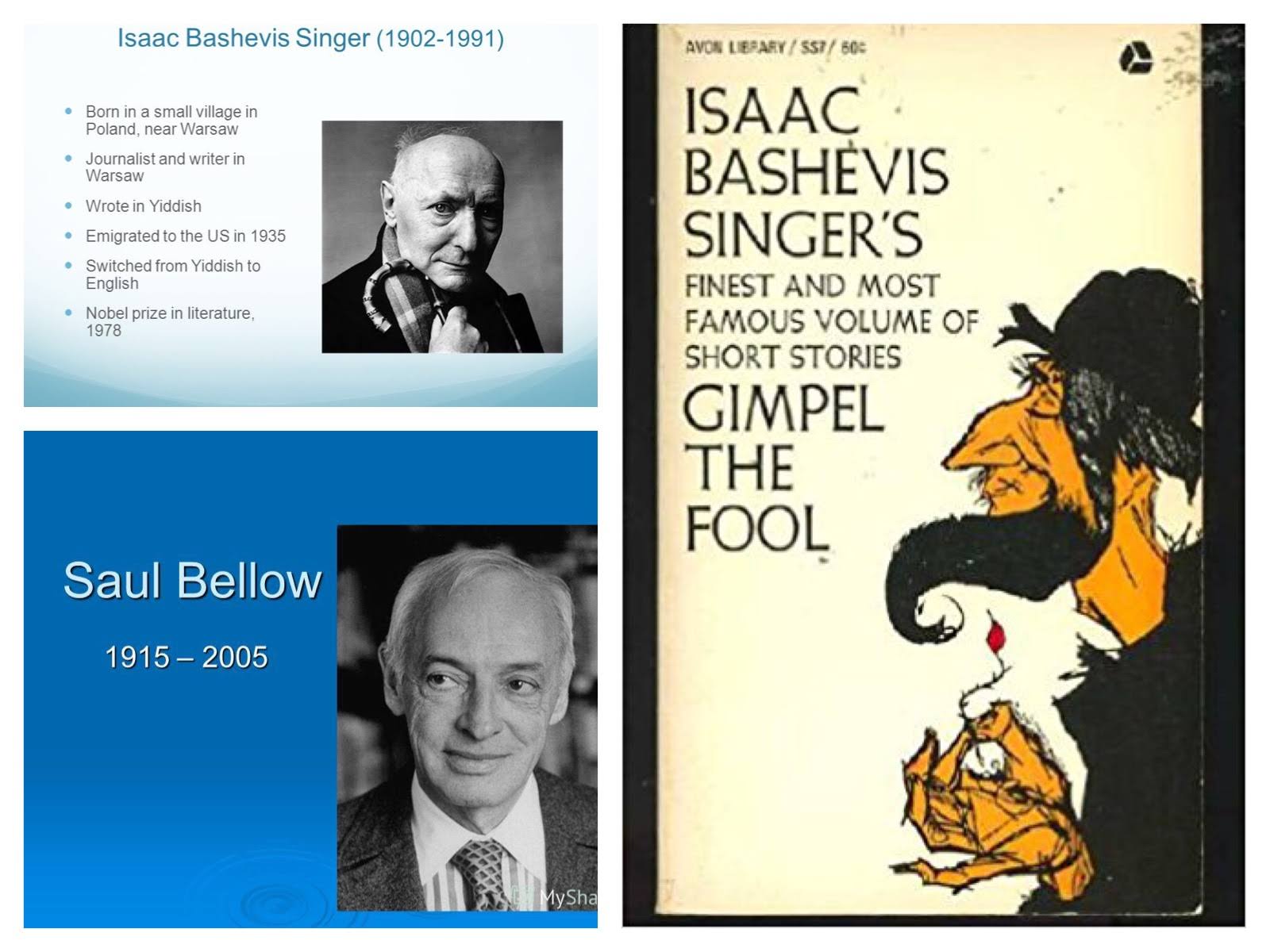
Issac Singer (1902-1901-born Poland) won the Nobel Prize in 1986 for the full body of his work. He is best known to the public as the author of Yentil, the basis for a very popular movie. Singer's, even though he left Poland in 1935 because of the rise of the Nazis, work is very rooted in the culture in which he was raised. He became an American citizen. Singer died and is buried in Florida. . He indicated his biggest influences as a short story writer were Anton Chekhov and Guy de Maupassant 


You can read the story in the Kindle sample of the book pictured above. It is included in The Collected Short Stories of Issac Bashevis Singer as well as the Library of America collection of his works.


A few days ago I read a wonderful story by Issac Singer, "The Gentleman from Cracow" set among farmers, merchants of Ashkanazi heritage in Cracow,Poland. Today's story, "A Friend of Kafka" is set in Warsaw amongst people involved in the Yiddish theater, highly literate men, women play a big part in the story but pretty much as the sexually attract the men in the story. There are aristocrats among the characters. The narrative is structured around the conversations of two friends. A lot is about the relationship of one of the men to Franz Kafka. One of the characters used to be big in the theater, the other is a writer. A good deal happens in the story. An old man's sexual capacity is restored in a sexual encounter with a countess hiding from a murderous lover.


The narrator always has to loan money to the old actor who loves to hear himself talk on everything from the brothel visit he took Kafka on to his chess game with the fates.


“Didn’t you once ask what makes me go on, or do I imagine that you did? What gives me the strength to bear poverty, sickness, and, worst of all, hopelessness? That’s a good question, my young friend. I asked the same question when I first read the Book of Job. Why did Job continue to live and suffer? So that in the end he would have more daughters, more donkeys, more camels? No. The answer is that it was for the game itself. We all play chess with Fate as a partner. He makes a move; we make a move. He tries to checkmate us in three moves; we try to prevent it. We know we can’t win, but we’re driven to give him a good fight"


"A Friend of Kafka" is ten minutes of delight, funny, and made me feel I was getting private gossip from old Warsaw.


There are about 40 Singer Short stories in the edition I have of his work. I hope to read all of them


Mel Ulm


Thursday, March 16, 2023

The Gentleman from Cracow. By Issac Singer - Commentary; New York, N. Y. Vol. 24, (Jan 1, 1957) - A Short Story


 The Gentleman from Cracow. By Issac Singer - Commentary; New York, N. Y. Vol. 24, (Jan 1, 1957) - A Short Story


In THE COMMUNITY HOUSE THERE WAS A PARCHMENT WITH A CHRONICLE ON IT, BUT THE FIRST PAGE WAS MISSING AND THE WRITING HAD FADED. ISAAC BASHEVIS SINGER, “THE GENTLEMAN FROM CRACOW” - quoted in The Lost: A Search for Six Million by Daniel Mendelsohn


Issac Singer (1902-1901-born Poland) won the Nobel Prize in 1986 for the full body of his work. He is best known to the public as the author of Yentil, the basis for a very popular movie. Singer's, even though he left Poland in 1935 because of the rise of the Nazis, work is very rooted in the culture in which he was raised. He became an American citizen. Singer died and is buried in Florida. . He indicated his biggest influences as a short story writer were Anton Chekhov and Guy de Maupassant 


You may read the story on Commentary Website

It is included in The Collected Short Stories of Issac Singer

I have already posted on three of Singer's stories, I was motivated to read "The Gentleman from Cracowby the reference in MeMendelso's book.

The Gentleman from Cracow is one of the most famous of Singer's stories. Set in a town in Poland with a mixed population of Jews and Gentiles, it is a very exciting work going into ancient Ashkanazi beliefs.  


I really do not want to at all spoil the plot of this gripping story. A 30 year old Jewish doctor, a widower arrives in Cracow. He is obviously very rich. Every matchmaker in town approaches him with a potential bride. He purposes a grand party be held in which all unmarried of age girls come along with eligible bachelors. He provides money for beautiful clothes and offers a huge dowry for every match made. The local Rabbi warns the people to be cautious but no one listens.


Then things turn very strange, very dangerous 


The Gentleman from Cracow originally written in Yiddish, then translated under the supervision of Singer. I have no information besides this on the translation.


"Born in 1904 into a family of rabbis, Singer grew up in a devout household in Warsaw’s Jewish quarter, but he also spent time in the villages and market towns of eastern Poland, most notably Bilgoray, where he took refuge with his mother and brother during World War I. He had firsthand exposure to forms of Jewish folk culture that were destroyed by the Nazis, and many of his works testify to the richness of that annihilated world. In his stories set in Poland, Singer drew upon vernacular traditions for tales imbued with a wild, sometimes mischievous, often disturbing supernaturalism that was an outgrowth of local storytelling but containing dark undercurrents born of his own concerns and obsessions. At the same time, his skeptical but never dismissive engagement with religion and spirituality—and the opposing forces of secularism—enabled him to take part in the creative ferment of Jewish modernism but also distance himself from its politics and literary methods." From Library of America edition of his stories


Wednesday, June 6, 2018

“Gimpel The Fool”. - A Short Story by Issac Singer, 1953. - translated from Yiddish by Saul Bellow


“Gimpel the Fool”, today’s story was written by one Nobel Prize Winner, in Yiddish, and translated into English by another, a hard to beat pedigree!  

Saul Bellow, he won the Nobel Prize in 1976,in addition to a Pulitzer Prize and three National  Book Awards for fiction (he is America’s most awarded author) was the son of Yiddish speaking immigrants from St Petersburg Russia.  They moved to Toronto where he was born, the family moved to Chicago when he was eight.  Long ago I read most of his novels and hope to reread some now.  

I have posted on several short stories by Issac Singer, who immigrated from Poland to New York City.

Gimpel is a late teenage orphan when we first meet him, a helper in a bakery.  Everybody calls him a fool and mocks him as if he is of subnormal intelligence.  People in the shetel kind of bully him into marrying a woman with a loose reputation, who already has a child.
Four months after the wedding, she has a full developed baby.  Somehow he comes to believe he is the father.  The years go by, he now owns a bakery and is considered rich, he finds his wife in bed with several men, she has six more kids which are probably not his.  Deeply troubled, he consults a Rabbi who tells him divorce his wife, leave her, and never see her or the children again.

In the tradition of the wandering fool, in the last segment of the story, he wander alone for many years, gaining wisdom.

I will not tell the close of the story.  It was fun to read, who can denigrate two Nobel Prize Winners.

You can read the story here 


Mel u


.


Wednesday, May 9, 2018

“The Border” - A Short Story by Issac Singer - first published May 7, 2018 in The New Yorker - translated from Yiddish by the author


I wish to thank Michael Alenyikov, author of a marvellous collection of interrelated of stories Ivan and Misha for letting me know of the publication of “The Border”. 

Here is a portion of my thoughts on Ivan and Misha:


 Ivan and Misha by Michael Alenyikov is an interrelated set of short stories about two fraternal twins, one bi-sexual and one gay, and their father, Lyov. The first story is set in Kiev (the largest city in the Ukraine) in Russia, where they were born.    In the brief prologue (set in the 1980s at the time of the collapse of the Soviet Union) we learn that the wife of Lyov and mother of the boys died before they were six.   The father is a doctor.   After only receiving one year of medical training and was sent out into the horrors of WWII in the Ukraine to remove limbs from soldiers,  without anesthetics.   They live in a large apartment complex in the style of the times.   The father keeps promising his sons a better life, a new mother, a new apartment, but nothing really happens until he moves the family to New York City and the stories start in the of medical training and was sent out into the horrors of WWII in the Ukraine to remove limbs from soldiers,  without anesthetics.   They live in a large apartment complex in the style of the times.   The father keeps promising his sons a better life, a new mother, a new apartment, but nothing really happens until he moves the family to New York City and the stories start in the late 1990s.    Alenyikov gives us a wonderful feel for the immigrant experience.    

Alenyikov does a great job of creating a sense of physical place, not something a lot of writers do well.   This ranges from the small apartment of Ivan to New York City.   We also get a very clear sense of how everyone lives.    I confess when I read a story about a person I like to know what they eat and we do in Ivan and Misha.   


Alenyikov's  treatment of the sexuality of the brothers is simply brilliant.  I liked that there was no discussion at all about how the two brothers "got that way", no suggestion that there was something wrong with them.       It is just who they are and everyone in their lives accepts it including them.   There is one very shocking scene that took a lot of real daring to write.   


There are some really wonderful minor characters in the novel. There is the handsome as all outdoors young Mormon missionary in the big city for the first time who does not know he is gay until Ivan seduces him and there are madmen right out of Howl.   There is an elderly lady with a very mysterious past who goes from Ivan's cab customer to one of his closest friends.     I liked her a lot and I think you will also as you try to figure her out.


There are tragic elements in the stories.   There is death, serious mental illness and Aids in these stories.    There is also a sheer love of life that comes strongly through.   Readers of Russian literature will love all of the references and will have fun deciding if they agree with what  the characters say about the various writers.   


The prose is beautiful.   There are many exquisitely done images.   I will restrain myself from comparing his work to the great Russian masters but this  could be done without condescension or pandering.   

My thoughts on “The Border” by Issas Singer.


Issac Singer

1902 Born near Warsaw 

1935 - Moves to New York City

1978 - receives Nobel Prize for Literature 

1991 - dies Surfside, Florida 

“Yiddish has not yet said its last word. It contains treasures that have not been revealed to the eyes of the world. It was the tongue of martyrs and saints, of dreamers and Cabalists - rich in humor and in memories that mankind may never forget. In a figurative way, Yiddish is the wise and humble language of us all, the idiom of frightened and hopeful Humanity.”  - Isaac Singer 

“The Border”, most likely written around 1980, was published for the first time this week, in The New Yorker.  An archivist found it while working in his vast collection of papers.  Singer first wrote it in Yiddish and then translated it into English.  It is suggested in The New Yorker that Singer or his publishers, he was a frequent contributor to the Yiddish language Jewish Daily Forward (I have posted on a number of stories from this publication, often called just Forward) may have felt the conversations between two Holocaust survivors, one who kept strongly to his faith and one who developed, while in the camps,
a hatred for the very notion  of God.  


There are only two characters in this story, both older retired men who were Holocaust survivors who after the war moved to New York City.  The man who kept his faith, now retired and a widower after forty years supporting his family with a pushcart took in another retired Holocaust survivor more for company than the rent money.  The other man lost everyone in his family.  He does not  accept that any God seen as good could have allowed the Holocaust.  When the other man begins his prayers he berates him:

“To whom are you praying? To the God who made Hitler and gave him the strength to kill six million Jews? Or perhaps to the God who created Stalin and let him liquidate another ten million victims? Really, Reb Berish, you’re not going to bribe the Lord of the Universe with a pair of phylacteries. He’s a first-class son of a bitch and a terrible anti-Semite.”
“Pfui.” Reb Berish grimaced. “Go away.”
“How long will we keep cringing before Him and singing Psalms?” Melnik continued. “I’ve seen with my very own eyes how they threw a Jew with a prayer shawl and phylacteries into a ditch full of shit. Literally.”

Berish talks to him about freewill, about acts of great kindness and self sacrifice among camp inmates.  They argue about women, Berish expects to meet his wife again in the afterlife.  His companion launches into a tirade against all women, especially Jewish women.  He tells Berish his faith is for children:

“What are you crying for? This is humanity, the crown of creation. My theory is that all men are Nazis. What right do we have to slaughter a calf and eat it? The one with the knife slaughters. It’s just as Hitler believed: might is right. As for God, He’s a Nazi to end all Nazis. The arch-Hitlerite. He has more power than anybody else, so He tortures everybody. You see, I’m not an unbeliever. There is a Gehenna, there is. Why should people suffer only on earth? They’re tortured in the hereafter, too. God has His own Treblinka, with devils, hobgoblins, demons, angels of death. They burn the poor sinners or hang them by their tongues or by their breasts. All the details are there in ‘The Rod of Punishment.’ But there’s no paradise. When it comes to death, I become a real heretic.” 

Both men are lonely and they need each other’s company.  After breakfast they go out to see what the women in the neighbourhood are doing.  

“The Border” is a powerful story, a very worthy edition to Yiddish literary treatments of Holocaust themes.

You can read this story here. 


My post, from November, 2011 on Ivan and Misha is here


Mel u


Featured Post

Imperial Reckoning: The Untold Story of Britain’s Gulag in Kenya by Caroline Elkins - 2005 - 701 Pages

  Imperial Reckoning:     The Untold Story of Britain’s Gulag in Kenya by Caroline Elkins - 2005 - 701 Pages 2006 Pulitzer Prize Winner From...