Wednesday, January 9, 2019

"The Whale That Fell in Love with a Submarine" A Short Story by Akiyuki Nosaka- 2003- translated from the Japanese by Ginny Tapley Takemori - 2015


"The Whale That Fell in Love with a Submarine" A Short Story by  Akiyuki Nosaka- 2003- translated from the Japanese by Ginny Tapley Takemori - 2015

Included in The Cake Tree and other Stories by Akiyuki Nosaka

  1. “Insects” - a Short Story by Yuchi Seirai, a post Atomic Bomb work,2012
  2. The Great Passage by Shion Miura, 2011, a deeply moving work centered on the creation of a Japanese Language Dictionary 
  3. "The Whale That Fell in Love with a Submarine" A Short Story by  Akiyuki Nosaka- 2003- translated from the Japanese by Ginny Tapley Takemori - 2015

Please consider participating in Japanese Literature Challenge 12, this is my ninth year.  It runs from January 1 to March 31.  The homepage has lots of reading suggestions.

On July 18 last year I posted upon  great story by Akiyuki Nosaka, “The Cake Tree”, focusing on the very difficult timed of Japanese children living in very bombed out rural areas in late 1945, right after Japan surrendered. I decided then I should binge read the other fifteen stories in the collection but I lost sight of that goal, with so much I want to read.  Today's story, "The Whale that Fell in Love with a Submarine" renewed this intention.

"The Whale that Fell in Love with a Submarine", about a love sick sardine whale who has a problem:

"Sardine whales average about sixteen metres long, but our whale floating here so terribly listlessly was uncommonly large at twenty metres, and weighed in at thirty tons—and to make matters worse, he was a male. Unlike humans, female whales are bigger than males, and the bigger they are, the more splendid they are thought to be. And not just by the humans who hunt them for their meat and their oil, but by their very own fellow whales. For the males, it wasn’t so much a case of the smaller the better, but if like our whale they were bigger than the females, beyond what was acceptable, so to speak, then the females seemed to find them repulsive and refused to have anything to do with them....
Upon reaching adulthood, whales find a mate and travel the oceans together, giving birth to a baby whale once every two years. But this male was too big, and however hard he tried to attract a mate, emitting subsonic signals to alert the young females to a passing shoal of sardines or giving them gifts of shrimp, they simply ate their fill and then quickly swam away as if repelled at the mere sight of his enormous body. In other words, our whale was a complete flop with the ladies. It wouldn’t have been so bad if he’d just been bad-tempered or ugly—after all, there was some chance of finding a quirky female who was attracted to ill-natured males or odd looks. But being too big was a no-no. They were all scared of him."

We learn just how sad our whale is, you will like and identify with him, I did for sure.  He seems so nice.  I started out smiling at the start, by the end I felt so sad over the brutal fate of the whale, a gentle intelligent creature who would have made a great mate.  

These lines were so moving:

"Overhead a never-ending stream of aeroplanes flew northwards and then returned southwards, sometimes belching thin trails of smoke from their engines or flying so low and unsteadily that it seemed they would crash at any moment. These were the American bombers conducting air raids on the Japanese archipelago far to the north, although of course the whale didn’t know this. There were also numerous ships, big and small, ploughing through the waves in a great hurry. When the whale was little his mother had taught him that, if he ever saw a ship, he had to quickly dive into the depths and stay down as long as his breath lasted, swimming as far away from it as he could. Even if the ship was smaller than him, aboard there was an extremely cruel type of animal called a human. Upon catching sight of a whale, these humans immediately took it for an enemy and gave chase, firing harpoons at it. She herself had twice barely escaped with her life, and the horror of those memories still brought tears to her eyes as she told him about them. “Had you done anything nasty to them?” he’d asked, unable to comprehend why the humans would hate whales that much. “Of course not! On the contrary, we are the most intelligent animals in the sea and quite capable of befriending humans,” she replied, adding with a sigh, “If they were just a little kinder, we could even save them when they get into trouble.” This was true. Whales have the biggest brains of all animals, and are very intelligent."

The whale encountered a small Japanese submarine, one intended to be used in suicide attacks on the American fleet.  The crew of the submarine heard the Emperor announce Japan's surrender and debated over what they should do.

Our friend thinks the submarine, the same color as a sardine whale, is a very big female, one that might be willing to accept him as a mate.  He begins courting the submarine.  When he rubs against the sub the  crew is very afraid he may  destroy the sub. I will leave the ending untold.

From this I left wondering about the largely intold story of the impact of war on animals.  Like small children, they are the wholly innocent victim.  

I was also left very revolted by Japan's decision to resume commercial whaling.

Mel u


Works I have So Far Read for Japanese Literature 12


Monday, January 7, 2019

Sarah Hamar-Jacklyn - Two Short Stories by one of the stars of The Canadian Yiddish Stage


Sarah Hamar-Jacklyn - Two Short Stories by one of the stars of The Canadian Yiddish Stage

"In a Museum". 1954 - tranlated by Ida Wynberg

"She Found an Audience" 1954 - translated by Alisa Poskanger

Born 1905 in Novvoradomsk, Poland

Immigrated 1904 to Montreal, with her parents

Passes on in 1975 in Montreal

Sarah Hamer-Jacklyn was a long time preformer in the Montreal Yiddish Theater.  Second to New York City, Montreal had a large number of Yiddish immigrants.  While merging with much success into Canadian society, they cherished their heritage.  

In addition to acting, Hamer-Jacklyn was a very frrquent contributor of short stories to Yiddish language periodicals.

Both of today's stories demonstrate the theatrical influence on her work.  

The longer story, "She Found an Audience" is narrated by an aspiring young writer named Sarah.  She is close friends with two other ambitious young women.  Dora, her group nick name is "Isodora", is studying to become an actor  and a dancer, Zina is striving to become a famous singer. We see Sarah and Zina making good advances.  Dora gets nowhere but finds an audience in a very unexpected venue

"In a Museum" is the story, many will find it overly smaltzy and predictable but it was fun to read.  The lead character is a young widow.  After her husband's best friend makes very unwanted advances she finds passion during a Museum visit.

There is a Holocaust related story by her in the anthology, I hope to post on it on Janusry 27, Internstional Holocaust Remembrance Day.


Sarah Hamer-Jacklyn (1905–1975) Born in Novoradomsk, Poland, Sarah Hamer-Jacklyn immigrated to Canada in 1914. Captivated by the Yiddish theatre in Toronto, she began her career as an actress and singer at sixteen. Retaining her love of Yiddish as well as her dramatic connection with the theatre, her short stories serialized in the Canadian Yiddish daily Der Keneder Adler, as well as in major literary journals, depict a wide range of subjects spanning shtetl life, Holocaust narratives, and women’s search for creative expression in America. Her collection of short stories, including Lebens un gestalten ( Lives and Portraits) and Shtamen un tsveygn ( Stumps and Branches), published in the 1940s and 1950s, were received with critical acclaim. From The Exile Book of Yiddish Women Writers / edited by Frieda Johles Forman

The Exile Book of Yiddish Women Writers / edited by Frieda Johles Forman includes three stories by Sarah Hamer-Jackalyn, a first date anthology partially focusing on works authored by Yiddish immigrants to Canada.


A very good short bio on Sarah Hamer-Jacklyn from the Jewish Woman' Archive


Saturday, January 5, 2019

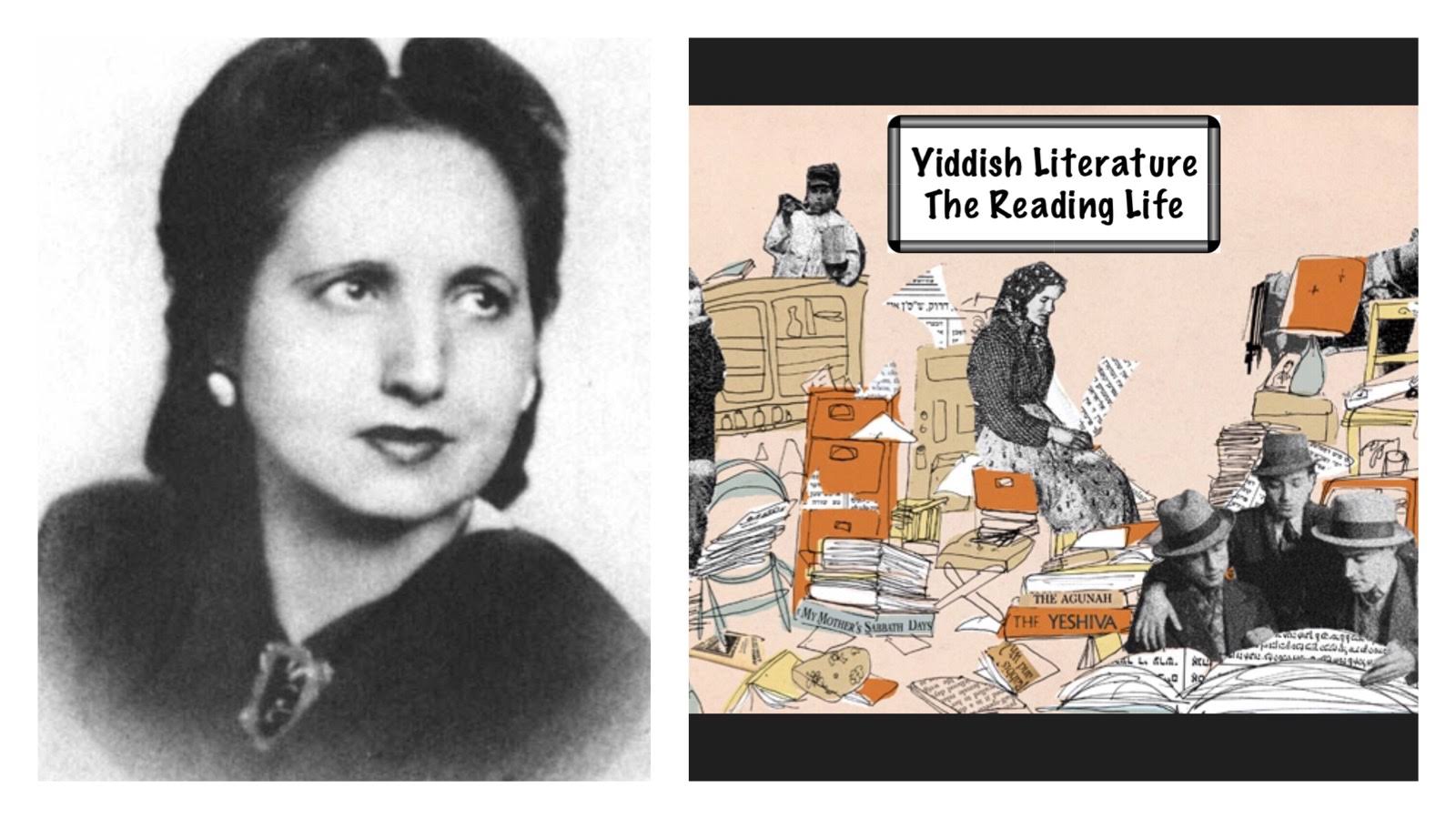
My First Quarter Reading Life Goals - The Reading Life Que


I am starting to accumulate a lot of books I want to read in the first quarter of 2019, the highest priority items are in the pic above.  As I finish a book or decide not to read it I will remove it and add another. I will update the list every month.

If you have read any of these works, your thoughts would be appreciated 

I will continue to read short stories, Yiddish literature, Japanese Fiction, Holocaust related works.  

I would welcome any suggestions in these areas 


Friday, January 4, 2019

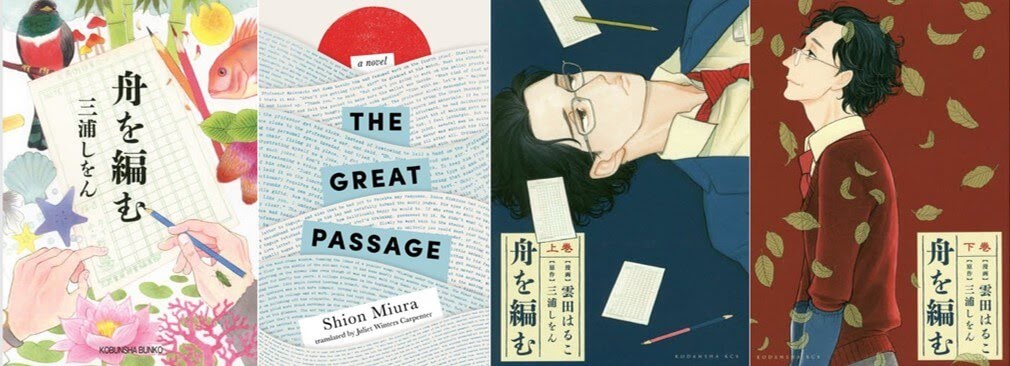
The Great Passage by Shion Miura - 2011- translated from Japanese by Juliet Winters Carpenter - 2017


My Introductory Post to The Japanese Literature 12 Challenge


Works I have So Far Read for Japanese Literature 12

  1. “Insects” - a Short Story by Yuchi Seirai, a post Atomic Bomb work,2012
  2. The Great Passage by Shion Miura, 2011, a deeply moving work centered on the creation of a Japanese Language Dictionary 

"“A dictionary is a ship that crosses the sea of words,” said Araki, with a sense that he was laying bare his innermost soul. “People travel on it and gather the small points of light floating on the dark surface of the waves. They do this in order to tell someone their thoughts accurately, using the best possible words. Without dictionaries, all any of us could do is linger before the vastness of the deep.” 
― Shion Miura, The Great Passage


Only  four days into the new reading year, I may well have just finished the most moving, beautiful novel I will read in 2019, The Great Passage by Shion Miura. I also count it as a classic work about people who lead Reading Centered Lives. (Plus the central characters all love cats! Ok and the book made me think of Samuel Johnson working on his dictionary.)

As The Great Passage opens, Kohei knows his thiry seven  year career as an editor of dictionaries for Gembo Publishing is almost over.  He is in the opening stages of directing  the editing of a 2900 page dictionary of the Japanese langauge.  Before he retires he wants to find a new director, someone with a great passion for words, very committed to the project which will take another 13 years to finish.  We learn how he became invloved in the project in a marvelous open to the novel.

In the company’s sales department, he finds a perfect person for the job, Mitsuya Majime, a collector of old books, he lives through the books he reads.  He has a degree in linquistics and loves words, pondering their multiple meanings.  (It must have been very challenging to translate all the word meanings and I commend the translator for an elegant accomplishment.)

In his work he is joined by an elderly linguist scholar and a recruit from the marketing department, kind of an “anti-nerd" who fashions himself as a great ladies man, even though he is married with four children.  They also have a contract clerk, a forty year old woman, helping with the very detailed super challenging task.

Majime has for the last ten years rent a room in the house of an elderly lady.  They have become very close, he sees his parents once a year.  His books have taken over one of the three stories.  His co-workers tease him for having no romantic experience in his 27 years, it started out when he tried to write a definition of "love".  One day everything changes in a fashion you will really like when the landlady's beautiful daughter, a professional chef, moves in to take care of her grandmother. (The book also had wonderful loving descriptions of all sorts of food.)


Up until he met the granddaughter, his most intimate contact was his cat.  The first romantic encounter between them, strictly G rated, was just so beautiful, far more erotic than the most explicit X rated scene.

The novel does a great job bringing out the very diverse types of people in the novel.  For sure I learned a lot about dictionary making and the publishing business in Japan.  The scenes set in the grsbdsughter's restaurant added tremendously to the novel.

The closing months of the dictionary editing were very exciting with everyone working against a deadline, with over fifty college students brought in to proof read the huge work.  There are several interesting subplots, all intriguing.  

The work brings in classic Japanese works in a delightful fashion, in a way it is modeled on the classic 20th century work by Natsume Sōseki, Botchan.

Sadly this appears to be the only work by Shion Miura translated in a Kindle edition.  It is priced now at $0.99 and is included in the Kindle unlimited program.

I love this book.

There is a Japanese language movie and a four part animated manga style TV show based on the book.

These lines sometimes appear to tell my story

"No matter how poor he was at communicating with people, with books he could engage in deep, quiet dialogue.” 
― Shion Miura, The Great Passage

Under the surface, Miura delves into profound philosophical questions,. 

"“Words were necessary for creation. Kishibe imagined the primordial ocean that covered the surface of the earth long ago—a soupy, swirling liquid in a state of chaos. Inside every person there was a similar ocean. Only when that ocean was struck by the lightning of words could all come into being. Love, the human heart . . . Words gave things form so they could rise out of the dark sea.” 
― Shion Miura, The Great Passage


Shion Miura, the daughter of a well-known Japanese classics scholar, started an online book-review column before she graduated from Waseda University. In 2000, she made her fiction debut with Kakuto suru mono ni mar (A Passing Grade for Those Who Fight), a novel based in part on her own experiences during her job hunt. In 2006, she won the Naoki Prize for her linked-story collection Mahoro ekimae Tada Benriken (The Handymen in Mahoro Town). Her other prominent novels include Kaze ga tsuyoku fuiteiru (The Wind Blows Hard), Kogure-so monogatari (The Kogure Apartments), and Ano ie ni kurasu yonin no onna (The Four Women Living in That House). Fune o amu (The Great Passage) received the Booksellers Award in Japan in 2012 and was developed into a major motion picture. She has also published more than fifteen collections of essays and is a manga aficionado.


Juliet Winters Carpenter attended the Inter-University Center for Japanese Language Studies in Tokyo. Her first translated book, Kobo Abe’s Mikkai (Secret Rendezvous), received the Japan-US Friendship Commission Prize for the Translation of Japanese Literature. In 2014, more than three decades later, Honkaku shosetsu (A True Novel), by Minae Mizumura, received the same award, as well as the Lewis Galantière Prize of the American Translators Association. Carpenter’s other translations—more than fifty—include nearly every genre of fiction and nonfiction, as well as film subtitles and song lyrics. A professor at Doshisha Women’s College of Liberal Arts in Kyoto, Carpenter has lived in Japan since 1975. She’s licensed to teach the Japanese instruments koto and shamisen and sings alto in the Kyoto City Philharmonic Chorus. She and her husband divide their time between Kyoto and Whidbey Island, Washington.


Mel u

Thursday, January 3, 2019

The Hidden History of Florida by James Clark - 2015


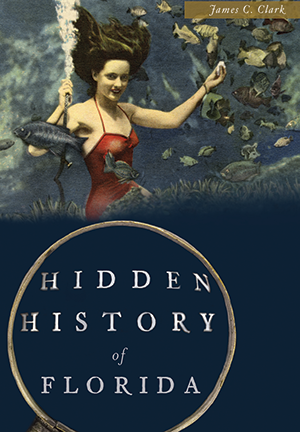
Hidden History of Florida by James C. Clark

Hidden History of Florida by James C. Clark is a perfect pick if you want learn a lot in a short time about the history of Florida.  This is a book anyone interested in Florida will enjoy.  Clark fashions  the history into a fascinating narrative with numerous interesting “human interest” interludes detailing among other things why Saint Petersburg was named after a city in Russia, how a once impoverished tribe of Native Americans, the Seminoles, became rich enough to write a check for a billion dollars to buy the Hard Rock Cafe Chain after fighting three wars with the American Army, and much more.  I will, based on the book, do a Florida timeline.

Timeline

8000 BC - First Native American settlement, near Sarasota

1000 AD - there are nine distinct tribes 

1500 - estimated population of the state was 375,000- 150,000 speak Timuca

April 2, 1513 - Ponce de Leon lands somewhere between Melbourne and Jacksonville.  In time the  indigenous population will be reduced to near zero, from disease and warfare. Clark's  goes into a lot of detail about the fate of the Indians

1521 - first colony

1579 - The cultivation of oranges, introduced from Spain begins.  By 1835 millions of oranges were being shipped north and to Europe, for the next hundred years oranges, cattle and timber were the major sources of cash

1624 - First African American born, in St. Augustine

1763 to 1765- England Owns west Florida panhandle area

1808 - importation of slaves into USA is banned, a very large trade in slaves smuggled in from Cuba begins 

1821 - USA acquired Florida from Spain.  Clark  goes into detail about the various international claims by the French and British to parts of Florida.

1822 - Tallahassee is chosen as the state capital, being half way between the then major population centers of St. Augustine and Pensacola

1835 Second Seminole War begins, by 1842 most Seminoles were shipped west but some escaped into the Everglades.  Allan explains the make up of the Seminoles, largely not Native originally to Florida but a mixture of Creeks and escaped slaves.

March 3, 1845 - Florida becomes a state, slavery is legal.  Clark helped me understand issues involved in bringing Florida into The Union as a slave state 

1859 - by the end of the third Seminole War the around four hundred survivors retreat to the Everglades


Population of Florida 1861. - 154,494 - 92,741 Free, 61,753 slaves

Clark goes into enough detail about the civil war to help me understand the role of Florida in the war

January 10, 1861 Florida suceeds from The Union.  Per capita, Florida sent The most men into war, 15000.  It was then least populated southern state.

After the war, very harsh laws, called Jim Crow laws, were passed designed to keep exslaves in near bondage

Clark writes a lot about different Florida governors and senators, the good, the bad and in-between

1898 - lead by Theodore Roosevelt, based in Florida, the Rough Riders invade Cuba as part of the Spainish American war.  Through this the USA acquired the Philippines and took a place as a world class international power.  This helped him become president just as Zachary Taylor's role in the Seminole Wars did for Taylor.

1914 - World War One begins

January 3, 1921 - my Mother was born in Highsprings Florida, then population 1795. 

Population of Florida 1921 - 997,000
Population of Texas 4.8 Million
Population of California 3.75 million

After the war ends, the tourist trade develops rapidly.  Allan explains how this was tied in with the building of rail roads down the east coast to Miami.  Air conditioning also helped make the state more attractive to northern immigrants

Cattle ranching greatly increases as does large scale agriculture interests including sugar in the Everglades area

1941 to 1945 world war two.  

1950- Population 2.75 million 

October 1, 1971 - Disney World opens near Orlando and becomes world's greatest tourist attraction.

Clark has well done chapters on the explosive growth of Florida's population and the role it played in national politics

He even included cool chapter on Florida's first tourist attraction, featured on the book cover, 

Currently the population of Florida is around 21 Million.

This post is in recognition of the 98th anniversary of the birth of my mother, the finest of all Floridians.

I learned a lot from The Hidden History of Florida.  It would be a very good book  for classes in Florida history.  Read this book and you will know much more about Florida history than 99.5 percent of the residents.


James C. Clark is a lecturer at the University of 95, where he has taught since 1987. He earned his doctorate in Florida history from the University of Florida. He is considered one of Florida’s leading historians and is the author of twelve books, including Florida: A Concise History. His work has been honored by the Florida Historical Society, the Florida Society of Newspaper Editors and the Florida Magazine Association. He lives in Orlando, Florida.


Mel u


Wednesday, January 2, 2019

My Introductory Post for the Japanese Literature 12 Challenge -plus A short story by SEIRAI YŪICHI "Insects" on the aftermath of the Atomic Bomb dropped on Nagasaki- 2012- Translated by Paul Warham


My Introductory Post for the Japanese Literature 12 Challenge -plus A short story by SEIRAI YŪICHI "Insects" on the aftermath of the Atomic Bomb dropped on Nagasaki- 2012- Translated by Paul Warham


I first participated in Dolce Bellezza's Japanese Literature Challenge in July 2009, the month I started The Reading Life.  I had never prior to then read any Japanese Literature.  I had nothing against the idea but when I went to school, long before the internet, there was little to no contemporary Japanese work in translation.  By the time works begin to come out, my reading dance card was full.  I began to see books in the stores, each proclaimed on the jacket, as were all the other books, as a great masterwork.  The Japanese Resding Challenge opened up a whole new reading life world to me.  Starting with Huruki Murkami's After Dark, I went on to read hundreds of Japanese authored works.  I now count among my favorite writers  Kenzaburo Oè, Hurakami Murakami, Kobo Abe, Banana Yoshimoto, Junichiro Tanazaki and Yokio Mishima. Almost everyday I learn of a just published translation.  A new generation of writers is out there waiting for you to discover them!  There are elegant works by Nobel Laureates about kimonos down to x-rated romps through the dark side of Tokyo. There are great WW Two novels and short stories, historical fiction, and LGBTQ works.

I urge everyone to join the Japanese Literature 12 event.  It is a great way to learn about new to you writers from the reviews, get some new readers for your blog should you have one and meet others who love reading.  The very nonstressful rules are on the website, with lots of reading suggestions.  

If I were to suggest one book for all to read it would be Atomic Aftermath Short Stories About Hiroshima and Nagasaki (Japanese) Paperback Shinsho – 1984
by Kenzaburo Oe (Edited and introduced).  There is deep wisdom in these stories.

Here are a few of the works I hope to read for JL 12, running from January 1 to March 31, 2019.

  1. Killing Commendatore by Hurakami Murakami
  2. At least 12 Short Stories from the just published Penquin Book of Japanese Short Stories, edited by Jay Rubin with an introduction by Hurakami Murakami
  3. The Great Passage by Shim Miura
  4. In the Company of Cats by Tamayuki Hashina
  5. The Master Key by Masaka Togawa
  6. Triangle, Triangkd by Hisaki Matsuura
  7. A Slow Boat to China RMX by Hideo Furakana

Today's short story by Yuchi Seirai (I will alternate sometimes between Japanese and Western customs with regard to the placing of the surname) "insects" opens right after an atomic bomb has exploded over Nagasaki on August 9, 1945. The then  young female narrator is in shock from severe injuries, all around her everything is destroyed.  She, like everyone, does not grasp the magnitude of what has happened.  As she regains consciousness she notices a grasshopper has landed on her.  The woman is Christian, a religion once outlawed.  She is initially rescued by her grandparents, her parents and her five siblings were all killed.  Disfigured by the bomb, she has little hold of marrying as it is feared she will produce unhealthy children.  She thinks about how insects survived when people do not, how good the God of her faith and heritage allow that? Almost never going out, she eventually gets a job in a print shop where five of the six employees are injured survivors .  The story weaves back and forth in time from the day of the bomb to current time, showing how the bomb has shaken her faith in God, stopped her from developing a family of her own.

This is a very worth reading story.  It is included in Penquin Book of Japanese Short Stories.  It appeared originally in Nagasaki: Stories, a collection of six bomb related stories by Yuchi Seirai.  Sadly, the Kindke edition is $33.00, for a 192 page book.  The Penguin Book of Short Stories is only $5.95. It is a great value.


Yuichi Seirai 青来有一
Yuichi Seirai  (1958–)  writes fiction grounded in his home city of Nagasaki at the same time that he serves it as an official in the municipal government. His first published work was Jeronimo no jujika (Jeronimo's Cross), winner of the 1995 Bungakukai Prize for New Writers. In 2001 Seisui (Holy Water) brought him the Akutagawa Prize after four earlier nominations, and in 2007 Bakushin (Ground Zero) received both the Tanizaki Jun'ichiro Prize and the Ito Sei Prize. Other notable works include Tsukuyomi no shima (The Island of Tsukuyomi, 2002) and Terenparen (Slacker, 2007). Although not very prolific, Seirai displays a solid commitment to exploring Nagasaki's historical legacy that distinguishes him as one of its foremost novelists.


Very interesting interview

Mel u


Tuesday, January 1, 2019

2018 Year End Review


2018 was an interesting Reading Life year for me, new favorites discovered and old friends revisited.  Here is a partial demographic break down of my postings for 2018.

There were 133 posts on works by women, 80 by men.

Living authors were featured 102 times, those who have taken the Celestial Omnibus, 111 times

Top author home lands

  1. USA
  2. Poland
  3. Ireland
  4. UK
  5. Ukraine
  6. Sri Lanka
  7. France
  8. Australia
  9. Germany
  10. Canada
  11. Russia

(The writers from Poland, the Ukraine and Russia all wrote in Yiddish.)

The five most viewed posts of the year were all on short stories by Filipino writers.  

To my fellow book bloggers keep blogging.  Imagine how great it will be to look back on 25 plus years of book blogging.  Sometimes I do think “why bother" but blogging helped me get through some very dark times.

My great thanks to all who leave comments.

Great thanks also to Max u for kind Amazon gift cards.

I will soon do a separate post on my 2019 Reading Life hopes and plans.

Mel u


Featured Post

Imperial Reckoning: The Untold Story of Britain’s Gulag in Kenya by Caroline Elkins - 2005 - 701 Pages

  Imperial Reckoning:     The Untold Story of Britain’s Gulag in Kenya by Caroline Elkins - 2005 - 701 Pages 2006 Pulitzer Prize Winner From...