Sunday, March 10, 2019

'What Feminism Is': the 2017 Séan Ó Faoláin Competition winning Short Story by Louise Nealon


Irish Short Story Month -Year 8


The Reading Life Gateway to Ireland


Link to today's story


'What Feminism Is': the 2017 Séan Ó Faoláin Competition winning Short Story  by Louise Nealon

James Joyce wrote both the most influential novel since Don Quioxte as well as the most influential collection of short stories ever done.

William Butler Yeats is the greatest poet of the 20th century, to me one of the best  of all time.

Samuel Beckett fundamentally changed modern drama.

All were born in Ireland and their works manifest very deep roots.

Ireland had given birth to four Nobel Prize Winners and six winners of a Booker Prize.

I have since I began my Blog in July of 2009 done 635 Irish related 
Posts.  Far more than writers from any other country. I have done Q and A sessions with some eighty Irish born authors.  If anything is of lasting value on my blog, it is these posts.  

All this from a country with a population of about 4.7 million. 

As it has been for eight years, March is Irish Short Story Month on The Reading Life.  This year I hope to read and post on some stories by new to me Irish Women Writers and hopefully a few by old friends.  

The first story for this year's Irish Short Story Month 'What Feminism Is': was the 2017 Séan Ó Faoláin Competition winning Short Story  by Louise Nealon, the author's first published story. 

In this story, which you can read on The Irish Times (at the link above) a young woman, maybe midtwenties, we are vicariously in bed with her during a sexual encounter with a man she has not previously slept with.  We sense casual encounters are part of her life style.  She seems a bit bored with the man after things are over.  I laughed when she talked about, the story is structured as an interior monologue, how she liked to stick her fingers in men's ears to see their reaction.  Maybe she seems a feeling of reciprocal penetration and she likes seeing their reaction.

The next time she runs into the man,working on his PhD, he is with his girlfriend.  She did not know of her.  Jointly they edit a university literary journal.  The woman has been widely published and we sense more literary than sexual rivalry.

We sit in as the woman goes over how the encounter with her £50 pound an hour therapist.  She changed sex to just a kids in talking to the therapist. The woman is writing a story about the encounter, she sent the man a copy.  

"I decide to read my story to the woman who my family pays fifty pounds an hour to listen to me. My woman. That’s what I call her if anyone asks me where I’m going on Saturday mornings. If I use the word therapist, I say it ironically with a wry smile and make a joke about being in a Woody Allen movie. She is a soft-spoken, older lady who looks like she shops in Marks and Spencer and smells of talcum powder and scented candles. She always asks me how I am when I sit down in the chair opposite her, and I smile and say, “I’m grand, how are you?” as if to trick us both into thinking it’s a normal conversation."

We come to understand a bit of how the woman uses layers of irony to understand herself.  Nealon had shown us things about the woman she probably does not really know about herself.  Family affluence has allowed her and her classmates to have a kind of extended childhood in which extended self reflection plays a large part.  We also see her interesting relationship with her mother.

"What Feminism Is" delighted me with the way we could through the author's thoughts see events in a Belfast literary world.  The woman is from the south and that adds another element to the story.

I read this story once a day for three days.  I highly recommend it and hope to follow the author's development for a long time.  She has a second story online and I hope to read that soon.

You can listen to Nealon read the story at the link below


Louise Nealon is a 26- year-old writer from Co Kildare. She studied English literature in Trinity College Dublin, and then completed a Masters in Creative Writing at Queen’s University Belfast in 2016. She lives on her family farm where she divides her time between reading, writing and milking cows. This is her first published story.

Mel u


Thursday, March 7, 2019

Orphans Progress - A Short Story by Mavis Gallant - First Published April 3, 1965 in The New Yorker


“Orphans Progress” by Mavis Gallant


In “Orphan’s Progress” In just seven intense pages Mavis Gallant traces how the two official languages spoken in Canada, French in Quebec and English in the rest of the country, impact the lives of two orphan girls, Cathie and Mildred.
They were six and ten when the death of their mother sent them to live with their grandmother.  Their father spoke only English and their Quebec mother was bilingual.  Upon becoming orphans they are sent to live with their English only grandmother.  The grandmother and the maid talk of the squalid conditions they came from, a slur on the mother and Quebec French Canadian culture.  The girls barely know that there are two languages, it is almost part of their inner life is being repudiated in a way they cannot see.   French is placed in their minds as inferior language. We follow the girls for another ten years and we see how the language divide ends up breaking the bond between the girls.

As I read of the impact of growing up in a two language culture where one language is viewed as inferior I wondered about the Philippines where 170 languages are spoken, maybe ten with over a million speakers.  To have any sort of professional job, you have to speak English, hopefully for you sounding like an American.  College courses are in English.  There is little non English literature, what exists is mostly read  by academics.  I see a deeper impact here than in French Canada.

Mel u


Wednesday, March 6, 2019

The House of Fear - A Short Story by Leonora Carrington - 1937 - translated from the French by Kathrine Talbot with Marina Warner:


A Lovely Reading of The House of Fear


“When I got home I lit a little fire to prepare my meal. I had a cup of tea, thought about my day and mostly about the horse whom, though I’d only known him a short time, I called my friend. I have few friends and am glad to have a horse for a friend. After the meal I smoked a cigarette and mused on the luxury it would be to go out, instead of talking to myself and boring myself to death with the same endless stories I’m forever telling myself. I am a very boring person, despite my enormous intelligence and distinguished appearance, and nobody knows this better than I. I’ve often told myself that if only I were given the opportunity, I’d perhaps become the centre of intellectual society. But by dint of talking to myself so much, I tend to repeat the same things all the time. But what can you expect? I’m a recluse. It was in the course of these reflections that my friend the horse knocked on my door, with such force that I was afraid the neighbours would complain.” - From “The House of Fear”  who among us has not had such thoughts during breakfast?


Leonora Carrington- Britain's Last Surrealist Tate Shots. A wonderful beautifully done video -  (By the author of The Surreal Life of Leonora Carrington, Joanna Moorhead, includes a conversation with  Carrington as well as images of her art)


I will remember April, 2017 as the month I "discovered" Leonora Carrington.  I know most of us living a reading life have had the experience of being amazed by a new to us writer, someone you had never even heard about before the day you first read their work.  You do a bit of Googling only to learn you are seemingly among the very few who have not long ago read their work.  This is a humbling experience but also one of the great pleasures of the reading life world has to offer.  This is how I feel now about Leonora Carrington.  (Be sure and look at her art work also.)

In observation of the 100th birth anniversary (April 6, 1917) of Leonora Carrington two collections of her short stories and a fascinating sounding biography by Joanna Moorhead, The Surreal Life of Leonora Carrington a
were published. Carrington was very closely associated with the Surrealist movement, both personally and artistically.  (In the long ago I visited the Museum of the Museo Nationale de Anthropologia in Mexico City where I must have seen one of her works.  Her art is on display in major museums throughout the world.) 

“The House of Fear” is literary surealism.  Gloria Orenstein in her introduction to the 1975 collection of six of works said:

"Leonora Carrington's express the system of being through occult parables whose true meaning becomes accessible to those initiated into the specific form of symbolism that a work displays. The symbols are emblems derived from a deep knowledge of alchemy, Cabala, Magic, the Tarot, witchcraft and mythology".

I have issues with the notion of short stories having "a true meaning" but this is an illuminating remark.  Long long ago I was quite into the occult, I studied various systems of Magik, Asian texts, gnosticism, symbolism from The Tarot, the teachings of the order of The Golden Dawn, Cabalistic teachings.  I can see, or perhaps project, much of this onto her art work and in her stories.

My main purpose here is to let interested parties know they can listen to this story on YouTube and to keep a record of my reading.  Like lots of her narrators,the central and only human character is an isolated woman with issues, mutual no doubt, with society.  A  horse invites her to a party and she agrees to go.  The party is very strange and seems to pretend danger.

“The House of Fear”  will have you probing your Jungian archetypes.

Orleander Boussweau


Monday, March 4, 2019

The Story of the Night by Colm Toibin -1996 -312 pages


Website of Colm Toibin


Prior to The Story of the Night I have posted upon several other works by Colm Toibin.  Included are Brooklyn, Nora Webster, The Testament of Mary, The Master (my favorite), and House of Names.  I have also read some of his short stories and essays devoted to Irish Literature.  I was delighted to find his 1996 set in Argentina novel The Story of the Night marked down to $1.95 for a flash sale.


Set in Buenos Aires, beginning shortly before the 1982 Falkland Islands War with  Great Britain, it traces the life history of Richard Grey.  His mother is very British and his deceased father was Argentinian.  When we first encounter Richard, he is just finishing college, living as he always has with his mother.  They have a small stipend from the pension of the father and live in an apartment with very low rent.  He is fluent in English and begins giving language lessons.  From his relationship with a student his age from a wealthy politically connected the rest of his story will develop.  

Toibin does a great job depicting Richard’s relationship with his sometimes difficult mother.  We sense both his frustrations as she begins to pry into his private life, asking if he has a girlfriend and his very profound love of his mother. As she ages and does become a care burden for him, we see him face this and grow as a person.  We feel his pain when she dies.  Other than an aunt he has no other family.  We learn a lot about the family history.

Above all else, The Story of the Night is about being gay in Buenos Aires.  Potential readers should know in advance at least 100 pages of the book are devoted to descriptions of gay sex, some very graphic.  Richard encounters lot of gay men.  He cruises the night in Buenos Aires picking up men for no name sex.  He visits bathhouses looking for men.  He has two serious long term relationships, one with his first student and then with his student’s brother.  This was in a time before aids when sex with strangers without protection was normal.  At times it seems all the men he encounters were gay or at least open.  

His big break in life comes when, through the parents of one of his lovers, he meets Sally and David, an American couple in Buenos Aires on behalf of the United States State Department to develop contacts among top Argentinian 
Politicians with the aim of putting a Pro-American as President.  His boyfriend’s father is interested in becoming president and wants Richard to cultivate the couple and get them to bankroll his election.  The couple ends up initially hiring him as a translator and host for a group of. American businessmen coming to Argentina.  They offer him a rate of pay six times that of his job teaching English at a college, a job he hated .

He develops from this contacts in the American oil industry.  The Americans want Argentina to privatize the giant government oil business.  Sally sets him up with a consulting business.  He begins to become seriously affluent.  He has a nonstarting sexual encounter with Sally at her initiation and David flirts  with him.

There is a lot in this book.  We see the excitement felt by Argentinians when they invaded the held by England Falkland Islands.  We go to lots of restaurants and clubs.  It was very interesting and gratifying to see Richard, who I liked a lot, become very successful.  I became worried for him as it was clear the story of the Argentinian night would end badly for him.  

Something tragic begins to happen in the gay community in Buenos Aires.  Men are dying from the just begun AIDS epidemic.  There is then no cure or any help but pain relief available.  


 Toibin portrays in detail the devastation of AIDS.  Richard learns you get Aids from unprotected anal sex, a practice he has indulged in for years, with lovers and strangers.  You might get the disease and not know it until the deadly effects develop years later.  We also learn a lot about politics in Argentina, about the thousands of disappeared young people who were Anti-Peronists.

The strength of this novel is in the development of the characters, especially Richard and his final lover, Pablo as well as his relationship to his mother. There is a lot of really near  x-rated descriptions of gay sex, some may find this overdone.  I did at first but having completed the novel I see the point of so much sex.  The Story of the Night is almost a portrayal of an end to an era of innocence, if you can get behind thinking of sex with strangers in a bath house as innocent.  If you work at it, I think you may see my point, unless I am way off.

I am very glad I read this book.  There are three Toibin novels I have not yet read available as Kindle editions and if they ever go on sale I will probably read them.

Mel u


Sunday, March 3, 2019

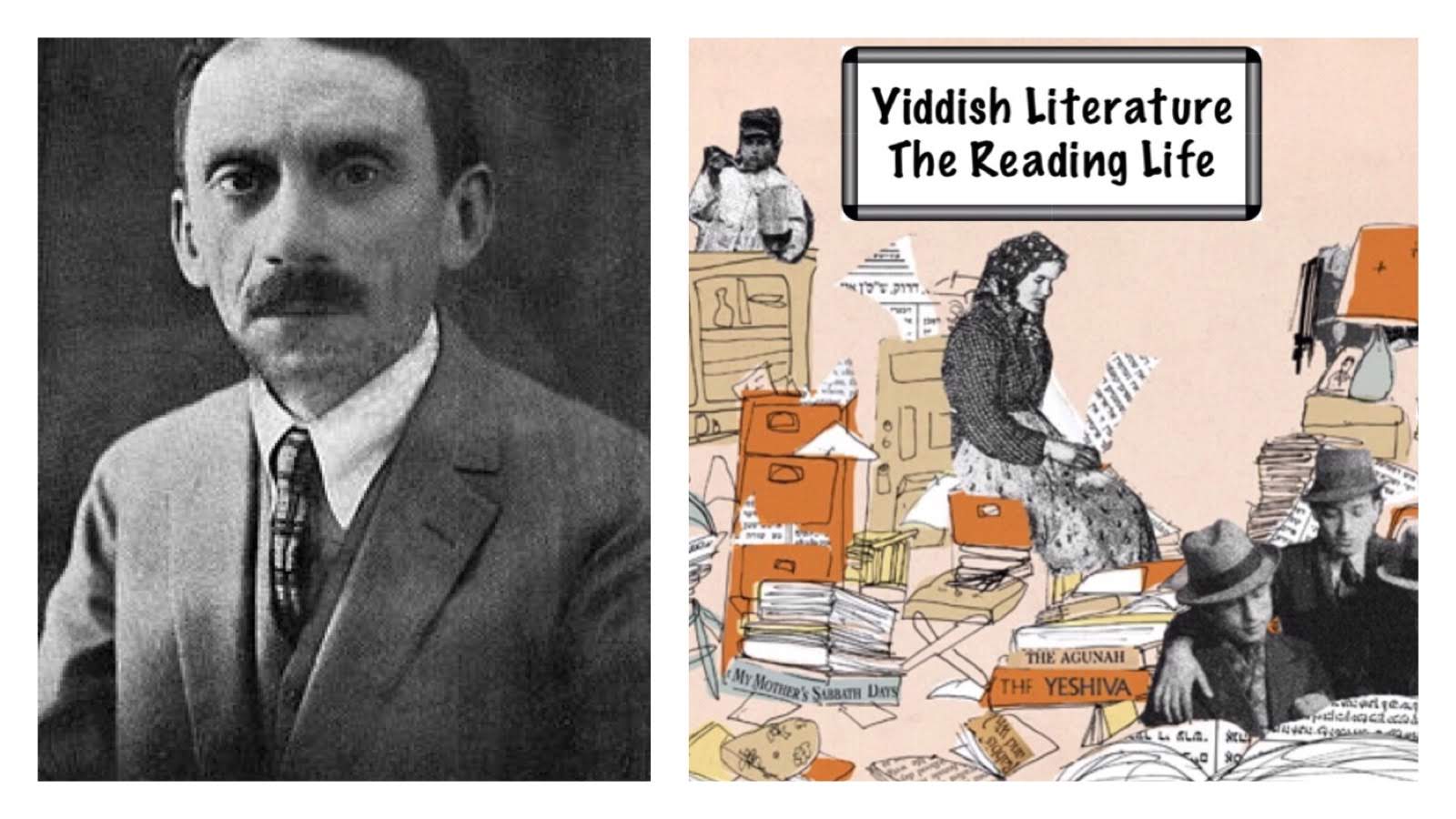
Friends - A Short Story by Hersh Dovid Norberg- first published in The Forward February 24, 1912 - translated from Yiddish by Seymour Levitan


I read "Friends" by Hersh Dovid Norberg in the anthology, Have I Got a Story for You: 100 Years of Stories From the Forward, edited by Ezra Glints with an introduction by Dana Horn.  There are 41 stories in this collection, with a very good introduction and consise well done biographies of each author.  This book is a valuable resource to all into Yiddish literature and would serve as a good first book for those interested in this great reading life area.

Hersch Dovid Norberg

1876 - Wszchzonous, Poland

1927 - Warsaw, Poland

Hersch Dovid Norberg was a very prolific author and a  world traveler.  With the encouragement of I. L. Peretz, he began to write in Yiddish. He was fluent in Russian, Polish, German as well as Hebrew.  

(See the article linked below from The Yivo Encyclopedia of Jews in Eastern Europe for information on his career and life history.


There are three characters in "Friends", a married couple and the husband's close friend of many years.  We see how deeply the husband loves his wife.  He has not seen his friend since he married and he insists on an extended visit.  He  soon becomes concerned his wife and his friend are having an affair.  He has no proof but he is consumed by jealousy.  The ending is very moving and takes us many years into the future.  Some will say the story is a bit schmaltzy, certainly worth the ten minutes reading time.

Mel u


Saturday, March 2, 2019

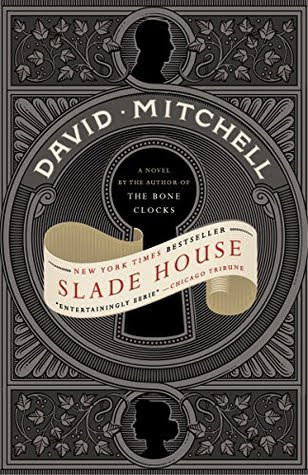
Slade House by David Mitchell - 2015


My first encounter with David Mitchell, in February of last year,  was with his marvelous novel Bone Clocks. I knew I wanted to read more by such a creative writer.  Luckily I recently found his Slade House, which has overlapping characters with Bone Clocks  and other of his novels but you can be read it with no knowledge of this book, on a flash sale as Kindle edition for $1.95.  I guess it can be considered in the tradition of haunted house horror stories.  It is really a fun and if you give in to it, a scary book.

Slade House appears only once every nine years.  It is inhabited by twins, a male and a female born in the 1880s.  In order to maintain their life sustaining energy, ever nine years they, often in different appearances, lure someone into the house and consume their soul.  Each of the six episodes in Slade House involves different victims from different walks of life each tricked into entering the house and becoming a victim.  As the authorities investigate the mysterious disappearances,  we learn more about the twins and the occult theories used by psychic experts, self proclaimed, to explain what is going on.  We get to know the twins more with each segment.

The ending is very powerful 


To me Slade House was very creative, a delightful escapist read.


David Mitchell is the award-winning and bestselling author of The Thousand Autumns of Jacob de Zoet, Black Swan Green, Cloud Atlas, Number9Dream, Ghostwritten and The Bone Clocks. Twice shortlisted for the Man Booker Prize, Mitchell was named one of the 100 most influential people in the world by TIME magazine in 2007. With KA Yoshida, Mitchell co-translated from the Japanese the international bestselling memoir, The Reason I Jump. He lives in Ireland with his wife and two children...from Davidmitchellbooks.com

I have begun The Thousand Autumns of Jacob de Zoet, The opening chapter was incredible.

Mel u


Friday, March 1, 2019

The February Reading Life Review - Future Projects, Reading Plans


February Authors 


Row 1

  1. Grace Paley - USA - Short Story Master 
  2. Michael Chabon - USA- Winner Pulitzer Prize
  3. Zelda Abramson - Canada- Author The Montreal Shtetl: Making Home After the Holocaust -essential reading 
  4. Slivano Ocampo - Argentina- highly regarded multi genre writer
  5. Alyssa Wong - USA- award winning Science Fiction and Fantasy Writer


Row 2

  1. Chaya Bhuvaneswar- Short Stories- debut collection White Dancing Elephants- I highly recommend this collection to all lovers of the form
  2. Akiyuki Nosaka - Japan - poignant World War Two Stories 
  3. Mavis Gallant - Canada to France
  4. Blume Lempel - Ukraine to USA - important Yiddish Short Story writer

Row 3

  1. Cynthia Ozick -USA
  2. Philip Roth - USA - Pulitzer Prize Winner
  3. A. S. Byatt - UK - Booker Prize Winner
  4. Jarrod Tanney - USA - author City of Rogues and Schnorrers: Russia's Jews and the Myth of Old Odessa

Countries of Origin of Authors
  1. USA- 6
  2. Japan - 1
  3. Uk - 1
  4. Canada - 2
  5. Ukraine- 1
  6. Argentina- 1

Four works by men were featured in February, nine women.

Six living writers and seven deceased authors were included 

Four writers were featured for the first time, nine are old friends 

Blog Stats

5,594,664 page views since inception 

There are currently 3497 active posts on The Reading Life

Top Visitor Home Countries 

  1. USA 
  2. The Philippines 
  3. India 
  4. Canada
  5. UK
  6. Russia - 
  7. Germany
  8. France
  9. Ukraine 

As the internet becomes more widely available in India and China I can see great growth potential.  


The most viewed post for the month was on an  Indonesian authored Short 
Story,The Century Carved by Oka Rusmini.  

As usual pre World War Two Short Stories by Authors from the Philippines were the next three most viewed posts.

Following this in fifth place is Hiroshima Notes by Kenzaburo Oe.  Most of the readers of this post were from India.

I find it very gratifying when posts I wrote over five years ago still receive world wide readership.

Plans for March and Beyond 

For eight years Irish Short Stories have been featured on my blog in March.I will continue this tradition.

I will continue to read along with Buried in Print in her Mavis Gallant Event


Please feel free to join in

The Book Jotter is hosting for March a very interesting event, a Wales Readathon..  I have found an interesting novel to read and will be participating.  Events like this help strengthen the international book blog community and I hope lots of people participate.

I will be reading Madame Soustzka by Bernice Ruebens.

The website below has lots of reading suggestions 


I am launching a three month event that will focus on short stories by women from or tied to the Indian Subcontinent.  This will run in March, April and June. Details to come.  I hope to feature at least 24 writers.

I’m reading, last read about eleven years ago, 2666 by Roberto Bolano 

I will continue reading Yiddish literature and related history.  

I am very pleased that Oleander Bousweau has agreed to become a director of The Reading Life.

Great thanks to Max u for his kind provision of Amazon Gift Cards

I offer my humble thanks to all who leave comments, you help keep me going 

To my fellow book bloggers, keep up your blog. The Reading Life helped me emerge more or less sane from a very dark period in my life.  I imagine how great it might be when younger bloggers can look back on fifty years of blogging.  

Mel u


Featured Post

Imperial Reckoning: The Untold Story of Britain’s Gulag in Kenya by Caroline Elkins - 2005 - 701 Pages

  Imperial Reckoning:     The Untold Story of Britain’s Gulag in Kenya by Caroline Elkins - 2005 - 701 Pages 2006 Pulitzer Prize Winner From...