Showing posts with label Iréne Nemirovsky. Show all posts

Saturday, July 2, 2016

The Dogs and the Wolves by Iréne Nemirovsky (1940, translated by Sandra Smith, 2009)


Suite Francaise is the acknowledged master work of Iréne Nemirovsky.  I first read this book during Paris in July in 2015.  I loved that book so much that I added her to my read all I can list.  Since then I have read and posted on eleven of her novels and four short stories.  


Iréne Nemirovsky was born in Kiev, Russia February 11, 1903 into a wealthy Jewish family, her father was a banker for the Czar, and she died in Auschwitz Concentration Camp on August 17, 1942.  She wrote thirteen exquisite novels, her most famous work is Suite Francaise, and published thirty short stories. Her family moved to Paris after the Russian Revolution where her father restored his fortune. I have read eleven of her novels and ten of her short stories.  After  her first novel, David Golder, published in 1926 she wrote almost a novel a year.  With her murder the Nazis, the French were far from blameless concerning the fate of their Jews, deprived the world of upwards of thirty novels.  To me the literary impact of the Holocaust is personified in Iréne Nemirovsky.  
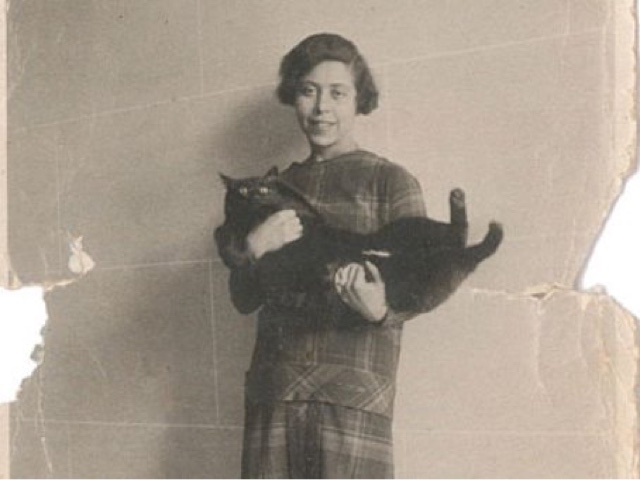


The Dogs and the Wolves is one of her very best works,  the opening segments in which we learn of Jewish society divisions  in the Ukraine are totally brilliant.  I think too many read only Suite Francaise, I do suggest you start Nemirosky there, and fail to see the aspects of her work dealing with her roots in Jewish Russia and the Ukraine.   The open section of The Dogs and The Wolves in which tne different social classes among Jews in a  Ukrainian city are portrayed are simply magnificent.  Her account of a pogram by Cossacks is as powerful as anything by the classic Yiddish writer, Lamed Shapiro.  After the pogram they move to Paris.  In one chilling conversation a rich Jew tells his family they have nothing to worry about.  I don't know if Nemirovsky foresaw what was to happen to the Jews of the Ukraine or not but it seemed prophetic. 

Much of the drama of the story is taken up by two related Jewish families  one poor at the start, and one quite rich, both living in Paris.   Though a happy bit of serendipity brought on when the poor man's children apply for help at the house of their rich relatives, the poor family eventually rises to a comfortable level of affluence.  Romantic drama begins between the children of the two Jewish families plays a big part in the plot. It is very emotional.   There is a lot to be learned about French Jewish life in this novel.  The quality is uneven, sections are just totally wonderful and others are period romance/marriage story norms, though very well executed.

Please share your experience with Iréne Nemirovsky with us.

Mel u


Sunday, April 10, 2016

The Mirador Dream Memories of Iréne Nemirovsky by her Daughter byĖlizabeth Gille (2011


Iréne Nemirovsky was born in Kiev in the Ukraine February 11, 1903, she died at Auschwitz August 17, 1942.  Her most  famous work is Suite Francaise.


Élisabeth Gille was only five years old when her mother, Iréne Nemirovsky, was deported to Auschwitz. She never saw her mother again.    She wrote a fictional memoir as if she were her mother. When she herself in as in her fifties.  Gille has created a wonderful loving tribute to her mother.  I felt my understanding of Nemirovsky was significantly increased by this book.  

I totally endorse this book for all lovers of the work and person of Iréne Nemirovsky.

Mel u

Saturday, April 9, 2016

The Pawn on the Chest Board by Iréne Nemirovsky. (1934, translated by Stephen Wilson)

I offer my great thanks to Max u for providing me with an Amazon gift card that allowed me to read this great novel by Iréne Nemirovsky 


        Iréne Nemirovsky and her Family 


Iréne Nemirovsky was born in Kiev in the Ukraine February 11, 1903, she died at Auschwitz August 17, 1942.  Her most  famous work is Suite Francaise.


I begain reading Iréne Nemirovsky with her acknowledged master work about France under German occupation, Suite Francaise.  With the completion of The Pawn on the Chest Board I have read twelve of her novels, a very good authorized biography, the imagined memoirs done by her daughter and ten of her short stories.  Starting in 1924 she wrote on average a novel a year.  With her murder in the Auschwitz Concentration Camp at age thirty nine, the Germans robbed the world of probably thirty more wonderful novels and who knows how many short stories.  I cannot help but take this loss personally.   

I have a que now of seven posts waiting to be written so some of my near term postings will be brief.

The Pawn on the Chest Board begins is set  in France during an economic crisis.  The plot focuses on a man who through shrewd dealings in which profit is the only concern, rises to real wealth.  Nemirovsky knew from family experience the workings of international finance at high levels, she had no illusions about the ethics of wealthy businessman and international traders.  Soon it is clear another world war is likely to start and the man finds a source of cheap weapons overseas.  He begins to sell them at inflated prices to the French military and becomes very rich.  (Plot revelation coming) his son joins the French Army and is killed as a result directly of the defective armaments his father brokered to the government.

      I highly recommend this biography 


A desire to provide wealth and security for his family, as is often the case in a Nemirovsky work the mother is seen as behind much of the family problems pushing the husband to make more and more money to satisfy her money which results in the death of their only child.

This is a very good work showing tremendous emotional intelligence.  


Mel u

Thursday, April 7, 2016

Fire in the Blood by Iréne Némirovsky. (Written 1939, first published 2006, translated by Sandra Smith)


Iréne Nemirovsky was born in Kiev in the Ukraine February 11, 1903, she died at Auschwitz August 17, 1942.  Her most  famous work is Suite Francaise.


I have read and posted on eleven novels by Iréne Nemirovsky, several short stories and an excellant biography.  I have placed her image in the side bar of my blog.  As of now I am behind seven posts, partially due to an equipment failure now remedied, so I hope I can be forgiven if I post briefly on her posthumously published novel, written it is estimated in 1939.

Fire in the Blood was found, completed, in her archives.  It is set in a rural French village just before World War Two.  It is the story of the trials and tribulations, loves and passions of the town residents.  It is in part a study of the impact of the passions generated by the fire in the blood.  All of her work is worth reading.  

Mel u

Tuesday, January 26, 2016

All Our Worldly Goods by Iréne Nemirovsky (1947, translated by Sandra Smith) A Post for Holocaust Memorial Day)


This week, in what I hope will become an annual event on my blog, I am posting on works by authors who died in the holocausts, holocaust memorials and historical works.  There have been holocausts as far back as recorded history goes and they are still going on today.  I know that many more than Jews were killed in the Holocaust.  Much of the trouble in the world today was set in motion by the Holocaust.  


Iréne Nemirovsky was born in Kiev, Russia February 11, 1903 into a wealthy Jewish family, her father was a banker for the Czar, and died in Auschwitz Concentration Camp on August 17, 1942.  She wrote thirteen exquisite novels, her most famous work is her Suite Francis, and published thirty short stories.  I have read nine of her novels and ten of her short stories.  After  her first novel, David Golder, published in 1926 she wrote almost a novel a year.  With her murder the Nazis, the French were far from blameless concerning the fate of their Jews, deprived the world of upwards of thirty novels.  To me the literary impact of the Holocaust is personified in Iréne Nemirovsky.  I do not forgive or forget.  My only way of expressing my feelings is to post on the latest of her works I have read, All Our Worldy Goods, published posthumously in 1947.


All Our Worldly Goods is largely set in a small town in rural France, taking place in the years 1910 to 1940.   It centers on two families, bound together by a marriage neither side wanted.  It begins showing us the impact of World War One on the residents of the town.  It ends with the devastation of the town by German bombing.  We see how innocent lives are devastated by the war.  Nemirovsky lets us feel the love of the French for their land, they are horrified by gas warfare in WW I that killed even their trees.   We are along when people leave Paris for fear of the approaching Germans in World War Two.  Nemirovsky is a master at the multifarious class distinctions that divide people and she shows how the war changed these distinctions.  In 1940 in France many, maybe most residents, thought the Germans would win the war.  Many were quick to turn on French Jews, jealous of their preceived wealth.  Many also did what they could to help their fellow citizens.

If you read a bit about Nemirovsky you will find suggestions that she was herself anti semetic.  I have seen this in top end journals.  It is based largely on the lead character in David Golder and it shows  a very shallow understanding of her work and life.  


Where Némirovsky died.

Mel u


Tuesday, October 27, 2015

The Life of Iréne Nemirovsky by Oliver Philipponnat and Patrick Lienhardt (2010)


Suite Francaise was my entry into the wonderful novels and short stories of Iréne Nemirovsky (1903 to 1942).  I have now read eight of her novels and ten of her short stories. She wrote fifteen novels and over thirty short stories.   I love her work.  Eventually I hope to read her full oevere at least once.  I wanted to know more about her life than I could learn from brief online articles and The Life of Iréne Nemirovsky by Oliver Philipponnat and Patrick Lienhardt served me quite well. 

She was born in Kiev, Russia in 1903.  Her father was of peasant stock and rose to serious wealth by trading on a large scale. He was a financial advisor to the Czar. He fled Russia for Finland with his daughter Iréne  and wife Fanny in 1917 when the post-Czarist government issued a warrant for his arrest.  After a year the family moved to Paris where Iréne would live until turned in by French gendarmes as a Jew. She applied and was turned down for French citizenship. The father had transported significant wealth and once again established an affluent life for his family. She was transported to Auschwitz where she died in 1942.  Her husband Michael Epstein tried frantically to get her released.  He ended up also dying in Auschwitz.  Their two children were kept in a convent until the war ended. The dominant psychological force in her life was the mutual hatred of Iréne and her mother.  

I like to read literary biographies, not because I generally read literature in search of biographical clues but because i like to ponder the well streams of creativity.  Literary biographies present a great challenge.  Do you focus more on the life or the work?  Do you relate every incident in their life to something in their works, is their old nanny and school chums searched for in their works or do you focus on the day to day year to year activity of the subjects life?  The best biographies find a way between these two extremes, helping us to understand why the author wrote what the did while letting us feel we know them.  Thd Life of Iréne Nemirovsky leans slightly toward being a work of literary exigis. 


The section of the book devoted to the Russian years of Nemirovsky was fascinating, I learned a lot about late Czarist upper class life including who the financial advisor of Rasputin was!  There is much cultural data in the opening sections that provided me with a wonderful learning experience.  The Nemirovskys were Jews and there were ugly  currents of anti-Semiticism in late Czarist Russia.  There were terrible pograms, mostly by Cossacks.  IShe wrote only in French which she learned very young from a French governess. She loved Classic French and Russian literature.  In 1929 she published her first book, David Golder, about a Jewish Russian banker living in Paris with his wife and daughter.  It was tremendously sucessful and was made into a movie.   From then on Nemirovsky wrote at least one novel a year as well as numerous short stories.  

      Her daughters and husband

In Paris I was intrigued to learn Nemirovsky was considered "wild" but there are no details provided.  A very important aspect of the life, and very much seen in her work, is her troubled relationship with her mother, who does seem a horrible person.  Némirovsky's novel Jezebel is said by the biographers to be partially based on the mother.  


On the right her mother, above her father

Close to a third of the book is spent detailing the plots of various books she wrote and in offered explanations as to how these books were related to her life experiences.  Nemirovsky saw herself as a mother and a wife who wrote fictions and I wished their was  more on the day today business of her life.  For example, we are given no idea what she ate or fed her children but their is a lot of data on the publishing industry in Paris from 1929 to 1942.  We learn she graduated from the Sorbonne but nothing of her student days.  

There was at one time  controversy about Nemirovsky portrayal of the Jewish banker in David Golder.  She made pointed references to her "poisoned blood".  Some have accused her of being anti-Semetic but this is just too stupid to speak about on The Reading Life.  

Great shame is reflected on the French by their treatment of French Jews.  Nemirovsky was turned over for transportation to Aushwitz by Parisian policemen.  

Their are many fascinating facts mentioned in passing about French life and culture. I was deeply moved to learn that tne last literary work Nemirovsky probably read was The Journal of Katherine Mansfield.

The description of her transportation by train to Auschwitz was truly heartbreaking.  The Germans cheated the world, I feel this personally, of at least twenty more novels.  At 39'she was a great writer.

The authors tell the story of the 2004 discovery and publishing of her acknowledged by all master work Suite Francaise.  

It is so terrible to imagine a creator of such beautiful wise works as Iréne Nemirovsky murdered by the Germans.  The country she loved helped send her to her death.   She was a kind gentle profoundly intelligent person who believed France was the most beautiful country in the world.  

There is much to admire about The Life of Iréne Nemirovsky.  I am glad I had the opportunity to read it.  It is for lovers of Nemirovsky, not just for the curious. 


Mel u


Saturday, October 17, 2015

"Those Happy Shores" - " Les Rivages Heureux" a short story by Iréne Nemirovsky (1938)


There are ten short stories by Iréne Nemirovsky pictured above.  Most of the stories are set in Paris just before or right after the start of World War Two.  "Those Happy Shores" is set in a bar, a place where an affluent man from the provinces in town on business might stop in looking for professional female company.  The story focuses on a woman who had been the mistress of an unmarried man for ten years.  She lived in a nice apartment he provided and from his allowance.  He always planned to include her in his will but once the cancer set in his mind set was elsewhere.  Everything ended up being left to his sister who threw her out.  Now she waits in the bar, hoping to find another long term lover but settling for a man for the evening.  We see her struggle not to think of herself as a prostitute, she is forty.  In the bar she meets a beautiful twenty year old girl, just starting in on the life.  It was fascinating to listen to them talk.

As the story winds down, tne bartender tells her she is no longer welcome in tne bar, the pYrons are tired of her asking for drinks and cigarettes.  As she walks the Paris night, the happy shores of the Seine seem to call her.

Mel u


Thursday, October 15, 2015

"Monsieur Rose" a short story by Iréne Nemirovsky (1940)

"He was as aloof and self-contained as a cat. His life was an easy one; he had never married; and he was rich."  Opening line of "Monsieur Rose


As I mentioned in my post on "The Onlooker" by Iréne Nemirovsky (1903 to 1942) the French brought to perfection the character of the older never married rich and refined man.  He is perhaps to be considerd uncle of the Dandy.   The opening lines of the story, quoted above, evoke him perfectly.  

As the story line develops Paris is beginning to be overtaken by a fear of invasion.  Monsieur Rose was one of the first Parisians to own a gas mask.  This story and "The Onlooker" are considerd sort of development stories for Suite Francaise.  His flight from Paris as the Germans advance throws him into another world. The close of the story is very intense.  His world is shattered.

Mel u


Monday, October 12, 2015

"The Spell" by Iréne Nemirosky (1936)

A Short Story Set in the Ukraine by the Author of Suite Francaise 


Like almost everyone else, my literary love affair with Iréne Nemirosky (1903 to 1942) began with her Suite Francaise.  I have so far had the great pleasure and honor of reading eight of her fifteen novels and two of her fifty or so short stories.  

Lately I have been reading very dark stories by  Clarice Lispector and Constance Fenimore Woolson.  In a while I will write a post talking about all three together.  In a quick note, all died two young, two were descended from Eastern Euopean Jews that emigrated to avoid the anti-semiticism of their ancestoral home.  I will never escape the incredible evil inherent in Nemirosky's death in Auschwitz.  

I am delighted to have recently acquired a collection of ten of her short stories.  I have already posted on the title story.  "The Spell" centers  on the teenage girls of a wealthy family in the the Ukraine.  They live in a world of pleasure without a care in the world.  The descriptions of the family house with many retainers and a gorgeous dining routine that certainly made me jealous are beautiful and made me wish and feel I was there.  The girls gossip and wonder about the adults who often visit, some times for weeks.  They are trying to understand tne mystery of love.  One of the girls claims she can cast love spells.  Tne central "action" of the story comes when the other girls demand she cast a spell.

This story was a great pleasure to read, perhaps a relief from the witchcraft of Lispector and the misery of Woolson's stories.  


My great thanks to Max u for the Amazon Gift Card that allowed me to acquire this book.

Mel u


Featured Post

Imperial Reckoning: The Untold Story of Britain’s Gulag in Kenya by Caroline Elkins - 2005 - 701 Pages

  Imperial Reckoning:     The Untold Story of Britain’s Gulag in Kenya by Caroline Elkins - 2005 - 701 Pages 2006 Pulitzer Prize Winner From...