Monday, February 29, 2016

La Place de Létoile by Patrick Modiano (1968, part one of The Occupation Trilogy, translated by Frank Wynne)


Patrick Modiano's (born 1945, France, Nobel Prize 2014) fiction on the Nazi occupation of Paris moved the Nobel Prize Committee to award him the the Nobel Prize in 2014.  The Occupation Trilogy is not a three part work, it is simply three novellas set in Paris during World War Two published in one book.  (I have read and posted on Iréne Némirovsky's fiction set in France  during the early part of this period.)  My first venture into the oevere of Modiano was in his After the Circus, a very interesting work.  La Place de Létoile is much better.  


An appreciation of La Place de Létoile  would be enhanced if one had a good working knowledge of the history of French literature.  The narrator presents and views himself as a man of great culture.  After reading the work I read a few online reviews.  I found the review in The Telegraph for sure far exceeded my ability to give a brief account of the very great depth of this work so I shall share it


As I read this I as brought to mind Coco Chanel living in the Ritz Hotel in Paris, fawning over Gestapo Officers.  The work also brought up the themes in Memoirs of an Anti-Semite by Gregor Von Rezzori

Behind both of these wonderful works of art is the exposure of the war on the Jews as a war on the reading life.  Much of the great literature that defined the mental world of the narrator of Le Place de Létoile was written by Jews.  Exaggerated sexuality plays out in these works as a compensation for the deep partially hidden from the narrators lack of self determination brought about by their anti-Semetism and their capitulation to the barbaric ideology of the Nazis.   Anti-Semitism was very much embedded in French society long before the occupation.  Many French citizens welcomed the removal of French Jews.  

I will reread this book for sure.  I hope soon to read the other two works in The Occupation Trilogy.

          1969 versus 2014.


Friday, February 26, 2016

The Reading Life Review February 2016 with a Look Ahead


February 2016 was a decent reading life month.  I read eleven novels and four biographical works.  I am coming to really enjoy literary biographies.  

Blogging wise, I at times am feeling a need for an extended break.  If I ever seem to stop posting I will hopefully be back and will respond to Reading Life related E Mails.  

For the last five years I have devoted March to Irish Short Stories.  In order to maintain continuity I will treat March as Irish Short Story Month but will not focus just on Irish Short Stories as I have done in the past.  My heart is still with the Irish but my energy level is to low to do the kind of event I have done in the past.  

Since inception I have had 3,910,010 page views.  There are 2834 posts on the blog.  The top home countries for visitors last month were, the USA, the Philippines, India, Germany and Canada.  The most viewed posts are on short stories by Filipino authors.

I added a new tracking widget, Flag Counter, on September 10. So far I have collected 112 flags.  


This month I continued reading short stories though I only posted on "Domestic Peace" by Honore de Balzac.  Here are the other stories I read in February, 2016.

1.  "An Island" by David Constantine.  - A Frank O'Connor Prize Winning author

2.  "Strong Enough" by David Constantine.  My third reading of this great story about a man very into the reading life.

3.  "Private Life of a Famous Chinese Film Director" by Simon Van Booy.  

4.  "Fat" by Krys Lee. - author of Drifting House

5.  "Two Colonials" by Hortense Calisher. 

6.   "The Delicate Prey" by Paul Bowles.  Considerd one of his very best set in Morocco works 

7.   "My Own People" by Anzia Yezierska 1921

8.   "How I Found America" by Anzia Yezierska 1920

9.    "Sabine  Women" by Marcel Ayme

10.  "Domestic Peace" by Honore de Balzac 1828

11.  "The Thing in the Forest" by A. S. Byatt.  A very good story about two girls evacuated from London during the Blitz 

12.  "In Dark New England Days" by Sarah Orne Jewett - 1899 

Biographical Works I read in February 


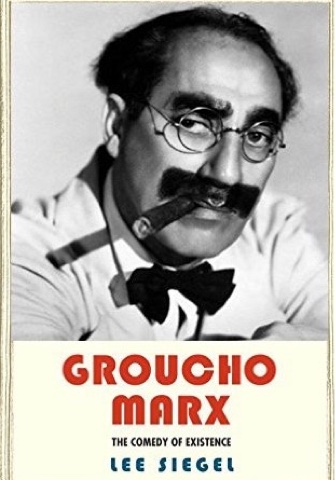
1.  Grouch Marx. The Comedy of Existence by Lee Siegel

2.  The Secret Lives of Somerset Maugham by Selina Hastings. Very rate work

3.  Rosamond Lehmann A Life by Selina Hastings  also a first rate biography

4.  Our Crowd The Great Jewish Families of New York by Stephen Birmingham. 


Novels I read in February 


1.  Human Acts by Han Kang. My first venture into Korean Modernism

2.  The Vegetarian by Han Kang.  A very powerful work

3.   Journey by Moonlight by Artal Szerb. His master work, a classic of Hungarian literature

4.  Dusty Answers by Rosamond Lehmann  her first novel

5.  An Invitation to the Waltz. By Rosamond Lehmann a pure delight

6.  My Name is Lucy Barton by Elizabeth Strout.  not bad

7.  Kathleen's Wish by Linda Lappin. Great work on the final years of Katherine Mansfield

8.  The Country of the Pointed Firs by Sarah Jewett. A regional class, set in Maine. For sure worth reading

9.  The Memories of Barry Lyndon by William Thackarey  first read his Vanity Fair

10.  Memoirs of an Anti-Semite by Gregor Von Rezzori. Reread 

11.  La Place de Létoile by Patrick Modiano - part of The Occupation Trilogy 

I offer my great thanks to Max u for the Amazon gift cards.


Wednesday, February 24, 2016

Memoirs of an Anti-Semite by Gregor Von Rezzori (1981) second reading


I first read Memoirs of an Anti-Semite by Gregor Von Rezzori in November of 2013.  I just finished rereading it yesterday.  I will reread it at least once more.  I do not have a great urge to add what I said in my first post on it.


I would add now that we can see the narrator age, see his culture increase, his worldly knowledge.  

There is a great depth in this work.  Far to much to talk about in a blog post. 


Mel u

Tuesday, February 23, 2016

Groucho Marx The Comedy of Existence by Lee Siegel (2016, 176 pages)

“I  would never join a club that would have a man like me as a member". Groucho Marx


Groucho Marx The Comedy of Existence by Lee Siegel is part of the Yale University Press Jewish Biographies series. It is not a standard biography but an attempt to place the humour in the movies of the Marx Brothers in the context of Jewish history, humour and culture.,A lot of time is spent on the New York City upbringing of Groucho and his brothers.  

This is book is very much an in depth cultural examination of great films like A Night at the Opera, Duck Soup, Animal Crackers, Horse Feathers, A Day at the Races, and Coconuts.  Siegel treats Groucho, the central figure in all the movies, as flouting convention and respectability, maybe attacking the Goy society that he knew looked down on Jewish actors and comedians.  


A lot of space is devoted to Groucho's attitude toward women.  You can see some of this in a scene where the brothers are getting treatments  at a fancy salon.  Notice the very handsome very blond totally Goy man in the center.  He and Groucho were sort of partners, the blond  representing conventional society and Groucho, Harpo, and Gummo the outsiders.  The boys are for sure hoping to cop a few free feels!


Siegel talks a good bit about Jewish homour and its self deprecating nature.  This humor was often partially misogyistic, with a wife  seen as the millstone around your neck.  In my reading of Yiddish literature this seems a cogent analysis.  


Groucho Marx The Comedy of Existence increased my understanding and appreciation of their movies.  I hope they are shown on cable here soon.  Siegel helps us understand their role in Jewish culture. I loved the description of the relationship of Groucho and T. S. Eliot.

The book is repetious.  It seems like it might have been based on a college class where each lecture repeated the main points.  At times I wondered how the brothers would react to a heavy intellectual collegiate treatment of their films.  I visualized Harpo eyeballing the crowd for nubile coeds, Groucho dragging the professor into nonsensical arguments.  Siegel also assumes Groucho controlled fully tne content of the movies, discounting directors and producers. 

I was given a review copy of this book.  I recommend it to those very into the Marx brothers who want to do more than just enjoy their crazy movies.  It increased my understanding of the nature of New York City theater and Jewish preforming arts. 

Lee Siegel, author of five books and the recipient of a National Magazine Award, writes about culture and politics for the New York Times and the Wall Street Journal, among many other publications.

Mel u

Sunday, February 21, 2016

"Domestic Peace" a short story by Honore de Balzac (1839, a component of The Human Comedy)


My Comedie Humaine read through project is nearing close and has slown down.  I have read all of most famous works.  Balzac wrote very fast at a speed powered by fifty cups of coffee a day, legend has it.  A good bit of his shorter works are kind of formula stories about the sexual and romantic antics of the wealthy.  "Domestic Peace" is set in 1809, at a fancy dress ball at which Napolean and Josephine are expected.  It is a place where everyone wants to be at their most glamourus.  In one very interesting segment we learn how the high death rates of the young aristocrats in the French army has stimulated the sexual appetites of women.  Interesting to me, this was the precise thing Elizabeth Bowen said about the Blitz.

There is a mysterious woman at the ball who has refused offers to dance.  One man bets his friend he can get her to dance with him.   Carried through the story is the idea of live at first sight and immediate commitment to marriage we find in other works of Balzac and the period generally.  A quarrel between the mysterious woman and her husband and a deception revealed close out the story.

There are the usual long descriptions  of people and clothing.   The atmosphere of the party is well done.  

"Domestic Peace" is a decent story.  

Mel u


Umberto Eco. 1932 to 2016


Mel u

Harper Lee. 1927 to 2016


Featured Post

Imperial Reckoning: The Untold Story of Britain’s Gulag in Kenya by Caroline Elkins - 2005 - 701 Pages

  Imperial Reckoning:     The Untold Story of Britain’s Gulag in Kenya by Caroline Elkins - 2005 - 701 Pages 2006 Pulitzer Prize Winner From...