Showing posts with label Ernst lubitsch. Show all posts

Tuesday, December 10, 2024

The Shop Around The Corner - !940 - Directed by Ernst Lubitsch- Starring Margaret Sullivan and Jimmy Stewart


The Shop Around The Corner - !940 - Directed by Ernst Lubitsch- Starring Margaret Sullivan and Jimmy Stewart 
 

Ernst Lubitsch 


Born: January 29, 1892, Berlin, Germany - produces 65 silent films before moving to America


1922 Moves to Hollywood- Warner Pictures Signed him to a three year six picture contract


Died: November 30, 1947, Los Angeles, California, United States

Lubitsch directed two of my favourite movies, Ninotchka and To Be or Not to Be

Alfred Kralik, played by Jimmy Stewart,is the top salesman at a leathergoods shop in Budapest owned by the high-strung Mr. Hugo Matuschek. Kralik's coworkers at Matuschek and Company include his friend, Pirovitch, a kindly family man; Ferencz Vadas, a two-faced womanizer; saleswoman Ilona Novotny; clerk Flora Kaczek; and Pepi Katona, an ambitious, precocious delivery boy. One morning, Kralik reveals to Pirovitch that he's been corresponding anonymously with an intelligent and cultured woman whose ad he came across in the newspaper.

Kralik is Mr. Matuschek's oldest and most trusted employee, but lately there has been tension between the two. They get into an argument over Mr. Matuschek's idea to sell a cigarette box that plays "Ochi Chërnye" when opened. After their exchange, Klara Novak, played by Margaret Sullivan,enters the gift shop looking for a job. Kralik tells her there are no openings, but when she is able to sell one of the cigarette boxes (as a candy box), Mr. Matuschek hires her. However, she and Kralik do not get along.

Mr. Matuschek begins to suspect his wife is having an affair as she stays out late and requests money from him.

As Christmas approaches, Kralik is preparing to meet his mystery correspondent for a dinner date. The meeting is stalled when Mr. Matuschek demands that everyone stay after work to decorate the shop. Later Kralik is called into Mr. Matuschek's office and is fired. No one in the shop understands Mr. Matuschek's actions are related to his suspicions that Kralik is having an affair with his wife. Later, Mr. Matuschek meets with a private investigator who informs him that his wife is having an affair with one of his employees—Ferencz Vadas. Pepi returns to the shop just in time to prevent Mr. Matuschek from committing suicide.

Meanwhile, Kralik arrives at the Cafe Nizza, where he discovers that his mystery woman is Novak. Despite his disappointment, Kralik goes in and talks with her, pretending he is there to meet Pirovitch. In his mind, Kralik tries to reconcile the cultured woman of his letters with his annoying coworker—secretly hoping that things might work out with her. Concerned that Kralik's presence will spoil her first meeting with her "far superior" mystery correspondent, she calls Kralik a "little insignificant clerk" and asks him to leave.

Later that night, Kralik goes to the hospital to visit Mr. Matuschek, who offers him a job as manager of Matuschek and Company.

 Grateful to Pepi for saving his life, Mr. Matuschek promotes him to clerk. The next day, Novak calls in sick after her mystery man failed to show. That night, Kralik visits her at her apartment. During his visit, she receives a letter from her correspondent and reads it in front of Kralik (who wrote the letter).

Two weeks later, on Christmas Eve, Matuschek and Company achieves record sales. Kralik and Miss Novak, alone in the shop, talk about their planned dates for the evening and Miss Novak reveals that she had a crush on Kralik when they first met. After pretending to have met Novak's mystery man, Kralik puts a red carnation in his lapel and reveals to her that he is her mystery correspondent and they kiss.

The Shop Around The Corner, set in the 1930s, is a charming film. The characters are all very well developed.


Thursday, December 5, 2024

To Be or Not to Be. DIrected by Ernst Lubitsch - Starring Carole Bard and Jack Benny - 1942


 To Be or Not to Be. DIrected by Ernst Lubitsch - Starring Carole Bard and Jack Benny - 1942 - set in Warsaw in 1939 with German invasion imminent has strong comedic elements, great lines but it is not the laugh a minute film that To Be or Not to Be, directed by Mel Brooks and following the plot of Lubitsch's earlier version is.


2002, the American Film Institute selected To Be or Not to Be as one of the 50 funniest American movies of all time. In March of 1942, when the film was initially released, most critics weren't laughing. A movie lampooning Adolf Hitler may have been acceptable a few years prior (see, for example, Charlie Chaplin's The Great Dictator [1940], though even then Chaplin began to regret his decision after learning more of the Nazis' "homicidal insanity"). But by 1942, Pearl Harbor had been attacked, America had entered World War II, and, to make matters even more dour, the star of To Be or Not to Be, the radiant Carole Lombard, had died in a plane crash less than two months before the premiere.

All told, those who saw To Be or Not to Be had their reasons not to be amused.

Now, however, with the benefit of time's remedial passing and decades worth of hindsight, Ernst Lubitsch's classic stands as an entertaining, surprisingly audacious, and powerfully poignant comic gem. One of the great filmmaker's final features (he would pass away just five years later), it is today most shocking not so much for the comedy itself, but rather the abrupt yet effortless shifts in tone, from screwball hysterics to genuinely austere observations.


Sunday, December 24, 2023

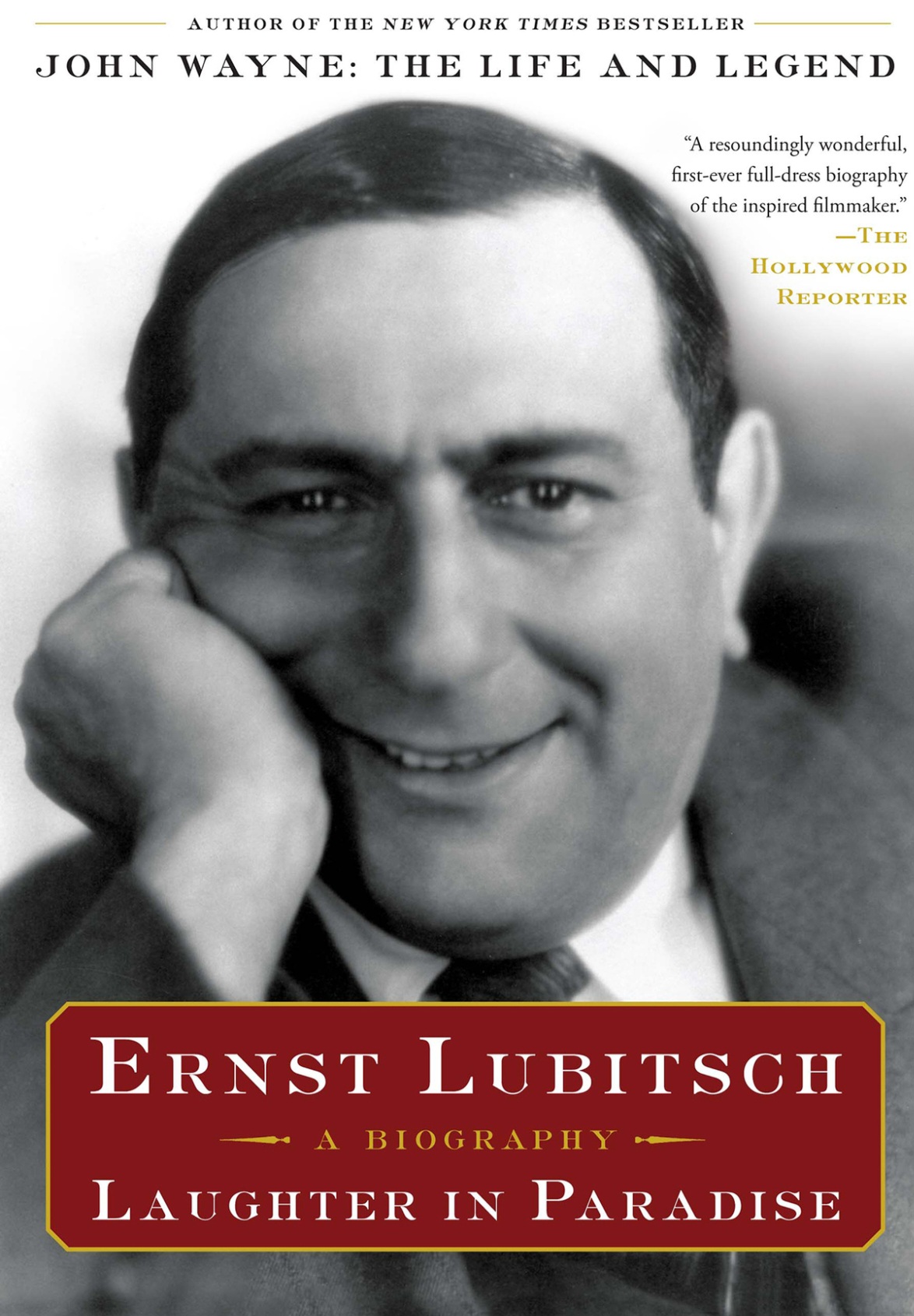
Ernst Lubitsch 'A Biography Laughter in Paradise Scott Eyman- 2015- 662 Pages


Ernst Lubitsch : A Biography Trouble in Paradise by Scott Eyman - 2015 is
The only full-length biography of legendary film director Ernst Lubitsch, the director of such Hollywood classics as Trouble in Paradise, Ninotchka, and The Shop Around the Corner.


 Ernst Lubitsch 


Born: January 29, 1892, Berlin, Germany - produces 65 silent films before moving to America

1922 Moves to Hollywood- Warner Pictures Signed him to a three year six picture contract

Died: November 30, 1947, Los Angeles, California, United States

Lubitsch directed two of my favourite movies, Ninotchka and To Be or Not to Be.


"Born in Berlin and transported to Hollywood in the 1920s with the help of Mary Pickford, Lubitsch brought with him a level of sophistication and subtlety previously unknown to American movie audiences. He was quickly established as a director of unique quality and distinction. He captivated audiences with his unique “touch,” creating a world of fantasy in which men are tall and handsome (unlike Lubitsch himself) and humorously adept at getting women into bed, and where all the women are beautiful and charming and capable of giving as well as receiving love. He revived the flagging career of Marlene Dietrich and, in Ninotchka, created Greta Garbo’s most successful film. When movie buffs speak of “the Lubitsch touch,” they refer to a sense of style and taste, humor and humanity that defined the films of one of Hollywood’s all-time great directors. In the history of the medium, no one has ever quite equaled his unique talent."  From the publisher 

My bottom line, if you love the movies of Lubitsch you will be very grateful for the comprehensive insightful biography that Scotf Eyman has written.

Scott Eyman takes readers behind the scenes of such classic films as Trouble in Paradise (1932), The Merry Widow (1934), Bluebeard's Eighth Wife (1938), Ninotchka (1939), The Shop around the Corner (1940), To Be or Not to Be (1942), and Heaven Can Wait (1943), which together constitute one of the most important and influential bodies of work in Hollywood. Eyman examines both the films Lubitsch crafted and the life he lived―his great successes and his overwhelming anxieties―to create an indelible portrait of Hollywood's Golden Age and one of its most respected artists.

Eyman begins with Lubitsch's grandparents.  He details his education and his dislike of working in his father's clothing business. The family were not extremely observing of Jewish orthodoxy but they were proud of their heritage and aware of the way others felt about Jews.

Eyman explains a lot about the German movie industry and then the flight of many to Hollywood.  Once in Hollywood Lubitsch begins to earn significantly more than in Germany.  Some of his films were commercial successes others were flops.  I learned a lot about the business side of Hollywood.

Eyman talks about the numerous romantic relationships of Lubitsch with actresses.  He was a central figure in the Los Angeles area European film community.  He was a loyal friend and inspired this in others.

I highly reccomend this book.

"Scott Eyman was formerly the literary critic at The Palm Beach Post and is the author or coauthor of sixteen books, including the bestseller John Wayne and Pieces of My Heart and You Must Remember This with actor Robert Wagner. Eyman also writes book reviews for The Wall Street Journal, and has written for The New York Times, The Washington Post, and the Chicago Tribune. He and his wife, Lynn, live in West Palm Beach."
From his publisher 

Mel Ulm 


Thursday, December 7, 2023

The Marriage Circle - A 1924 Silent Film Directed by Ernst Lubitsch- 1 hour 34 minutes


Available on YouTube 


Ernst Lubitsch 


Born: January 29, 1892, Berlin, Germany - produces 65 silent films before moving to America


1922 Moves to Hollywood- Warner Pictures Signed him to a three year six picture contract


Died: November 30, 1947, Los Angeles, California, United States


Lubitsch directed two of my favourite movies, Ninotchka and To Be or Not to Be


The Marriage Circle stars Monte Blue and Florence Vidor as a married couple whose lives are thrown into disarray when the wife's best friend begins to flirt with the husband. The film is also notable for its use of innuendo and double entendre, which Lubitsch would become known for in later films.


The Marriage Circle was a critical and commercial success, and it helped to launch Lubitsch's career in Hollywood. It is now considered to be a classic of silent cinema.


Here are some of the things that make The Marriage Circle (1924) so special:


Lubitsch's direction: Lubitsch was a master of visual storytelling, and he uses his camera to great effect in The Marriage Circle. He is particularly adept at using suggestion and innuendo, and he often leaves things to the viewer's imagination.


The performances: The film features a number of strong performances, including Monte Blue, Florence Vidor, and Adolphe Menjou. Vidor is particularly memorable as the wife who is torn between her husband and her best friend.


The humor: The Marriage Circle is a very funny film, but the humor is often subtle and sophisticated. Lubitsch is a master of timing and delivery, and he gets the most out of his actors.


The romance: Despite the film's lighthearted tone, there is also a genuine sense of romance between the two leads. Lubitsch is able to capture the chemistry between them, and he makes the viewer believe that they are truly in love.


Films by German directors are an important part of post World War One German Culture, from the groundbreaking silent classics of the Weimar Republic to the movies of Leni Reisenthal in celebration of Nazi rule, beloved by Goebels, to modern Oscar winners, I am pleased to see German Literature Month XIII now welcomes posts on Films by German Directors


This is a post for German Literature Month XIII 2023 November 1 to December 7


German Literature Month is hosted by Lizzy’s Literary Life


https://lizzysiddal2.wordpress.com/2023/09/22/announcing-german-literature-month-xiii/


Tuesday, December 5, 2023

Sumurun (One Arabian Night) - A 1920 German Silent Movie Directed by Ernst Lubitsch- 1 Hour 42 Minutes- starring Pola Negri


 Available on YouTube 

Ernst lubitsch 


Born: January 29, 1892, Berlin, Germany - produces 65 silent films before moving to America

1922 Moves to Hollywood- Warner Pictures Signed him to a three year six picture contract

Died: November 30, 1947, Los Angeles, California, United States

Lubitsch directed two of my favourite movies, Ninotchka and To Be or Not to Be.

"Only Negri—very beautiful—and the majestic Paul Wegener, with his riveting Tartar features, manage to make any impression at all. As with the fling with Egyptiania represented by The Eyes of the Mummy Ma, an Arabian Nights setting is simply not Lubitsch material. Except for a few moments—eunuchs sitting in a geometrically perfect row formation—the film is bereft of the director’s typical playfulness; at this still-developing stage of his career, he lacks the flair needed to integrate a dramatic narrative with such a frankly fanciful, fairy-tale environment.' From Ernst Lubitsch Laughter in Paradise by Scott Eyman 

I imagine Edward Said would find Sumurun an example of "orientalism".

Sumurun is a lavish and exotic tale of love, betrayal, and revenge set in the Arabian desert.

Sumurun tells the story of a beautiful slave girl who falls in love with a cloth merchant. However, the jealous hunchback Yeggar (played by Lubitsch himself) also desires her and makes things difficult for the couple.


The film is based on a pantomime by Friedrich Freksa and was highly praised by critics in Germany. It was described as a "cinematic journey into a universe of emotions and passions of great intensity and utter perfection, with a remarkable Ernst Lubitsch in one of the main roles."


Monday, December 4, 2023

Lady Windermere's Fan - A 1925 Silent Film Directed by Ernst Lubitsch- 1 Hour 36 minutes- based on Oscar Wilde's 1892 Play


 Lady Windermere's Fan - A 1925 Silent Film Directed by Ernst Lubitsch- 1 Hour 36 minutes- based on Oscar Wilde's 1892 Play

Ernst lubitsch 

Born: January 29, 1892, Berlin, Germany - produces 65 silent films before moving to America

1922 Moves to Hollywood- Warner Pictures Signed him to a three year six picture contract

Died: November 30, 1947, Los Angeles, California, United States

Lubitsch directed two of my favourite movies, Ninotchka and To Be or Not to Be.

The film tells the story of Lady Windermere (McAvoy), a young woman who suspects her husband, Lord Windermere (Bert Lytell), of having an affair with the notorious Mrs. Erlynne (Rich). When Mrs. Erlynne arrives in London, Lady Windermere becomes convinced that her suspicions are true and decides to leave her husband. However, Mrs. Erlynne reveals that she is actually Lady Windermere's mother, and that she has returned to protect her daughter from making the same mistakes she did.

Lubitsch's film is a masterfully crafted adaptation of Wilde's play. He captures the wit and social satire of the original work, while also adding his own touch of visual flair. The film's silent format allows Lubitsch to use expressive gestures and close-ups to great effect, and his use of light and shadow is particularly striking.

The film was a major critical and commercial success. It was praised for its direction, acting, and technical achievements. It was also a box office hit, grossing over $1 million worldwide.


Lubitsch's film is a masterfully crafted adaptation of Wilde's play. He captures the wit and social satire of the original work, while also adding his own touch of visual flair. The film's silent format allows Lubitsch to use expressive gestures and close-ups to great effect, and his use of light and shadow is particularly striking.

Films by German directors are an important part of post World War One German Culture, from the groundbreaking silent classics of the Weimar Republic to the movies of Leni Reisenthal in celebration of Nazi rule, beloved by Goebels, to modern Oscar winners, I am pleased to see German Literature Month XIII now welcomes posts on Films by German Directors


This is a post for German Literature Month XIII 2023 November 1 to December 7


German Literature Month is hosted by Lizzy’s Literary Life


https://lizzysiddal2.wordpress.com/2023/09/22/announcing-german-literature-month-xiii/


Sunday, December 3, 2023

Die Augen der Mumie Ma (English: The Eyes of the Mummy or The Eyes of the Mummy Ma) is a 1918 German silent film directed by Ernst Lubitsch. The film stars Pola Negri as Ma, Emil Jannings as Radu, and Harry Liedtke as Wendland


 Available on YouTube 


Die Augen der Mumie Ma (English: The Eyes of the Mummy or The Eyes of the Mummy Ma) is a 1918 German silent film directed by Ernst Lubitsch. The film stars Pola Negri as Ma, Emil Jannings as Radu, and Harry Liedtke as Wendland

Run Time 58 Minutes 


Ernst Lubitsch 

Born: January 29, 1892, Berlin, Germany - produces 65 silent films before moving to America


1922 Moves to Hollywood- Warner Pictures Signed him to a three year six picture contract


Died: November 30, 1947, Los Angeles, California, United States


Lubitsch directed two of my favourite movies, Ninotchka and To Be or Not to Be.

I am currently reading a very informative biography,  Ernst Lubitsch : Laughter in Paradise by Scott Eyman 


Here is his assessment of today's movie:


"The Eyes of the Mummy Ma is Lubitsch’s stab at the Far Eastern exotica that would pay rich dividends for Fritz Lang and Joe May, but it lacks their hysterical panache; Ernst plays the silly plot for romance rather than thrills. There are some good touches—a lantern that careens wildly during a fight, fitfully illuminating the struggle; a subtle tracking shot as Emil Jannings exerts his hypnotic power over Pola Negri—but there are just as many odd absurdities: Negri awkwardly struggling to haul herself on to a horse, Harry Liedtke struggling to lift Negri and almost failing. Ernst’s staging and blocking lack the fluidity of the comedies that had been animated by his own vigorous sense of humor or the presence of Ossi Oswalda."

The film is about a young painter named Wendland (Liedtke) who travels to Egypt, where he is haunted by the ghost of a beautiful Egyptian princess named Ma (Negri). 


The film is a visually stunning and atmospheric work that is considered to be one of Lubitsch's best films. It is also one of the earliest and most influential horror films. The film's use of lighting, shadow, and camera angles is masterful, and the performances are all excellent. Negri is particularly good as Ma, and she is able to convey both the character's beauty and her sadness.


The film was a critical and commercial success upon its release. It was praised for its originality, its style, and its performances. The film has also been praised for its feminist themes. Ma is a strong and independent woman who is not afraid to stand up for herself. She is also a victim of male violence, and the film can be seen as a critique of patriarchal society.


Films by German directors are an important part of post World War One German Culture, from the groundbreaking silent classics of the Weimar Republic to the movies of Leni Reisenthal in celebration of Nazi rule, beloved by Goebels, to modern Oscar winners, I am pleased to see German Literature Month XIII now welcomes posts on Films by German Directors


This is a post for German Literature Month XIII 2023 November 1 to December 7


German Literature Month is hosted by Lizzy’s Literary Life


https://lizzysiddal2.wordpress.com/2023/09/22/announcing-german-literature-month-xiii/


Saturday, December 2, 2023

The Oyster Princess (Die Austernprinzessin) is a 1919 German silent comedy film directed by Ernst Lubitsch and starring Victor Janson, Ossi Oswalda and Harry Liedtke. 58 minutes


Ernst lubitsch 

Born: January 29, 1892, Berlin, Germany - produces 65 silent films before moving to America

1922 Moves to Hollywood- Warner Pictures Signed him to a three year six picture contract

Died: November 30, 1947, Los Angeles, California, United States

Lubitsch directed two of my favourite movies, Ninotchka and To Be or Not to Be.

The film tells the story of Ossi Quaker, the spoiled daughter of an American oyster king, who dreams of marrying a real-life prince. Her father, eager to please her, arranges for her to meet Prince Nucki, an impoverished German nobleman. However, Nucki is wary of Ossi's wealth and sends his friend Josef, a commoner, to pose as the prince in order to assess the situation.

Josef, attracted to Ossi's beauty and wealth, falls in love with her and pretends to be the prince. However, his charade is soon exposed when Ossi's father discovers that Josef is not a real prince. Despite this, Ossi and Josef declare their love for each other, and the film ends with them happily married.

The Oyster Princess is a satirical comedy that pokes fun at the pretensions of the wealthy and the foolishness of social climbing. Lubitsch's direction is deft and witty, and the film is full of clever sight gags and sparkling dialogue. Oswalda is delightful as the spoiled Ossi, and Liedtke and Falkenstein are equally good as the two.

Lubitsch also emulates Griffith in the unfortunate custom of using white actors in blackface.

Films by German directors are an important part of post World War One German Culture, from the groundbreaking silent classics of the Weimar Republic to the movies of Leni Reisenthal in celebration of Nazi rule, beloved by Goebels, to modern Oscar winners, I am pleased to see German Literature Month XIII now welcomes posts on Films by German Directors


This is a post for German Literature Month XIII 2023 November 1 to December 7

German Literature Month is hosted by Lizzy’s Literary Life

https://lizzysiddal2.wordpress.com/2023/09/22/announcing-german-literature-month-xiii/


Thursday, November 30, 2023

Madame DuBarry is a 1919 German silent film on the life of Madame Du Barry. It was directed by Ernst Lubitsch, written by Norbert Falk and Hanns Kräly with the title role taken by Pola Negri and Louis XV played by Emil Jannings. Its alternative title for United States distribution was Passion.


 Available on YouTube 


Madame DuBarry is a 1919 German silent film on the life of Madame Du Barry. It was directed by Ernst Lubitsch, written by Norbert Falk and Hanns Kräly with the title role taken by Pola Negri and Louis XV played by Emil Jannings. Its alternative title for United States distribution was Passion.


Ernst Lubitsch 


Born: January 29, 1892, Berlin, Germany - produces 65 silent films before moving to America

1922 Moves to Hollywood- Warner Pictures Signed him to a three year six picture contract

Died: November 30, 1947, Los Angeles, California, United States

Lubitsch directed two of my favourite movies, Ninotchka and To Be or Not to Be.


I am currently reading Ernst Lubitsch- A Biography: Laughter in Paradise by Scott Eyman. I learned of the close artistic relationship between Pola Negri and Ernst Lubitsch from this marvelous book.

"A new addition to the Lubitsch ménage was Pola Negri, who would become his primary object of female contemplation for the next four years. Aggressive where Ossi Oswalda was passive, ferociously sexual where Oswalda was girlish, Negri’s mere presence changed the chemistry of Ernst’s films, and of his surroundings. A naturally imperious personality, born in Poland sometime between 1899 (her date) and 1894 (the likely date), Negri would become virtually the only person who ever referred to Lubitsch as “Ernie.”...I believe she was one of the most vital persons I have ever known,” he would say of her in 1938, “combining those two most important requisites—natural color (the art of being talked and written about) and a highly developed and sensitive artistic instinct.” From Ernst Lubitsch Laughter in Paradise 


Madame du Barry is a 1919 German silent historical film directed by Ernst Lubitsch and starring Pola Negri as Jeanne du Barry, the last mistress of King Louis XV of France. The film was a commercial success and helped to establish Lubitsch's reputation as a major filmmaker.


The film tells the story of Jeanne du Barry's rise from humble beginnings to become one of the most powerful women in France. She is a beautiful and ambitious woman who uses her charms to seduce King Louis XV and gain his favor. However, her rise to power is met with envy and resentment from the nobility, and she eventually falls victim to the French Revolution.


Lubitsch's direction is stylish and sophisticated, and he makes use of opulent sets and costumes to create a visually stunning film. Negri gives a captivating performance as Jeanne du Barry, and she is well-supported by a cast that includes Emil Jannings as King Louis XV.


Madame du Barry is a fascinating and entertaining film that is considered to be one of Lubitsch's best works. It is a must-see for fans of silent cinema and historical drama.

The film's title is a reference to the famous French perfume house, which was founded in 1775. The perfume was named after Madame du Barry, and it was said to be one of her favorites.


Madame du Barry is a lavishly produced film, with opulent sets and costumes. The film is also notable for its use of close-ups and its innovative camera techniques.


The film was released in Germany on September 18, 1919. It was released in the United States on November 24, 1920. 


Films by German directors are an important part of post World War One German Culture, from the groundbreaking silent classics of the Weimar Republic to the movies of Leni Reisenthal in celebration of Nazi rule, beloved by Goebels, to modern Oscar winners, I am pleased to see German Literature Month XIII now welcomes posts on Films by German Directors


This is a post for German Literature Month XIII 2023

German Literature Month is hosted by Lizzy’s Literary Life

https://lizzysiddal2.wordpress.com/2023/09/22/announcing-german-literature-month-xiii/


Wednesday, November 15, 2023

The Love Parade- A 1929 Musical Comedy Directed by Ernst Lubitsch- Starring Maurice Chevalier- 1 Hour 40 Minutes


 Available on YouTube 

Films by German directors are an important part of post World War One German Culture, from  the groundbreaking silent classics of the Weimar Republic to the movies of Leni Reisenthal in celebration of Nazi rule, beloved by Goebels, to modern Oscar winners, I am pleased to see German Literature Month XIII now welcomes posts on Films by German Directors


German Literature Month is hosted by Lizzy’s Literary Life

https://lizzysiddal2.wordpress.com/2023/09/22/announcing-german-literature-month-xiii/

Ernst lubitsch 

Born: January 29, 1892, Berlin, Germany - produces 65 silent films before moving to America

1922 Moves to Hollywood- Warner Pictures Signed him to a three year six picture contract

Died: November 30, 1947, Los Angeles, California, United 

Ernst lubitsch Directed two of my all time favourite films, Ninotchka and To Be or Not to Be 

The Love Parade is the eighth movie directed by Ernst Lubitsch so far featured on The Reading Life.  

The film was Lubitsch's first "talkie" and tells the story of a playboy count (Chevalier) who becomes prince consort to the queen of Sylvania (MacDonald). The count, who is used to being a free spirit, finds it difficult to adjust to his new role as a husband and figurehead. The queen, who is bored with her life, is attracted to the count's charm and independence.

The film is notable for its sophisticated humor, its lavish musical numbers, and its performances by Chevalier and MacDonald. It was a critical and commercial success, and it helped to establish MacDonald as a major star.

The Love Parade was nominated for five Academy Awards, including Best Picture, Best Director, and Best Actor for Chevalier. It won the award for Best Cinematography.

The film was a major influence on later musical comedies, and it is considered a classic early talkie.  The dialogue is delightful and the sets are marvelous 


Sunday, November 12, 2023

The Shop Around the Corner- 1940 - A Film Directed by Ernst Lubitsch- 1 Hour 35 minutes


 Available on Internetarchives.org 


Films by German directors are an important part of post World War One German Culture, from  the groundbreaking silent classics of the Weimar Republic to the movies of Leni Reisenthal in celebration of Nazi rule, beloved by Goebels, to modern Oscar winners, I am pleased to see German Literature Month XIII now welcomes posts on Films by German Directors


German Literature Month is hosted by Lizzy’s Literary Life

https://lizzysiddal2.wordpress.com/2023/09/22/announcing-german-literature-month-xiii/

 this year's German Literature Month is now inviting contributions on writers from Germany writing in another language. I am taking the liberty to expand this to directors born in Germany who produced movies in English, such as Ernst Lubitsch, Fritz Lang, and Billy Wilder .
Ernst Lubitsch 

"During the 1920s, German cinema showed the way for modernity, as the UFA (Universum Film AG) studio in Berlin-Tempelhof, the largest and most advanced in Europe, brought together the greatest talents, including the producer Erich Pommer, and the directors Fritz Lang and Ernst Lubitsch. The great Hollywood studios, which had offices in Berlin, sought to attract the most talented directors; for instance in 1922, Paramount brought Ernst Lubitsch (1892-1947), who became the uncontested master of the elegant American comedy, and the famous “Lubitsch touch,” but who also released a biting satire of Nazi Germany in To Be or Not to Be. Universal brought in William Wyler (Wilhelm Weiller) (1902-1981) that same year, Warner called on the Hungarian Michael Curtiz (1886-1962) in 1926, and Fox gave a contract to Wilhelm Murnau (1888-1931) in 1927.  Passed over by both Vienna and Berlin, Curtiz directed a series of masterpieces in America that have subsequently become classics, notably with the actor Errol Flynn, who starred in Captain Blood in 1935 and especially in The Adventures of Robin Hood in 1938. His most famous film is no doubt Casablanca (1942) with Ingrid Bergman and Humphrey Bogart. In 1930, Paramount hired Marlene Dietrich, whom Joseph von Sternberg (1894-1969) had encouraged to leave Germany after the success of The Blue Angel." From Sorbonne University Arts in Europe

Born: January 29, 1892, Berlin, Germany - produces 65 silent films before moving to America

1922 Moves to Hollywood- Warner Pictures Signed him to a three year six picture contract

Died: November 30, 1947, Los Angeles, California, United States

Lubitsch directed two of my favourite movies, Ninotchka and To Be or Not to.

This is the eighth film from Ernst Lubitsch I have posted upon.

The Shop Around the Corner is a 1940 American romantic comedy film directed by Ernst Lubitsch and starring James Stewart and Margaret Sullavan. It is based on the 1937 Hungarian play

The film tells the story of two employees at a leather goods shop in Budapest,in the 1930s,

who can barely stand each other, without realizing that they are falling in love through the post as each other's anonymous pen pals. 
When the shop's owner announces that he is hiring a new manager, both Alfred and Klara begin to suspect that the other is the applicant, and their rivalry intensifies.

The film begins with an introduction to the Matuschek and Company leathergoods shop in Budapest. The owner, Mr. Matuschek (Frank Morgan), is a kind and benevolent man who takes care of his employees. Among the employees are Alfred Kralik (James Stewart) and Klara Novak (Margaret Sullavan). Alfred is a head clerk who is known for his efficiency and attention to detail. Klara is a saleswoman who is known for her charm and wit.

The film is a classic example of the Lubitsch Touch, a style of comedy that is known for its wit, sophistication, and romanticism. Lubitsch uses a variety of techniques to create humor, including double entendre, slapstick, and visual gags. He also makes use of subtle symbolism and foreshadowing to develop the characters and plot.

The Little Shop Around the Corner is a timeless romantic comedy that has been praised by critics and audiences alike for its charm, humor, and heart. It is considered to be one of Lubitsch's finest films.


Saturday, November 11, 2023

Meyer from Berlin - A 1919 Silent Film Directed by and Starring Ernst Lubitsch- 57 Minutes

available on YouTube with English Subtitles -

Films by German directors are an essential part of post World War One German Culture. From the groundbreaking silent classics of the Weimar Republic to the movies of Leni Reisenthal in celebration of Nazi rule, beloved by Goebels, to modern Oscar winners, I am pleased to see German Literature Month XIII now welcomes posts on Films by German Directors

German Literature Month is hosted by Lizzy’s Literary Life

https://lizzysiddal2.wordpress.com/2023/09/22/announcing-german-literature-month-xiii/

In this year's German Literature Month is now inviting contributions on writers from Germany writing in another language. I am taking the liberty to expand this to directors born in Germany who produced movies in English, such as Ernst Lubitsch.

Ernst Lubitsch 

Born: January 29, 1892, Berlin, Germany - produces several silent films

1922 Moves to Hollywood- Warner Pictures Signed him to a three year six picture contract

Died: November 30, 1947, Los Angeles, California, United States

Lubitsch directed two of my favourite movies, Ninotchka and To Be or Not to.


Lubitsch both directed and starred in Meyer in Berlin (Meyer aus Berlin).


It was part of the Sally series of films featuring Lubitsch as a sharp young Berliner of Jewish heritage. It was Lubitsch's penultimate film as an actor, after 1920 he devoted himself entirely to screenwriting and directing.

The film tells the story of Sally Meyer, a young Berliner who persuades his doctor to convince his wife that he is ill so that he can take a holiday in the Austrian Alps in order to pursue women. However, he mistakenly travels to the Bavarian Alps instead, and ends up staying in the same hotel as a beautiful woman named Frau Kitty. Meyer and Kitty flirt with each other, but Meyer is careful not to go too far, as he does not want to get caught by his wife.


Meanwhile, Meyer's wife, Martha, becomes suspicious of his absence and hires a detective to follow him. The detective discovers that Meyer is in the Bavarian Alps, and Martha travels there to confront him. However, Meyer is able to convince her that he is innocent, and the two of them reconcile.


Meyer from Berlin is a classic example of Lubitsch's early silent comedies. It is a witty and satirical film that explores the themes of marriage, infidelity, and social class. Lubitsch's direction is sharp and sophisticated, and the performances are excellent, especially from Lubitsch himself as Meyer.


The film is also notable for its beautiful cinematography and its use of location shooting. The Alps provide a stunning backdrop for the story.

Meyer from Berlin was a critical and commercial success upon its release, and it helped to establish Lubitsch as one of the leading filmmakers of his generation. The film is still considered to be one of the best silent comedies ever made.


Lubitsch's silent films are known for their sophistication, wit, and visual elegance. He was a master of visual storytelling, and his films are full of clever camerawork, editing, and mise-en-scène. His silent films also feature some of the greatest stars of the era, including Pola Negri, Emil Jannings, and Ossi Oswalda. I hope to post upon a few more of the silent films he made before he left Germany 


"Meyer, aka Sally, aka Pinkus, has become a complex comic character, something of a cross between Woody Allen (the utter helplessness in any environment but concrete) and Groucho Marx (the sexual aggressiveness, the insulting one-liners). Upbeat, effervescent, for all of his efforts at fomenting extramarital episodes, Meyer remains adamantly unconcerned if his passes don’t get him anywhere. “This is the women’s compartment,” he’s told when he gets on the train." From Ernst Lubitsch- Laughter in Paradise by Scott Eyman


Thursday, November 9, 2023

A Royal Scandal- A 1945 Movie Produced by Ernst Lubitsch-directed by Otto Preminger 1 Hour 30 Minutes

 In that Golden Age of Hollywood that everybody’s always talking about there were only two directors whose names meant anything to the public and critics: Cecil B. DeMille and Ernst Lubitsch. —claudette colbert

 None of us thought we were making anything but entertainment for the moment. Only Ernst Lubitsch knew we were making art. - John Ford

Available on YouTube 

Films by German directors are an essential part of post World War One German Culture. From the groundbreaking silent classics of the Weimer Republic to the movies of Leni Reisenthal in celebration of Nazi rule, beloved by Goebels, to modern Oscar winners, I am pleased to see German Literature Month XIII now welcomes posts on Films by German Directors

German Literature Month is hosted by Lizzy’s Literary Life

https://lizzysiddal2.wordpress.com/2023/09/22/announcing-german-literature-month-xiii/

In this year's German Literature Month is now inviting contributions on writers from Germany writing in another language. I am taking the liberty to expand this to directors born in Germany who produced movies in English, such as Ernst Lubitsch.

Ernst Lubitsch 

Born: January 29, 1892, Berlin, Germany - produces several silent films

1922 Moves to Hollywood- Warner Pictures Signed him to a three year six picture contract

Died: November 30, 1947, Los Angeles, California, United States

Lubitsch directed two of my favourite movies, Ninotchka and To Be or Not to Be.

A Royal Scandal is the six film by Ernst Lubitsch so far featured on The Reading Life.  

In August of 1944 Lubitsch had serious health issues, his doctors did not want him taking on the stress of directing a movie.  He was then under contract to Fox Studios who made an arrangement in which Otto Preminger would direct A Royal Scandal and Lubitsch would produce it with a final cut authority.

With Lubitsch peering anxiously over his shoulder, Preminger managed to restrain whatever “creative” impulses he might have had by taking Lubitsch’s completed script and shooting it more or less verbatim. “Whatever changes I made were very small,” he said nearly thirty years later.

A Royal Scandal is a fictionalized account of the life of Russian Empress Catherine the Great, starring Tallulah Bankhead in the title role.
The film chronicles the tumultuous reign of Catherine the Great of Russia, focusing on her romantic entanglements and political maneuverings. Tallulah Bankhead delivers a captivating performance as Catherine, portraying her with a blend of intelligence, wit, and sensuality.

The story unfolds in the opulent surroundings of the Russian court, where intrigue and power struggles are the order of the day. Catherine's passionate affair with the dashing young officer Alexei Chernoff (William Eythe) ignites a political firestorm, as Chancellor Nicolai Ilyitch (Charles Coburn) and other court figures plot to exploit the situation for their own gain.

Amidst the political machinations, Countess Anna Jaschikoff (Anne Baxter) navigates the complexities of love and loyalty, torn between her devotion to Catherine and her heartbreak over the stolen affections of her fiancée.

A Royal Scandal is a witty and engaging historical costume drama, offering a glimpse into the life of a remarkable woman who dared to defy the norms of her time. The film's sharp dialogue, captivating performances, and lavish production values make it a timeless cinematic classic.

I found the repartee delightful, all written by Lubitsch, the acting marvelous (you may find an actor from Ninotchka in an important part).
Mel u


Wednesday, October 11, 2023

Cluny Brown - A 1946 Movie Directed by Ernst Lubitsch- Starring Jennifer Jones and Charles Boyer- 1 hour 46 Minutes


 This is the sixth movie directed by Ernst Lubitsch upon which I have posted.


Ernst Lubitsch 

Born: January 29, 1892, Berlin, Germany

Died: November 30, 1947, Los Angeles, California, United States

My favourites are Ninotchka and To Be or Not to Be

Cluny Brown is a witty and sophisticated comedy that satirizes British high society and the class system. 

The film tells the story of Cluny Brown (Jones), a free-spirited young woman who dreams of a better life. She is sent by her plumber uncle to work as a parlor maid in the country home of Sir Henry Carmel (Reginald Owen) and his wife, Alice (Margaret Bannerman). While there, she meets Adam Belinski (Boyer), a Czech refugee staying as a houseguest. Cluny is immediately attracted to Adam, but she is also engaged to marry Jonathan Wilson (Richard Haydn), a stuffy chemist.

Cluny soon finds herself torn between her two suitors and her own desires. She is drawn to Adam's passion and his unconventional lifestyle, but she is also afraid of giving up the security of a marriage to Jonathan. In the end, Cluny must decide which path she wants to take in life.

Cluny Brown was a critical and commercial success upon its release, grossing over $3 million at the box office. It was nominated for two Academy Awards: Best Actress for Jones and Best Original Screenplay for Hoffenstein and Reinhardt.

Mel Ulm


Saturday, September 23, 2023

Heaven Can Wait- A 1943 Movie Directed by Ernst Lubitsch - Starring Gene Tierney and Don Aoache- Run Time 1 hour and 47 Minutes


 This is the six movie directed by Ernst Lubitsch upon which I have posted.


Available on YouTube


Ernst Lubitsch


Born: January 29, 1892, Berlin, Germany


Died: November 30, 1947, Los Angeles, California, United States


My favourites so far are Ninotchka and To Be or Not to Be


The screenplay was by Samson Raphaelson based on the play Birthday by Ladislaus Bus-Fekete. The music score was by Alfred Newman and the cinematography by Edward Cronjager.

The film tells the story of a playboy named Henry Van Cleve (Don Ameche) who dies and arrives at the entrance to Hell. The Devil (Laird Cregar) is not so sure that Henry deserves to go to Hell, so Henry recounts his life story, both good and bad.

Henry's story begins with his childhood as the spoiled only child of wealthy parents. He grows up to be a playboy, living a life of luxury and indulgence. However, he also has a good heart, and he is able to find love and happiness with his wife, Martha (Gene Tierney)
Henry's life is not without its flaws, however. He has a number of affairs, and he can be reckless and irresponsible. But even in his darkest moments, he always tries to do the right thing


Heaven Can Wait was a critical and commercial success upon its release. It was nominated for three Academy Awards, including Best Picture, Best Director, and Best Cinematography


Mel Ulm


Sunday, September 17, 2023

That Uncertain Feeling - A 1941 Film Directed by Ernst Lubitsch - Run Tims 1 hour and 41 Minutes


 That Uncertain Feeling - A 1941 Film Directed by Ernst Lubitsch

Ernst lubitsch 
Born: January 29, 1892, Berlin, Germany
Died: November 30, 1947, Los Angeles, California, United States

So far my two favourite films from Ernst Lubitsch are Ninotchka and To Be or Not to Be.


Today's film is about the bored wife of an insurance salesman who meets an eccentric pianist and seeks a divorce.

Jill Baker (Oberon) is a socialite who is married to Larry (Douglas), a successful insurance executive. Jill's life seems perfect, but she is secretly unhappy in her marriage. Larry is so focused on his work that he neglects Jill, and she feels like she is losing herself.

One day, Jill goes to see a psychoanalyst, Dr. Vengard (Alan Mowbray), for help with her hiccups. During her first visit, Jill realizes that her hiccups may be related to her unhappiness in her marriage. Upon her second visit, Jill meets a famous pianist, Alexander Sebastian (Meredith), and her doubts about her marriage are intensified when he starts courting her. There are complex emotional developments I will leave for first time viewers to enjoy as I did.

The film was a critical and commercial success upon its release. It was nominated for two Academy Awards: Best Actress for Oberon and Best Original Screenplay for Walter Reisch and Donald Ogden Stewart.

Mel Ulm

Wednesday, September 6, 2023

To Be or Not to Be -A 1942 Movie Directed by Ernst Lubitsch- Produced By Alexander Korda Starring Carole Lombard and Jack Benny - Run Time 1 hour and 38 Minutes


 Available on YouTube 

Ernst Lubitsch 

Born: January 29, 1892, Berlin, Germany

Died: November 30, 1947, Los Angeles, California, United States

So far this movie and  Ninotchka are my fa favourite works directed by Ernst Lubitsch 


The plot concerns a troupe of actors in Nazi-occupied Warsaw who use their abilities at disguise and acting to fool the occupying troops.

It was released one month after actress Carole Lombard was killed in an airplane crash.

The film was a critical and commercial success, and was nominated for an Academy Award for Best Music (Original Score). It is considered one of the greatest comedies of all time, and has been praised for its wit, satire, and Lubitsch's masterful direction. Mel Brooks remade the movie

The film opens with a scene of a mustachioed man walking alone in the streets of Warsaw. The man is a close resemblance to German Chancellor Adolf Hitler. This scene sets the tone for the film, which is a dark comedy about the Nazi occupation of Poland.

The main characters are Joseph Tura (Jack Benny) and Maria Tura (Carole Lombard), a husband-and-wife acting team. When the Nazis invade Poland, the Turas' theater is closed down. Joseph and Maria decide to use their acting skills to help the Polish resistance. They impersonate Nazi officers and spies, and they even stage a play about the Nazi occupation.

Here are some of the things that make To Be or Not to Be a great film:

  • The wit and satire: The film is full of witty dialogue and satire that skewers the Nazis and their ideology.
  • The performances: The cast is excellent, with Jack Benny and Carole Lombard giving two of their best performances.
  • The direction: Ernst Lubitsch is a master director, and he brings his unique style to To Be or Not to Be. The film is beautifully shot and directed, and it is full of memorable scenes
Mel Ulm


Saturday, September 2, 2023

Ninotchka- A 1939 Film directed by Ernst Lubitsch- Starring Greta Garbo and Melvin Douglas- run time one hour and fifty minutes


I love this movie so much.  My second favourite movie by Ernst Lubitsch is To Be or Not to Be.  

Ernst lubitsch 

Born: January 29, 1892, Berlin, Germany

Died: November 30, 1947, Los Angeles, California, United States


It was written by Billy Wilder, Charles Brackett, and Walter Reisch, based on a screen story by Melchior Lengyel. Ninotchka is Greta Garbo's first full comedy, and her penultimate film; she received her third and final Academy Award nomination for Best Actress.


The film tells the story of Ninotchka Yakushova (Garbo), a stern Soviet commissar who is sent to Paris to supervise the sale of jewels seized from Russian nobles. There, she meets the dashing Count Leon d'Algout (Douglas), a playboy who tries to seduce her. Despite her initial resistance, Ninotchka eventually succumbs to Leon's charms and begins to see the world in a new way.


Here are some of the things that make Ninotchka a special film:


The witty dialogue: Billy Wilder, Charles Brackett, and Walter Reisch wrote some of the most memorable lines in film history for Ninotchka. For example, when Ninotchka first arrives in Paris, she is asked if she likes the city. She replies, "I find it quite tolerable."

The stylish direction: Ernst Lubitsch was a master of romantic comedy, and he brought his full talents to bear on Ninotchka. The film is full of visual gags and moments of pure delight.

Greta Garbo's performance: Garbo was not known for her comedic skills, but she gives a charming and nuanced performance in Ninotchka. She perfectly captures the transformation of Ninotchka from a cold-hearted ideologue to a woman who is open to love and new experiences.


The scenes back in the Soviet Union, the meet up at the train station, the conversations of Ninotchka with the Russian  Countess are just marvelous.


Mel Ulm


Friday, August 4, 2023

That Lady in Ermine - A 1948 Movie Directed by Ernst Lubitsch- Starring Betty Grable, Caeser Romero, and Douglas Fairbanks, junior


That Lady in Ermine - A 1948 Movie Directed by Ernst Lubitsch- Starring Betty Grable, Cesar Romero and Douglas Fairbanks Junior


Run time one hour and twenty nine minutes 


Although Lubitsch received sole credit as director, he died after only eight days of filming, and the project was completed by Otto Preminger 

This is the fifth movie directed by Ernst Lubitsch upon which I have posted.

Ernst Lubitsch 

Born: January 29, 1892, Berlin, Germany

Died: November 30, 1947, Los Angeles, California, United States


The film is set in 1861 in the Principality of Bergamo, a fictional country in southeastern Europe. Countess Angelina (Grable) is about to be married to Baron Mario (Romero), when Hungarian hussars led by Colonel Teglash (Fairbanks, Jr.) invade the castle. Mario flees, leaving Angelina to fend for herself.


One of Angelina's ancestors, Francesca (also Grable), was forced to deal with a similar situation many years earlier. Her portrait hangs in the castle, and by night, Francesca leaves the confines of the portrait to help Angelina grapple with her growing feelings for the colonel.


The film's dual role for Betty Grable, as both Angelina and Francesca, was a challenge for the actress, but she was able to pull it off with great success.

The film's musical numbers are some of the best of Lubitsch's career, and they help to move the story along and add to the film's overall charm.

The film's setting in a fictional country in southeastern Europe gives it a sense of escapism and allows the filmmakers to create a world that is both familiar and exotic.

The court settings are well done, the men are gorgeous and Betty is always a cinematic delight.


This film, as are numerous others starring Betty Grable as well as works directed by Ernst Lubitsch are on YouTube 


Mel Ulm 


Featured Post

Imperial Reckoning: The Untold Story of Britain’s Gulag in Kenya by Caroline Elkins - 2005 - 701 Pages

  Imperial Reckoning:     The Untold Story of Britain’s Gulag in Kenya by Caroline Elkins - 2005 - 701 Pages 2006 Pulitzer Prize Winner From...