Showing posts with label I. L. Peretz. Show all posts

Friday, December 22, 2017

“Bontshe the Silent” - A Short Story by I. L. Peretz - 1894 - translated from Yiddish by Hillel Halkin


A Podcast of Bontshe the Silent by I. L. Peretz

Yivo Institute Article on I. L. Peretz


“Isaac Leib Peretz was arguably the most important figure in the development of modern Jewish culture—and until 1939 one would not have had to argue the claim at all. Peretz dominated Jewish literary life in Warsaw almost from the moment he settled there in 1890 until his death on the fifth day of Passover, April 3, 1915, his influence radiating outward from the Polish capital to the growing centers of Jewish settlement worldwide. The estimated hundred thousand people who accompanied his remains to the Warsaw cemetery included delegates and representatives of every sector of Jewish life, testimony to his inclusive appeal at a time of increasing political factionalism. When the Yiddish writers of America formed a new literary association the year after his death, they named it for Peretz.”.  Ruth Wisse, from her Introduction to The I. L. Peretz Reader, from Yale University Yiddish Library 

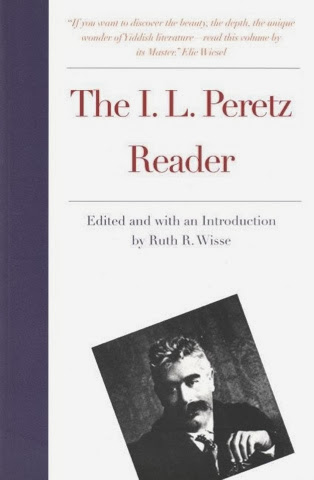
“Bontshe the Silent” (sometimes titled as “Bontshe Shvayg”) is the seventh story by I. L. Peretz (1859 to 1915, Poland) to be featured on The Reading Life.  All of the stories by him I have so far read are contained in The I. L. Peretz Reader, edited and introduced by Ruth Wisse.  (In the interest of full disclosure, Yale  University Press has given me many fine books, including this one.)

Bontshe lived a life of total obscurity, mattering to no one in life or death.  He suffered terribly, he was thrown out of his home by a drunken father and abusive stepmother at age 15.  He married a woman who cheated on him and left him with a son to raise.  As soon as the boy was able, he in turn tossed Bontshe into the streets.  

When he dies he is shocked when the most supreme angels trumpet his arrival and Father Abraham personally welcomes him to the afterlife.  He knows he will be tried to see if he is worthy of heaven.  The defending attorney (Peretz was an attorney and I suspect a very eloquent courtroom performer) recites all Bontshe suffered in silence.  When the prosecutor takes over, he can think of nothing bad to say about Bontshe.  Father Abraham tells him that on earth he may have had nothing but now all the riches of heaven are his, all he has to do is ask.  Bontshe says, almost afraid to speak, that he would like every morning to have a hot roll with butter.  As the story closes, everyone in court is laughing at Bontshe.  They cannot fathom the life that has lead him to ask for only this.

Mel u


Saturday, December 14, 2013

"The Magician" by I. L. Peretz - 1904. From The Yale Yiddish Library


"The Magician" is a story replicated in many cultures.  The story of the seemingly impoverished stranger with very unexpected seemingly magic powers who helps the poor.  As "The Magician" opens a magician has arrived in town and is putting on shows. He seems very impoverished, his clothes are threadbare and his shoes look decades old. In his shows he can seemingly pull things out of thin air and he can make rubles appear in the mud on his shoes.   Of course everyone asks why is he in rags if he can make rubles appear?  Who really is he?

It is near the Passover Holiday, a time of feasting. The central family in the story are going through very hard times, the wife is ashamed she cannot put on a meal.  The husband refuses to allow her to ask for help from neighbors.   It is the tradition on Passover that anyone in need can stop at a house and join the meal.   The mysterious magician asks to dine with them.  The husband invites him in to share what little food they have, telling not to expect much.  The magician tells them not to worry.


The husband is concerned this may be black magic so he goes to his Rabbi for counsel.  He is told that if the food has substance it is real.  It does and they enjoy the wonderful feast, knowing they have been blessed by a visit from the Prophet Elijah.   Elijah always came disguised as a pauper. 

"The Magician" is a very enjoyable story that also can help us learn traditional ways of a largely lost culture.

My thanks to Yale University Press for a very generous gift of books.  There is background information on Peretz in my prior posts on his work.  

Mel u


Wednesday, November 20, 2013

"What is the Soul" by I. L. Peretz (1890). The Reading Life Yale Digital Library Project


Thanks to a very generous gift from Yale University Press I have begun another permanent long term Reading Life Project, Yiddish Literature.  My prior posts have some back ground information on the culture from which Yiddish literature came.  I am also on the opening stages of another new long term project, The Literature of the Austro-Hungarian Empire and I feel these two projects should be mutually illuminating.   Both of these cultures were deeply into the reading life and essentially similar forces doomed them both.  (All old projects continue on.). The literature of these societies were produced by and large by deeply cultured men.  If there are any high status Yiddish female writers translated into English, please let me know.  

"What is the Soul" is a kind of coming of age story of a young student at a rabbinical school.  It reflects the deep reference those in this tradition had for scholars and learning.  The student, a young man, is preoccupied with concerns about the nature of the soul.  He asks his teachers if Goys have souls, if animals do, if it is corporeal and how it survives death.  He gets many different answers.  You can see in this story how the Yiddish community defined itself through a contrast with Christians (Goys) and to a lesser extent fully European Jews.  (In works by Viennese Jewish writers you will hear Jews calling others Jews "Yids" in derision.)  We see the student begin to realize his teachers may not know.  

"What is the Soul" is very much reading and gives us a look into a lost world. 

Isaac Leybush Peretz (1852–1915) is one of the most influential figures of modern Jewish culture. Born in Poland and dedicated to Yiddish culture, he recognized that Jews needed to adapt to their times while preserving their cultural heritage, and his captivating and beautiful writings explore the complexities inherent in the struggle between tradition and the desire for progress. This book, which presents a memoir, poem, travelogue, and twenty-six stories by Peretz, also provides a detailed essay about Peretz’s life by Ruth R. Wisse. This edition of the book includes as well Peretz’s great visionary drama A Night in the Old Marketplace, in a rhymed, performable translation by Hillel Halkin.

“If you want to discover the beauty, the depth, the unique wonder of Yiddish literature—read this volume by its Master.”—Elie Wiesel 
(From Yale University Press) 


Friday, November 8, 2013

"The Golem" by I. L. Peretz - 1893 - The Reading Life Yiddish Literature Project

In Jewish tradition, the golem is most widely known as an artificial creature created by magic, often to serve its creator. The word "golem" appears only once in the Bible (Psalms139:16). In Hebrew, "golem" stands for "shapeless mass." TheTalmud uses the word as "unformed" or "imperfect" and according to Talmudic legend, Adam is called "golem," meaning "body without a soul" (Sanhedrin 38b) for the first 12 hours of his existence. The golem appears in other places in the Talmud as well. 


"

"The Golum", a very brief work, is set in the Jewish Ghetto in Prague.  Once again the Christians of Prague are going on violent destructive attacks on the persons and property of people living in the Jewish section of Prague.  Similar to the last story by Peretz on which I posted, "The Pious Cat", "The Golem" is a fable like story designed to teach a moral lesson using traditional images. 

As the goys begin to kill more and more people, the most learned of Rabbis fashions a golem and instructs him to defend the Praque Ghetto.   It goes on a horrible killing spree.   Soon even those he is guarding begin to fear he will wipe out so many goys there will be none of them left to do work on the sabbath day. Just a simple story, maybe partially of wish fulfillment.  


Isaac Leybush Peretz (1852–1915) is one of the most influential figures of modern Jewish culture. Born in Poland and dedicated to Yiddish culture, he recognized that Jews needed to adapt to their times while preserving their cultural heritage, and his captivating and beautiful writings explore the complexities inherent in the struggle between tradition and the desire for progress. This book, which presents a memoir, poem, travelogue, and twenty-six stories by Peretz, also provides a detailed essay about Peretz’s life by Ruth R. Wisse. This edition of the book includes as well Peretz’s great visionary drama A Night in the Old Marketplace, in a rhymed, performable translation by Hillel Halkin.

“If you want to discover the beauty, the depth, the unique wonder of Yiddish literature—read this volume by its Master.”—Elie Wiesel 
(From Yale University Press) 


"The Pious Cat" by I. L Peretz 1893 The Reading Life Yiddish Literature Project


This is my second post on one of the central figures of the Yiddish literary tradition, I.L. Peretz. (There is background information on him and Yiddish literature in my prior post on him).  I admit I like short stories about cats so I decided to read next  his "The Pious Cat".  Great writer or not no one gets by with a bad cat story on The Reading Life.  

"The Pious Cat" is just a simple fable like story about a mischievous cat and a canary that conveys some interesting points about human nature.  The canary is kept in a cage.  The cat likes to kill and bring home birds.  Every time he does his people hit him.  They really hit him when he tries to open the cage for the canary.  He keeps trying to figure out what the people want.  As it closes I think Peretz is making a comment about the nature of governments.   

I will next read his "The Golem".

My thanks to Yale University for a very generous gift of books


Friday, November 1, 2013

"The Kabbalists" by I. l. Peretz 1891 The Reading Life Yale Yiddish Collection Project


Isaac Leybush Peretz (1852–1915) is one of the most influential figures of modern Jewish culture. Born in Poland and dedicated to Yiddish culture, he recognized that Jews needed to adapt to their times while preserving their cultural heritage, and his captivating and beautiful writings explore the complexities inherent in the struggle between tradition and the desire for progress. This book, which presents a memoir, poem, travelogue, and twenty-six stories by Peretz, also provides a detailed essay about Peretz’s life by Ruth R. Wisse. This edition of the book includes as well Peretz’s great visionary drama A Night in the Old Marketplace, in a rhymed, performable translation by Hillel Halkin.

“If you want to discover the beauty, the depth, the unique wonder of Yiddish literature—read this volume by its Master.”—Elie Wiesel 
(From Yale University Press) 

Reading Yiddish literature is motivating me to expand my historical and cultural knowledge into areas which I know little about.  There is significant, as I so far see it, controversy about basic facts among those who claim authority.  The story I read today by I. L. Peretz, "The Kabbalists" obligated me too seek out a basic understanding of what a Kabbalist  did.  The short answer is that he is a scholar of Jewish mystical philosophies which originated in the early Middle Ages and which were them selves based on interpretations of the Torrah and what were considered divine revelations.  The notion of secret Jewish teachings helped to open up a vast world to occultists and played into the hands of anti-Semites.  Secret teachings of the Kaballah were behind many cults like The Order of the Golden Dawn.   A Kabbalist would spend a life time studying old texts, looking for God in the pages of old books.   If ever there was a culture into the reading life, that of the Yiddish was it.  

"The Kabbalists" is set in a school, it used to have a lot of pupils but now there is only the elderly teacher and one pupil.  The community it drew it students from has fallen on hard times and people can no longer afford to send their sons to study.   The master and student are dressed in very old clothes and survive on small food donations.  The student refuses to quit as all his peers did, he had a deep faith that his master's teachings will lead him to unity with God.   The teacher was focused on discovering hidden meanings in the words of David.  He is attempting to listen to the music of a choir of Angels.  It is easy to wonder if this does not come from the Platonic notion of the music of the spheres, from medieval Neo Platonists doctrines.  The student cries out in death at the end of the story and the teacher says the Devine choir needed another singer.  The villagers all wish for such a glorious death.  


I will be reading and posting on many more Yiddish works.  In the interest of full disclosure, Yale university Press has made a very generous gift of books to me.

Please share your experience with Yiddish writers with us.


Featured Post

Imperial Reckoning: The Untold Story of Britain’s Gulag in Kenya by Caroline Elkins - 2005 - 701 Pages

  Imperial Reckoning:     The Untold Story of Britain’s Gulag in Kenya by Caroline Elkins - 2005 - 701 Pages 2006 Pulitzer Prize Winner From...