Showing posts with label Jewish History. Show all posts

Sunday, September 1, 2024

Refuge in Hell: How Berlin's Jewish Hospital Outlasted the Nazis by Daniel B. Silver - 2003


 Refuge in Hell: How Berlin's Jewish Hospital Outlasted the Nazis by Daniel B. Silver - 2003


This is essential reading for anyone with a serious interest in the Holocaust and the history of Jewish Life in Berlin.  Silver goes back to about 1350 when a restricted number of Jewish families were allowed to settle in Berkin, processing to periods when Jews were welcomed. By about 1940  over half of the economic productivity in Berkin was generated by the activity of Jews. (Silva goes into details on who was seen as a Jew by the Nazis and explains his own use of terminology.)  As German antisemitism grew worse some how a Jewish Hospital with almost all Jewish Doctors and staff survived, Some employees were saved by being married to Christians and for a while from being World War One Veterans.  They began to see family members deported to death camps.


The Germans actually sent Jewscto the hospital to be treated and once they recovered they sent them to death camps.  The hospital used to treat everyone.  If you could not pay you were welcomed.  Then they were told they could treat only Jews so they lost a large percentage of their paying customers.  Food rations were cut but still the hospital stayed open.


"Dan Silver, a lawyer and former general counsel to the CIA, tells the astonishing story of Berlin's Jewish Hospital during WWII. For decades before the Nazis seized power in Germany, the hospital had served Berlin's Jews as their principal medical resource. At the war's end, it was still functioning, delivering what medical care it could and sheltering a large percentage of the city's few remaining Jews. Silver asks how a Jewish institution, located in the capital city of a regime dedicated above all to obliterating the Jews, could possibly have survived. To answer this question, Silver has gathered the available documentary evidence and interviewed the handful of hospital staffers still alive. According to these sources, the institution's survival hinged on an amalgam of factors, including sheer, blind luck and bureaucratic infighting among Nazi organizations. As Silver explains, the Nazis' bizarre system for classifying persons of partly Jewish ancestry played a role as well, since some hospital personnel with mixed ancestry were not treated with the same implacable hostility as full Jews were. Silver acknowledges where gaps in the evidence make certainty impossible, as in assessing Dr. Walter Lustig, the hospital's chief during the war years. Lustig may have been a betrayer and collaborator, as some staffers think, or he may have manipulated the system as best he could to save at least some Jews from destruction. The balanced analysis of Dr. Lustig's record typifies the author's careful use of evidence throughout this absorbing book." From Amazon


Refuge in Hell: How Berlin's Jewish Hospital Outlasted the Nazis by Daniel B. Silver greatly expanded my knowledge of Holocaust and Jewish history.


Friday, May 24, 2024

Last Ships from Hamburg: Business, Rivalry, and the Race to Save Russia's Jews on the Eve of World War I by Steven Ujifusa - 2023 - 372 Pages


 Last Ships from Hamburg: Business, Rivalry, and the Race to Save Russia's Jews on the Eve of World War I by Steven Ujifusa - 2023 - 372 Pages


"Well-researched. . . . [A] meticulous investigation of turbulent days, as chronicled in The Last Ships from Hamburg, illuminates for the reader that once free of the fetters of European anti-Semitism, all things were possible.” — The Times of Israel

"Steven Ujifusa’s thoroughly researched and well-told story is a revelation. Intimate portraits of J.P. Morgan, Kaiser Wilhelm II, and several others who figured in the great transatlantic migration culminate in the startling story of its main character, Albert Ballin -- the little-known giant (though barely five feet tall) who was responsible for bringing more immigrants to the U.S. than any other person in the nation’s history." — Daniel Okrent, author of The Guarded Gate and Last Call

“Ujifusa’s metic­u­lous­ly researched and well-writ­ten work illus­trates the vast influ­ence these gen­er­a­tions of immi­grants had on Amer­i­can cul­ture and soci­ety.” — Jewish Book Council

“With impeccable research, masterful prose, and deep feeling, Steven Ujifusa tells the incredible story of one of the greatest human exoduses in history, of the 1.5 million Jews who escaped Czarist Russia, and the three people who helped make that possible. He gives readers a front-row seat along the way, to the boardrooms of German shipping companies, third-class hulls of ships crossing the Atlantic, to tenements on the Lower East Side. This is a page-turning history on a grand scale, with an intimate touch.” — Steven Pressfield, bestselling author of Gates of Fire and The Lion’s Gate

Last Ships from Hamburg: Business, Rivalry, and the Race to Save Russia's Jews on the Eve of World War I by Steven Ujifusa is a valuable addition to American, Jewish and Russian history, focusing on the immigration of Russian Jews to America, seen as the promised land. Most went in steerage class on ships that could take from 30 days to a week. Conditions were rough and for most the cost was high. Jewish aid societies played a big part and immigrants already in America helped their relatives.  They had to pass through Hamburg, in the 1870s the busiest port in the world, stopping in England then on to New York City. 

Ujifusa goes into lots of details on Russian, German, and American history, including periods of American anti- immigration attitudes.  Some wealthy Americans supported immigration as they needed workers for their factories while American workers feared immigrants would lower wages.

STEVEN UJIFUSA is the author of A Man and His Ship and Barons of the Sea. He received an AB in history from Harvard University and a master’s degree in historic preservation from the University of Pennsylvania and has given presentations across the country and on the high seas. He is the recipient of a MacDowell Colony Fellowship, the Washington Irving Medal for Literary Excellence from the Saint Nicholas Society of the City of New York, and the Athenaeum of Philadelphia’s Literary Award. He lives with his wife, a pediatric emergency room physician, and his two sons in Philadelphia.


Sunday, April 14, 2024

Stolen Words The Nazi Plunder of Jewish Books by Mark Glickman - 2016 - 344 Pages


 Stolen Words The Nazi Plunder of Jewish Books by Mark Glickman - 2016 - 344 Pages is a beautiful, brilliant book.  I offer my great thanks to Rabbi Glickman for sharing so much essential knowledge about Jewish traditions and the efforts of the Nazis to destroy Jewish Culture with us,

"Stolen Words is an epic story about the largest collection of Jewish books in the world—tens of millions of books that the Nazis looted from European Jewish families and institutions. Nazi soldiers and civilians emptied Jewish communal libraries, confiscated volumes from government collections, and stole from Jewish individuals, schools, and synagogues. Early in their regime the Nazis burned some books in spectacular bonfires, but most they saved, stashing the literary loot in castles, abandoned mine shafts, and warehouses throughout Europe. It was the largest and most extensive book-looting campaign in history.
 
After the war, Allied forces discovered these troves of stolen books but quickly found themselves facing a barrage of questions. How could the books be identified? Where should they go? Who had the authority to make such decisions? Eventually the military turned the books over to an organization of leading Jewish scholars called Jewish Cultural Reconstruction, Inc.—whose chairman was the acclaimed historian Salo Baron and whose on-the-ground director was the philosopher Hannah Arendt—with the charge of establishing restitution protocols.
 
Stolen Words is the story of how a free civilization decides what to do with the material remains of a world torn asunder, and how those remains connect survivors with their past. It is the story of Jews struggling to understand the new realities of their post-Holocaust world and of Western society’s gradual realization of the magnitude of devastation wrought by World War II. Most of all, it is the story of people —of Nazi leaders, ideologues, and Judaica experts; of Allied soldiers, scholars, and scoundrels; and of Jewish communities, librarians, and readers around the world."  From Nebraska University Press  - the Publisher 

Most people know the Nazis burned Jewish Books but my guess is few know that they stole millions of books from Jewish collections and individuals. Their purpose was to use them to document their fantasies about Jewish plots and to place the works in a planned museum of Jewish culture to be built  after a victory which never happened.

Glickman describes Germany as a country that respected the power of books.  That is why they were so concerned to capture Jewish Books. Likewise he details the great importance of studying the written word in Jewish History as well as the widespread love of books in Eastern European and Russian Jewish communities.

He takes us way back in Jewish and German history and ends up  with his experiences teaching in a summer camp for teenagers on Jewish culture 

Rabbi Mark Glickman has served at congregations in Ohio, Washington State, and Colorado. He is the author of Sacred Treasure—The Cairo Genizah: The Amazing Discoveries of Forgotten Jewish History in an Egyptian Synagogue Attic.


Wednesday, March 27, 2024

Stepchildren of the Shtetl : The Destitute, Disabled, and Mad of Jewish Eastern Europe, 1800–1939 by Natan M. Meir.- 2020


Stepchildren of the Shtetl : The Destitute, Disabled, and Mad of Jewish Eastern Europe, 1800–1939 by Natan M. Meir. - in The Stanford University Jewish Studies Series

"This outstanding book offers us a glimpse at the underbelly of a Jewish community rarely studied from this vantage point. Meir tackles an elusive topic with analytic skill, keen sensitivity, and clear, accessible prose."―Steven J. Zipperstein, author of Pogrom: Kishinev and the Tilt of History

Winner of the 2021 Choice Award for Outstanding Academic Title, sponsored by the American Library Association.

Finalist in the 2020 National Jewish Book Awards (History category), sponsored by the Jewish Book Council.

Honorable Mention in the 2021 DHA Outstanding Book Award, sponsored by the Disability History Association

Stepchildren of the Shtetl : The Destitute, Disabled, and Mad of Jewish Eastern Europe, 1800–1939 by Natan M. Meir. - in The Stanford University Jewish Studies Series- is very through study of a not much written about aspect of Eastern European Jewish, especially Jewish Russian history.

Meir details the numerous reasons an Eastern European Jew were to live in poverty.  If you were disabled or seriously mentally ill or cognitively challenged and had no family you had few options.  Public Begging or charity were your primary options,

Meir covers the operations of "poor houses" and the traditional obligations of Charity, the cholera weddings of the poor as well as the fears of many in Jewish society that the marginalised Jews played into the hands of Anti-Semitism.

"Memoirs of Jewish life in the east European shtetl often recall the hekdesh (town poorhouse) and its residents: beggars, madmen and madwomen, disabled people, and poor orphans. Stepchildren of the Shtetl tells the story of these marginalized figures from the dawn of modernity to the eve of the Holocaust.

Combining archival research with analysis of literary, cultural, and religious texts, Natan M. Meir recovers the lived experience of Jewish society's outcasts and reveals the central role that they came to play in the drama of modernization. Those on the margins were often made to bear the burden of the nation as a whole, whether as scapegoats in moments of crisis or as symbols of degeneration, ripe for transformation by reformers, philanthropists, and nationalists. Shining a light into the darkest corners of Jewish society in eastern Europe—from the often squalid poorhouse of the shtetl to the slums and insane asylums of Warsaw and Odessa, from the conscription of poor orphans during the reign of Nicholas I to the cholera wedding, a magical ritual in which an epidemic was halted by marrying outcasts to each other in the town cemetery—Stepchildren of the Shtetl reconsiders the place of the lowliest members of an already stigmatized minority." From Stanford University Press

About the author

Natan M. Meir is the Lorry I. Lokey Professor of Judaic Studies at Portland State University.

I borrowed this book from The New York City Public library 


Saturday, October 14, 2023

The Kings of Algiers How Two Jjewish Families Shaped the Mediterranean World During the Napoleonic Wars and Beyond- November 14, 2023 by Julie Kalman


 Here are the essential works on Jewish Banking and Merchant Families 


The Warburgs: The Twentieth-Century Odyssey of a Remarkable Jewish Family by Ron Chernow

Sassoons: The Great Global Merchants and The Making of an Empire by Joseph Sassoon

The House of Rothchild: Volume 1and 2: Money's Prophets 1798 to 1848 by Niall Ferguson

To these essential histories of Jewish banking families I am very glad to be able to let my readers know of a new book, The Kings of Algiers How Two Jewish Families Shaped the Mediterranean World During the Napoleonic Wars and Beyond by Julie Kalman, that is a very important edition to Jewish banking and merchant families scholarship.

"At the height of the Napoleonic Wars, the Bacri brothers and their nephew, Naphtali Busnach, were perhaps the most notorious Jews in the Mediterranean. Based in the strategic port of Algiers, their interconnected families traded in raw goods and luxury items, brokered diplomatic relations with the Ottomans, and lent vital capital to warring nations. For the French, British, and Americans, who competed fiercely for access to trade and influence in the region, there was no getting around the Bacris and the Busnachs. The Kings of Algiers traces the rise and fall of these two trading families over four tumultuous decades in the nineteenth century.

In this panoramic book, Julie Kalman restores their story—and Jewish history more broadly—to the histories of trade, corsairing, and high-stakes diplomacy in the Mediterranean during the Napoleonic Wars and their aftermath. Jacob Bacri dined with Napoleon himself. Thomas Jefferson, James Madison, and Horatio Nelson considered strategies to circumvent the Bacris’ influence. As the families’ ambitions grew, so did the perils, from imprisonment and assassination to fraud and collapse.
The Kings of Algiers brings vividly to life an age of competitive imperialism and nascent nationalism and demonstrates how people and events on the periphery shaped perceptions and decisions in the distant metropoles of the world’s great nations." From the publisher, Princeton University Press

Unlike the Rothchilds and the Warburgs, the Bacris family was more at the mercy of the rulers they served, the deys of Algeria.

The book focuses on the first four decades of the 19th century. The Algerian rulers were in the practice of taking European and American ships captive and enslaving their crews. Kalman details the first rise of America to international power as the newly independent country fought back.

Algerian Royal politics were fraught with harsh rivalries for succession. Numerous rules were often killed by rivals.

The Bacris family members were often at odds with one another, borrowing among themselves without always repaying. 

Unlike the Rothchilds, Warburgs and Sassoons, the Bacris family did not have as strong an intelligence network and were not as unified. In one very telling way, as Kalman details, all of these families benefited from their status as "outsiders". It was not embarrassing to borrow from them and they were not normally perceived as having non-commercial ties to competing players. 

The Kings of Algiers How Two Jewish Families Shaped the Mediterranean World During the Napoleonic Wars and Beyond by Julie Kalman is extremely well documented and written in very elegant prose. I highly recommend it to any one interested in early 19th century history and especially to those into Jewish history.

"I completed my B.A. (Hons) at Monash University in 1992, and I have an M.A. (1998) and a PhD (2002) from the University of Melbourne. I am interested in the effects of Jewish emancipation on the non-Jewish world, ranging across French, British, and Mediterranean settings. I have other interests, too, and I have published on the history of migration to Australia, and the Eurovision Song Contest." From Julie Kalman 

Mel Ulm


Friday, September 15, 2023

The Jews of Ottoman Izmir: A Modern History by Dina Danon


 The Jews of Ottoman Izmir by By Dina Danon is a very valuable edition to the scholarship on modern Ottoman Jewish and Sephardic history. She offers a locally focused account of social and political change in one of the most important, yet also understudied, Ladino-speaking communities in the Ottoman She also shifts the narrative about Ottoman Jewish history in a new direction by emphasizing social class as a central framework for her analysis, and by looking, in particular, at the city's Jewish working class, at poverty, and at class conflict. 


Judaeo-Spanish or Judeo-Spanish, also known as Ladino, is a Romance language derived from Old Spanish. Originally spoken by Jews living in Spain it spread to the Ottoman Empire when the Spanish monarchs ordered all Jews to leave the country in 1492

"Through the lens of two crucial elements of Jewish self-government, namely its financial and leadership structures, I explore how “progress” demanded the reordering of social hierarchies along modern lines. This book traces ongoing efforts to rid the community of its most critical yet increasingly controversial source of revenue, the regressive gabela sales tax on kosher meat, which disproportionately burdened the poor. It tracks the elaboration of rationalized statutes and representative assemblies that would better address the needs of the poor and working classes and reconstructs the reversal of the longstanding rabbinic alliance with the wealthy. Undergirding all of these initiatives, as the book demonstrates, is the evolution of a vibrant and robust Ladino public sphere where the needs of el puevlo or “the people” were constantly debated with recourse to an expanding modern vocabulary of “rights.” From The Introduction 

A primary focus is on the reactions the community to poverty, particularly to beggers. Danon begins about 1898.

Izmir was an important port city. Danon details the role of Jews in the economy of the city.

This is a work of serious scholarship. I strongly recommend it to those who already possess a good bit of knowledge about European Jewish history.

Dina Danon is an assistant professor of Judaic studies at Binghamton University. While her teaching interests span the full range of Jewish history, she focuses on the Sephardi and Mizrahi communities of the Mediterranean world. Currently, she is researching the nature, function, and historical significance of the marriage marketplace in the Sephardi world during the late Ottoman period.
Danon received her PhD from Stanford University and was recently selected as one of six emerging scholars to participate in the Paula E. Hyman Mentorship Program of the Association for Jewish Studies.
Mel Ulm


Tuesday, April 20, 2021

The Rag Race: How Jews Sewed Their Way to Success in America and the British Empire by Adam D. Mendelsohn


The Rag Race: How Jews Sewed Their Way to Success in America and the British Empire by Adam D. Mendelsohn - 2015


PART OF THE GOLDSTEIN-GOREN SERIES IN

AMERICAN JEWISH HISTORY General editor: Hasia R. Diner


2015 - Best Book Prize from The Southern Jewish Historical Society


2014 - National Book Award from The Jewish Book Council


Earlier this month I read another work in The Goldstein-Goren Series in American Jewish History, Jews and Booze: Becoming American in the Age of Prohibition by  Marni Davis - 2012. If possible I suggest you read that book first if you are interested in American Jewish History.


Adam D.Mendelsohn’s book focuses on the history of Jewish involvement in what is called “The Rag Trade”.  The rag trade is the merchandising 

and manufacturing of cheap clothes, often made from recycled used clothes, rags. In both London and New York City Jewish immigrants, often arriving speaking no English upon arrival, came to be very important, nearly dominant in this field, both as workers, peddlers and business owners.


The book propses a question.  Jews from Russia and Eastern Europe arrived, about 2 million up to 1914, in total poverty, speaking no English often wearing their only clothes.  How did it come sbout that in 2021 their descendents are over all richest ethnic group in the country?


Mendelshon sees the answer in the complex circumstances that lead immigrants in New York City to become part of the rag trade, starting out working for very low wages in the clothing industry.


Immigrant Jews were often from families of peddlers.  Mendelshon explains the circumstances that produced this.  Peddlers developed sales and supply networks in remote parts of pre-Civil war America.  These  networks would lead the way to vast fortunes with immigrants and their children dominating the  clothing industry World wide.


The rag trade came to encompass everything from clothes made for enslaved Americans (made from cheapest material) to outfits in which a clerk could pass as rich.  The rag trade World wide changed  over to cotton from wool with the rise of big southern plantations, impacting international Politics.  To many this partially lead to negative attitude toward Jews by post Civil War ex enslaved people.


Much space is devoted to The Conversion of old no longer wanted garmets into new items. Collecting and reselling used clothing required few skills and only a little capital.


There is a lot of information and fascinating details including a lot on the rag trade in London not mentioned  in my post.


I am very glad I read The Rag Race: How Jews Sewed Their Way to Success in America and the British Empire by Adam D. Mendelsohn


From The Website of The University of Capetown


Associate Professor Adam Mendelsohn’s research and teaching focuses on how ethnic minorities have grappled with modernity, with a particular emphasis on the experience of Jews.

Adam is co-editor of the journal American Jewish History. He curated the exhibitions The First Jewish Americans at the New-York Historical Society and By Dawn’s Early Light at the Princeton University Museum of Art.  He directs the Kaplan Centre for Jewish Studies.

Current research projects:

Adam is working on a two-volume history that explores the experience of Jewish soldiers in the Union and Confederate armies in the


Tuesday, April 6, 2021

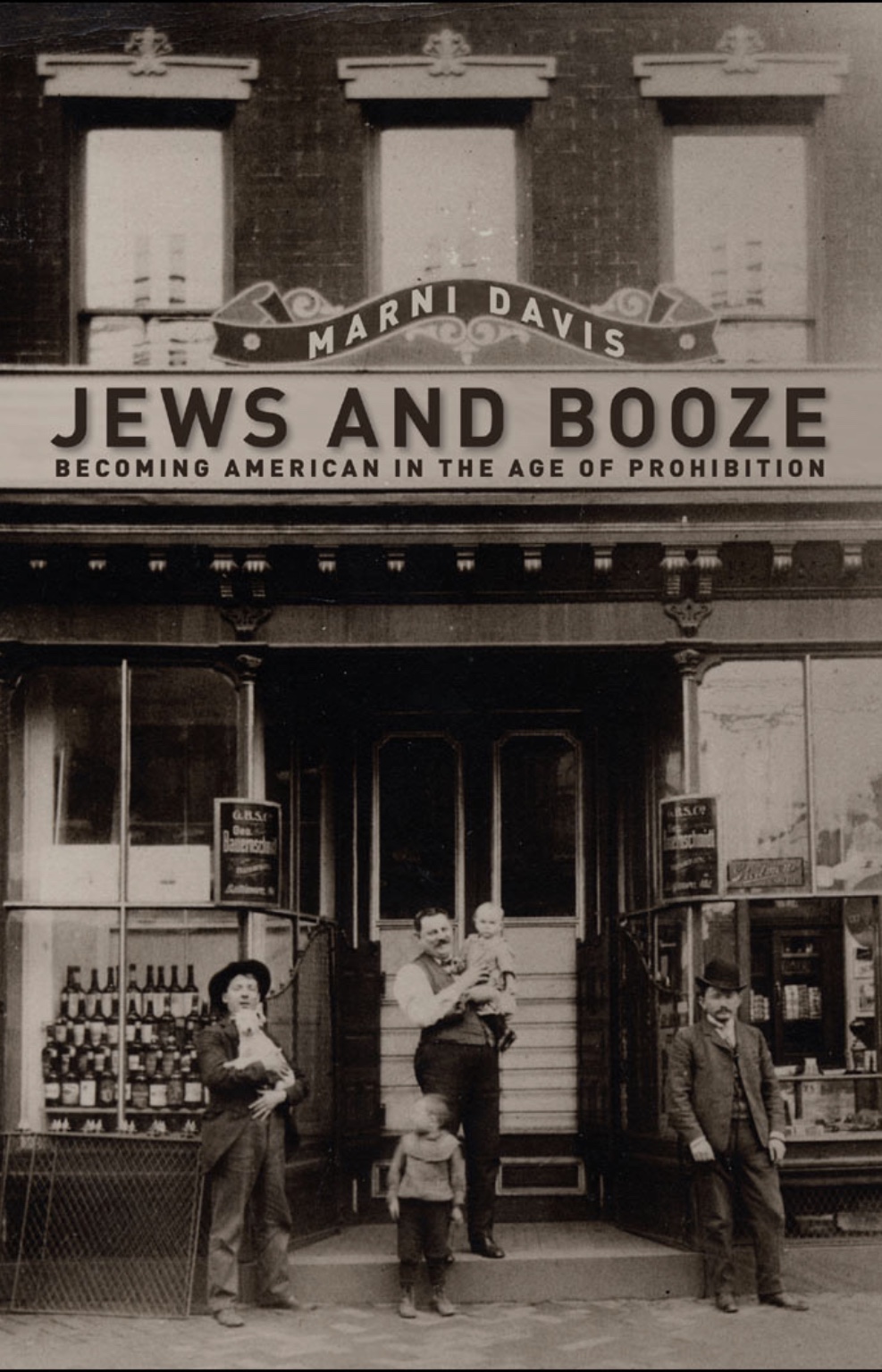
Jews and Booze: Becoming American in the Age of Prohibition by Marni Davis - 2012


Jews and Booze: Becoming American in the Age of Prohibition by  

Marni Davis - 2012


Finalist, 2014 Sami Rohr Prize for Jewish Literature from the Jewish Book Council


Series: Goldstein-Goren Series in American Jewish History


In this very well documented and organized academic history we learn how their relationship to the consumption, manufacturing, sale of Alcohol in America starting about 1820 running up through the end of prohibition in the 1930s shaped the ways in which Eastern European and Russian Jewish immigrants became Americans while preserving their culture.


Much space is taken up with the demands for prohibition of all sales. The driving force behind this was largely Protestant women who felt alcohol destroyed families. Davis shows us how there are

a very old Jewish traditional ways in which the consumption of wine was nearly mandated. Jews in Europe were heavily involved in making not just Kosher Wine but whiskey.  They continued in the occupations they knew when they moved.  Many set up hotels and restaurants in which selling alcohol was a big part of the profit. We learn a lot about the business side of selling liquor in America by Jews and others.  


Anti-alcohol groups began to tie in the sale of alcohol to anti-Semetic perceptions of Jews as preying on The weakness of men.  They are seen as behind rise in brothels and saloons.  Black men were seen as being totally used by Jewish merchants while black women worked as prostitutes.  Davis goes into lots of details on Atlanta.


We see How prohibiting the sale of alcohol did not stop The trade, just changed tbings.


Millions of Jews moved to America from 1850 to about 1915 or so. From Davis we can understand a bit more of How they became Americans.


I highly enjoyed this unique book. 


Marni Davis is a historian of ethnicity and immigration in the United States. She is the author of Jews and Booze: Becoming American in the Age of Prohibition (New York University Press, 2012), which was a finalist for the Sami Rohr Prize in Jewish Literature. An essay by Davis appears in Chosen Capital: The Jewish Encounter with American Capitalism (Rutgers University Press, 2012). She received her Ph.D from Emory University, and taught there for a year before joining the faculty at Georgia State.

Davis is currently researching and writing about the immigrant experience and the immigration debate in the American South in the years between Reconstruction and the liberalization of American immigration policy in the 1960s. She is particularly interested in the role that immigrants’ ethnic enclaves, both residential and entrepreneurial, played in Atlanta’s development as an economically booming and racially segregated New South city.

Davis offers undergraduate courses on immigrants in the U.S. (HIST 4225), modern Jewish history (HIST 3680), and the history of alcohol (HIST 4990). The graduate students under her advisement have done research projects on Cuban immigrants in Atlanta, anti-Catholicism in Progressive-era Georgia, and African-American medical education in Georgia at the turn of the century. - from Georgia State University 


Wednesday, September 4, 2019

Becoming Soviet Jews: The Bolshevik Experiment in Minsk by Elissa Bemporad - 2013


Becoming Soviet Jews: The Bolshevik Experiment in Minsk


Elissa Bemporad - 2013 

Elisa Bemporad helped me understand the political, religious and cultural challenges faced by Jews living in Minsk, now capital of Belarus, adjusting to the replacement of Czarist rule with that of the Bolsheviks. She focuses on the between the World Wars period.  She begins with an overview of Minsk just before World War One begins.


Minsk was in 1914 a heavily Jewish city, part of the imperial Russian Empire located in area of Russia, called the Pale of Settlement where Jews were allowed to live.

Jews occupied professional positions, were sucessful in trade and commerce.  Bemporad uses Minsk to explain what happens to the Jewish population of 
Russia when the Communists took over the government.  This was an frequently very violent period.  Young Jewish intellectuals were often in support of the  ideology of the Communists while older people feared a change.

Bemporad shows us how people kept their traditional beliefs while at least giving lipservice to anti-religious tenants of communism.  In order to get ahead, stay out of trouble you had to at least pretend to give up some of the old ways.
There is a very interesting chapter on the continuance of the custom of circumsicion.  The Kosher butcher was still an important figure.  Jews 
continued participated in labor bunds. She also talks about role of Yiddish in Minsk.  

As this period began, gender roles were clearly definded by Jewish tradition.  In theory, contrary to tradition, under Communism men and women were equal.  Bemporad devotes a chapter to “Housewives, Mothers, and Workers Roles and Representations of Jewish Women in Times of Revolution” that helped me understand these changes.  Educational and career oportunities for women expanded and cross faith marriages became more common.

The book is very well documented and an extensive bibliography is included.


Bemporad lets us see that being Jewish in Minsk was not just a matter of having a certain set of religious beliefs.  There were many who self-identified as Jewish who attended no services.  There was no contradiction to being a Jewish atheist in Minsk. Most spoke at least Yiddish and Russian.


Hanging over all histories of European Jews between wars is the Holocaust.  We see the impact on the community when Hitler and Stalin signed a treaty.  Eighty thousand Jews were murdered by Germans,nearly destroying all Minsk Jews.


Bemporad also treats The persistence of Anti-Semiticism after WW Two.


This book was published by The Indiana University Press.
They have lots of serious  books on Eastern European and Russian Jewish Culture.  

Their  website is below


Author Bio

Elissa Bemporad is the Jerry and William Ungar Associate Professor of East European Jewish History and the Holocaust at Queens College and the CUNY Graduate Center. She is the author of Becoming Soviet Jews: The Bolshevik Experiment in Minsk (Indiana University Press, 2013), winner of the National Jewish Book Award and of the Fraenkel Prize in Contemporary History. The Russian edition was recently published with ROSSPEN, in the History of Stalinism Series. Her new book, entitled Legacy of Blood: Jews, Pogroms, and Ritual Murder in the Lands of the Soviets, will be published with Oxford University Press in 2019. Elissa is the co-editor of Women and Genocide: Survivors and Perpetrators (Indiana University Press in 2018), a collection of studies on the multifaceted roles played by women in different genocidal contexts during the twentieth century. She has recently been a recipient of an NEH Fellowship and a Fellowship at the Center for Advanced Holocaust Studies at the United States Holocaust Memorial Museum in Washington DC. Elissa's projects in progress include research for a biography of Ester Frumkin, the most prominent Jewish female political activist and public figure in late Imperial Russia and in the early Soviet Union...from The Stanford  Center for Jewish Studies.

I would happily read more works by Bamporad and greatly enjoyed this work.

Mel u


Saturday, April 21, 2018

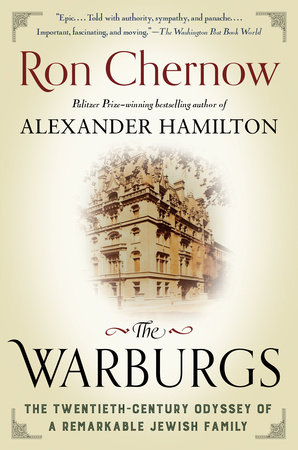
The Warburgs: The Twentieth Century Odyssey of a Remarkable Jewish Family by Ron Chernow - 1993, 880 Pages


I offer my great thanks to Max u for The Amazon Gift Card that allowed me to read this great book.

An Autodidactic  Corner Selection.

Anyone interested in twentieth century Jewish history, international finance, German banking, the Holocaust, and much more narrated through the lives of the Warburg Family will love this book. The story begins in the mid 16th century when a Warburg was a “Court Jew” in Hamburg to the development of a fortune and a legend to rival  the Rothchilds.  One Warburg founded the Federal reserve bank in America while helping other Jews out of Nazi Germany, another used his vast fortune to build great library, preferring Reading to banking.   Chernow has a wonderful way of making us know each of the many family members.  We know much more about them than we do about most subjects of biographies.

The book really gets going toward the end of the 19th century.  The Warburgs were very patriotic Germans.  They helped the Germans Finance the Franco-Prussian War.  Warburgs were in the German Army in World War One.  After the war they did all they could to reduce the harsh demands of The Treaty of Versailles on Germany.  Chernow does a wonderful job working in details about the period.  

As we enter the 1930s Chernow lets us feel the tension among German Jews.  Most German Jews thought or hoped Hitler would “calm down”.  Some knew this was an illusion, others thought their WW One Iron Crosses would save them.  Through a combination of foresight, good luck and a willingness to pay huge penalties, almost all the Family got out before 1939.  To the great credit of the Family, they took many employees and personal servants out with them. The Family entered the private banking business in New York City and became even more wealthy.  

Warburgs tended to marry within the extended family.  (Children of first cousins are only slightly more likely to have Birth defects than orher children though if the practice continues for several generations the risk grows.) An acceptable Warburgs mate had to be Jewish and very rich so the options were limited.  As family members were born in New York City, some did marry rich Christians but they did find some family resistance. We see some of the marriages were long loving relationships, some of the men had mistresses.  The Warburgs supported numerous Jewish causes, had complex feelings about Zionism, were great patrons of the arts in addition to bring powerful business men.  Most were highly cultured and felt a banker should know more than just finance. 

This is a delightful book.  A book as richly informative as the family it teaches us about.


Ron Chernow’s bestselling books include The House of Morgan, winner of the National Book Award; The Warburgs, which won the George S. Eccles Prize; The Death of the Banker; Titan: The Life of John D. Rockefeller, nominated for the National Book Critics Circle Award; Washington: A Life, which received the Pulitzer Prize for Biography; and Alexander Hamilton, nominated for the National Book Critics Circle Award and adapted into the award-winning Broadway musical Hamilton.

Chernow has served as president of PEN, has received eight honorary doctoral degrees, and was awarded the 2015 National Humanities Medal. He lives in Brooklyn, New York. From ronchernow.com

Mel u


Featured Post

Imperial Reckoning: The Untold Story of Britain’s Gulag in Kenya by Caroline Elkins - 2005 - 701 Pages

  Imperial Reckoning:     The Untold Story of Britain’s Gulag in Kenya by Caroline Elkins - 2005 - 701 Pages 2006 Pulitzer Prize Winner From...