Wednesday, October 7, 2020

Of doctors and doctors - A short Story by Neera Kashyap - 2020


Of doctors and doctors - A short Story by Neera Kashyap 


Published 2020 in Setu - a Bilingual monthly journal published from Pittsburgh, USA :: पिट्सबर्गअमेरिका से प्रकाशित द्वैभाषिक  


You may read today’s story here 


This is the third short story by the multi-talented Neera Kashrap I have had the very real pleasure of experiencing.


Today we feature a story dealing with a vital social issue concerning health care in Rural India.


In May of this year I made my very fortunate first venture into the work of Neera Kashyap.


I loved her “Leave, Gentle Spirit”, a fascinating story narrated by an American ethnographer living in a small village in the Himalayas. Her mission there is to develop an in-depth understanding of the culture, folkways, religious beliefs and customs of women in the village, she learned to speak Hindi, widely spoken in the area.  As much as possible she lives like the women she is researching..


“Leave, Gentle Spirit" is a wonderful work, deeply informed and wise.  It deals with cultural divisions and gives us a look at life within the Himilayan region.


Next I read her “The Silent Tree” in which we are shown how the death of a husband and father impacts those who survive.


I really liked “Of doctors and doctors” for its vivid cinematic presentation of the work day of Doctor Kamala in his clinic somewhere in rural India.  Doctor Kamath was educated at a very fine medical school but gave up his big city practice to help the poorer people in rural India.  He is appalled to discover how local doctors snd hospitals take advantage of people to way over charge them for dubious treatments. 


Kashnap made me feel like I was in the examination room. The whole family often sit in on the examination.  


I want to share enough of the exquisite prose of Kashnap to let you  see why I am so taken by her work.


“I cannot prescribe medicines till I have the test results", said Kamath ringing the buzzer for Swarup who sailed in with another patient complete with family, the one huddled next to the window lunging towards his desk. For a moment, Kamath looked at them unseeingly. His own medical fraternity, he thought. He had seen patient prescriptions where steroid injections were administered first, ending in no conclusive diagnosis, but in a list of medicines. A poor farmer with uncomplicated hypertension was being sent to a city cardiologist for regular ECGs. A private hospital nearby used ultrasound as a money-spinner, charging desperately poor people Rs 1000 for each unneeded scan.


The patient before him was a girl in her teens. She lay immobile in her father’s arms, eyes shut. The mother hung to her husband’s side, eyes wide with alarm. She held up the girl’s salwar to reveal two brown punctures on her lower leg, red swellings all around. Kamath had seen non-venomous snake bites which had mainly involved keeping the patient calm as he administered first aid. He took a closer look.


There was a discharge from one of the holes. He felt a swelling in the lymph nodes behind the girl’s knees. His sharp volley of questions revealed that she had stepped on a snake in the paddy field and got bitten; it was a snake – she had seen it, the mother urged. This happened 18 hours ago. When her swelling and dizziness increased, they took her to their local doctor.


“What doctor?” asked Kamath.

“Family doctor. In the village. He gave two injections and some tablets.” The mother emptied a small brown envelope, large multi-colored pills rolling out onto her palm.


Kamath felt the venom rise in his throat. He lowered the girl’s legs and turned her to her left. He snapped at Swarup to bring him soap solution and bandages, washed the wound and covered it loosely with sterile gauze. He gave the girl a tetanus shot in the arm; she did not flinch”


I look forward to following the work of Neera Kashrap for a long time.


The inadequacy of rural health care in India is now a significant social issue.


Neera Kashyap has worked on health, social and environmental communications. As an author, she has published a book of stories for young adults titled, ‘Daring to dream’ (Rupa & Co.,2003) and contributed to five prize-winning anthologies published by Children’s Book Trust. As a literary writer of short fiction, poetry, essays, story/book reviews and creative non-fiction, her work has appeared in two poetry anthologies published in the U.K. (Clarendon Publishing House and The Poet) and in several South Asian journals


Mel u

Tuesday, October 6, 2020

A Wreath of Roses by Elizabeth Taylor - 1949 - with an introduction by Helen Dunmore- 2010

 A Wreath of Roses  by Elizabeth Taylor - 1949 - with an introduction by Helen Dunmore - 2010


July 3, 1912 Reading,  England


November 19, 1975 Penn, England 


Question.  In Mrs Pelfrey at the Claremont there is a character named Mrs Taylor, in A Wreath of Roses, a central character is Liz.  How do you see this use of parts of her name.?


This is the fourth novel by Elizabeth Taylor I have so far had the great pleasure of reading..   Previously I have read A View of the Harbour, At Mrs. Lippincote’s and my so far favorite Mrs Pelfrey at the Claremont.


I hope to read in the next few months these additional novels:


The Sleeping Beauty 1953

The Soul of Kindness 1964

Blaming 1976. Published posthumously


Longer term it is my wish to do a full read through, including her short stories.


“A Wreath of Roses has been called Elizabeth Taylor’s darkest novel, dealing as it does with murder, loneliness, terror and suicide. The aftertaste of the Second World War is still on everyone’s tongue. Young men who have been formed by the extremes of violence must find a way of adjusting to civilian life, and out of the chaos discover a coherent story to tell themselves about their futures.” Helen Dunmore 


A Wreath of Roses is set in an English Village in the heat of summer.  The war has been over a couple of years. The story opens at a railway station.  Camille Hill, an unmarried woman into her middle years has come to visit two old friends, Liz and Francis.  Liz is struggling with the obligations and expectations of being married to a clergyman and having an infant. Francis, her other friend, is a well regarded painter.  Of late her outlook on life has darkened reflected in her work.  Camille feels her life is dull.


Camille sees a to her handsome man at the station.  Then as they wait making a bit of small talk, a man falls to his death in front of the train.  In a writer as bookish as Taylor, I see this as an invocation of the opening of Anna Karenina.  We are privy to the thoughts of the man as well.  We learn he spent years in a German prisoner of war camp.  He is going to the same town as Camille.  Their developing relationship is the driving force in the plot.


Camille’s friends see evil in him.  We slowly learn of his past.  We see how his terrible war years have impacted him.


I found the close of this book very powerful.  Listening to the truly evil revelations of the man rendered in the exquisite prose of Taylor had a quite visceral impact on me. 


Taylor is a master of character development.


.


Sunday, October 4, 2020

The Outlaw Ocean: Journeys Across the Last Untamed Frontier by Ian Urbina - 2019


The Outlaw Ocean: Journeys Across the Last Untamed Frontier by Ian Urbina - 2019


The Outlaw Enjoy dervives from a series of articles Ian Urbina published in The New York Times in 2015.  It was born in years of intrepid first hand investigations of what goes on in the wide open oceans  once you get outside territorial rights.  


He starts with a chapter detailing the terrible explotation of desperately poor rural Thai men recruited to work on fishing boats that often stay out to sea for years, being supplied by fleet ships which also take the catch.  The men are often in debt bondage, beaten and used sexually by ship  officers.  Any possible legal protection they have ends once outside Thai Waters.  The working conditions are very dangerous.  Urbina spent time on these boats and lived in the filthy conditions the men endure.  The fishing methods are very enviormentally destructive, they kill and throw out many more fish than they harvest.


Ever enjoy Chilian Seabass at a Lovely restuarant?  Read the chapter about how they are caught and you might not have it again.


“The fish is also a favorite entrée in upscale restaurants in the United States and Europe, costing about $30 a fillet. But diners won’t find “toothfish” on menus. There, it is sold under a more palatable name: Chilean sea bass. Demand soared in the 1980s and 1990s after a Los Angeles fish wholesaler with a flair for marketing renamed the fish. The rebranding worked a little too well. The oily fish, rich in omega 3, soon came to be known on docks worldwide as white gold. Most scientists now agree that the toothfish population is dwindling at an unsustainable rate.”


Toothfish are found in southern artic waters.  Fidhing in The  southern artic is almost unregulated, there are laws limiting catches but they are very hard to enforce.


Urbina explains why ships are registered in third world countries with reputations for corruption.  


Big ships worth millions are often purchased with loans, some from commercial banks and some from foggy syndicates of some sort.  So How do you reposss a 200 meter freighter running Under a flag from The Sudan when the owners want to keep it?  You hire a boat repo man!  How this works is explained in a fascinating chapter.


Every chapter tells a story.  There is a great deal to be learned in this very well written book.  I have just hit a few highlights.  


“Meet Ian Urbina

The Outlaw Ocean series was originally published in The New York Times, where Ian Urbina (See: Wikipedia) has been an investigative reporter for over two decades. Several of his stories have been adapted into major feature films, including The Outlaw Ocean which was purchased by Netflix and Leonardo DiCaprio.

During his career, Ian has won a Pulitzer Prize for Breaking News, a George Polk Award for Foreign Reporting, and his work has been nominated for an Emmy Award. He has degrees in history and cultural anthropology from Georgetown University and the University of Chicago. Before joining The Times, he was a Fulbright Fellow in Cuba and he also wrote about the Middle East and Africa for various outlets including the Los Angeles Times, Harper’s and Vanity Fair. He lives in Washington D.C. with his family.

The Outlaw Ocean reporting, almost all done offshore, took Ian across 5 seas and 14 countries in Africa, Asia, the Mediterranean, South America, and the Middle East. It resulted in 8 front-page stories in The New York Times and a book published by Knopf Doubleday. “. 

from https://www.theoutlawocean.com


Thursday, October 1, 2020

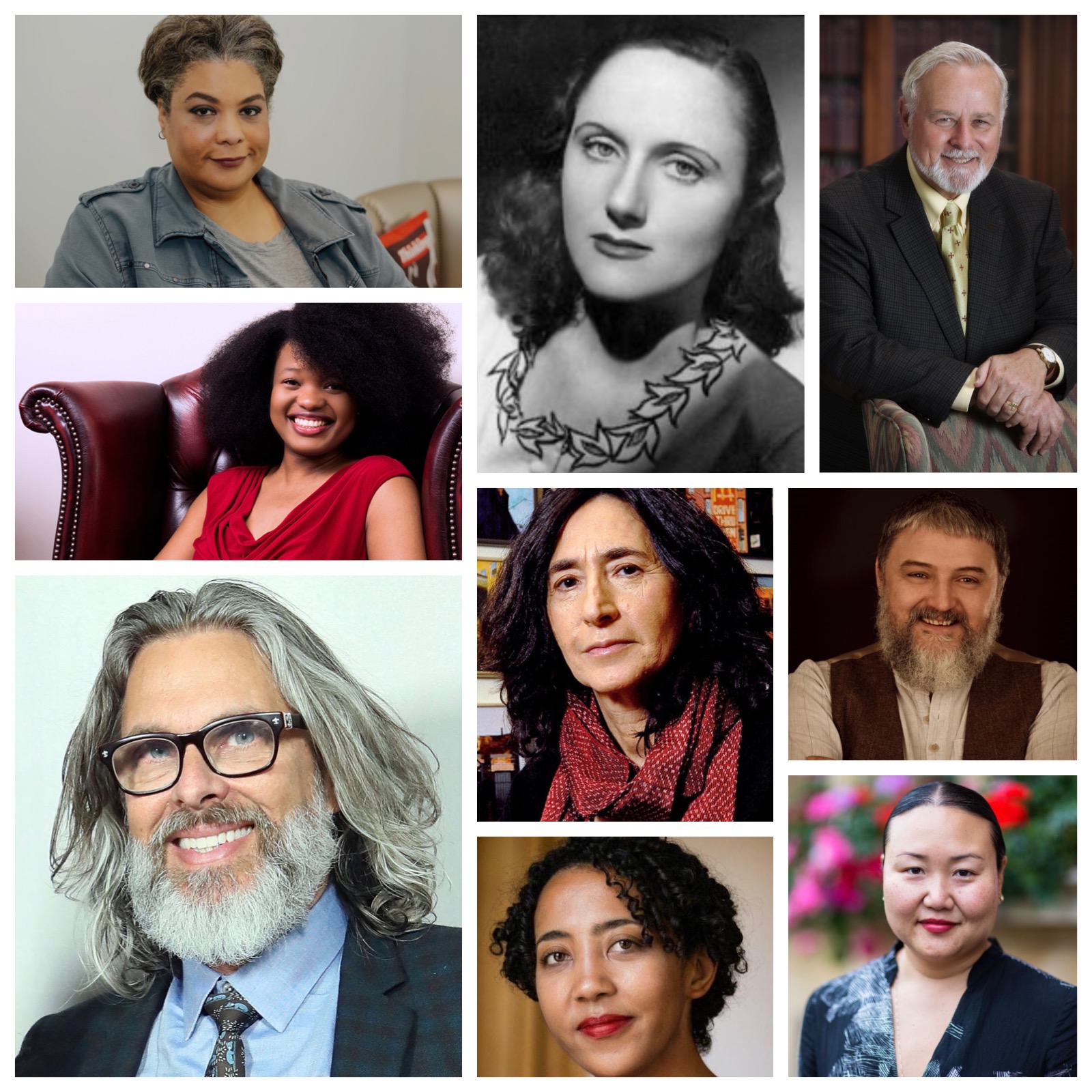
The Reading Life Review - September 2020


 September Authors 


Column One

1. Roxane Gay - USA - highly regarded novelist, Short story writer and cultural observer
2. Chibunda Onuzo - Nigeria to UK - author Welcome to Lagos-I look Forward to following her work for a long time
3. Michael Chabon - USA - Pulitzer Prize for Fiction- most recently read The Yiddish Policemen’s Union

Column Two

1. Elizabeth Taylor - UK - exquiste novels and Short stories - i hope to read her in full
2. Francine Prose - USA - Reading Like a Writer, Nine Muses and Their Artists- Blue Angel.  
3. Namwall Serpe - Zambia to USA - The Old Drift- Winner of The 2020 Arthur C. Clarke Award which i Will read soon

Column Three

1. James Longo - USA - historian - read this Month his Hitler and The Hapsburgs 
2. Billy O’Callaghan - Ireland - i have been following his work since March 2013.  I Will continue to  read anything he writes
3. Hanya Yanaghara - USA - author A Little Life which is a masterpiece .  I Will read her People in The Trees Soon

I also read but could find no image of her, Nadia Cohen’s Biography of A. A. Milne.  She is from England.

Home Lands of Authors

1. USA - 5
2. Uk - 2
3. Zambia - 1
4. Nigeria - 1
5. Ireland - 1

All but one author, Elizabeth  Taylor, are living.  Three are men, seven women.  Five writers were featured for the first time, I hope to read more of their work.  Five are old friends of The Reading Life.

Blog Stats 

As of today we have received 6,120,830 page views 

Among the five most viewed posts for the month are three short stories by authors from the Philippines as well as short stories by Jhumpa Lahiri and Irene Nemirovsky.  All top ten posts for September were on short stories.

Home Countries of Visitors 

1. USA
2. The Philippines 
3. India
4. Germany 
5. Canada
6. Romania
7. The Dominican Republic 
8. UK
9. Japan

This is the first time Romania and the Dominican Republic have been in this list. I welcome them.

There are currently 3805 posts on The Reading Life.


Future Plans

I really want to begin to read the now near overwhelming to me amount of Yiddish literature I have accumulated.  

I hope to post on several very exciting review books I have been kindly given.

On review books, I look carefully at everything I am sent.  

In November I will participate in Margaret Atwood Month hosted by Buried in Print and Consumed by Ink


I also hope to once again participate in German Literature Month 

I offer my thanks to Max u for his kind provision of Amazon Gift Cards.

To those who take the trouble to leave comments, you help keep me going

As always I appreciate the support from the Bousweau family.

To American book bloggers, I know these are dark times for many of you, keep reading and blogging.  You are valued highly and needed.

Mel u


Monday, September 28, 2020

Sunita - A Short Story by Chibundu Onuzo - from New Daughters of Africa- 2019


 Sunita - A Short Story by Chibundu Onuzo - from New Daughters of Africa- 2019


Among the insidious lingering aspects of colonialism are the scars left in the descendents of people once ruled by those who denigrated the normal skin tone, hair texture and traditional modes of dress of their ancestors.  Here in the Phillippines there are frequent TV commercials aimed at young women advertising products claiming  to “whiten your skin”.  All of The female media personalities and women in TV commercials have skin tones significantly lighter than typical.


“Sunita” by Chibundu Onuzo in just a few pages shows us a young woman struggling to overcome this colonizing of the mind.  In the process we learn about women of color from Africa are viewed in posh London.  Her family is from Nigeria and rich.  They sent her to London in the care of an aunt.  She attented an almost all white girls schools.  She bought a weave for her hair.  She  tried out an Afro.


As she approaches graduation she is assigned a mentor, another woman of color, to prepare her for job interviews.  Her mentor works for a company that helps businesses fill their diversity  quotas.  Dolapo wants to get a job in investment banking,


“Dọlapọ loved the afro now hidden under her weave, loved its untameable, uncombable sprawl, loved the extra inches it added to her height, loved the mushroom silhouette of her head in photos, loved hair that grew up instead of down, gravity-defying, extra-terrestrial hair. “That’s fine if you want to work in advertising or publishing, or media, or fashion, or maybe even engineering, but certainly not banking,” Daisy said. “My friends like it.” “White friends or black?” “Does it really matter?” “White or black?” “Mostly white.” “They think its funky, edgy and cool, don’t

they?” “What’s wrong with that.” “Never elegant, chic, glamorous; these are the adjectives we use for women in banking. These are the adjectives for success. As a black woman, let me be honest, when you walked into this room, what I saw was unprofessional, unkempt and unserious.” She had been paired with Daisy by Diversity Unlimited, a recruitment firm that helped companies fill up their ethnic minority quota. Daisy had worked for seven years in an investment bank. Daisy carried a red leather bag with slim, curved handles, discreet, silver, letters spelling out PRADA under the zip. Daisy wore structured dresses, thin black heels, milky pearls, minimal lipstick.”


We see Dolopo is at first torn.  She wants the job that would plesse her parents and insure her future but she wants to be herself, to be proud of her heritage.


I loved these lines so much:


“Dọlapọ’s more modest purchase came in a black cardboard box, edged with gold curlicue. The hair lay lustrous on a bed of crepe, folded into itself like a small, sleek creature, a sable or a mink. Her aunt had gone with her to the salon, leafing through magazines as they wove Dọlapọ’s afro into lines and then stitched the human hair to hers, tight-running stitches that made her eyes water. She skyped her parents in Nigeria once she got home. “Ọpẹ o,” her mother sang, her face large and happy on the screen. “Thank God you’ve finally gotten rid of that bush. Darling, come and see your eldest daughter.” The tablet was passed to Dọlapọ’s father.”


Of course she story takes a turn to a more independent Dolapo.  


This is a wonderful story 


Chibundu Onuzo


Born in Nigeria, she moved to England when she was 14. She began writing her first novel, The Spider King’s Daughter (2012), at the age of 17 and it was published by Faber and Faber when she was 21. The novel won a Betty Trask Award and was shortlisted for the Dylan Thomas Prize and the Commonwealth Book Prize. 

It was longlisted for the Desmond Elliott Prize and for the Etisalat Prize for Literature. In 2014 she was selected for the Hay Festival’s Africa39 list of 39 Sub-Saharan African writers under 40 with the potential to define future trends in African literature. In 2018 she was elected Fellow of the Royal Society of Literature in its 40 Under 40 initiative. Reviewing her second novel, Welcome to Lagos (2016), Helon Habila wrote in The Guardian: “. . . her ability to bring her characters to life, including the city of Lagos, perhaps the best-painted character of all, is impressive.”  - from New Daughters of Africa.


I liked this story so much I acquired yesterday her novel Welcome to Lagos.  


Mel u


Sunday, September 27, 2020

The Living and the Dead - A Short Story by Namwali Serpe - from New Daughters of Africa - 2019


The Living and the Dead - A Short Story by Namwali Serpe - from New Daughters of Africa - 2019


“I dream of Victoria, said J. The English name was steely in his mouth. My black hand in her white hand. The Queen’s smile, true and full. Her crown like the sun, with jewels and gold. I ask: Will you honor us, Your Majesty? She nods. It will come to you when you accept it. Christianity, Commerce, Civilization”


A few days ago among my Google Card Announcements there was a story about Namwali Serpe 

the 2020 Winner of the Arthur C. Clark award for best science fiction book of the year for her debut set in Zambia novel The Old Drift.   I was pleased to see she has a story, “The Living and the Dead”, included in New Daughters of Africa, so I decided to start my reading of Namwali Serpe there.


The story begins in Gabon, not far from Lambaréné.  A powerful man has just died.  He is tended by slaves he has freed.  It takes a while to understand that it Albert Schweitzer.  It seems his medicine box was missing, some of those in his entourage think the box was stolen in order to cause his death.  We learn that Schweitzer is called “Bawana”, a Swahili term for “master”.  We learn Schweitzer tried to force Victorian era values on those he freed, not being above striking someone in the face with a whip.  


We see how the body of Schweitzer is treated according to the traditional ways of his followers.  There is at first a dispute over what to do with his body but the group leader, Abdullah, decides the body should be taken to England for burial.  Numerous of his followers accompany the body to England.  They are taken around and shown off in fancy affairs.  They don’t like the food and miss their homeland.


The story is a very thought provoking work on colonial rule, not just of territory but of minds.  I liked this story so much I ordered her debut novel, The Old Drift.


Namwali Serpell was born in Lusaka and lives in New York. Her first novel, The Old Drift (Hogarth, 2019), won the  Anisfield-Wolf Book prize for fiction “that confronts racism and explores diversity,” the Arthur C. Clarke Award for science fiction, and the L.A. Times’ Art Seidenbaum Award for First Fiction in 2020. It was short listed for the L.A. Times’  Ray Bradbury Prize for Science Fiction, Fantasy & Speculative Fiction and long listed for the Center for Fiction First Novel Prize and the Historical Writers’ Association Debut Crown in 2019. It was named one of the 100 Notable Books of 2019 by the New York Times Book Review, one of Time Magazine’s 100 Must-Read Books of the Year, and a book of the year by New York Times Critics, The Atlantic, NPR, and BuzzFeed.

She is a recipient of a 2020 Windham-Campbell Prize for fiction. In 2014, she was chosen as one of the Africa 39, a Hay Festival project to identify the most promising African writers under 40. In 2011, she received a Rona Jaffe Foundation Writers’ Award. Her first published story, “Muzungu,” was selected for The Best American Short Stories 2009 and short listed for the 2010 Caine Prize; she went on to win the 2015 Caine Prize for “The Sack.” 

She is a Professor of English at Harvard University. Her first book of literary criticism, Seven Modes of Uncertainty, was published in 2014 by Harvard University Press. Her second book of essays, Stranger Faces, is forthcoming with Transit Books in Fall 2020. Her nonfiction book, American Psycho Analysis, is forthcoming with Columbia University Press.  From https://www.namwaliserpell.com/


Friday, September 25, 2020

The Lives of the Muses: Nine Women and The Artists They Inspired by Francine Prose - 2002


 The Lives of the Muses:  Nine Women and The Artists They Inspired by Francine 

Prose - 2002


After recently Reading Reading Like a Writer - A Guide for People that Love Books by Francine Prose i recalled I had snother of her books on my E reader, The Lives of the Muses: Nine Women and The Artists They Inspired.


These  are the Muses and their Artists:


Hester Thrale - Samuel Johnson 


Alice Liddell - Lewis Carroll


Elizabeth Siddal - Dante Gabriel Rossetti


Lou Andreas Salomé - Rilke and Nietsche


Gala Dali - Salvador Dali


Lee Miller - Man Ray and other photographers


Charis Weston - Edward Weston (photographer)


Suzanne Farrell - George Balanchine 


Yoko Ono - John Lennon


Prose begins with an account of the place of the Muses in ancient Greek Mythology.  Each chapter on an individual Muses also begjns with a lead into her account of the relationship of the Muses and their Artists through a digression into ancient Greece.


Of  the artists covered I am most familiar with Samuel Johnson whom i first began to read about fifty years ago.  Once on a two week excursion to London I visited fhe Johnson House Museum.  While there i read his poem London” everyday.  I stopped and had lunch at the historic Old Chedder Cheese Pub where he often dined.


Of course like every one else I have read the two Alice books. In 2014 I read a biography by a leading authority, Lewis Carroll The Man and His Circle by Edward Wakeling.  Like his subject Wakeling is an Oxford Don.  Carroll’s muse was about ten when he met her. The relationship ended when she turned 13, as directed by Alice’s mother.  Prose deals with the big question here- what is up with the nude and erotic photographs of pre-adolescent girls?  


“He was very into photography for many years and now the big question about Carroll comes up.  What is behind the many, about 1500 photographers of young girls, including nude photographs.  Why did a mature Oxford Don love to socialize with young girls?” Edward Wakeling


Wakeling tries to defuse the long raging controversary concerning whether or not Carroll was sexually interested in young girls by telling us several times he also photographed young boys and socialized with them also. I found that a tremendously poor defense

The answer is still unknown.  Carroll never married and never had any sex of any kind.  He took a vow of celibacy on becoming a Don. No one suspected him of being a pedophile, just odd, though he made Alice’s mother uncomfortable.


I have been to the Salvador Dali Museum in St. Petersburg, Florida and read a bit of Rossetti and have viewed jmages of pre-Raphalite art.


On the rest i have no knowledge.  I was never into post Beattles John Lennon music.


I found her thoughts on Johnson and Thrale to challenge my conception of their relationship.


One issue is of course do  the Muses sleep with their artists?  The modern answer would be “it’s complicated”.  The Lives of the Muses: Nine Women and The Artists They Inspired was consistently fascinating.


I was left with a question- are there any male muses to well known female artists ?

.


.


Featured Post

Imperial Reckoning: The Untold Story of Britain’s Gulag in Kenya by Caroline Elkins - 2005 - 701 Pages

  Imperial Reckoning:     The Untold Story of Britain’s Gulag in Kenya by Caroline Elkins - 2005 - 701 Pages 2006 Pulitzer Prize Winner From...