Showing posts with label biography. Show all posts

Saturday, July 13, 2024

Secrets of the Flesh: A Life of Colette by Judith Thurman (2000) - A Paris in July Biography

Secrets of the Flesh: A Life of Colette by Judith Thurman (2000) - A Paris in July Biography


Paris in July does not just include books. Contributions on your Paris vacation, your favourite meal or restaurant, French movies, music, art, Parisian history and more are very welcome. On the home page for the event you will inevitably discover perhaps new to you authors, movies and recipes to send you if you are lucky to Paris or at least the kitchen.


If Paris is the city of love, then Colette (Sidione-Gabreelle Colette 1873 to 1954) is the high priestess.  For many their image of Paris derives from memories of the movie, Gigi, made from her probably most famous work.  Living to almost eighty, she produced eighty volumes of writings of all sorts.  When she passed in 1954 she was given the first ever state funeral for a French 

I do not wish to sketch out much of Colette's life.  I will just talk about a few aspects of her life that I learned about from the biography, things that struck me.

Of course I goggled her and I saw all the images from her days dancing semi-nude on the stage, working to support herself, performing as a mime.  Physically Colette embodied the erotic ideal of the era.  As Thurman shows us,she  loved the world of the theater.  Colette married three times.  She was actively involved with a group of aristocratic Parisian lesbians know as "The Amazons".  

Thurman goes into great detail concerning the various marriages of Colette, her relationship with her parents and her own daughter.  She had many friends and lovers and her life was full of drama.  We see her develop as a writer and we marvel at her incredible productivity.  

Colette the as not and ideologically driven intellectual like other French writers of the period.  She wrote about sex, relationships, food, the theater, the people of Paris.  As she grew older she gained a lot of weight but she carried it without shame and attracted long term lovers of both sexes much younger than she was.   Colette moved a lot and we get to visit with her all over France.

During the German occupation of Paris she did publish her work in journals and papers that carried virulent anti-Semetic articles. One of her stories was published in a magazine that had an ad for one of Hitler's books.  To me and as depicted by Thurman, though not all agree, her actions do not appear to be collaboration, just a largely apolitical woman of the world accepting what seemed like the reality of the times.  Her husband in this period was Jewish and he was detained for a while by the Gestapo and she worked very hard on achieving his release, which did happen.  

Judith Thurman intersperses literary exegesis with the details of Colette's life in a very skillful and interesting fashion.  The book is also a rich source of cultural data of the period, especially the world of lesbian and gay Paris, among the upper classes.  

The book shows Colette grow old and sick but still powerful. 

With Marcel Proust as the greatest French writer of the 20th century, Colette was second.  It seems without much   dispute she is the greatest female writer in French history, with apologies to George Sand.  

This is a first rate biography of a great writer from whom we can all still learn much.


Mel Ulm 
The Reading Life 


Friday, June 8, 2018

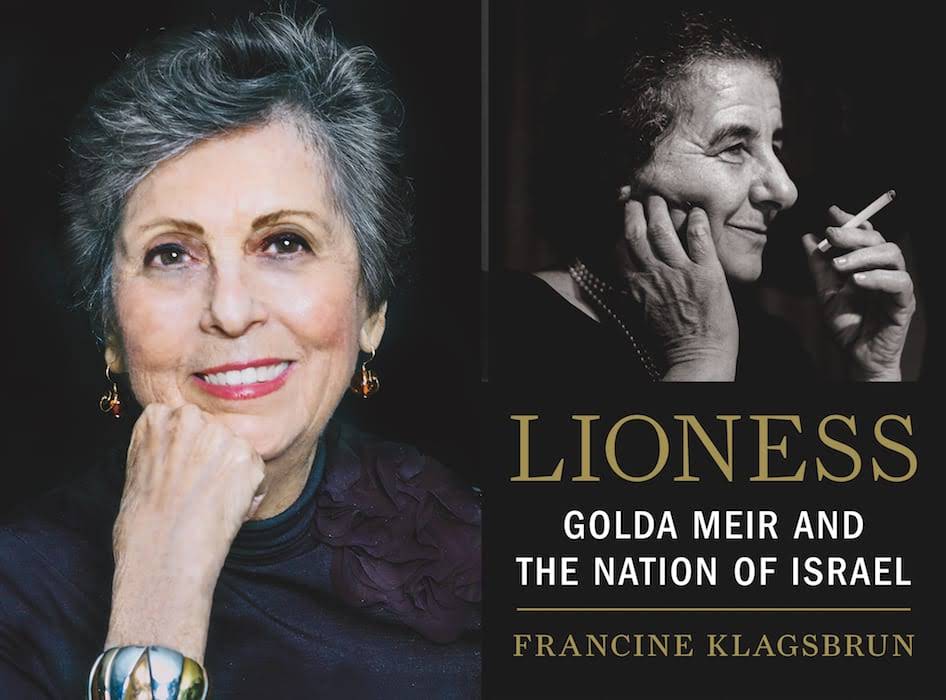
Lioness: Golda Meir and The Nation of Israel by Francine Klashbrun, 2017, 884 Pages


May 3, 1898, born in Kiev in the Ukraine

1904, her father immigrates to the USA, settling in Milwaukee, Wisconsin 

1906, fearful of pograms, all family joins her father in Milwaukee 

1921, She moves, with her husband, to Palestine 

1948, State of Israel is Born

1948, becomes Israel’s representative to Moscow

March 17, 1960, becomes Prime Minister of Israel, after decades of public service

December 8, 1978 dies in Jerusalem 

As I read Francine Klashbrun’s magnificent biography Lioness: Golda Meir and The Nation of Israel it felt like I was reading about an almost mythic person, towering above those around her or foolish enough to be opposed to her.  

Anyone at all interested in the history and future of Israel will love this book. It won The Jewish Book of the Year Award from the Jewish Book Council.  It was the Council’s newsletter which brought the book to my attention.  When I read Cynthia Ozick’s glowing review, I acquired the book.  Not a casual read at over 800 pages, it is a history of Israel as much as a biography of Golda Meir.

Klashbrun lets us see how hard life was in Palestine in the 1920s.  Meir and her husband, marriage faded away, lived on a kibbutz, a collective farm, at first.  Run on socialist principals, it was a hard life.  We follow her at first struggles to make a living, the strain of being a mother while away for much of her time on government business is very well developed.  Meir did have relationships with men other than her husband, they eventually divorced.  Her parents immigrated also.

We learn a lot about her fund raising in America, vital in helping country prepare for war. Meir was a brilliant Public speaker.  I found the Klashburn’s treatment of the migration of Holocaust surivors to Israel very informative and moving.

Even though I knew Israel would win all her wars with her neighors, it was exciting to read about Meir’s part in Israel’s  success.  

There is a huge amount more in this giant of a book than I have mentioned.

Some will perhaps see this book as very Pro-Israel, pro Zionist.  To them I will just say “Baron avek”.

ABOUT THE AUTHOR
FRANCINE KLAGSBRUN is the author of more than a dozen books, including The Fourth Commandment: Remember the Sabbath Day and Married People: Staying Together in the Age of Divorce. Lioness received the 2017 National Jewish Book Award/Everett Family Foundation Book of the Year. Klagsbrun was also the editor of the best-selling Free to Be . . . You and Me and is a regular columnist for The Jewish Week, a contributing editor to Lilith, and on the editorial board of Hadassah magazine. Her writing has also appeared in The New York Times, The Boston Globe, Newsweek, and Ms. Magazine. She lives in New York City..  from Random House

Mel u


Monday, September 5, 2016

George Eastman Bringing Photography to the People by Lynda Pflueger (a young adult biography, 2015)


1854 to 1932


Founded Eastman Kodak Company , popularized the use of film as the medium for photography, made cameras affordable to the general public, major philanthropist.


Last week I read a very good young adult biography by Lynda Pflueger on Thomas Nast, the founding father fhe American political cartoon famous for fighting political corruption in New York City.  I was very pleased to learn she also has written a book on one of the greatest of American inventors, businessmen, George Eastman, whose Kodak and Brownie cameras meant most anyone could be a photographer.  

Eastman first was interested in photography as a hobby.  His first camera cost a month salary for him Photographs were taken on plates.  Eastman, from Rochester, New York, with some help, basically invented photographic film.  He went into business making film and was very successful.  He set up plants in London and Paris as well as Rochester.  It was his inexpensive cameras, like the Kodak, a name he made up, that made him truly wealthy.  Eastman was very good to his employees, giving them periodic extra pay based on company profits.  Eastman never married.  He built a magnificent home for he and his mother.  He gave very generously to local colleges and had a special passion for providing dental care for poor children.

Eastman was a very good man, he gave away most of what he earned.  We can all admire him.

www.lyndapflueger. com

You can learn more about Pflueger's work on her very well done webpage.

I think both of her books belong in school libraries.  Raiders into American history will greatly enjoy them.

Mel u

Sunday, August 28, 2016

Thomas Nast Political Cartoonist by Lynda Pflueger (2014) -


1840 to 1902, born in Germany, immigrated to America, staying In New York City, with his parents, Thomas Nast is considerd the father of American political cartooning. 

"Nast’s legacy to future generations includes the symbols he made popular that are still recognized today: Uncle Sam, the Democratic donkey, the Republican elephant, and Santa Claus. When Santa Claus appears each year, American children would label him an imposter if he did not look like the Santa Claus portrayed in Nast’s Christmas drawings." - Lynda Pflueger 


Before I read Thomas Nast Political Cartoonist by Lynda Pflueger at the very most I would perhaps recognized him as the creator of the post famous political cartoon in American history.

        "Boss Tweed", de facto ruler of New York City, and his cronies, trying to pass the blame (1871, first appeared in Harper's Weekly)

Pflueger starts her very well written biography with an account of the arrival of the Nast family in New York City. Nast was six at the time.  Pflueger tells us about the times of the family getting settled in a new country.  Nast attended public school from six to fourteen, he never did very well in school, being mainly interested in pursuing a career as an artist.  

    Self portrait of Nash during a rough patch in his life. Right after the civil war. 

In 1854 he left public school and began two years of art instruction.  He got a job as a draftsman in 1856 and sold his first drawing to Harper's Weekly in 1859.  He, as Pflueger details,was  to have a long and mutually benifical relationship with the four Harper brothers.  He began to regularly publish drawings in Harper's Weekly, many of them harshly critical of the very corrupt New York City political organization known as Tammany Hall, dominated by William "Boss" Tweed.  I as fascinated to read about his time as a war correspondent in Italy.  In a time where photography was just starting, and lots of potential voters are either barely literate or speak a language besides English, detailed vivid drawings like those of Nast were the viral media of the 1870s.

At the time venal politicians were exploting anti-immigrant sentiment among segments of the American population, sounds a bit familiar.  The biggest fear seems to have been that of Chinese railroad laborers who stsyed in the country after the railroads were completed.    Nast, an immigrant, was strongly pro immigrant. I loved Nast's cartoon making fun of politicians who proposed building a wall to keep out immigrants. 


As Nast's cartoons began to increase demands for reform in NYC he was offered large bribes to stop publishing his drawings.  To his great credit he refused.  Nast was pro-Catholic and anti-slavry.  He might have been predjudiced against the Irish.  Where your ancestors were from was a very big matter in NYC at the time.

Pflueger does a very good job explaining how politics worked at the time.  I also learned a lot about the  magazine business and the economics of being a cartoonist. Sometimes Nast was very affluent, sometimes he had to scramble to feed his wife and five kids.    Nast published drawings not just on political   corruption but on slavery and injustice of different sorts.  Nast comes across to me as a very good man, proud of his work but able to look at himself with a wry eye. 


            One of his more famous drawings.


One of his covers for Harper's Weekly

Nast was a character artist, he exaggerates characteristics to make his points, he relied on stereotyped features to make his drawings vivid.


   He wanted the South totally defeated


Thomas Nash Political Cartoonist, a young adult biography, taught me a lot about American history.  I never knew how important cartoons were. 

Readable in under two hours, I really enjoyed this book and recommend it to readers at all levels interested in American history.  The concerns of Nast are the concerns of America today.  I would love to see his cartoons on Trump and his wall! 

If I had a wish for the book,i would like to see included a chart converting USA money in the time of Nast's life to current money.  When Pflueger tells us, for example, that Nash was paid forty dollars a week when he started at Harper's I need a frame of reference for this.


On the author's very well done webpage you can learn about how she came to write this book and her other works and interests. 

Mel u


Wednesday, June 8, 2016

Curzon Imperial Statesman by David Gilmour (1994, 704 pages)

George Curzon, 1st Marquess of Kedleston

1859 to 1925

Vice Roy of India, 1899 to 1905

"To many people George Curzon was the very image of an arrogant and ambitious aristocrat. Heir to one of the great country houses of England, he was educated at Eton, where he won several academic prizes, and at Oxford, where he won several more; at both institutions he was spoken of as a future Prime Minister. In his twenties he established himself as an author, a Member of Parliament and an expert on foreign affairs. Before he was 40 he became Viceroy of India, the ruler of nearly three hundred million people inhabiting territory now divided between India, Pakistan, Burma and Bangladesh. But Curzon’s career was a spectacular blend of triumph and disappointment. As Queen Victoria’s last Viceroy, he presided over the Indian empire at its apogee; as Foreign Secretary he was a crucial figure on the international stage after the First World War. Yet his triumphs were invariably succeeded by disillusionment and a fall."  David Gilmour


George Curzon was from 1899 to 1905 the Vice Roy of India, the crown jewel in the British Empire.  He was near absolute ruler over 300,000,000 million residents of the incredibly diverse in all ways of Indian Subcontinent.  

David Gilmour does a magnificent job of letting us see how Curzon, a very complex man, rose to great power, only to fall and rise again. His family was aristocratic but without great wealth.  He married the daughter of a wealthy American industrialist from Chicago.


Curzon entered public service right out of college.  Because of his great intellect, powerful work ethic, devotion to duty and charismatic personality he was quickly advanced at a young age to positions of great responsibility.

I do not wish to detail Curzon's career path, Wikepedia has a decent basic facts article.  I basically acquired this book because I am very into colonial South and South East Asia history and I wanted to learn about Curzon's time in India.  Curzon iwas not just a capable administrator.  He made himself into an expert on Indian and Persian culture.  India was not a monolithic country, there were hundreds of different political divisions, including about 750 Princely states, some bigger than England, others with just a few thousand subjects.  There were many languages and religions to bewilder the average Englishman.  Curzon enjoyed the perks of his position.  He seemed to have really enjoyed going on tiger hunts with local nahibs. He was treated as an Emperor would hope to be.


After his return to England Curzon was a member of the cabinet and the House of Lords.  Gilmour details a lot of the political jockeying for power of the time.  Lots of people felt Curzon should have been prime minister of England but he was not.  He was not always a skilled political infighter and in England lost out to men of lesser ability because he was not superficially likeable. He was preceived as arrogant by many, no doubt correctly.

Curzon was a great reader, mostly biography and history.  He became wealthy through the money his wife left their daughters when she passed.  He made a hobby of restoring old stately homes and castles and giving them to the government.  Gilmour explains his active role during WWI in the home foreign office. 

Curzon was a sometimes difficult man to work for, being very hard on servants and his ADCs in India but he also looked out for them and they as viewed him as a benevolent if remote father figure.

Curzon and his wife Mary had three daughters.  His daughters were at times difficult.  They had their own money, actually more than their father, through trusts from their mother. 

Curzon Imperial Stateman is a very good book I strongly recommend for anyone into English or Indian History.

Check author's webpage for his bio and other works 


Mel u

Thursday, April 28, 2016

Mrs Guinness The Rise and Fall of Diana Mitford The Thirties Socialiteby Lyndsy Spence 2015


Not long ago I read a very good book Nancy Mitford A Biography by Selina Hastings.  This was my first immersion into the world of the famous and infamous Mitford Sisters.  I wanted to learn more about the sisters and the milieu in which they lived.  I am into "faded" aristocrats, relishing the unconventional, savoring the decadent, accepting the fey alongside the forthright.  On a personal note I have three daughters of my own, one just at the age when Diana Mitford destroyed her seemingly fairy tale marriage to a member of the fabulously wealthy Guinness to become the mistress of Oswald Mosley, notorious as the leaders of British Fascist Union and a passionate admirer of Adolph Hitler,  so I had to wonder  how six girls all raised more or less the same can have such different personalities. 


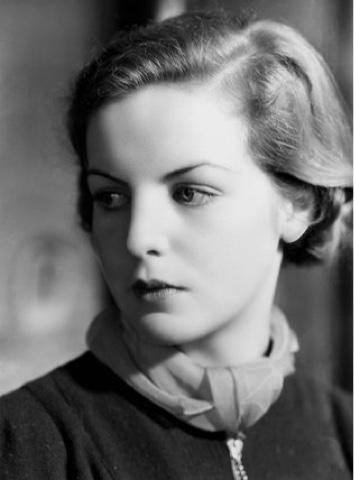
                                1910 to 2003
  
Diana was born into an affluent aristocratic English family.  She had five sisters, including the novelist Nancy Mitford, and one brother, Tom.  She was the fourth child and the third daughter.  Her father was a baron.  Their maternal grandfather was Thomas Gibson Bowles, the founder of two still in print British Magazines, The Lady and Vanity Fair.  Spence did a great job of making the early years of Diana come to life for me.  But for six months at a Paris boarding school, Diana was home schooled by a frequently changing series of governess.  Their father did not especially believe in education for girls.  Diana's parents were rich land but her father was not a great business man and they did sometimes struggle to maintain a proper life style.  She was a cousin of Clemintime Churchill and a second cousin of Bertrand Russell.

Of course as  anyone who has read Victorian novels knows, the biggest issues on the minds of the sisters and their parents was getting them properly married.  Spence evokes the tension and drama this involves. Of course a suitable husband must come from old money and preferably be in line to inherit a title. Spence talks about the big coming put event for the girls, presentation to the queen, signaling they are "on the market". Diana was an incredible beauty and soon became engaged to Bryan Guinnesses from the hyper-wealthy  beer family.  We can see the manipulative personality of Diana in the opening stages of her relationship with Bryan.  At first her parents thought the couple was too young to marry but Bryan was guaranteed a princely income for life so they were married.  Spence lets us see the real passion Bryan had for Diana and we also are shown perhaps based on practicality her lesser love.  Diana gave birth to sons in 1930 and 1931.  They owned a large estate and beautiful   townhouses in Dublin and London.  Diana hosted parties for high society young and mingled with literary figures like Evelyn Waugh.  I laughed when I learned his wife was also named Evelyn and he was called "he Evelyn".  They, as directed by Diana, socialized with a "campy" sort of crowd.  If it were not for a man Diana was to meet and fall in total love with, as she never did with Bryan, in 1932 she would be remembered mostly as the sister of the novelist, Nancy Mitford.  


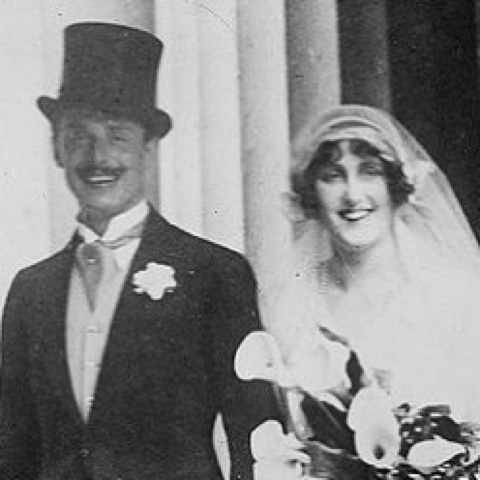
           January 30, 1929 - Diana Marries Bryan Guinness 

In February of 1932 Diana met, at a garden party, Oswald Moslsy, leader of the British Union of Fascists, the BUF.  Mosley, a notorious womanizer from a wealthy family was at the time married to a daughter of Lord Curzon, a former Viceroy of India.  His political goal was to turn England into a fascist society allied with the Nazis and Mussolini, with himself as national leader.  At this period in England many of the wealthy feared the growing popularity of the communist party and were drawn to the idea of a strong man leader to keep the masses under control.   Diana at once fell in love with Mosley, whose attitude toward women was almost openly predatory. His wife, who he did not want to divorce because of her much greater than his own wealth, tried to shrug of his relationships as just passing events but it iwas not easy. Mosley had affairs with numerous of her friends and a sister.  Spence does a great job in detecting the dynamics involved.  In the case of Diana his wife was deeply troubled by her great beauty.  To make things all the weirder or worse, Diana's younger sister Unity Mitford, had fallen totally under the spell of Hitler, accepted his full ideology.  She was only nineteen, of course Diana was still in her early twenties, and the appeal of Hitler for Unity seems to be a personal magnetism, almost sexual adoration of Hitler.  Soon Diana told her husband Bryan she wanted a divorce, he was crushed as he very much loved her.  I felt very sad for him as I read Spence's depiction of his emotions.  At the time divorce could be granted only if one party had committed adultery so to save his wife shame Bryan falsely stated in court he had once hade sex with a prostitute while married.  He even paid a woman to back this up in court. Bryan loved Diana so much he wanted to settle a large life time income on her but to her credit she took just £2500 a year.


Unity took her to Germany to go to Rallies to hear Hitler talk. Both sisters, initially knowing no German, felt Hitler was a great man, one who could save the world.  Unity and Diana soon attracted the attention of top Nazi leaders, in apperance, tall and blond, it is said Hirler called them perfect examples of Aryan womanhood.  Diana begins to learn German and does all she can to help Mosley with the BUF.  Mosley has by now about fifty thousand members in the BUF, the most hardcore he forms into a "blackshirt" army which classes with Communist groups.  As England and Germany seemed headed for war, Diana wants her country to side with the Germans, take over Europe and is at least unconcerned about Hitler's plans for the Jews.


Spence's account of Diana's fascination with Hitler and her involvement with high Nazi party members and the BUF was fascinating.  Diana is completely in love with Mosley.  Leaving out a lot of super interesting material you can learn about in Spence's great biography, after the death of Mosley's wife he and Diana are married in the private chambers of Goebbel's with Hitler in attendance.


                             October 6, 1936 Diana Marries Oswald Mosley


Diana's family and friends begin to see her involvement with the BUF as potentially dangerous to the interests of England.  The close of the biography, written as well as a fine literary work, is very dramatic and I will leave it untold.


  • Nancy Mitford (1904-1973)
  • Pamela Mitford (1907-1994)
  • Thomas Mitford (1909-1945)
  • Diana Mitford (1910-2003)
  • Unity Mitford (1914-1948)
  • Jessica Mitford (1917-1996)
  • Deborah Mitford (1920-2014

Not long ago I read a very good biography of Coco Chanel, Mademosille:  Coco Chanel and the Pulse of History by Rhonda Garelick.  In her account of Chanel's involvement with the Nazis and her love affair with a Nazi officer, probably directed by higher ups to draw information they thought she had from her many social contacts, Garelick goes into great depth explaining the inherent fascism in the designs of Chanel and in her fascination with Nazi uniforms and paraphnalia as much of the basis for the appeal of fascism.  If you look at pictures of Diana and Unify, you can see the very strong influence Coco's designs had on their esthetic sensibility.  The fascinating uniforms of the Nazis must have enthralled Diana and Unity, compared to the crumpled tweeds of English aristocratic men like their father, Churchill, or Bryan.   

Mrs Guinness The Rise and Fall of Diana Mitford The Thirties Socialite by Lyndsy Spence is a wonderful  biography and a valuable work of social history.  Spence had access to letters and interviews with family members and associates of Diana to a greater degree than prior biographers.  

Spence does not judge Diana, she presents her as person living in tumultuous times.  I strongly endorse this book based on biographical excellence, social history, human insight as well as style.

                       
Author Bio


Lyndsy Spence founded The Mitford Society, an online community dedicated to the Mitford girls. Her first book, The Mitford Girls' Guide to Life was published by The History Press in 2013, and her forthcoming books are Margaret Lockwood: Queen of the Silver Screen (Fantom Films, June 2016) and The Mistress of Mayfair: The Men, Money and Marriage of Doris Delevingne (The History Press, November 2016). She is the editor of The Mitford Society annuals which are sold on Amazon. She also writes book reviews for The Lady and has written features for BBC News Magazine, Social & Personal, Vintage Life and her local newspaper, the Antrim Guardian in Northern Ireland.   She has a BA honors degree  in Humanities with English Language and Literature, and a Diploma in Literature. She has 2 pets, a cat named Harriet and a dog named Lola, and loves heritage and old world aristocrats. 

         Available on Amazon.


I am very glad I read Lyndsy Spence's finely done biography and I look forward to reading more of her work.

Mel u

Thursday, April 21, 2016

Emma Jung, Her Marriage to Carl and the Early Years of Psychoanalysis by Catrine Clay


Carl Jung (1875 to 1961, born and died in Switzerland) was a pioneer in the field of psychoanalysis. He developed the concepts of the collective unconscious, archetypes, introversion and extroversion, and the complex.

Emma Rauschenbach Jung (1892 to 1955, born and died in Switzerland was from a very wealthy family.  She assisted her husband in his work.


Labyrinths Emma Jung, Her Marriage to Carl and the Early Years of Pschoanalysis by Catrine Clay is a book that anyone interested in the theories of C. G. - Carl - Jung and the history of psychoanalysis will enjoy.  His wife Emma came from a very rich Swiss family,  Jung was from a working class background, supporting himself working long hours in an mental hospital when he married Emma.  She became heavily involved in his work, helping him write patient reports.  They lived, as was customary in the hospital.  Jung began his word association  examinations to delve into the psyche of his patients.  Jung was a very handsome and charismatic doctor and female patients fell in love with him.  Clay is not real explicit but it seems Jung probably violated 21th century rules on patient contact.  This caused friction in his marriage.  It was interesting to learn about life and work in the mental hospital.

When a woman married, control of her money went to her husband.  Jung relished the life style Emma's money provided. We learn a lot about the social customs of the period.  Clay also tells us a lot about Jung's relationship with Sigmund Freud. 

Emma despised the infidelities of Jung but she endured them.  We follow them on their trips to America and all over Europe as Jung's fame grows.

Clay explicates some of Jung's theories on the collective unconscious, archetypes and touches on his relationship to Nazism.  Jung was in no way a supporter of the Nazis but his theories could be used to suggest the ethos of the Germans gave rise from racial archetypes to a Furher figure.  

This is a well written book. It should be read as advertised,  as a story of a marriage.  

Years ago I read Clay's King, Kaiser, and Czar, about three cousin who were the regal heads of Europe when World War One began, a good work of popular history. 

Official bio

Catrine Clay has worked for the BBC for over twenty years, directing and producing award-winning television documentaries. She won the International Documentary Award, the Golden Spire for Best History Documentary, and was nominated for a BAFTA. She is the author of King Kaiser Tsar and Trautmann’s Journey, which won the Best Sports Biography of the Year, and was runner-up in the William Hill Sports Book Prize. She is married with three children, and lives in London.

I recommend this book to anyone interested in Jung, the history of psychoanalysis and anyone  wants to learn about the wife behind the famous man.  It can also be read as a social history of married life in the period. 

I was given a review copy of this book.

Mel u


Wednesday, April 20, 2016

Louis Bamberger Department Store Innovator and Philanthropist by Linda B. Forgosh (forthcoming 2016)


Louis Bamberger Department Store Inovator and Philanthropist by Linda B. Forgosh is the first biography of one of the greatest of merchant princes descended from German Jewish immigrants who came to American in the 19th century.  

Not long ago I read a very good work that served as an excellent preparation for this book, Our Crowd The Great Jewish Families of New York by Stephen Birmingham.  Louis Bamberger (1855 to 1944) was descended from German Jewish immigrants.  He grew up Baltimore, began to work in a family owned store at fourteen.  In 1892 he purchased the stock of a distressed  merchant in Newark, New Jersey and through very innovative merchandising methods turned this into the sixth biggest department store in the country and turned himself and his partner into multi-millionaires.

In the days before shopping centers if you wanted something you went to a department store to buy it. Bamberger was one of the most creative and aggressive users of newspaper advertisements and was actually the first department store to have an in house radio station.  He treated his employees, who were called associates, very well for the period. He offered paid vacations, tuition assistance, maintained an employee assistance fund for emergencies and until his store got too big, he knew his employees.  If someone's child was in the hospital, he might well stop by.  He staged lots of interesting in store events to draw people into Bamberger's.  He was one of the very first stores to offer no hassle returns.  His store had a restaurant, community meeting rooms, a post office and lots of other first ever done ideas.  He expected his employees to know the store and he published a magazine for his employees. He started free deliveries all over the area.  If one of his drivers saw a person who needed help, they were expected to help out. 

                      1910, an electric  Bamberger delivery truck

  In 1929 he sold his store to Macy's, giving away a million dollars to his 250 longest tenured employees.  He stated active in the store, coming in most days up until the final years of his life.


Bamberger, never married and without children, was a great philanthropist.  His most lasting achievement was the founding endowment of the Institute of Advanced Studies at Princeton.  He contributed five million dollars and as a board member was active in managing the institute.  He became friends with the most famous faculty member, Albert Einstein.   He founded and was a continuing supporter of the Newark Museum of the Arts and the Newark Young Hebrew Men's Association.  He made a contribution and solicited donations that allowed a hospital to be opened in Newark, The Beth Israel.  He insisted that sixty five percent of the beds be available to those who could not pay for them.  Bamberger did not just give money, he gave his time and financial expertise.

Bamberger was a very private person.  He preferred to socialize with his sister and her husband. He often made buying trips to Europe.  As Jews became persecuted in Germany, Bamberger help those he could immigrate.


      Left, Louis Bamberger with his partner and brother in law Felix Fludd


I finished this very well done biography with a great sense of admiration for Mr. Bamberger and I wish I could have shopped in his store.  Unlike his contemporaries who achieved great wealth he did not develop a contempt for the average person. His employees all held him in high esteem.  When he died all flags in Newark flew at half-staff for three days.  He is someone we can truly admire and I thank Linda B. Forgosh for making it possible to know his story.


LINDA B. FORGOSH is an independent scholar and executive director of the Jewish Historical Society of New Jersey.

Mel u

Saturday, April 2, 2016

Madame Blavatsky The Woman Behind the Myth by Marion Meade (2014)


Helene Petrova Blavatsky founded The Theosophical Society 1n 1875
She was born in 1831 in the Ukraine and died in London in 1891.
Her most important publication is Isis Unveiled, 1891, contains her core doctrines.


"And there have always been individuals, or secret societies,” he went on, “who insisted they were the guardians of some ancient knowledge. From the Egyptian priesthood it was passed down to the mystery cults of Alexandria; from the Alexandrians to the Hebrew Kabala and the Gnostics; from the Gnostics to the Knights Templar and from the Kabala to the late-medieval mystics, Pico della Mirandola, Pater Trimethius, Cardano, Raimundus Lullus, Paracelsus and finally the Rosicrucians. The Rosicrucians are the last link in the chain … ” “And then?” ......So the ancient knowledge now exists as a paradox: our rational minds can’t fathom it.. What followed—occult science—was nothing but fraud and parody: Rational Man’s fancy dress frolic with the irrational. The eighteenth-century Freemasons, the spiritualists, the theosophists, St Germain and Cagliostro all claimed to be thousands of years old. Of course they were lying. On the other hand, lots of people falsely claim that they know the Prince of Wales, but does that make his existence a mere superstition? We just can’t grasp these things with our modern patterns of thought."  From The Pendragon Legend by Antal Szerb 1938

In the long ago I was very interested in the occult.  My interest lingers to this day so I was happy to be given the opportunity to read Marion Meade's highly regarded biography of a very influential occultist, Madame Blavatsky The Woman Behind the Myth.  Madame Blavatsky (or as she was called HPB) was born into an aristocratic Russian family.  Formal education was very limited for girls but HPB as an avid reader.  Her lasting cultural importance was actually greatest in India.  If you spend a bit of time unraveling her core doctrines, which she claimed to have been instructed upon 
by Tibetian wise men, you will see the core doctrines of most 20th century occult theorists.  These theories had a large influence on many highly regarded authors.  


From her most famous book, Isis Unveiled.

The problem a biographer of HPB faces is that much of the information about her life history comes from her and others involved closely with her who were devotees of her theories or profited from believers.  These were and are a very unreliable group of informers..  Meade treats all of the people she writes about with great respect, including HPB.  The problem with this is that those in her works were either half or total charlatans or were deluded individuals seeking either contact with deceased loved ones or divine wisdom dispersed by holy men and women and various Guru figures.  Meade devotes long chapters to the official biography of HPB and then says well maybe this is all just either fabrications or delusions.  


HPB saw as her mission to bring forward these ancient truths, maybe she believed even them, maybe she was a near psychotic who played on the vulnerable.   

Meade goes into great detail about HPB's life in Russia, her travels, and her various relationships.  We learn a lot about the business side of occult groups in the 19th century.  Meade does not pass judgement on HPB or her theories.  She gives credence to psyche powers, moving objects with the mind etc.  

At 660 pages this is a long book, at times repetious.  Meade is not really open to the idea that occultists like HPB may well be power seekers, con artists praying on those in pain, people seeking attention.  

This is a book anyone into the history of occult movements and western versions of Indian philosophy will enjoy.  Some will read the book and see her as just a complete fraud but that is not what matters, it is her still great influence felt by millions who have never heard of her.


This biography is published by Open Road Media.  The next time you are looking for something to read, especially if you prefer E reading as I do, take a look at their very well done webpage.  They have on offer books by over 2000 authors, all very well described and fairly priced.


Mel u

Tuesday, November 17, 2015

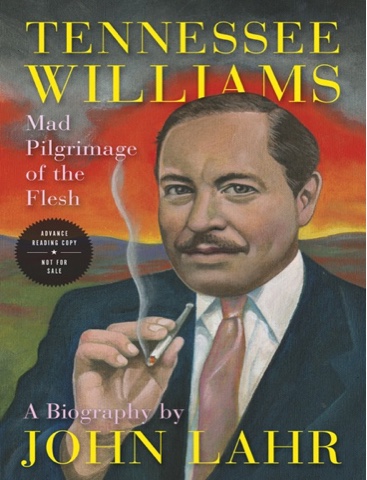
Tennessee Williams Mad Pilgrimage of the Flesh A Biography by John Lahr. (2015, 784 pages)


John Lahr's Tennessee Williams The Mad Pilgrimage of the Flesh is a great biography, bringing the American playwright to life for us, and what a life it was!  John Lahr, senior theater critic for The New Yorker for many years, has an in depth knowledge of the American stage.  

Tennessee Williams (born 1911 in Columbus,Mississippi, died in New York City in 1983) was a tremendously sucessful  playwright.  Among his most famous plays, all produced on Broadway and made  into movies for which he produced the screen play were his first The Glass Managerie, A Street Car Named Desire, Sweet Bird of Youth, A Cat on a Hot Tin Roof and The Night of the Iguna.  Williams became very rich from his plays.  He also wrote two novels, and a number of short stories and poems. Lahr quotes a good bit from his poems.

(Any reason to post this pic on my blog works for me.  Elizabeth Taylor and Richard Burton starred in the movie version of The Night of the Iguana.)

Lahr's book does not follow a chronological structure but we do leave it with a complete overview of his life.   We first meet Williams just before the opening of his first play.   Lahr made me feel I was back stage, where the drama was at least as high as it was on stage.

Williams comes from a  dysfunctional Southern Gothic family straight out of a William Faulkner novel.  Lahr shows us how his family impacted the plays.  Much of the book is devoted to his sex and romantic life.  He had a few early relationships with women but soon enthusiastically accepted his homosexuality.  Living in a time before AIDS took much of the fun out having sex with random strangers met on the streets of big cities all over the world, Williams, quoting Lahr, "Binged on boys".  We are with him cruising the bars and streets in New Orleans, London, New York.  Rome was his favorite hunting ground.  One of the things I liked about Williams and Lahr's presentation of him was that he felt joy in his sexuality, not shame in a time before Gay liberation movements. 

Lahr goes into a lot of backstage details.  Williams knew lots of the famous and infamous of the theatrical world.  Lahr talks about a number of actors and actresses of the period.  He details tne heavy usage of alcohol and amphetamines by Williams.  Williams was surrounded by enablers that helped him indulge in his destructive proclivities in exchange for a share in the life style of a hyper wealthy celebrity.  Williams had a number of longer term relationships both most seemed close to gold diggers to me.  

If you are interested in the American theater circa 1945 to 1975, you will greatly profit from this book.  It is also a valuable edition to American gay studies.  The prose style is lyrically beautiful.  I closed the book really liking this flawed man and looking forward to seeing his movies on cable now that I have read Lahr's book.  It is an information rich work.  Reading it was a pure pleasure.  

Tennessee Williams Mad Pilgrimage of the Flesh is a total must for theater buffs.  

I was given a review copy of this book. 


Maria St. Just was Williams "personal assistant" for years, here performing one of her main functions.

Mel u


Saturday, October 17, 2015

Helena Rubinstein The Woman Who Invented Beauty by Michéle Fitoussi(2010, translated by Kate Bignold and Lakshmi Ramakrishnan)


Helena Rubinstein (born 1872 in Kraków, Poland, died 1965 in New York City) created the cosmetic industry, became a billionaire starting with nothing (inflation adjusted), transformed herself into an Icon perhaps matched in her time only by Coco Chanel.  She taught millions of women how to make themselves beautiful.  She became a renown supporter of the visual arts, know for her exquisite taste. 
  
She was the eldest of eight daughters from a struggling family in a povertly ridden Jewish Shetl in Kraków, Poland.   Fitoussi shows us how much a potential struggle it was for her parents to find suitable husbands and provide the expected dowry for each daughter.  (In my post on this wonderful biography I will mostly focus on some of the many things in the book that most struck me and will not set out a sketch of her life.)  I will say this is a very good book, it is far more than just a biography but also a portrait of Jewish life, a history of the modern cosmetics industry, and it gives us a vivid look at the struggles that Helena Rubenstein as a Jewish woman basically on her own for her formative years faced creating a business empire that still thrives.  The roots of her empire were in a cosmetic cream her mother made. 


Members of the greater Rubinstein family had emigrated to Australia and Helena decided that was best for her.   She did not want to be just another housewife, none of the prospective mates suggested for her were suitable.  As I read on in the book, I am more and more impressed by the tremendous work ethic of Helena.  When she arrived in Australia, she went to work on an uncle's farm.  She worked tremendously hard.  She was very beautiful and her family there tried to find a match for Helena among the limited number of single Jewish men in the area. In the mean time Helena noticed the devastating impact of the Australian sun on the skin of women,  she had her mother send her some jars of her cream.  She began to research cosmetics, wondering how to make a skin cream from local products.  She developed a product and with the help of men friends she had acquired, began to market her product. After having a falling out with her uncle she went to work as a waitress in a coffee shop.  There she met men who helped her set up a cosmetic shop selling a cream she had created. An important skill she learned in Australia was advertising and promoting her product. Compressing a bit, her shop did very well and soon she had shops throughout Australia.  One of the things I liked so much about Helena was her loyalty to her family.  Numerous family members ended up working for her. She wanted to go back to Europe for a visit and to expand her empire. By the time she returned to Europe, she had over half a million pound in an Australian bank.

Helena wanted to conquer the French cosmetic world and she succeeded.  She began to use her now serious wealth to buy beautiful apartments, collect art and mix in high social levels.  She married a man that helped her business a lot, he was also dependent on her financially but once I overcome my skepticism I thought he was  not that bad a husband, aside from cheating on her. They  had two sons but Helena was so busy with work that much of the raising of the boys was done by hired servants.  The boys had life time issues with their mother but they were very close.  Helena kept getting richer and richer and more and more famous.  

She had one world left to conquer, the American cosmetic market.  Conquer it she certainly did.  It was hilarious to follow  her feud with Eve Arden.  Just before the American stock market crashed in 1929 Helena sold ninety percent of her company to a Wall Street firm, the Lehman brothers. The sale made her one of the richest women in the world. Lehman Brothers took the company public by selling stock.  The crash destroyed about ninety percent of the stock value.  Now Helena showed true brilliance.  She got a list of all those who had bought stock from Lehman brothers and she offered to buy it slightly above the post crash price.  She soon had control of her company back and when the price rebounded she was all the richer.  A girl from a Polish Shetl out smarted Wall Street.  I loved it.

Her first  marriage had ups and downs.  He cheated on her.  Every time he did, she bought herself expensive jewelry.  She would divorce and marry a prince. 


This is really an interesting book.  I learned a lot from it.  Recently I read two biographies of Coco Chanel, I see similarities between the two women but I see Helena as the better person. 


Mel u

Monday, December 1, 2014

Lewis Carroll The Man and his Circle by Edward Wakeling (forthcoming January, 2015)


Lewis Carroll The Man and His Circle by Edward Wakeling is a factoid rich highly informative work.  Edward Wakeling, per my research, is one of the world's leading authorities on Lewis Carroll, pen name of Charles Lutwidge Dodgson (1832 to 1898), author of Alice in Wonderland, 1865, and Through the Looking Class, the 1871 sequel.  His books were an immediate tremendous success and brought him financial independence and worldwide fame.  

As I learned in the book, Dodgston was a very bright young man. Following his father he went to Oxford at 18.  At age 20, he was awarded a "studentship".  This was a grant for life of rooms at Oxford. The catch was you had to swear a lifetime oath of celibacy, which Dodgson did as far as truly known kept this vow.  He taught Mathamatics and Logic.

There is a lot of good detail on publishers, illustrators, other professors, life at Oxford and the family history in this book.  It does not focus very much on literary exegesis or on how or really even why Carroll wrote his famous books.  

Carroll lived a very sheltered life as a life time student and academic  He took his vow of celibacy seriously, per Wakeling.  He faced few of the normal challenges of life.  He lived all his life at Oxford and taught a bit of mathematics.  He lived among other single men.  He was very into photography for many years and now the big question about Carroll comes up.  What is behind the many, about 1500 photographers of young girls, including nude photographs.  Why did a mature Oxford Don love to socialize with young girls?   Wakeling tries to defuse the long raging controversary concerning whether or not Carroll was sexually interested in young girls by telling us several times he also photographed young boys and socialized with them also. I found that a tremendously poor defense!    Wakeling says, and I guess I accept his authority, nude photography of young girls was not uncommon in Victorian England.  I don't see how it being common practice,  in thirty plus years of on and off reading of Victorian literature and history I have never heard of this, is a defense.  It just means there was a market for such pictures.  As far as is known, he took no nude photographs of young boys.  I did not find Wakeling's rationalization for Carroll's activities with children convincing.  


Lewis Carroll The Man and his Circle is a book for those very interested in the subject matter. If you want basic bio data on Carroll, start out on Wikepedia.  The planned price on this book is $49.00. I am not castigating anyone for this price but unless your book buying budget is very high and the subject fascinates you it is simply too expensive.  

I was given a review copy of this book.

Mel u


Edward Wakeling is an internationally recognized authority on Lewis Carroll. A former chairman of the Lewis Carroll Society, he edited the ten volumes of Lewis Carroll's Diaries and regularly acts as a consultant to auctioneers, television programs and exhibitions worldwide. He owns one of the finest collections of Carroll material in private hands. His books include Lewis Carroll's Oxford Pamphlets (University Press of Virginia Press, 1993), Lewis Carroll Photographer (with Roger Taylor, Princeton University Press, 2002) and Lewis Carroll and his Illustrators (with Morton N. Cohen, Cornell University Press, 2003


Featured Post

Imperial Reckoning: The Untold Story of Britain’s Gulag in Kenya by Caroline Elkins - 2005 - 701 Pages

  Imperial Reckoning:     The Untold Story of Britain’s Gulag in Kenya by Caroline Elkins - 2005 - 701 Pages 2006 Pulitzer Prize Winner From...