Wednesday, February 13, 2019

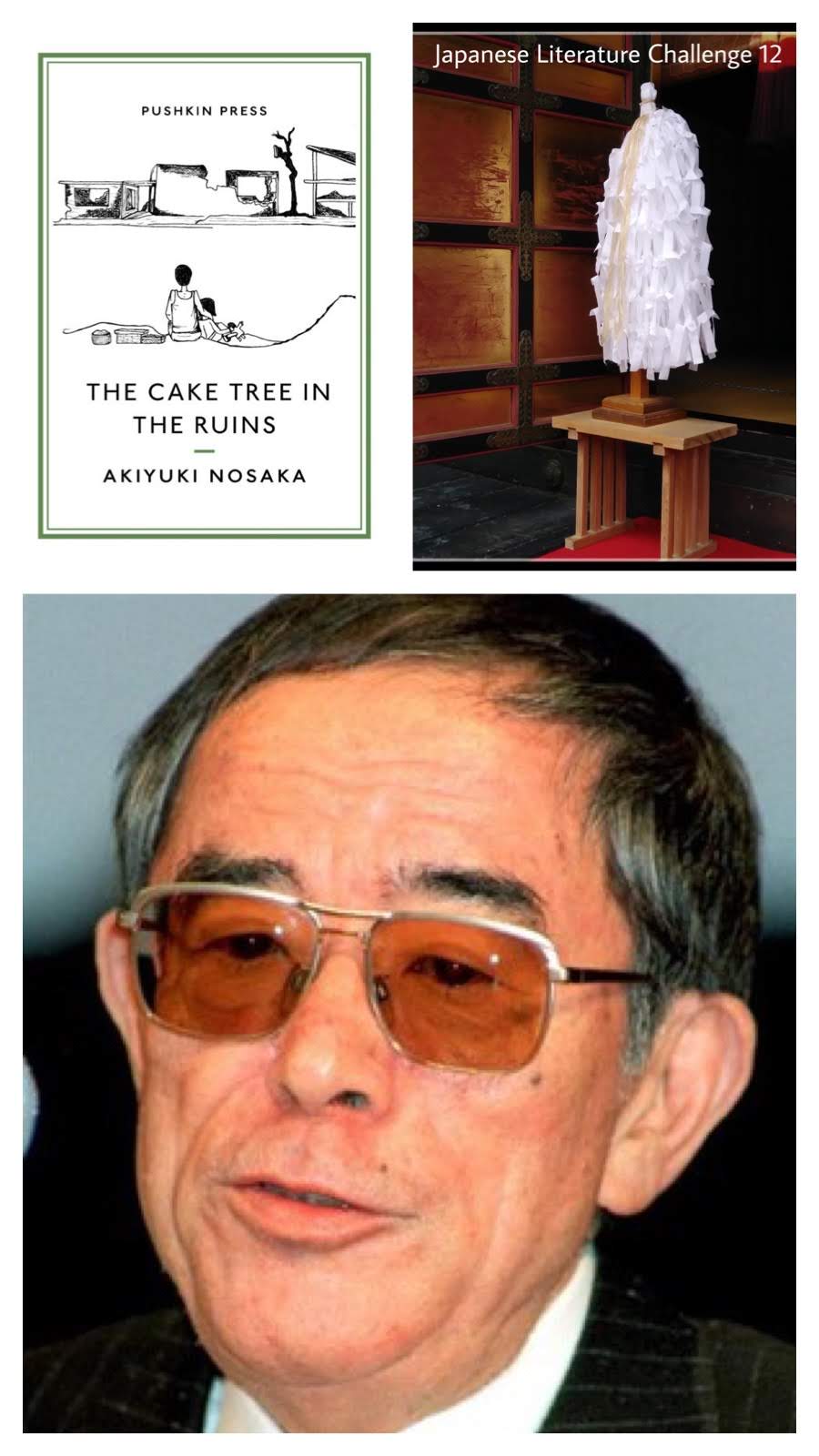
The Old She-Wolf and the Little Girl - A Short Story by Akiyuki Nosaka - 2003 - from THE CAKE TREE IN THE RUINS Translated from the Japanese by Ginny Tapley Takemori


Works I Have So Far Read for The Japanese Literature Challenge 12, ending March 31, 2019.


  1. “Insects” - a Short Story by Yuchi Seirai, a post Atomic Bomb work,2012
  2. The Great Passage by Shion Miura, 2011, a deeply moving work centered on the creation of a Japanese Language Dictionary 
  3. "The Whale That Fell in Love with a Submarine" A Short Story by  Akiyuki Nosaka- 2003- translated from the Japanese by Ginny Tapley Takemori - 2015
  4. “Bee Honey” - A Short Story by Banana Yoshimoto- 2000 - set in Argentina during the annual Mother’s March for Disappeared Children.
  5. Killing Commendatore: A Novel by Huruki Murakami- 2017
  6. The Master Key by Masako Togawa - 1962 - translated by Simon Grove
  7. "The Elephant and its Keeper" - A Short Story by Akiyuki Nasaka- 2003. translated from the Japanese by Ginny Tapley Takemari
  8. The Emissary by Yoko Tawada - 2014 - translated by Margaret Mitsutani
  9. “The Prisoner of War and the Little Girl” - A Short Story by Akiyuki Nasaka- 2003. translated from the Japanese by Ginny Tapley Takemari. I did not post on this story.
  10. “The Soldier and the Horse” - A Short Story by Akiyuki Nasaka- 2003. translated from the Japanese by Ginny Tapley Takemari. I did not post on this story
  11. "The Soldier and the Horse". - A Short Story by Akiyuki Nasaka - 2003 - no post
  12. "Mr. English" - A Short Story by GENJI KEITA -1985- no post
  13. "The Old She Wolf and the Little Girl" by Akiyuki Nasaka - 2003


Akiyuki Nosaka’s Stories, set in the closing days of World War Two, Japan surrendered on August 15, 1945 a date noted at the start of each story focus on the most innocent victims of the war, very young children and animals.  The stories have a fairy tale feel, the animals are very effectively  
anthropomorphic rendered, putting us totally seeing thinks from the animals perspective.  One of the two stories I have posted upon is about a very lonely whale brought to a very bloody end by his love for a Japanese submarine.  The other begins in the Tokyo Zoo.  There is no money to feed the animals so a decision is made to kill the animals, including a very gentle elephant raised in the zoo.  His keeper of many years takes him out into the countryside.  We feel the great bond between them, not even shattered in death.

Today's story "The Old She-Wolf and the Little Girl" is set in then Japanese occupied Manchuria.  The Japanese ruled Manchuria very cruelly but now they are fleeing, running from the imminent arrival of the Russian Army, bent on oregaining their honor from the Sino-Japanese war.  Those running are mostly women, children and old men.  The men were all drafted into the Japanese army, even the forty plus year old father of the Little girl in our story.  The Chinese know the Japanese will lose and treat the refugees as the Japanese treated them in their Glory days.

There are only two characters in the story, a little girl of about four and an elderly female wolf who has left her pack, which she up until recently lead, to find a peaceful place to die.  The young girl has contacted measles, her mother, fleeing in a large group, had no choice but to abandon her.  At first the wolf plans to stalk her a while and then have her as a last meal.  Then she starts to think that her pack would never abandon a young pup, what must these humans be like.  She begins to bond with the child, feeds her and protects her.

When the wolf and the little girl meet, the girl mistakes the wolf for the abandoned family German Shepherd, Bella, who she loved.

"Thirsty, the wolf took a drink from a small stream, then caught two field mice to appease her hunger. She had just started running as hard as she could to catch up with the group again when she suddenly caught sight of something red in the grass. Pricking up her ears, she could hear a hoarse voice crying. It didn’t immediately occur to her that it might be a human child, but as she cautiously approached she saw a small girl tottering through the grass. The only reason she didn’t pounce on the girl and gobble her up right away was that the edge had been taken off her hunger by those two field mice. And then she was quite taken aback when the little girl showed absolutely no fear upon seeing her, but instead called out “Belle!” and flung her arms happily around her neck. The girl stroked the wolf ’s neck and back, sobbing, “Where’s Mama, Belle? Go find her for me!” The wolf didn’t understand what she was saying, but the girl clearly thought that she was a friend and so she submitted to her, thinking how odd it was for a human to be so unafraid of a wolf. The little girl didn’t smell of the things the wolf hated most, leather and gunpowder, but instead was permeated with the scent of milk. This brought back memories of all the cubs that, not so long ago, she herself had given birth to and raised. Come to think of it, the little girl’s sobbing voice was not unlike the wheedling cries of a newborn wolf cub. Before the wolf realized what she was doing, she was cradling the little girl between her front paws, just as she had done with her own cubs, and was licking her face and hands, which still smelt of her mother’s milk. The little girl snuggled up to her. Now and then she called loudly, “Mama!”, but her only answer was the sound of the wind crossing the wide-open plain. She began sobbing again, but when the wolf licked away her tears she became ticklish and wriggled."

The girl gets sicker from the measles.  The old wolf now has a purpose, to take care of the girl.

As the story proceeds we learn what life was like for the fleeing Japanese but the story ends on such a cruel note I cared little for them.

Mel u


Monday, February 11, 2019

"Neela: bhopal, 1984" - A Short Story by Chaya Bhuvaneswar - From her collection White Dancing Elephants - 2018


I first became aware of the amazing stories of Chaya Bhuvaneswar in a news letter from PEN.  It was announced that she, along with four other writers, was shorted  listed for their annual award for Best Debut Short Story Collection. On her website, one of the best and most respectful to readers of author websites I am familiar with, I learned of numerous awards and looked through the glowing reviews.  

Years ago when I first began posting on short story collections I followed standard procedures, post briefly on a few of the stories then conclude with metaphor laden concluding remarks and issue a recommendation.  Sometime ago I moved toward focusing on individual stories.  If I like a writer as much as I do Chaya Bhuvaneswar I post on numerours of the stories.  This seems more respectful of the writer, better for serious readers and for me also.  Writing about a work seems to increase my understanding and helps me recall the story.

Last month i read and posted upon the wonderful title story, “White Dancing Elephants”.  Today I am posting on a very different story, one you may read at the link above.

I am a bit embarrassed to admit it did not know  about Bhopal disaster before today.  On December 2nd, 1984 a gas leak occurred at a pesticide plant in Bhopal, India owned by Union Carbide.  It produced the worst in history industrial disaster.  Over 500,000 people were injured by the gas leak.  3500 were acknowledged immediate casualties and up to twenty thousand died with in weeks.  Over 30,000 suffered permanent injuries. (The long legal battle to seek reparations is detailed in my links.) Many were blinded.

“Not for another thirty or maybe a hundred years will the water and land be safe again, as pure and unpolluted as they were hours before. Before the air burned and became a hateful thing. neela: bhopal, 1984  Eight thousand years ago, children huddled with their mothers Eight thousand years ago, children huddled with their mothers in cool caves. Those caves are hidden deep in a forest, miles from here, and would have been so much safer than shantytowns around the factory in Bhopal City, the easily penetrated houses of corrugated metal and scavenged plywood. The walls of those shacks are sheets of plastic with small holes...”

She awakes to find her three brothers dead.  She runs to the forest,trying to escape.

“All three of your brothers, limber and clever boys, were gifted at nosing out delectable refuse, edibles in the garbage. They were like scavenging dogs, little ponies. Long ago they nicknamed you Neelagai—antelope, for your thin quick legs, your skill at finding enough unspoiled food for all of them—and when they pretended to hunt you, none of them could find you here. Other hunters have found you at the edge of your forest: methyl isocyanate, fleet-footed mercury, and Sevin, the most experienced killer, creeping like ground brush."

This is a heartbreaking story, of indifference and greed of the very rich inflicting horrible cruelty on thousands of the poorest people in Bhopal.

The last words are hard to cope with.

I will read all of her stories.

CHAYA BHUVANESWAR is a practicing physician and writer whose work has appeared or is forthcoming in Narrative Magazine, The Awl, Tin House, Michigan Quarterly Review, Notre Dame Review, story South, aaduna, r.k.v.r.y. and elsewhere. She has received a Henfield writing award, a Rhodes scholarship, and is a frequent public speaker on social justice as well as trauma and recovery. Her debut short story collection, White Dancing Elephants, was selected as the winner of Dzanc Books' 2017 Short Story Collection Prize.  From  the publisher's webpage

Mel u


Sunday, February 10, 2019

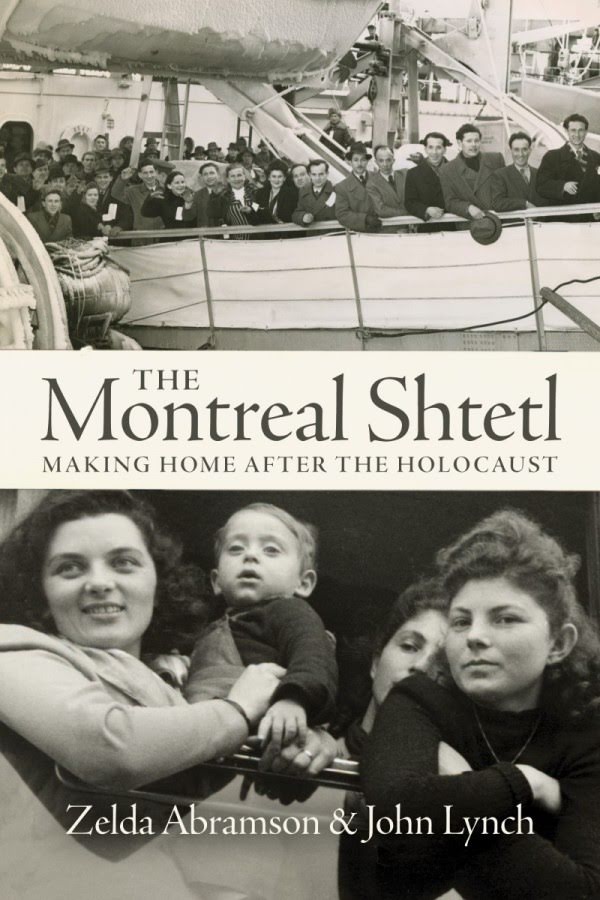
The Montreal Shtetl- Making Home After the Holocaust by Zelda Abramson and John Lynch - 2018


The Montreal Shtetl- Making Home After the Holocaust by Zelda Abramson and John Lynch

Growth of Jewish Population of Montreal

1941 - 63,000

1951 - 80,000

1958 - 100,000

The Montreal Shtetl- Making Home After the Holocaust by Zelda Abramson and John Lynch is a groundbreaking essential work, both for content and methodology.  It is a study of the immigration of Eastern European Jews into Montreal and their integration into Canadian society, after the Holocaust.  Most arrived with very little money, normally speaking Yiddish, Hungarian or Russia but little English.  Unlike early waves of immigration in which a man would come first, establish himself and then bring over his family, post Holocaust immigrants often came as families.  The Montreal Shtetl- Making Home After the Holocaust focuses on immigration from 1947 to 1954.

Immigrants first priorities were a place to live and a job.  The lucky ones had family or contact already in Canada to help them.  The other were helped by various government and private organizations.  The authors go into detail about Canadian immigration laws of the period.  Workers were especially needed in the garment trade and those with skills in this area found work right away, mostly initially as paid by pieces completed factory workers.  There was no day care so where there were children normally the wife stayed home.  It was normal for men to bring work home, often to be helped by his wife.  The immigrants were very hard working, very family oriented and wanted very much  be a success. (Ten years after arriving success meant owning a house in a decent area, kids in good schools, food anxiety long gone, often owning a business or being in managerial positions.)

Just like in Israel, Holocaust survivors were often viewed by Canadian English speaking Jews as suspect.  It was wondered how they survived.  The authors show how new arrivals, mostly Hungarian Jews, sometimes also but not always speaking Yiddish, stuck together.  In part this was because Holocaust survivors could often only closely bond with other survivors.  Third generation Canadian Jew looked down on new arrivals as ignorant and though they helped them they were not warmly welcomed.  Many immigrants were in fact highly educated, having had professional positions and wealth before they lost it all.  It was sad to learn that an immigrant with a degree in engineering would find his first Canadian landlord explaining what a light switch was for.  There were lots of quick marriages in the immigrant community. Many had lost their spouses in the Holocaust.  Education of children, who quickly became translators for their family, was a very top priority.  It was interesting to see that parents might speak Hungarian or Yiddish to each other and friends but insisted their children speak only “The King’s English”.


The heart of The Montreal Shtetl- Making Home After the Holocaust is in the numerous fascinating interviews with the immigrants.  The authors explain the methodology behind the interviews.  Most interviewed were seventy plus.
The interviews are in three sections.  The first section is devoted to experiences before they arrived and how the arranged passage to Canada.  There were set quotas as to how many Jews could be admitted.  Canada was more liberal than the USA at the time.  Many immigrants applied to the USA, Canada, Australia and South Africa, just wanting to put Europe way behind them.

Section two of the interviews deals with settling in Canada.  The authors studied the records of Jewish Social Agencies of the period.  Immigrants got some cash aid, help with rent and counseling.  Some at once found housing and a job, others struggled.  

The last section of interviews takes us on into their full integration into Canadian society, their children were professionals and their grandchildren in medical or law school.  Most, but not all of course, did very well.  We follow them from rooming houses to nice houses in exclusive areas.  Most immigrants did socialize mostly with other immigrants and we do see there was a lingering anti immigrant feeling, nearly as bad among prior immigrants as English or French speakers.

The Montreal Shtetl- Making Home After the Holocaust by Zelda Abramson and John Lynch should be read by anyone interested in immigration, Canadian history or post Holocaust Jewish experiences.  This is a wonderful book. I liked everything about it! The interviews were a joy to read.

In conjunction with this book, I suggest reading World of Our Fathers: The Journey of the East European Jews to America and the Life They Found and Made by Irving Howe.

I highly recommend everyone visit the website of Between the Lines Books, a forty year old Montreal based publishing company.


“Between the Lines books presents new ideas and challenge readers to rethink the world around them. Our authors offer analysis of historical events and contemporary issues not often found in the mainstream. We specialize in informative, non-fiction books on politics and public policy, social issues, Canadian and world history, international development, gender and sexuality, critical race issues, culture, adult and popular education, labour and work, environment, technology, and media.” - from the publisher 

Zelda Abramson is an associate professor of sociology at Acadia University. Her areas of teaching and research include methodology, health, and family. As a public sociologist, she strives to combine academic research with social activism. Zelda grew up in Montreal as a child of Holocaust survivors.

I was initially drawn to this book through my admiration for Chava Rosenfarb, whose image is in my blog side bar.  After spending four years in Auschwitz and then Bergen-Belsen, five years waiting for a Canadian visa in Paris, she and her husband,also a survivor, moved to Montreal.  Already a renown author, she was met with a reception by Yiddish writers.  She wrote stories related to Holocaust survivors in Montreal as well as many other great works.  The Montreal Shtetl- Making Home After the Holocaust by Zelda Abramson and John Lynch helped me understand her works more.

I salute Between the Pages for publishing The Montreal Shtetl- Making Home After the Holocaust by Zelda Abramson and John Lynch and give my great thanks to the authors.

Mel u


Saturday, February 9, 2019

The Loudest Voice - A Short Story by Grace Paley - first published- 1959:


A reading by Rhea  Perlman


December 11, 1922 - The Bronx

August 22, 2007 - Thetford, Vermont


"“Active? Active has to have a reason. Listen,” she said sadly, “I’m surprised to see my neighbors making tra-la-la for Christmas.” My father couldn’t think of what to say to that. Then he decided: “You’re in America! Clara, you wanted to come here. In Palestine the Arabs would be eating you alive. Europe you had pogroms. Argentina is full of Indians. Here you got Christmas … Some joke, ha?”

Rita Perlman is the perfect reader for a Grace Paley story.  Her voice and the exquisite artistry of Paley combine for a wonderful experience. If you have access to the story read it maybe first, then listen, then read again.

The story is set in New York City, centered upon a family of Yiddish speaking immigrants from Eastern Europe.  The story shows us the universal tension in immigrant families between maintains their traditions and getting their children established as "real Americans", paving the way to success. Their daughter is known for having a very loud voice.

It is Chirstmas season, of course the family does not observe the holiday.
At the daughter's school, she is maybe ten, is asked, because of her loud voice, to play an important part in a play about the life of Jesus.  As we see in the opening quote, this is a transition point for the parents, her mother objects to this and her father accepts.

A wonderful story.

Rita Perlman also reads, on You Tube, another story by Grace Paley, "Goodbye and Good Luck".  (I posted on this back in 2013 and loved hearing it read.). Set in the venue of the Yiddish theater, I loved it.

Mel u

Friday, February 8, 2019

"Thank You For the Lovely Tea" by Mavis Gallant - first published 1956


Buried in Print's Mavis Gallant Reading Schedule 

Mavis Gallant on The Reading Life


Born August 11, 1922 in Montreal

1950- moves to France

September 1, 1951, publishes her first short story (In The New Yorker)

February 18, 2004 - dies in her beloved Paris.


"Thanks for the Lovely Tea" by Mavis Gallant

"Ruth took her in coldly, leaning on a plump, grubby hand. Mrs. Holland was untidy –she had heard people say so. She was emotional. This, too, Ruth had overheard, always said with disapproval. Emotion meant “being American”; it meant placing yourself unarmed in the hands of the enemy. Emotion meant not getting one’s lipstick on straight, a marcel wave coming apart in wild strands. It accounted for Mrs. Holland’s anxious blue eyes, for the button missing on a blouse, the odds and ends forever falling out of purse or pocket. Emotion was worse than bad taste; it was calamitous."

Today's story, "Thanks for a Lovely Tea" is set on a rainy day somewhere in Canada around 1931.  It centers on a teenage girl, Ruth, placed in a boarding school after her mother passed.  I admit as I read this story I wondep if I might find, or read into the story, a glimpse as to why Gallant moved out of the country as soon as she could and for sure I did.  The story is replete with images evoking a bland repressed emotion rejecting society.

The story begins on a slow time of day in the slowest period of the school year.  The virtues of Ruth is that she is patient, self-controlled.  The King has just died along with the Kipling, a celebrator of British colonialism.  The just retired head mistress is described as a spinister. Two other girls live at the school full time, friends with Ruth.  Ruth is further described as placid, lazy.  The school patron is a wealthy fruit merchant.  The girls wear uniforms, no showing of teenage looks or family wealth.

All is not well for Ruth, as we might have guessed.  Her widowed father has a lady friend, Mrs Holland (reaching here "Holland" might evoke, in 1932, a very bland place, far from Paris). Mrs Holland has come to take her to tea at a fancy department store.  Ruth brings her two friends.  We never learn what Mrs Holland looks like, how she met Ruth's father, her first name or her life history.  Ruth seems her and her father as to elderly for serious romance.

The tea is a classic of repressed emotion, Mrs Holland, you can tell, wishes it was just her and Ruth.  Ruth, it seems to me brought her friends along to prevent Mrs Holland from broaching the idea of her marrying Ruth's father.  Mrs Holland sees the girls as "cold little Canadians".  Now I wondered could Mrs Holland actually be an American?  As the story closed the head mistress asks Mrs Holland if the girls thanked her for tea.

"She laid her cold pink hand on Mrs. Holland’s for a moment, then withdrew it, perplexed by the wince, the recoil. “One forgets how much it can mean at that age, a treat on a rainy day.” “Perhaps that’s the answer,” Mrs. Holland said. The headmistress sensed that things were out of hand, but she had no desire to be involved; perhaps the three had been noisy, had overeaten. She smiled with such vague good manners that Mrs. Holland was released and could go."

The last paragraph masterfully, in a subdued denouement perfectly closing "Thanks for the Lovely Tea" takes us deeply into the zeitgeist of proper Canadians in 1930.


I have been reading short stories by Mavis Gallant (born Montreal 1922, died Paris, 2014) since 2013.  I was delighted when a blogger I have happily followed for years, Buried in Print, announced they would be reading and posting on her many short stories (116 published in The New Yorker alone) on a weekly basis.   I have on my E Reader The Collected Short Short Stories of Mavis Gallant (contains per Gallant about half of her stories) so I decided to try to read along with Buried in Print's weekly schedule as much as I might.

Recently I was delighted to find a collection of sixteen of sixteen mostly set in Canada short stories by Gallant,Home Truths for sale in Kindle format for $1.95. it is now back up to $9.95.  Buried in Print has just reached these stories so I will be reading along on all these works.


Mel u

Monday, February 4, 2019

City of Rogues and Schnorrers: Russia’s Jews and the Myth of Old Odessa by Jarrod Tanney - 2011- 288 pages


“Much like Shanghai, New Orleans,and San Francisco’s Barbary Coast, old Odessa was both venerated and vilified as a city of sin—heaven for some, hell on earth for others—a haven for smugglers, thieves, and pimps who boasted of their corruption through endless nights of raucous revelry.” 


Writers of not purely academic nonfiction often face a quandry. Do you write for  General  readers who well may have little interest in your book or for those already interested.  The problem Is one set of readers will already know most of what you need to tell a reader just curious on the topic will be common knowledge to other set.  So either you assume a reader knows little or nothing or that they know quite a bit.  Sort of like teaching a class on The Holocaust in which The students are half College freshmen who have barely heard of it and The other half of the Class are post doctorial experts.  


Jarrod Tanney in his City of Rogues and Schnorrers: Russia’s Jews and Old Odessa does a very good job providing content for both audiences, especially in the very valuable notes and bibliography aimed at advanced readers. ( There is a review on Amazon saying the footnotes are not linked to the footnote numbers in the body of the text. I guess this problem got fixed as I had no such issue.)


1794- Odessa, on the Black Sea, was founded on land concurred from Turkey.  Russia gained a much needed warm water port to open up trade.  Soon Jews came to play a big part in the booming export and whole sale trade.  With single men moving there to make their fortunes and sailors from all over the world teeming the streets, Jewish Gangsters ran prostitution and shipped girls to South America in the sex trade.  Tanney very interestingly talks about how the Jewish gangsters were half admired for getting the better of the Goyim.

Tanney talks about the impact of the pograms of 1821, 1859, 1871, 1881 and most importantly 1905.

In 1892 there were 124,000 Jews living in Odessa.

Odessa was a Center for Jewish literary endeavors.  Most famously, talked about in depth by Tanney was Issac Babel, author of Odessa Stories focusing on a gangster.  He also goes into detail about work by Sholem Aleichem centered in Odessa as well as others.  


Odessa was once a city famous for decadence, corruption, great writers, citizens and visitors from all over the world were drawn to Russia’s only warm water, compared with the Baltic ports, of the country.  It was also a place where an ambitious young man might find a fortune as an exporter.  Tanney showed me the predominance of Jews in the theater and music.  Half the cities doctors were Jewish.

A lot of the book is devoted to the figure of the Schnorrers.  Here is how Wikipedia explains this.  


The English usage of the word denotes a sly chiseler who will get money out of his acquaintances any way he can, often through an air of entitlement. A schnorrer is distinguished from an ordinary beggar by dint of his boundless chutzpah. Like "moocher", "schnorrer" does not apply to direct begging or destitution, but rather a habit of getting things (food, tools) by politely or insistently borrowing them with no intention of return.


Odessa is a city famous for its Schnorrers.

(The Forward has a superb article on the concept.  In his movies Groucho Marx often played a Schnorrer.


There are lots of things to be learned from this book.  For example I’m seeing better the role of the marriage broker as a Schnorrer figure, making wild unsubstantiated claims.  

City of Rogues and Schnorrers: Russia’s Jews and Old Odessa is a book anyone in Eastern European and Russian Jews history or Yiddish literature will like a lot.  

There is a good bibliographic list and lots of interesting data in the footnotes.

From the author’s website

“Welcome to my website! I live in Wilmington, North Carolina, where I teach Jewish studies in the history department at UNCW. I joined the department in 2010, after a two year stint as a Schusterman post-Doctoral Teaching Fellow in the foothills of Apalachia, at Ohio University. I completed my Ph.D. in Russian and Jewish History at UC Berkeley in May 2008, where I was fortunate to work with Yuri Slezkine, John Efron, and Reggie Zelnik.

My book, City of Rogues and Schnorrers (Indiana UP, 2011) examines how the Russian city of Odessa was mythologized as a Jewish city of sin, celebrated and vilified for its Jewish gangsters, pimps, bawdy musicians, and comedians.

My current project is on the history of Jewish humor. Although I primarily focus on America since the 1960s, I trace its origins to the Yiddish speaking shtetls of eastern Europe. To truly understand Seinfeld and Sarah Silverman, one must understand Sholem Aleichem.”


Oleander Bousweau 
Mel u


Saturday, February 2, 2019

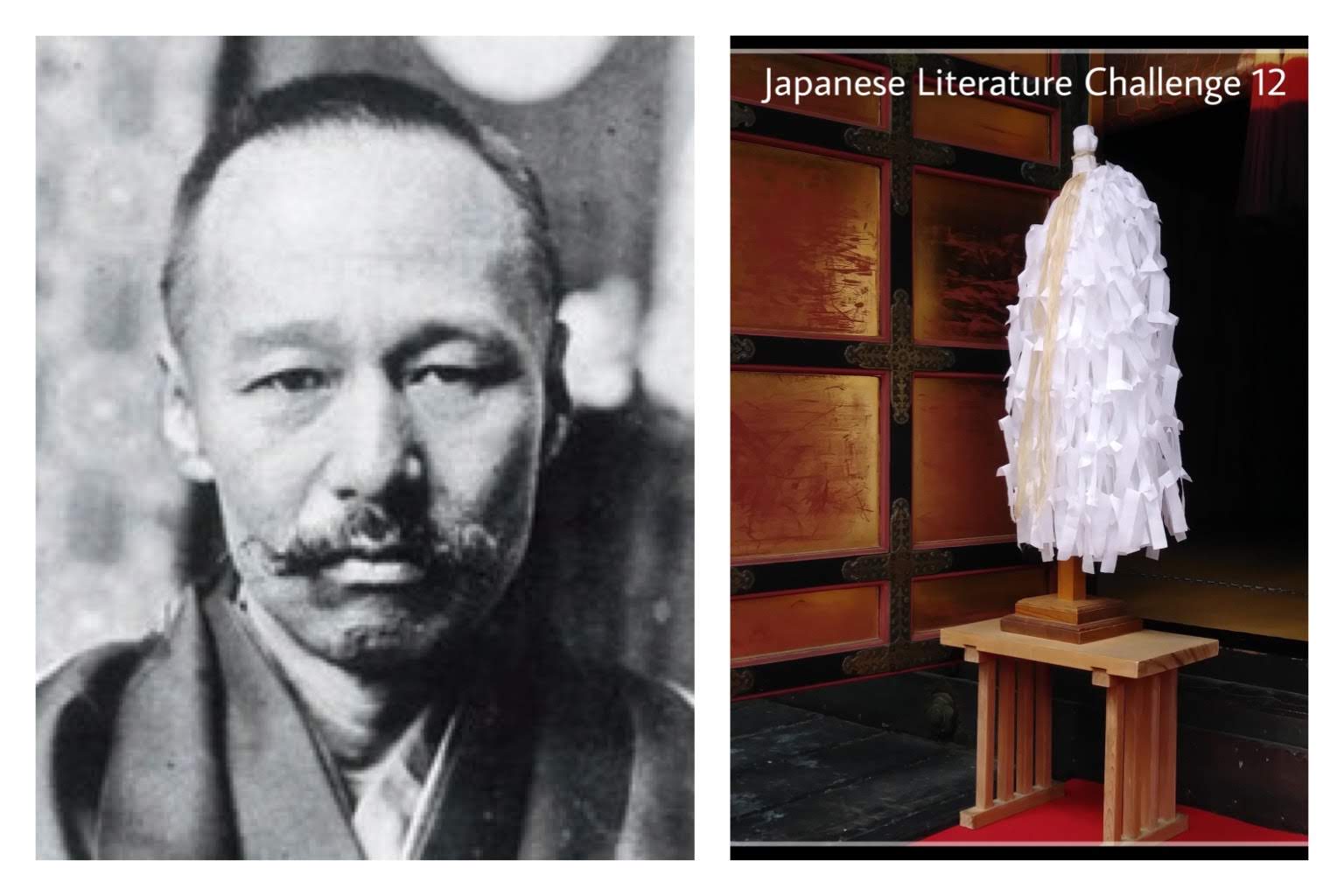
My Plans for Month Two of The Japanese Literature 12 Challenge plus a story by Mori Ogai, author of Vita Sexualis, “The Last Testament of Okikaw Yagoeman”, 1922, translated by Richard Browning


The Japanese Literature Challenge 12 will run until March 31. This is my tenth year of participation.  

Here is what i read last months


  1. Insects” - a Short Story by Yuchi Seirai, a post Atomic Bomb work,2012
  2. The Great Passage by Shion Miura, 2011, a deeply moving work centered on the creation of a Japanese Language Dictionary 
  3. "The Whale That Fell in Love with a Submarine" A Short Story by  Akiyuki Nosaka- 2003- translated from the Japanese by Ginny Tapley Takemori - 2015
  4. “Bee Honey” - A Short Story by Banana Yoshimoto- 2000 - set in Argentina during the annual Mother’s March for Disappeared Children.
  5. Killing Commendatore: A Novel by Huruki Murakami- 2017
  6. The Master Key by Masako Togawa - 1962 - translated by Simon Grove
  7. "The Elephant and its Keeper" - A Short Story by Akiyuki Nasaka- 2003. translated from the Japanese by Ginny Tapley Takemari
  8. The Emissary by Yoko Tawada - 2014 - translated by Margaret Mitsutani
  9. “The Prisoner of War and the Little Girl” - A Short Story by Akiyuki Nasaka- 2003. translated from the Japanese by Ginny Tapley Takemari. I did not post on this story.
  10. “The Soldier and the Horse” - A Short Story by Akiyuki Nasaka- 2003. translated from the Japanese by Ginny Tapley Takemari. I did not post on this story.

My biggest goal for the event was to read the Killing Commendatore by Huruki Murakami, it did not disappoint.

I loved The Great Passage by Shion Miura.  I am very into Japanese WW  Two Literature and discovered two new to me writers in this area.  I read for the first time works by four writers I hope to explore further.  For me, a very good first month.

I have two novels on my list For February.  One is The Pornographer by Akiyuki Nosaka.  Another is a newly translated novel by Yokio Mishima, The Frolic of the Beasts.  The Penguin Book of Japanese Short Stories is a great resource and I will read more from this book.  Otherwise my options are open.

Mori Ogai (Ogai Mori)

Born 1862

1882 to 1916- served in Japanese Army, participated in Sino-Russian war, having a medical degree he became The Surgeon General of The Japanese Army

1909- His semi-auto biographical account of his sexual coming of age Vita Sexualis is published.  Shocking in 1909, draws him repreminds from his superiors.

From my post in for The Japanese Literature Challenge in 2010

Ogai Mori (1862 to 1922) was born into a privileged family in the southern Japan.   His family had long had the been by right of inheritance physicians to the daimyo (a feudal samurai lord) of the region.    As the oldest son of the family, Mori as expected graduated from Medical School.   In his younger days he studied Confucian texts to supplement his schooling and insure a grounding in the classics.    After graduation he enrolled in the Japanese Imperial Army.   The army sent him to Germany to pursue advanced medical training and while there he developed a passion for European literature.     Upon return to Japan he was given a high ranking position in the army medical corps.   While pursuing his military career he started at his own expense a literary journal in the pages of which Japanese literary criticism first began.   In time he  was promoted to the position of Surgeon General of the Japanese Imperial Army.   While in the army he served in Manchuria and Taiwan during periods of combat.   As a hobby he pursued his writings, the most famous of which is The Wild Geese.


Vita Sexualis is considered an autobiographical novel of the sexual development of Mori.   It was considered so daring at the time that it was banned three weeks after its initial publication and Mori drew an official reprimand from his military superiors.   The book is narrated as if one writer was presenting the manuscript of a second one.     Vita Sexualis is in no sense at all a an explicit book but it does talk in an open way about homosexual activity (including rape) in Japanese all male boarding schools which were attended by most elite Japanese of the time.   The book is told sort of one year at a time starting with age six and ending at age twenty one.    The narrator ends up in medical school just like Mori did.   We see him learning about self gratification from his peers up to his first sexual encounter which was with  a prostitute.   This  is portrayed as a normal right of male passage at the time.  I thing the suggestion that elite Japanese males commonly visited prostitutes and tea houses  of bad repute is   probably one of the reasons the top functionaries of the Imperial Army did not like his book.   We also see the role of  geisha in the life of the Japanese elite.   There is a lot of blurring of the line between prostitutes and gieshas in Japanese novels.       Given time it was expected that gieshas would provide sexual services and also cultural instruction to young elite males.   For sure this is the depiction of that aspect of Japanese life is shown in Vita Sexualis.   I think maybe the real  reason his book was banned as he revealed to much "boy's club" information about life among the elite in Japan.

Today’s story by Ogai, “The Last Testament of Okikaw Yagoeman”, first published in 1922 is a state by an elderly samurai warrior written in explanation for his motives for committing ritual suicide. For many years he lived simply as a Buddhist monk.  He writes of the three masters he has served.  He has only enough worldly goods to pay for a proper funeral.  The testimony is addressed to a fellow monk who he knows will be the one to discover his body. He asks that his children be sent nail clippings.

The story is very elegant and requires no explanation.

This work is included in The Penquin Book of Japanese Short Stories.

Mel u


Featured Post

Imperial Reckoning: The Untold Story of Britain’s Gulag in Kenya by Caroline Elkins - 2005 - 701 Pages

  Imperial Reckoning:     The Untold Story of Britain’s Gulag in Kenya by Caroline Elkins - 2005 - 701 Pages 2006 Pulitzer Prize Winner From...