Wednesday, January 6, 2021

Peony Lanterns - A Short Story by Aoko Matsuda - translated from The Japanese by Polly Barton - 2020


“Peony Lanterns” a Short Story by Aoko Matsuda - translated from the Japanese by Polly Barton -2020 - My Plans for The Japanese Literature 14 Challenge 


Electric Litarature has placed this story online, accompanied by an introduction by Carmen Maria Machado


The Japanese Literature Challenge 14 - Hosted by Dolce Bellezza 

January 1 to March 31. Japanese Literature Challenge 14


In these pandemic times we may not be able to visit Japan in person  but through JL14 you can make many virtual trips.


This will be the 12th time I have participated in The Japanese Literature Challenge.  I first joined in July 2009, just as I started The Reading Life. From this start, never having read any Japanese literature, I

went  read hundreds of works, adding numerous writers to my “read all I can” list.  I came to see that the post World War Two Japanese novel is a World Class Cultural treasure of a very high order.  


My plans so far for JL14 includes these novels


  1. Before The Coffee Gets Cold by TOSHIKAZU KAWAGUCHI
  2. A Single Swallow by Zhang Lin
  3. Life for Sale by Yukio Mishima
  4. Star by Yukio Mishima
  5. The Frolic of The Beasts by Yukio Mishima (all these of The Mishima works are newly translated)


I also have added to my wish list three novels by Osamu Dazai as well as Breasts and Eggs by Mieko Kawakami.  There are also a lot of stories i have not yet read in The Penquin Book of Japanese Short Stories.


Today I am starting my participation in JL14 with a really fun story by s writer new to me Aoko Matsuda, “Peony Lanterns”.  In her introduction Carmen Maria Macado says it is a modern retelling of a classic Japanese Ghost Story in which a man is visited every night by what he thinks is a beautiful woman.  In fact she is a ghost embodied as a decayed corpse.


The central character has recently lost his sales job in a corporate reshuffle.  His spirit is low as he sits home supported by his wife.  Of course he finds this humiliating.  One day two women knock on his door, they are selling peony lanterns.  Against his better judgement he lets them come inside.  One is in her fifties, fhe other mid thirties.  Both are well dressed and attractive.  I do not want to give away the very intriquing  plot of this story but the longer the women stay, the stranger they seem.  The ending was a lot of fun.


About the Author - from Electric Literature 


Aoko Matsuda is a writer and translator. In 2013, her debut book, Stackable, was nominated for the Yukio Mishima Prize and the Noma Literary New Face Prize. Her novella, The Girl Who Is Getting Married, was published by Strangers Press in the U.K. in 2016. In 2019, her short story “The Woman Dies” was short-listed for a Shirley Jackson Award. She has translated work by Karen Russell, Amelia Gray, and Carmen Maria Machado into Japanese.


Mel u


Monday, January 4, 2021

Fordlandia: The Rise and Fall of Henry Ford's Forgotten Jungle City by Greg Grandin - 2009


Fordlandia: The Rise and Fall of Henry Ford's Forgotten Jungle City by Greg Grandin  - 2009


Nominated for National Book Award and Pulitzer Prize for History


An Autoditactic Corner Selection


Essential Reading for all into 20th Century American History


Henry Ford 


Born - July 30, 1863 - Springwells, Michigan 


Founds Ford Motor Company on June 16, 1903


October 1, 1908 - Introduces Model T - by 1918 over half American cars were model Ts


1926 - Initiates a $5.00 minimum wage (equal to $130.00 a day now - established forty hour work week and gave health insurance to workers


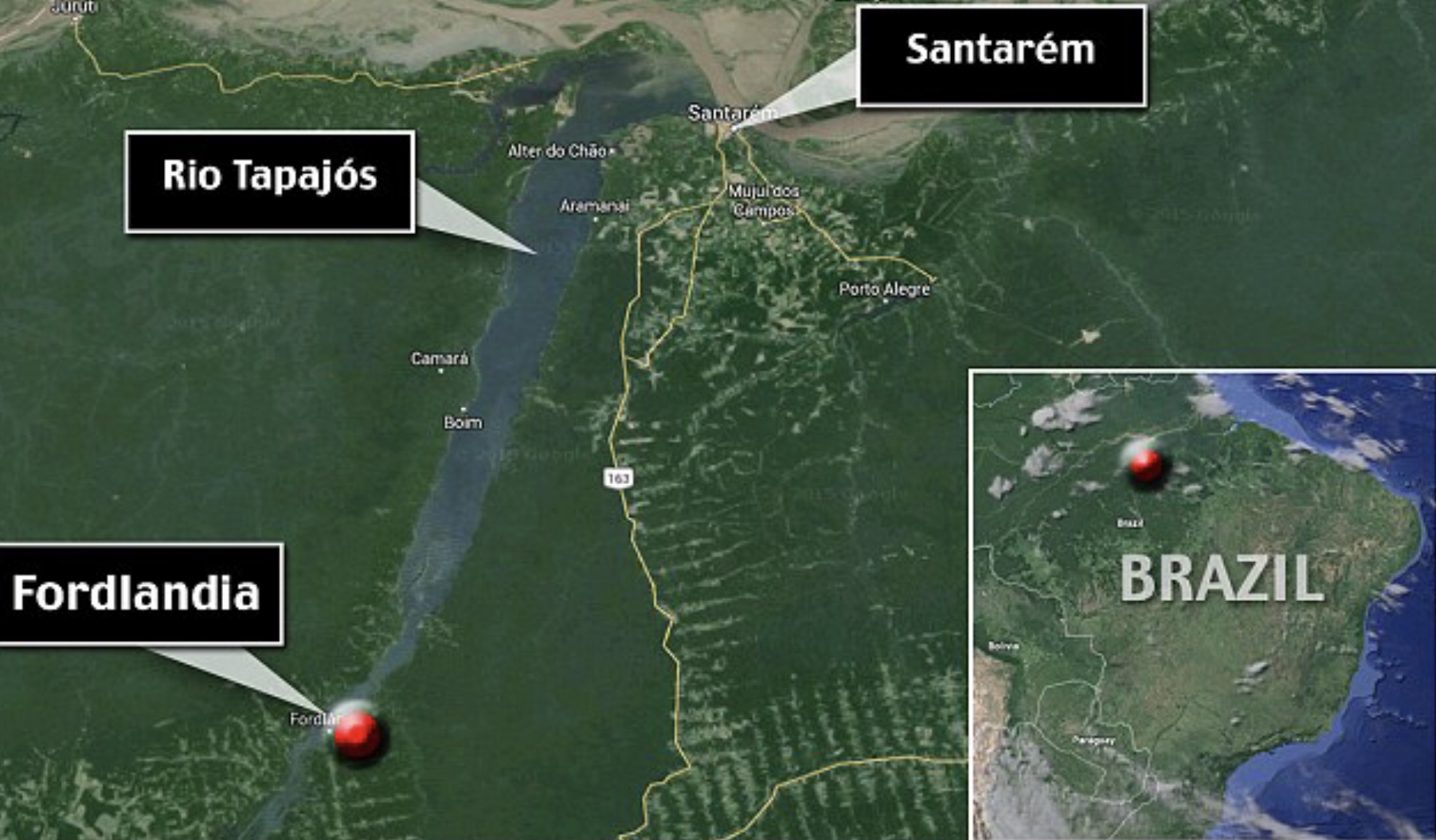
1928 - established Fordlandia on 14,268 square Kilometers in N. E. Brazil- the purpose was to produce rubber


N


1934 - Fordlandia abandoned 


April 1, 1947 - Dies - Dearborn, Michigan 


Fordlandia: The Rise and Fall of Henry Ford's Forgotten Jungle City by Greg Grandin  - 2009


Nominated for National Book Award and Pulitzer Prize for History


An Autoditactic Corner Selection


Essential Reading for all into 20th Century American History


Henry Ford 


Born - July 30, 1863 - Springwells, Michigan 


Fordlandia: The Rise and Fall of Henry Ford's Forgotten Jungle City by Greg Grandin gets my 2021 reading life year off to a wonderful start.  Grandin elegantly tells the story of Henry Ford’s riise from a mechanic, the child of an Irish immigrant,to 

one of the richest people in the world.  We learn that Ford did not invent  the assembly line but perfected it.  He was the

first automobile manufacturers to produce a car millions could afford, the Model T, costing $850.00, buyable on credit, coming only in black.  Ford did pay very well, he wanted the best workers. Many African Americans moved up from the south to get a job in his factory.

Ford paid everyone the same but Grinder does say he gave them low skill jobs and did not advance them.  Ford turned his employees into cogs in his process.  No one was allowed to sit down.  As his work force topped 100,000 he began an internal security force which made sure there was no talk of unions.  Dissenters were at risk for physical harm.  He sent inspectors to employee houses trying to enforce a no drinking regulation.  


I learned a lot about the development of The 

 automobile business.  Soon Ford had factories in many countries as well as franchised sales offices.Ford was a pacifist, very against Franklin Roosevelt.  As Japan expanded the international supply of rubber Ford needed was in danger of being curtailed.  He knew he had to do something.  Once WW Two began Ford did turn his factories to the war effort.


Grinder also goes a lot into the rubber industry.  Ford knew once rubber was grown only in Brazil but seedlings were smuggled out and rubber was grown more successfully in S. E. Asia.  Brazilian rubber tappers were normally in debt bondage to a local merchant.  It was very interesting to learn why rubber trees did better outside of Brazil.Ford, aided by a loyal management team, decided to revitalize the Brazilian rubber industry.  In order to do he acquired a huge parcel of land in N. E.Brazil, on rivers that were part of the Amazon system. We learn of the interactions of Ford’s representatives and the Brazilian government people, both sides wanted to personally profit.  Ford wanted to recreate a Michigan town, minus the bars,brothels, deep in the Amazon using as workers the people in the area.  Logistically it was hard to get supplies there as ocean going vessels needed to bring in requirements could only reach the area half the year.  Grinder goes into a lot of fascinating detail about the problems getting the workers, who were well paid, to accept strict regulations.  All sorts of side businesses sprung up to service the workers, including of course bars and brothels.  Often a Ford employee would bring his extended family with him.  Ford employees, many young single men, would often quit their jobs once they had enough cash to live a few months.  Ford tried to make employees eat in a company cafeteria 

serving food very unlike home cooking.  Grinder describes a violent strike of Ford employees that required the intervention of the Brazilian army to restore order.


Grinder very clearly lets us see why the project was doomed from the start.


We learned of Ford’s mental decline, his troubled relationship with his only child Edsel


Grinder closes the book with a grim account of what Ford did to The Brazilian Amazon in cities like Manus.  Grinder convinced me that Ford helped turned people all over World into near corporate cogs and near slaves


Greg Grandin

Pulitzer Prize-winning scholar Greg Grandin has been appointed as the Peter V. and C. Vann Woodward Professor of History in the Faculty of Arts and Sciences.

Grandin, who holds a Ph.D. from Yale (1999), won a 2020 Pulitzer Prize in general nonfiction for his book “The End of the Myth: From the Frontier to the Border Wall in the Mind of America” (Metropolitan Books). The book explores the meaning of the frontier from the American Revolution to the presidential election of 2016. It was also a finalist for both the Pulitzer’s history category this year and the 2019 National Book Award.

The Yale professor is the author of seven books. His “Fordlandia: The Rise and Fall of Henry Ford’s Forgotten Jungle City” was a finalist for the 2010 Pulitzer Prize in History, as well as for the National Book Award and the National Book Critics Circle Award. He is also the author of “The Empire of Necessity: Slavery, Freedom, and Deception in the New World,” which won the Bancroft and Beveridge prizes in American history and was shortlisted for the Samuel Johnson Prize in the United Kingdom. His first book, “The Blood of Guatemala,” won the Latin American Studies Association’s Bryce Wood Award for best book published on Latin American in any discipline.

Grandin has co-edited, with Gil Joseph, “A Century of Revolution,” and, with Deborah Levenson and Elizabeth Oglesby, “The Guatemala Reader.” He has published widely in The New York Times, Harper’s, The London Review of Books, The Nation, The Boston Review, The Los Angeles Times, The New Republic, The Hispanic American Historical Review, and The American Historical Review, among other places,.

A graduate of Brooklyn College at the City University of New York, Grandin studied for his Yale doctorate studied under historian Emilia Viotti da Costa. He joined the Yale faculty in the fall of 2019, having previously taught at New York University.

Grandin is a member of the American Academy of Arts and Sciences and the Society of American Historians.”  From Yale University


Fordlandia: The Rise and Fall of Henry Ford's Forgotten Jungle City by Greg Grandin is a very powerful book.  


All teachers of history, not just American history as Ford changed World, should read this book.


.


Sunday, January 3, 2021

2020 Reading Life Year End Review - Reading While Quarantined


For many millions 2020 was a weird nasty year.  It was a year of the rat and it certainly seemed even the rats wanted it over.  


I have pretty much been inside our condo in Metro Manila since early March as mandated by the government and my family.  I am of an age more vulnerable to the virus.  We suffer no material deprivation at all, our three adult daughters are home as well as our six cats and now our latest family member, Chewbacca, a wonderful Shjn Tzu.  

,


The Family is very close and we enjoy being together.  I do miss going to The mall, eating in resturants once and a while but I have  streaming services and of course my Reading.  Plus anything we want can be delivered.  We  are thankful for our privledged status as many here suffer real hardship.


If I did not love Reading and have access to a huge number of works I would have found the  year a lot worse.  We did have to cancel a planned trip to Europe but still hope for better options coming.


In 2020 I posted on 25 works of narrative nonfiction and 27 novels and novellas.  There are 108 posts on story stories.  Some of these posts were on multiple stories so I am guessing I talked on about 175 stories.


As of today Pages on The Reading Life have been viewed 6,192,503 times.  There are 3860 posts online.


The top home countries for visitors in 2020 were


  1. USA
  2. India
  3. The Phillippines 
  4. Germany
  5. Russia
  6. UK
  7. Hong Kong
  8. Canada
  9. France
  10. Turkmenistan 
  11. Indonesia 
  12. Brazil
  13. The Netherlands 
  14. Japan
  15. United Arab Emirates
  16. Dominican Republic
  17. Romania
  18. Bangladesh


Reading plans and hopes for 2021.


I good predictor of features on The Resding Life can be found in The side bar images. 


.

I Will once agajn particpate in The Japanese Literature Challenge, Jan to March.


I Will either finish Reading Balzac’s Comedie Humaine (83 of 91 items completed) or give up.


I have a big back Log of Yiddish Literture i want dig into.


In March I Will Focus on Irish Short Stories.


Saturday, January 2, 2021

Narrative Non-Fiction from my 2020 readings -


Narrative Non-Fiction from my 2020 readings  


Best four of my year


  1. Who We Are and How We Got Here: Ancient DNA and the New Science of the Human Past by David Reich - 2018 - 
  2. The Comanche Empire by Pekka Hämäläinen - 2008 - 510 pages - an amazing work of narrative non-fiction.
  3. 999 The Extraordinary Young Women of the First Official Transport to Auschwitz by Heather Dune Macadam 2020 - 486 Pages - very valuable edition to Holocaust Studies 
  4. The Outlaw Ocean: Journeys Across the Last Untamed Frontier by Ian Urbina - 2019


January 


  1. Save Me the Plums: My Gourmet Memoir by Ruth Reichl - 2019
  2. WASHINTON’S IMMORTALS The Untold Story of an Elite Regiment Who Changed the Course of the Revolution by Patrick K. O’Donnell - 2012


February 


  1. Brothers At Arms: American Independence and the Men of France and Spain Who Saved It by Larrie D. Ferreiro. 2016


March 


  1. TOM PAINE A Political life by JOHN KEANE - 1999 -676 pages


April, May and June were slow reading months for me, I read no non-fiction during these three months.


July -devoted to Parisian matters 


  1. The Mistress of Paris- The 19th Century Courtesan Who Built an Empire on a Secret by Catherine Hewitt - 2015
  2. Ambition and Desire: The Dangerous Life of Josephine Bonaparte by Kate Williams - 2014
  3. Marc Chagall by Jonathan Wilson - 2007


August


  1. 999 The Extraordinary Young Women of the First Official Transport to Auschwitz by Heather Dune Macadam 2020 - 486 Pages
  2. Who We Are and How We Got Here: Ancient DNA and the New Science of the Human Past by David Reich - 2018


September


  1. The Lives of the Muses: Nine Women and The Artists They Inspired by Francine Prose - 2002
  2. The Extraordinary Life of A. A. Milne by Nadia Cohen - 2018
  3. Hitler and the Hab­s­burgs: The Führer’s Vendet­ta Against the Aus­tri­an Royals by James Longo- 2018


October 


  1. SPREADING THE GOSPEL OF BOOKS ESSAE M. CULVER AND THE GENESIS OF LOUISIANA PARISH LIBRARIES       By FLORENCE M. JUMONVILLE      2019 - 272 Pages
  2. The Comanche Empire by Pekka Hämäläinen - 2008 - 510 pages
  3. The Men Who Lost America: British Leadership, the American Revolution, and the Fate of the Empire by Andrew Jackson O'Shaughnessy - 2013 - 720 pages
  4. The Outlaw Ocean: Journeys Across the Last Untamed Frontier by Ian Urbina - 2019


November 


  1. Montaigne by Stefan Zweig Original text © Atrium Press Ltd, 1976 First published in German in Europäisches Erbe, S. Fischer Verlag, 1960 Translation © Will Stone 2015 First published by Pushkin Press
  2. I Belong to Vienna: A Jewish Family’s Story of Exhile and Return by Anna Goldenberg - Translated from the German by Alta L. Price 2020
  3. Drunk on Genocide: Alcohol and Mass Murder in Nazi Germany by Edward Westermann - forthcoming March  2021

December 


  1. James Edward Oglethorpe by Joyce Blackburn with a Preface by Eugenia Price-1970
  2. Joseph Roth: A Search for the Wandering Jew by Dennis Marks - 2011
  3. Books Promiscuously Read - Reading As a Way of Life by Heather Cass White - forthcoming July 2021 - no post. 
  4. The last kings of Shanghai : the rival Jewish dynasties that helped create modern China by Jonathan Kaufman - 2020 - no post
  5. The Slave Ship: A Human History by Marcus Rediker - no post


Friday, January 1, 2021

The Reading Life Review- December 2020


Row 1 - left to right


  1. Janet H Swinney- U K - this is her  eighth time to be featured, wonderful short stories - her stories have appeared in print anthologies and online journals across the UK, India and America. Earlyworks Press have published much of her work in the UK, while in India, it has appeared in a number of online literary journals, including the Bombay Review, Out of Print and the Lakeside International Review of Literature and Arts as well as in the academic journal Postcolonial Text. Her story The Map of Bihar was nominated for the Eric Hoffer prize for prose 2012 and was published in Best New Writing 2013 (USA). In 2014 she was a runner-up for the London Short Story Prize. She has had work listed in many competitions. Her story The House with Two Letter-Boxes was longlisted for the Commonwealth Writers’ Prize 2019. In 2020 she was a guest of the Kala Ghoda Arts Festival in Mumbai, with a specific remit to talk about India as seen through the lens of the short story. Her first collection of short fiction, The Map of Bihar and Other Stories, was published in 2019 by Circaidy Gregory Press and was well reviewed by the Irish Times. She has just completed her second collection, from which Foxtrot in Fulham is the title story, and a play based on the short stories and vignettes of Saadat Hasan Manto.
  2. Chaim Grade - Poland to NYC - Yiddish writer, very profound 
  3. Tarasankar Badopadhyay - India- pre-independence Bengali writer- first time featured 
  4. Linda Lappin - USA to Italy, Linda Lappin is the prize-winning author of four novels: The Etruscan (Wynkin deWorde, 2004), Katherine’s Wish (Wordcraft, 2008), Signatures in Stone: A Bomarzo Mystery (Pleasureboat Studio, 2013), and Loving Modigliani: The Afterlife of Jeanne Hébuterne (Serving House Books, 2020). Signatures in Stone was the overall winner of the Daphne DuMaurier prize for best novel of 2014. She is also the author of The Soul of Place: Ideas and Exercises for Conjuring the Genius Loci (Travelers Tales, 2015), which won a Nautilus Award in the category of creativity in 2015
  5. Winifred Holtby - UK, - read and loved her Short story collection Truth is Not Sober and other stories- Will read her novel South Rising soon. - first appearance 


Row Two - Left to Right


  1. Joyce Blackburn - USA - Author of James Oglethorpe, a biography of The first Governor of Georgia and 25 others books - please excuse poor image but all I could find. First apperance
  2. Winifred Parker-Downes - UK - i read 21 of her set in England during World War Two Short Stories. Published 852 times in The New Yorker- first appearance 
  3. Dasha Philyaw - USA - author of highly regarded debut collection The Secret Lives of Church Ladies - first appearance - will read more of her work. Highly recommended 
  4. Steve Wade - Ireland - featured eight times -Steve Wade’s award-winning short fiction has been widely published in literary magazines and anthologies. His work has been broadcast on national and regional radio. He has had stories short-listed for the Francis McManus Short Story Competitionand for the Hennessy Award. His stories have appeared in over fifty publications.  


Row 3 - Left to Right 


  1. Dennis Marks - UK - musical director of BBC, manager of National Opera, producer of numerous TV Documentaries, Author of In Search of Joseph Roth - First Apperance
  2. Catherine McNamara. - Australia to Italy - Catherine McNamara grew up in Sydney, ran away to Paris to write, and ended up in West Africa running a bar. She was an embassy secretary in pre-war Mogadishu, and has worked as an au pair, graphic designer, gallery manager, teacher, translator and shoe model.. Praised by Hilary Mantel, her short story collection The Cartography of Others (May 2018, Unbound) was a Finalist in the People’s Book Prize 2019-20, was awarded Grand Prize in the Eyelands International Book Awards (Greece) and listed on the Literary Sofa’s Best of 2018 Reads. Her book Pelt and Other Stories (2013) was long-listed for the Frank O’Connor Award and semi-finalist in the Hudson Prize. Her short stories and flash fiction have been Pushcart-nominated and published widely in the U.K., Europe, U.S.A. and Australia. Her flash fiction collection Love Stories for Hectic Peopleis out in autumn 2020. Catherine speaks Italian and French and lives in Veneto, Italy, where she hosts summer retreats for writers and artists in her African-art-filled farmhouse. She is an online writing mentor and coach - featured many times 
  3. Saul Friedländer- Born in Prague now splits time between the USA and Israel - Holocaust scholar. Author Proustian Uncertainies - Reflections on Reading in Search of Lost Time. Pulitzer Prize winner- First appearance 
  4. Danille Evans - USA - author two highly regarded collections of short collections - I hope to read them both 

Blog Stats 


Birth Countries of authors


  1. UK - 3
  2. USA - 4
  3. Poland - 1
  4. Czechoslovakia - 1
  5. India - 1
  6. Australia- 1
  7. Ireland-2


Seven authors were featured for the first time, eight are old friends .

Eight women were featured, seven men. Six are deceased.


In December I posted upon one novel, three works of nonfiction , and eleven short stories.


I read In December 

three very good narrative nonfiction works upon which I did not post.


  1. Books Promiscuously Read - Reading As a Way of Life by Heather Cass White - forthcoming July 2021 - no post. 
  2. The last kings of Shanghai : the rival Jewish dynasties that helped create modern China by Jonathan Kaufman - 2020 - no post
  3. The Slave Ship: A Human History by Marcus Rediker - no post


As of today Pages on The Reading Life have been viewed 6,192,503 times.  There are 3858 posts online.


The top home countries for visitors in December were


  1. USA
  2. India
  3. Malaysia - first appearance so high on the list
  4. Russia
  5. UK
  6. United Arab Emirates
  7. Phillippines
  8. Germany
  9. Canada


Of the five most viewed posts, two were on pre-WW Two Short Stories from India, a Short Story from Indonesia, “Miss Adele Among The Corsets” by Zadie Smith and a wonderful new novel Loving Modigliani: The Afterlife of Jeanne Hébuterne by Linda Lappin


Soon I Will do The Year End Reading Life Review in which i Will set out my plans and hopes for 2021.


My thanks to Max u for his kind provision of Amazon Gift Cards.


To those who leave comments you Help keep me going 


Mel u - Curator

Ambrosia Bousweau - European Director

Oleander Bousweau - Advisory Director


Featured Post

Imperial Reckoning: The Untold Story of Britain’s Gulag in Kenya by Caroline Elkins - 2005 - 701 Pages

  Imperial Reckoning:     The Untold Story of Britain’s Gulag in Kenya by Caroline Elkins - 2005 - 701 Pages 2006 Pulitzer Prize Winner From...