Wednesday, May 23, 2018

America is not in the Heart by Elaine Castillo - 2018,468 Pages


I


America is Not in the Heart, the debut novel of Elaine Castillo, is a vivid detailed portrayal of the lives of immigrants from the Philippines in the 1990s in pre-Silicon valley California.  The characters are mostly 


hard working, settled in, buying houses and have obtained citizenship.  One of the main characters often works 16 hour shifts as a nurse.  One of the men was a well regarded physician back home but in California he cannot practice medicine and works as a security guard.  Outside of work, they are caught up in a vast network of family members, relatives and friends also from the Phillipines.  Castillo does a wonderful job bringing out the details of their lives, I wish I could have been there for a big lechon feast!  Castillo seems to me to capture her characters conversations perfectly..  The characters mostly speak English but they do sometimes, maybe in moments of emotional intensify, they use expressions not just from the lingua Franca, Tagalog, but from The Regional languages of Ilocano and Pangasinan.  (I do notspeak Regional languages but Family members do and they verified the use of the expressions.)

There is a lot of drama in the plot, mostly generated by a woman born into a wealthy family with ties to President for Life Ferdinand Marcos.  While in medical school she drops out and joins up with communist rebels in the north.  For ten years she acts as their doctor until she is caught by government troops and tortured.  Her Family does not want her back so she has to Choice but to move to California to live with her uncle.

From here things get complicated and I will leave things unspoiled.  

Castillo does a very good job showing how status conscious Filipinos can be.  She also lets us see important where you grew up is to Filipinos.  There are lots of food references.

America is not in the Heart is a very good account of Filipino immigrants lives.  I recommend it highly.  Castillo has a deep understanding of the culture, history and myths of country, a place much more complex than most putsiders realize.

ABOUT ELAINE CASTILLO
Elaine Castillo was born in the San Francisco Bay Area. She is a graduate of the University of California, Berkeley. America Is Not the Heart is her first novel. 

From The publisher’s Website

“A saga rich with origin myths, national and personal . . . Castillo is part of a younger generation of American writers instilling literature with a layered sense of identity.” —Vogue


How many lives fit in a lifetime?


When Hero De Vera arrives in America–haunted by the political upheaval in the Philippines and disowned by her parents–she’s already on her third. Her uncle gives her a fresh start in the Bay Area, and he doesn’t ask about her past. His younger wife knows enough about the might and secrecy of the De Vera family to keep her head down. But their daughter–the first American-born daughter in the family–can’t resist asking Hero about her damaged hands.

An increasingly relevant story told with startling lucidity, humor, and an uncanny ear for the intimacies and shorthand of family ritual, America Is Not the Heart is a sprawling, soulful debut about three generations of women in one family struggling to balance the promise of the American dream and the unshakeable grip of history. With exuberance, grit, and sly tenderness, here is a family saga; an origin story; a romance; a narrative of two nations and the people who leave one home to grasp at another.


Featured in * New York Magazine * Entertainment Weekly * Elle * Lit Hub * Shondaland * The Millions * Time Out * Vulture * Real Simple * PopSugar * Paris Review * Cosmopolitan * Southern Living * Buzzfeed * Refinery29 * Marie Claire * Vogue *

End

I think anyone interested in the Philippines will love this book

Mel u


Philip Roth - March 19, 1933 to May 22, 2018


The first work by Philip Roth I read, back in 1969, was Portnoy’s Complaint, the last was his classic Short story, “The Conversion of the Jews”, in 2017.

Mel u

Tuesday, May 22, 2018

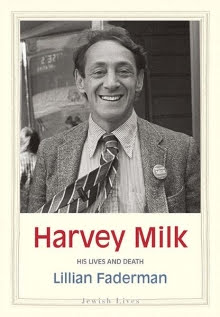
Harvey Milk His Lives and Death by Lillian Faderman - 2018 - From The Yale University Jewish Lives Series


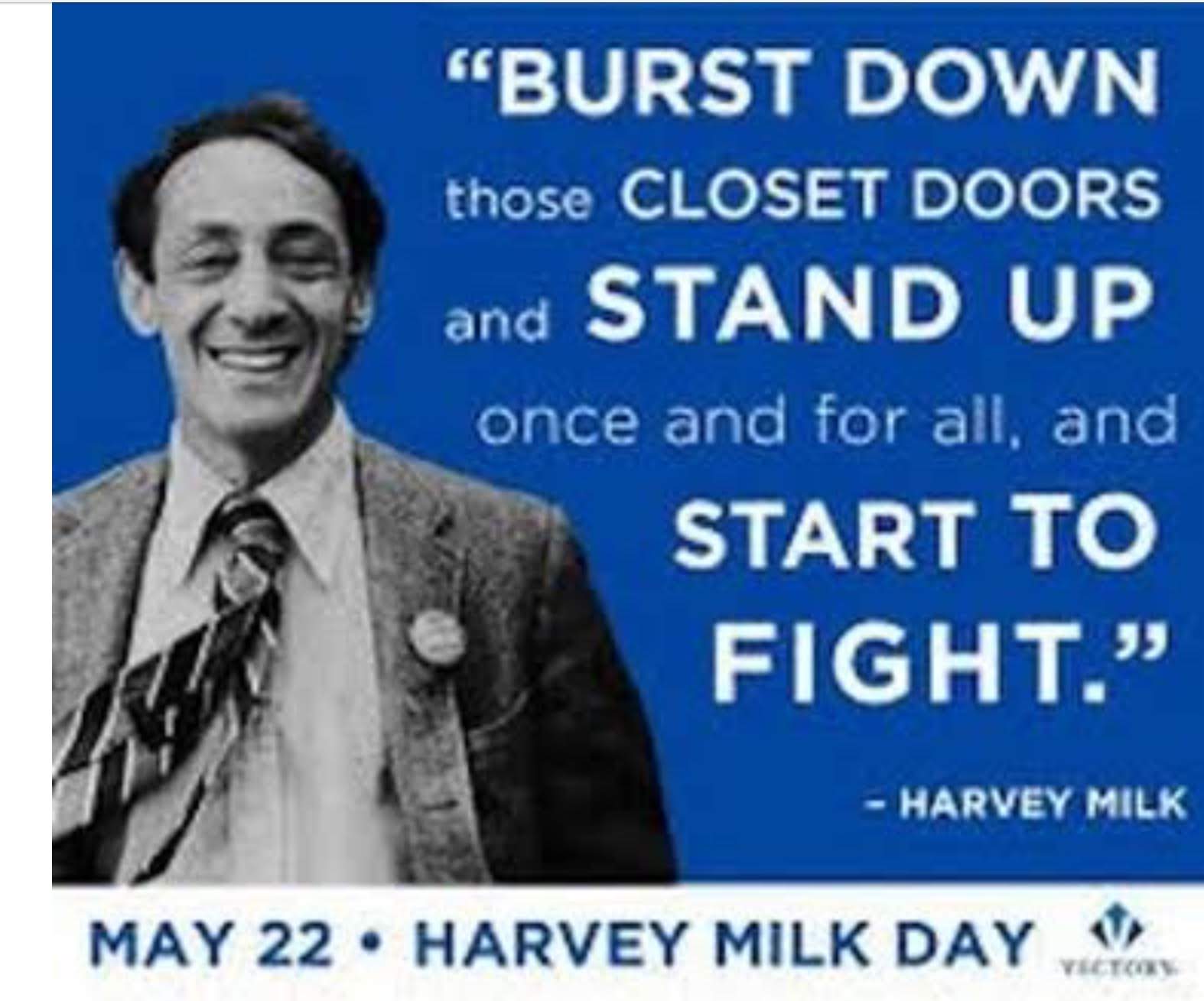
A Post in Observation of Harvey Milk Day 


Harvey Milk

May 22, 1930 born Woodmere, NY 

January 28, 1978 - Elected to The Board of Supervisors of San Francisco - first openly Gay elected official in the history of California 

November 27, 1978 -  murdered

Today is the 87 birthday of Harvey Milk.  I hope  one day May 22 will be an American National Holiday in 
honor of centuries of oppression of GLBT Citizens, a bigotry very far from over.  From now on The Reading Life will honor this day.  I hope other book bloggers will join me.  


Harvey Milk His Lives and Death by Lillian Faderman (included in The Yale University Jews Lives Series) does wonderfully suceed in bringing Harvey Milk vividly to life.  Her book is not just a factual biography of a man who helped changed the world but a very good account of what it meant in his pre-San Francisco days to be a homosexual who felt she or he had to keep their sexuality a secret, from parents, employers, landlords and a society where to indulge in homosexual acts was a crime. 

In his younger days, maybe up to thirty, Milk acted the part of a straight young man, he was very into sports and even joined the Navy.  Milk as soon as he had sexual feelings, knew he was Gay.  He began sexual activity around 15.  He lived in the pre-AIDS era, there was little danger in his activity.  As he got older he developed a series of relationships. Often his partners 
were younger men in need of a guidance.  He got a very good job on Wall Street but he never really liked it.  He moved to Texas for a while before ending up in San Fransisco where in March 1973 he opened Castro Camera.  In 1973 there were strict heavily enforced laws against homosexual activity.  Oral sex was a crime for anyone.  

Faderman does a wonderful job showing us how Castro Camera came to informal headquarters for elements of Gay San Francisco.  Milk caught the political bug, he ran for supervisor two times before he won.  Faderman explains the various elements in Gay political Life in San Francisco, it was interestingly fragmented. We learn a lot about the electoral process. Once elected Milk pushes hard for the passage of laws to help not just Gays, but the elderly, poorer residents and for very laudable quality of life issues.  (Back in 1973 property costs had not yet driven out all but the most affluent.)

I dont want to go over how he died.  

I am really glad I read this book.  Faderman has a very interesting discussion of the part his Jewish roots influenced him.


Yale University Press gave me a review copy

Lillian Faderman is an internationally known scholar of lesbian and LGBT history and literature, as well as ethnic history and literature.. 

Faderman's work has been translated into numerous languages, including German, Spanish, Italian, Japanese, Turkish, Czech, and Slovenian. Among her many honors are six Lambda Literary Awards, two American Library Association Awards, and several lifetime achievement awards for scholarship, including Yale University's James Brudner Award, the Monette/Horwitz Award, the Publishing Triangle Award, the Golden Crown Literary Society Trailblazer Award, the ONE National Gay and Lesbian Archives Culture Hero Award, and the American Association of University Women's Distinguished Senior Scholar.  From http://www.lillianfaderman.net/

Mel u


Saturday, May 19, 2018

Pogrom: Kishinev and The Tilt of History by Steven Zapperstein


An Autodidactic Corner Selection 


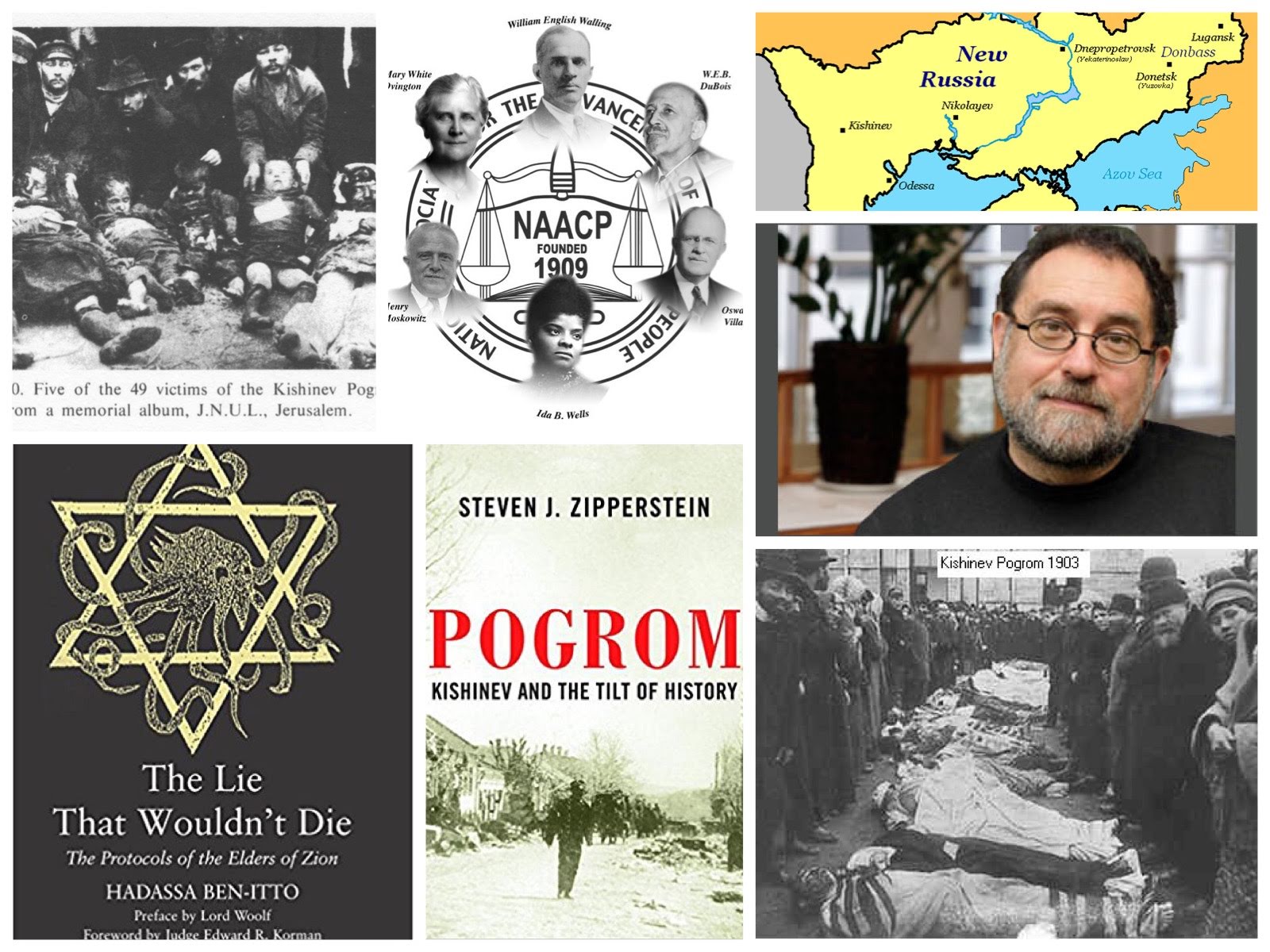
Pogram Kishinev and the Tilt of History by Steven Zapperstein is a wonderful book.  It tells a detailed story about a pogram that took place in Tsarist Russia in April 1903 and included the murder of 49 Jews, the rape of many Jewish women and girls, the wounding of about 600 and the robbing and destruction of over 1000 Jewish owned homes and businesses.  Zapperstein goes into a lot of detail about what happened during those three terrible days in 1903.  People from neighboring areas actually brought in wagons to carry away stolen items.  

News of the pogram was widely written about in the American and English press.  The Hearst newspaper powerhouse gave very heavy coverage of the pogram.  Zapperstein explains how this journalism lead to the creation of The NAACP largely by New York City based Jews who saw in the wide spread lynching of Black men in the American south a horror much like the Kishinev Pogram.  Zapperstein details how to this very day the pogram caused most American Jews to be liberals.

One of the most valuable parts of this great history is Zapperstein’s account of how pogram lead to one of the most evil forgeries ever done, the 1909 production of The Protocals of The Elders of Zion.  This work, in which an Assembly of Jews allegedly laid out a plan to achieve world domination provided much of the justification for the Holocaust and is believed to this day by many idiots to be real.   It was written in part to excuse Russian government backed pograms. For me this alone makes this book must reading for the autodidactic.

Zapperstein also covers Jewish literary treatment of the pogram, iCultural impact it had on the founders of the Israeli Army.

Pogram Kishinev and the Tilt of History by Steven  Zapperstein is an elegant work, deeply researched, very well organized.  It is not overly academic.  I think anyone with a serious interest in 20th century history will be glad they read this book.  It is must reading for those into Jewish history.


Steven J. Zipperstein is the Daniel E. Koshland Professor in Jewish Culture and History at Stanford University. He has also taught at universities in Russia, Poland, France, and Israel; for six years, he taught at Oxford University. For sixteen years he was Director of the Taube Center for Jewish Studies at Stanford. He is the author and editor of eight books including The Jews of Odessa: A Cultural History (1986, winner of the Smilen Prize for the Outstanding book in Jewish history); Elusive Prophet: Ahad Ha’am and the Origins of Zionism (1993, winner of the National Jewish Book Award); Imagining Russian Jewry (1999); and Rosenfeld’s Lives: Fame, Oblivion, and the Furies of Writing (2008, shortlisted for the National Jewish Book Award in Biography, Autobiography and Memoir). 

Zipperstein’s articles have appeared in The New York Times Sunday Book Review, the Washington Post, The New Republic, the Jewish Review of Books, Chronicle of Higher Education and elsewhere.  He was editor of the journal Jewish Social Studies for twenty years, and the book series Stanford Studies in Jewish History and Culture for a quarter of a century.  Together with Anita Shapira, he is series editor of the Yale University Press/Leon Black Foundation Jewish Lives series. Zipperstein is the immediate past Chair of the Academic Advisory Council of the Center for Jewish History, in New York and is currently Chair of the Stanford History Department's Graduate Studies Committee.  .  From Stanford University


Mel u


Thursday, May 17, 2018

“The Wrong Question” - A Short Story by Janet H Swinney - from The Bombay Review - 2017


Last month “Drishti” by Janet H Swinney impressed and delighted me so much I asked the author if she had other stories online that I could read and post about.  Happily she sent me links to two of her stories.

“Drishti” centers on a Life Guard working the beach at a resort in Goa.  In just a few pages she opened up the world of the life guard.  

 “The Wrong Question” is set in a Yoga Shala, a long standing famous center for spiritual teaching.   Today is the Guru’s 95th birthday and a massive celebration is getting started.  One of things I liked a lot about “Drishti” was the very knowing way Swinney contrasted the western tourists drawn by the hedonistic reputation of Goa with Indians who work and visit the resorts.  In “The Wrong Question” she shows western    seekers of wisdom who have traveled from afar to listen to the Guru speak.  Swinney made me feel like I was part of the event in these wonderful lines:

“It feels like a public holiday, the sort of day when everyone heads for the ghat. Long before one gets to the yoga shala, one can tell who’s heading there. Groups of five and six thread their way through the town’s back lanes, dressed in their best. The Western men wear shorts with multiple pockets and sandals that bristle with straps, while the women have been shopping in some over-priced emporium and have chosen cotton kurtas with crude, block printed patterns and over-generous pants. This is their take on authenticity. The locals have a different view. The men are dressed like bank managers in stiffened shirts, and well-pressed trousers; a daughter or a servant has polished their shoes vigorously for them before they left the house. The women are cocooned in silken saris that are as tightly coiled as croissants from the German bakery. Sleek plaits, as thick as tyre tread, hang down their backs and wag across their backsides. On street corners, the fruit and vegetable vendors uncloak their barrows, wondering what trade they might attract at this early hour of the morning.”

The Guru has developed a fondness for sweets and it seems every devotee wants to place a garland on his shoulders.  People have come from all over the world to hear him speak.  I really like the brief vignettes of several western, they seem English, letting us see how the teachings of the Guru impact them:

“The guru begins to recite. They all press their hands together in prayer and look sternly into their chests, joining in dutifully.
‘Yogena cittasya padena vacam…Malam sarirasya ca vaidyakena….’
With the culminating ‘Om,’ they breathe a collective sigh and look up at him expectantly.
‘You see,’ he says, settling himself to the task in hand. ‘What is yoga? This is what I want to say. Yoga is the controlling of the activity of the mind. Only if the mind still does your true nature emerge. No matter where you come from, whether East or West, your mind is full of this and that. Taking your children to school every day; doing your job at the office; worrying about your promotion; cooking your husband’s dinner. So many things are there. So many small decisions also: rice or naan; paneer or gobi; trousers or pyjamas. But while your mind is busy over there, there is no peace, there is no stillness. It’s like the machine, so many of you Westerners use in the gym, or like the buffalo grinding corn in the village. People are thinking: how can I stop this treadmill? How can I get off? Am I right?’
Members of his audience acknowledge that he is.
‘So what to do?’ He pauses for effect. ‘First, we must know that the mind can be managed. There are so many managers these days.”

Swinney is a very talented artist with a deep feel for her subjects.

Next month I will post on a third of her stories.  In August The Lakeview Journal of Literature and The Arts,  I am an Advisory Director, publish one of her stories.

I hope to read many more of her works

I greatly enjoyed this story and endorse it to all lovers of the form.

Author supplied data


Repentant education inspector, based in London but with ties in India.
Eleven of her stories have appeared in print. The most recent of these, 'Political Events Have Taken a Turn,' appears in ‘The Sorcery of Smog.’ (Earlyworks Press 2018). Other stories have appeared online in ‘The Bombay Literary Magazine’, ‘Out of Print’, ‘Joao Roque’ and the ‘Indian Review’.
She was a runner-up in the London Short Story competition 2014, and nominated for the Eric Hoffer prize for prose 2012. Her first collection of stories will be published shortly by Circaidy Gregory Press. She is currently working on a play based on stories by Manto.
Find her on Facebook at Janet H Swinney – Addicted to Fiction, or at www.janethswinney.com

Mel u


Wednesday, May 16, 2018

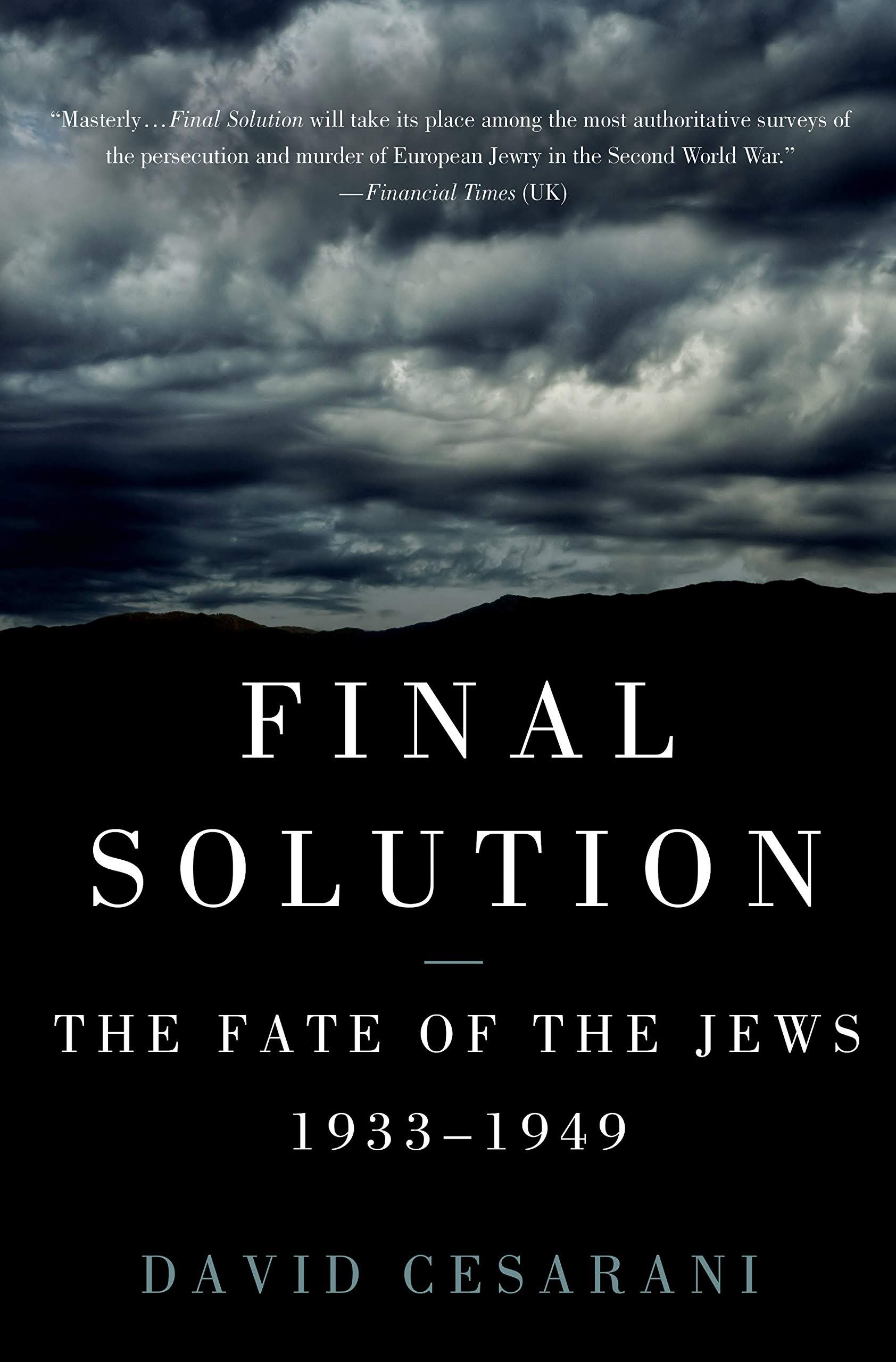
Final Solution: The Fate of the Jews 1935 to 1939 by David Cesarani - 2016, 1081 pages


I offer my great thanks to Max u for the Amazon Gift Card that allowed me to read this book.


An autodidactic Corner pick


“Who is on the lookout from this strange tower to warn us of the coming of new executioners? There are those of us who sincerely look upon the ruins today as if the old concentration-camp monster were dead and buried beneath them. Those who pretend to take hope again as the image fades, as though there were a cure for the plague of these camps. Those of us who pretend to believe that all this happened only once, at a certain time and in a certain place, and those who refuse to see, who do not heed the cry to the end of time.”  Jean Cayrol

Those without a real understanding of the Holocaust and the tremendous impact it still has on the world have little hope of an understanding of international politics. 

All teachers of history should read Final Solution: The Fate of the Jews 1935 to 1939 by David Cesarani.  This is a long book but once you read this you will know way 

more than just the basics.  Cesaranj begins his opus by telling us most people who know about the Holocaust, and of course with every passing day as ignorance becomes a mark of pride,
fewer have even heard of it, learned about it from TV shows.  Most think it was confined to concentration camps in Germany.

Cesarani integrates the political history of the rise of Hitler to the Holocaust.  He makes it very clear it was not just Germans who enthusiastically murdered Jews.  The Poles and the Lithuanians helped kill in the millions in mass shooting episodes.  It sickens me to see the current governments of Poland and Lithuania trying to deny their governments were fully complicit and eagerly cooperated in the murder of Jews.  France for sure has the blood of my beloved Irene Nemirovsky on her hands.  Ukrainians, Romanians, Hungarians all we’re happy to get rid of Jews in their areas.  Partially it was a form of robbery as the property of the Jews was then up for grabs.

Most who talk of the Holocaust try to say it was all caused by Hitler and the Nazis but almost all Germans approved of the Holocaust but of course after the war none of them 
of them had ever even known what was happening.  

Cesarani goes into depth explaining why Hitler hated Jews so much.

He talks about various plans for removing Jews either to Madagascar or far Eastern Russia.  There is chatter on the internet now that Zionism is tied to Nazi ideology and from Final Solution: The Fate of the Jews 1935 to 1939 by David Cesarani you can understand why people think this or try to claim it.

Cesarani talks about what happened to camp survivors who had no place to go.  Most did not want to return to destroyed homelands to live among those who wanted them gone.  Most survivors wanted to go to either The USA or Palestine.  Much of the strength of Israel comes from the spirit of Holocaust survivors who helped form Israel and made “Never Again” a sacred motto.

Read Final Solution: The Fate of the Jews 1935 to 1939 by David Cesarani and you will be much closer to understanding world events.


Sunday, May 13, 2018

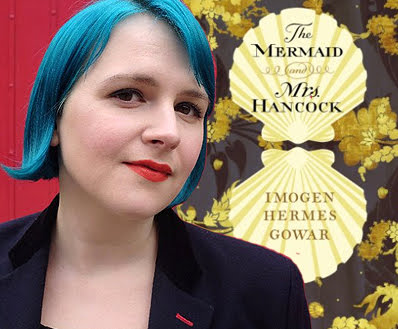
The Mermaid and Mrs Hancock by Imogene Hermes Gowar - 2018


The Mermaid and Mrs Hancock by Imogene Hermes Gowar, set in late Georgian London in the 1780s focuses on a middleaged never married merchant, Mr. Hancock and his future and eventually actual wife.  This debut novel is already on best seller lists in The UK.  The Irish Times and The Guardian both have spoken of author’s very real ability to transport us to the taverns, the streets, inside the busuness of merchant shipping, Mr Hancock’s primary occupation.  We dont just see London, we hear it, smell the smells, notice all sorts of small details.  

As The Mermaid and Mrs Hancock opens the captain of a merchant ship financed by Mr. Hancock has just arrived back and is reporting the results of the voyage to him.  A trip can take up to two years, Mr. Hancock has investors eager to reap their promised rewards.  Mr. Hancock is completely shocked when the captain tells him he traded the ship for the body of a mermaid.  He did receive enough cash to pay off the investors.  Mr. Hancock cannot believe the captain would be so stupid but he becomes convinced maybe he can make a fortune, way more than the lost profits, by charging people to see the mermaid.  Soon he is rolling in Guineas.  

Mr. Hancock’s teenage niece lives with him and he has servants.  We get to know everyone in the household.  Soon the next big phase of The Mermaid and Mrs Hancock opens when three afluent looking men offer to rent the mermaid for a week, to be the center piece at a party at a high end brothel, frequented by the cream of London Society.  

Now we are going to The brothel!  Mr. Hancock, a stranger to such places, is a bit uncomfortable dealing with the madame but he negotiates a deal.  A great party is arranged, girls dress as mermaids.  Mr Hancock is there, the mermaid has brought him riches.  He is fascinated by the girls, is shocked to see distinquished members of parliament with half naked girls in their laps, and is taken by one of the girls.  He has no experience with brothels and prostitutes and even though the madame tries to get him upstairs, he does not indulge.

I admit I most enjoyed the descriptions of brothel life.  One of women he meets used to be a house girl but found a wealthy retainer.  Sadly she recently lost him but does not want to go back to servicing all comers. Mr Hancock, now quiet rich, he feels the mermaid has brought him luck in his merchant endeavors, eventually decides he wants to marry her.  The woman is not real interested but she tells Mr. Hancock if he can find an other mermaid for her she will marry him.  He hires his old captain to find another one.  He returns with a life mermaid.  They marry, build a grand house, she becomes pregnant but miscarries.  

To me I thought the novel went down hill a bit after the marriage but maybe I just like the descriptions of brothel life more than rest of the novel.

There is a scene where the brothel keeper is sentenced to the pillory that totally brilliant.

I am very glad I was given a review copy of The Mermaid and Mrs Hancock.  I think anyone interested in 18th century England Will enjoy this debut novel.

There are lots of wonderful things in this book.


The author’s very interesting blog.

IMOGEN HERMES GOWAR was awarded the Malcolm Bradbury Memorial Scholarship in 2013 to study creative writing at the University of East Anglia. The Mermaid and Mrs. Hancock is her first novel and was a finalist in the Mslexia First Novel Competition and short-listed for the inaugural Deborah Rogers Foundation Writers’ Award. Her previous studies in archaeology, anthropology, and art history, and work in museums inspire her fiction.. from the publisher.


Featured Post

Imperial Reckoning: The Untold Story of Britain’s Gulag in Kenya by Caroline Elkins - 2005 - 701 Pages

  Imperial Reckoning:     The Untold Story of Britain’s Gulag in Kenya by Caroline Elkins - 2005 - 701 Pages 2006 Pulitzer Prize Winner From...