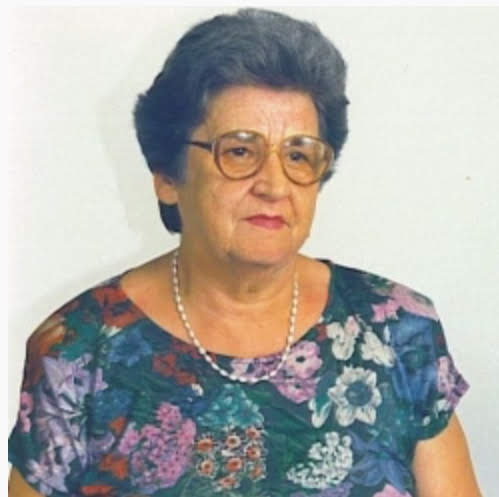
Showing posts with label Yente Mash. Show all posts

Friday, October 26, 2018

“Ingathering of Exiles” by Yenta Mash. - 1993 - translated from Yiddish by Ellen Cassedy


Ingathering of Exiles can be read on Words Without Borders


“Ingathering of Exiles” by Yenta Mash. - 1993  - translated from Yiddish by Ellen Cassedy


1922 born Zguiritse, Moldova

1977 immigrated to Israel

2013 dies Haifa, Israel

She begins to write upon Immigration 

Set in Haifa, Israel, “Ingathering of Exiles” is a potrait of a street and the people who live and have shops there.  It is not the fanciest street in Haifa but it just might be the most interesting.   I loved the stories of the different merchants.  Here is a sample of this marvelous story.  

“don’t know about other cities, but in Haifa the street called Kibbutz Galuyot—Ingathering of Exiles—is definitely worthy of the name. Other cities may have bestowed the name when the street was still under construction, without knowing whether it would turn out to be a good fit. In Haifa, though, the street was already in its glory when it got its name. If they’d called it Kibbutz Olamot—Ingathering for Eternity—that wouldn’t have been wrong either. The street must date back to the Ten Commandments, maybe even back to the Creation. Certainly it’s as chaotic as the dawn of time—a bedlam of languages from all corners of the earth. People quarrel in Hebrew to get a point across; they fling insults in Russian to show how important they are; and to pull out all the stops they curse in Yiddish. Sometimes a few punches are even thrown, but by now the scrappiest old fighters have passed on, and these days people don’t want to get their hands dirty. When a skirmish breaks out, most of the time the police don’t even hear about it; the parties patch it up among themselves and move on.”

This story now is among sixteen Short stories by Mesh translated by Ellen Cassedy and published in a collection entitled On The Landing.  I hope to read all these stories.  There is an additional story of Mesh on line courtesy The Yiddish Book Center and I next post on that.


Ellen Cassedy, the author of We Are Here, is a frequent speaker about the Holocaust, Lithuania, and Jewish culture.  Her book began when she set out to connect with her Jewish family roots.  In a searing terrain of memory and moral dilemmas, she explored how people in Lithuania – Jews and non-Jews alike – are engaging with their Nazi and Soviet past.  In the end, she found hope for a more tolerant future.
We Are Here is the winner of numerous awards and was shortlisted for the William Saroyan International Prize for Writing.
Ellen’s Tips for Writers appear monthly on SheWrites.com.
Her play, Beautiful Hills of Brooklyn, celebrates the spare beauty of a small but important life. Based on the diary of an actual elderly woman, it was adapted into a short film that won numerous awards and qualified for an Academy Award nomination.
Ellen was awarded the 2012 Translation Prize by the  Yiddish Book Center with her colleague, Yermiyahu Aaron Taub.  Her translations appear in the magazine of the Yiddish Book Center and in Beautiful as the Moon, Radiant as the Stars: Jewish Women in Yiddish Stories (Warner Books).
Ellen is a former columnist for the Philadelphia Daily News, a former speechwriter in the Clinton Administration, and the author of two books for working women. Her work has appeared in Hadassah, The Jewish Daily Forward, the Huffington Post, Ha’aretz, Jewish Telegraphic Agency, Lilith, Bridges, Polin, and Shofar: An Interdisciplinary Journal of Jewish Studies.
...from Ellencassedy.com


Yenta Mash (1922–2013) grew up in the region once known as Bessarabia (present-day Moldova), renowned as a lively polyglot area and a flourishing center of Jewish culture. In 1941, she was exiled to the Siberian gulag by Soviet forces. She endured seven years of hard labor before leaving the prison camp and making her way to Chisinau, then the capital of the Moldavian SSR. In 1977, in her fifties, Mash immigrated to Israel and settled in Haifa, where, she began to write and to publish. Her short stories were published in Yiddish journals on both sides of the Atlantic, and her work was collected in four volumes published in Israel. She was honored with Israel’s Itsik Manger Prize in 1999 and with the Dovid Hofshteyn Prize in 2002...from Words Without Borders


From “Kibbutz Galuyot” in Meshane mokem (A Change of Place). © 1993 Yenta Mash. By arrangement with the author’s estate. Translation © Ellen Cassedy. 


Thursday, August 16, 2018

“Mona Buba” - A Short Story by Yente Mash, translated from Yiddish by Ellen Cassedy, first published in The Forward, March 16, 2012


“Mona Buba” - A Short Story by Yente Mash, translated from Yiddish by Ellen Cassedy, first published in The Forward, March 16, 2012


1922 born Zguiritse, Moldova

1977 immigrated to Israel

2013 dies Haifa, Israel

She begins to write upon Immigration 

“IN THE FIRST years after the war, Jews began returning from the evacuation. First we wept over the ashes of our ruined towns, and then we moved to the cities and looked around for a place to live—a corner, a room under a leaky roof, anywhere we could settle down and unpack our troubles. New to the big city, we were hungry for something familiar to nourish our souls, something to call our own. We were overjoyed when we ran into Zeke, the gaunt, towering prophet who’d apparently been sent straight from heaven to lift our spirits and relieve our loneliness. Zeke was delighted with us too. So long as we gathered around and kept on listening, he didn’t care who we were. Often enough he forgot we were there and addressed himself directly to the Lord of the Universe. Day and night, he went around in a shapeless overcoat three sizes too big, clasping an open book to his chest like the Ten Commandments. We started thinking of him as a kind of Moses, even though, unlike Moses, he didn’t stutter—in fact, his tongue was as sharp as a knife.”

“Mona Bubbe” is set somewhere in The Soviet Union Shortly after the close of World War Two.  Jews are returning to their old towns, often finding nothing but ruins.  They are drawn to a Jewish street preacher whose teachings, half incoherent though they maybe, give them a feeling of the old days.  He does talk about The Soviet Union as a “false messiah”. He is of no danger to anyone but the Soviet Secret Police, so people say, suspect he is an agent of some sort, hiding behind a mask of madness.  Here is what happens to him

“In fact, he was an American agent, an anti-Soviet propagandist. In short order he was whisked away, and no trace remained of the prophet with his giant coat and holy book. Now the streets were deserted, especially in the evenings.”

After the war, there were a great many very psychologically demanged people, people who lost their minds in camps and gulag, lost all their families, who just show up somewhere.  Mona Baba was such a one.

“Well, why not? First of all, she was a woman, so she needed a woman’s name. And, whenever she thought someone was making fun of her, she’d flash her eyes and gnash her teeth like a baba, a witch. Your blood would curdle. But at the same time you’d see a curious smile on her lips, just like Mona Lisa’s. So some joker came up with the name Mona Baba, a combination of beauty and hag that was about as bizarre as she was. Since people were pretty sure she was a Jew, it didn’t take long for her to become Mona Bubbe.”

A big community center type project has in area.  Mona goes there every night to listen to the orchestra, in rapture to the music.  For all anyone knows, she might have once been lead violinist for the Stalingrad Philhormonic.  Slowly she notices members of the orchestra are missing.  She learns they are moving to Israel.  As the story closes she is at the train station, she sees several musicians on the train and screams out “traitor”

YENTA MASH, ONE of the preeminent Yiddish writers of the late twentieth and early twenty-first centuries, was born in Zguritse, a small town in what is now Moldova. She received both a Jewish and a secular education and was trained as a teacher. In 1941, when Mash was nineteen years old, she and her parents were exiled to the Siberian gulag by Soviet forces along with other “bourgeois elements.” There her parents died, and Mash endured seven years of hard labor under extreme conditions of privation and terror. After the war Mash married and made her way to Kishinev, which was then the capital of the Moldavian Soviet Socialist Republic. For years she worked as a bookkeeper while struggling to recover from the physical and psychological scars of her experiences in Siberia. In 1977, Mash immigrated to Israel and settled in Haifa,
where, in her fifties, she began to write and publish. Her first publication appeared in the journal Di goldene keyt (The Golden Chain), edited by poet Avrom Sutzkever, and won praise for its startling, vivid depictions of the twentieth century’s cataclysms and upheavals. As Mash’s career developed, her work plumbed her life experiences across both decades and continents. Her short stories and memoiristic essays were published in Yiddish-language journals on both sides of the Atlantic, including the Forward. Mash was honored with Israel’s Itsik Manger Prize in 1999 and with the Dovid Hofshteyn literary prize in 2002. “Mona Bubbe” appeared in Mash’s 1986 collection Meshane mokem (A Change of Place), and was published by the Forward on March 16, 2012, in honor of Mash’s ninetieth birthday. It takes place in the Jewish community of Kishinev, just as its members were leaving for Israel in the 1970s and 1980s.

I read this fine story in Have I Got A Story for You: More than a Century of Stories from The Forward- The leading American Yiddish publication, translated by Ellen Cassedy.  


Featured Post

Imperial Reckoning: The Untold Story of Britain’s Gulag in Kenya by Caroline Elkins - 2005 - 701 Pages

  Imperial Reckoning:     The Untold Story of Britain’s Gulag in Kenya by Caroline Elkins - 2005 - 701 Pages 2006 Pulitzer Prize Winner From...