Showing posts with label Silent movies. Show all posts

Friday, January 19, 2024

Un Chien Andalou (An Andulsian Dog) - A 1929 Film - directed by Luis Buñuel with script cowritten by Salvador Dali - 16 minutes


 Available on YouTube with English Captions 


Chien Andalou is a 1929 French silent short film directed, produced and edited by Luis Buñuel, who also co-wrote the screenplay with Salvador Dalí. Buñuel's first film, it was initially released in a limited capacity at Studio des Ursulines in Paris, but became popular and ran for eight months. 

The film is a series of unconnected images and scenes that explore the subconscious mind and the irrational. It is often shocking and disturbing, and it has been interpreted in many different ways.

One of the most famous scenes in the film is the opening scene, in which a man cuts a woman's eye with a razor. 

Other scenes in the film include a man dragging a piano down a street, a woman's hand being covered in ants, and a man being attacked by a swarm of locusts. These scenes are all surreal and disturbing, and they create a sense of unease and anxiety in the viewer.


Un Chien Andalou has been interpreted in many different ways. Some critics see it as a commentary on the irrationality of the human mind. Others see it as a reflection of Buñuel's and Dalí's own personal obsessions and anxieties.


Luis Buñuel Portolés (22 February 1900 – 29 July 1983) was a Spanish filmmaker who worked in France, Mexico, and Spain. He is widely considered to be one of the greatest and most influential filmmakers of all time. Buñuel's works were known for their avant-garde surrealism, often infused with political commentary.


Buñuel was born in Calanda, Spain, into a wealthy family. He received a strict Jesuit education, which sowed the seeds of his lifelong obsession with religion and subversive behavior. After moving to Madrid to study philosophy and literature, Buñuel became involved in the Spanish Surrealist movement. In 1929, he collaborated with Salvador Dalí on the short film Un Chien Andalou, which is considered to be one of the most important Surrealist films ever made.


After the Spanish Civil War, Buñuel fled to Mexico, where he made a number of films, including Los olvidados (1950) and El (1952). These films are considered to be masterpieces of Mexican cinema, and they helped to establish Buñuel's reputation as one of the world's leading filmmakers.


In the 1960s, Buñuel returned to Europe, where he made a number of his most acclaimed films, including Viridiana (1961), Belle de Jour (1967), and The Discreet Charm of the Bourgeoisie (1972). These films are known for their subversive humor, their exploration of taboo subjects, and their challenging and innovative filmmaking techniques.


Buñuel died in Mexico City in 1983 at the age of 83. He left behind a body of work that is considered to be among the most important and influential in the history of cinema.


Some of Buñuel's most notable films include:


Un Chien Andalou (1929)

L'Âge d'or (1930)

Los olvidados (1950)

Viridiana (1961)

Belle de Jour (1967)

The Discreet Charm of the Bourgeoisie (1972)

Tristana (1970)

The Phantom of Liberty (1974)

This Obscure Object of Desire (1977)

Buñuel's films continue to be studied and admired by filmmakers and film scholars alike. His work has had a profound influence on generations of filmmakers, including Jean-Luc Godard, David Lynch, " From Bard 


In time I hope to view all of these films


One interpretation of the film is that it is a metaphor for the sexual act. The image of the man slicing the woman's eye could be seen as a representation of the male penetration of the female. The image of the woman walking down the street with a severed hand in her pocket could be seen as a representation of female castration.


Another interpretation of the film is that it is a commentary on the nature of reality. The film's dreamlike imagery could be seen as a way of exploring the idea that reality is not always what it seems. The image of the cloud cutting the moon in half could be seen as a representation of the fragility of reality.


Friday, January 12, 2024

City Lights - A 1831 Silent Film Directed by and Starring Charles Chaplin- 1 Hour 21 Minutes


Available on YouTube 


"If if only one of Charles Chaplin's films could be preserved, “City Lights” (1931) would come the closest to representing all the different notes of his genius. It contains the slapstick, the pathos, the pantomime, the effortless physical coordination, the melodrama, the bawdiness, the grace, and, of course, the Little Tramp--the character said, at one time, to be the most famous image on earth.

When he made it, three years into the era of sound, Chaplin must have known that “City Lights” might be his last silent film; he considered making a talkie, but decided against it, and although the film has a full musical score (composed by Chaplin) and sound effects, it has no speech. Audiences at the time would have appreciated his opening in-joke; the film begins with political speeches, but what emerges from the mouths of the speakers are unintelligible squawks--Chaplin's dig at dialogue. When he made “Modern Times” five years later, Chaplin allowed speech onto the soundtrack, but once again the Tramp remained silent except for some gibberish." from Roger Ebert 

https://www.rogerebert.com/reviews/great-movie-city-lights-1931


City Lights (1931) is a silent romantic comedy-drama film written, produced, directed by, and starring Charlie Chaplin. It tells the story of a lovable tramp, played by Chaplin himself, who falls in love with a blind flower girl (Virginia Cherrill) and tries to help her regain her sight. Despite being released during the Great Depression, the film is a beautiful and touching story about hope, resilience, and the power of love. 


He embarks on a series of hilarious and often dangerous exploits to raise money for her to undergo a sight-restoring operation.

Along the way, he develops a turbulent friendship with a drunken millionaire and faces numerous hardships, showcasing both the comedy and pathos of his life.


Although sound films were already gaining popularity, Chaplin chose to stick with the silent format for City Lights, believing it allowed for a broader emotional palette.

The film's score, composed by Chaplin himself, features the hauntingly beautiful "La Violetera," a leitmotif for the flower girl.


Tuesday, January 9, 2024

Battling Butler- A 1926 Silent Film directed by and starring Buster Keaton - 1 Hour 16 Minutes


Alfred Butler (Keaton), a spoiled and pampered millionaire, takes his loyal valet, Snitz Edwards, on a camping trip. Alfred is smitten with a beautiful mountain girl named Sally O'Neil, but her family disapproves of his weakling ways.


In a desperate attempt to impress Sally, Snitz lies and tells her that Alfred is actually "Battling" Butler, a famous boxer. This sets off a chain reaction of hilarious chaos.


Alfred, clueless about the lie, gets entangled in a boxing match against the real Battling Butler, leading to a series of slapstick mishaps and acrobatic stunts.


Through it all, Alfred tries to win Sally's heart while avoiding the wrath of the real boxer and navigating the confusion caused by his mistaken identity.


It was directed by Keaton himself, along with Edward F. Cline.


The screenplay was written by Joseph Farnum and Carl Roberts.


The film was shot on location in the Sierra Nevada mountains.
It was released on September 19, 1926.


Wednesday, January 3, 2024

Sherlock, Jr. A 1924 Silent Film - Directed by and Starring Buster Keaton- 44 Minutes


Available on YouTube 


"The greatest of the silent clowns is Buster Keaton, not only because of what he did, but because of how he did it. Harold Lloyd made us laugh as much, Charlie Chaplin moved us more deeply, but no one had more courage than Buster. I define courage as Hemingway did: "Grace under pressure." In films that combined comedy with extraordinary physical risks, Buster Keaton played a brave spirit who took the universe on its own terms, and gave no quarter." Roger Ebert 


Buster Keaton Films I have posted upon


The Navigator- 1927 - 

The General - 1924

Our Hospitality- 1926

Sherlock, Jr. - 1925


 Sherlock Jr. is a true gem of silent comedy, and a testament to the comedic genius of Buster Keaton! This 1924 film is as hilarious as it is inventive, following the story of a hapless projectionist who dreams of becoming a detective and ends up living his fantasy i


Keaton plays both the projectionist and his dream persona, Sherlock Jr., a detective who leaps from the movie screen and into the real world to solve a robbery case. The film is filled with Keaton's signature physical comedy, from pratfalls and stunts to clever visual gags and impeccable deadpan delivery.


One of the most iconic scenes is the dream sequence, where Keaton seamlessly blends live-action with film footage. As Sherlock Jr. enters the movie screen, he finds himself navigating a world that's both familiar and surreal. He climbs ladders that stretch into the sky, walks through doorways that lead to unexpected places, and even gets chased by a giant pair of scissors


Keaton's mastery of physical comedy is on full display throughout the film. He hangs from trains, dodges falling scenery, and even gets caught in a spinning clothesline – all while maintaining his iconic stoic expression.


Sherlock, Jr. Shows the amazing stunts of Buster Keaton, often dangerous.


Tuesday, January 2, 2024

Our Hospitality- A 1923 Silent Film- Directed by and Starring Buster Keaton- 1 Hour 15 Minutes


Available on YouTube 


 Willie McKay, unaware of his family's longstanding feud with the Canfields, inherits an estate in the South. He falls in love with Virginia Canfield, not realizing her family are his sworn enemies. He's protected by the Southern code of hospitality within their home, but hilarious chaos ensues as he tries to navigate the feud and win Virginia's heart.


The film showcases Keaton's signature deadpan humor and incredible physical comedy. From train-related mishaps to death-defying stunts (including a famous scene where he and a Canfield brother are tied together and flung over a waterfall), Keaton kept me laughing throughout.


While the film is primarily slapstick comedy, it also satirizes Southern hospitality and the absurdity of long-lasting family feuds.


Critical reception: "Our Hospitality" was a commercial and critical success, receiving positive reviews for its humor, action, and heartwarming story. It's considered one of Keaton's best films.


Saturday, December 30, 2023

The Navigator - A 1924 Silent Movie - Directed by and Starring Buster Keaton- 59 Minutes


 The Navigator - A 1924 Silent Movie - Directed by and Starring Buster Keaton- 59 Minutes 

https://www.rogerebert.com/reviews/great-movie-the-films-of-buster-keaton

Roger Ebert celebrates the wonderous work of Buster Keaton 

Available on YouTube In a beautifully 
restored version.

The Plot: Wealthy Rollo Treadway (played by Keaton) plans a romantic cruise to propose to his neighbor Betsy. But things go awry, and he ends up on a different ship, leading to comedic adventures on the high seas.

Buster Keaton's Brilliance: The film showcases Keaton's signature style of physical comedy, with incredible stunts, deadpan expressions, and ingenious gags. From navigating a moving staircase to battling a mischievous cow, he keeps the audience in stitches.

Critical Acclaim: The Navigator was a huge success, both critically and commercially. It was praised for its originality, humor, and Keaton's performance. It's even preserved in the National Film Registry by the Library of Congress

The scenes with the cannibal islanders might  be considered racist today.

I loved the underwater scenes.

The Navigator is a showcase for Keaton's mastery of physical comedy. He performs incredible stunts and gags, often defying gravity and logic with his deadpan expression and impeccable timing.

Remembered scenes include him nonchalantly swinging from the mast of a storm-tossed ship, trying to catch a hat that's blown away by the wind, and even using a live cow to churn butter.

The film also showcases Keaton's inventive use of props and sets. The dilapidated freighter becomes a playground for his comedic genius, with every corner offering new opportunities for slapstick and visual humor.
Legacy and Impact:

The Navigator was a critical and commercial success, solidifying Keaton's position as one of the greatest silent film comedians. 


Tuesday, December 26, 2023

The Adventures of Prince Achmed -A 1926 German Animated Movie - Directed by Lotte Reiniger


 Available on YouTube with English Captions 

The Adventures of Prince Achmed -A 1926 German Animated Movie - Directed by Lotte Reiniger


The Adventures of Prince Achmed is the oldest surviving full length animated movie. Some older silent films are of interest historically, others of intrinsic value for their artistic achievement.  The Adventures of Prince Achmed is, to me, both.


This silent masterpiece, directed by the pioneering animator Lotte Reiniger, takes us on a magical journey with Prince Achmed, a handsome young prince who stumbles upon a flying horse and embarks on a whirlwind of adventures.

Here are some key points to remember about "The Adventures of Prince Achmed":

Groundbreaking animation: Reiniger's signature silhouette animation technique, using meticulously crafted cardboard cutouts, is a marvel to behold. The graceful movements and expressive figures create a unique visual style that's both timeless and captivating.

Enthralling story: Based on elements from "The Arabian Nights," the film weaves a fantastical tale of love, loss, betrayal, and redemption. Prince Achmed encounters witches, demons, beautiful princesses, and even Aladdin himself, as he navigates treacherous lands and faces impossible challenges.

Silent film charm: The absence of dialogue adds to the film's dreamlike quality, allowing the animation and music to tell the story. The original score, composed by Friedrich Hollaender, perfectly complements the visuals and enhances the emotional impact.


Here are some additional things you might find interesting:

The film's production was a labor of love, taking Reiniger and her team over two years to complete.

The film was originally released with intertitles in German, but later versions have been dubbed in various languages.

"The Adventures of Prince Achmed" has been praised by animation legends like Walt Disney and Hayao Miyazaki, who credit it as a major inspiration for their own work.


"Lotte Reiniger was a German film director and the foremost pioneer of silhouette animation. She was born in Berlin in 1899 and began her career as a puppeteer and set designer. In 1923, she made her first short film, The Adventures of Prince Achmed, which was a critical and commercial success. This film was the first feature-length animated film ever made and is considered a masterpiece of silhouette animation.  


Reiniger went on to make over 40 films throughout her career, including The Adventures of Baron Munchausen (1931), Papageno (1935), and The Flying Dutchman (1952). Her films were known for their intricate detail, beautiful cinematography, and whimsical stories.

Reiniger was a groundbreaking figure in the world of animation. She helped to establish silhouette animation as a legitimate art form and her films continue to be enjoyed by audiences around the world.

Reiniger was also a pioneer in the use of multiplane animation. This technique, which uses multiple cameras to create a sense of depth and perspective, was first used in her 1926 film, The Adventures of Prince Achmed. Multiplane animation is now a standard technique in animation, but it was groundbreaking at the time that Reiniger used it.


Reiniger was a gifted artist and storyteller. Her films are both visually stunning and emotionally moving. She was a pioneer in the field of animation and her work continues to inspire and delight audiences today." From Bard

Please share your experiences with other films by Lotte Reiniger 


Saturday, December 23, 2023

A Page of Madness (狂った一頁, Kurutta Ichipeiji) is a 1926 Japanese silent experimental horror film directed by Teinosuke Kinugasa


Available on YouTube 


A Page of Madness (1926)

Written by Yasunari Kawabata & Teinosuke Kinugasa & Minoru Inuzuka & Banko Sawada

Based on the short story by Yasunari Kawabata

Directed by Teinosuke Kinugasa

Starring Masuo Inoue, Ayako Iijima, Yoshie Nakagawa

Released September 24, 1926 (Japan)

RT 78 min.


This is a very strange movie. I was fascinated by the bizarre images from the start. There are no Subtitles. In Japan in 1926 silent films had in theater narrators who would have explained the actions on screen. I confess I could not very much follow the plot but I loved this unique movie.  Once I read the Bard post it all made sense


"The film is set in a mental institution in  Japan and tells the story of a man who takes a job as a janitor there in order to be close to his wife, who is a patient. He becomes increasingly obsessed with her and attempts to break her out, but his plans are thwarted by the asylum's staff. The film is notable for its use of innovative cinematic techniques, such as double exposure, superimposition, and rapid editing, which create a disorienting and dreamlike atmosphere.


• Lost and Found: The film was lost for 45 years until it was rediscovered by Kinugasa in his storehouse in 1971. It has since been restored and is now considered one of the most important silent films ever made.


• Avant-garde: "A Page of Madness" was created by a group of artists known as the Shinkankakuha, or School of New Perceptions. This group was dedicated to pushing the boundaries of film and creating works that were both experimental and emotionally resonant.


• Critical Acclaim: The film has been praised for its originality, its visual style, and its performances. It has been cited as an influence on a number of filmmakers, including David Lynch and Akira Kurosawa.


Here are some additional details about "A Page of Madness":


• Cast: Masao Inoue, Yoshie Nakagawa, Ayako Iijima


• Music: The film was originally accompanied by live benshi narration and music. A number of different scores have been composed for the film since its rediscovery." From Bard


Friday, December 22, 2023

Orochi- A 1925 Japanese Silent Film - Directed by Buntarō Futagawa - 1 Hour 5 minutes


 Available on YouTube 


Orochi is one of the earliest surviving Japanese films from 1925. At almost a hundred years old the film is significant as a piece of history. The film is directed by Buntarō Futagawa and stars Tsumasaburō Bandō, as a disgraced samurai who is shunned from society and seen as a villain. The film was originally called ‘Outlaw’, which was blocked by censors due to not wanting to make an outlaw seem like a hero and then changed to Orochi, meaning Serpent. Thankfully the moral ambiguity of the characters is still evident in the final film.

Story and Significance:

A compelling anti-hero: The film tells the story of Kunitomi, a skilled but ostracized samurai wrongly accused of a crime and cast out from his clan. He descends into the criminal underworld, but despite his circumstances, retains his strong sense of morality and loyalty. This focus on a flawed and complex protagonist challenged the typical samurai narratives of the time, making "Orochi" a groundbreaking and insightful film.
Social commentary: The film weaves a powerful critique of feudalism and its rigid social structures. Kunitomi's downfall is not just due to personal misfortune, but also a result of the corrupt and unjust system he's trapped in. "Orochi" resonated with audiences facing similar societal struggles in the Taisho era, a period of modernization and political upheaval in Japan.
Masterful action and drama: Despite being silent, "Orochi" delivers thrilling sword fight sequences and emotionally charged scenes. Bandō's charismatic performance further elevates the film, showcasing his incredible skills as a swordsman and actor.
Legacy and Influence:

Critical acclaim: "Orochi" was a critical and commercial success upon its release, solidifying Bandō's stardom and establishing Futagawa as a leading director. It gained international recognition as well, garnering praise for its technical prowess and powerful storytelling.
Preservation and restoration: Sadly, like many silent films, "Orochi" was considered lost for decades. However, fragments were discovered in the early 2000s, and a painstaking restoration effort brought the film back to life. 

Inspiration for future generations: "Orochi" continues to inspire filmmakers and film scholars today. Its innovative narrative, social awareness, and stunning visuals have cemented its place as a classic of Japanese cinema.

"Buntarō Futagawa: A Pioneering Figure in Japanese Cinema
Buntarō Futagawa (1899-1966) was a trailblazing Japanese film director and writer who left his mark on the silent era of Japanese cinema. Known for his innovative narratives and powerful social commentary, Futagawa's films continue to be celebrated and studied today.

Here are some key points about Futagawa:

Early Life and Career: Born in Tokyo in 1899, Futagawa started his career in the film industry in 1921. He worked as both an actor and director, often collaborating with renowned actor Tsumasaburō Bandō.
Orochi and Beyond: Futagawa's most recognized work is the 1925 film "Orochi" ("The Serpent"), a silent samurai drama that captivated audiences with its action-packed sequences, complex protagonist, and critique of feudalism. Other notable films include "Shisen ni tateba" ("Standing by the Abyss", 1924) and "Ekisutora gâru" ("Express Train", 1925).
Style and Impact: Futagawa's films were known for their dynamic camerawork, innovative editing techniques, and focus on social themes. He explored the lives of marginalized individuals and challenged traditional narratives, paving the way for future generations of filmmakers." From Bard


Sunday, December 10, 2023

Intolerance- A 1916 Silent Film Directed by D.W. Griffith- 2 hours 56 minutes


Available on YouTube 


""He achieved what no other known man has achieved. To watch his work is like being witness to the beginning of melody, or the first conscious use of the lever or the wheel; the emergence, coordination and first eloquence of language; the birth of an art: and to realize that this is all the work of one man." James Agee on D, W. Griffith 


Intolerance, a silent film released in 1916, is a complex and controversial work by D.W. Griffith, one of the most influential figures in early American cinema. It tells the story of intolerance through four separate narratives spanning different time periods and locations:


• The Fall of Babylon: Prince Belshazzar, a pacifist, is overthrown by warring religious factions.


• The Passion of Christ: The film depicts the last days of Jesus Christ in the style of a Passion play.


• The St. Bartholomew's Day Massacre: The film portrays the brutal massacre of Huguenots in France by Catholics.


• Modern America: A woman fights to save her husband from execution for a murder he did not commit.


Griffith's purpose:


• Confronting criticism: The film was partly a response to the controversy surrounding his earlier film The Birth of a Nation (1915), which was widely criticized for its racist portrayal of African Americans and its glorification of the Ku Klux Klan.


• Exploring a universal theme: Griffith aimed to show the universality of intolerance and its destructive consequences throughout history.


Technical innovations:


• Cross-cutting: Griffith pioneered the use of parallel editing, interweaving the four stories to create a powerful and emotional impact.


• Massive sets and costumes: The film features elaborate sets and costumes, particularly for the Babylonian sequence, which was inspired by Italian historical epics.


• Use of allegory: The film uses several allegorical elements, such as the recurring image of a woman rocking a cradle, to symbolize the birth of hope and the possibility of overcoming intolerance.


Critical reception:


• Initial failure: Despite its innovative techniques, Intolerance was a commercial failure upon its release. Critics were divided, some praising its ambition and technical achievements, while others found it confusing and preachy.


• Legacy: Over time, the film's reputation has grown. It is now considered a landmark in film history, praised for its groundbreaking editing techniques and its powerful message of tolerance


• Technical influence: The film's innovative editing techniques have had a profound influence on subsequent generations of filmmakers.


Friday, December 8, 2023

Broken Blossoms- A 1919 Silent Film Directed by D. W. Griffith-1 Hour 34 minutes- Starring Lillian Gish


available on YouTube 
 
"He achieved what no other known man has achieved. To watch his work is like being witness to the beginning of melody, or the first conscious use of the lever or the wheel; the emergence, coordination and first eloquence of language; the birth of an art: and to realize that this is all the work of one man." James Agee on D, W. Griffith 


"Griffith in 1919 was the unchallenged king of serious American movies (only C.B. DeMille rivaled him in fame), and "Broken Blossoms" was seen as brave and controversial. What remains today is the artistry of the production, the ethereal quality of Lillian Gish, the broad appeal of the melodrama, and the atmosphere of the elaborate sets (the film's budget was actually larger than that of "Birth of a Nation").

And its social impact. Films like this, naive as they seem today, helped nudge a xenophobic nation toward racial tolerance.

There is all of that, and then there is Lillian Gish's face. Was she the greatest actress of silent films? Perhaps; her face is the first I think of among the silent actresses, just as Chaplin and Keaton stand side by side among the men" From Roger Ebert's review 


Broken Blossoms, also known as The Yellow Man and the Girl, is a 1919 American silent drama film directed by D.W. Griffith and starring Lillian Gish and Richard Barthelmess. Considered one of Griffith's most important works, the film tells the story of a young Chinese immigrant, Cheng Huan (Barthelmess), who falls in love with a mistreated young woman, Lucy Burrows (Gish). The film explores themes of racism, abuse, and compassion.


Cheng Huan, a gentle and idealistic Chinese man, immigrates to London with dreams of spreading the teachings of Buddhism. However, he soon becomes disillusioned by the harsh realities of life in the city's slums. He turns to opium for solace and loses his faith. One night, he finds Lucy Burrows, a young woman who is being abused by her father, a violent boxer. Cheng takes Lucy in and cares for her, and the two form a deep bond.

Lucy finds comfort and protection in Cheng's presence, and they fall in love. However, their interracial relationship is met with prejudice and hostility from Lucy's father and the surrounding community. The film culminates in tragedy, as Lucy is ultimately killed by her father in a fit of rage.

Cultural Impact:

Broken Blossoms was a critical and commercial success, and it is considered one of the most important films of the silent era. The film's innovative use of close-ups, iris shots, and other cinematic techniques helped to establish Griffith as a master of the medium. 


Thursday, December 7, 2023

The Marriage Circle - A 1924 Silent Film Directed by Ernst Lubitsch- 1 hour 34 minutes


Available on YouTube 


Ernst Lubitsch 


Born: January 29, 1892, Berlin, Germany - produces 65 silent films before moving to America


1922 Moves to Hollywood- Warner Pictures Signed him to a three year six picture contract


Died: November 30, 1947, Los Angeles, California, United States


Lubitsch directed two of my favourite movies, Ninotchka and To Be or Not to Be


The Marriage Circle stars Monte Blue and Florence Vidor as a married couple whose lives are thrown into disarray when the wife's best friend begins to flirt with the husband. The film is also notable for its use of innuendo and double entendre, which Lubitsch would become known for in later films.


The Marriage Circle was a critical and commercial success, and it helped to launch Lubitsch's career in Hollywood. It is now considered to be a classic of silent cinema.


Here are some of the things that make The Marriage Circle (1924) so special:


Lubitsch's direction: Lubitsch was a master of visual storytelling, and he uses his camera to great effect in The Marriage Circle. He is particularly adept at using suggestion and innuendo, and he often leaves things to the viewer's imagination.


The performances: The film features a number of strong performances, including Monte Blue, Florence Vidor, and Adolphe Menjou. Vidor is particularly memorable as the wife who is torn between her husband and her best friend.


The humor: The Marriage Circle is a very funny film, but the humor is often subtle and sophisticated. Lubitsch is a master of timing and delivery, and he gets the most out of his actors.


The romance: Despite the film's lighthearted tone, there is also a genuine sense of romance between the two leads. Lubitsch is able to capture the chemistry between them, and he makes the viewer believe that they are truly in love.


Films by German directors are an important part of post World War One German Culture, from the groundbreaking silent classics of the Weimar Republic to the movies of Leni Reisenthal in celebration of Nazi rule, beloved by Goebels, to modern Oscar winners, I am pleased to see German Literature Month XIII now welcomes posts on Films by German Directors


This is a post for German Literature Month XIII 2023 November 1 to December 7


German Literature Month is hosted by Lizzy’s Literary Life


https://lizzysiddal2.wordpress.com/2023/09/22/announcing-german-literature-month-xiii/


Monday, December 4, 2023

Lady Windermere's Fan - A 1925 Silent Film Directed by Ernst Lubitsch- 1 Hour 36 minutes- based on Oscar Wilde's 1892 Play


 Lady Windermere's Fan - A 1925 Silent Film Directed by Ernst Lubitsch- 1 Hour 36 minutes- based on Oscar Wilde's 1892 Play

Ernst lubitsch 

Born: January 29, 1892, Berlin, Germany - produces 65 silent films before moving to America

1922 Moves to Hollywood- Warner Pictures Signed him to a three year six picture contract

Died: November 30, 1947, Los Angeles, California, United States

Lubitsch directed two of my favourite movies, Ninotchka and To Be or Not to Be.

The film tells the story of Lady Windermere (McAvoy), a young woman who suspects her husband, Lord Windermere (Bert Lytell), of having an affair with the notorious Mrs. Erlynne (Rich). When Mrs. Erlynne arrives in London, Lady Windermere becomes convinced that her suspicions are true and decides to leave her husband. However, Mrs. Erlynne reveals that she is actually Lady Windermere's mother, and that she has returned to protect her daughter from making the same mistakes she did.

Lubitsch's film is a masterfully crafted adaptation of Wilde's play. He captures the wit and social satire of the original work, while also adding his own touch of visual flair. The film's silent format allows Lubitsch to use expressive gestures and close-ups to great effect, and his use of light and shadow is particularly striking.

The film was a major critical and commercial success. It was praised for its direction, acting, and technical achievements. It was also a box office hit, grossing over $1 million worldwide.


Lubitsch's film is a masterfully crafted adaptation of Wilde's play. He captures the wit and social satire of the original work, while also adding his own touch of visual flair. The film's silent format allows Lubitsch to use expressive gestures and close-ups to great effect, and his use of light and shadow is particularly striking.

Films by German directors are an important part of post World War One German Culture, from the groundbreaking silent classics of the Weimar Republic to the movies of Leni Reisenthal in celebration of Nazi rule, beloved by Goebels, to modern Oscar winners, I am pleased to see German Literature Month XIII now welcomes posts on Films by German Directors


This is a post for German Literature Month XIII 2023 November 1 to December 7


German Literature Month is hosted by Lizzy’s Literary Life


https://lizzysiddal2.wordpress.com/2023/09/22/announcing-german-literature-month-xiii/


Saturday, December 2, 2023

The Oyster Princess (Die Austernprinzessin) is a 1919 German silent comedy film directed by Ernst Lubitsch and starring Victor Janson, Ossi Oswalda and Harry Liedtke. 58 minutes


Ernst lubitsch 

Born: January 29, 1892, Berlin, Germany - produces 65 silent films before moving to America

1922 Moves to Hollywood- Warner Pictures Signed him to a three year six picture contract

Died: November 30, 1947, Los Angeles, California, United States

Lubitsch directed two of my favourite movies, Ninotchka and To Be or Not to Be.

The film tells the story of Ossi Quaker, the spoiled daughter of an American oyster king, who dreams of marrying a real-life prince. Her father, eager to please her, arranges for her to meet Prince Nucki, an impoverished German nobleman. However, Nucki is wary of Ossi's wealth and sends his friend Josef, a commoner, to pose as the prince in order to assess the situation.

Josef, attracted to Ossi's beauty and wealth, falls in love with her and pretends to be the prince. However, his charade is soon exposed when Ossi's father discovers that Josef is not a real prince. Despite this, Ossi and Josef declare their love for each other, and the film ends with them happily married.

The Oyster Princess is a satirical comedy that pokes fun at the pretensions of the wealthy and the foolishness of social climbing. Lubitsch's direction is deft and witty, and the film is full of clever sight gags and sparkling dialogue. Oswalda is delightful as the spoiled Ossi, and Liedtke and Falkenstein are equally good as the two.

Lubitsch also emulates Griffith in the unfortunate custom of using white actors in blackface.

Films by German directors are an important part of post World War One German Culture, from the groundbreaking silent classics of the Weimar Republic to the movies of Leni Reisenthal in celebration of Nazi rule, beloved by Goebels, to modern Oscar winners, I am pleased to see German Literature Month XIII now welcomes posts on Films by German Directors


This is a post for German Literature Month XIII 2023 November 1 to December 7

German Literature Month is hosted by Lizzy’s Literary Life

https://lizzysiddal2.wordpress.com/2023/09/22/announcing-german-literature-month-xiii/


Saturday, November 25, 2023

Journey into the Night (Der Gang in die Nacht) - A 1921 German Silent Film Directed by F. W. Murnau - 1 Hour 9 minutes- His Oldest Surviving Film


available on YouTube 

In each of my posts each posts, hopefully ten, on F. W. Murnau I plan to share a documentary I found edifying 


A Post in Participation in German Literature Month XIII- November 2023


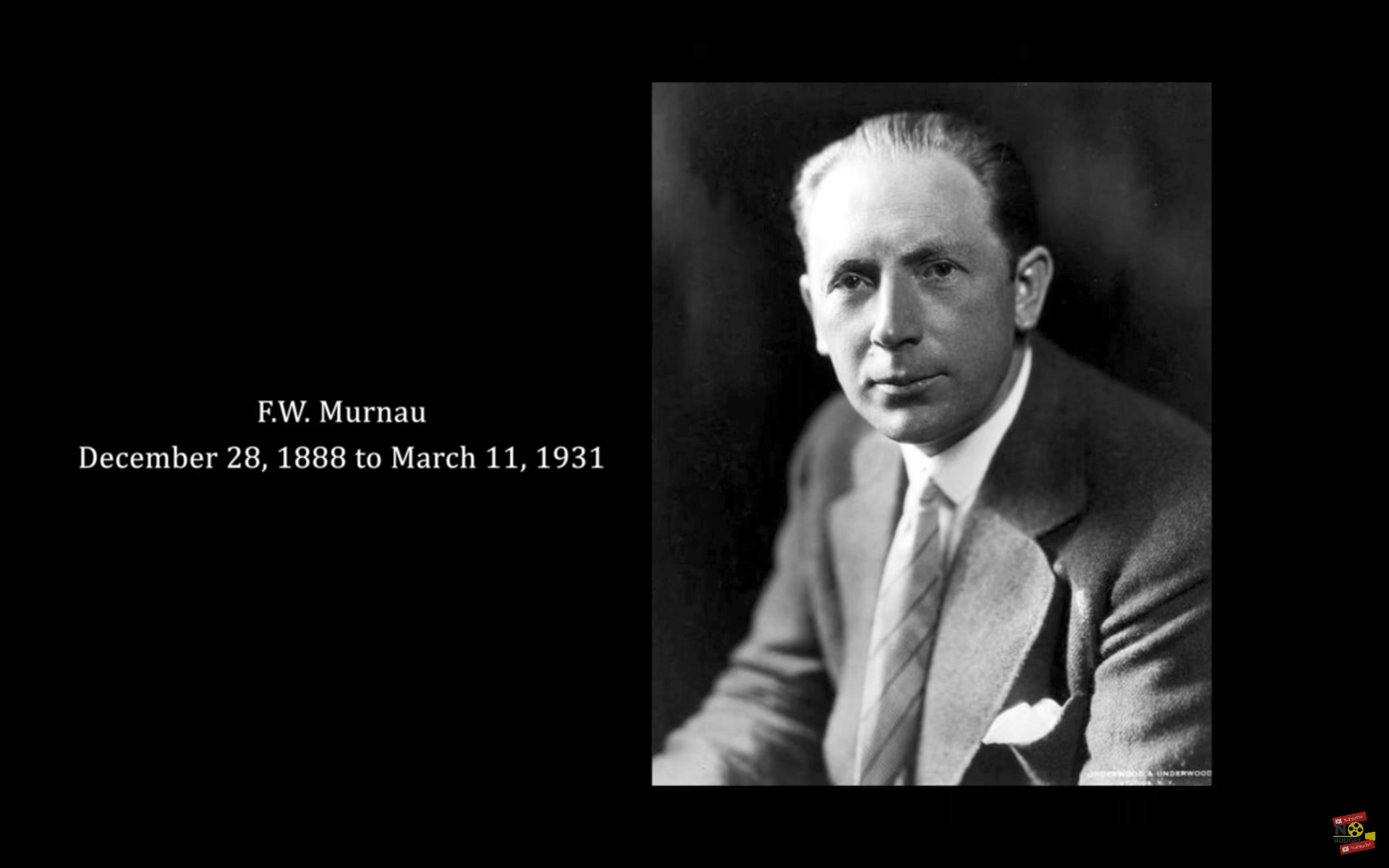
F.W. Murnau, born December 28, 1889, Bielefeld, Germany


Moved to California in 1926 - he made three silent films for Fox Studios before forming his own company 


—died March 11, 1931, Hollywood, California, - from injuries in an Automobile accident 


His most famous film is Nosferatu, which was featured earlier this month.


Films by German directors are an important part of post World War One German Culture, from the groundbreaking silent classics of the Weimar Republic to the movies of Leni Reisenthal in celebration of Nazi rule, beloved by Goebels, to modern Oscar winners, I am pleased to see German Literature Month XIII now welcomes posts on Films by German Directors


German Literature Month is hosted by Lizzy’s Literary Life


https://lizzysiddal2.wordpress.com/2023/09/22/announcing-german-literature-month-xiii/


F.W. Murnau's 1921 silent film Journey into the Night (German: Der Gang in die Nacht) is a captivating drama that delves into the complexities of love, betrayal, and redemption. The film follows Dr. Eigil Börne, a respectable physician engaged to the devoted Hélène. However, their tranquil life takes an unexpected turn when Börne encounters the captivating cabaret dancer Lily.

Mesmerized by Lily's allure, Börne breaks his engagement to Hélène and pursues a passionate relationship with Lily. Their union is initially filled with euphoria, but their contrasting personalities and Lily's reckless behavior soon lead to turmoil. Börne's finances crumble, forcing him to abandon his city life and seek refuge as a country doctor.

In the tranquil countryside, Börne encounters a blind painter, restoring his sight and rekindling his own sense of purpose. However, news of Hélène's deteriorating health due to heartbreak shatters Börne, causing him to confront the consequences of his choices.

Journey into the Night masterfully blends captivating visuals and poignant storytelling. Murnau's expressive use of shadows, light, and close-ups creates a haunting atmosphere, reflecting the characters' inner struggles and the film's exploration of themes like love, loss, and the pursuit of happiness.

The film's enduring legacy lies in its exploration of human nature's complexities, the consequences of our actions, and the possibility of redemption. It serves as a poignant reminder of the fragility of love and the enduring impact of our choices.

Journey into the Night is considered a seminal work of German Expressionist cinema, captivating audiences with its masterful storytelling and timeless themes. 

Mel u


Wednesday, November 22, 2023

The Grand Duke's Finances (Die Finanzen des Großherzogs) - A 1924 German Silent Film Directed by F. W. Murnau- 1 Hour 54 Minutes


There are a number of very good documentary videos on F. W. Murnau on YouTube.  The 16  minute presentation above details his groundbreaking cinematography 

In each subsequent posts, hopefully ten on F. W. Murnau I plan to share a documentary I found edifying 

A Post in Participation in German Literature Month XIII- November 2023


F.W. Murnau, (born December 28, 1889, Bielefeld, Germany

Moved to California in 1926 - he made three silent films for Fox Studios before forming his own company 

—died March 11, 1931, Hollywood, California, - from injuries in an Automobile accident 


His most famous film is Nosferatu, which was featured earlier this month.


Films by German directors are an important part of post World War One German Culture, from the groundbreaking silent classics of the Weimar Republic to the movies of Leni Reisenthal in celebration of Nazi rule, beloved by Goebels, to modern Oscar winners, I am pleased to see German Literature Month XIII now welcomes posts on Films by German Directors


German Literature Month is hosted by Lizzy’s Literary Life

https://lizzysiddal2.wordpress.com/2023/09/22/announcing-german-literature-month-xiii/


Today's Movie is Available on YouTube with English Subtitles 

Time is widing down on German Literature Month XIII. In terms of films I have decided to focus on the works of the great F. W. Murnau.

(There are a number of his works on YouTube.)

Murnau directed 21 films, 12 still survive.

"F W. Murnau not only exploited new filming techniques such as the use of negative exposure, stop-motion and low angle camera positions, but also made pioneering achievements in terms of film settings, choosing to film both in studios (Faust, The Last Laugh) and on location (Nosferatu, Sunrise). Along with G.W. Pabst, Robert Wiene and Fritz Lang, he established German expressionism as arguably the most significant movement of the silent film era. Working with the best cinematographers and set designers of his time, including Fritz Arno Wagner, Karl Freund, Karl Hoffmann, Walter Rohrig and Hermann Warm, Murnau crafted a body of work which penetrates deeply into the psychic world of his characters and constructs a remarkably distinct cinematic universe." From The Harvard Film Archives 


The film stars Harry Liedtke as the Grand Duke, a well-meaning but hapless ruler who is struggling to keep his country afloat despite its crippling debt. He is constantly pursued by his creditors, led by the menacing usurer Marcowitz, who is determined to collect on the Grand Duke's loans.

In a desperate attempt to save his country, the Grand Duke decides to marry the wealthy Russian Grand Duchess Olga. However, Olga is not interested in marrying the Grand Duke, and her brother, the Crown Prince of Russia, is vehemently opposed to the match.

The Grand Duke's hopes are further dashed when a businessman named Bekker offers him a large sum of money to exploit a sulfur mine on the island. The Grand Duke is torn between the financial benefits of the deal and his concern for the welfare of his subjects.

As the Grand Duke's financial problems mount, he finds himself surrounded by a host of eccentric and comical characters, including a scheming secretary, a lovestruck artist, and a pair of bumbling detectives.

Despite its serious subject matter, The Grand Duke's Finances is a lighthearted and entertaining film that is full of wit and charm. Murnau's direction is inventive and stylish, and the film's performances are all excellent.

Mel u


Monday, September 11, 2023

The Birth of a Nation - A 1915 Film Directed by D. W. Griffith- run time 3 hours and seven minutes- A Silent Film


Certainly "The Birth of a Nation" (1915) presents a challenge for modern audiences. Unaccustomed to silent films and uninterested in film history, they find it quaint and not to their taste. Those evolved enough to understand what they are looking at find the early and wartime scenes brilliant, but cringe during the postwar and Reconstruction scenes, which are racist in the ham-handed way of an old minstrel show or a vile comic pamphlet." - Roger Ebert

"He achieved what no other known man has achieved. To watch his work is like being witness to the beginning of melody, or the first conscious use of the lever or the wheel; the emergence, coordination and first eloquence of language; the birth of an art: and to realize that this is all the work of one man." James Agee 

 The Birth of a Nation is an amazing movie, a work of art that embodies horrible values.  It supports  completely racist stereotypes of formerly enslaved persons and portrays the Klu Kluz Clan as devoted to returning the post civil war American South back to the control of white people. White actors in blackface portrayed ex- slaves.

u


The film is a highly racist and pro-Ku Klux Klan depiction of the Reconstruction Era in the United States. It was a critical and commercial success, and is considered one of the most influential films ever made.
The film is set during the Reconstruction Era in the United States, following the Civil War.

The film tells the story of two families, the Camerons (who are white) and the Stonemans (who are white and Northern).

The film portrays the Ku Klux Klan as a heroic organization that protects white people from black violence.  The south is depicted as ruled by northern carpetbaggers using freed slaves as front men. The greatest horror to southern whites was intermarriage.


The film was a critical and commercial success, and is considered one of the most influential films ever made.

Featured Post

Imperial Reckoning: The Untold Story of Britain’s Gulag in Kenya by Caroline Elkins - 2005 - 701 Pages

  Imperial Reckoning:     The Untold Story of Britain’s Gulag in Kenya by Caroline Elkins - 2005 - 701 Pages 2006 Pulitzer Prize Winner From...