Showing posts with label Israel. Show all posts

Sunday, April 28, 2024

The Genius of Israel: The Surprising Resilence of a Divided Nation in a Turbulent World by Dan Senor and Saul Singer- 2023 - 532 Pages


The Genius of Israel: The Surprising Resilence of a Divided Nation in a Turbulent World by Dan Senor and Saul Singer- 2023 - 532 Pages 


Senor and Singer attempt and succeed in answering very fundamental questions about Israeli society.

How has a small nation of 9 million people, forced to fight for its existence and security since its founding and riven by ethnic, religious, and economic divides, proven resistant to so many of the societal ills plaguing other wealthy democracies?

Why do Israelis have among the world’s highest life expectancies and lowest rates of “deaths of despair” from suicide and substance abuse? Why is Israel’s population young and growing while all other wealthy democracies are aging and shrinking? How can it be that Israel, according to a United Nations ranking, is the fourth happiest nation in the world? Why do Israelis tend to look to the future with hope, optimism, and purpose while the rest of the West struggles with an epidemic of loneliness, teen depression, and social decline?

Published just after the October 7 attack by Palestine based Iran backed Hammas terrorists launched the worst attack on Jews since the Holocaust The Genius of Israel is a deeply documented work which answers the questions posed by the extreme resilience of Israel society.

From Simon and Schuster 

"Dan Senor and Saul Singer, the writers behind the international bestseller Start-Up Nation, have long been students of the global innovation race. But as they spent time with Israel’s entrepreneurs and political leaders, soldiers and students, scientists and activists, ultra-Orthodox Jews, Tel Aviv techies, and Israeli Arabs, they realized that they had missed what really sets Israel apart.

Moving from military commanders integrating at-risk youth and people who are neurodiverse into national service, to high performing companies making space for working parents, from dreamers and innovators launching a duct-taped spacecraft to the moon, to bringing better health solutions to people around the world, The Genius of Israel tells the story of a diverse people and society built around the values of service, solidarity, and belonging.

Widely admired for having the world’s highest density of high-tech start-ups, Israel’s greatest innovation may not be a technology at all, but Israeli society itself. Understanding how a country facing so many challenges can be among the happiest provides surprising insights into how we can confront the crisis of community, human connectedness, and purpose in modern life.

Bold, timely, and insightful, Senor and Singer’s latest work shines an important light on the impressive innovative distinctions of Israeli society—and what other communities and countries can learn."

Saul Singer is coauthor of the bestselling book Start-Up Nation: The Story of Israel’s Economic Miracle. He is a former editor and columnist at the Jerusalem Post and has written for The Wall Street Journal, The Washington Post, and other publications. Singer has given keynote speeches at innovation conferences around the world including Beijing, Sydney, Singapore, London, Madrid, Amsterdam, Oslo, Nairobi, and Sao Paulo. Before moving to Israel in 1994, he served for ten years as an advisor to US Members of Congress. He lives in Jerusalem with his wife and three children.


Daniel Samuel Senor (/ˈsiːnər/; born November 6, 1971) is an American Canadian columnist, writer, and political adviser. He was chief spokesman for the Coalition Provisional Authority in Iraq and senior foreign policy adviser to U.S. presidential candidate Mitt Romney during the 2012 election campaign. A frequent news commentator and contributor to The Wall Street Journal, he is co-author of the book Start-up Nation: The Story of Israel's Economic Miracle (2009) and The Genius of Israel: The Surprising Resilience of a Divided Nation in a Turbulent World (2023). 


I wish the college students and professors demonstrating against Israel in thinly viewed Anti-Semitic attacks would take the time to read this brilliant book, especially students of Jewish heritage. 


Tuesday, April 2, 2024

Start-up Nation: The Story of Israel's Economic Miracle - 2009 - by Dan Senor and Saul Singer


Start-up Nation: The Story of Israel's Economic Miracle - 2009 - by Dan Senor and Saul Singer


"How has a small nation of 9 million people, forced to fight for its existence and security since its founding and riven by ethnic, religious, and economic divides, proven resistant to so many of the societal ills plaguing other wealthy democracies?

Why do Israelis have among the world’s highest life expectancies and lowest rates of “deaths of despair” from suicide and substance abuse? Why is Israel’s population young and growing while all other wealthy democracies are aging and shrinking? How can it be that Israel, according to a United Nations ranking, is the fourth happiest nation in the world? Why do Israelis tend to look to the future with determination and purpose while the rest of the West struggles with an epidemic of loneliness, teen depression, and social decline?nture capital investment as the US and thirty times more than Europe?" from dansenor.com


The central question of the book is: How is it that Israel, a country of only 7.1 million people, has been able to produce more start-up companies than much larger and more stable nations? The authors attribute Israel's success to a unique combination of factors, including:


A culture of immigration and immigration that brings together people from diverse backgrounds and skillsets.

A mandatory military service that instills discipline, teamwork, and leadership skills in young Israelis.

A strong emphasis on education and research and development.

A government that is willing to take risks and support innovation.

A close relationship between the Israeli military and the private sector, which has led to the development of many new technologies.


Saul Singer is coauthor of the bestselling book Start-Up Nation: The Story of Israel’s Economic Miracle. He is a former editor and columnist at the Jerusalem Post and has written for The Wall Street Journal, The Washington Post, and other publications. Singer has given keynote speeches at innovation conferences around the world including Beijing, Sydney, Singapore, London, Madrid, Amsterdam, Oslo, Nairobi, and Sao Paulo. Before moving to Israel in 1994, he served for ten years as an advisor to US Members of Congress. He lives in Jerusalem with his wife and three children.


Daniel Samuel Senor (/ˈsiːnər/; born November 6, 1971) is an American Canadian columnist, writer, and political adviser. He was chief spokesman for the Coalition Provisional Authority in Iraq and senior foreign policy adviser to U.S. presidential candidate Mitt Romney during the 2012 election campaign. A frequent news commentator and contributor to The Wall Street Journal, he is co-author of the book Start-up Nation: The Story of Israel's Economic Miracle (2009) and The Genius of Israel: The Surprising Resilience of a Divided Nation in a Turbulent World (2023). 


Monday, September 10, 2018

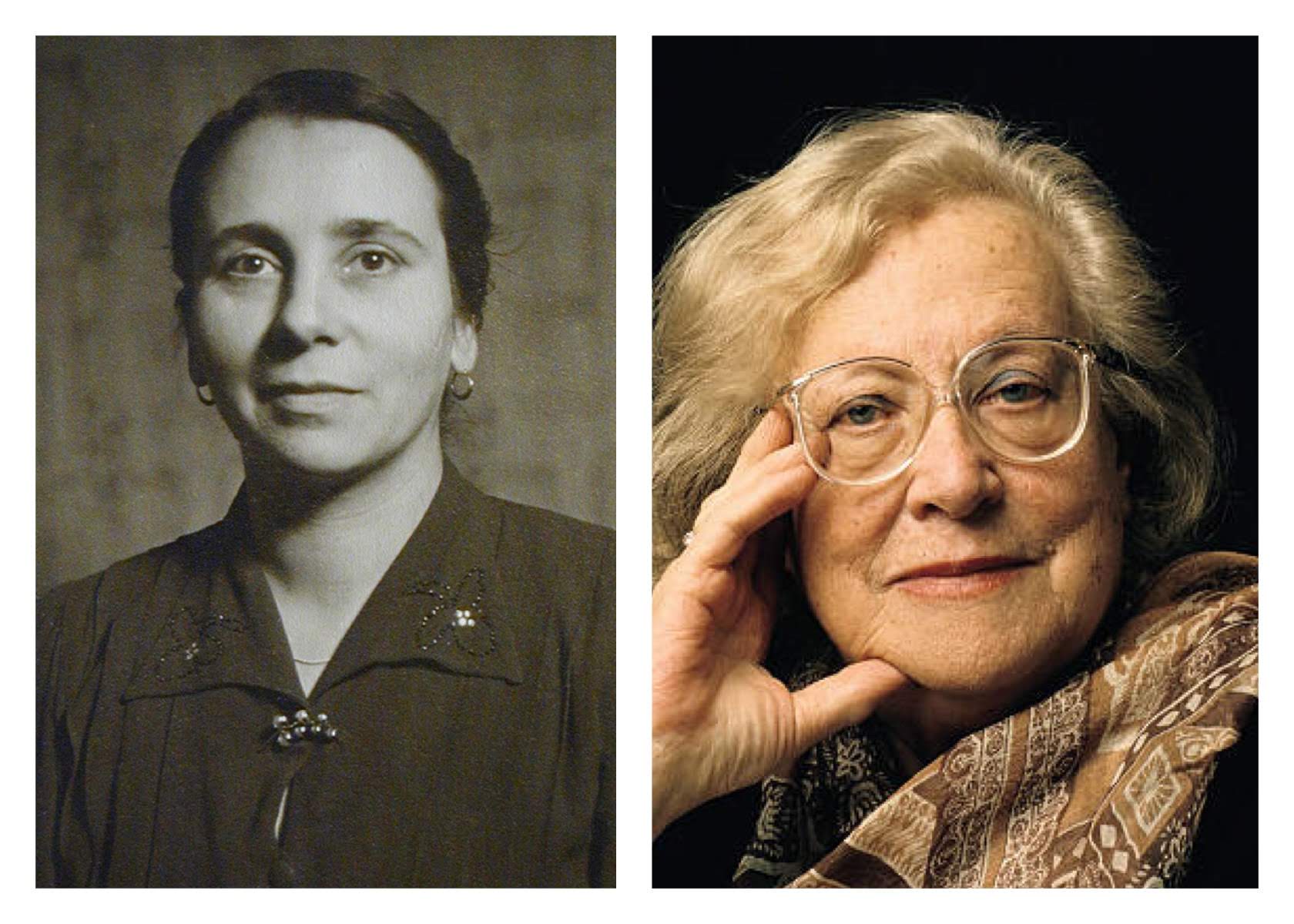
“The Key Game” by Ida Fink — A short story on a Jewish family in the Holocaust.


Ida Fink

Born November 1, 1921 -  Poland

Her father was a physician, her mother a music teacher.  She grew up speaking Polish and German. 

1941 to 1942- Confined to the 
  Zbarazh. Ghetto, she escaped with forged papers

1948 - Marries Bruno Fink, an engineer.  He was a Survivor of four concentration camps, all of his extended family died in The Holocaust

1957- Immigrated with husband and son to Israel

1971 - publishes her first short story

2008 - receives the Israel Prize, the nations highest cultural award.

September 27, 2011 - dies in Israel, age 89

Yesterday I did a google search for “Best Holocaust Fiction”, near the top was Ida Fink, known for her brief  short stories about how people coped with the Holocaust.  Her best known stories involve children.

I had never heard of her but clearly I wanted to learn more about Ida Fink.  Amazon has several of her works on sale but none in Kindle Format.

Luckily I was able to find one of her stories on line, “The Key Game”.   In just a few pages we see how hiding in fear of the knock on the door from the Nazis impacted the lives of Jewish children.  The young son in a family of Jews has been taught what to do when someone knocks.  He has been taught a routine of noises he can make and things he can say through the door that will give his Father Time to hide and he has been given a hard role to play if the Germans ask him about his father.

I don’t know much about the publication data on this story.  I would guess around 1985 and I do not have information on who translated it from Polish.  If you have this data, please contact me.


Wednesday, December 2, 2015

Return to Zion The History of Modern Israel by Eric Gartman (2015)


A Post by Ambrosia Boussweau, European Director of The Reading Life 


“To attack Jews is anti-Semitism, but an outright attack on the State of Israel is also anti-Semitism,” the Pope told a World Jewish Congress delegation. “There may be political disagreements between governments and on political issues, but the State of Israel has every right to exist in safety and prosperity.”  Pope Francis, 2015

Return to Zion The History of Modern Israel by Eric Gartman is a wonderful book, perfect for anyone who wants to understand middle eastern politics, which dominates the world stage now.  In his introduction Gartman says that reading history should be exciting and fun and for sure he has achieved that objective in this exciting book.  He sees the four thousand year history of the Jews as one of the great stories of human history and the development of and vibrant survival of a Jewish homeland in the Middle East as the triumph of a people against crushing odds.  One of the very important things to understand about Israel is how it arose almost directly out of the Holocaust and Gertman does a wonderful job explaining this.  The motto "Never Again" and the rock hard determination to survive rose out of the Holocaust.  Many of the early settlers of Israel were Holocaust survivors and refugees from Eastern Europe and the pograms of Russia.  


Over the last year or so I have read a number of books on the Holocaust as well as all of the works in the Yale Yiddish Library (this collection is by far your best introduction to Yiddish literature).  I agree with Mel that the Holocaust was a war on the reading life.  We both see it as the central event of the 20th century.  The Holocaust set the stage for the Paris attacks. All terrorist groups are motivated by a hatred of Jews.  This is just a fact.  

They book opens with an account of the Jewish rebellion against the Romans in 73 to 74 A.D. He focuses on the siege of the fortress of Masada and the suicude of the 800 pr so Jewish defenders of the fort.  He explains how the memory of this event fueled the fire for a Jewish homeland.  He details the history of Zionism and the international politics behind England's permission for Jews to settle in the region of Palestine came about. He talks a bit about how this defeat of the rebellion destroyed the Jewish homeland and began the dispersion of Jews.   Basically Churchill thought Jewish immigrants would do a better job developing the region than indigenous Arabs.  I found this fascinating.  

On May 14, 1948 David Ben-Gurian proclaimed the existence of the state of Israel declaring it a world wide home for Jews.  Soon many people, over a million would come just from Russia, moved to Israel.  The problem arose because the territory claimed by the state of Israel was occupied by a few million Arabs, mostly Palestenian.  All of the surrounding countries were lead by dictators or monarchs and all had as their central policy the destruction the state of Israel and the complete slaughter of all Jews.  The Arabs  intended to complete the work of Hitler.  Jewish leaders, many were veterans of World War Two, and the citizens of the new country of Israel began to create a defense force.  With the help of financial aid from the American Jewish community they build up a powerful force.  Every male citizen of age is in the reserves. As explained by Gertman, the residents of Israel were largely highly educated and many had technical or commercial skills where the Palestein residents were over 90 percent illiterate and had done little or nothing to improve their homeland in 2000 years.  

Jewish immigrants to Israel had almost no experience as farmers for because by law in Russia and Easyern Europe Jews could not own land.  Gartman explains how the collective farms produced what he calls a "New Kind of Jew", one who could turn the harshest soil into richly productive agricultural land.   When most early residents arrived they spoke either Yiddish or Russian.  In an incredibly bold and  brilliant move the leaders decided to make the ancient language of Hebrew the official language.  All over the country people began to learn Hebrew.  It is the only case in history of the revival of an ancient language.  People very quickly totally bonded to their new homeland.  

Shortly after the declaration of statehood nearby countries like Egypt, Syria, and Jordan invaded.  Like in all subsequent invasions, the Arabs were crushingly defeated.  Gartman  covers all the invasions.  I knew that Israel would win but the story of the wars was very thrilling,

   In the Yom Kippur War, the Russians provided the Egyptian military with the latest in high tech weapons, planes and tanks.  The problem was the Arabs did not know how to repair them or use their advanced features.  Egyptian soldiers were quick to jump out of tanks and run for home.  Israeli soldiers on the other hand were totally trained and knew how to use the powerful weapons supplied by the USA and France.  At the conclusion of all these wars Israel could have easily destroyed the Arab capitals but they did not believe in the killing of civilians.  The Israelis showed a restraint in victory their enemies would not even have considerd.   

The big human rights issue in the Middle East now is the fate of the Palestenians.  Israel has perhaps millions of Arab residents who are a great source of social unrest.  They feel Israel has stolen their land.

I would note that if the  oil rich Arab nations spent a tiny bit of the money they use to fund their military to help the Palesteinians the human rights crisis could easily be ended.  It is to the advantage of Israel's   enemies to keep the Palesteinians in misery so they can blame Israel.

Gartman tells us how Isrsel developed into a very prosperous country through hard work, dedication and intelligence.  He tells readers there is no possibility of Arab countries destroying Israel as the country is so powerful  and is backed by America. The Arabs have been backed by Russian but not to the degree America has backed Israel.    He basically acknowledges Israel probably  has nuclear weapons and may have been prepared to use them in the 1967 war.  

I learned a lot from this i book. Much more than I have touched on.  I grew up with Israel on the nightly news but it was good to have it all told in a coherent narrative.  He talks a lot about Israeli politics. 

Some might say the book is totally pro-Israel .  It does cover the hardships of the Palesteinians.  I think if they had the power the countries bordering Israel would complete the Holocaust. Gertman does go into how Israel did  face criticism for perceived injuries inflicted on Palestenians.  

  Arab leaders have screamed out death to all Jews but the grace of the Jews is they could wipe out the Arabs but have not.  


David Gartman  is an analyst for the US department of defense.

Reading this book helped put the events in the Middle East in perspective.  I really respected how Gartman traced the origin of Israel to the Holocaust.  In a great irony, at a time they badly needed it, Germany gave Israel a huge amount of money for theft of goods during W W Two.  The country used these funds to help arm against those who would continue the Holocaust. 


Ambrosia Boussweau 


Saturday, November 30, 2013

"The Tales of Hershel Summerwind" by Itzik Manger. 1935


A very generous gift of books from Yale University Press is making this project possible.  


Yiddish, German, and Austro-Hungarian literature are interrelated in many complex ways.  In The Origins of Totalitarianism Hannah Arendt takes as one of her central themes the idea that modern totalitarian forms of government developed as a result of vicious anti-Semiticism. If she is right, then it was the development of Nazism partially as a hatred from European Jewish culture that ended up destroying Viennese culture that produced  so many great writers and murdered most of the original readers of Yiddish literature.  Stefan Zweig moved to Brazil to escape the destruction of the culture he loved and shortly afterwards he and his wife committed suicide.

Itzik Magner's life mirrors the movements of many other Jewish writers attempting to escape from their Nazi controlled homelands.   Magnar was born in Czernonitz in the Ukraine in 1901, then part of the Austro-Hungarian Empire (as was Gregor Von Rezzori).  He moved to Warsaw in 1928 as it afforded him more publishing and theatrical opportunities for his dramas.  He was very successful but in 1938 to escape the Nazis he moved to Paris (as did Josesph Roth in 1933).  In 1940 he moved to London and became an English citizen.  In the mean time the Nazis burned all of works they could find and murdered a large percent of his readers.  In 1958 he moved to Isreal.  He was a tremendous success as a playwright there and when he died there in 1969 he was declared an Isreali National Poet with hundreds of mourners at his funeral.  Leonard Wolf's introduction to the Yale collection presents a marvelous portrait not just of Manger but of the era.


Leonard Wolf says under a surface simplicity Yiddish fiction and poetry is among the most complex and sophisticated in the world.  The authors were almost all very erudite, learned men (no female Yiddish writers of repute as far as I can see).  Manger intended to complete a book of ten short stories modeled on Bocaccio's Decameron.  He planned it to be told by Jews from ten different countries terrorized by the Nazis.  It was to be set in an undergroud bunger where they were all hiding out from the horrors of the Nazis.  Each person was going to tell the group a story to help pass the time.  Sadly he only competed two of the stories.  Wolf has thankfully included them both in the Yale Collection. One is "The Story of Hershell Summerwind" and the other is "The Story of the Nobleman's Mustach".  I shall post on both of these short stories and another unrelated story in the collection.  

Hershel Summerwind is eighteen.   His story draws on childhood memories and the very wide spread folk tale of a boy whose father remarries when the boy's  beloved mother dies.  The step mother treats him with great cruelly. His father wants him to "grow up".  The step-mother has a pet rooster who she thinks is the reincarnation of her first husband.  Hershel and the rooster hate each other and a lot of the fun of the story is seeing them battle it out.  On the day of his sister's wedding, his father sends him in a wagon to the father's best friend's house to get a barrel of twenty year old wine, a wedding gift.  Hershel has some great adventures and misadventures on this errand.  A flock of drunken birds takes him for a long flight in one hilarious segment.  This is a very good totally fun to read story.  


Featured Post

Imperial Reckoning: The Untold Story of Britain’s Gulag in Kenya by Caroline Elkins - 2005 - 701 Pages

  Imperial Reckoning:     The Untold Story of Britain’s Gulag in Kenya by Caroline Elkins - 2005 - 701 Pages 2006 Pulitzer Prize Winner From...