Showing posts with label England. Show all posts

Tuesday, May 7, 2024

The Wide Wide Sea : Imperial Ambition, First Contact and the Fateful Final Voyage of Captain James Cook by Hampton Sides - 2024 - 411 Pages


 The Wide Wide Sea : Imperial Ambition, First Contact and the Fateful Final Voyage of Captain James Cook by  Hampton Sides - 2024 - 411 Pages -is  a magnificent historical narrative.


NEW YORK TIMES BESTSELLER • A “thrilling and superbly crafted” (The Wall Street Journal) account of the most momentous voyage of the Age of Exploration, which culminated in Captain James Cook’s death in Hawaii, and left a complex and controversial legacy still debated to this day."


“Hampton Sides, an acclaimed master of the nonfiction narrative, has taken on Cook’s story and retells it for the 21st century.”—Los Angeles Times

The Wide Wide Sea : Imperial Ambition, First Contact and the Fateful Final Voyage of Captain James Cook by Hampton Sides focuses on Cook’s last voyage. The purpose of the voyage, sponsored by King George the Third and championed by numerous other high ranking figures was to find the fabled North West Passage.  The hope was this would cut a huge amount of time from a voyage across North America while greatly extending the scope of the British Empire. 


"OJuly 12th, 1776, Captain James Cook, already lionized as the greatest explorer in British history, set off on his third voyage in his ship the HMS Resolution. Two-and-a-half years later, on a beach on the island of Hawaii, Cook was killed in a conflict with native Hawaiians. How did Cook, who was unique among captains for his respect for Indigenous peoples and cultures, come to that fatal moment?


Hampton Sides’ bravura account of Cook’s last journey both wrestles with Cook’s legacy and provides a thrilling narrative of the titanic efforts and continual danger that characterized exploration in the 1700s. Cook was renowned for his peerless seamanship, his humane leadership, and his dedication to science-–the famed naturalist Joseph Banks accompanied him on his first voyage, and Cook has been called one of the most important figures of the Age of Enlightenment. He was also deeply interested in the native people he encountered.  Cook mapped huge swaths of the Pacific, including the east coast of Australia, and initiated first European contact with numerous peoples. He treated his crew well, and endeavored to learn about the societies he encountered with curiosity and without judgment.


Yet something was different on this last voyage. Cook became mercurial, resorting to the lash to enforce discipline, and led his two vessels into danger time and again. Uncharacteristically, he ordered violent retaliation for perceived theft on the part of native peoples. This may have had something to do with his secret orders, which were to chart and claim lands before Britain’s imperial rivals could, and to discover the fabled Northwest Passage. Whatever Cook’s intentions, his scientific efforts were the sharp edge of the colonial sword, and the ultimate effects of first contact were catastrophic for Indigenous people around the world. The tensions between Cook’s overt and covert missions came to a head on the shores of Hawaii. His first landing there was harmonious, but when Cook returned after mapping the coast of the Pacific Northwest and Alaska, his exploitative treatment of the Hawaiians led to the fatal encounter." From penquin press  - The Publisher 


Here are a few things that particularly struck me. Cook and his medical staff some how kept his crew from getting scurvy.   While his crew did have sex with Polynesian women Cook, which planted Gonorrhea on the islands,, a married Quaker, did not.  He was not a rigid Christian ideologue, he did his best to understand the faiths and social structure of the societies he encountered.  In Hawaii he was taken initially as a returning God by some.  Sides vividly brings to life the extreme hardships and dangers of the voyage.  Cook was very much cut off from news of England, he did not know of the outbreak of the American revolution. With 21st century sensibilities I was turned off by the wanton killing of so many animals.  The final battle scenes on Hawaii were very exciting and to me more than a little disturbing.

HAMPTON SIDES is best-known for his gripping non-fiction adventure stories set in war or depicting epic expeditions of discovery and exploration. He is an acclaimed journalist and the author of the bestselling histories Ghost Soldiers, Blood and Thunder, Hellhound On His Trail, In the Kingdom of Ice, On Desperate Ground and, most recently, The Wide Wide Sea. - from the author’s website 


Monday, August 22, 2016

"The Other Kingdom" - A Short Story by E. M. Forster (1911, included in The Celestial Omnibus and other stories)


"For life is practically a battle. To all intents and purposes a battle. Except for a few lucky fellows who can read books, and so avoid the realities." From "The Other Kingdom" 

Author of Passage to India, Howard's End, Aspects of the Novel and numerous other works

I recently reread one of my favorite short stories, "The Celestial Omnibus".  I think it contains deep wisdom about the rewards and pains of a reading life and I hope to keep periodically returning to it until I feel I am ready to take my own celestial omnibus, return tickets are available but not required.  

There are lots of blog posts about Forster's novels, I have posted on several of them, but few seem to read his short stories.  Of course this is in part due to the sad fact that few read short stories and fewer read 150 year old ones.

I decided to read "The Other Kingdom" today because it comes right after "A Celestial Omnibus" in the collection. I started it then and decided to come back to it.  As "The Other Kingdom" opens the young Irish bride of an upperclass Englishman is receiving  tutoring in Latin.  Her husband wants to educate her.  I was pondering the meaning of the title, I did a Google search, perhaps it has a meaning in classical Roman literature I do no get or maybe it refers to Ireland.  The woman is esthetic when her husband gives her a wood of her very own.  The story takes a treacherous turn and I will not spoil it.  I think what I liked best about the story were the conversations about the value of studying the classics.

I will be, I hope, reading more of his short stories.


Saturday, August 20, 2016

Wilfred Owen Complete Works (published by Delphi Classics)


"the war poets were the true poetic heirs to this epic grief. I think of a grief so terrible it will always need voicing, so terrifying it will always seek expression, so primitive it will always throw itself back to an original source. And the language of this grief is formalized as poetry." Edmund Hirsch from How to Read A Poem and Fall in Love With Poetry


Wilfred Owen was born at Oswestry on 18th March
1893. He was educated at the Birkenhead Institute, and matriculated at London University in 1910. . . In 1915, in spite of delicate health, he joined the Artists’ Rifles O.T.C., was gazetted to the Manchester Regiment, and served with their 2nd Battalion in France from December 1916 to June 1917, when he was invalided home. Fourteen months later he returned to the Western Front and served with the same Battalion, ultimately commanding a Company. He was awarded the Military Cross for gallantry while taking part in some heavy fighting on 1st October. He was killed on 4th November 1918, while endeavouring to get his men across the Sambre Canal..  From Siegfried Sassoon 

1914

War broke: and now the Winter of the world
With perishing great darkness closes in.
The foul tornado, centred at Berlin,
Is over all the width of Europe whirled,
Rending the sails of progress. Rent or furled
Are all Art's ensigns. Verse wails. Now begin
Famines of thought and feeling. Love's wine's thin.
The grain of human Autumn rots, down-hurled.

For after Spring had bloomed in early Greece,
And Summer blazed her glory out with Rome,
An Autumn softly fell, a harvest home,
A slow grand age, and rich with all increase.
But now, for us, wild Winter, and the need
Of sowings for new Spring, and blood for seed  - Wilfred Owen

Recently I read what might be the best book on the art of reading I have yet read,  How to Read a Poem and Fall in Love With Poetry by Edward Hirsch.  (What he says can be largely applied to fiction also).  One of the poets he speaks most reverentially about is the English World War One poet, Wilfred Owen.  He sees Owen as a poet in the Homeric tradition.  As I read his poems on life and death in the trenches in France I could not help but imagine Achilles, Hector, Odysseus, and Paris listening to a bard recite Owen in silent awe.  I was very happy to see Delphi Classics has an E Books of his complete works, including an extensive correspondence, available for $0.99.

As I said in my post on Elizabeth Bishop I do not have the technical tools to generalize about poetry collections.  His poems about the war, the senseless slaughter of millions of men I felt an oceanic feeling, a sense this is what poetry is about.  His more conventional poems are lovely, he was killed at age twenty five, blocked from developing his full powers. 

There is great beauty in this image


Where his poetry was inspired


His birth place


Wilfred Owen was classically educated, a lover of poetry.  You can see that and his love for the common "Tommie" fighting for his king in a completely absurd incredibly wasteful war.

Mel u

"In Another Country" by David Constantine (2013 Frank O'Connor Prize Winner) - A Note on My Short Story Reading Goals


"Surely to God it wasn’t much to ask, that you get through to the end and looking back you don’t fill with horror and disappointment and hopeless wishful thinking?" - from "In Another Country" 


I just read yesterday a 1996 Paris Review interview with the fabulous Mavis Gallant in which she said collections of short stories by one author should not be read straight through as a novel but savored slowly.  I know she is right but I find it hard to resist the urge to read through a collection when it is by an author as wonderful as Gallant or David Constantine. 

"In Another Country", the title story in the very generous collection of his works, is the fourth story by Constantine which I have read and now posted upon.  This story centers on a couple mRried fifty years. The husband, eighty, is suffering from cognitive decline and we see how this distresses his wife. As the story opens they are talking about the discovery of the body of a young woman, frozen in the glaziers of Switzerland. We slowly learn the man and discovered woman had a romance when he was twenty.  They fled then Nazi Germany hoping to settle in Switzerland.  She dies on the way.  With the discovery of her body old long dormant wounds are opened.  The man, even though he clearly has no ability to do so, feels compelled to claim her body as next of kin.  She was pregnant when she died.  The couple had no children.

This is a beautiful if heartbreaking story about growing old, about a very long marriage.  I will remember it I hope for a long time. 

Future short story reading plans

As of today I have 163 short story books on my E reader, thousands of stories.  Most of these books I have been given.  Right now I am reading more or less straight through, contrary to Mavis Gallant's advise, a collection of her stories and one of forty stories by Anne Beattie.  I will mostly journalize my reading experience.  Other than posts on Indian and Filipino short stories, short story posts draw little readership.


 Mel 

David Constantine

Born in Salford in 1944, David Constantine worked for thirty years as a university teacher of German language and literature. He has published several volumes of poetry, most recently, Nine Fathom Deep (2009). He is a translator of Hölderlin, Brecht, Goethe, Kleist, Michaux and Jaccottet. In 2003 his translation of Hans Magnus Enzensberger’s Lighter than Air won the Corneliu M Popescu Prize for European Poetry Translation. His translation of Goethe’s Faust, Part I was published by Penguin in 2005; Part II in April 2009. 

David's four short story collections are Back at the Spike, the highly acclaimed Under the Dam (Comma, 2005), The Shieling (Comma, 2009), which was shortlisted for the 2010 Frank O’Connor International Short Story Award, and Tea at the Midland (Comma 2012). Constantine’s story ‘Tea at the Midland’ won the BBC National Short Story Award 2010, and the collection as a whole won the Frank O'Connor International Short Story Award in 2013. 

He lives in Oxford where, for ten years, he edited Modern Poetry in Translation with his wife Helen (until 2011). David's short story 'In Another Country' has been adapted into '45 Years' - a major film, directed by Andrew Haigh and starring Tom Courtenay & Charlotte Rampling. This film won two silver bear awards at the Berlin Film Festival, the Michael Powell Best British Film at Edinburgh, and the WFTV award for Best Performance (for Rampling)... It has also been nominated for nine international others....   (From Comma Publishing)

Wednesday, June 8, 2016

Curzon Imperial Statesman by David Gilmour (1994, 704 pages)

George Curzon, 1st Marquess of Kedleston

1859 to 1925

Vice Roy of India, 1899 to 1905

"To many people George Curzon was the very image of an arrogant and ambitious aristocrat. Heir to one of the great country houses of England, he was educated at Eton, where he won several academic prizes, and at Oxford, where he won several more; at both institutions he was spoken of as a future Prime Minister. In his twenties he established himself as an author, a Member of Parliament and an expert on foreign affairs. Before he was 40 he became Viceroy of India, the ruler of nearly three hundred million people inhabiting territory now divided between India, Pakistan, Burma and Bangladesh. But Curzon’s career was a spectacular blend of triumph and disappointment. As Queen Victoria’s last Viceroy, he presided over the Indian empire at its apogee; as Foreign Secretary he was a crucial figure on the international stage after the First World War. Yet his triumphs were invariably succeeded by disillusionment and a fall."  David Gilmour


George Curzon was from 1899 to 1905 the Vice Roy of India, the crown jewel in the British Empire.  He was near absolute ruler over 300,000,000 million residents of the incredibly diverse in all ways of Indian Subcontinent.  

David Gilmour does a magnificent job of letting us see how Curzon, a very complex man, rose to great power, only to fall and rise again. His family was aristocratic but without great wealth.  He married the daughter of a wealthy American industrialist from Chicago.


Curzon entered public service right out of college.  Because of his great intellect, powerful work ethic, devotion to duty and charismatic personality he was quickly advanced at a young age to positions of great responsibility.

I do not wish to detail Curzon's career path, Wikepedia has a decent basic facts article.  I basically acquired this book because I am very into colonial South and South East Asia history and I wanted to learn about Curzon's time in India.  Curzon iwas not just a capable administrator.  He made himself into an expert on Indian and Persian culture.  India was not a monolithic country, there were hundreds of different political divisions, including about 750 Princely states, some bigger than England, others with just a few thousand subjects.  There were many languages and religions to bewilder the average Englishman.  Curzon enjoyed the perks of his position.  He seemed to have really enjoyed going on tiger hunts with local nahibs. He was treated as an Emperor would hope to be.


After his return to England Curzon was a member of the cabinet and the House of Lords.  Gilmour details a lot of the political jockeying for power of the time.  Lots of people felt Curzon should have been prime minister of England but he was not.  He was not always a skilled political infighter and in England lost out to men of lesser ability because he was not superficially likeable. He was preceived as arrogant by many, no doubt correctly.

Curzon was a great reader, mostly biography and history.  He became wealthy through the money his wife left their daughters when she passed.  He made a hobby of restoring old stately homes and castles and giving them to the government.  Gilmour explains his active role during WWI in the home foreign office. 

Curzon was a sometimes difficult man to work for, being very hard on servants and his ADCs in India but he also looked out for them and they as viewed him as a benevolent if remote father figure.

Curzon and his wife Mary had three daughters.  His daughters were at times difficult.  They had their own money, actually more than their father, through trusts from their mother. 

Curzon Imperial Stateman is a very good book I strongly recommend for anyone into English or Indian History.

Check author's webpage for his bio and other works 


Mel u

Tuesday, January 12, 2016

Vanity Fair by William Thackeray. 1848


Vanity Fair by William Thackeray first was added to my to be read list in the long ago when I read Clifton Fadiman's description of it in his Lifetime Reading List.  He praised it for its panoramic view of British society and the creation of perhaps the original literary bad girl, Rebecca Sharp.  In November of last year I read a book described by the publisher as "The Vanity Fair of the Weimer Republic, Wolf Among Wolves by Hans Fallada.  I decided the time had at last come to read Vanity Fair.

I am not inclined to retell the plot, Wikepedia has a good summery those trying to avoid reading the book can utilize. I will just talk a bit about my reactions and what I liked   about the work.  

Becky and her life time friend and cocenter of the novel, Amelia Smedley are both just graduating from a finishing school.  Becky was a charity student, her mother was a second rate opera singer and her father a gambler, her best friend Amelia was from a wealthy family.  Upon graduation the school owner was in the habit of giving girls copies of Doctor Johnson's dictionary.  I was totally flabbergasted when Becky   threw her copy out of the window of the coach taking her away.  I saw this as Thackeray's  first salvo fired at the pretensions of English society.  I laughed out loud, something I rarely do reading a book written over 150 years ago.  

Becky is looking to raise her status in life through the proper employment of her considerable charms.  There are more twists and turns in the plot than in a road through the mountains of Baguio.  Everybody but Amelia has a bad side, in some characters that is their only side.   Lots of exciting, tragic, and some pleasant things happen.  The book was first published serially so Thackeray had to end chapters leaving the readers waiting eagerly  for the next episode.
.

One thing I really liked about the novel was the treatment of the impact of the wars against Napolean as seen from the perspective of the English upper class where officer ranks were purchased.  Additionally I really enjoyed and was not expecting the accounts of British life in India.  

Vanity Fair is long at close to 1000 pages but I think Thackeray needed this length for  his portrait of British society.  He also makes frequent remarks about the characters which exhibited great insight.  He speaks directly to the reader and I liked his remarks a lot. Fadiman described Thackeray as "a worldly wise clubman" and this seems accurate to me. I found the book got more interesting as I read in and learned more about the world of Becky and Amelia.  The longer I read on the more I liked the novel. 


Vanity Fair belongs on the life time list of all serious literary autodidacts.  It is often listed as one of the hundred best novels in the world.  I am very happy to have at last read this classic.

I hope those more experienced in Thackeray might suggest others of his novels I might read or should I just stop with Vanity Fair?

How is the movie, I hoped to find it on Netflix but did not. 


 Mel u

Tuesday, June 16, 2015

A View of the Harbour by Elizabeth Taylor (1947)


"Taylor’s sentences are like Renaissance jewelry, intricate, composed, flawless." From the introduction by Roxana Robinson


"‘A man,’ she thought suddenly, ‘would consider this a business outing. But, then, a man would not have to cook the meals for the day overnight, nor consign his child to a friend, nor leave half-done the ironing, nor forget the grocery order as I now discover I have forgotten it. The artfulness of men,’ she thought. ‘They implant in us, foster in us, instincts which it is to their advantage for us to have, and which, in the end, we feel shame at not possessing.’ She opened her eyes and glared with scorn at a middle-aged man reading a newspaper. ‘A man like that,’ she thought, ‘a worthless creature, yet so long has his kind lorded it that I (who, if only I could have been ruthless and single-minded about my work as men are, could have been a good writer) feel slightly guilty at not being back at the kitchen-sink.’ ". From A View of the Harbour

I completely agree with Roxana Robinson's assessment of the sentences of Elizabeth Taylor, "Taylor’s sentences are like Renaissance jewelry, intricate, composed, flawless."  My first experience with Elixabeth Taylor (1912 to 1975, England) was last year when I read her delightful story about infidelity, "Blush".  I was very grateful when The New York Review of Books offered me a review copy of her 1947 novel, A View from the Harbour.  The novel is set in a run town coastal town in England.  It is a very gossipy novel that focuses on the lives of the residents.  

Taylor is a very acute observer of small details.  I think her remark, from a female novelist who is one of the book's characters, that I quote above will ring painfully true to legions of writers.  

The characters in the story are all connected in one way or another.  Several are working through the consequences of recently failed relationships.

It is the exquiste sentences and the many wonderful observations that made A View of the Harbour such a delight to read.  


Mel u

Thursday, January 22, 2015

Pride and Prejudice by Jane Austin (1813)


Around 1960 or so in The Lifetime Reading Plan by Clifton Fadiman I first was made aware I needed to read Jane Austin's Pride and Predjudice.  I remembered trying it then but I was not ready for it yet.  The most recent time I read a glowing endorsement of the book was in Reading Like a Writer by Francine Prose, published in 2014.  Many book bloggers say it is their favorite novel of all time.  

I am so glad I have at long last read this wonderful book.

Which Austin novel should I Read next?

Who is your favorite sister?

Best match? 

Mel u

Saturday, October 25, 2014

Hamlet by William Shakespeare (first preformed 1603)


 "You have not experienced Shakespeare until you have read him in the original Klingon."  Klingon Chancellor Gorkon in Star Trek VI: The Undiscoverd Country


It is pushing 45  years since I last read Hamlet.  I am not sure what prompted me to reread it now.  
Shakespeare has a very good claim to be called the best writer who ever lived.  I think I might have been prompted to reread it now through my recent readings of classic French  writers like Proust, Balzac and Zola to try to climb as high as one can in the reading life, to experience possibly the very best.  I see Hamlet epitomized Italo Calvino's definition of a classic work of literature as one that is inexhaustible, that can be read over and over always knowing you will discover more about the work and yourself with each reading.   

I found I recalled parts of the plot and parts I had totally forgotten.  I remembered many of the lines that  have passed into the culture.  Reading it again was not like rereading an old friend like Oliver Twist but seeing without fear it was not beyond reading as enjoyment and for the sublime pleasure only rereading the very best works of literature can bring.  

If you have old memories of pedantic pedagogical professors doing their best to make you hate Shakspeare then purge these.  In fact in a shameful  moment this morning on the American TV Fox Network the hostess suggested only the pompous and prentitious pretended to read Shakespeare.  I fear for a culture where those who read great literature are mocked. 

I hope to reread Hamlet at least once in 2015.  I will next reread King Lear.  

If you first read Shakespeare in college and then reread it years later just because you felt like it, please share your experiences with us.

Mel u

Monday, October 6, 2014

Middlemarch A Study of a Provincial Town by George Eliot (1871 to 1872)

"What do I think of Middlemarch? asked the great American poet Emily Dickinson. "What do I think of glory?" And Virginia Woolf called it "The magnificent book, which with all its imperfections, is one of the few English books written for grown-up people". Many of what Woolf thought were imperfections are in fact strengths. It is possible to argue that Middlemarch is the greatest English novel."  A. S. Byatt


Middlemarch by Gerorge Eliot (1819 to 1880, England) is universally regarded as one of the greatest novels of all times, perhaps the pinnacle of the Victorian novel.  I am so glad to have at last read this magnificent work.   I recently learned that Eliot was among Proust's favorite English writers. In an article in The Guardian by A. S. Byatt she says that Eliot learned much from Balzac and I can see that.  I think it may help in understanding this novel to have been married for a longtime.  Book bloggers often talk about whether a book is part of the canon or not. ( I think the notion of a literary canon was first created by American professors at Columbia and Harvard but the meaning of the term has expanded way beyond that and has or was a subject of dispute among academics.). No one could deny Middlemarch a place near the top of the canon.   It is a must read classic for all literary autodidacts.  

I will just make a few random observations on the book (for homework help seekers, just go to Wikepedia and copy the whole article on Middlemarch and turn it in as your work).

I think it is important to see it as the full title would have us do, as a study of a small town in the Midlands of England in around 1830 to 1832.  It is a portrait of life in the imaginary town of Middlemarch.    It is intensely focused on marriages, the place of women in society, the importance of the clergy, and social structure. There are deep themes about the nature of love.  It  focuses on relatively affluent, upper middle class people, more on women than men   It does not rise to the highest levels of society like Proust and Zola and it does not take us into the lives of the very poor like Dickens or Hardy (meaning most people at the time) or the decadent rich.  There are no brothels or factories, no opera parties, no famous artists or courtesans. Eliot is a very close observer of a particular segment of society.    Balzac soars higher and sinks lower in his depictions of life.  There are didactic narrative  intrusions but if Tolstoy can do it so can Eliot.

It is an exciting book, you want to see what will happen next.  There are lots of minor characters and several plot lines.   

Please share your experience with Eliot with us.

My post on Silas Marner


I hope to read The Mill on the Floss in 2015.  Proust loved it.  


Thursday, September 11, 2014

The Mayor of Casterbridge by Thomas Hardy. 1886


My Posts on Thomas Hardy

I think I first found out that some few books were considered great literature from reading The Lifetime Reading Plan by Clifton Fadiman back around 1960.  The Mayor of Casterbridge by Thomas Hardy is one of nineteen English language novels on the list.  Written in a time before political  correctness and such, Fadiman acknowledges his list is swayed to English language works.  Since beginning The Reading Life five years ago I have read two Hardy novels,Jude the Obscure and The Return of the Native and several of his short stories.   I am very glad I have at long last read The Mayor of Casterbridge.  Thomas Hardy was greatly admired by Marcel Proust, who regarded him as a flawless artist.

The novel begins with a young man making a very terrible decision while drunk.  He sells his wife and baby daughter to a sailor for five crowns.  From this act, the plots line and the lives of the central characters develop.  The man tries to find them, having done it a time of emotional confusion, but he cannot.  He takes and keeps a vow not to touch liquor for twenty one years, he having already lived that long.  Twenty years go by and the man has changed, through hard work and application he has built up a good business and become mayor of his town Casterbridge.  In a cultural that celebrates drinking, he has kept his vow.  I really don't want to give away much more of the plot that Hardy worked so hard to make consistently exciting, surprising and one has to say, often depressing.  There are lots of twists and turns.

As I read on in the novel, I came to marvel over Hardy's ability to show how events can change some people or maybe better said how they can reveal them.   There is unremitting tradgedy, one bad thing after another happens.   Hardy does rely on a few devices of melodrama for his big events.  Hardy makes the English countryside and the created community of Wessex County come very vividly to life. There are lots of very interesting minor characters and the main figures are brilliantly realized.  

Some say Hardy is a "depressing writer" depicting a world of unending misery.   I think at the very end of The Mayor of Casterbridge Hardy is addressing this.


What Hardy novel should I read next year?  back to back Hardy a little too deeply sad for me now. 

Mel u

Thursday, February 20, 2014

"The Birds" by Daphne du Maurier (1952)


Since I began The Reading Life in July of 2009 I have read and posted on two novels by the tremendously popular English writer Daphne du Maurier (1907 to 1989), Rebecca and Jamaica Inn, both of which were made into movies by Alfred Hitchcock.   Yesterday St. Martin's Press very kindly gave me an edition of her short stories. I decided to read the tittle work "The Birds", which was the basis for one of Hitchcock's most famous movies.  It has been a long time since I have seen it but images from the movie came back to me as I read the story.  


I think most potential post readers will know the basic plot of the story.  Birds all over England go wild and in a coordinated effort begin to attack and kill people.  Du Maurier's description of the great flows of seagulls and the horror of the attacks were really a wonder to read. 

I wondered what could we see the attack of the birds, which seems to be taking place all over the world as wireless broadcasts stop.  Is it nature's revenge for man's destruction of the natural world?  Is it a working out of terrors over the Nazi invasion of Germany that never happened?  The lead character says near the close of the story that he knows the Americans will solve the problem, they are the world's last hope.

I think this story would be excellent for discussion by classes of students 12 and up. 

There are five more stories in the collection and I look forward to reading them.


Mel u

Sunday, September 16, 2012

"The Heart of Denis Noble" by Alison Macleod

"The Heart of Denis Noble" by Alison MacLeod (2011)

"Every part of a story contain every other part"


"My ability to dowse for the voice of a story or novel, to hear it and trust in it, feels like a gift. Literary craft and technique are vital. Research is often crucial. But the voice of a story is its essence or spirit. I'm its conduit. I'm both less and more myself as I write. At its most powerful, a story, like a fire, eats up all the air in the room. Its life is perhaps the thing that makes me feel alive."  Alison MacLeod


"The Heart of Denis Noble" by Alison MacLeod (UK) is a simply marvelous work of  the story teller's craft by a writer of transcendent artistry and brilliance.   By a series of skip backs in time she tells the life of Denis Noble, a Professor of Cardiovascular Physiology.   Macleod takes us from inside his mother's womb, to his days with his working class parents, through his college days and his first romances to his stream of consciousness as he goes under in preparation for heart replacement surgery.   If the story were simply told in a linear fashion it would be a great story but what makes it so powerful is the way Macleod leaps back in forth not so much in time, anybody can do that, but in Noble's  changing memory of the past as he ages.   We are following his consciousness as he travels back in forth while under the influence of the medication he is given to get him through his operation.   As the story begins, we learn of the heart that is flying on its way to him in an air ambulance.   We learn the procedures for transplanting a heart.   MacLead uses great details to make us feel we are in the operating room.   We then learn through the meandering reflections on his past of Denis what is done with a sheep's heart after it is butchered. He worked at a slaughter house in his  young days.  We learn a little bit about how he became a famous Professor but a lot is left out, a master's touch.  We reflect on the differences between the jobs of the surgeons and the
"slaughter-men"   The scenes describing the butchery of animals, the occupation of his younger days are an amazing counter point to the operating room.   Going deep enough we know the skills to butcher a sheep and remove its heart intact are historically linked to heart transplants.   In the long ago the heart was removed from sacrificial victims by priests, now the hooded doctors are the priests.


As he begins to drift off under the anesthesiology treatment, he begins to hear the music he selected for his operation, the second movement from Schubert's Piano Trio in E-Flat Major and he thinks of his days as a student in bed with a woman, he hears her voice in his ear

But when her fingers find him beneath the sheet, they surprise him with a catheter, and he has to shut his eyes against the tears, against the absurdity of age."

There are a lot of wonderful things in this story.   I do not wish to give the full plot as I hope my readers will one day experience this story for themselves.   We are there in 1940, he was four years old, when he returns to perhaps his real first memory, when his family house in England was hit by a German bomb.    Of course this memory is not a pure memory but one reconstructed from years of retelling, first my his parents then by himself.   This story is very much about the ways we remember and reconstruct out past and how small past moments never leave us.

There are some very interesting remembered conversation between Denis and his girl friend while in college.  She was a literature major.   If one were to attempt to "deconstruct" this story I think in the remark made by the girlfriend to Denis (he remembers best the conversations he had with her while in bed) MacLeod has given us a strong clue - "Every part of a story contain every other part".  There are several distinct subsections of the story, in the operating room, Denis as a child, working in the slaughter house, being with his family and in college.   Each of these stories contains the basic thematic elements (not an expression I like but I will use it) and each informs the other.  

Only three and half real time hours pass in this story but we see sixty plus years of his life, we also skip over huge parts.  On a personal note I felt a shock of recognition  when as he comes back to consciousness after the operation his wife says to him "You came back to me".  Two years ago I went into a coma for several minutes with zero visible brain activity after three cardiac arrests caused by a horrible case of pneumonia.   The doctors told my wife to pray as there was little they could do and that almost no one ever comes back after what I have been through.   I emerged from it and the first words my wonderful wife said was "You have come back to me".    I shared this with my wife and we both felt the real power and stark verisimilitude of this.

"The Heart of Denis Noble" is a flawless story.   We travel deeply into the consciousness of the central character.   We know his core experiences in life.   We see them linked to instances of violence as in the bombing and the butchery of the animals or sexuality.

There is much more in this story and I think anyone who reads it will be glad they did.

I wish to thanks Max u for providing me with an Amazon gift certificate which allowed me to read this story.

There is a very interesting interview with Alison MacLead here

She has a fascinating article in The  Guardian in which she tells us of her ten top short stories.

Information on MacLeod's collection of short stories Fifteen Modern Tales of Attraction can be found here


Official Author Biography


Alison MacLeod grew up in Montreal and Halifax. She is the author of two novels, The Changeling(1996) and The Wave Theory of Angels (2005). Her work has won Writers' Awards from both the Canada Council and Arts Council England. In 2008, she was won the U.K.'s Society of Authors' Olive Cook Award for Short Fiction, while her story collection Fifteen Modern Tales of Attraction was long-listed for the International Frank O'Connor Award in that same year. In the UK, it was also named as one of the 'Top Ten Books to Talk About in 2009' in association with World Book Day. Her short stories have been widely published and broadcast in Canada and the U.K. by Prospect, the Ottawa Citizen, Virago, Bloombury, London Magazine and the BBC. Alongside her writing, she is Professor of Contemporary Fiction at the University of Chichester in England. She lives in Brighton and returns home to Canada twice a year.

I read this story in The Best British Short Stories 2012,edited by Nicholas Royle.

I look forward to reading much more of Alison MacLeod's work in the near and distant future.


Mel u

Saturday, May 21, 2011

Virginia Woolf: Two Short Stories-"The Legacy" and "The Man Who Loved His Kind"

"The Legacy" (1944, 6 pages)
"The Man Who Loved His Own Kind" (1944, 5 pages)


The Reading Life Virginia Woolf Project


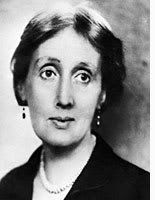
One of the Reading Life projects I am working on is the complete fiction of Virginia Woolf (1882 to 1941-England).    In addition to the major novels, Woolf published around 25 shorter works of fiction.    Both of these stories are included in her anthology (1944) The Haunted House and other Stories.   I have previously posted on nine of her short stories.    


"The Legacy" is a very powerful work about love, marriage, vanity and legacies.  As the story opens Angela Clandon, wife of a very prominent politician, has just passed away and her husband, Gilbert, is reading a list of legacies she has left to the people that were important to her.    One of  the  first legacies is to her secretary, Sissy Miller.    Gilbert thinks to himself that his wife was so considerate she has left a legacy to everyone that mattered to her.   All of their married life of many years (they never had any children)  his wife kept a diary.    Whenever he tried to look at the diary, she hid it from him.   There was one diary notebook for each of the fifteen years of their marriage.    Angela obviously knew she was dying and left legacies for everyone.   


"To him, of course, she had left nothing in particular, unless it were her diary. Fifteen little volumes, bound in green leather, stood behind him on her writing table. Ever since they were married, she had kept a diary. Some of their very few — he could not call them quarrels, say tiffs — had been about that diary. When he came in and found her writing, she always shut it or put her hand over it. “No, no, no,” he could hear her say, “After I’m dead — perhaps.” So she had left it him, as her legacy." 


Gilbert begins to slowly read these diaries.    As the diaries begin in the first year she mentions often how handsome he is and how she loves him.    As the years go by she mentions him less and less.    His vanity is offended by this.    He begins to find an increasing number of references to "B.M.".   He soon knows he is a man but he is puzzled  by what role she played in Angela's life and is troubled by the fact that he has never heard of him.    Then in one shocking  entry he finds out that B.M. was in their house while he was on a business trip.   He discovers that B.M. is introducing her to political ideas that the very conservative Gilbert finds shocking.   B.M.  seems to be a radical Marxist of some kind.    As the years of the diary goes by Gilbert is hardly mentioned at all.     "The Legacy" is another beautifully written work by Woolf.   I know you think you know the meaning of the legacy now but there is a surprise that deepens our understanding of the blindness of Gilbert.


"The Man Who Loved His Own Kind" is about two old friends who run into each other after a 20 year hiatus.   Mr Dalloway (the husband of Mrs Dalloway) invites Prickett Ellis to a party.    Both men practice law.   Ellis accepts the invitation knowing he finds parties a bore and is inept at small talk.     This is a very subtle story about class differences.    The class difference between the two men is not a huge gap, just a small one and that make the story much more interesting.    At the party Ellis is not really able to comfortably converse and Dalloway sees this and bring over to him a woman he feels he will get along well with.    I will leave the rest of the plot untold.    


Frank O'Connor in The Lonely Voice-A Study of the Short Story says that short stories (or at least the best of them) are typically about members of "submerged groups", people that  need someone to speak for them because of their marginal social status.   The short stories of Woolf i have read so far do not all answer to this description.   Her central characters are normally well educated, well off people.   Of course, O'Connor could simply say the stories of Woolf are  below the quality of the writers he covers in his book.   

Both stories can be read HERE

Woolf's short stories are a very important part of her own legacy to the world.  

Do you think if it were not for the novels, that we would still be reading the short stories of Woolf?

Mel u

Saturday, April 30, 2011

A Post In the Honor of the Royal Wedding-Three Very English Short Stories-

"Quality" by John Galsworthy (1912, 7 pages)
"Leaf by Niggle" by J. R. R. Tolkien (written 1938-published 1945-12 pages)
"The Innocence of Father Brown" by C. K. Chesterson (1911, 22 pages)


Three Classic English Short Stories
in Honor of the Royal Wedding

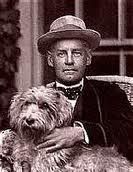
Today in honor of the Royal Wedding I am going to post on short stories by three very English writers.   Two of them are new to me authors and one I have not read in many years.   


John Galsworthy 


"Quality" by John Galsworthy (1867 to 1933-Surrey England) is a wonderful story about the relationship of an English gentleman of wealth and leisure and  his German boot maker.   
Galsworthy is most famous for his Forsythe Trilogy set among the English gentility.   It has become quite famous through movies and TV shows based on it.    Galsworthy was born into a wealthy family and educated as a barrister (he never practiced) .   He worked as  hospital orderly in France during WWI (he attempted to serve in the military but was considered to old-47).    He received the Nobel Prize in 1932.    I really loved "Quality".   As it begins we are in a boot makers shop.    The shop is run by two elderly German  brothers.   To them making boots is not just a job or a craft, it is an art.   Their boots are made from the finest Russian leather (remember in 1912 there is no one more royal than a Russian nobleman!).   The first thing the brothers do is bring out a piece of leather they feel will be right for you.    One of the problems of the  brothers  is that they make their boots so well they last years longer than the boots of their competitors so their customers do not have to come back to buy new ones very often.   They are the boot makers  to the Royal family but they do not have a plaque in their shop window announcing this as any other shop would.   All they have in their window is a sign giving their family name and a pair of their boots.   There is a definite really well done story line in "Quality" which I will let you discover if you wish.   It is beautifully written.    The character of the narrator is very well done and I felt I knew the German brothers a little.   The ending is a bit sad as something will be lost that cannot be replaced.   I will for sure read more of his stories (I will post a link where you can read or download this -and much more from the author-at the end of my post).   "Quality" is old fashioned story that for sure lives up to its name.   I can see why Galsworthy is so loved.


J. R. R. Tolkien
 
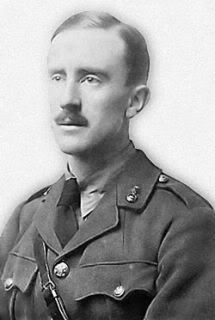
"Leaves by Niggle" by J. R. R. Tolkien (1892 to 1973-born in the Orange Free State to British parents) is another story of a man dedicated to his art and little concerned with the profit he can make from it.    Like most people I have read and really enjoyed his Lord of the Rings.  It has been a long time since I read this trilogy but I still recall a lot of it.   (There is a good article on him in Wikipedia if you want to read about the basics of his life and work.    He might have been born in Africa but he was as English as he could be!   He served as  junior officer in WWI with the British Army in France.)    Niggle is an older man, never married, living way out in the country in a  small cottage.   He has only one  real neighbor.   His life work and his passion is painting.   He has never really been much of a success and never made more than just enough to live on.   For a very long time he has been working on a painting of a tree.   


    The story is a bit slow getting going but it is really well done.   ( I  will include a link to it at the end of the post).   If you read and loved his big work, you owe it to yourself to try this short story.   

C. K. Chesterson


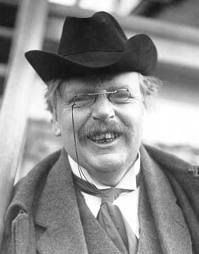
C. K. Chesterton (1874 to 1936-London, England) wrote 80 books, 200 short stories and 1000s of essays.  ( You can read about his very interesting life and career HERE).    Chesterson is now most remembered and loved for his fifty of so short stories about Father Brown, a parish priest in Branford, England.  

"The Innocence of Father Brown" (22 pages, 1911) begins with a famous detective in search of a master criminal.    The criminal has escaped capture for a long time by his high intelligence, his brashness and his willing to commit one crime to escape from another.   The two men are engaged in a long term battle of wits.   So far the criminal normally wins.     The story takes a while to get going and Father Brown does not show up until it more than half over.   I will not relay the plot as it is fun and clever.    I really like the theological conversation about the nature of reason that Father Brown has with the criminal (who is pretending to  be a priest).    Father Brown has learned a lot about how crime is done in England.    I think you will like his explanation of how he learned so much about the dark side of human nature.  "The Innocence of Father Brown" is very English in its understated display of  the intelligence of Father Brown and in his simple modesty.    

"Quality" by John Galsworthy can be read HERE.   A great deal of his work, including his famous trilogy, can be read online.

"The Leaf of Niggle" can be read HERE

"The Innocence of Father Brown" (and much more of Chesterton's writings) can be read HERE

What are your favorite pre-WWII English short stories?

Mel  u

Featured Post

Imperial Reckoning: The Untold Story of Britain’s Gulag in Kenya by Caroline Elkins - 2005 - 701 Pages

  Imperial Reckoning:     The Untold Story of Britain’s Gulag in Kenya by Caroline Elkins - 2005 - 701 Pages 2006 Pulitzer Prize Winner From...