Showing posts with label Ireland. Show all posts

Tuesday, September 24, 2024

Long Island by Colm Toibin - 2024 - 304 Pages


 Long Island by Colm Toibin - 2024 - 304 Pages


OPRAH’S BOOK CLUB PICK * INSTANT NEW YORK TIMES BESTSELLER * “Stunning.” —People * “Dazzling yet devastating...Tóibín is simply one of the world’s best living literary writers.” —The Boston Globe * “Momentous and hugely affecting.” —The Wall Street Journal *

From the beloved, critically acclaimed, bestselling author comes a spectacularly moving novel featuring Eilis Lacey, the complex and enigmatic heroine of Brooklyn, Tóibín’s most popular work in twenty years.


Long Island is the 16th work by Colm Toibin upon which I have posted.

Long Island is a sequel to his novel Brooklyn.   Brooklyn is set in the 1950s.  It is about a young Irish woman, Eilis, who moves from rural Ireland to Brooklyn in hopes of  making a better life.

Eilis gets a job working in a big store and lives in a boarding house owned by an Irish woman and all of the other tenants are Irish women also. 

Eilis meets a man, a kind decent one but he Italian, not Irish. She goes to night school. Brooklyn is very much about the immigrant experience. It is about longing for home and the consequences of emigration on those who are left behind.  

Long Island jumps ahead twenty years.  Eilis Lacey is, married to Tony Fiorello, a plumber and one of four Italian American brothers, all of whom live in neighboring houses on a cul-de-sac in Lindenhurst, Long Island, with their wives and children and Tony’s parents, a huge extended family. It is the spring of 1976 and Eilis is now forty with two teenage children. Though her ties to Ireland remain stronger than those that hold her to her new land and home, 

A man arrives at her door one day with such shocking news that Ellis feels a need to go back to Ireland to get away from her husband. 

The occasion is the 80th birthday of her mother. She takes her two teenage children with her.  

Lacy reconnects with her best friend and an old flame who owns a popular pub.

COLM TÓIBÍN is the author of eleven novels, including The Magician, winner of the Rathbones Folio Prize; The Master, winner of the Los Angeles Times Book Prize; Brooklyn, winner of the Costa Book Award; and Nora Webster, as well as two story collections and several books of criticism. He is the Irene and Sidney B. Silverman Professor of the Humanities at Columbia University and has been named as the Laureate for Irish Fiction for 2022–2024 by the Arts Council of Ireland. He was also awarded the Bodley Medal and the Würth Prize for European Literature. SimonandSchuster.com


Tuesday, April 30, 2024

"Dog Collar" - A Short Story by Oonagh Montague - 10 Pages - included with Cork Stories - Edited by Madeleine D’Arcy & Laura McKenna - 2024 -


Irish Short Story Month XIII 2024
April to ?


  "Dog Collar" - A Short Story by Oonagh Montague - 10 Pages - included with Cork Stories - Edited by Madeleine D’Arcy & Laura McKenna - 2024 - Is the sixth work from Cork Stories upon which I have so far posted.

If your life has ever at least partially revolved around a dog then "Dog Collar" perfectly depicts such a highly emotional relationship. The married with children woman on whom the story centers seems at times closer and more honest with her dog, Sid, than to her husband or children.

"Sid looks like a happy dog. He’s a small terrier with tufted black fur and a jaunty, uncut tail. There’s a red scarf around his neck. The scarf and tail lend him a rakish come-at-melife countenance, but this is not who Sid is. He’s a furred barometer of grief, and wherever she goes, he is watching. When her mood dips, he begins to tremble, trailing her from room to room, studying her face as if she were the weather and he a lone skiff. On the days when tears she doesn’t feel pool at the corners of her eyes, Sid finds a shoe of hers and pees in it. If, like today, she has waited till the house empties, till her husband has left for work and the boys for school, waited till the door clicked shut, the air stilled and she with it, so that she can let her smile slide off her skin into the breakfast things, Sid begins to whimper, and the sound of it fills her with a quiet and pointless rage."

The story explores via her interaction with a priest on whether or not she considers 

Oonagh Montague is a writer from Cork, Ireland. A former journalist and editor of Arts Ireland, her short stories have been included in 'Winter Papers' (Curlew Editions), the anthology ‘Cork Stories’ (Doire Press) and the 2024 Bournemouth Writing Festival flash winners’ anthology, ‘Lines in the Sand’. She was also awarded third place in the 2024 AIS Creative Writing Awards, judged by Prof Sarah Moore Fitzgerald, Donal Ryan, Roddy Doyle and Marion Keyes.

Whether you are just getting started in Irish Short Stories or have been an 

avid reader for fifty years, Cook Stories, published by Doire Press, will delight you with 18 Stories.

The best way to purchase this marvelous collection is via the Publisher Doire Press 

https://www.doirepress.com

Mel Ulm
The Reading Life


Tuesday, April 9, 2024

Plentiful Country: The Great Potato Famine and the Making of Irish New York by Tyler Anbinder- 2024 - 430 Pages


Plentiful Country: The Great Potato Famine and the Making of Irish New York by Tyler Anbinder- 2024 - 430 Pages

Irish Potato Famine

1845 to 1852

An estimated one million Irish died and another one million emigrated- mostly to America with New York City as their point of entry

I have read numerous books on the impact and causes of The Irish Potato Famine. By far the best account I have read is in Plentiful Country: The Great Potato Famine and the Making of Irish New York on their occupational development, how they made a living and supported their families.

Migration to America was not cheap. First one had to book passage to England and then buy a ticket to America. This meant the poorest Irish could not leave. (About five percent of Emirates had their trips paid for by absentee landlords.) 

There were several classes of tickets, most travelled in steerage. The trip could take 30 days food had to be brought for the passengers trip unless they were in first class. Upon arrival a job and a place to live were of highest priority.

Anbinder explains the concept of "chain migration".. As soon as they could an emigrate,often a man, would send money back to his family for others to emigrate. An older arrival would help new arrivals find jobs. Some had valuable job skills , money to start a business and some nothing 

Anbinder details how the records of Emigrate Savings Bank allowed him to follow the working and personal lives of famine era Irish emigrants.  

The bank was founded in 1850 by 18 members of the Irish Emigrant Society, with the support of Archbishop John Hughes, purposed of the goal of serving the needs of the Irish community in New York City. The headquarters was located at on 49 Chambers Street in Manhattan.

Emigrant Savings collected extensive records of the arriving Irish immigrants to America, which were later donated to the New York Public Library and serve as valuable genealogical resources that are the core resource for Anbinder.

To open an account you had to supply your current address, your time of arrival in New York City, where you were from in Ireland, list your current occupation, any relatives you have living in New York or back in Ireland, your children and full data on any spouse you might have, Every time you made a deposit the bank updated your records. Most Irish lived in tenements without locked doors so they wanted bank accounts. Emigrate savings had only largely Irish employees and was very conservatively managed.

From the Publisher 

"A breathtaking new history of the Irish immigrants who arrived in the United States during the Great Potato Famine, showing how their strivings in and beyond New York exemplify the astonishing tenacity and improbable triumph of Irish America.
  
In 1845, a fungus began to destroy Ireland’s potato crop, triggering a famine that would kill one million Irish men, women, and children—and drive over one million more to flee for America. Ten years later, the United States had been transformed by this stupendous migration, nowhere more than New York: by 1855, roughly a third of all adults living in Manhattan were immigrants who had escaped the hunger in Ireland. These so-called “Famine Irish” were the forebears of four U.S. presidents (including Joe Biden) yet when they arrived in America they were consigned to the lowest-paying jobs and subjected to discrimination and ridicule by their new countrymen. Even today, the popular perception of these immigrants is one of destitution and despair. But when we let the Famine Irish narrate their own stories, they paint a far different picture.

In this magisterial work of storytelling and scholarship, acclaimed historian Tyler Anbinder presents for the first time the Famine generation’s individual and collective tales of struggle, perseverance, and triumph. Drawing on newly available records and a ten-year research initiative, Anbinder reclaims the narratives of the refugees who settled in New York City and helped reshape the entire nation. Plentiful Country is a tour de force—a book that rescues the Famine immigrants from the margins of history and restores them to their rightful place at the center of the American story. " 

Using data from the records of The Emirate Bank, Anbinder follows the life histories of numerous Famine Emirates. Many prospered others struggled to get along. Most no matter what way preferred America to Ireland. Anbinder traces the spread of the Irish through out the country,  

From Anbinder's conclusion 

"How had the Famine immigrants achieved this improbable success? First, notwithstanding the assertions of native-born Americans then and historians ever since, the Famine Irish were not overwhelmingly forced into menial day labor upon arrival. Only about half of the male Famine immigrants began their lives in America in these low-paying, perilous positions. For every Famine immigrant who had to take day labor or similar work upon landing in New York, there was another who arrived with desirable vocational experience—training as a craftsman, or experience operating a small business, or a background working as a clerk behind a desk or counter—that allowed them to find comparable jobs in Manhattan. Then, as now, Americans assumed that the immigrants who arrived on America’s shores must have been penniless paupers, the dregs of their homelands, when in fact such migrants have never made up a very large proportion of those who move to the United States. That is the case today, and that was the case for the Famine Irish, even though contemporaries failed to recognize that fact. Second, those who did start out as day laborers were hardly trapped in those positions. Forty-one percent of men whose first American jobs are best described as unskilled and who were still alive ten years later ended their careers higher up the socioeconomic ladder than where they began, and three-quarters of these social climbers finished their working days in white-collar occupations. Some became clerks, salesmen, or civil servants, but the vast majority (three out of four) opened their own business, running a saloon, grocery, or other retail enterprise. Skilled craftsmen were not trapped in their occupations either—thousands of them opened retail establishments like saloons and groceries, and still more started businesses related to their artisanal trade. To say that unskilled and artisan Famine immigrants “seldom rose from the bottom of American urban society,” as prominent scholars of the Irish experience in America have suggested for generations, is simply not true. Further evidence that the Famine immigrants had more control over their fates than previously understood is found in their savings accounts. The Famine refugees saved a lot more in those accounts than their native-born neighbors imagined. Leaving aside those who emigrated as children (and therefore had the advantages of an American education) as well as those who died before living for a decade in the United States, we find that male Famine immigrants living in New York or Brooklyn saved, on average, $463 in their accounts, equal to about $17,000 today (the median high balance was $291). Even if we take only the immigrants who started at the bottom of the socioeconomic ladder and never climbed any higher, the level of savings is still impressive."

Tyler Anbinder is an emeritus professor of history at George Washington University, where he taught courses on the history of American immigration and the American Civil War era. He is the author of three award-winning books: "Nativism and Slavery: The Northern Know Nothings and the Politics of the 1850s" (1992); "Five Points: The Nineteenth-Century New York Neighborhood that Invented Tap Dance, Stole Elections, and Became the World’s Most Notorious Slum" (2001); and "City of Dreams: The 400-Year Epic History of Immigrant New York." Anbinder has won fellowships from the National Endowment for the Humanities and served as the Fulbright Thomas Jefferson Distinguished professor of History at the University of Utrecht. His fourth book, Plentiful Country: The Great Potato Famine and the Making of Irish New York was published last month 

I hope to read his other books soon.

Plentiful Country: The Great Potato Famine and the Making of Irish New York is a wonderful book.

Mel Ulm


Wednesday, April 3, 2024

"A Love Letter in the Midsummer" A Short Story by Danny Denton -included with Cork Stories - Edited by Madeleine D’Arcy & Laura McKenna - 2024 - An Irish Short Story Month Work


Irish Short Story Month XIII 
March and April - 2024


A Love Letter in the Midsummer" A Short Story by Danny Denton -included with Cork Stories - Edited by Madeleine D’Arcy & Laura McKenna - 2024 - An Irish Short Story Month Work

Today's story by Danny Denton, a lecturer in creative writing at Cork University, is a delightful six page story within a story.

"That midsummer she wrote him a love letter from Leenane. But it was not exactly a love letter, more a sort of teleplay about King Kong and Godzilla sharing an apartment off Douglas Street, long after their various escapades in Japan and New York and across the world’s oceans. He’d kept the letter in his back pocket all evening, and when at last the pub was swept clean and wiped down and locked up, he walked along by Sullivan’s Quay and stopped on a riverside bench there. Taking out the letter, he felt that heavy compression of expectation in his chest. ...

Morning in the apartment. King Kong poked his dishevelled head out of the bedroom doorframe, taking in the scope of the kitchen and living area. ‘You cleaned up,’ Kong said. ‘Sorry.’ Godzilla sat at the table, browsing away on his laptop, his cup of tea to one side. ‘You’re grand,’ he consoled, not for the first time. Kong crossed to the kitchen on shaky legs and began the ritual of going through the cupboards, hanging out of them and grumbling, looking perhaps for something that wasn’t there. ‘How bad was it?’ he eventually asked. "

I really enjoyed this story.

Danny Denton is an Irish novelist, the editor of The Stinging Fly and a lecturer in creative writing at University College Cork. His first novel, The Earlie King & The Kid In Yellow, was published by Granta Books in 2018, and nominated for 'Newcomer of the Year' at the Irish Book Awards. Among other publications, Denton's work has appeared in The Stinging Fly, Southword, Granta, Winter Papers, The Dublin Review, Guardian, Irish Times and Big Issue.

Whether you are just getting started in Irish Short Stories or have been and avid reader for fifty years, Cook Stories, published by Doire Press, will delight you with 18 Stories.

The best way to purchase this marvelous collection  is via the Publisher Doire Press 

https://www.doirepress.com


Friday, March 22, 2024

"God and Ants" - A Short Story by Steve Wade - a Irish Short Story Work

"God and Ants" - A Short Story by Steve Wade - a Irish Short Story Work 


Irish Short Story Month XIII 

March and April - 2024


I am very pleased to once again feature one of Steve Wade’s award-winning stories during Irish Short Story Month.


I have been following the work of Steve Wade since March of 2013.  Reading all his work for the last ten years is my sincerest demonstration of my high regard for his work


His debut collection can stand with the masters of the Irish Short Story.


  Gateway To Steve Wade on The Reading Life 


Website of Steve Wade 


A Wide Ranging Q and A Session With Steve Wade 


This is the ninth  short story by Steve Wade that has been featured on The Reading Life.  The fifth  from his debut collection.


As “Gods and Ants” opens Alfred working on a painting of a boatin the harbour.  As he paints people strolling about ask him why the painting shows a different number of windows

on the boat than they see. Of course like any artist he does not take kindly to this.  He begins to imagine art connoisseurs and visiting Parisians at “encountering the painting during Alfred P. Parkinson’s first major art exhibition, which would one day be staged in Sacre Coeur, would experience thescene’s essence. He saw them marvelling at the paradise island blue sky and the more sombre blue reflecting in thesea below into which the overwhelmed sun bled white-gold. On their tongues the coastal-air saltiness blends with the plaintive sound of the gulls screaming their interminable plea before the endless sea. And the boats – patient, rusting leviathans, whose white, multi-eyed cabins have witnessed countless fishing adventures far out in the cormorant-black sea, watched over by a yellow moon, hours before the dawn spills across the horizon.”


His vision of his future exhibit is interupted by people strolling by. Of course he is offended by their philistine  observations on his work.


“The few aimless evening strollers who had gathered tentatively around Alfred and his easel pulled in others. They swarmed about him like ants crawling over a fallen raptor, flightless, though not yet dead. Their presence and proximity interfered with his concentration. Time and discipline was his defence – Gods were not peeved by Ants”. 


Arnold begins to imagine his work is great art.  Then something happens.


“Gods and Ants” is as I expected it would be,a perceptive, interesting and fun to read story.


About the Author - Steve Wade’s award-winning short fiction has been widely published in literary magazines and anthologies. His work has been broadcast on national and regional radio. He has had stories short-listed for the Francis McManus Short Story Competitionand for the Hennessy Award. His stories have appeared in over fifty print publications, including Crannog, New Fables, and Aesthetica Creative Works Annual. His unpublished novel, On Hikers’ Hill was awarded First Prize in the abook2read.com competition, with Sir Tim Rice as the top judge. He has won First Prize in the Delvin Garradrimna Short Story Competition on a number of occasions. Winner of the Short Story category in the Write by the Sea writing competition 2019. His

short stories have been nominated for the PEN/O’Henry Award, and for the Pushcart Prize.


From the Author’s  introduction 


“The stories in this collection first appeared in anthologies and periodicals. Some of them have won prizes or have been placed in writing competitions. Ostracised by betrayal, isolated through indifference, gutted with guilt, or suffering from loss, the characters in these twenty-two stories are fractured and broken, some irreparably. In their struggle for acceptance, and their desperate search for meaning, they deny the past”


A very worthy edition to the reading list of all lovers of the short story.


Mel Ulm


Monday, March 18, 2024

"Fire Starter" - A Short Story by Alan McCormick - 2022 - An Irish Short Story Month XIII Work

Irish Short Story Month XIII 


"Fire Starter" is the first story by the highly awarded Wiclow resident Alan McCormick to be featured in The Reading Life.  Going forward I hope to delve deeply into his work.

"Fire Starter" is set in an asylum of some sort, the exact location and nature of it are a  bit cloked in shadows. Conventional religion is employed as part of the therapy"

"Theo thinks he’s Christ.  At my first attempt to eat breakfast in the retreat’s communal dining room, he’s shouting:

‘I can save some of you but I won’t be able to save all of you!’

‘That’s fine, Theo, do whatever you can,’ Simon the warden replies, pulling him away

Later, as I try to eat, I hear sobbing coming from the lounge.

Simon’s head appears around the doorway: ‘Theo has had an unfortunate accident, kids,’ he says, ‘and won’t be staying with us for a while.’

Simon’s wife, Ursula, wears tight purple leggings that smell of citrus and sandalwood. She looks young for fifty, and speaks as if she’s a WW2 German spy expertly repeating dated bookish English, a Teutonic phrase occasionally intervening between exacting vowels and corrective grammar. She is also a healer.

I lie on my bed, eyes closed, head propped on a mound of pillows as she kneels beside me, lightly stroking my left temple, my face turned into the soapy incense of her legs, soothing purples filling my eyelids.

‘Breathe in the calm beautiful energy of God’s nature. God loves you if you are good, and he loves you even more if you are bad. God loves you and so does everyone else.’

‘Even Theo?’

‘Especially, this Theo,’ she replies."

The narrator is a patient, inmate  at the asylum.  There is a very powerful description of a therapy session.

I do not want to spoil the plot for first time readers but I do wish to share a bit more the amazing prose of McCormick.

"Tall red spikes of light jag above a bush behind them, and Theo arrives on the lawn swinging a flaming stick above his head. He runs past Saskia who dances unsteadily around an upturned wheelchair. Sparks scatter, the crackling sound of scorched wood; the pungent smell of sulphur as he gets near to us. Ruth walks purposefully from the house to stand in his way, licks from the stick’s flame reflected in her eyes. She holds out her arms to welcome him. Theo stops and prods the stick toward her, flickers of fire falling to the ground and dying by her feet. She stays still, her arms held open, and smiles. Theo drops the stick and walks slowly into her embrace. She holds him, and then frees one arm to invite me in too."

You can read "Fire Starter" and other stories on author's website 

https://alanmccormickwriting.com/

Alan McCormick lives with his family in Wicklow. He’s a Trustee and former writer in residence for InterAct Stroke Support, a charity employing actors to read fiction and poetry to stroke patients.

His writing has won prizes and been widely performed and published, including recently in The Stinging Fly, Banshee, Southword, Sonder and Exacting Clam magazines, and previously in Salt’s Best British Short Stories, A Wild and Precious Life – A Recovery Anthology, Modern Nature Anthology – Responses to Derek Jarman’s Modern Nature, The Poetry Bus, The Bridport and Fish Prize Anthologies, Popshot, Litro and Confingo.

Work has appeared online at Epoque Press, Words for the Wild, 3:AM Magazine, Dead Drunk Dublin, Trasna, Mono, The Quietus, Fictive Dream, The Willesden Herald and Found Polaroids.

His story ‘Firestarter’ came second in the 2022 Francis MacManus RTE Short Story Competition and ‘Boys on Film’ came second in The 2023 Plaza Prizes Sudden Fiction competition. Stories in the past have won the Ruth Rendell InterAct Stroke Support Story Competition, The Liverpool International Short Story Competition and the Middlesex Literary Festival Story Prize.

DOGSBODIES and SCUMSTERS , his collection of short stories with flash shorts inspired by Jonny Voss’s pictures, was published by Roast Books and long-listed for the Edge Hill Prize.  

Alan and Jonny also collaborate on illustrated shorts known as Scumsters – see more at Deaddrunkdublin and Scumsters.blogspot  


Friday, March 15, 2024

"The Big River" - A Short Story by Desmond Hogan - 2017 - An Irish Short Story Month XIii Post

 Irish Short Story Month XI


Today's Story, "The Big River" is included in the most recent collection of short stories by Desmond Hogan, The History of Magpies.

Shauna Gilligan's Highly Illuminating Introduction to  Desmond Hogan

http://rereadinglives.blogspot.com/2012/06/desmond-hogan-irelands-most-famous.html

I have been reading Desmond Hogan for 12  years now.  I take his work very seriously.  I was first introduced to his work by Shauna Gilligan, PhD, author of Happiness Comes From Nowhere.  Through her kindness I met Hogan in May of 2003, at the office of Lilliput Press.  We spoke of two authors for whom we share great admiration, Nathaneal West and Zora Hurston, among other things.

"We were here when the Christians first came to Ireland and we will be here when they leave" - A proverb of Irish Travellers 

A considerable portion of the work of Desmond Hogan focuses on Irish Travellers.  Irish travellers have an ancient history.   They Are  acknowledged as an ethnic group.

Travellers play an important part in "The Big River", numerous suicides mostly by hanging are alluded to in the story,

"‘Shannon Crotty was my cousin. He hung himself. His wife Ethlinn Flavin from Knocknaheeny in Cork hung herself before him. Her brother Besty hung himself in between them. A lot of Travellers are hanging themselves now. One man because he had cancer. A girl because she was pregnant and did not want her father to know it."

(Amusingly in the Comedy TV series Derry Girls Travellers are depicted as dangerous and terrifying.)

Hogan makes extensive use of colour and references to historical-cultural entities in "The Big River" which I find fascinating:

"In their trailer the newly weds had a picture of two elephants kissing, horns wrapped around one another’s trunks: a photograph of Santa Claus presenting a cup for hurling to Shannon as a child, in a black bow tie; the dead Hunger Striker Martin Hurson with miner’s locks, white shirt, white tie, smile reserved for weddings; a statue of Saint Patrick with ashen hair and peach lips; a parrot with flaked red head; a pair of beige polka-dot wellingtons; a donkey and four Edwardian children, boy in young Edward VIII cap, clinging to a little girl’s waist on top of the donkey"

I hope to post on other stories by Desmond Hogan during ISSM XIII.

Mel Ulm


Saturday, October 28, 2023

Random Acts of Optimism- A Short Story Collection by Alison Well - 2023 - 15 Short Stories-114 Pages


 I find posting upon a collection of Short stories more challenging than upon a novel.  I loved this debut collection by Alison Wells, some of the works have ties to the Gothic and Paranormal tradition but even the spectral figures epitomise human quandries.


I will post on four of the 15 stories, quoting enough to give you a feel for the author's beautiful prose.


"Bog Bodies"

"into the future, she wrenches herself out of the sucking bog, its desperate mouth fastened round her, the squelch and pop as it releases her like regurgitation. Under the earth she stretched her fragile fingers against the immovable soil, made of living remains but dead, dead weight. Everything she could not do. Now she pushes out, presses her fingerprints against the sagging soggy earth, she makes her mark. The bog bounces back, erases her. She rises up, a ragged mast on the high sea, weatherwhipped and pliant. Under her tanned leathery skin, her bones are frail, a luminescentlattice, roped loosely by sinew. She feels the wind behind her, filling up her sails, she readies herself for flight. Above her head a heron makes determined for hill-framed shining water." 

If Sheridan le Fanu, the great 19th century Irish writer of classic Gothic, Horror and Ghost novels and short stories were to have the across time pleasure of reading "Bog Bodies" I think he would be gratified another Irish writer has added a marvelous story to the tradition. This story is a caution to bullies while celebrating near neolithic tradition.

"Through time she feels the weight of the bog, the strata of eons pressing upon her, the thin prehistoric cries of the ritually slain, outcasts and villains." From Bog Bodies 


"Last Tango with Dinosaurs"

tt was awkward about the dinosaurs. No-one knew what to do with the Brontosaurus in the park. On Wednesday a child digging to China on the beach found dinosaur eggs, still warm. On Friday a Pleisosaurus was spotted lunging at the hydrofoil in Ryde. By the following week, the the Pterodactyls had killed some seagulls at Shanklin.  And now the tea dancing was cancelled ... A plant-eater had jeopardized the floral arrangements at the local hall and all activities were suspended, including the Senior Tango competition." 

Set on The Isle of Wight
"Last Tango with Dinosaurs" is an hilarious account of what happens when an attempt is made to turn a proliferation of dinosaurs into a tourist bonanza. This is too enjoyable cinematic story for me to reveal more of the plot.

"Without the Light Pollution You Can See the Stars"

"He was always on the lookout for wonder, ever since he was young, always, long before he finally moved out here with Emily, Amy and Hannah. He’d always been beguiled by the romanticism of stars, their beautiful mystery, though they were so far away, or dead already. And yet the stars suggested some great white plain, beyond the dark."

This story had a deeply personal impact on me, I am not a poet as is the lead character but my life was transformed and I was opened to more of the join and pain of the world when i joined the family of my wife and her three daughters.  This was twenty years ago.  I do not easily bond with people and her way to early passing last year has brought on both darkness and light.


"The Spaceman has his Tea"

"For a short time after he got back everyone wanted his story; daytime TV, popular science journals, the local papers, all looking for sound bites from space. He found himself within a great hubbub of rhetoric, voracious vernacular. The first time he saw the Earth, that bright globe in blackness, he’d expected the symphony of violins, the music of the sphere. But all there was only silence."

One, as I perceive, the themes of the stories in this collection, is how alone we can become among others by transformative events. For the space man it was his trip around the earth in a spacecraft. It is like the rest of his time on earth will just be marking time.

Some press reviews

"A genuinely marvellous collection. There’s a crystalline quality to the prose that at times dazzles and at others leaves you gasping for breath, but more than anything it’s the compulsive nature of the storytelling that will have readers unable to put this collection down. Alison Wells, a very fine writer and clearly one who has honed her craft to mastery, deserves a broad and enthusiastic audience. Random Acts of Optimism ought to do the trick.”  – Billy O’Callaghan, author of Life Sentences

'There’s an incredibly sensual precision to Wells’ sentences – nobody writes like Alison Wells – her stories sizzle, she’s an unsentimental yet compassionate documenter of humanity, whose stories are never what you might expect. She has an unusual and imaginative approach, a wide range, and a canny wisdom. The tragic and comic are not just juxtaposed, they wrap around each other – Wells is a unique voice, and this collection is one to treasure. Fans of the work of Lorrie Moore and Lucia Berlin will love this collection.” – Niamh Boyce, Award Winning Author of The Herbalist and Her Kind

Reading these 15 is stories one at a time will definitely give you an wonderful thought provoking interlude in your day.
 I ended up wishing there were at least 30.

Alison Wells was born in London, raised in Kerry and lives in Bray, near Dublin with her husband and four children. A graduate of Communication Studies and Psychology, she is now an enthusiastic librarian. Alison has been awarded residencies at Cill Rialaig, Co. Kerry. Her literary short fiction has been Pushcart prize nominated and shortlisted for Hennessy New Irish Writing, Bridport, BBC Opening Lines and Bray Literary Festival. Writing has appeared in The Stinging Fly, The Lonely Crowd, Crannóg, UK National Flash Fiction anthologies Jawbreakers and Scraps and New Island/RTÉ Arena’s New Planet Cabaret. Eat! was highly commended in the Irish Writers Centre Novel Fair 2019. In 2020 she was a finalist with The Exhibit of Held Breaths. Her Head Above Water blog explores creativity and resilience.

Mel Ulm 


Saturday, November 26, 2022

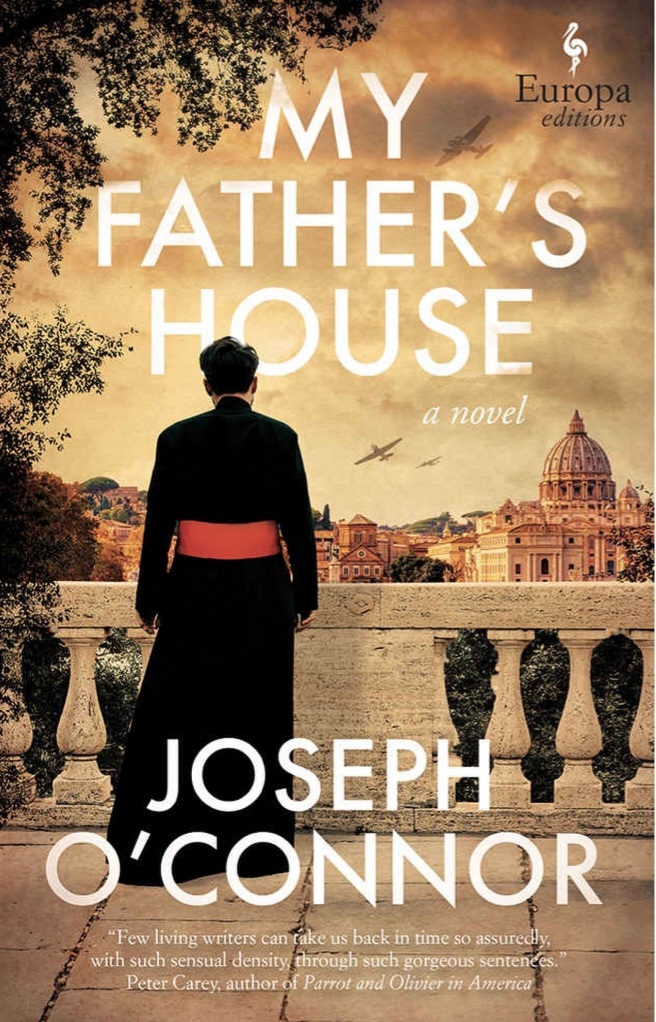
My Father's House by Joseph O'Connor - A Novel - forthcoming January 31, 2023 - A Novel - forthcoming January 31, 2023 - 440 pages


 My Father's House by Joseph O'Connor - A Novel - forthcoming January  2023- 440 Pages 


Set  in Nazi  Occupied  Rome  during September 1943 gestapo boss  Obersturmbannführer Paul Hauptman rules the city with terror and violence Hunger is widespread. Rumors fester. The war’s outcome is far from certain. 

Diplomats, refugees, and escaped Allied prisoners flee for protection into Vatican City, at one fifth of a square mile the world’s smallest state, a neutral, independent country within Rome. A small band of unlikely friends led by a courageous Irish priest is drawn into deadly danger as they seek to help those seeking refuge. 

Book 1 in the Rome Escape Line Trilogy, My Father’s House is a powerful, heartbreaking literary thriller based on the true story of Monsignor Hugh O’Flaherty, who risked his life to smuggle thousands of Jews and escaped Allied prisoners out of Italy under the nose of his Nazi nemesis. A deadly high-stakes battle of wits ensues in this astonishing, unforgettable story of love, faith and sacrifice, exploring what it means to be truly human in the most extreme circumstances 

Having read four prior novels by Joseph O'Connor, i had high hopes for this work. I was certainly not disappointed . In addition to the plotline in 1943, there are segments set in England in 1963 and beyond, interviews with participants, a section of an unfinished memoir and an account of what happened to the Gestapo leader after the war.  

Thursday, June 16, 2022

Nora: A Love Story of Nora and James Joyce by Nuala O’Connor - 2021 - A Novel - The One Dublin One Book Winner for 2022


Nora: A Love Story of Nora and James Joyce by Nuala O’Connor - 2021 - A Novel - The One Dublin One Book Winner for 2022


Narrated by Nora Barnacle Joyce, set from 1904 to 1951, this is historical fiction at its finest.


James Joyce


Born Rathgar, Ireland - February 2, 1882


The Dubliners - 1914


Portrait of The Artist as a Young Man - 1916


Ulysses - 1920


Finnegan’s Wake - 1939


Married to Nora Barnacle Joyce - 1931 to 1941


Died - January 13,1941 - Zurich, Switzerland 


Nora Barnacle Joyce - 1884 to 1951


Nora Barnacle, from Galway, at age 20 while working as a maid Finn’s Hotel in Dublin, fell in love with James Joyce at first sight.  They developed a deeply passionate affair.  Never did she dream of the relationship she would have with an incredible literary genius, taking her to Austria, Italy, and Paris.  They started out with him teaching at a Berlitz School in Ternitz, Austria barely being able to pay rent and lucky to have food.  When Joyce got paid, far too  often he spent the money on drinking with friends.  In this marvelous novel their early years are brought vividly to life. Joyce ends up moving to Rome to keep teaching.


Nora knows Joyce is a unique person even though she cannot read his work.  I could not help but smile when I learned she never made it past page 11 in Ulysses.  


One of the numerous factors that made Nora so exciting was looking forward to the results of publications of Joyce’s great works.  O’Connor shows us the difficulties Joyce had with prospective publishers, through the eyes of Nora. 


With the publication of Ulysses, with Joyce and Nora and their two children, Georgie and Lucia, living in Paris, their financial fortunes totally change.  Joyce receives  a very large grant plus royalties.  Of course if he gets 100,O00 pounds he spends it all.  We meet Slvia Beach, Ezra Pound, Peggy Guggenheim and other wealthy  socialites. Nora, a maid from Galeay, is mixing in high Society.  Finally after years they get married.  Everybody, including Joyce, is convinced of his genius.


One of the worst aspects of the life of Nora and Joyce was the terrible mental problems of his daughter.  Joyce’s vision 

problems became increasingly serious.


I have read several biographies of James Joyce.  I felt Nora gave a very strong feel for what living with James Joyce was like.  


I highly endorse this book to everyone interested in James Joyce.  There is much more in Nora: A Love Story of Nora and James Joyce by Nuala O’Connor than I have mentioned.


Nuala O’Connor was born in Dublin, Ireland, in 1970, and lives between Counties Galway and Leitrim.

Her fifth novel NORA (Harper Perennial/New Island, 2021), about Nora Barnacle, wife and muse to James Joyce, was recently published to critical acclaim in the USA, Ireland, the UK, and Germany, and is forthcoming in other languages.

NORA was named as a Top 10 2021 historical novel by the New York Times and was the One Dublin One Book choice for 2022. Nuala curated the Love, Says Bloom exhibition at MoLI, on the Joyce family, for #Ulysses100.

She is editor at flash fiction e-zine Splonk.”  From https://nualaoconnor.com/


Included is a list of books on Joyce and Nora, an interview and a note for book clubs.


Mel Ulm


Saturday, March 26, 2022

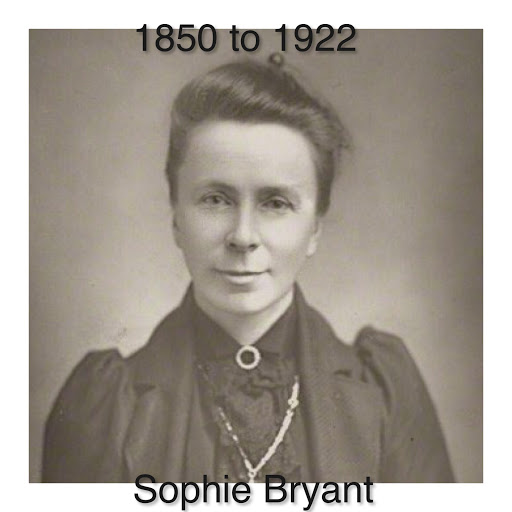
"The Passions of Sophie Bryant - A Short Story by Shauna Gilligan, author of Happiness Comes from Nowhere (2017)


I have been reading Shauna Gilligan since March 31, 2012.  I have posted upon several of her wonderful short stories (my posts contain links to the stories) and her highly 
regarded debut novel, Happiness Comes From Nowhere.  Additionally she very kindly contributed an illuminating overview on the work of Desmond Hogan.  In her Q and A session on The Reading Life we dealt with a broad range of matters, many, but not all, Irish literature related.  In all there are eight posts devoted to or by Shauna Gilligan on the blog.  Obviously I would not follow a writer for so long and so closely if I did not hold them in quite high regard.

The just recently published short story "The Passion of Sophie Bryant" is a very intriguing work.  In just a few beautiful pages Gilligan brings to live for us the famous Irish mathematician, educator and a feminist, Sophie Bryant.  (I suggest nonIrish readers take a look at the article from the Irish Times linked to above to expand your understanding of her importance in Irish history.  My guess is most Irish readers will be aware of her importance but others, including myself, will have no prior knowledge about her. I believe Gilligan is assuming some knowledge.  

Sophie Bryant was born in Dublin in 1850, her father was a Trinity Fellow and a famous mathematician.  Bryant was educated at home, learning to speak French and German from governesses.  She moved to London at age 13 when her father was offered a position as Chairman of the Geometry Department of the University of London.  At sixteen she started college, focusing on science.  At nineteen she married a well known mathematician, ten years her senior, he died a year later.  She never remarried.  She continued her education, herself becoming a highly regarded mathematician and head mistress at the North London College school as well as a leading advocate of more legal rights for women, including the right to vote.  She loved outdoor activities and died while hiking in France while on holiday.  

Gilligan does a wonderful job in just a few page taking us into the interior life of Bryant, from her childhood, her brief marriage and her death.  On first scrutiny Bryant will seem the epitome of rationality, dedicated to geometry and science and moral philosophy.  I find I'm really liking the episodic narrative method. Gilligan skillfully takes us below that, to a seer with a vision for a unified view of science and morality.  She was raised in a culture that largely suppressed passion in women, Bryant may not have understood how to deal with this aspect of her life and Gilligan helps us feel her pain and loneliness.  

I really liked this story, I read it five times.

I look forward to following Shauna Gilligan's work for many years 

Shauna Gilligan lives in Kildare with her family and a black and white cat called Lucky. She writes short and long stories and is interested in the depiction of historical events in fiction, and creative processes. She is currently working on her second novel set in Mexico.

Mel u


Featured Post

Imperial Reckoning: The Untold Story of Britain’s Gulag in Kenya by Caroline Elkins - 2005 - 701 Pages

  Imperial Reckoning:     The Untold Story of Britain’s Gulag in Kenya by Caroline Elkins - 2005 - 701 Pages 2006 Pulitzer Prize Winner From...