Showing posts with label Henry James. Show all posts

Friday, July 17, 2020

Madame de Mauves - A Set in Paris novella by Henry James - originally published in The Galaxy Magazine in 1874


Madame de Mauves - A Set in Paris novella by Henry James - originally published in The Galaxy magazine in 1874


Paris in July 2020 - Hosted by Thyme for Tea


Beauty is a Sleeping Caf’s Post on Madame de Mauves


  1. “Forain” - a set in Paris Short Story by Mavis Gallant
    2. “Winter Rain” - a Short story by Alice Adams about an American woman living in Paris after World War Two
    3. Marc Chagall by Jonathan Wilson
    4. Missing Person by Patrick Modiano
    5. “Sisters” by Elizabeth Taylor
    6. Ambition and Desire:The Dangerous Life of Josephine Bonaparte by Kate Williams
Born April 15, 1843 - New York, New York

From 1855 to 1860 The James Family traveled in Europe,where his father had business interests.  For at least two years he lived in Paris.  He became fluent in French.

1869 to 1870. Travels on his own in Europe. He  worked for a brief period as the Paris Correspondent for The New York Tribune.

In 1869 he moves to London, he will become an English citizen.  In 1875 he moves to Paris for a year.  In Paris he meets Zola, Turgenev and Guy de Maupassant.among others.

1884- he visits Paris again, deeping his literary contacts

1885 returns to London

Dies February 1916 (aged 72); London

Paris was very important to Henry James.  His work often deals with the contrast of Americans to Europeans.  Paris was above all else representative of the depth of European culture versus the newness of America.Americans were seen as naive, Parisians as decadent.  To me his The Ambassadors (1903) is the quintessential American in  Paris novel.


A  pedagoical sterotype of James is that his early works are much easier to read than works of his later years.  Madame de Mauves is an early work. The story centers on the marriage of a morally upright faithful to her vows American woman to a French man who has no respect for the marriage, making no effort to hide  his affairs. She is rich and he married her for her money. He is the Comte de Mauves, a count.  Many an American heiress were drawn into European marriages by titles.

The central character, Longmore, an American man on a long visit to Paris, is introduced to Madame de Mauves, the American woman, by her close Parisian friend.

She tells Longmore that Madame de Mauves badly needs a friend, a confidant.  They gradually develop a close relationship.  Longmore falls in love with her but she makes it clear she wants only friendship.   Gradually he gets to know her husband,the Comte de Mauves and his sister, the crass widow Madame de Clairin.  They encourage him to have an affair with Madame de Mauves, which would allow her husband under conventions of Paris high society, free to have affairs.

He declines to pursue this option.  He returns to New York City and meanwhile husband falls in  love with his wife and deeply regrets The pain he has caused her.

There is a shocking turn of events at the close.

Read through the lenses of forty more years of very prolific works and a knowledge of his life, one can see this as an early study of unconsumated relationships of men to women they loved, or could have loved had they been able to let go.






Friday, July 10, 2015

"The Parisian Stage" by Henry James (1875, from published in Transatlantic Sketches) - A Post For Paris in July # 6


"The stage throws into relief the best gifts of the French mind, and the Theatre Francais is not only the most amiable but the most characteristic of French institutions. I often think of the inevitable first sensations there of the “ cultivated foreigner,” let him be as stuffed with hostile prejudice as you please. He leaves the theatre an ardent Gallomaniac. This, he cries, is the civilized nation par excellence.  Such art, such finish, such grace, such taste, such a marvellous exhibition of applied science, are the mark of a chosen people, and these delightful talents imply the existence of every virtue. His enthusiasm may be short and make few converts; but certainly during his stay in Paris, whatever may be his mind in the intervals, he never listens to the traditional toe —toe —toe which sounds up the curtain in the Rue Richelieu, without murmuring, as he squares himself in his chair and grasps his lorgnette, that, after all, the French are prodigiously great!"  From "The Parisian Stage" by Henry James


This is my fourth year as a participant in Paris in July # 6.  hosted by Thyme for Tea.  The event is getting of to a great start with lots of posts on a wide range of topics, from food, to travel, to movies and of course French literature.  There is a great body of literature by those who admire France but cannot claim it as their birth land.  In my limited reading, the greatest American in Paris novel is The Ambassador by Henry James (1843 to 1916.).  Henry James lived in Paris in 1875 to 1876, staying just over a year.  He loved the deep culture of France, the beauty of the country and was  impacted by writers he met in Paris such as Flaubert, Zola, de Maupassant and Turgenev.

I was looking through the Delphi E Book of The Complete Work of Henry James (at $2.95 this 6000 page plus work will keep you off the streets for a long time) at his nonfiction.  I have previously read his very perceptive essay on Honore de Balzac.  I found in his travel book, Transatlantic Sketchs "On the Paris Stage".  Anyone emerged in 19th century French literature to any degree will know how very important the stage was to Parisian society.  In "On the French Stage" James gives a superb description of the play going experience.  He talks about the famous actors and actresses.  It was interesting to read his descriptions of the actresses.  

James loved the theater and made me wish I lived where I could see classical French theater preformed.  In order to understand the French novel James tells us we need at least a nodding acquaintance with the great plays, especially those of Moliere.


Mel u

Saturday, December 27, 2014

"Longshaft's Marriage" by Henry James (August 23, 1883)


Not long ago I read an interview in The Paris Review with Leon Edel, author of a five volume biography of James, says one of the unanswered biographical question on James concerns his attitude toward sexual matters.  Edel says in his novels James is is very guarded about revealing anything about himself but in his short stories he sometimes opens up more.  One of the short stories Edel recommends was "Longshaft's Marriage".  (I hope I am not the only one who at least wondered if the title choice might mean what it does in American slang now but I guess that is just an unfortunate linguistic development.)

As the story opens two young affluent American women on a grand tour of Europe, now in Nice. Anyone who has read much James knows that Europe versus America is one of the big themes of James and it manifests itself strongly here.  

One of the young women is kind of subservient to the richer of the pair as she received a huge gift of money from her from an inheritance.  She notices a very handsome but sickly looking young man has been looking at her friend.  She makes inquiries and finds the young man is from a very wealthy English blue blood family and learned he is thought to be dying of consumption. The man approaches her and tells her he is in love with her friend and wants to marry her.  The friend urges her to do it so she can inherit his vast estate.  The other woman declines fearing he might recover and then she would be stuck married to him.  

Two years go by and the women are back in America.  The richer one now is in the last few months of death by consumption.  She proposes her and her friend go back to Europe.  Her private plan is to try to find the Englishman, hoping he survived and purpose marriage.  By a near Miracle they find the man and marriage is proposed.

I will leave the rest of the story untold.  

I wondered why both the man and woman see marriage as a good option only on their death bed?

"Longshaft's Marriage" is a very interesting story written in the of course sublime prose of James.

Mel u


Thursday, January 30, 2014

The Ambassadors by Henry James (1903)


Henry James (1843 to 1916) is the most prolific of major American novelists.  Since I began my blog I have posted on several of his novels and short stories.  James considered The Ambassadors his finest work.   

I have had The Ambassadors on my To Be Read list for several decades now, just like another American classic I read earlier this month, The Scarlett Letter.  The advance press on the book was that it was very difficult.  My reaction was simply to slow down my reading speed and it was quite manageable. Some of the sentences are long with numerous subordinate clauses but nothing one cannot follow.

The basic plot involves a fifty five year old American widower being charged by his fiancé with the task of investigating how an extensive stay in Paris has impacted her son, Chad.  The more I read on in this wonderful book, the less I could think of another book I would rather be reading.  James can create great excitement and suspense out of seemingly ordinary events.  The descriptions of Paris are just flat out wonderful.  

There are multifarious ways one could approach this novel.  I see it as a study in contrasts.  America versus Europe, a dominant theme in several of his works, men versus women, youth and age, etc.  The central character, Lambert Strether, is a cipher.  He holds nothing back but remains a mystery.  

If there is a message in this master work, it is seize life, live as fully as you can.  

I would personally suggest starting on James with Washington Square and then The Aspern Papers.

James is not at all an impossible to read author, just slow down a bit.

O

Wednesday, December 12, 2012

Portrait of a Novel: Henry James and the Making of an American Masterpiece by Michael Gorra

Portrait of a Novel:  Henry James and the Making of an American Masterpiece by Michael Gorra (2012, 416 Pages, 1180 KB)


I decided I wanted to read Portrait of a Novel:  Henry James and the Making of an American Masterpiece by Michael Gorra  when I saw that Colm Toibin, who wrote a greatly admired novel based on the London years of Henry James (1843 to 1916-USA), The Master, listed it as one of his top reads for 2012.   He said it was more than just a very close reading of Portrait of a Lady but also a great work of literary biography (one of my favorite genres) and a history of the literary culture of the era.

This is a great book.  Anyone interested in Henry James or American literature will really like this superbly written and documented book.   It is not just a work of literary exegesis, though it does a great job of explaining how the novel works, it is a travelogue of the places in the novel and of James' haunts in Europe.   We meet and learn some very interesting things about Turgenev, Flaubert, Guy de Maupassant and other writers and cultural figures that were new to me.   Gorra deals with the often asked question, never to be really answered, as to whether or not James was gay and if he was a life time celibate.  He explains how James came to be able to create such brilliant realized female characters.

This book is also a great and humbling lesson in how to read a masterpiece.  Gorra also talks about a number of James' other works, he especially admires The Aspern Papers, Washington Square and The Wings of the Dove.   I also was happy to learn of the short stories of James' that Gorra most admires.

Gorra also talks about the place of James in the canon  of the modern novel.  He goes into a lot of details about James' famous family and the economics of his publishing career.  He talks about how James was one of the very first modern writers to deal extensively with the contents of the consciousness of his characters.

Gorra does talk about some of the prior biographical works on James and about other interpreters of his work.  There are about seventy pages of footnotes and documentation.   Gorra does not say anything he cannot back up.

I totally endorse this book to anyone interested in the subject matter.   I do not see it finding many readers who are not already into Henry James but if you have never read James I think Gorra would tell you to start with Daisy Miller.  

I hope to read at least The Wings of the Dove and a number of the short stories,in 2013.  I also think I will reread Portrait of a Lady.  


Author Data

Michael Gorra came to Smith in 1985, after getting his A.B. at Amherst and his Ph.D. at Stanford. He works primarily with 19th and 20th century fiction, concentrating on the history and development of novelistic form. His upper-division courses include the Victorian Novel, Modern British Fiction, a class on contemporary fiction called The Novel Now, a 200-level class on William Faulkner, and seminars on George Eliot’s Middlemarch and the work of Henry James. In the Comparative Literature program he has taught classes on travel writing and the 19th century short story. He also teaches a first-year seminar on the 19th century European novel called Ambition and Adultery, and in Fall 2013 will offer a new first-year seminar called Reading the Civil War.


Mel u


Thursday, February 16, 2012

"The Pupil" by Henry James

"The Pupil" by Henry James (1891, 32 pages)

Mr. C-1992 to 2012-
Cherished Always-
"The Pupil" by Henry James is one of the seven short stories I read on the day that we buried our beloved Cat,  Mr C.    In a world that sometimes seems senseless, Henry James is a source of great order and wisdom.   I have previously posted on four of his novels and two of his most famous short stories.

By   coincidence this story, like his wonderful easy to read short novel, The Aspern Papers, "The Pupil" is partially set in Venice, so I will include it as part of my participation in February in Venice hosted by  Ally from Snow Feathers and Dolce Bellezza.

"The Pupil" is a rather strange story.    Like several of the major works of James (1843 to 1916 USA), one of the central characters is a child, in this case a teenage boy who we first meet at age 11.   "The Pupil" has four main characters the young Pupil, his dishonest parents, and his tutor, the young recent Oxford graduate, Mr. Pemberton.    Pemberton is promised, of course, a salary but when he tries to ask what he will be paid, he is not given a straight answer.   In fact over the course of nearly two years with the family as they move from one hotel to another in Europe, skipping out on the bills, he is never paid anything.

The mother in the family, a truly nasty woman, uses emotional blackmail on the tutor employing his growing fondness for the boy as leverage when he does demand wages.   The boy knows the tutor is not being paid and he knows his parents are using the tutor for free lessons.   The tutor knows it also but he is so fond of the boy he does not want to quit his job.   He also has no money so he is kind of stuck as they do feed and house him.   One day a good friend finds the tutor a very well paying job with a decent affluent family and he takes it.    What happens next is really powerfully tragic.

As the story closes, the family moves to Venice and there are numerous references to places in Venice in the story.

"The Pupil" can easily be found online.


Mel u


Saturday, November 5, 2011

"The Altar of the Dead" by Henry James

"The Altar of the Dead"  by Henry James (1895, 24 pages)


"The Alter of the Dead" by Henry James is a very interesting story.   Henry James (1843 to 1916) is considered among the very best American writers of fiction.   His work has a reputation as being difficult and that puts a lot of people off from reading him.  (There is some background information on James in my prior posts on him.)   I would say read the three short stories I have posted on this month and I think there is a good change you may realize what a tremendous writer James was.   


I will just make a few more or less random observations on "The Alter of the Dead".    There are only two on stage characters in the story.   The male character was set to be married but just before the wedding his wife dies.   His close friends begin to die and he discovers he has a more amiable relationship with people after they are dead.   He sets up a shrine  in a cemetery to his ever growing list of departed and goes to visit it every day.   The portrait of the man is simply brilliant.  He meets a woman who also goes to the cemetery every day.   He over years gets to know her and becomes friends with her.   Just like in "The Beast in the Jungle" and "The Jolly Corner" the friendship never advances beyond the Platonic and the man never tries to advance it even though you can see both he and the woman want and need more from each other.   There is a perfect twist toward the end of the story.   I will not tell more of the plot.


"The Altar of the Dead" is a thematically rich story.   The prose is simply exquisite.    The characters are perfectly developed.   


You can download it or read it online HERE.


I do not know if I will make it through all of the nearly 4000 pages of the shorter fiction of Henry James but I will be reading his short stories regularly from now on and will post on the ones I like best


The next Henry James short story I will read will be "The Pupil".


Mel u

Wednesday, November 2, 2011

Henry James: Two of His Most Famous Short Stories

"The Beast in the Jungle" (1903, 44 pages)
"The Jolly Corner" (1908, 34 pages)


At Sixteen
Two Stories About What Might Have Been

The Library of America collected four volume set of the short stories of Henry James (1843 to 1916-USA)  runs to nearly 4000 pages.  (Now there is a reading challenge worthy of the name!)  "The Beast of the Jungle" and "The Jolly Corner" are considered by those who have read a lot of his work as among his very best short stories.  (There is some background information on Henry James in my prior posts on him.)


Both of these stories have something interesting in common.   The unmarried confirmed bachelor  male lead character in each story has a very close woman friend with whom he has had a very long purely Platonic relationship.   "In the Beast in the Jungle" the male character explicitly states that one of the reasons he values his close relationship to his female friend is that she makes him appear to be more like other men.   "In the Jolly Corner" the male leads faces a ghost like figure which seems to represent what his life would have been like had he been more like other men.   In his introduction to the volume in which I read these two stories David Sweet of the American University in Cairo says that some do take this as a reference to the male lead characters inability to accept his homosexuality.   I can see how one might reverse engineer the facts of the life of Henry James into such a reading but I think it is a reach in terms of the text but it is there as a possibility.  


"The Beast of the Jungle" is a wonderful work of art of a genius at the heights of his power.   The man in the story has a very close long term female friend. He has never married or had as far as we are told, any romances at all.  He also has a long standing fear that something terrible is going to happen in his life.   He uses this as an excuse not to pursue a romantic relationship with the woman as he does not want to involve her in the terrible thing that will happen to him.   He genuinely likes her but it is a bit sad to see he values her mostly as it makes him seem less strange in the eyes of society.   This for sure is a reference to the strong homophobic values of the society in which the story unfolds.    The ending is perfect and when we find out what the beast in the jungle is it comes with a heartbreak.   This is a very powerful story.


As Henry James aged, his writing style is considered to become more and more "difficult".   "The Jolly Corner" would be considered stylistically on a par with his last novels.   If you have given up on his novels, you will probably not relish this story.   That being said, "The Jolly Corner" is considered his best paranormal type work after The Turn of the Screw.   The central male character is also a confirmed bachelor with a long time close Platonic female friend.   He has lived in London for many years (just like James did) and lived from the rents of inherited properties in New York City.   "The Jolly Corner" is about what happens when he returns to New York City and begins to renovate one of his old properties and how this changes his relationship to the woman.    "The Jolly Corner" is really a fun read.   


You can easily find both of these stories online.   


I will be reading and posting on more of  the shorter fiction of Henry James.   I will probably next post on "The Pupil", then on "The Alter of the Dead".   


Please share your thoughts and experience on Henry James.


Mel u


Tuesday, October 25, 2011

Washington Square by Henry James

Washington Square by Henry James (1880, 178 pages)


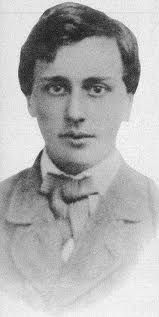
Henry James at 16
Washington Square is the forth work by Henry James-(1843-to 1916) I have read since I began my blog in July of 2009.    Prior to today I have posted on one major novels. Portrait of a Lady.   I have also posted on two shorter works, his very widely blogged about work, The Turn of the Screw, and a shorter novel I am very fond of, The Aspern Papers.   Henry James is very high up in the literary canon.  He is universally seen as one of the, if not the greatest, American authors.

Washington Square completely took me by surprise by just how suspenseful it was.   It was originally published in serial fashion and if   I had  been reading this back in 1880 I would have been at the store waiting for each new chapter.    I know some readers will not associate this feeling with Henry James but I was so interested in finding out how the story would end that I was very tempted to skip to the last chapter!

There are four main characters in the novel.   Dr. Sloper, a very successful quite brilliant New York City physician,  his daughter Catherine who is about twenty when we first encounter her, Morris Townsend, her suitor, and her widowed aunt, the sister of the Doctor, who lives with the Doctor and his daughter.   The doctor is a widower and had another child that died at an early age.    His daughter has been left $10,000 a year by her mother (a lot of money in 1880) and her father has told her he will leave her another $20,000.  

The doctor dearly loves his daughter but as a man who prides himself on knowing the truth about people, he sees her as quite plain looking, dull in her personality and perhaps not as intelligent as he would have hoped.    When Morris Townsend begins to call on her and in time professes his love he at once assumes he is a fortune hunter and tells his daughter that no man as handsome as her suitor would be interested in her if it were not for her money.    The doctor investigates the suitor a bit when his daughter insists they will be married and he finds the man lives with and from his sister.     Her near conniving aunt is very taken with Morris and encourages the relationship and does what she can to keep the couple in communication even though her brother forbids this.   The relationship of the aunt (herself a widow) and Morris is just brilliantly depicted and is a masterpiece of character development.

The ending is really heartbreaking.  Washington Square is not a difficult book at all.   There are no 60 word sentences or anything like that.  I really enjoyed this book so much.    I read the very well done Barnes and Noble edition but you can easily download it or read it online.

Mel u

Saturday, March 26, 2011

The Turn of the Screw by Henry James

Henry James at 16
The Turn of the Screw by Henry James (1898,  112 pages)


Since I began my blog I have posted on two works by Henry James,   The Aspern Papers and The Portrait of a Lady.    Just before I began my blog I read two of his novels,  The Bostonians and The Europeans, both of which I think are good starter James books.  James is a very high canon status writer.


James (1843 to 1916-New York City) was a tremendously influential writer.    His novels are on almost all lists of 100 best novels ever.    He is not a "fast read".

I have had The Turn of the Screw on my TBR list long before I had the slightest idea what a TBR list was.   I finally got around to it a few days ago.    There are many blog posts on The Turn of the Screw.   Wikipedia has a good basic article on  the plot and themes of the work and there are lots of very well done blog posts on it.   My post is just going to be sort of a "reading note".

The Turn of the Screw is subject to multiple interpretations.   It might be a ghost story.  It might be about a mental illness and the fear children can sometimes induce in adults.   I liked the feel of unknown evil lurking in the background.   I liked the descriptions of the children and the wonderful prose.   To be a bit eccentric, I prefer The Aspern Papers (also a novella)  but I am glad I have at last read The Turn of the Screw.   I read a Barnes and Nobel edition but you can easily find it online.  


Mel u

Friday, March 4, 2011

Portrait of a Lady by Henry James

Portrait of a Lady by Henry James (1881, 442 pages)

Please consider joining us for Irish Short Stories Week  March 13 to March 20


The last Henry James (1843 to 1916-USA- ) work I posted on was The Aspern Papers (1888, 84 pages) on March 26, 2010.   I really enjoyed  The Aspern Papers a lot and told myself I needed to read more Henry James soon.   Soon turned into a year as it often does.    


According to the little bit of research I have done, Portrait of a Lady is one of the very most popular novels of James and is considered the last novel he wrote before his prose reached the famous level of difficulty of the last works.    Elizabeth Bowen said of herself that she was a "Portrait of a Lady kind of girl."      


Henry James-16
Portrait of a Lady is not an "easy read" only because some of the sentences are very long and some of the paragraphs go on for pages and pages.   The book is about a young American woman living in Europe.    She inherits a lot of money and is soon set on by various suitors.   A lot of the book is taken up in the development of the characters of Isabel and her suitors.   As is normal for a James book, it is about the contrasts of America versus Europe, naivety versus experience, cunning versus wisdom, among other topics.   


Portrait of a Lady gives us a very vivid look at life among the wealthy Americans living in Italy and England (James spent 53 years of his life living in England and became an English citizen).    This was a world in which few people could be trusted and no one is quite what they seem.


Portrait of a Lady has a huge number of totally wonderful and brilliant observations about the characters of the people in the story.  It for sure is part of the canon.   Many people say it is their favorite James novel.   I would advise those getting started in James to read first The Europeans, then  The Bostonians and then Portrait of a Lady.    I am very glad I at last got around to reading another Henry James work.    I plan now to read for the first time The Turn of the Screw within two weeks or so.   


Mel u

Friday, March 26, 2010

"The Aspern Papers" by Henry James


The Aspern Papers by Henry James (1888, 84 pages in Barnes and Noble Edition)

The Aspern Papers is  considered from the start of James middle period.  ( James was born in New York City in 1843 into a wealthy very educated and cultured family.  He lived in Europe for many years and eventually became an English citizen.   He died in 1916.  He produced a huge diverse volume of literary works.    Several of his novels often show up on lists of 100 best novels.)     It was published between The Bostonians and a Tragic Muse.   I greatly enjoyed The Bostonians and have not yet read The Tragic Muse.    It is considered by many a small master work of 19th century American prose.  I would say first it is not hard to read.     It does not have super long sentences with four or five subordinate clauses.   It does not have a lot of characters,  only three in fact.    It in fact is a pleasure to read and the plot action is easy to follow.  

The central figure of The Aspern Papers, we never learn his name, is a literary biographer and collector and seller of memorabilia of famous writers.     He has heard a rumor that a very elderly lady living in Venice, Juliana Bordereau,  was at one time the lover of a deceased now famous American poet, Jeffrey Aspern.   (Aspern is creation of James.)    He finds out the elderly lady lives in genteel poverty in a very large house in Venice.   He quickly discerns that they are barely surviving on an annuity and offers to pay an above market amount to rent a room in her house.   Living with Mrs Bordereau is her niece Miss Titus.   They are Americans.   Both have been out of the country so long they do not  feel any more like Americans but for sure they are not Italians.   The city of Venice so lovingly described that we long to be there and feel strongly the beauty of the background of this story.   The narrator wants the papers he thinks the elderly lady so much that he begins to court the niece with compliments and gifts.   The niece herself is far from a young woman.   No ages are given but I see the Mrs Bordereau in her 80s or so and the niece late 40s.    The narrator wants the documents so bad that he sneaks into room of Mrs Borderau and is caught by her as he is going through her possession in search of the documents.    Just a few days after this incident she dies and the narrator feels the shock of catching him may have been the cause.    The niece, in a question of the player playing the player, suggests she might give the documents to the narrator if he marries her, something he has no interest in doing.   We are shocked when we find out what has really happened to the papers.

Part of the theme of The Aspern Papers is a simple attack on literary biographers (sort of the equivalent to writers for scandal magazines now).      It also deals with the very common theme in James of the American living in Europe.   It is also about loneliness and lost love and a beautiful city.   It is also about relationships between men and women that never advance beyond the "starting gate".      It is about the relationship of an artist to his life.   I have to say also it is fun to read.   It is a fine example of late 19th century fiction and will well repay the time it takes to read it.     

I am reading this for The 2010 Reading Themes Challenge.   This is a very interesting challenge in that you are ask to "pick your own theme".   I picked as my theme "Flaubert and Friends".    While in Paris Henry James socialized and dine with Gustave Flaubert and his good friend Ivan Turgenev and others in Flaubert's circle.     
Henry James was the brother of the philosopher Williams James.    So far I have posted on Indiana by George Sand, a brilliant book  on women's rights (among other things) and Pierre et James Guy De Maupassant (James called it a masterpiece) for this theme.    


Featured Post

Imperial Reckoning: The Untold Story of Britain’s Gulag in Kenya by Caroline Elkins - 2005 - 701 Pages

  Imperial Reckoning:     The Untold Story of Britain’s Gulag in Kenya by Caroline Elkins - 2005 - 701 Pages 2006 Pulitzer Prize Winner From...