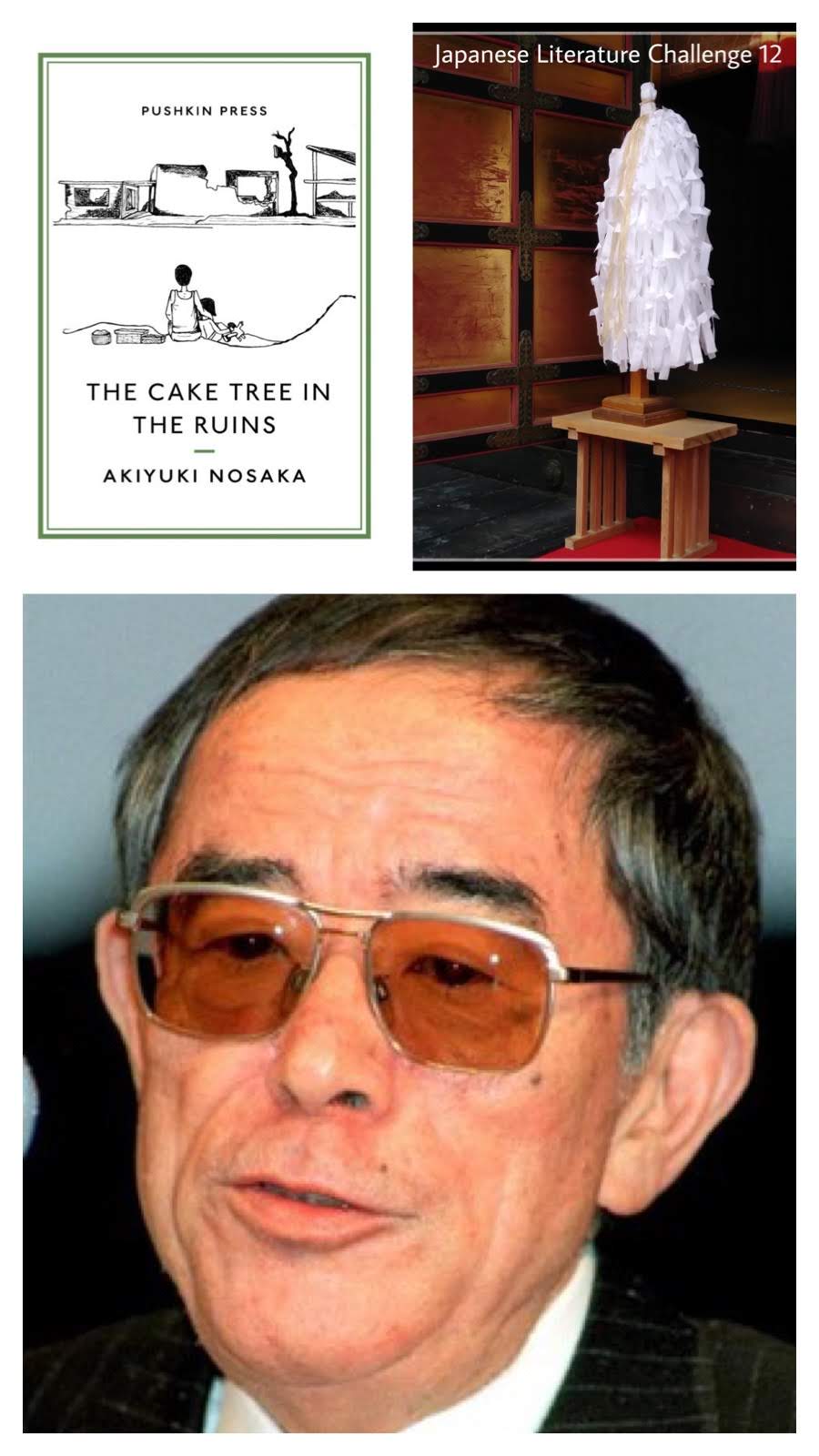
Showing posts with label Akiyuki Nosaka. Show all posts

Wednesday, February 13, 2019

The Old She-Wolf and the Little Girl - A Short Story by Akiyuki Nosaka - 2003 - from THE CAKE TREE IN THE RUINS Translated from the Japanese by Ginny Tapley Takemori


Works I Have So Far Read for The Japanese Literature Challenge 12, ending March 31, 2019.


  1. “Insects” - a Short Story by Yuchi Seirai, a post Atomic Bomb work,2012
  2. The Great Passage by Shion Miura, 2011, a deeply moving work centered on the creation of a Japanese Language Dictionary 
  3. "The Whale That Fell in Love with a Submarine" A Short Story by  Akiyuki Nosaka- 2003- translated from the Japanese by Ginny Tapley Takemori - 2015
  4. “Bee Honey” - A Short Story by Banana Yoshimoto- 2000 - set in Argentina during the annual Mother’s March for Disappeared Children.
  5. Killing Commendatore: A Novel by Huruki Murakami- 2017
  6. The Master Key by Masako Togawa - 1962 - translated by Simon Grove
  7. "The Elephant and its Keeper" - A Short Story by Akiyuki Nasaka- 2003. translated from the Japanese by Ginny Tapley Takemari
  8. The Emissary by Yoko Tawada - 2014 - translated by Margaret Mitsutani
  9. “The Prisoner of War and the Little Girl” - A Short Story by Akiyuki Nasaka- 2003. translated from the Japanese by Ginny Tapley Takemari. I did not post on this story.
  10. “The Soldier and the Horse” - A Short Story by Akiyuki Nasaka- 2003. translated from the Japanese by Ginny Tapley Takemari. I did not post on this story
  11. "The Soldier and the Horse". - A Short Story by Akiyuki Nasaka - 2003 - no post
  12. "Mr. English" - A Short Story by GENJI KEITA -1985- no post
  13. "The Old She Wolf and the Little Girl" by Akiyuki Nasaka - 2003


Akiyuki Nosaka’s Stories, set in the closing days of World War Two, Japan surrendered on August 15, 1945 a date noted at the start of each story focus on the most innocent victims of the war, very young children and animals.  The stories have a fairy tale feel, the animals are very effectively  
anthropomorphic rendered, putting us totally seeing thinks from the animals perspective.  One of the two stories I have posted upon is about a very lonely whale brought to a very bloody end by his love for a Japanese submarine.  The other begins in the Tokyo Zoo.  There is no money to feed the animals so a decision is made to kill the animals, including a very gentle elephant raised in the zoo.  His keeper of many years takes him out into the countryside.  We feel the great bond between them, not even shattered in death.

Today's story "The Old She-Wolf and the Little Girl" is set in then Japanese occupied Manchuria.  The Japanese ruled Manchuria very cruelly but now they are fleeing, running from the imminent arrival of the Russian Army, bent on oregaining their honor from the Sino-Japanese war.  Those running are mostly women, children and old men.  The men were all drafted into the Japanese army, even the forty plus year old father of the Little girl in our story.  The Chinese know the Japanese will lose and treat the refugees as the Japanese treated them in their Glory days.

There are only two characters in the story, a little girl of about four and an elderly female wolf who has left her pack, which she up until recently lead, to find a peaceful place to die.  The young girl has contacted measles, her mother, fleeing in a large group, had no choice but to abandon her.  At first the wolf plans to stalk her a while and then have her as a last meal.  Then she starts to think that her pack would never abandon a young pup, what must these humans be like.  She begins to bond with the child, feeds her and protects her.

When the wolf and the little girl meet, the girl mistakes the wolf for the abandoned family German Shepherd, Bella, who she loved.

"Thirsty, the wolf took a drink from a small stream, then caught two field mice to appease her hunger. She had just started running as hard as she could to catch up with the group again when she suddenly caught sight of something red in the grass. Pricking up her ears, she could hear a hoarse voice crying. It didn’t immediately occur to her that it might be a human child, but as she cautiously approached she saw a small girl tottering through the grass. The only reason she didn’t pounce on the girl and gobble her up right away was that the edge had been taken off her hunger by those two field mice. And then she was quite taken aback when the little girl showed absolutely no fear upon seeing her, but instead called out “Belle!” and flung her arms happily around her neck. The girl stroked the wolf ’s neck and back, sobbing, “Where’s Mama, Belle? Go find her for me!” The wolf didn’t understand what she was saying, but the girl clearly thought that she was a friend and so she submitted to her, thinking how odd it was for a human to be so unafraid of a wolf. The little girl didn’t smell of the things the wolf hated most, leather and gunpowder, but instead was permeated with the scent of milk. This brought back memories of all the cubs that, not so long ago, she herself had given birth to and raised. Come to think of it, the little girl’s sobbing voice was not unlike the wheedling cries of a newborn wolf cub. Before the wolf realized what she was doing, she was cradling the little girl between her front paws, just as she had done with her own cubs, and was licking her face and hands, which still smelt of her mother’s milk. The little girl snuggled up to her. Now and then she called loudly, “Mama!”, but her only answer was the sound of the wind crossing the wide-open plain. She began sobbing again, but when the wolf licked away her tears she became ticklish and wriggled."

The girl gets sicker from the measles.  The old wolf now has a purpose, to take care of the girl.

As the story proceeds we learn what life was like for the fleeing Japanese but the story ends on such a cruel note I cared little for them.

Mel u


Wednesday, January 23, 2019

"The Elephant and its Keeper" -A Short Story by Akiyuki Nosaka. 2003. Translated by Ginny Tapley Takemori


Works I Have So Far Read for The Japanese Literature Challenge 12


  1. “Insects” - a Short Story by Yuchi Seirai, a post Atomic Bomb work,2012
  2. The Great Passage by Shion Miura, 2011, a deeply moving work centered on the creation of a Japanese Language Dictionary 
  3. "The Whale That Fell in Love with a Submarine" A Short Story by  Akiyuki Nosaka- 2003- translated from the Japanese by Ginny Tapley Takemori - 2015
  4. “Bee Honey” - A Short Story by Banana Yoshimoto- 2000 - set in Argentina during the annual Mother’s March for Disappeared Children.
  5. Killing Commendatore: A Novel by Huruki Murakami- 2017
  6. The Master Key by Masako Togawa - 1962 - translated by Simon Grove
  7. "The Elephant and its Keeper" - A Short Story by Akiyuki Nasaka- 2003. translated from the Japanese by Ginny Tapley Takemari


The Japanese Literature Challenge,  #jlc12, runs until March 31.  Everyone is invited to join us.  Maybe as happened to me by participating in JLC 3 back in 2009, ten years from now you will count numerous Japanese writers among your favorite writers.

"The Elephant and its Keeper" is the third story included in The Cake Tree in the Ruins, a collection of short stories by Akiyuki Nasaka, published by Pushkin Press I have now read.  Six of the twelve stories, for sure I will read them all, feature animals in the title.  All of the stories in the collection are set in the final days of World War Two. Much of the population of Japan is near starvation, much of the country, especially Tokyo, is in ruins.  There is no hope left of victory and nothing to look forward to but more misery.  Nasaka's stories focus on the most innocent victims, children, animals, and country people.  His amazing "The Whale Who Fell in Love with a Submarine" reads almost like fairy tale but cuts deeply.  

"The Elephant and its Keeper" begins in Tokyo in 1945.  Government officials are worried that American bombs may free potentially dangerous Tokyo Zoo animals, lions, tigers, wolves etc.  The animals are closed to starving and might attack residents.  Plus it takes too many resources to feed them.  A machine is designed to strangle the animals.  All are killed but for the zoo's biggest resident, the elephant.  The machine does not work on him. The officials decide to stop feeding him and let him die of starvation.  They tell his keeper, of many years, not to come anymore.  It was so sad when the elephant heartbroken looks for his keeper.  The keeper did not just feed him but stayed with him nearly all the time.  The keeper cannot stand the thought of his friend starving.  Against regulations, he begins sneaking food to the elephant, enough so the officials wonder why he lives on.  The keeper discovered they plan to shot his friend.  He tells the elephant they will leave tommorow night and hide in the countryside, where the elephant can eat grass.  The keeper knows he will be in big trouble if they are found.  Under the cover of night they sneak out.  

I don't want to reveal much more of this very poignant story.  It is a love story on both sides as the elephant shows the depth of his returned love
when the keeper's darkest hour comes.

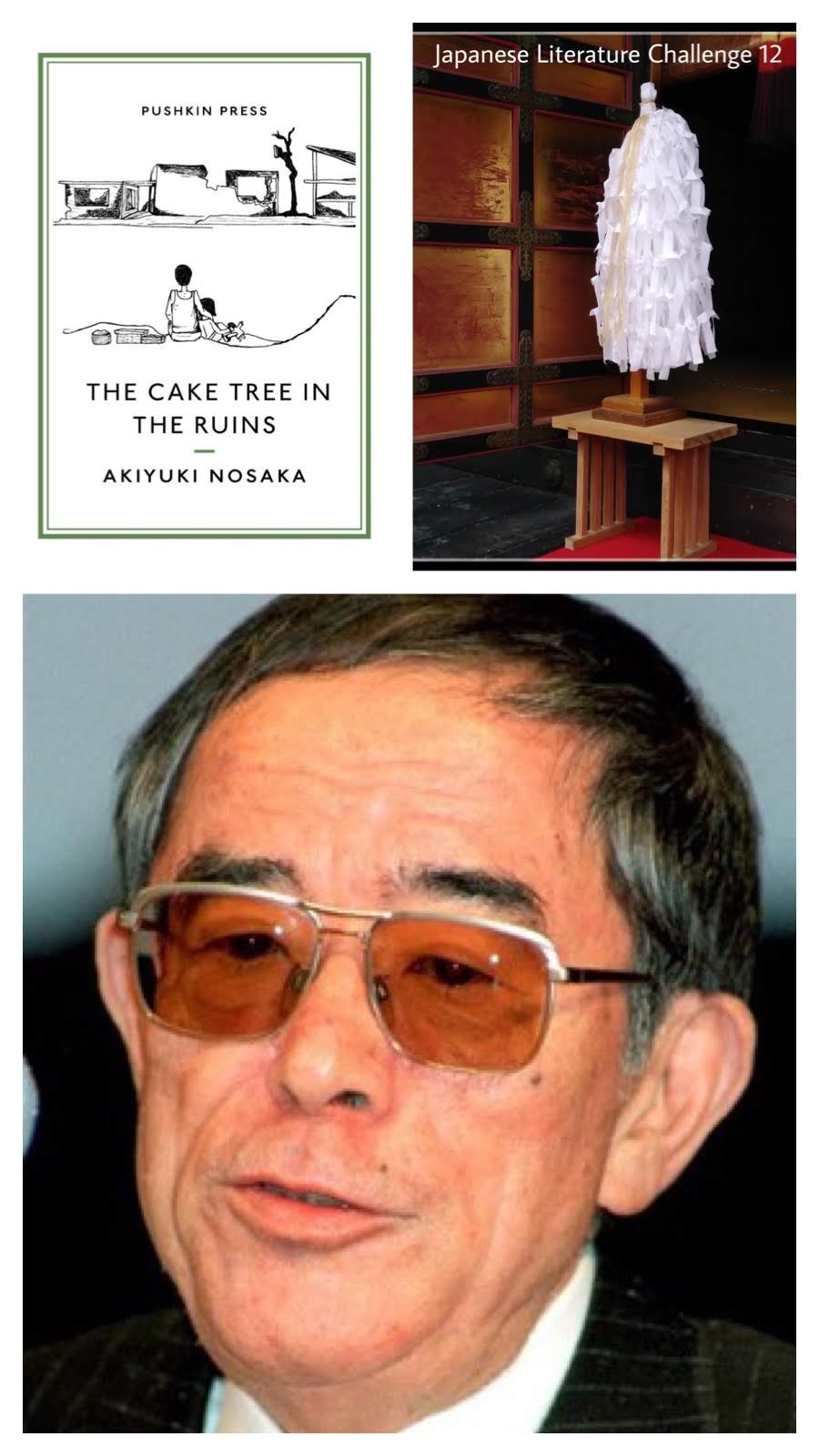
Akiyuki Nosaka was born in 1930 in Japan, and was a member of the yakeato generation, 'the generation of the ashes', who survived the devastating firebombing of their country during the Second World War. Nosaka lost both his parents and sister in the bombing and its aftermath, but went on to become an award-winning novelist, short-story writer, essayist, lyricist, singer and politician. His novel Grave of the Fireflies was turned into a hugely successful Studio Ghibli film and is forthcoming in a new translation from Pushkin Press.Nosaka died in 2015...from Pushkin Press

Ginny Tapley Takemori studied Japanese at the universities of SOAS (London), Waseda (Tokyo), and Sheffield, and now lives in rural Japan. She has translated a dozen or so early modern and contemporary Japanese authors, and her most recent publications include From the Fatherland with Love by Ryū Murakami (with cotranslators Ralph McCarthy and Charles de Wolf), Puppet Master by Miyuki Miyabe, and The Whale that Fell In Love with a Submarine by Akiyuki Nosaka... From Words Without Borders

Four short stories translated by Ginny Tapley Takemori can be read at Words Without Borders.


Mel u


Sunday, July 15, 2018

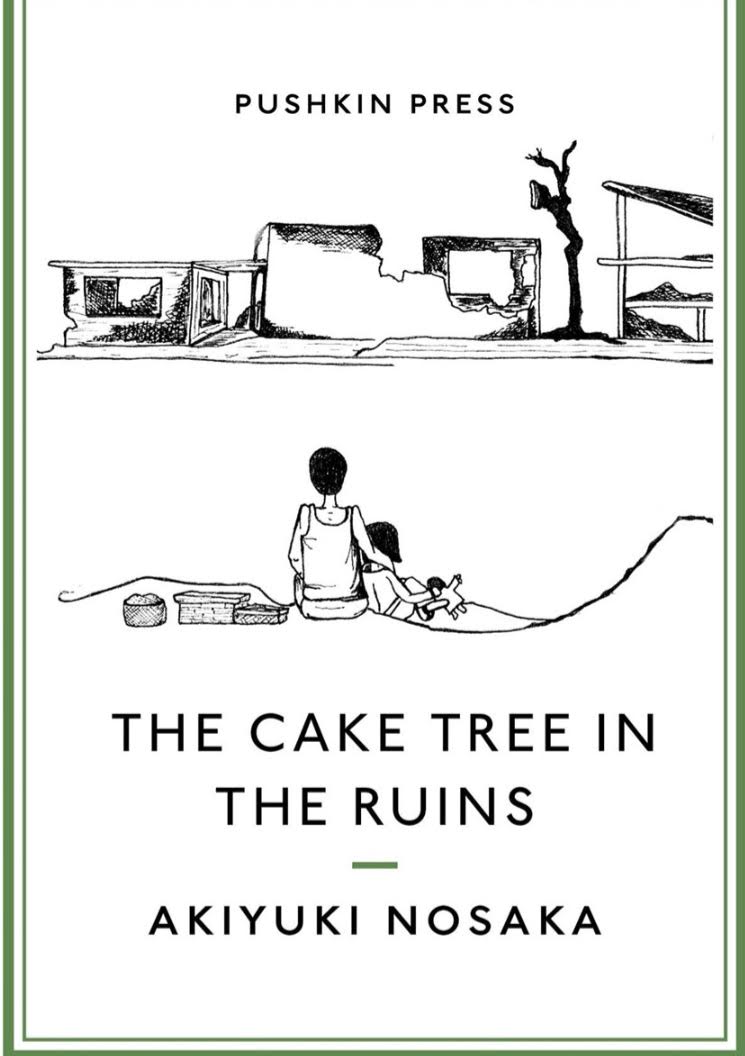
“The Cake Tree in The Ruins” - A Short Story by Akihuki Nosaka - 2003 - translated 2015 by Ginny Tapley Takemori


“On 15th August, the war the grown-ups had started finally ended. The whole of Japan had been burnt to the ground and everyone was hungry, but amidst the ruins stood just one cake tree. It was always surrounded by children gorging themselves on its delicious leaves and branches, but the grown-ups passed right by without ever even noticing it was there.”

Post World War Two Japanese fiction is a World Class cultural treasure.  Underlying much of the tremendously creative and often profoundly wise literature is the impact of Japan’s defeat in the war.  When The Emperor addressed his subject on the radio on August 15, 1945 and told them Japan had surrendered and that he was not a god, the cultural basis for Japanese society was devastated.  Kenzaburo Óe has said the most valuable result of the atomic bomb attacks was in the wisdom the terrible suffering brought to the survivors and care givers.  Some writers,  responded by writing elegant accounts of a destroyed tradition, others shifted to very violent sexually graphic works representing a now limit free ethos, others to magic realism. Some, like Akiyuki Nosaka strives to capture the pain of ordinary Japanese.  

In “The Cake Tree”, set in a Kobe after it was firebombed in 1945
we are presented a very moving account of the daily existence of a group of children, ages five to ten.  These lines show the impact on the children 

“Adults were better at enduring these conditions, but it was really tough on growing children, especially since it was the grown-ups who had gone to war in the first place while the children were simply innocent victims. For those children between the ages of five and ten in 1945, it really was a miserable existence—they had never eaten anything tasty, while however hungry the grown-ups were now they could remember eating their fill of delicious food in the past. They would reminisce about the tasty eel in suchand-such a restaurant, and the mouth-watering tempura in another, especially the shrimp and vegetable fritters”

The search for food became the work of the children:

“Rice had been rationed since 1941, sugar was hard to come by, the cakes and candies that had once flooded into the ports had vanished, and by the end of the war the only sweets available were dried bananas and sweet potatoes. In order to survive, the children formed gangs to go scavenging for the tomatoes, cucumbers, pumpkins and other vegetables people had started growing in the ruins. They knew it was wrong to steal, but survival was more important to them, and they could sniff out exactly where tomatoes were turning red or pumpkins were swelling up nicely. “Hey, what’s this tree?”

The tree’s story is just so beautiful, magic realism with the touch of a master.  I don’t want to tell the marvelous close of this story but I loved it.  Nosaka, drawing on his own experiences, in just a few pages bringing to life a world now largely forgotten

This is the title story in a collection of that name forthcoming from Pushkin Press. There are eleven other WW II era stories in collection, one about a whale that falls in love with a submarine and a very deep story about the relationship of an American POW and a little girl.

All into Japanese fiction, especially works about the war, need to add this to their to be read list.  I will be returning to these stories for more 
posts.

Akiyuki Nosaka was born in 1930 in Japan, and was a member of the yakeato generation, ’the generation of the ashes’, who survived the devastating firebombing of Japan during the Second World War. Nosaka was an award-winning novelist, short-story writer, essayist, lyricist, singer and politician. His adoptive parents were killed in the Allied firebombing of Kobe, and after he was evacuated with his sister, she died of malnutrition. These experiences inspired the stories in this collection, as well as one of his best-known works, Grave of the Fireflies, which was turned into a hugely successful Studio Ghibli film (called ’a masterpiece’ by the Guardian), and which is forthcoming in a new translation from Pushkin Press. Nosaka died in 2015. From Pushkin Press

Mel u


Featured Post

Imperial Reckoning: The Untold Story of Britain’s Gulag in Kenya by Caroline Elkins - 2005 - 701 Pages

  Imperial Reckoning:     The Untold Story of Britain’s Gulag in Kenya by Caroline Elkins - 2005 - 701 Pages 2006 Pulitzer Prize Winner From...