Showing posts with label New Zealand. Show all posts

Saturday, January 28, 2023

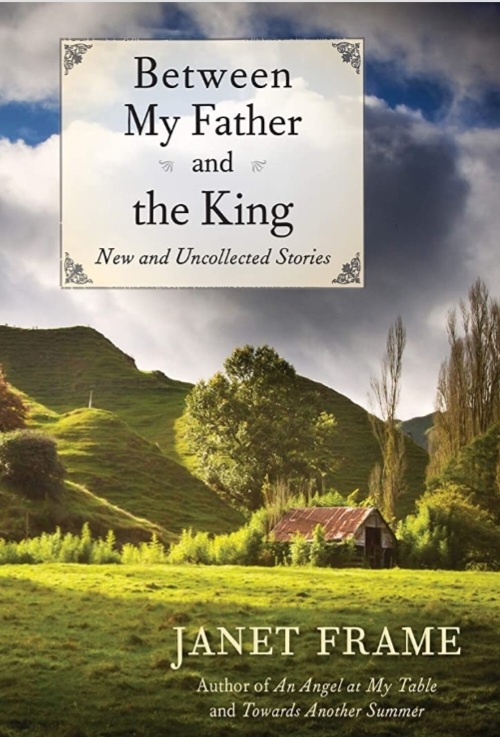
"Between My Father and the King" -A Short Stories by Janet Frame- from Between My Father and the King and Other Stories - 2012


 Janet Frame


A Post in Memorium of Her Passing Eight Years Ago


Born - August 28, 1924- Dunedin, New Zealand 

Died - January 29, 2004- Dunedin, New Zealand 

Janet Frame Literary Trust- janetframe.or.nz 

This is my first venture into the work of Janet Frame, I hope it will not be my last. After Katherine Mansfield, she is the third  New Zealand born writer to be featured on The Reading Life.

Today's story was originally published, as far as I can ascertain, in her postummous collection in 2012 and shortly after that in the Manchester Review. (The story can be read in the sample of the Kindle Edition of Between My Father and the King and other Stories.)

"Between My Father and the King" in just a few marvelous pages evokes a very moving account of a soldier from New Zealand, a veteran of what was once called The Great War, feelings toward a debt HD owes the British government, personified in the person of the King of England. The story is narrated by his daughter.

 
" My father fought in the First World War that used to be called ‘Great’ until the truth of its greatness was questioned and the denial of its greatness accepted. My father came home from the war with a piece of shrapnel in his back, remnants of gas in his lungs, a soldier’s pay book, an identity disc, a gas mask, and a very important document which gave details of my father’s debt to the King and his promise before witnesses to repay the King the fifty pounds borrowed to buy furniture: a bed to sleep in with his new wife, a dining table to dine at, linoleum and a hearthrug to lay on the floor, two fireside chairs for man and wife to sit in when he wasn’t working and she wasn’t polishing the King’s linoleum and shaking the King’s hearthrug free of dust; and a wooden fireside kerbto protect the hearthrug, the linoleum and my father and his wife from sparks when they sat by the fire. All this furniture, the document said, cost fifty pounds, which had to be paid to the King in agreed instalments. I found this document the other day, and the accompanying note of discharge from debt; and it was the first time I had known of my father’s dreadful responsibility. For besides promising to repay the loan he had sworn to keep the bed and mattress and fireside kerb and hearthrug and linoleum and dining table and chairs and fireside chairs in good order and on no account sell or exchange them"

The daughter ( I am assuming it is his daughter rather than a son based on the introduction to the collection) has just found the document in which her father  agrees to let a representative of the King inspect his furniture at any time. The man and his wife get nervous everytime someone knocks on the door, fearing it might be the King’s inspector. This is a profoundly anti-war and colonial story, reflecting how ordinary people are sacrificed in wars for the glory of Kings.  The ending is darkly hilarious and terribly sad.

Mel Ulm 

Monday, August 26, 2019

Beyond the Bay - A Novel by Rebecca Burns - 2018


Beyond the Bay by Rebecca Burns conveys a strong sense of what life was like for English settlers in New Zealand in 1892.  The central characters are Isobel, who along with her husband, has been living in Auckland for ten years and her younger sister Esther newly arrived.  In alternating chapters, the sisters let us see what was like to be a woman struggling to get by in New Zealand.

Isobel left England because she felt her husband Brendan, constantly losing jobs while bordering on abusive, and her marriage, would be revitalized by moving to New Zealand.  Her mother often harped on what a poor husband she   had.  Moving to New Zealand was a huge undertaking, requiring courage and was often motivated by near desperation.  Esther was only 12 or do when Isobel  left.  

Isobel  periodically sends letters back to England describing the mansion she owns, the servants she employs.  She reports Brendan has totally reformed and  has a very good job.  He is now sober and all is well.  She paints a picture of Auckland as a near paradise. When Esther arrives in Auckland she finds Isobel has been lying.  Isobel lives in a tentament apartment, Brendan gets fired from one job after another and Isobel does laundry and garment work for rich families.  Much of Auckland is squalor.

As the story progresses we slowly learn about their mother who is now rich and has given Esther some money.  Burns does a very good job walking us through the rough streets of Auckland, we see how poor women help each other.

Isobel is involved in the suffragette movement in New Zealand to give women the right to vote and hold office.  She takes Esther to meetings.  This is a huge change for New Zealand.  ( In England women got the right to vote in 1918, in the USA 1920, 1944 in France, 1902 in Australia, Canada 1917.)

Esther begins to see the sad state of Isobel's marriage, both financially and personally. In one very moving scene Esther and some neighborhood women are talking when a man approaches.  Everyone but Esther runs at the sight of him.  It turns out he is their landlord.  Esther ends up paying Isobel's rent.  The landlord will come to play a very important part in the story.

I don't want to give away much of the plot but Esther has a past in England and a secret.  She had an affair with a rich older man.  Basically to get rid of the threat she might pose to his marriage, he has given her land in New Zealand.

A lot of exciting things happen, an ardouos back country trip, a new romance and a shocking but ultimately very satisfying conclusion.

Burns shows us the sisters gradually getting to know each other again.  There are interesting minor characters.  We get a feel for ranch life in New Zealand.  People we at first disliked reveal their characters and life history expanding our sympathy for them.

I highly recommend Beyond the Bay to all into quality historical fiction.  I would for sure read a sequel to this book to see the lives of the sisters develop.  


Author supplied data

“Fowey Festival of Words and Music Short Story Competition Winner 2013
Black Pear Press Short Story Competition 2014

My short story collections - Catching the Barramundi (2012) and The Settling Earth (2014) - were both published by Odyssey Books and longlisted for the Edge Hill Short Story Award, the UK's only award for short story collections. 

My first novel, The Bishop's Girl (Odyssey Books), was published in September 2016.

My third collection of short stories, Artefacts and Other Stories, was published in September 2017 (Odyssey Books).

I have a writer's website at www.rebecca-burns.co.uk

Follow me on Facebook at http://www.facebook.com/RebeccaBurnsWriter

Follow me on Twitter at @Bekki66”

Odyssey Books publishes high quality titles at a fair price. Take a look at their offerings.

Dana Hui Lim is the author of Mother and the Tiger-  A Memoir of the Killing Fields. Published by Oddsey Books, it is a masterpiece.  Of the 3609 posts on my blog, I am most proud of my Q and A Session with the author of Mother and theTiger A Memoir of the Killing Fields, Dana Hui Lim


Mel u


Monday, September 29, 2014

The Keepsake by Kirsty Gunn

The Keepsake by Kirsty Gunn  (1997, 213 pages)

"Parts of The Keepsake somehow brought to mind ancient death cults in Meso-American religion."-from my first post on The Keepsake (in September 2011)"
This is an update of a prior post on the occasion of my fourth reading of this great book with a few new observations added at the start.

Notes added after fourth reading

. Obviously I hold this book in very high esteem.  After finishing my fourth reading I look forward to the fifth, hopefully in 2015.  As I read this time I saw,I think,how the circular broken wheel structure of the narrative mirrors the life of the narrator.   I saw deeper I hope into the perpetuation of cycles of abuse, I began to wonder if the narrator was sexually abused by her mother.  There is much pain and loneliness in Ths Keepsake  that it hurts to read but not as much as the pain of knowing it is there and looking away.    There are deep things about old books and the reading life here but I do not yet feel I am close enough to an understanding to yet talk of it.  

3rd reading observations

"Parts of The Keepsake somehow brought to mind ancient death cults or Meso-American religion."-from my first post on The Keepsake (in September 2011)

This is my third  reading of a very amazing almost painfully beautiful very dark book, The Keepsake by Kirsty Gunn  (1960, New Zealand).  I hope to read it a number of more times.


There is so much in this book it is hard for me to know where to start.  I found reading it the third time a very intense experience as I feel I am beginning to come to terms with the work.  

Here is the goodreads description of the book (almost never do I quote third party descriptions but I need help here)

Through a shifting and interwoven narrative, Kirsty Gunn explores the dark world of a young girl who has grown up with a mother dependent on storytelling and the oblivion of addiction to cope with the memory of her lost love, the girl's father. Raised on these deceptive tales of happiness, the younger woman is drawn into and begins to relive the real story of pain, abandonment, and the tyranny of desire. Her shocking affair with an older man seems to repeat the pattern set by her mother. The tangled yarn of her mother's past begins to be unraveled by the younger woman - until finally she can come to tell a story that is her.   

This is not a bad description but it misses the real core themes of the book, in my opinion.  It is about love as obsession, incest, child molestation, reading and its role as a memory and a trapping device, about colonialism, about Europe, about drug addiction, the nature of evil, about human weakness and predators that feed upon it.  I wish I could explain more but I cannot.  The prose itself seduces us with its opiate like beauty just as the woman in the plot was seduced and destroyed.

There is a very dark beast lurking in the labyrinth , a mystery the narrator may or may not understand as her life progresses and as she falls in the same traps her mother did.


Friday, May 23, 2014

"The Bull Calf" by Rachel Fenton (2013)


Two days ago I read my first story by the multi-award winning Rachel Fenton, "Ladder to the Moon".   I liked the story so much that I am now posting on a longer story, "The Bull Calf".  In very different ways, both stories are related to miscommunication, one on a personal level and one on a trans-New Zealand matter.   "The Bull Calf" (I will include a link to the story at the close of the post) is a brilliant laugh out loud story about the tragic consequences of poor communication by a Prime Minister of New Zealand.  I found it to be a product of high creative intelligence.  It would make Swift smile and could be the basis for an excellent movie.

Official Bio

Rachel J. Fenton was born in 1976 and grew up in relative poverty in South Yorkshire. She has a BA in English Studies from Sheffield Hallam University, where she studied under the tutelage of E. A. Markham before relocating to Auckland in 2007. Winner of the 7th Annual Short Fiction Competition (University of Plymouth) and the 2013 Flash Frontier Winter Award, she is a Pushcart Prize nominee. Short-listed for the 2013 Fish international Poetry Prize (judged by Paul Durcan), the 2012 Royal Society of New Zealand Manhire Prize, Binnacle Ultra-Short Competition (named honoree), the Fish One Page Prize, the 6th Annual Short Fiction Competition, and the Kathleen Grattan Award, other listings include the Bristol Prize, and the Sean O’ Faolain International Short Story Prize.


Recent publications include the journals The Stinging Fly MagazineShort Fiction #7;JAAM #30, #31; brief #44-45, #47; French Literary Review #18Cordite Poetry Review;Pank; and Metazen; and a comprehensive list can be found at http://snowlikethought.blogspot.com.


AKA Rae Joyce, she is an AUT award winning graphic poet, was mentored by Dylan Horrocks, is featured in New Zealand Comics and Graphic Novels (Hicksville Press), Two Thirds North, The Poetry BusFlash FrontierThrush Poetry Journal, and was 2013 Artist in Residence at Counterexample Poetics. Between 2011 and 2012, she wrote, drew and published a page per day of the epic web-comic Escape Behaviours.


As the story opens the Prime Minister of New Zealand intended to announce in a press release that he was starting a new "pest control" policy, instead he made a mistake and said "pet control".  The policy went on to detail how he planned to get rid of all of New Zealand's pets.  Everybody expected the prime minister would acknowledge an error, maybe blame it on an underling. Instead he won't admit he was wrong.  I want to quote a bit from the story so you can get a feel for Fenton's superb prose which perfectly matches her story.

"The way the Prime Minister talked, you’d have thought he was a conservationist, some even suggested comparison to higher posts. Maybe that’s how it got so far; people forgot he was only a politician. He went on.


New Zealand has one of the highest pet to person ratios of any country in the world, far in excess of the United States and the UK. Each year dogs are responsible for the deaths of our national icon.’ He left a dramatic pause, but before any dog owners had a chance to call in, he balanced the scales. ‘Cats are responsible for the extinction of eight species of native birds.’

If someone had tapped the Southern Cross cable, they’d have heard it abuzz with enraged cat and dog owners, some of them scientists and members of parliament from the Prime Minister’s own party. Twitter went down overnight. Facebook followed. Blogs were reignited. Someone put a sound clip of “For the love of birdsong” on YouTube with a bunch of inflammatory photographs that went viral on the internet."

New Zealand is very much a pet loving country, dogs and cats are totally cherished.  People go ballistic thinking the government plans to destroy all their pets. Exceptions are made for working dogs like blind guidance dogs but there are no exceptions for cats who are blamed for bird kills.  The minister seems willing to allow people to keep their existing pets but once these pets pass, they can get no more.  People start going to all kind of extremes.  Sales of puppies and kittens go through the roof.   One sad man even blinds himself so he can try to claim his dog guides him.  

This story is just so much fun to read.  Cat lovers like me will be outraged. It is just so clever.  It is a wonderful satire of political miscommunication.


You can read this story here. 


Rachel Fenton has completed A Question and Answer Session so please look for that soon.

I will be reading and posting on more of her short stories.


Tuesday, December 10, 2013

The Big Music by Kirsty Gunn (2012, 496 pages)


I have read Kirsty Gunn's The Keepsake three times.  I have posted on it twice and hope to read it again in 2014.   I think it belongs in the Sontag category of "High Art".  The Big Music, twice as long as The Keepsake, is a very challenging, intricately constructed modernist tour de force set in the highlands of Scotland (where New Zealand born Gunn now lives).  There are excellent very insightful reviews of The Big Music in online editions of majors newspapers which I suggest interested buyers read.  

The central thing in the book, called "The Big Music", is Scottish bagpipe music.  If you know little or nothing about the history or the musical theory and methods of bagpipes, you certainly will after completing The Big Music.  Gunn's work is a deep meditation on the nature of music and through this that of art.  It is also a lesson in how to read a novel.

The novel is presented to us as if were a collection of material Gunn found relating to a famous family of bagpipers.  For generations they have composed music for bagpipes and instructed others advanced techniques of the instrument.  Gunn uses the material as if were the basis for an academic treatise.  Interspaced with personal notes from many members of the family are historical and theoretical notes about bagpipe playing.  

I read this book twice, once three months ago and once this week.   There are many wonderful sentences and paragraphs about loneliness and the Scottish Highlands.  The bagpipe is superbly equipped for expressing pain and loss.  It was played as troops went into battle and at the funerals of kings and presidents.    It's sound is like no other instrument.  

There is a lot of fascinating historical information in The Big Music.  

The Big Music is a very challenging book which should be read slowly and thoughtfully.  I hope to reread it in a year or two.  


Monday, October 15, 2012

The Unlife of Ma Parker by Matt and Debbie Cowens A Short Story


Katherine Manfield Day
In Observation of the 124th Birthday of
Katherine Mansfield

October 14, 1888 to
January 9, 1923


Not long ago I posted on a wonderful collection of short stories, Mansfield with Monsters:  The Untold Stories of a New Zealand Icon by Matt and Debbie Cowens (2012, 232 pages).   The stories are presented to us as newly discovered Mansfield stories that show her great interest in paranormal matters.    I loved the book and the stories were all wonderful and a lot of fun.  I think Katherine Mansfield would have liked them and I am sure John Middleton Murry would have demanded royalities and claim he was planning to publish these stories soon if he were still with us.   One of my favorite Katherine Mansfield stories is "The Life of Ma Parker."    I am very honored that Matt and Debbie Cowens have allowed me to share this wonderful story with my readers.


"The Unlife of Ma Parker"
A Short Story from Mansfield and Monsters
by Matt and Debbie Cowens 


When the literary gentleman, whose flat old Ma Parker cleaned every
Tuesday, opened the door to her that morning, he asked after her grandson.
Ma Parker stood on the  doormat inside the dark little hall, and she
stretched out her hand to help her gentleman shut the door before she
replied. The skin on the back of her hand had a greenish,  sickly pallor and
a line of stitches peeped out from under the cuff of her coat. "He's
breathing easier now, sir," she said quietly before tugging her coat sleeves
back down to  her knuckles.
    "Oh... good! I'm delighted to hear that," said the literary gentleman.
In spite of the good news, Ma Parker looked worse than usual. Any trace of
colour had withered away,  leaving only sallow grey skin and unsettlingly
pale eyes staring out of dark and swollen eyelids. A worn, greasy scarf was
wrapped about her neck, bulging at each side as some  hidden bulk forced it
out. But he felt awkward. He could hardly go back to the warm sitting-room
without saying something―something more. Then because her sort set such a
store  by the meanest sorts of education he said kindly, "The young lad will
be in school soon?"
    "Beg parding, sir?" said old Ma Parker huskily.
    Poor old bird! She did look dashed. "I hope the boy will begin, ah,
school," said he. Ma Parker gave no answer. She bent her head and hobbled
off to the kitchen, clasping  the old fish bag that held her cleaning things
and an apron and a pair of felt shoes. The literary gentleman raised his
eyebrows and went back to his breakfast.
    "Taken ill, I suppose," he said aloud, helping himself to the marmalade.
There was no other explanation for her strange behaviour and disturbing
appearance.
    Ma Parker drew the two jetty spears out of her bag and hung it behind
the door. She unhooked her worn jacket and hung that up too. Then she tied
her apron and sat down to  take off her boots. To take off her boots or to
put them on was an agony to her, but she had been in agony for days. In
fact, she was so accustomed to the pain that her face  was drawn and screwed
up ready for the twinge before she'd so much as untied the laces. That over,
she sat back with a sigh and softly rubbed the stitches above her ankles.
The  feet which were now attached to her legs were larger than her own had
been and concealing them under the boots had made the pain so much worse,
but what else was she to do?

 *

    "Gran! Gran!" Her little grandson stood on her lap in his button boots.
He'd just come in from playing in the street.
    "Look what a state you've made your gran's skirt into!"
    But he put his arms round her neck and rubbed his cheek against hers.
    "Gran, gi' us a penny!" he coaxed.
    "Be off with you; Gran ain't got no pennies."
    "Yes, you 'ave."
    "No, I ain't."
    "Yes, you 'ave. Gi' us one!"
    Already she was feeling for the old, squashed, black leather purse.
    "Well, what'll you give your gran?"
    He gave a shy little laugh and pressed closer. She felt his eyelid
quivering against her cheek. "I ain't got nothing," he murmured...

    *

    The old woman heaved her body upright, seized the iron kettle off the
gas stove and took it over to the sink. The noise of the water drumming in
the kettle deadened her  pain, it seemed. She filled the pail, too, and the
washing-up bowl. The extra tendons the doctor had inserted into her forearms
made light work of the lifting, but the weakness  in her chest prevented her
from taking any pleasure in it.
    It would take a whole book to describe the state of that kitchen. During
the week the literary gentleman "did" for himself. That is to say, he
emptied the tea leaves now  and again into a jam jar set aside for that
purpose, and if he ran out of clean forks he wiped over one or two on the
roller towel. Otherwise, as he explained to his friends,  his "system" was
quite simple, and he couldn't understand why people made all this fuss about
house-keeping.
    "You simply dirty everything you've got, get a hag in once a week to
clean up, and the thing's done."
    The result looked like a gigantic dustbin. Even the floor was littered
with decaying toast crusts, envelopes, cigarette ends. But Ma Parker bore
him no grudge. She pitied  the poor young gentleman for having no one to
look after him. Out of the smudgy little window you could see a dark
alleyway with a thin strip of sad-looking sky, and whenever  there were
clouds they looked very worn, old clouds, frayed at the edges, with holes in
them, or dark stains like tea.
    While the water was heating, Ma Parker began sweeping the floor. "Yes,"
she thought, as the broom knocked, "what with one thing and another I've had
my share. I've had a  hard life."
    Even the neighbours said that of her. Many a time, hobbling home with
her fish bag she heard them, waiting at the corner, or leaning over the area
railings, say among  themselves, "She's had a hard life, has Ma Parker." And
it was so true she wasn't in the least proud of it. It was just as if you
were to say she lived in the basement-back at  Number 27. She'd had a hard
life, but now? Now what did she have...?

    *

    At sixteen she'd left Stratford and come up to London as a kitchen-maid.
Yes, she was born in Stratford-on-Avon. Shakespeare? No, people were always
asking her about him.  But she'd never heard his name until she saw it on
the theatres.
    Nothing remained of Stratford except that "sitting in the fire-place of
an evening you could see the stars through the chimney," and "Mother always
'ad 'er side of bacon,  'anging from the ceiling." And there was something―a
plant, there was―at the front door, that smelt ever so nice. But the plant
was very vague. She'd only remembered it once or  twice just before the
operation, when she was lain out like a corpse on the table and the gas
filled her lungs....
    It had been a dreadful place―her first place. She was never allowed out.
She never went upstairs except for prayers morning and evening. It was a
fair cellar. And the cook  was a cruel woman. She used to snatch away her
letters from home before she'd read them, and throw them in the range
because they made her dreamy.
    When that family was sold up she went as "help" to a doctor's house, and
after two months there, she married her husband. He had been a baker and she
had been desperate to  leave the doctor's house. The doctor had scared her
from the first day. He wasn't a cruel man; he was kind in his own strange
way but she had been terrified by those unnatural  experiments in the
attic...
    "A baker, Mrs Parker!" the literary gentleman would say. For
occasionally he laid aside his tomes and lent an ear, at least, to this
product called Life. "It must be rather  nice to be married to a baker!"
    Mrs Parker didn't look so sure.
    "Such a clean trade," said the gentleman.
    Mrs Parker didn't look convinced.
    "And didn't you like handing the new loaves to the customers?"
    "Well, sir," said Mrs Parker, "I wasn't in the shop above a great deal.
We had thirteen little ones and buried seven of them. If it wasn't the
'ospital it was the  infirmary, you might say!"
    "You might, indeed, Mrs Parker!" said the gentleman, shuddering, and
taking up his pen again.
    Yes, seven had gone, and while the six were still small her husband was
taken ill with consumption. It was flour on the lungs, the doctor told her
at the time.... Her  husband sat up in bed with his shirt pulled over his
head, and the doctor's finger drew a circle on his back.
    "Now, if we were to cut him open here, Mrs Parker," said the doctor,
"you'd find his lungs chock-a-block with white powder. Breathe, my good
fellow!" And Mrs Parker never  knew for certain whether she saw or whether
she fancied she saw a great fan of white dust come out of her poor dead
husband's lips....
    But the struggle she'd had to bring up those six little children and
keep herself to herself. Terrible it had been! Then, just when they were old
enough to go to school her  husband's sister came to stop with them to help
things along, and she hadn't been there more than two months when she fell
down a flight of steps and hurt her spine. And for  five years Ma Parker had
another baby―and such a one for crying! ―to look after. Then young Maudie
went wrong and took her sister Alice with her; the two boys emigrated, and
young Jim went to India with the army, and Ethel, the youngest, married a
good-for-nothing little waiter who died of ulcers the year little Lennie was
born. And little  Lennie―her poor little grandson. She would have done
anything for him....

    *

    The piles of dirty cups, dirty dishes, were washed and dried. The
ink-black knives were cleaned with a piece of potato and finished off with a
piece of cork. The table was  scrubbed, and the dresser and the sink that
had old sardine tails swimming in it....

    *

    Lennie had never been a strong child―never from the first. He'd been one
of those fair babies that everybody took for a girl. Silvery fair curls he
had, blue eyes, and a  little freckle like a diamond on one side of his
nose. The trouble she and Ethel had had to rear that child! The things out
of the newspapers they tried him with! Every Sunday  morning Ethel would
read aloud while Ma Parker did her washing.
    "Dear Sir, Just a line to let you know my little Myrtil was laid out for
dead... After four bottles... gained 8 lbs. in 9 weeks, and is still putting
it on."
    And then the egg-cup of ink would come off the dresser and the letter
would be written, and Ma would buy a postal order on her way to work next
morning. But it was no use.  Nothing made little Lennie put it on. Taking
him to the cemetery, even, never gave him a colour; a nice shake-up in the
bus never improved his appetite.
    But he was gran's boy from the first....
    "Whose boy are you?" said old Ma Parker, straightening up from the stove
and going over to the smudgy window. And a little voice, so warm, so close,
it half stifled her―it  seemed to be in her breast under her heart―laughed
out, and said, "I'm gran's boy!"

    *

    At that moment there was a sound of steps, and the literary gentleman
appeared, dressed for walking.
    "Oh, Mrs Parker, I'm going out."
    She kept her back to him, rude though it was, for fear he would see her
arms and grow curious. "Very good, sir."
    "And you'll find your half-crown in the tray of the inkstand."
    "Thank you, sir."
    The door banged. She took her brushes and cloths into the bedroom. But
when she began to make the bed, smoothing, tucking, patting, the small lungs
in her chest ached,  making the job almost unbearable. She thought of little
Lennie and his suffering. It hadn't been right. That's what she couldn't
understand. Why should a little angel child  have to ask for his breath and
fight for it? There had been no sense in making a child suffer like that.

    *

    A sound as though something was boiling came from Lennie's little box of
a chest. A great lump of something bubbling in his chest that he couldn't
get rid of. When he  coughed the sweat sprang out on his head; his eyes
bulged, his hands waved, and the great lump bubbled as a potato knocks in a
saucepan. But what was more awful was when he  didn't cough he sat against
the pillow and never spoke or answered, or even made as if he heard. Only he
looked offended.
    "It's not your poor old gran's doing it, my lovey," said old Ma Parker,
patting back the damp hair from his little scarlet ears. But Lennie moved
his head and edged away.  Dreadfully offended with her he looked―and solemn.
He bent his head and looked at her sideways as though he couldn't have
believed it of his gran.
    She couldn't lose Lenny, not while she still had breath in her body. She
went to see the son of her old employer―a doctor, carrying on his father's
work―and asked him about  one of those experiments in the attic. She'd been
cleaning when she'd come across it all those years ago―a rabbit pinned to a
tray of wax, severed in half and stitched back up  across the belly, and a
large number of wires clamped here and there, and even sewn into the
creature's chest and temples.
    "Ah, I see you're admiring my latest patient," the old doctor had
appeared at her shoulder, making her start.
    "Sorry, sir, I was only..."
    "No, need to apologise. It's fascinating. The power of electricity. We
still know so little about its true potential, but I have been conducting my
experiments and if  you'll now observe..." He switched on a contraption by
the table and with a crackle the rabbit jerked in a violent spasm. Then its
little chest moved up and down, and it turned  its head ever so slightly
towards her, and blinked...
    The doctor's son had carried on his father's work, and seemed excited at
the prospect of some human subjects.
    "You understand there'll be risks," he said. "I may be able to get your
lungs into the little boy, but you'll almost certainly perish while I attend
to him. Should the  reanimation process then bring you back it may have
serious complications. There's a very real possibility of tissue damage in
the extremities―lower limbs, hands, feet and so  on."
    "Do whatever it takes, sir. Just help my Lennie."
    What was the good of her having a strong pair of lungs in her old body
when little Lennie suffered?
    Lennie thrived after the operation and was stronger every day. She had
woken into an unlife of fresh agony. How long would her aching body struggle
on in this wretched  state? The doctor had no answers to comfort her. She
had died on the surgeon's table, her body torn open and her lungs removed.
Little Lennie's twisted lungs had filled her  chest cavity and some pickled
hands and feet had replaced her own. An intricate clockwork ticked away
beneath her sternum, keeping the dead, foreign body parts in time with the
spark of life that the electricity had rekindled. When she asked him about
the layers of muscle and bone that he had grafted to her healthy limbs, the
doctor had chuckled and  said that his curiosity had got the better of him.

    *

    "What's it matter if Lenny lives and breathes?" she whispered, rubbing
the trail of surgical thread round her throat beneath her collar. The steel
bolts protruding from  either side of her neck tingled as her fingers―the
pickled fingers of a long dead woman―brushed against them. Now even the feel
of her boy's warm arms about her neck gave her  pain, but she couldn't let
him know that. She couldn't wince at the sharp twinges of the stitching at
her throat, wrists, and ankles. She couldn't let herself cough though the
small lungs in her chest were so clogged that she felt that she might never
breathe clean air again.
    "I can't ever let him know."
    As she said those words she suddenly let fall her brush and doubled over
in a fit of violent coughing. She found herself in the kitchen, unable to
breathe as though she was  drowning in a sea of flour and ash. It was so
terrible that she flung open the back door of the flat, gasping for air. Her
breath caught in her throat at the sight of a man  leaning against the wall
in the alleyway. He was tall and thin, a knitted cap pulled low over his
brow and the collar of his worn, dark coat turned up. He smiled at her,
broad  yellow teeth showing behind a coarse beard.
    "Stuffy in there, eh?" he asked, pushing off from the wall and
swaggering toward her. His right hand was pressed against his leg, and she
saw a sturdy black poker swinging  behind his coat. Its sooty end bore a
nasty looking hook.
    Ma Parker stepped back into the kitchen without a word and swung the
door shut, but the man lunged forward and thrust the tip of the poker into
the gap. Ma Parker staggered  back, her heavy feet clumsy beneath her. The
door swung open and the man stepped into the kitchen, still smiling.
    "I saw the gent leave," he said, lifting the poker and resting it on his
shoulder. He looked around the room, picked up a silver salt shaker from the
bench.
    "He'll be back any minute, I'm sure," Ma Parker said, backing up against
the door to the hall.
    "Oh, I don't know as that's fer certain." The man's smile faded and he
unbuttoned his coat with his left hand and licked his lips. "I reckon
there's like to be plenty of  time."
    Ma Parker knew she could not run. Even before the surgery she'd moved
slowly. Now she could barely manage more than a shuffle. She straightened
her apron and muttered,  "You'd best be on your way."
    There were no more words. The man crossed the kitchen in two quick
strides, brought the poker up as high as the low ceiling would allow, and
swung it with deadly force. Ma  Parker thought of her little Lennie, his
bright face and scarred chest with her lungs inside, and she smiled.
    The poker caught her in the neck. The force of it was terrific―enough to
knock her off her feet. She sprawled onto the kitchen floor and waited for
the darkness to take  her. She saw the man step over her then push open the
door to the hall. His feet were enormous. So were his hands.
    She was surprised to find that the pain of the blow was quick to fade.
It had ripped fire across her throat when the poker struck, but now it was
back to its dull ache. She  raised a hand to her neck and there was blood,
but not the fountain she'd expected. She sat up. Taking a polished pot from
the stove, she inspected her reflection. The bolt on  the left side of her
neck was bent and her stitches had pulled, but that was all. She slipped off
the apron and inspected her collar bone. Blood oozed from the scar where the
clockwork had been inserted down into her chest cavity. And yet, she was
alive. Or undead. Whatever the case, the assault had not left her worse for
wear. There was no  guarantee that her attacker would leave her unmolested
as he made his exit, though. Ma Parker rose to her feet, looked to the open
door to the alley, hefted the pot, and  stepped into the hall.
    She found the man in the sitting room, bent over the literary
gentleman's writing desk. Ma Parker stepped into the room and tightened her
grip on the pot handle.
    "I've had a hard life," she said. She shuffled forward on tender ankles.
"Hard and brutal and full of grief."
    The man turned, his face drawn. His eyes flicked toward the hall, where
his poker rested against the wall, then back to Ma Parker. He looked from
the pot to the neck bolts  to the swollen purple scars which crossed her
collar bone and disappeared under her dress.
    "There's no need for you to get hurt," he said, raising his calloused
hands, palms open.
    "Too late for that," Ma Parker replied, eyeing him up.
    "'Ave it your way," the man growled, slipping a short-bladed knife out
of his belt. He tried to circle round her but Ma Parker shuffled back in
front of the doorway.
    "That's a nice voice you've got. Must have a good set of lungs in
there."
    She shuffled forward, the pot hanging loose from her hand. He fired a
quick rabbit punch into her leering face then brought the knife up in a
thrust intended to slip under  her ribcage. It hurt more than she'd expected
as the blade lodged in the extra bones that the doctor had used to reinforce
her chest. She nearly fell, but she managed to get a  hold of his coat with
her free hand and steady herself. As he tried to barge past her and reached
for the poker she brought the pot around in an underarm arc and struck him
on  the elbow of his outstretched arm. There was a wet crack and the lower
half of his arm swung up, then hung like a meaty pendulum. He would have
screamed, but at that moment she  let go of his coat and seized the back of
his head. She meant to crack his forehead against the door frame, but as she
gripped the back of his skull and pulled back in  preparation for the blow,
she felt something in her forearm tugging. Ma Parker could feel the new
sinew and bone slipping into place, could feel the strength in her new limb,
muscles yearning to be used. She gave in to the urge.
    The back of the man's head burst like a rotten egg. Ma Parker felt her
fingers stretch then puncture the skin at the back of his head as his skull
shattered. He twitched  and danced for a moment, then slumped forward into
the hall. Ma Parker looked down at her pickled hand, the tightly corded
muscles in her forearm, the chunk of flesh with  matted hair and blood in
her fingers.
    "What 'ave I done?" said old Ma Parker.
    As she said those words she suddenly let fall her hand. She stumbled
back into the kitchen, as though by leaving the hall she could escape her
actions.
    She couldn't go home; Lennie was there. The blood would frighten Lennie
out of his life. She couldn't go outside and sit on a bench anywhere; people
would come asking  questions. If she even sat on the doorstep a policeman
might come by and speak to her.
    Wasn't there anywhere where she could hide and keep herself to herself
and stay as long as she liked, not disturbing anybody, and nobody noticing
her?
    Her chin began to tremble; there was no time to lose.
    She shuffled back to the hall with her heavy mop and bucket. "Nothing
fer it. I'll have to clean this mess up."
    When the literary gentleman returned he found that the hallway carpet
was quite wet, and faintly pink. Methods of cleaning being a mystery to him
he thanked Ma Parker, who  had stayed unusually late, but asked her to be
less vigorous with the furnishings in future. She nodded as she left, her
clumsy feet and shuffling gait as pitiful as ever. She  didn't seem overly
troubled by the enormous bundle she carried over her shoulder, something
angular and bulky wrapped in two wet coats. She coughed up a gob of blood as
she  left, but it didn't seem to trouble her much.
    "Fresh," she muttered to herself as she stepped out into the biting
wind. "Head's no use, but still plenty of good parts left."
    It was cold on the street as she began her long journey to the doctor's
house. People went flitting by, very fast; the men walked like scissors; the
women trod like cats,  but nobody paid any notice to the shuffling old woman
with the heavy bundle.
    The icy wind swept up the street and blew out her apron into a balloon.
And now it began to rain.


End of Guest Post

I thought a bit about publishing this story in observation of the birthday of Katherine Mansfield.   To many, including those who have read only two or three stories, Mansfield is a sacred Icon of New Zealand culture.  Many describe her as the greatest female short story writer.       I have read all of the biographies of her (Katherine Mansfield:  The Story Teller by Kathleen Jones is by far the best), all of her stories ( I know there are a few newly discovered ones), and many of her poems and a few of her letters and journal entries.   I know she liked to thumb her nose a bit at the conventional world and I think it was more than her talent that scared Virginia Woolf.   My guess is she would love this and the other stories in Mansfield and Monsters.   Matt Cowen indicated to me they have receieved a very good feed back from the Katherine Mansfield Society so I am publishing it in honor of her brithday.   October 14 will always be Katherine Mansfield Day on The Reading Life

Mel u
The Reading Life--

Monday, October 1, 2012

Mansfield with Monsters: The Untold Stories of a New Zealand Icon by Matt and Debbie Cowens

Mansfield with Monsters:  The Untold Stories of a New Zealand Icon by Matt and Debbie Cowens (2012, 232 pages)


Matt and Debbie Cowens in Mansfield with Monsters:  The Untold Stories of a New Zealand Icon have seen beyond the Mansfield of society ladies in conferences, beyond the New Zealand patriots, beyond those who read her work because of what Virginia Woolf said about her.  They show a deep  insight into a darker side of her psyche and work not found in too many other places.  The stories in this collection are purported to be the correct versions of some of the most famous stories of Mansfield, before they were censored.

I have read and posted on all of the short stories of Katherine Mansfield (1888 to 1923-New Zealand) that can be found online. My knowledge of the life of Katherine Mansfield mainly  comes from the magisterial biography by Kathleen Jones, Katherine Mansfield-The Story Teller.   In their very interesting and plausible introduction the Cowens tell us that Mansfield had a strong   interest in occult matters.    She was acquainted with  Aleister Crowley (occultists will not like this but I think much of the occult practices and beliefs in the English speaking world found today and for sure during the life of Mansfield, can be traced to the writings of Crowley.)   The introduction of the  Cowens tells us more about her relationship with Crowley and other occult figures than Jones does (Jones probably left them out as these are speculative conjectures at least in part).  I was very interested to learn that in her travels in Europe she often stopped at occult pilgrimage places.  If you study her relationships with men she seems to have a pattern of involvement with Guru like men.  If you wanted to you could probably trace this in part back to her relationship with her very powerful and dominating father.

Seances, mystics, Eastern Europeans cult leaders, spirit readings and such were all the rage in Mansfield's time in England and Europe (1903 to 1933).   It is perfectly credible to see Mansfield as having a deep interest in such things.  She was, however,nobody's fool so I will let the scholars ponder the question if they like but my Katherine Mansfield was knowledgeable about the occult and may have turned to it as she sensed her early death was approaching.

The stories in Mansfield with Monsters:  The Untold Stories of a New Zealand Icon are brilliant, quite wonderful retellings of the most famous of Mansfield's short stories as if they were tales from the dark side.   They are so well done that they do feel just like she wrote them.   There are seventeen stories in this collection.  I really liked every one.  Some are laugh out loud funny and some are beautiful.   Mansfield's stories are often about lonely left out people and these stories capture that.   I will post a bit on seven of the stories so you can get a  feel for the collection and will then make a few concluding remarks.  I will also include a link to the publishers web page on the book where you can learn a lot more about it, read comments from well known critics on it and see pictures of the authors as well as a well done video.   You can also download a sample of the work.

"Mrs Brill" ("Miss Brill" is the most read of Mansfield's stories-I can sort of tell based on visits to my web pages on her work which of her stories is being read-and taught-anywhere in the world) is a hilarious retelling of a classic story.  In the much loved original, Miss Brill takes her fox wrap with her to the park and observes the people around her and talks to the fox head about them.   She sees herself as above the to her dull and mundane people in the park.  Then one day something happens that breaks her heart.  This story is about Mrs Brill, the original Brill had as far as we know no men in her life ever, is similar but ever so different.   Mr Brill is basically dead but she is able to reanimate him twice a year and she always takes him to the park to talk to about the people they see.  The ending of this story is both totally funny, works perfectly as a tale of revenge and is quite logical.  I will leave it untold.

"The Fly" (some consider this her most "existential story"-older men as a general rule do not come off well in her stories-Daddy issues?) starts out very much like the original.   An older man is allowed out on his own only once and a while by his very protective family.   He often goes to visit his old boss, another older man.   The boss  has been morose and sad since his son died in a war.  In Mansfield's time, (her beloved brother died in WWI) death of young men hung heavy in the air.   What is so great about this story is how we gradually learn the son died in a war against alien invaders.  We have to figure out for ourselves what happened.  I loved this story and I am not sure, blasphemy here, that I did not prefer it to the original.

Everybody likes "The Garden Party",  Mansfield's great story about social classes and a young girl's first immersion into the "real world".   Some see it as retelling of the  Orpheus myth and I find this credible.   The story is set inside the walled compound of an affluent family.  Outside of the walls are the homes of the poor, seen as less than fully human by the girl's high society money.  There is a big change in this story, weird insect like creatures lurk out side the walls and we feel the decay and sadness in the poor.  The story, this one and the original, both let us see the eyes of the girl begin to open.  This was a really fun story.

The Cowens' version of  "The Young Girl" is just toooo weird for words.  I think Mansfield would have loved this one.  One of the things I like about the stories of the Cowens' is that they do not explain things, they just let the actions and words in the story do their work.   I will say is that of alien leaches invaded New Zealand in 1905 or so this story captures it.   This is a really wonderful story.  Like the others, it is great fun to read.

"A Bank Holiday" is an impressionistic story seemingly set in small town New Zealand on a Bank Holiday (Mansfield's father was chairmen of The Bank of New Zealand).   The new version and the old one both give us a good look at what happens during a holiday festival.    I loved these lines from the Covens' story:

"He thinks of Egypt, of the risen dead he fought in his youth.   He thinks of the great walking gods of Africa, taller than mountains, which drove so many of his companions to madness.   He remembers the ecstasy cults of Calcutta who tore themselves to pieces in moments of religious fervour.  He hears the  Music too, and knows it.  It is the cold piping of the deepest recesses of the night, of the place beyond the stars where only hunger reigns.  He knows this tide cannot be stopped, cannot be fought.  He turns and flees, praying that he might survive the coming terror.  Praying that the world will survive."
I will just say the bank holiday does not end well.

 "The Daughters of the Lizard Colonel" is one of Mansfield's post popular stories.   It shows how three adult  daughters of a retired colonel are kept in kind of a perpetual state of childhood by its domination.   Now imagine the colonel is a lizard creature trying to pass as human and you have a small idea of how great the remade version of this story is.

"The Doll's House" is normally described as a story about class distinctions in rural New Zealand early 20th century.   The rich and the poor go to school together but there are lots of class lines.   One girl gets a faboulos doll house as a gift and the poorest lowest down family in the community is not allowed to have their daugters view it.  You will like the new ending of this story.

There are ten more stories in the collection so I think the Cowens have given solid value.

This is not just a collection of short stories.   The whole thing is a really interesting work of art.   The introduction makes the stories plausible and there are some very interesting photographs.

I think these stories can be enjoyed  by those not into Mansfield but will really be relished  by Mansfield devotees like myself (if they can avoid being peeved over the idea behind the stories).   Mansfield had kind of a warped sensbility and I think she would have liked these stories and I am sure John Middleton Murry would have demanded royalties!

For a lot more information on Mansfield with Monsters:  The Untold Stories of a New Zealand Icon go to the web page of the publisher, Steampress

I will be posting  an incredible retelling of "The Life of Ma Parker"  on my blog in a few days.

Mansfield with Monsters:  The Untold Stories of a New Zealand Icon by Matt and Debbie Cowens is a totally fun, wonderfully written and very perceptive collection of stories.   You can tell the Cowens loved writing  these stories and I loved reading them

Mel u

Featured Post

Imperial Reckoning: The Untold Story of Britain’s Gulag in Kenya by Caroline Elkins - 2005 - 701 Pages

  Imperial Reckoning:     The Untold Story of Britain’s Gulag in Kenya by Caroline Elkins - 2005 - 701 Pages 2006 Pulitzer Prize Winner From...