Showing posts with label German Literature. Show all posts

Wednesday, November 6, 2024

Castle Gripsholm - 1931- by Kurt Tucholsky- 244 Pages- translated from the German by Michael Hofmann -2019


Castle Gripsholm - 1931- by Kurt Tucholsky- 244 Pages- translated from the German by Michael Hofmann -2019

KURT TUCHOLSKY (1890–1935) was born in Berlin to a middle-class Jewish family. He received a law degree from the University of Jena in 1915 and was conscripted to fight in World War I not long after

. A notably poor soldier, his aphorism likening soldiers to murderers became a pacifist rallying cry. Tucholsky began his journalism career while still a student, and he found success writing in a range of forms, including the feuilleton, criticism, satire, poetry, and lyrics for cabarets. Under both his name and various pseudonyms, his work frequently appeared in the leftist intellectual organ Die Weltbühne Tucholsky’s collected writings amount to thousands of pages and include a play, Christopher Columbus (1932); an illustrated book, Deutschland, Deutschland über alles (1929); and two works of fiction, Rheinsberg (1912) and Castle Gripsholm (1931). He was married twice, to Else Weil from 1920 to 1924 and to Mary Gerold in 1924. In 1933, his last piece for Die Weltbühne appeared in January; by August his German citizenship had been annulled and his books burned en masse. The Nazis had denounced him as “one of the most wicked of literary pornographers.”

 He divorced Mary to distance her from Nazi persecution and lived in exile in Sweden on short-term visas under threat of deportation, where he died from an overdose of sleeping pills. There are two annual literary awards given in his name: the Swedish PEN Tucholsky Prize and Germany’s Kurt Tucholsky Prize.

Castle Gripsholm is Tucholsky’s only novel, his longest single piece of work of any kind. As a critic, he had a very high regard for the form, and so, despite his modesty in not claiming the tag for himself, tribute should be paid to the skill of this one (which has sold three-quarters of a million copies). More than anything else, it is a beautifully plausible version of what it pretends to be: ‘a summer story’ – the plainest and clearest and liveliest of first-person writing – full of fresh air, sunshine, trees, companionableness and friendly bickering – sweet oblivion. But, in the light of its author’s other preoccupations, commitments and achievements, and of the date itself – two years later he would be stripped of his citizenship and his books would be burned – can this withdrawal, this holiday, this compliance with his ‘publisher’s’ wishes, can it be real? It is real, though the reality is wishful. That the sales of his books really did matter more than what he was trying to achieve in writing them. That it would be possible to turn away from politics, and to forget what was happening, in some serene privacy. That the struggle in Germany and for Germany could take place on some manageably small and symbolic level, like the struggle for Ada. That his privacy would indeed be serene . . . Castle Gripsholm is a book by a man who was never a father himself, and in whose life there were many women.

Available in The New York City Public Library 


Friday, November 17, 2023

"The Little Berliner" - A Short Story by Robert Walser - 1914- translated from the German by Helen Watts - included in Selected Short Stories of Robert Walser


The Little Berliner" - A Short Story by Robert Walser - 1914- translated from the German by Helen Watts - included in Selected Short Stories of Robert Walser

"Since then I have slowly learned to grasp how everything is connected across space and time, the life of the Prussian writer Kleist with that of a Swiss author who claims to have worked as a clerk in a brewery in Thun, the echo of a pistol shot across the Wannsee with the view from a window of the Herisau asylum, Walser’s long walks with my own travels, dates of birth with dates of death, happiness with misfortune, natural history and the history of our industries, that of Heimat with that of exile. On all these paths Walser has been my constant companion. I only need to look up for a moment in my daily work to see him standing somewhere a little apart, the unmistakable figure of the solitary walker just pausing to take in the surroundings." William Sebald


 "The Little Berliner" by Robert Walser, is part of my Participation in German Literature III, hosted by Lizzy’s Literary Life 


https://lizzysiddal2.wordpress.com/2023/09/22/announcing-german-literature-month-xiii/


Born: April 15, 1878, Biel/Bienne, Switzerland

Died: December 25, 1956, Herisau, Switzerland

Robert Walser is for sure now on my read everything he wrote list. I was glad to see a preface by Susan Sontag, (say what you will but they do not come much smarter than Sontag) included with The Walk and Other Stories by Robert Walser.  

I have already done several posts on short stories by Walser. (You can read Sontag's essay and "Response to a Request" by downloading a sample of The Walk and Other Stories). There is great sadness and loneliness in the stories of Walser. There was a time when people compared Kafka to him, now it is the other way around. Sontag and W. C. Sebald both verify this. Sontag calls Walser "a kind, gentle tempered Beckett". Walser's stories seem to me about the struggle to keep the self  alive in a world where blind conformity is the norm. 

"The Little Berliner" is narrated by the 12 year old daughter of an affluent art dealer, she lives in a rich neighbourhood.  She is an only child.  Her parents are separated, she occasionally stays in Munich with her mother. She has her future all as the wife of a wealthy man mapped out. She does know there are many poor people in Berlin but this is very remote to her, 

I found "The Little Berliner" a delightful story.  


Tuesday, November 14, 2023

Weights and Measures ("Die Kapuzinergruft",) by Joseph Roth - 1937 - accompanied by Stefan Zweig's Funeral Observations- translated from the German by David la Fay- 2017 - 112 Pages


 Weights and Measures,  a novella by Joseph Roth, is part of my Participation in German Literature 

Hosted by Lizzy’s Literary Life 

https://lizzysiddal2.wordpress.com/2023/09/22/announcing-german-literature-month-xiii/


Weights and Measures  tells the story of Anselm Eibenschütz, an artillery officer in the Austro-Hungarian army who leaves his beloved post at the insistence of his wife to take up a civilian job as Inspector of Weights and Measures in a remote backwater near the Russian border.

At first, Eibenschütz attempts to carry out his duties with rectitude and diligence. However, he soon finds himself adrift in a world of petty corruption, bribery, and drunkenness. He is also undone by his passion for the beautiful gypsy Euphemia.

Over time, Eibenschütz's moral compass becomes increasingly corrupted. He begins to accept bribes and overlook irregularities in the weights and measures of the local merchants. He also becomes increasingly dependent on alcohol to numb his pain and loneliness.

In the end, Eibenschütz's downfall is complete. He is dismissed from his job, his wife leaves him, and he is left to live out his days in a drunken stupor.

Weights and Measures is a powerful and haunting novel that explores the themes of corruption, moral decay, and the loss of innocence. It is also a beautiful and evocative portrait of Eastern Europe's borderlands in the early twentieth century.

The novel is notable for its complex and well-developed characters, its rich prose, and its unflinching depiction of the human condition.
Weights and Measures is a very powerful unflincing account of a descent into alcohol to hide from despair, a feeling you have nothing to live for.

Mel u


I am also participating in Novellas in November 
Novellas in November is hosted by Cathy of 746 Books and Rebecca of Bookish Beck.

https://bookishbeck.com/


This is the 14th time I have posted on a work by Joseph Roth. I hold his work in very high esteem.


Their is an image of Joseph Roth and his very close friend Stefan Zweig in the header page of my blog 


JOSEPH ROTH 


Born: September 2, 1894, Brody, Ukraine

Died: May 27, 1939, Paris, France


Spouse: Friederike Reichler (m. 1922–1939)

Partner: Irmgard Keun


His works 

  The Spider's Web (Das Spinnennetz) (1923, adapted in 1989 into a film of the same name)

Hotel Savoy (1924)
The Rebellion (Die Rebellion) (1924; some editions of the English translation call it simply Rebellion)
"April: The Story of a Love Affair" (April. Die Geschichte einer Liebe) (1925; in The Collected Stories)
"The Blind Mirror" (Der blinde Spiegel) (1925; in The Collected Stories)
Flight without End (Die Flucht ohne Ende) (1927)
Zipper and His Father (Zipper und sein Vater) (1928)
Right and Left (Rechts und links) (1929)
The Silent Prophet (Der stumme Prophet) (1929)
Job (Hiob) (1930)
Perlefter (novel fragment) (1930)
Radetzky March (Radetzkymarsch) (1932; some editions of the English translation call it The Radetzky March)
Fallmerayer the Stationmaster (novella) (Stationschef Fallmerayer) (1933)
The Antichrist (Der Antichrist) (1934)
Tarabas (1934)
"The Bust of the Emperor" (Die Büste des Kaisers) (1934; in The Collected Stories)
Confession of a Murderer (Beichte eines Mörders) (1936)
"Die hundert Tage" ("The Ballad of the Hundred Days") (1936)
Weights and Measures (Das falsche Gewicht) (1937)
The Emperor's Tomb (Die Kapuzinergruft) (1938)
The Legend of the Holy Drinker (Die Legende vom heiligen Trinker) (1939)
The String of Pearls (Die Geschichte von der 1002. Nacht) (1939)
"The Leviathan" (Der Leviathan) (1940; in The Collected Stories)
The Collected Stories of Joseph Roth, trans. by Michael Hofmann, New York: W. W. Norton & Company (2003)

Radetzky March is the acknowledged highest regarded of his novels, my sentimental favourite is The Hotel Savoy.


Weights and Measures is a very powerful unflincing account of a descent into alcohol to hide from despair, a feeling you have nothing to live 


Tuesday, November 7, 2023

"Louisey” (“Luischen” in German-published in 1900 - A Short Story by Thomas Mann- translated from the German by Damion Searls - 2023


 German Literature Month is hosted by Lizzy’s Literary Life

https://lizzysiddal2.wordpress.com/2023/09/22/announcing-german-literature-month-xiii/

This is my 12th year of  Participation in this great international event.

This year movies by German directors are a part of the event.

Works I have so far featured for German Literature XIII 

1.  Chaotic World and Childhood SorrowsA Short Story by Thomas Mann - 1924

2. Aguirre, the Wrath of God - A Film- Directed by Werner Herzog- 1972 

3. Triumph of the Will - A Film Directed by Leni Riefenstahl- 1936

4. The Blue Angel- A 1930 Film Directed by Joseph Sternberg 

Today I am featuring Thomas Mann’s first published short story, " Louisey", initially published in 1900.  The story line struck me as if it would be appropriate for an expression era German film, heavily melodramatic with a shocking conclusion.

In the small, stifling town of Lübeck, nestled amidst the rolling hills and dense forests of northern Germany, lived a peculiar couple named Jacob and Anna Margite Rosa Amelia Jacoby. Their marriage, an oddity even in the realm of human relationships, was a perplexing puzzle to all who knew them. Some whispered of a love match gone sour, while others speculated about a hidden arrangement of convenience. Regardless of the truth, the Jacobs' union was a spectacle of contradictions, a comedy of errors played out behind the closed doors of their grand townhouse.


Jacob Jacoby, a man of portly stature and perpetually furrowed brow, was a respected attorney, known for his sharp intellect and unwavering dedication to the law. Anna Margite Rosa Amelia Jacoby, on the other hand, was a vivacious socialite, a whirlwind of laughter and charm, always seeking the next thrill or amusement. Their personalities were like oil and water, their interests as different as night and day. Yet, they remained bound together, their lives intertwined in a web of unspoken resentments and unspoken desires.


Their home, a grand edifice of red brick and ornate carvings, reflected the duality of their existence. The front rooms, adorned with fine furniture and exquisite works of art, exuded an air of sophistication and refinement. But behind the closed doors of their private quarters, the atmosphere was altogether different. Their bedrooms were worlds apart, Jacob's a studious haven of books and papers, Anna's a boudoir of frills and trinkets.


Their marriage was a sham, a pretense maintained for appearances' sake. Jacob, a man of convention and propriety, was content with the façade of a respectable union, while Anna, ever the rebel, chafed against the constraints of their loveless partnership. She sought solace in the arms of others, her affairs as numerous as the stars in the night sky.


Their daughter, Louisey, a child of remarkable beauty and intelligence, was the sole witness to their charade. She observed their interactions with a quiet detachment, her large, dark eyes absorbing the silent drama unfolding before her. Louisey was a paradox, a blend of her parents' contrasting natures. She possessed her father's sharp intellect and her mother's vivacious charm, but she also harbored a deep-seated melancholy that mirrored the emptiness of her parents' lives.


One summer evening, as the sun cast long shadows across the cobblestone streets of Lübeck, Anna Margite Rosa Amelia Jacoby threw a grand garden party. The town's elite gathered in their backyard, sipping champagne and exchanging pleasantries, oblivious to the turmoil simmering beneath the surface.


Louisey wandered through the crowd, a solitary figure amidst the revelry. She overheard snatches of conversations, whispers of her mother's indiscretions, and felt a surge of anger and resentment. She confronted her mother, their voices rising above the din of the party, their words like daggers piercing the façade of their family's carefully constructed illusion.


The party ended abruptly, the guests departing with hurried goodbyes, their faces etched with shock and disapproval. Jacob, his face pale with humiliation, retreated to his study, while Anna Margite Rosa Amelia Jacoby stormed off to her room.


Later that night, as the town lay silent under a blanket of stars, Louisey found herself drawn to her mother's room. She stood outside the door, listening to the muffled sobs coming from within. She felt a pang of sympathy for her mother, recognizing the loneliness and desperation that fueled her reckless behavior.


In that moment of shared vulnerability, Louisey made a decision. She would no longer be a silent observer to her parents' misery. She would intervene, somehow, some way, to break the chains that bound them to a life of unfulfilled dreams and unrequited love.

I leave the very dramatic conclusion Untold.

I hope to post upon at least one more new to me work by Thomas Mann this month 


Wednesday, November 29, 2017

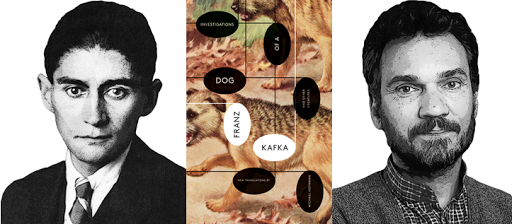
“Investigations of a Dog” - A Short Story by Franz Kafka - 1922 - translated by Michael Hoffman - 2016


German Literature Month, November, 2017 on The Reading Life


  1. “You’d Have Larvae Too” by Nora Wagener, 2016
  2. Vertigo by W. G. Sebald, 1990
  3. The Last Weynfeldt by Martin Suter, 2006
  4. “An Earthquake in Chile” by Heinrich Von Kleist, 1809
  5. Who is Martha? by Marjana Gaponenko, 2012
  6. “The Legal Haziness of Marriage” by Olga Grjasnowa, 2015
  7. “Aladdin, COB” by Isabelle Lehn, 2015
  8. “The Last Bell” by Johannes Urzidil, 1968
  9. The Rings of Saturn by W. G. Sebald, 1995
  10. Late Fame by Arthur Schnitzler, written 1892, published 2016
  11. Blood Brothers by Ernst Haffner, 1933
  12. Berlin Alexanderplatz by Alfred Döblin, 1929
  13. Confessions of a Murderer by Joseph Roth, 1936
  14.   “Compulsion” by Stefan Zweig,  1929
  15. “Borderlands”by Johannes Urzidil, 1956 (no post)
  16. “A School Boy’s Diary” by Robert Walser, 1910 (no post
  17. Austerlitz by W. G. Sebald, 2001, Second Reading 
  18. “The Duchess of Albanera” by Johannes Urzidil, 1965


  1. Gigli by Irmgard Keun, 1931
  2. Gay Berlin -Birth of a Modern Identity by Robert Beachy, 2014 *
  3. “Ernst in Civilian Clothes” by Mavis Gallant, 1963 *
  4. “Germans at Meat” by Katherine Mansfield, 1908 *
  5. Casanova’s Homecoming by Arthur Schnitzler, 1918
  6. “Investigations of a Dog” by Franz Kafka, 1922

Items with an * are my English language supplements to German Literature Month


This will be our last post for this year’s German Literature Month, other than the closing post.  I first read Kafka about fifty years ago.  I read his short story “The Hunger Artist”, I can partially recall the plot.  This was, I am pretty sure, the first piece of translated into English German fiction I had yet read.  I have since I began The Reading Life read or reread most of his major works.  I was delighted to be recently given a collection of  Kafka short stories, new translated by the multi-award winning Michael Hoffmsn containing lots of new to me works.  

“Investigations of a Dog”, the title story of the collection was a lot of fun.  I do think many people almost take Kafka’s work  too much as an obscure to all but a tiny elite master text.  People allow themselves to be intimidated.  Much of his work is funny and can be enjoyed by anyone with an open mind.  In this story, a long interior monologue by a middle aged smaller than average dog, we are treated to interesting observations on science, religion, government, relationships and much more as the Dog tries to figure out the meaning of life.  Of course food is at the  center  of his life. Everything is very convincingly done from the dog’s point of view.  There are deep levels of meaning in the  story, I think, a commentary on Society but it can be read just for the fun of accepting a dog’s thinking.

Euphemia B. Rodsengraz
The Reading Life 


Tuesday, November 28, 2017

Casanova’s Homecoming by Arthur Schnitzler-1918


German Literature Month, November, 2017 on The Reading Life

  1. “You’d Have Larvae Too” by Nora Wagener, 2016
  2. Vertigo by W. G. Sebald, 1990
  3. The Last Weynfeldt by Martin Suter, 2006
  4. “An Earthquake in Chile” by Heinrich Von Kleist, 1809
  5. Who is Martha? by Marjana Gaponenko, 2012
  6. “The Legal Haziness of Marriage” by Olga Grjasnowa, 2015
  7. “Aladdin, COB” by Isabelle Lehn, 2015
  8. “The Last Bell” by Johannes Urzidil, 1968
  9. The Rings of Saturn by W. G. Sebald, 1995
  10. Late Fame by Arthur Schnitzler, written 1892, published 2016
  11. Blood Brothers by Ernst Haffner, 1933
  12. Berlin Alexanderplatz by Alfred Döblin, 1929
  13. Confessions of a Murderer by Joseph Roth, 1936
  14.   “Compulsion” by Stefan Zweig,  1929
  15. “Borderlands”by Johannes Urzidil, 1956 (no post)
  16. “A School Boy’s Diary” by Robert Walser, 1910 (no post
  17. Austerlitz by W. G. Sebald, 2001, Second Reading 
  18. “The Duchess of Albanera” by Johannes Urzidil, 1965
  19. Gigli by Irmgard Keun, 1931
  20. Gay Berlin -Birth of a Modern Identity by Robert Beachy, 2014 *
  21. “Ernst in Civilian Clothes” by Mavis Gallant, 1963 *
  22. “Germans at Meat” by Katherine Mansfield, 1908 *
  23. Casanova’s Homecoming by Arthur Schnitzler, 1918

Items with an * are my English language supplements to German Literature Month

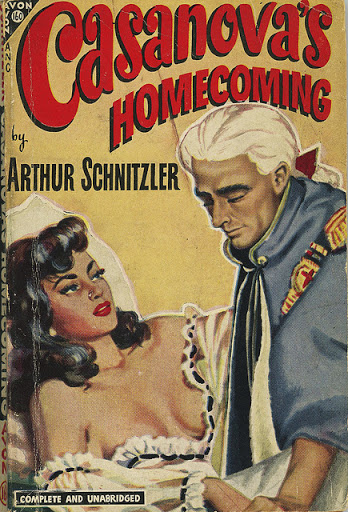
Casanova’s Homecoming is a sad work, in more ways than one.  When we meet Casanova the man once considered Europe’s greatest lover, seducer of duchesses and their dishwashers, with an encyclopaedic knowledge of the brothels of the continent, who considered it ok to seduce, near rape young girls (sounds like an American senator) and justify it by paying them afterwards is long past his physical prime at fifty three, much of his money gone.  He still has a voracious sexual appetite and uses every trick he knows to get women in bed.  Sometimes he pays as little as he can, sometimes he pays way more than required.  Sometimes he charms them, seems all the same to him.

His big goal in life is to go back to his old home Venice.  He needs official help as he was once in prison there.  By sheer luck he meets an old friend of his who owes him a great debt.  When Casanova has money he is generous. The man helps him, Casanova years ago seduced and paid both the man’s now wife and his mother.   The man has contacts that can help Casanova be allowed back in Venice and a cute thirteen year old daughter....

This book was probably shocking in 1918.  It can be read in under two hours and I feel it is worth that.  You can download an E book for free.  Schnitzler’s Late Fame is a better work and Casanova in Bolzano by Sandor Marai (1940) is a much better literary treatment of Casanova.


ARTHUR SCHNITZLER (1862-1931) was so central a figure in Viennese literary life in the first decades of the 20th century that the great cultural historian Peter Gay titled his book on the development of bourgeois culture between the Battle of Waterloo and World War I, Schnitzler’s Century.
A Jewish doctor born to a Jewish doctor in the largely Jewish Leopoldstadt quarter of Vienna (a plaque marking his birthplace, a short walk from the Prater, can be seen if you crane your neck on Praterstrasse), his true love was writing. Schnitzler was hugely successful as a playwright by his thirties; his most famous work, Reigen (La Ronde), was first performed in 1897.
His writings, biting portraits of Hapsburg society that were frank in their sexuality, made him both a star and a scandal. - from Jewishcurrents.org

We hope to post on about ten more works by Arthur Schnitzler by the end of 2018.   

Avant Bousweau
The Reading Life


Sunday, November 26, 2017

Gilgi by Irmgard Keun - 1931 - Translated from German by Geoff Wilkes -2016


Works I Have So Far Read for German Literature Month, November, 2017

  1. “You’d Have Larvae Too” by Nora Wagener, 2016
  2. Vertigo by W. G. Sebald, 1990
  3. The Last Weynfeldt by Martin Suter, 2006
  4. “An Earthquake in Chile” by Heinrich Von Kleist, 1809
  5. Who is Martha? by Marjana Gaponenko, 2012
  6. “The Legal Haziness of Marriage” by Olga Grjasnowa, 2015
  7. “Aladdin, COB” by Isabelle Lehn, 2015
  8. “The Last Bell” by Johannes Urzidil, 1968
  9. The Rings of Saturn by W. G. Sebald, 1995
  10. Late Fame by Arthur Schnitzler, written 1892, published 2016
  11. Blood Brothers by Ernst Haffner, 1933
  12. Berlin Alexanderplatz by Alfred Döblin, 1929
  13. Confessions of a Murderer by Joseph Roth, 1936
  14.   “Compulsion” by Stefan Zweig,  1929
  15. “Borderlands”by Johannes Urzidil, 1956 (no post)
  16. “A School Boy’s Diary” by Robert Walser, 1910 (no post
  17. Austerlitz by W. G. Sebald, 2001, Second Reading 
  18. “The Duchess of Albanera” by Johannes Urzidil, 1965
  19. Gigli by Irmgard Keun, 1931
  20. Gay Berlin -Birth of a Modern Identity by Robert Beachy, 2014

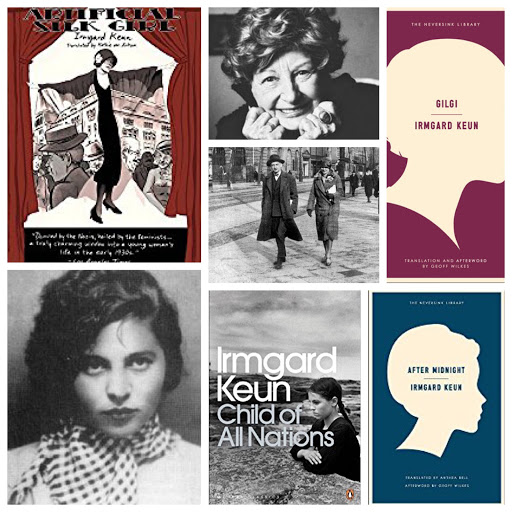
Gilgi is the third novel by Irmgard Keun I have read.  During previous German Literature Months I read her Artificial Silk Girl and then After Midnight.  A cynic might sum up her work as Sex in the City on Alexanderplatz in late Weimar, early Nazi Germany.  All of her central characters in the three novels I have read are young single women trying to survive in Berlin while maintaining some self respect in the face of the pressure of male bosses to have sex with them.  (Sound like the headlines on CNN this morning.)

Gigli works as a secretary in a hosiery factory.  Her boss, thirty years older and of course with daughters older than Gigli and a wife, is pressuring Gilgi to have dinner with him.  She knows a flat out refusal could lead to unemployment and she badly needs her salary.  She agrees to go but has her very alluring friend Olga, not above semi-professional servicing an affluent older gentleman, accidentally stop at their table at dinner and the boss soon forgets all about Gigli.

Gilgi is ambitious, she is learning English and French in classes and trying to safe money to leave Germany.   However, she falls in love with a big talking man  very short on marks.  She winds up pregnant.  Gilgi’s visit to a doctor to get an abortion, criminal offence at the time but common is brilliantly done.

The strength and the pleasure of this novel is watch Gilgi try to survive, the weakness is in the romance.  

I enjoyed this novel with the caveat that I am very into the literature and culture of Weimar Germany.  It is Keun’s portrayal of young women in this period that draws me to her work.

To those new to her work I would suggest you start with After Midnight.

I still have one of her novels to read, Child of All Nations, and I hope to read that next year.

Mel u


IRMGARD KEUN (1905–1982) was born in Berlin and raised in Cologne, where she studied to be an actress. However, reputedly inspired by a meeting with Alfred Döblin, the author of Berlin Alexanderplatz, she turned to writing, and became an instant sensation with her first novel, Gilgi, One of Us, published in 1931 when she   was just twenty-six. A year later, her second novel, The Artificial Silk Girl, was an even bigger bestseller. The rising Nazi party censured Keun, however, and her books were included in the infamous “burning of the books”
in 1933. After being arrested and interrogated by the Gestapo, Keun left her husband and escaped Germany. While wandering in exile, Keun conducted an eighteen-month affair with the writer Joseph Roth and wrote the novels After Midnight and Child of All Nations. In 1940, Keun staged her suicide and, under a false identity, reentered Germany, where she lived in hiding until the end of the war. Her work was rediscovered in the late seventies, reviving her reputation in Germany..  


Wednesday, November 22, 2017

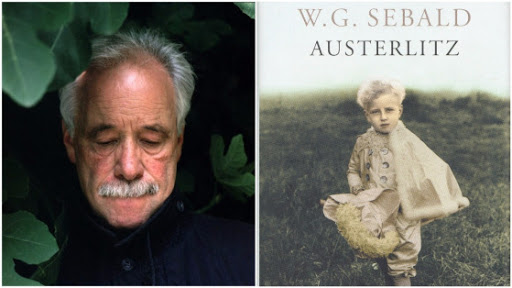
Austerlitz by W. G. Sebald - 2001 - translated from German by Anthea Bell


“Curiously enough, one cannot read a book; one can only reread it. A good reader, a major reader, and active and creative reader is a rereader.” Vladimir Nabokov

Prussia, the ruler of Germany, was always an enemy of the intellect, of books, of the Book of Books—that is, the Bible—of Jews and Christians, of humanism and Europe. Hitler’s Third Reich is only so alarming to the rest of Europe because it sets itself to put into action what was always the Prussian project anyway: to burn the books, to murder the Jews, and to revise Christianity."  Joseph Roth, 1933"


Works I Have So Far Read for German Literature Month, November, 2017

  1. “You’d Have Larvae Too” by Nora Wagener, 2016
  2. Vertigo by W. G. Sebald, 1990
  3. The Last Weynfeldt by Martin Suter, 2006
  4. “An Earthquake in Chile” by Heinrich Von Kleist, 1809
  5. Who is Martha? by Marjana Gaponenko, 2012
  6. “The Legal Haziness of Marriage” by Olga Grjasnowa, 2015
  7. “Aladdin, COB” by Isabelle Lehn, 2015
  8. “The Last Bell” by Johannes Urzidil, 1968
  9. The Rings of Saturn by W. G. Sebald, 1995
  10. Late Fame by Arthur Schnitzler, written 1892, published 2016
  11. Blood Brothers by Ernst Haffner, 1933
  12. Berlin Alexanderplatz by Alfred Döblin, 1929
  13. Confessions of a Murderer by Joseph Roth, 1936
  14.   “Compulsion” by Stefan Zweig,  1929
  15. “Borderlands”by Johannes Urzidil, 1956 (no post)
  16. “A School Boy’s Diary” by Robert Walser, 1910 (no post
  17. Austerlitz by W. G. Sebald, 2001, Second Reading 


If ever a book way over repaid my rereading it was Austerlitz by W. G. I first read this, my first encounter with Sebald, during German Literature Month in November 2013.  I think one needs to devote serious time to learning How to read his unconventional novels.  Since November 2013 I read and posted upon his three earlier novels.  YouTube has several videos of academic lectures on Sebald.   Some were very good.  Some focus on his place in Holocaust Literature, some deal with his photographs, his treatment of memory, and his unique narrative methods.

German Literature Month is winding down and I have a number of more works I hope to read before month end.  I Will just touch upon some few matters that struck me.  

I really liked the numerous references to Balzac.  I am currently working my way through his Comedie Humaine and I was thrilled to see the reference to his work.  This is very much a book about two men deeply into the reading life.

I enjoyed the descriptions of Prague and Paris.  I greatly relished the conversations between Austerlitz and the narrator.   

Austerlitz is a great work of art.  I hope to reread all of Sebald next year.  

Mel u


Monday, November 20, 2017

Confessions of a Murderer by Joseph Roth - 1936 -


“Prussia, the ruler of Germany, was always an enemy of the intellect, of books, of the Book of Books—that is, the Bible—of Jews and Christians, of humanism and Europe. Hitler’s Third Reich is only so alarming to the rest of Europe because it sets itself to put into action what was always the Prussian project anyway: to burn the books, to murder the Jews, and to revise Christianity."  Joseph Roth, 1933"


Works I Have So Far Read for German Literature Month, November, 2017

  1. “You’d Have Larvae Too” by Nora Wagener, 2016
  2. Vertigo by W. G. Sebald, 1990
  3. The Last Weynfeldt by Martin Suter, 2006
  4. “An Earthquake in Chile” by Heinrich Von Kleist, 1809
  5. Who is Martha? by Marjana Gaponenko, 2012
  6. “The Legal Haziness of Marriage” by Olga Grjasnowa, 2015
  7. “Aladdin, COB” by Isabelle Lehn, 2015
  8. “The Last Bell” by Johannes Urzidil, 1968
  9. The Rings of Saturn by W. G. Sebald, 1995
  10. Late Fame by Arthur Schnitzler, written 1892, published 2016
  11. Blood Brothers by Ernst Haffner, 1933
  12. Berlin Alexanderplatz by Alfred Döblin, 1929
  13. Confessions of a Murderer by Joseph Roth, 1936

During German Literature Month November 2013 I read my first work by Joseph Roth, his acknowledged by all masterwork,  Radetzky’s  March.  He is now one of my “read all I can authors”. I have posted upon eight of his novels, three novellas, three collections of essays, and two short stories.  Roth was at one time the highest paid journalist in Europe.  His essays are gems, a delight to read.  (1894 to 1939, Roth died before the Holocaust had truly begun but he saw it coming.  The Nazis burned his books..  There is bio data in my prior Posts.)

Confessions of a Murderer is set in a Paris cafe, one for serious drinkers, a venue Roth knew well.  An older Russian exile (there is a great essay on Russians in Paris in Hotel Years) is known among other Russian habitué of the cafe as “The Murder”.   A journalist, having a late night drink, asks the man why he is referred to in such a fashion.  He begins a very long tale, starting in Czarist Russia with a claim that his real father was not his forester father but a count who had an affair with his mother.  This belief, it might be true, sets off a course of events that dominated his life.  He becomes a member of The Czarist Secret Police, assigned to protect the Czar from assisination.  I found Roth’s account of the workings and corruption of the Secret Police fascinating.  

The novel is a bit of a potboiler, O.K. a lot of one, at this point in his life Roth needed income, it goes as far as it could in depicting sex and really is quite exciting.  Roth is letting us see the consequences of the decline of the old empires.  

It has been compared to Conrad’s Secret Agent and to some of the work of Dostoevsky.

I would say first read Radetsky’s March, then the sequel to this, The Emperor’s Tomb and then my sentimental favorite Hotel Savoy.  My guess is by then you will be hooked on Roth.  Roth is as smart as they come.  

Mel ü


Featured Post

Imperial Reckoning: The Untold Story of Britain’s Gulag in Kenya by Caroline Elkins - 2005 - 701 Pages

  Imperial Reckoning:     The Untold Story of Britain’s Gulag in Kenya by Caroline Elkins - 2005 - 701 Pages 2006 Pulitzer Prize Winner From...