going back over 200 years. Today's story arises from this history.
Thursday, April 18, 2019
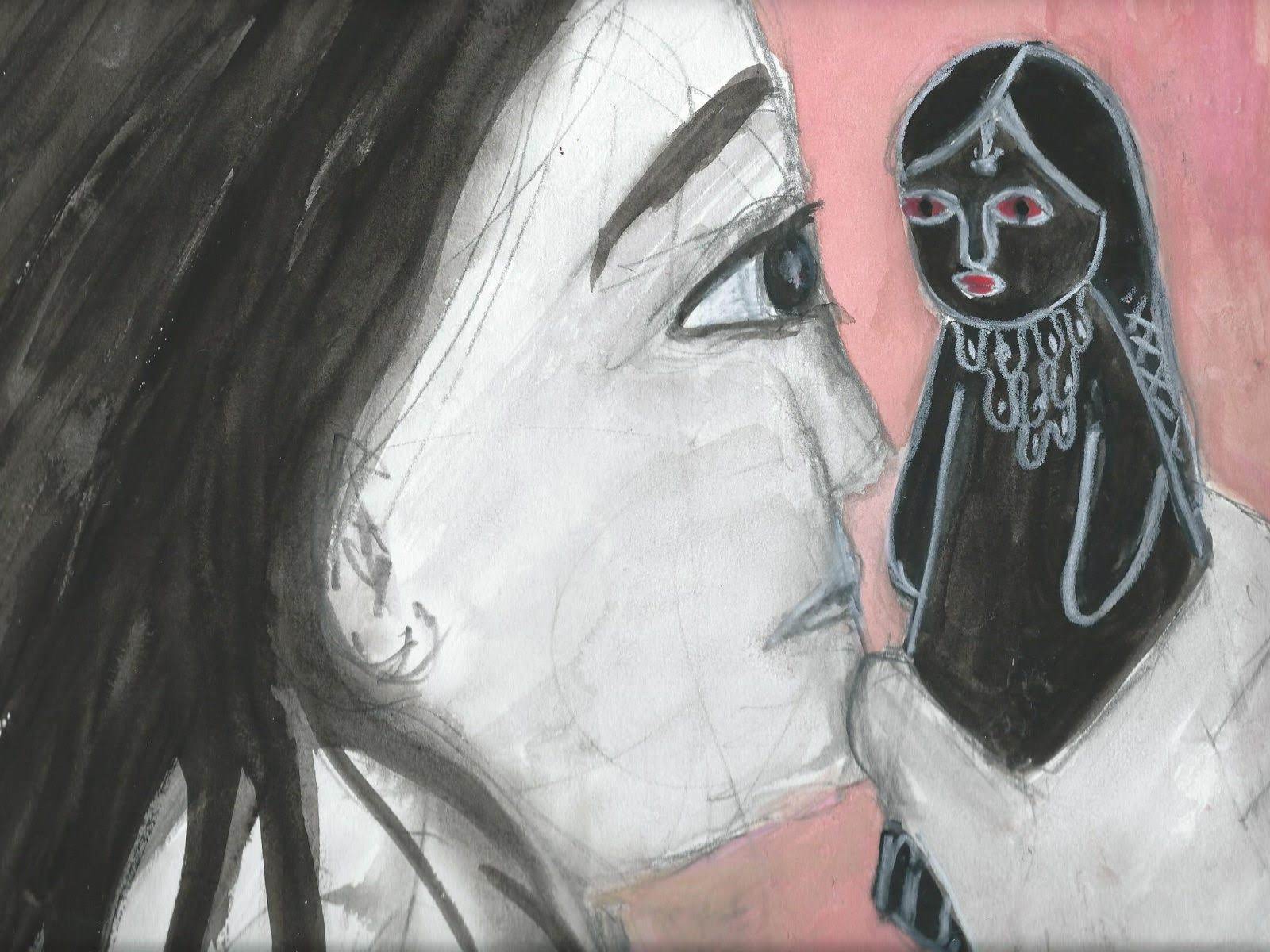
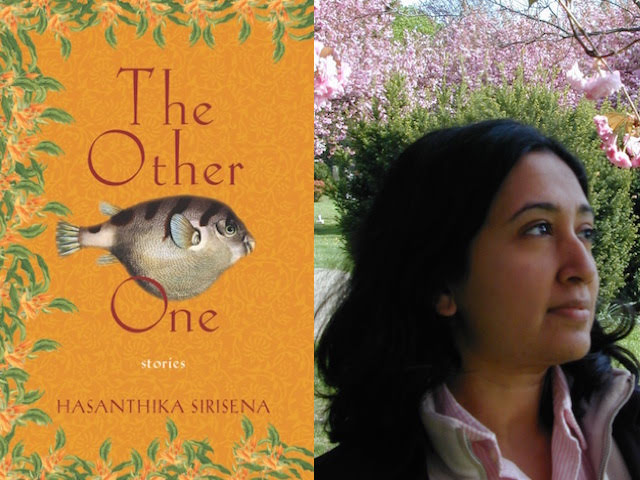
The Chief Inspector’s Daughter - A Short Story by Hasantika Sirisena - 2016
going back over 200 years. Today's story arises from this history.
Monday, March 25, 2019
Outside - A Short Story by Amanthi Harris - published in Lighthouse - A Journal of New Writing - Issue 18, Winter 2018 to 2019
Thursday, January 31, 2019
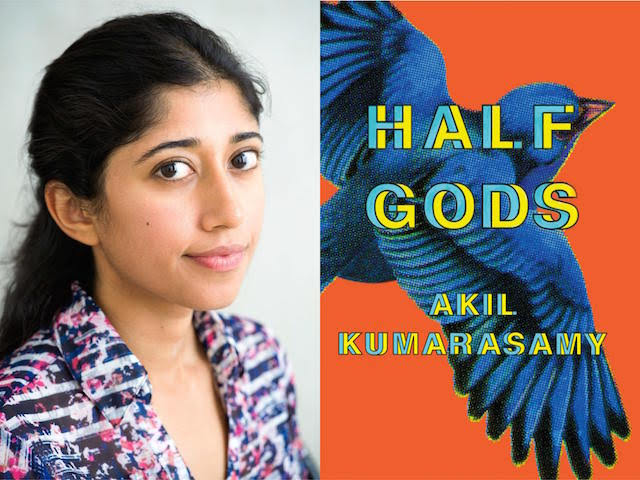
“The Office of Missing Persons” - A Short Story by Akil Kumarasamy- from her collection Half Gods
Website of Akil Kumarasamy
Post in The New Yorker on Half Gods
Gateway to works by Amanthi Harris focusing on Sri Lanka
Friday, August 8, 2014
"Road Kill" by Romesh Gunesekera (December 2, 2013, from The New Yorker)
Romesh Gunesekera writers primarily about life in contemporary Sri Lanka in the years after the long civil war. He has written a number of well regarded short stories told from the point of view of a driver of a van for tourists and wealthier residents on long cross country journeys. You can get a good feel for the atmosphere of the country and the excellant prose style of Gunesekera in the opening lines of the story:
Miss Saraswati spun around. A big brown rodent was scurrying across the floor toward the tallboy in the far corner. She hissed loudly and sharply, and it froze for a moment. As it began to edge forward again, she grasped my beer bottle by the neck and flung it. The bottle hit the rat with such force that the creature thudded against the wall. The bottle rolled along, unbroken. Its base had smashed the animal’s small skull.
“Burn it,” she instructed the waiter. “Use a plastic bag. Wash your hands afterward.” She turned to me. “Sorry about that. I’ll bring you another bottle.”
I stared at Miss Saraswati. “You learn to do that at Jaffna hotel school?”
I really enjoyed this story, it is perceptive and the characters are all very well drawn.
There are links to this and other stories by the author on his webpage.
http://romeshg2.wordpress.com/
I hope for sure to read more of his work.
Mel u
Saturday, September 1, 2012
The Cat's Table by Michael Ondaatje
Michael Ondaatje was born in Sri Lanka, 1943, and is a Canadian citizen. In 1992 he won the Booker Prize for The English Patient, which was made into an Academy Award winning film. The first time I heard of this movie it was in an episode of the Jerry Seinfeld show where Elaine screams out in the theater that she hates the movie. I have not seen the movie but after reading The Cat's Table, I feel her pain!
The novel begins in the 1950s in Colombo Sri Lanka where a young boy sets out on an ocean voyage on a cruise liner to join his relatives in London. He is assigned to eat at what is know as the "Cat's Table". It is the the lowest prestige table in the dining room, the furthest from the Captain's table. Also assigned to the table are two other young boys traveling alone, our narrator has a relative in first class who sort of looks out for him, and a collection of passengers of the lowest status. Part of the book, the most interesting part by far, was about the adventures of the young man and the two other boys while on the cruise. The novel also flashes forward in the life of the narrator, who has become a successful writer. One of the other boys becomes a well known artist.
I found the off ship portions of the book disappointing, the adult lives of the boys seemed almost like cliches and did not interest me very much. There are parts of the book that are brilliant but over all I found it disappointing. The book started great and if it would have stayed on the ship or flash backs to Sri Lanka I would have liked it a lot more. I also found the adults on the ship to be stock characters out of a Grand Hotel type movie.
If are you crazy for the author and like Mr Peterman a lot of people are then give this book a try. Otherwise unless you can get a free copy I do not endorse buying it.
Please share your experience with Ondaatje with us. Do you side with Elaine or Mr. Peterman?
Mel u
Monday, July 16, 2012
"The Street" by Pradeep Jeganathan
This is my second post for a new permanent event on The Reading Life. This event will be devoted to short stories of the Indian subcontinent. There is no literary culture with roots older than that of India. I will always admire Edmund Burke for telling the English that they had no right to govern a region whose culture is much older than theirs. Many of the geographic boundaries that created these countries were created by the British or are consequences of their misrule. Most of the stories I post on in this event will be from India but I have plans now to post on stories by authors from every country in the region with the exception as of now of Tibet for which I can so far locate no short stories translated into English. Some of the writers featured will be internationally famous, such as Salmon Rushdie, Sadat Manto, and R. K. Narayan but most of the writers I post on will be authors on whom there are no prior book blog posts. There are numerous books and academic conferences devoted to exploring the colonial experiences of India and Ireland and I will look these stories partially as post colonial literature. My main purpose here is just to open myself up to a lot more new to me writers and in this case most will be new to anyone outside of serious literary circles in the region. Where I can I will provide links to the stories I post on but this will not always be possible.
"The Street" is, like the first story I posted on for the event, about a very impoverished woman at the mercy of her husband and from the despised bottom of society. In most big Asian cities, I live in one, there are men and women who stand at the edge of the road, or sometimes in the middle, who try to make a living for themselves by selling things to passers by in their cars. Often they will have their children with them, sometimes sleeping beside the road. It is a terribly dangerous and very unhealthy life, one that offers no future for their children. If a woman is lucky she has a husband to help her share the burden but most times in the long run it is the woman who is the main support of the family.
"The Street" is about the wife of a man who used to sell things on the road in Colombo, the capital of Sri Lanka. His customers are in air conditioned cars (just to have a car means you are pretty rich), normally with drivers and with heavily shaded windows to prevent the lower classes from looking in their cars. One day her husband was hit by a car and he decided after that to not work any more. She took up the work. This story lets us see what her life is like. You offer fruit for sale to a passenger in a car worth more than you could make in a 1000 life times and they have their driver offer you half the fair price just to beat you down. She has some kind of friends. She used to work offshore in the middle east and sent all her pay back home to support her family but she cannot do it now as she has no one to take care of her children. One of her friends tells her about a child care place where she can put her kids for a price she can afford. She is assured that they will be taken care of and this would allow her to work as a live in maid, a much better work for her. Her friend from the streets arranges everything for her. At the appointed time a big car picks up the children and they are dropped off at the home. Then the woman is herself dropped off at a brothel and told she must work there to pay for the care of her children, who are now the captive of the brothel owners. I wondered how much her friend was paid for doing this to her.
"The Street" takes us deeply into its milieu. When the woman told her friend how her husband abused her she was told that he probably could not even stand up to a Tamil. Looking a bit deeper we see how sectarian divides are used to control societies and keep people from seeing who their real enemies are.
"The Street " is a very good, very much worth reading story about purely voiceless people.
I read this story in a collection of short stories from the region, The Lotus Singers: Short Stories from Contemporary South Asia (2011) edited and introduced by Trevor Carolan with various translators.
Featured Post
Imperial Reckoning: The Untold Story of Britain’s Gulag in Kenya by Caroline Elkins - 2005 - 701 Pages
Imperial Reckoning: The Untold Story of Britain’s Gulag in Kenya by Caroline Elkins - 2005 - 701 Pages 2006 Pulitzer Prize Winner From...
-
Book Blogger Appreciation Week Sept 13 to Sept 17-2010-Giveaway- Katherine Wish by Linda Lappin Leave a comment to win! Open to all f...
-
Nothing Can Destroy the Faith and Strength of the people of the Philippines -Mel u, November 10, 2013- comments welcome. "How My B...
-
The Reading Life Guide to Getting Started in the Indian Short Story One of my reading hopes for this year is to read a large number of the s...


.jpg)