Showing posts with label nonfiction. Show all posts

Sunday, June 23, 2019

The Lady in Gold: The Extraordinary Tale of Gustav Klimt's Masterpiece, Portrait of Adele Bloch-Bauer by Anne-Marie O’Connor - 2012 - 370 pages


Website of Anne-Maria O’Connor


The Lady in Gold: The Extraordinary Tale of Gustav Klimt's Masterpiece, Portrait of Adele Bloch-Bauer by Anne-Marie O’Connor - 2012 - 370 pages 

Gustav Klimt (1862 to 1918- Austro Hungarian Empire)

Adele Bloch-Bauer (1881 to 1925 - Vienna)

1907 - Lady in Gold completed and first exhibited 

March 12, 1938 - Austria comes under German Control


In 1941 Lady in Gold was Stolen by the Nazis and classified as degenerate  Jewish Art

September 2, 1945 - Germany surrenders

After the war, The painting remained in the  custody of an Austrian Museum.

In 2004 Lady in Gold was returned by court order to a descendent of The Blochs living in Los Angeles 

In 2006 it was sold for $135 Million at Auction in London by Christie’s.  This was at The time a World Record price for a painting.

The Lady in Gold: The Extraordinary Tale of Gustav Klimt's Masterpiece, Portrait of Adele Bloch  should be read by anyone interested in Belle-epoque Vienna (normally considered to be from 1900 and ending in 1914), in the art of the period, especially that of Gustav Klimt, upper class Jewish society, and the politics of the closing days of the Austria-Hungarian Empire.  Vienna's  climate of acceptance resulted in a great flourishing of Jewish society in Vienna.  O’Connor elegantly describes this society while flourishing and under fatal attack.

This was a period where the painting of portraits was a lucrative profession.  Every affluent Viennese wanted flattering portraits of his family, men of their mistresses.  Klimt painted some of the women from the richest Jewish families in Vienna.  Much of the opening narrative of the book turns on Klimt’s reputation as a glamorous womanizer, never married but with numerous high society affairs attributed to him.  A portrait could take years of work, The Lady in Gold took three years, and long hours of posing privately with the artist. O'Oconor loved this era and made it come to life for me.

Of course we know the terrible changes coming to the Jewish community in Vienna. O'Connor skillfully contrasts the artistic career of another young Austrian, an aspiring artist, Adolph Hitler.  There is speculation that his rejection by a Viennese art school was part of the cause of his hatred of Jews.  As one must, O'Connor goes into life in Nazi Vienna, mentioning figures such as Sigmund Freud, Billy Wilder, Heddy Lamar, and Stefan Zweig. The Nazis considered work by Gustav Klimt and other Jewish artists of the period as "degenerate". So called German art experts began stealing these works.  Klimt's paintings were considered very decadent, antithetical to "Aryan values".  O'Connor explains the fate of Klimt's work.  

The narrative opens in Los Angeles, California in 2002 or so.  An elderly descendent of the Bloch-Bauer family has engaged an attorney to try to recover the Klimt paintings stolen from her family.  In 1998 Austrian laws were passed requiring the return of Art stolen by the Germans to their rightful owner. In 2004, with the assistance of the US Supreme Court, the Klimt portraits were turned over to family members.

Being there at the sale of the Klimt works at Christie's was a lot of vicarious fun.

The Lady in Gold: The Extraordinary Tale of Gustav Klimt's Masterpiece, Portrait of Adele Bloch-Bauer by Anne-Marie O’Connor is a fascinating look at how the Holocaust impacted the art world.

This fine book motivated me to look at images of the work of Gustav Klimt, works of stunning beauty. For that alone I am grateful to Anne-Marie O'Connor

There is just so much to learn from this book.  I admit I knew nothing about Mark Twain's visit to Vienna, the involvement, including a possible romance of women from the family of Joseph Pulitzer with Klimt, he painted numerous women from the family, and much more.  

I loved this copiously illustrated documentary on the life and work of Klimt linked below.  


From the author's website. 


The website has images of numerous paintings, pictures of various portrait subjects.  


Anne-Marie O’Connor is a veteran foreign correspondent and culture writer who has covered everything from post-Soviet Cuba to American artists and intellectuals. O’Connor attended Vassar and the San Francisco Art Institute and graduated from the University of California at Berkeley, where she and fellow students co-created an award-winning documentary on the repression of mural artists after the 1973 military coup in Chile. She covered the wars in El Salvador, Nicaragua, and Guatemala as a Reuters bureau chief in Central America; the Shining Path guerrillas in Peru, coups in Haiti and U.S. interventions in Haiti and Panama; and covered Cuba and Haiti for a newspaper chain. At the Los Angeles Times she chronicled the violence of Mexico’s Arellano-Felix drug cartel, U.S. political convention; and profiled such figures as Nelson Mandela, George Soros, Joan Didion, John McCain, and Maya Lin. Her story on Maria Altmann’s effort to recover the family Klimt collection appeared in the Los Angeles Times Magazine in 2001. She has written for Esquire, The Nation, and The Christian Science Monitor. She currently contributes to The Washington Post from Jerusalem. 


 give a complete endorsement to The Lady in Gold: The Extraordinary Tale of Gustav Klimt's Masterpiece, Portrait of Adele Bloch-Bauer by Anne-Marie O’Connor.  

Mel u


Saturday, March 30, 2019

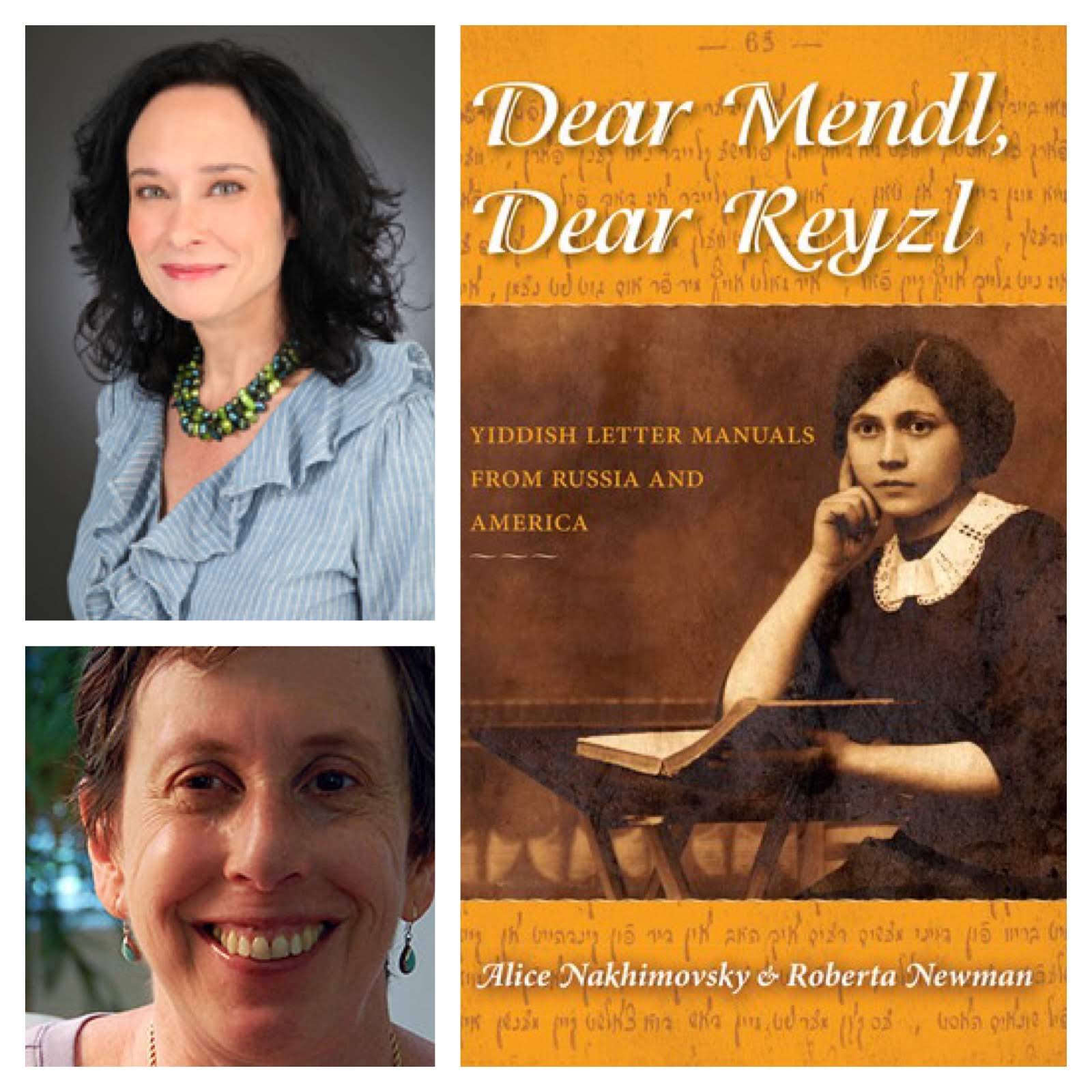
Dear Mendl, Dear Reyzl - Yiddish Letter Manuals from Russia and America by Alice Nakhimovsky and Roberta Newman, 2014, 248 pages, Indiana University Press


Dear Mendl, Dear Reyzl - Yiddish Letter Manuals from Russia and America by Alice Nakhimovsky and Roberta Newman, 2014, 248 pages, Indiana University Press 

Late 19th century and early 20th century  Eastern European Jewish society was  in flux.  People were leaving their ancestral homes in Russia and Poland for America, mostly New York City or Montreal and Toronto.  Rarely did they speak English.  They often lacked formal literacy in any language.  All sorts of matters had to be handled via correspondence.  The authors show us the great importance letter manuals, called brivnshtelers, became very popular.  

There were letters for all sorts of needs.  Marriages were still often at least semi-arranged.  There are numerous sample letters for this as well as letters declaring love.  All sorts of issues between parents and children show up in the sample letters as well as business letters.  The authors explain very well the way the manuals were employed.  There are separate treatments of letters for people in Russia and America.  There are lots of letters in Yiddish literature and the authors do talk about the classic writers.  One of my favorite work of Yiddish literature is the deeply hilarious profoundly revealing The Letters of Menakhem-Mendl and Sheyne-Sheyndl by Sholem Aleichem.  


There are lots of examples of letters in Dear Mendl, Dear Reyzl - Yiddish Letter Manuals from Russia and America.  From them you can increase your understanding of family dynamics, emotional attitudes and much more among Eastern European Jews.

This book will interest anyone into Yiddish literature.  Heritage readers wil be equally fascinated.  This is what most refer to as an academic work.  I am so glad I read this book.

In conjunction with this book I recommend  two works on the immigration experiences of Eastern European Jews.  Dealing with Canada, The Montreal Shtetl: Making Home After the Holocaust by Zelda Abramson and John Lynch.  For New York City, there is World of Our Fathers: The Journey of the East European Jews to America and the Life They Found and Made by Irving Howe.


Alice Nakhimovsky is a professor of Russian and Jewish Studies at Colgate University, where she directs the Program in Russian and Eurasian Studies. She has written extensively on Russian-Jewish literature and everyday life, and served on the editorial board of The YIVO Encyclopedia of Jews in Eastern Europe.

Roberta Newman is an independent scholar living in New York City. She is the Director of Digital Initiatives at the YIVO Institute for Jewish Research and was the Illustrations Editor and Director of Archival Research for The YIVO Encyclopedia of Jews in Eastern Europe.

Mel u


Thursday, February 8, 2018

World of Our Fathers:The Journey of Eastern European Jews to America and the World They Made by Irving Howe - 1976


World of Our Fathers:The Journey of Eastern European Jews to America and the World They Made by Irving Howe is a very valuable, highly interesting book. It is a social, cultural, and economic history of the migration of two million     Eastern European Jews to America.  All arrived at Ellis Island in New York.  More than half the immigrants settled in New York City.  In 1880 there was an estimated 60,000 Jews in the city, by 1914, there was about 1.1 Million. World War One and the Russian Revolution ended this wave of immigration.

The massive immigration began in 1880 when the liberal Czar Alexander II was assassinated. Shortly after this the government allowed
Anti-Jewish pograms all over Russia.  This sparked a desire to move to what was seen as a near promised land, America.  Most arrived with little more than a few rubles and the clothes on their backs.  All spoke Yiddish and most also spoke Russian.

Howe begins his narrative with a description of life in an Eastern European Shetl.   We see the terrible oppression, the lack of opportunity, the violence directed against Jews.  Unlike some immigrant groups, the Jews came largely as families. We see how hard it was to pay for their passage.  We are given a very vivid account of  arrival in New York City, from the much feared medical screenings at Ellis Islands to the dishonest agents waiting to fleece them. We see families settling into crowded tenement apartments in poverty stricken areas.  The men at once went to work,often in the garment industry working at least 12 hours a day for very low wages.   Women and children often worked in factories.  Howe goes into a lot of detail on the labor conditions.  I was moved when he told how most factory workers brought books to read on their breaks.

Quickly it is realised one must know some English to get anywhere in America.  Education for the young is a top priority.  

There is really a lot covered in this book, everything from diet changes, child rearing, like everywhere the young learn English much faster.  Howe tells us about the thriving Yiddish Press and writes very illuminatingly on Yiddish Literature in America.  He covers novelists, poets and the very important Yiddish theatre.  We learn how Yiddish heritage performers highly impacted American movies and the start of television.  We see the children and grandchildren of garment workers become lawyers, doctors, famous intellectual theorists and move way out of the tenements. They were normally very liberal in their politics and Howe shows us the impact of Yiddish activism on Labor Laws.

This is a very rich information loaded book.  Anyone interested not just in Jewish history in America but in American history will love this book.

Howe tells us Yiddish began to become a Language with fewer and fewer speakers. We learn how the immigrants reacted after WW II when they learned of the Holocaust and the devotion to Israel.

If a merit test had been put on the two million Yiddish speaking immigrants nearly none would have been admitted.  American would be a much poorer place if this had happened. 

“Howe was an emblematic New York Jewish intellectual, a man of modest origins who rose to pre-eminence in the serious study of ideas, literature and politics. He was known for many things, including a large, steady output of essays on culture and literature, the advocacy of democratic socialism and chronicling the Jewish experience in America. National Book Award Winner
Perhaps his most famous and widely read book was "World of Our Fathers," a history of Eastern European immigration to the United States that won the National Book Award in 1976.
Dissent, the magazine he founded and edited for nearly four decades, was for most of that time a leading journal of a certain kind of American politics. It was deeply critical of the abuses of capitalism and what its writers sometimes saw as the paranoia of this country, but it was even more repelled by leftist totalitarianism, in the Soviet Union, Cuba or elsewhere.” from the New York Times Obituary 

1920 to 1993

Mel u


Monday, December 25, 2017

In A Day’s Work: The Fight to End Sexual Violence Against America’s Most Vulnerable Workers by Bernice Yeung (forthcoming 2018)


American News Broadcasts and social media have been very much lately dealing with cases of sexual harassment upon women over whom they have power by high profile men in the entertainment business and politics.  Politicians have either resigned or lost elections.  Media personalities are fired and even the so called president of the USA has admitted harassment of women and has been accused of sexual crimes by numerous women. 

Bernice Yeung in her forthcoming superb work of investigative journalism, In A Day’s Work: The Fight to End Sexual Violence Against America’s Most Vulnerable Workers shows us the terrible sexual violence that has long gone ignored against women who work as night janitors, agricultural labourers (mostly seasonal workers) and household staff.  Yeung tells us that crime statistics indicate that women in these occupations are the most often sexually abused women.  

The women in these jobs often are poorly educated, have weak English skills, come from cultures where no one reports assaults to the police and are totally under the authority of men.  In the case of female night janitors cleaning offices and big stores, the women often work alone.  They have no witnesses to back up their assertions and desperately need to keep their jobs.  Yeung takes us along when a worker for an NGO makes contact with night janitors and we hear stories of horrible abuse, including rape.  

Female seasonal agricultural workers are especially vulnerable.  Mostly speaking little English, often without permanent residency status their male bosses often feel they are fair game for anything.  If the women submit they get to keep working, maybe get preferential treatment if lucky, if they resist they are usually fired.  As they often live in company housing, this makes them homeless.  In one heartbreaking case, a law suit was mounted against an apple   Company where a long time supervisor had abused women for years but the women lost because the companies attorneys were able to destroy their credibility.  The jury were all financially comfortable whites.  

Yeung lets us get to know the women involved, bringing them to life.  They all want little more than to support their families.  

Yeung does show us how some women have fought back, have won law suits.  

The next time a Hollywood producer is charged with abuse or a politician apologises contritely thing of the women in the shadows with little or no protection.  Ask your self why do some women matter and others do not.

Given the current attempt to demonise immigrants, I think this will produce an environment where women in these job fields, legal or not residents, may fear speaking out even more.  Immigrant Women are seen by many, including other women, as probably prostitutes on the side and are judged only by their looks.  


Bernice Yeung is a reporter for Reveal, covering race and gender. Her work examines issues related to violence against women, labor and employment, immigration and environmental health. In 2014, Yeung was part of the national Emmy-nominated Rape in the Fields reporting team, which investigated the sexual assault of immigrant farmworkers. The project won an Alfred I. duPont-Columbia University Award and a Robert F. Kennedy Journalism Award and was a finalist for the Goldsmith Prize for Investigative Reporting. A former staff writer for SF Weekly and editor at California Lawyer magazine, Yeung has had her work appear in a variety of media outlets, including The New York Times, The Seattle Times, the Guardian US and KQED-FM. She has a bachelor's degree in journalism from Northwestern University and a master's degree from Fordham University, where she studied sociology with a focus on crime and justice. Yeung is based in Reveal's Emeryville, California, office.


Mel u


Friday, November 24, 2017

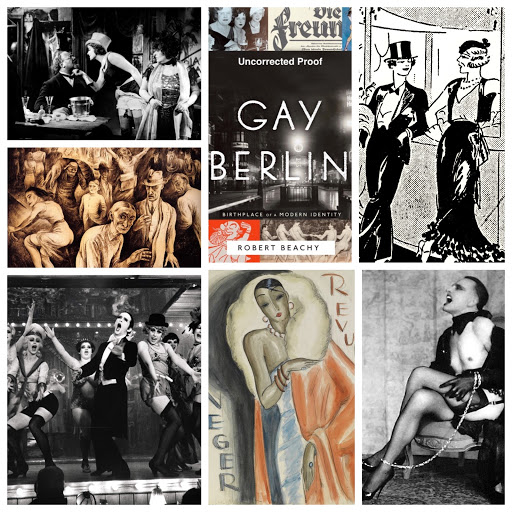
Gay Berlin - Birthplace of a New Identity by Robert Beachy (2014, nonfiction)


 Gay Berlin by Robert Beachy is a work anyone into the Weimar Period in Germany (1918 to 1933) must read and take seriously.  It is a very detailed well documented account of the open homosexuality of the period.  With state censorship relaxed there were open sex shows of all sorts in the nightclubs, sexual identities became blurred.  Berlin was the place where gay male sex tourists went for rent boys.  As Christopher Isherwood put it “Berlin is for boys”.  There were vast homosexual subcultures.  The streets were full of prostitutes of all sorts.  The activity ranged from scandals in the court of the Emperor to the back alleys of Alexanderplatz.  The classic novel of this period is Berlin Alexanderplatz by Alfred Döblin.  Some say as many as a third of Berlin women worked at least part time in the sex trade.  The police commissioner monitored these activities and more or less did not interfere.  It as still socially unacceptable for married men to have same sex relations so for the wealthy blackmail was a danger.

Robert Beachy details the start of scientific studies attempting to explain homosexuality.  The biggest concern was for men but lesbian relations also were openly practiced.  His thesis is that it was in Weimar Germany that the notion of an exclusively homosexual man was first articulated.  He suggests it was here where men and women first declared themselves gay.  

The Nazis used what was to them the extreme decadence of the Weimar period  as one of their “selling points”.  They suggested Jews had intentionally destroyed the economy of Berlin by hyperinflation to drive young men and women  to commit cheap sex acts with them.  

The question for serious readers and autodidacts is why was this period so productive of great art and literature. This is a huge question not touched much by Beachy.  I think the answer lies in the quote below.

UNCHARTED LIVES is a fascinating study by gay psychotherapist Stanley Siegel and straight Newsday columnist Ed Lowe. This data is balanced with Siegel's own dramatic mid-life coming out story. When asked why such a seemingly disproportionate number of creative men are gay this was Siegel's response—" I think that because gay men live in a society that is hostile to them, because they are oppressed, have few role models, and in most cases have no legal rights or institutions that support and honor us we became extraordinarily inventive in the ways we live our lives. The process of become gay, of accepting one's sexuality, is a process of living an extremely original life. The apparatus of a creative life begins early, when we feel we are different in some way but have no language to explain the difference. Young gay boys feel that almost always and consequently they often isolate themselves or are isolated by the outside world. Isolation presents a creative world. Sometimes in fantasy we deal with separation by becoming highly productive—drawing, writing, creating. Usually this stays with the person the rest of their life and is only enhanced by the challenges they meet later on."

Weimar Germany freed people from old strictures and this opened up the gates of creativity as artists and writers struggled to create their own identities.

I highly recommend this book to anyone interested in Weimar Germany, gay studies and German Literature and Art

Robert Beachy was trained as a German historian at the University of Chicago, where he received his Ph.D. in 1998. He is presently Associate Professor of History at Goucher College in Baltimore.

Mel u


Monday, October 30, 2017

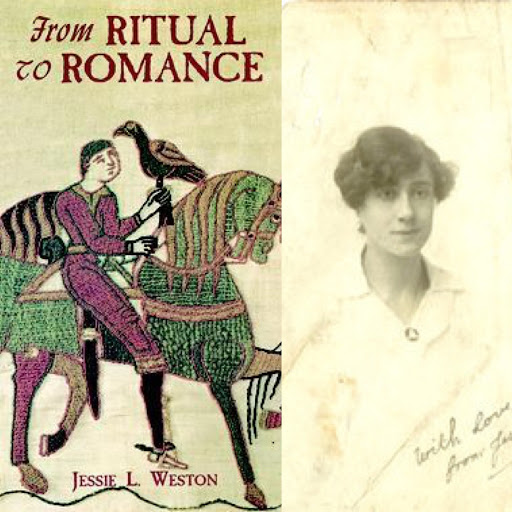
From Ritual to Romance by Jessie L. Weston (1920)


Please ponder and comment on my question below.

“Is it possible to establish chain of descent connecting early Aryan and Babylonian Ritual with Classic, Medieval and Modern forms of Nature.”

“In the process of our investigation we must retrace our steps and turn back to the early traditions of our Aryan forefathers, and see whether we cannot, even in that remote antiquity, lay our hand upon a clue, which, like the fabled thread of Ariadne, shall serve as guide through the mazes of a varying, yet curiously persistent, tradition.”

“the root of such belief and custom is imbedded in a deeper stratum of Folk-tradition than we had hitherto realized, that it is, in fact, a heritage from the far-off past of the Aryan peoples”

“When we turn from the early Aryan to the classic Greek period we find in the Kouretes, and in a minor degree in the Korybantes, a parallel so extraordinarily complete, alike in action and significance, that an essential identity of origin appears to be beyond doubt.”

In a book published in 1920 about the myth of the grail and the Fisher King do references to “our Aryan ancestors”, set off red flags of racism or worse? There are twenty eight references Aryans,  “our ancestors”, predating The Greeks and Near Eastern civilizations in From Ritual to  Romance by Jessie Laidley Weston. I Read this because in Lawrence Rainey in his very illuminating The Annotated Wasteland said:

“Not only the title, but the plan and a good deal of the incidental symbolism of the poem were suggested by Miss Jessie L. Weston's book on the Grail legend: From Ritual to Romance (Cambridge). Indeed, so deeply am I indebted, Miss Weston's book will elucidate the difficulties of the poem much better than my notes can do; and I recommend it (apart from the great interest of the book itself) to any who think such elucidation of the poem worth the trouble.”

Weston’s book was published just two years before The Waste Land.  Maybe The social malaise of The 1920s lead to a need to believe you are descendents of a lost to history super civilization.  Of course The comfort of The belief comes from excluding others.  We know who seized on Aryan ancestors and maybe this is causing my reaction.  

I am quite sure the research into the myth of the Grail and the Fisher King in the last near 100 years has rendered her conclusions mute, of course she did not have the scientific tools modern workers do.  

I do recommend this book for sure to those want to more fully understand The Wasteland, she does say interesting things and has a seeming level of erudition     high enough to intimidate most.

The quote below, from the webpage of Sacred Texts, gives a generous overview of the importance of the book:

“At the advanced age of 70, Jessie Weston, who had spent decades immersed in the Arthurian canon, wrote this relatively short book to attempt to explain the roots of the legend of the Holy Grail. She enumerates the seemingly inexplicable elements of the quest--The Fisher King, The Wasteland, the Chapel Perilous, and the Grail Cup itself--and ties them to the symbols and initiatory rites of the ancient mystery religions. She also attempts to identify the author and locality of the tale. Her thesis still inspires heated controversy among academics. It is also claimed that T.S. Elliot's The Wasteland was based on this book, although this has been questioned.

One thing is certain; although this book is one of the bullet-points of 20th century culture, probably very few have read and understood it in its entirety. Written in a formal academic style, with extensive passages in a dozen different languages, From Ritual to Romance is frankly a tough, but ultimately very rewarding read.”


You can read the book for free at the above webpage.  I paid $1.95 for a kindle edition, which seem fair.

Her Obituary (she died in 1928)

THE death is announced of Miss Jessie Laidlay Weston, D.Litt., which took place in London on Sept. 29 at the age of seventy-seven. Miss Weston was born on Dec. 29, 1850, and educated at Brighton, Paris, and Hildesheim, and studied art at the Crystal Palace School. In 1890, at the suggestion of the late Alfred Nutt, and with the view of making the stories of the Wagner dramas more widely known in England, she took up the study of the Arthurian Legend. Her first work was a translation of “Parzival,” by Wolfram von Eschen-bach, and this was followed by a series of studies of the origins and development of the Arthurian Cycle. She dealt in succession with Sir Gawain, Sir Lancelot du Lac, Sir Perceval, and “The Three Days' Tournament,” her studies being published in the Grimm Library. Then followed “Seven Arthurian Romances Unrepresented in Malory,” “Romance, Vision, and Satire,” and “Chief Middle English Poets.

To add to my questioning, the Germanic myths of Wagner, particularly that of Parzival, were part of the Jungian roots of Nazism.  

I am glad I read this book.  Serious literary autodidacts should add this to their list.  

Mel u


Thursday, September 22, 2016

Anti-Judaism The Western Tradition by David Nirenberg (2013, 464 pages)


"Anti-Judaism should not be understood as some archaic or irrational closet in the vast edifices of Western thought. It was rather one of the basic tools with which that edifice was  constructed" from Anti-Judaism The Western Tradition by David Nirenberg 


Anti-Judaism The Western Tradition by David Nirenberg is a brilliant, highly learned work that anyone interested In understanding world history, not just Jewish history,  should read.  I predict it will replace The Origins of Totalitarianism and Anti-Semitism by Hannah Arendt as the most read scholary work in the field.  

Of course anti-Judaism became a dominant force in Western culture because of the rise of Christianity as the dominant religion.  Nirenberg begins his account of the rise of anti--Judaism further back, to Egypt around 350 BCE with an alternative account of the departure of the Jews from Egypt. He cites a text from the Greek historian Heraclitus which suggests the Egyptian authorities expelled the Jews as a socially undesirable group.   He does a very detailed story of the portrayal of Jews and Jewish culture as seen in the Gospels of the New Testament.  The commonplace view on the biblical roots of antiSemiticsm arise from the attempt to place the blame for the cruxifiction of Jesus on the Jews.Nirenberg goes deeply into the ways in which Christianity defined itself as a repudiation of Jewish cultural identity.  There is very interesting chapter on the Koran.  There are very detailed chapters on medieval anti-Jewish texts,including those of Augustine.

One of the most informative  s cations of the book was on the role of the rise of the theories of Martin Luther in making anti-Jewish ideology one of the foundations of Western culture.  Luther was vehemently anti-Jewish and the spread of Lutheraism in Germania gave Kings backing for extensive special legislations restricting the economic and cultural lives of Jews.i was fascinated by his account of the relationship of Jewish money lenders to the royal authorities throughout Europe. Jews were allowed to loan money at interest, considered a sin.  The authorities then would force the Jewish money lenders to sell them the debts at big discounts.  Kings considered Jews in their fiefdoms to be their property.  

Nirenberg shows us how the historical explanations of blaming the Jews for all the troubles in the world has very ancient roots.  


Nirenberg’s thesis is that this idea of Judaism, which bears only a passing resemblance to Judaism as practiced and lived by Jews, has been at the very center of Western civilization since the beginning. From Ptolemaic Egypt to early Christianity, from the Catholic Middle Ages to the Protestant Reformation, from the Enlightenment to fascism, whenever the West has wanted to define everything it is not—when it wants to put a name to its deepest fears and aversions—Judaism has been the name that came most easily to hand. “Anti-Judaism"- from the Tablet's review of the book. 

Nirenberg intentionally does not use the commonplace expression "AntiSemiticsm".  

I was very pleased when in the closing chapters of the book Nirenberg referred to the work of Edward Said and Eric Aurerbach.  He also rebukes the central themes of Arendt who placed part of the blame for Anti-Semticism on her theory that Eastern European and Russian Jews choose to keep themselves culturally separated from Christians. 

Nirenberg's closing thesis is that Anti-Judaism has been used for two thousand years as an intellectual and historical,framework in which people could explain both what they are not and find a source for the evils of the world that exculpates themselves.  We learn from his book that any such overarching theory is really the result of a shallowly based understanding of history, a search for an easy theory to explain everything.

David Nirenberg -University of Chicago Department of History

Deborah R. and Edgar D. Jannotta Professor of Social Thought, Medieval History, Fundamentals, Middle East Studies, and the College; Member of the Stevanovich Institute on the Formation of Knowledge; Dean of the Social Sciences Division,
PhD 1992 Princeton University


I give my highest endorsement to Anti-Judaism The Western Tradition.  It is aserious academic work which  general history readers will find it fascinating.  There is much more in this book than I have mentioned.  For example I learned how even Nazi Ideology used as foundation for their warped the understanding by their alleged scholars of ancient Egyptian texts as a justification for their hatred of Jews.

Mel u


Featured Post

Imperial Reckoning: The Untold Story of Britain’s Gulag in Kenya by Caroline Elkins - 2005 - 701 Pages

  Imperial Reckoning:     The Untold Story of Britain’s Gulag in Kenya by Caroline Elkins - 2005 - 701 Pages 2006 Pulitzer Prize Winner From...