Showing posts with label Colette. Show all posts

Saturday, July 27, 2024

The End of Cheri by Colette- 1929 introduced by Judith Thurman and translated by Paul Eprile - 2022 - A Paris in July 2024 Novel


Paris in July does not just include books. Contributions on your Paris vacation, your favourite meal or restaurant, French movies, music, art, Parisian history and more are very welcome. On the home page for the event you will inevitably discover perhaps new to you authors, movies as well as recipes to send you if you are lucky to Paris or at least the kitchen.

The End of Cheri by Colette- 1929 introduced by Judith Thurman and translated by Paul Eprile - 2022 - A Paris in July 2024 Novel

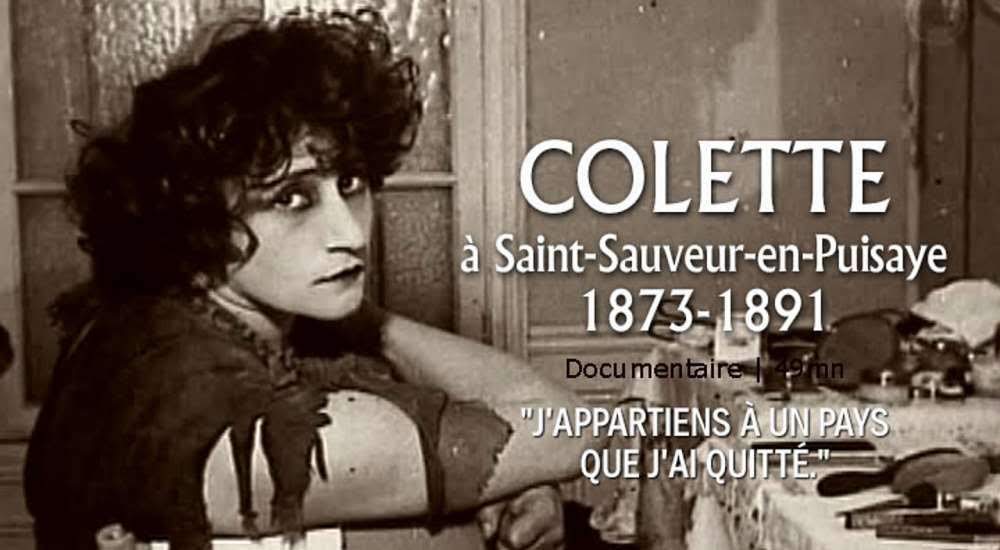
If Paris is the city of love, then Colette (Sidione-Gabreelle Colette 1873 to 1954) is the high priestess. For many their image of Paris derives from memories of the movie, Gigi, made from her probably most famous work. Living to almost eighty, she produced eighty volumes of writings of all sorts. When she passed in 1954 she was given the first ever state funeral for a French woman. She is an LGTGQ icon and she loved cats.

Early in the month I posted on Chéri, The End of Cheri is the sequel.

The End of Cheri takes place ten years after Cheri. Both Paris and Cheri have been very impacted by World War One. He is married now. He has been out of touch with Lea. 

"Most of Colette’s sequels (the Claudine franchise and others) were inferior in power and artistry to their originals. The End of Chéri is an exception: a bleak and ambitious social history disguised as the debacle of an antihero. The men in Colette’s work tend to be shallow, yet however terribly they behave, she pities them as the weaker sex. “Feminine delicacy in literature,” she wrote to a friend, is “one of those clichés that make me furious. Except for three or four female writers, their [women’s] vulgarity, their sentimental brutality, has all that it takes to make any man whatsoever feel wounded and embarrassed.” That is Chéri’s predicament as the hostage of a gynocracy. A decade has passed since he parted from Léa, and through his eyes, Colette captures the sea change in manners, the shift in sex roles, the breakdown of hierarchies, the speeding up of time, and the alternating currents of greed, euphoria, and despair that defined postwar Paris. He has returned from the front as one of those casualties whose fatal wounds are invisible. The meek sylph whom he married, a rich cocotte’s daughter, now manages their household and fortune with an immodest competence that disgusts him. Despite Edmée’s beauty, which he admires (“It’s not fair.”), their conjugal relations are fraternal. She tolerates his disdain partly because her affections are engaged elsewhere —with the maimed soldiers in the hospital she has endowed and the doctor who runs it. “What would you like Chéri to do in life?” Colette asked a journalist. “He wasn’t going to become an industrialist!” The gigolos and kept women of her fiction belong to an ancient nobility whose code of honor is vested in hedonism, and the subtlest among them practice it as an art. But Cheri’s muse has deserted him. He can’t find relief from his sensual and moral shell shock in any of his old vices, including malice." From the introduction by Judith Thurman 

I highly recommend Secrets of the Flesh: A Biography of Colette by Judith Thurman 

Mel Ulm 
The Reading Life 


Saturday, July 13, 2024

Secrets of the Flesh: A Life of Colette by Judith Thurman (2000) - A Paris in July Biography

Secrets of the Flesh: A Life of Colette by Judith Thurman (2000) - A Paris in July Biography


Paris in July does not just include books. Contributions on your Paris vacation, your favourite meal or restaurant, French movies, music, art, Parisian history and more are very welcome. On the home page for the event you will inevitably discover perhaps new to you authors, movies and recipes to send you if you are lucky to Paris or at least the kitchen.


If Paris is the city of love, then Colette (Sidione-Gabreelle Colette 1873 to 1954) is the high priestess.  For many their image of Paris derives from memories of the movie, Gigi, made from her probably most famous work.  Living to almost eighty, she produced eighty volumes of writings of all sorts.  When she passed in 1954 she was given the first ever state funeral for a French 

I do not wish to sketch out much of Colette's life.  I will just talk about a few aspects of her life that I learned about from the biography, things that struck me.

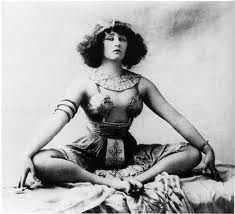
Of course I goggled her and I saw all the images from her days dancing semi-nude on the stage, working to support herself, performing as a mime.  Physically Colette embodied the erotic ideal of the era.  As Thurman shows us,she  loved the world of the theater.  Colette married three times.  She was actively involved with a group of aristocratic Parisian lesbians know as "The Amazons".  

Thurman goes into great detail concerning the various marriages of Colette, her relationship with her parents and her own daughter.  She had many friends and lovers and her life was full of drama.  We see her develop as a writer and we marvel at her incredible productivity.  

Colette the as not and ideologically driven intellectual like other French writers of the period.  She wrote about sex, relationships, food, the theater, the people of Paris.  As she grew older she gained a lot of weight but she carried it without shame and attracted long term lovers of both sexes much younger than she was.   Colette moved a lot and we get to visit with her all over France.

During the German occupation of Paris she did publish her work in journals and papers that carried virulent anti-Semetic articles. One of her stories was published in a magazine that had an ad for one of Hitler's books.  To me and as depicted by Thurman, though not all agree, her actions do not appear to be collaboration, just a largely apolitical woman of the world accepting what seemed like the reality of the times.  Her husband in this period was Jewish and he was detained for a while by the Gestapo and she worked very hard on achieving his release, which did happen.  

Judith Thurman intersperses literary exegesis with the details of Colette's life in a very skillful and interesting fashion.  The book is also a rich source of cultural data of the period, especially the world of lesbian and gay Paris, among the upper classes.  

The book shows Colette grow old and sick but still powerful. 

With Marcel Proust as the greatest French writer of the 20th century, Colette was second.  It seems without much   dispute she is the greatest female writer in French history, with apologies to George Sand.  

This is a first rate biography of a great writer from whom we can all still learn much.


Mel Ulm 
The Reading Life 


Monday, July 15, 2019

Cheri by Colette - 1920 - translated by Walter Ballenberger - 2014 - 142 pages


The Official Reading Life Paris in July Video


Works Read so for Paris in July 2019

  1. At the Existentialist Cafe:Freedom, Being and Apricot  Cocktails by Sarah Blackwell.  2016 - An exploration of the Parisian origins of French post World War Two Existentialism 
  2. Suzanne's Children: A Daring Rescue in Nazi Paris by Anne Nelson. 2017- an important addition to French Holocaust Literature
  3. Journey to the Edge of the Night by Louis-Ferdinand Celine -1932
  4. Death on The Installment Plan by Louis-Ferdinand Celine - 1936
  5. "Luc and his Father" - a set in Paris short story by Mavis Gallant - 1982
  6. The Invisible Bridge by Julie Orringer - 2010
  7. Paris Vagabond by Jean-Paul Clebert - 1952, translated 2016
  8. Cheri by Colette- 1920


I said this last year and am happy to say it again, if Paris is the City of Love than Colette is her High Priestess.  I also hope to say it again next year.  Colette (1873 to 1954, Sidonie Gabrielle Colette) wrote lots of short stories, novellas and a few novels, mostly set in The Belle Époque Era (1871 to 1914).  She was the first French woman writer to be given a state funeral.  Many draw their 
impression of Paris in the glory days from her most famous work, Gigi, or from the movies based upon it.  Much of her work focuses on slightly or more louche men, young and old, and the women of their world.   Colette worked on the stage in a period where preforming as an actress was often seen as part of the demimonde world.  Colette is also a revered GLBT figure for her sensitive and acute perceptive treatment of lesbian relationships as well as for her own very open sexuality.  Ok and she also loved cats!  I highly recommend The Secrets of the Flesh:  A Life of Colette by Judith Thurman, among the very best of literary biographies.

In Cheri we return to the world of Gigi, one populated with courtesans in their at least late forties living in mansions and still entertaining wealthy men who come to them for their extreme experience and for a feeling of through them being in touch with the high culture of older days.  Cheri is Fred Peloux, twenty five, the son of a once famous courtesan, Charlotte.  When we meet him he has been in a relationship with Leá for six years. Leá is forty nine, also a courtesan, friends with Cheri's mother.  They were in their younger days professional rivals for the men who sought out very expensive women, giving the, expensive gifts, mansions and such to mask the fact that they are prostitutes.  We know from works like Paris Vagabond, the novels of Celine and Zola that Paris was in this period full of cheap prostitutes so we know the clients of Leá and Charlotte seek more than sex.  Cheri is kind of a totally spoiled "boy toy" for Leá.  She has no big reaction when Cheri decides to marry a woman his age.  We also meet Desmond, who might be a same sex occasional lover of Cheri.

Part of the fun of this novel is the luxury of the world we find depicted.  
The conversations are marvelous and there is a lot of depth in the relationships.  We also wonder what are the men in their lives, wealthy all, seeking besides sex.  


Ambrosia Bousweau
Mel u


Wednesday, July 4, 2018

The Vagabond by Colette - 1910. Translated by Stanley Appelbaum, 2017


Paris in July hosted by Thyme for Tea is a great event.  I Focus on literary works and nonfiction but you are invited to share your thoughts and experience on anything Paris related, from a great recipe, a favourite movie set in Paris, mine is Ninotchka, an account of your stay in Paris.  I hope lots of people  participate. Just be sure and link you post on The event home page.  

If Paris is the city of love, then Colette (Sidione-Gabreelle Colette 1873 to 1954) is the high priestess.  For many their image of Paris derives from memories of the movie, Gigi, made from her probably most famous work.  Living to almost eighty, she produced eighty volumes of writings of all sorts.  When she passed in 1954 she was given the first ever state funeral for a French woman.  She is a LBGTQ icon. Plus she loved cats!

I highly recommend for those interested in Colette and her milieu Secrets of the Flash: A Life of Colette by Judith Thurman, upon which I posted during July in Paris 2015.

“The Vagabond is one of the first and best feminist novels”.  Erica Jong

Vagabond, with a an informative newly written introduction by the translator, tells the story of Renée Néré, thirty three and recently divorced.  She has begun working in a traveling Vaudeville Theatrical company.  Drawing on her own experiences as an actress and erotic dancer, Colette shows us a lot about the life of Renée and the backstage world of  French theatrical companies.


Actresses are often depicted as real or potential mistresses for wealthy roues in French literature, from Sand, to Balzac, Zola and Proust.  A woman who danced nude, as did the central character and Colette herself, was considered part of the Demi-Monde of Parisian society (The classic novel on this is Nana by Emile Zola).  Renée is being courted by a wealthy playboy who wants her to quit the stage and become his very well kept mistress.  The tension of the plot is derived from Renée’s love of her freedom and her craving for comfort and security.  Colette is acute in depictions of feelings and motivations.  

To those new to Colette I suggest you start with Gigi,then Vagabond.  If you read short stories, I have posted about this.  

Please share your experience with Colette.  

Mel u


Friday, July 7, 2017

Colette - Two Early Short Stories - A Recommendation of a Collection of her Short Fiction


Paris in July - Year Ten. -- Hosted by Thyme for Tea


"You will do foolish things, but do them with enthusiasm."  (Sidonie Gabrielle Colette)

"We are blinded to the beauty in our own lives
The hours taken are all that we'll get
For five or six hours in the month of July
The summer I read Collette
I found Paris a hundred years late
Calling it sleeping in (.......)
My ear to the stone I can hear her sing (.......)
I sold my silver to get myself there
To a room with a candle up three flights of stairs
That was the summer I let it all go
Filling my body with my heart and soul


We are blinded to the beauty in our own lives
I was taking all I can get
For five or six hours in the month of July
The summer I read Collette" - lyrics by Roseann Cash


I said this last year and am happy to say it again, if Paris is the City of Love than Colette is her High Priestess.  I also hope to say it again next year.  Colette (1873 to 1954, Sidonie Gabrielle Colette) wrote lots of short stories, novellas and a few novels, mostly set in The Belle Époque Era (1871 to 1914).  She was the first French woman writer to be given a state funeral.  Many draw their 
impression of Paris in the glory days from her most famous work, Gigi, or from the movies based upon it.  Much of her work focuses on slightly or more louche men, young and old, and the women of their world.   Colette worked on the stage in a period where preforming as an actress was often seen as part of the demimonde world.  Colette is also a revered GLBT figure for her sensitive and acute perceptive treatment of lesbian relationships as well as for her own very open sexuality.  Ok and she also loved cats!  I highly recommend The Secrets of the Flesh:  A Life of Colette by Judith Thurman, among the very best of literary biographies.


The Collected Stories of Colette edited by Robert Palmer is the best entrance to her short fiction, containing 100 stories, 31 never before translated.  I have both the paperback, a beautiful book, and the recently released digital edition.  If you wish to read the two stories I'm posting upon today, and Palmer's introduction, they are on the Amazon free sample.  The publisher blurb says there is no comparable collection in French.  

"Clouk Alone" and "Clouk's Fling"

Today I will post upon two early stories from the series on Clouk, starting with "Clouk Alone".  Clouk is a very archetypical Colette creation, a dandy of indeterminate age, a rich Parisian man boy.

You can see the power of Colette to create a character in just a paragraph in this 

"He was about to turn off the electricity before going up to his room, but stopped short: to get to the light switch he would have to walk past a long mirror, tinged green by the dampness, where he would have time to watch himself walking by, paler than normal, even more of the “poor child” than his fabulously wealthy mother had made him. He does not like to walk past it at certain hours of the night. He prefers to go straight up to the second floor, letting the chandelier and the sconces burn on. Upon waking, he would open his fishlike mouth, which could feign astonishment quite easily, when his inexorable valet would say to him: “Monsieur realizes that Monsieur again left the lights on downstairs. Monsieur won’t wonder why Monsieur’s electric bill is seven hundred francs again this month, worse than a department department store.” Clouk, born a millionaire, remained parsimonious by upbringing: a new car every year is a duty, turning off the electricity when one leaves a room is another."

Clouk misses Lulu, a musical actress and no doubt of the high end demimonde world, she taught him not to be afraid to be alone in his exquisite townhouse.  Suddenly he thinks he hears footsteps in the garden.  He wonders if he dare go look, he summons his valet, who clearly respects him only ironically. The valet asks him what he requires, at first he was going to tell him to look in the garden then he decides to tell him to turn of the lights.  This is a delightful story readable in under five minutes.


As "Clouk's Fling" opens he at a restaurant with a "companion", a not as young or or pretty as she once was actress.  She and Clouk are at a favorite after theater haunt.  Clouk watches the door, Half hoping Half fearing Lulu will enter.  The actress sleeps at Clouk's place, as she often has, Clouk does not like to be alone.  I really feel a need to let Colette's descriptive power shine through:

" The hours after dinner, divided between the restaurant and box seats in a music hall, went by quickly—barely time for a dozen cigarettes—bringing back midnight and the moment to sit down, for the third time since waking, in front of a stiff tablecloth, glazed by the roller, and cold as oilcloth. Each time he sits down at a table in some late-night bar, Clouk feels a warm, fleeting rush of exhilaration.....The best time of their day was the interminable daily toilette, two hours of bath, hairdresser, manicurist, masseuse: the meticulous and listless toilette of cloistered women, the empty chatter, the perplexed fussing with ties and vests . . . Then the brief drive in the car around the already dark Bois, truly an old ladies’ drive, cut short again by the desire, the need to return and sit down at the table of a bar. “Some port and herring sandwiches, right, Clouk? What dried us up like that last night was that nasty demi-sec champagne.”

As the story closes, we see beautifully depicted the routine of Clouk's life, the scenes in the restaurant is so wonderfully done.

My edition does not give the first publication data on these stories but by estimate is 1894 to 1898 period.

I hope to read more Colette 

Mel u


Tuesday, July 26, 2016

The Cat by Colette. (1933, translated by Antonia White)

The Cat, set in Paris, is the best book about a cat I have yet read.  Second best would be A Man, a Cat, and Two Women by Junichiro Tanazki, nearly as good.  Both focus on a wife's jealousy of her husband's love for a cat who was part of his life long before he met her.  


If Paris is the city of love, then Colette (Sidione-Gabreelle Colette 1873 to 1954) is her high priestess.  For many their image of Paris derives from memories of the movie, Gigi, made from her probably most famous work.  Living to almost eighty, she produced many volumes of writings of all sorts.  When she passed in 1954 she was given the first ever state funeral for a French woman.  


As The Cat begins a young couple are about to marry.  Colette does a marvelous job describing the passion of love, the infatuations of the honeymoon where neither can do wrong.  But in this marriage the wife has a rival, one who has been with her husband much longer than here, Sasa, a beautiful chartreuse cat.  Colette knows and deeply loves cats and it shows.  The wife demands to know who he loves more and she does something to the cat he cannot forgive. Besides a brief appearance  of his mother, an old servant, there are only three characters in the story, the man, the cat and the wife.

The Cat is not as famous as Gigi or Camille but for sure it is worth reading.  The estimated reading time is about ninety minutes.


So far for July in Paris I have read

1.  The Dogs and the Wolves by Iréne Nemirovsky 

2.  Mavis Gallant -  Two Set in Paris works, a short story and a note book entry

3.  Five Nights in Paris by John Baxter.

4.  The Little Paris Book Store by Nina George

5.  "The Problem of Summer Time" by Marcel Ayme

6.  "Love Under the Roof" by Emile Zola

7.  "The Purse" by Honore de Balzac 

8.  Gertrude Stein and her Family by Kathleen Warren

9.  "Czarist Parisian Emigres" by Joseph Roth 

Mel u

Saturday, July 23, 2016

Gigi by Colette (1944). - Copiously Illustrated Post


If Paris is the city of love, then Colette (Sidione-Gabreelle Colette 1873 to 1954) is her high priestess.  For many their image of Paris derives from memories of the movie, Gigi, made from her probably most famous work.  Living to almost eighty, she produced many volumes of writings of all sorts.  When she passed in 1954 she was given the first ever state funeral for a French woman.  


 Secrets of the Flesh: A Life of Colette by Judith Thurman. A truly great biography, must reading for all Francophiles

Gigi is set in the demimonde world of early twentieth century Paris.  "The Demimonde World" refers not to straightforward prostitutes but to women supported by wealthy, often older, married men. Gigi is a girl of sixteen, two years younger than my youngest daughter, who is being trained by her two aunts, both made comfortable by a life in this world, to be a suitable companion for a Baron.  It is a world of glamour and sophistication.  The very real power of Gigi is in the conversations of the aunts with Gigi, their instructions.  When Gigi asks about marriage, she is told "women in our family do not marry".  Her mother is an actress, the theater as Colette knew very well, as closely tied to the demimonde world and was often seen as a place to exhibit your charms.  The role of the mother in the story is very interesting.

 (The hit movie is a visual treat but far different from the original)

Gigi has an admirer very interested in her. Gigi knows what she will soon be expected to do, her aunts are counting on her earnings.  The demimonde world was rife with gossip.  One of the aunts iclose friends had just overdosed on laudanum in an effort to win back Gigi's admiror who had gotten bored with her.  Gigi knows once she has slept with a man of the sort one finds in her world, imagine an aging born to money Maurice Chevalier or a younger Loius Jordan who plays Gigi first lover in the movie, he may begin to lose interest in her.  Thus her aunts coach her how to acquire valuable jewels from your admirors while seemingly having no interest in money matters.


Some will see the sexual pursuit of sixteen year old girls by fifty plus year old wealthy men as nearly crossing into pedeophilia.  

The ending is very interesting.  Gigi has learned her lessons well


So far for July in Paris I have read

1.  The Dogs and the Wolves by Iréne Nemirovsky 

2.  Mavis Gallant -  Two Set in Paris works, a short story and a note book entry

3.  Five Nights in Paris by John Baxter.

4.  The Little Paris Book Store by Nina George

5.  "The Problem of Summer Time" by Marcel Ayme

6.  "Love Under the Roof" by Emile Zola

7.  "The Purse" by Honore de Balzac 

8.  Favored Stranger:  Gertrude Stein and Family by Leslie Warren


Mel u

Tuesday, October 6, 2015

"The Watchman" by Colette (1933)


When I think of Colette, as I do in odd moments, I do not usually conjure up memories of her stories based on being a mother.  "The Watchman" is an interesting story narrated over several days.  The children begin to report they hear odd noises in the attic, like someone walking around up there.  At first nothing can be found,  it is fun to observe the family interactions.  At the end they find a huge owl has turned the attic into his home.  


Ambrosia Boussweau 

Sunday, September 27, 2015

"The Saleswoman" by Colette (1922?)


If Paris is the city of love, then Collette (1873 to 1954) is the high priestess. ( I am currently reading a very good biography of Colette, Secrets of the Flesh:  A Life of Colette by Judith Thurman which I hope to post upon soon.)   I was looking through Robert Phelp's anthology The Collected Stories of Colette (great to have 100 of her short stories in one place, many newly or never previously translated but there are several critical flaws in the anthology that would cause me to be unable to recommend the purchase of this book) and I found a three page story called "The Saleswoman" so I read it.  It is set in a lady's wear shop.  A Saleswoman is trying to talk a customer into buying a hat.  As I read it I flashed to the early days of Coco Chanel, getting her start selling the hats she made in a small shop.  The great pleasure in reading this story is seeing how the saleswoman skillfully plays on the vanity and insecurity of her customer.  

I want to read more Colette and this story was a good brief reading life interlude for me.

The French literary consensus seems to be that Proust is the most important French writer of the first half of the 20th century with Colette in an uncontested second place.

Ambrosia Boussweau 
European Correspondent of The Reading Life

Tuesday, July 28, 2015

"The Other Wife" by Colette (1932). - A Post for Paris in July # 6

If Paris is the City of Love, then Colette is the High Priestess 

      
                                                                          1873 to 1954
"For her, as for Epicurus, hedonism was something much more purposeful and, one could say, more ethical than a greed for sensation. It was the expression of an active faith—a credo without a god, a devil, or an afterlife, but with the power of all true faith to inspire ecstasy, and reverence for creation, and to console."  Judith Thurman


Paris in July # 6. , hosted by Tamarra of Thyme for Tea, a blog I have followed for years,is one of my favorite book blog events.  It covers much more than literature and there are lots of wonderful participant posts online.

Paris in July # 6. has motivated me to read some very interesting works.

1.  "Baum, Gabriel, 1935" by Mavis Gilbert - A wonderful set in Paris short story

2.  "Two Friends" by Guy de Maupassant- Paris in July # 6. Requires reading de Maupassant!

3.  "Mildred Larson" by George Moore- What Paris Meant to the Irish

4.  "The Parisian Stage" by Henry James - an illuminating essay

5.  "The Man Who Could Walk Through Walls" by Marcel Aymé- a new to me writer I will return to

6.   Lovers at the Chameleon Club, Paris, 1932 by Francine Prose - interesting 

7.  Shocking Paris Soutine, Chagall and the Outlaw Art of Montaparrne by Stanley Meisler-a 
     Well done account of Yiddish emigre artists in Paris

8.  Short Stories about Cats by Three Classic French authors 

9.  Suite Francaise by Iréne Némirovsky- a true masterwork. Paris under the Germans

10.  The End of Evil Ways by Honoré de Balzac

11.  Mademoiselle Coco Chanel and the Pulse of History by Rhonda K. Garelick- brilliant bio.

12.  The Horla by Guy de Maupassant, translated by Sandra Smith

13.  "A Piece of Bread" by Francois Coppee 

14.  The Wine of Solitude by Iréne Némirovsky- White Russians move to Paris 

15.  Pynchon and Paris - 

If Paris is the city of love, then Colette is the High Priestess.  Many draw their image or fantasy of Paris from the movie based on her most famous work, Gigi.  I did not want Paris in July # 6 end without paying homage to Colette.  She was a tremendous cat lover, among many other things. I love her short stories.


"The Other Wife" is a small gem of a story.  A man and woman are dining at an elegant restaurant.  The man sees his prior wife, who his current wife has never seen, at the next table. Of course a small drama ensues. The story is a miniature masterwork of acute observation and just a lot of fun to read.  


In the long ago, Clifton Fadiman helped steer me to the reading life.  I was delighted to find he loved Colette.  

       "The day Colette (1873-1954) died, the worst thunderstorm in sixty-seven years hit Paris. Her last conscious act was to gesture toward the lightning and cry out, “Look! Look!” The words suggest the essence of her genius. 
       At eighty-one Colette was a legendary figure. A Grand Officer of the Legion of Honor, president of the Goncourt Academy, she would, to crown her career, receive a state funeral—unexampled honors for a French woman. A veteran of three marriages (the last a happy one), music hall performer, journalist, autobiographer, novelist, short story writer, deeply versed in the natural world of plants, flowers and animals, a connoisseur of more than a single variety of love, in the best sense a woman of the world, she ranked as one of the most vivid personalities of her time. During the final years of a long, crowded life, unable to stir from her Palais-Royal apartment, she reigned, surrounded by her beloved cats, as an object of wonder and pilgrimage. 
       Few have treated more revealingly at least one great theme, that of sexual love. She was most comfortable with the novella 
(Chéri, La Fin de Chéri, Gigi, Mitsou), but she excelled also in a kind of post-Maupassant short story, tender, sensual, witty, completely French, completely feminine. 
       “The Other Wife” is a deft, wry trifle, a small triumph of observation (“Look! Look!”). As with an O. Henry story, everything erupts in the last few words, indeed in the very last word. But her sensibility works on a plane quite different from his."

       —Clifton Fadiman


Mel u


Friday, July 19, 2013

Colette. Two set in Paris Short Stories


This is my third year as a participant in the Paris in July Reading Event hosted by Book Bath and Thyme for Tea.   I find this a very interesting and creative event of the sort that helps build the book blog community.  You will find  lots of reading ideas on the host blogs.


Colette (1873 to 1954) is Paris in July!  If Paris is the city of love, then in the works of Colette you can find all its minute nuances and infinite varieties explicated with no mercy.  Nothing gets past her.  Today I want to post briefly on two of her briefer set in Paris short stories.  

Monsieur Maurice" (4 pages) 

This story centers on a middle level bureaucrat, Maurice.  He is at the moment elated because the council president sought out his opinion on something.  He is deputy commissioner of tourism and farm mechanization. (Don't know why these go together, must be a private joke of Colette's).  There are two women in his waiting room in response to an advertisement for a stenographer.  He decides it will be fun to interview them and he calls them in one at a time.  The first is ever so lovely, young, flirtatious  and raises the libido of the very middle aged Maurice.   Maurice is at first set to hire her then he realizes the other applicant is from his home town so he figures he should at least go through the motions of interviewing her.  The second candidate is fifty, just like Maurice,  far from a beauty, and dressed in a no-nonsense fashion.    Maurice begins to talk to her about people from his small home town.   She tells him she remembers seeing him riding his horse around the town, when he was in his late teens.  She talks of how handsome she always thought he was and how all the women of the town enjoyed seeing him ride by and then she offers an apology for this inappropriate personal observation.  He then tells her to begin taking a letter as her new job has begun.  Monsieur Maurice made a good decision today.  (Translated by Mathew Ward)

"The Other Wife" (4 pages)

This story is about a fraught with peril much to be avoided moment for any man, the moment his new wife sees his previous one for the first time.  The newly married couple are being shown to their seat in a nice restaurant.  The man declines the table they are offered and says "don't look now, but that is my ex - wife and her new husband" over there.  They sit as far away from them as their is available.  Of course the new wife is doing all she can outside of making a spectacle to see the old wife. 

 Then she begins to ask her husband to compare her to the old wife.  Like I said, not a man's favorite scenario. (Translated by Mathew Ward).

I read both these stories in The Collected Stories of Colette, edited and introduced by Robert Phelps.  Sadly this is, as far as I can find, the only English language large (600 plus pages) collection of her stories.  The introduction is of little value,  the stories are grouped by theme and no original publication dates or sources is given.  To anyone who ever will  edit a collection of short stories, please include in your anthology an easy to find listing of the first publication date and place of publication.  Colette is a world  treasure and deserves a better collection.  


I hope to read and post on a Henry James and an Edgar Alan Poe story before July ends.

Mel u

Sunday, February 24, 2013

"The Semiramis Bar" by Colette

"The Semiramis Bar" by Colette  (1935, 5 pages)

A Reading Life Project
The Collected Stories of Colette


The Collected Stories of Colette edited and selected by Robert Phelps (1989, 606 pages)

"It's absurd to divide people into good or bad,  people are either charming or tedious"  from Lady Windemere's Fan
"
It was just a question of time until Colette (1873-to 1954, Paris, Sidonie-Gabrielle Colette) became part of my reading life.      I would have read her sooner but I do not read French and  translations of her work are not in the public domain.   I now own a copy of  The Collected Stories of Colette edited and selected by Robert Phelps which contains 100 of her short stories.  


I appreciate the work in assembling and translating 100 short stories.    The Collected Stories of Colette is a physically a beautiful book with a generous size type face.   I do not like the way the book is organized.   Phelps  has divided it up into sections based on what the stories are about.   I think  readers would be better served if the stories were in publication order, with the date of original publication in a note on page one of the story.   There are no dates of publication given on most of these stories.   The introduction tells us little or nothing of value about Colette, it does not even tell us when she was born or died.    I see myself doing at least 15 posts on Colette over the next few months and I will post  a bit on her life, art and cultural important in subsequent posts.    In addition to her huge literary output she heroically sheltered Jews from the Nazis in Paris during WWII, received a state funeral upon her death and is an iconic GLBT figure.  


"The Semiramis Bar" is a fascinating look at what would now be called a Gay bar in Paris in the 1930s.  It is really a work of  great talent.   Colette brilliantly starts the story by telling us of the owner, a strange woman who gives away food too those in need and charges absurdly high prizes to richer customers.   Colette's depiction of the clientele of the bar is just totally wonderful.  Maybe it is wrong or projecting the 21th century into this story to say it is about a Gay bar.  Maybe we should fall back on an older word and see it as a bar for those in the demimonde world of Parisian night life.   Almost by definition this included gay men and women but there are many other creatures of the Parisian night world that fall in this category.  I see Hart Crane and Ruffington Bousweau as clients when in Paris and I can visualize Jean Rhys there as well.  Prince Felix Youssovpov is often seen there after midnight.

"I know where I will go next time I
am in Paris"  -Carmilla
"The Semiramis Bar" is a very sophisticated story, a flawless work of art.  


Featured Post

Imperial Reckoning: The Untold Story of Britain’s Gulag in Kenya by Caroline Elkins - 2005 - 701 Pages

  Imperial Reckoning:     The Untold Story of Britain’s Gulag in Kenya by Caroline Elkins - 2005 - 701 Pages 2006 Pulitzer Prize Winner From...