Showing posts with label Karen Russell. Show all posts

Monday, January 15, 2018

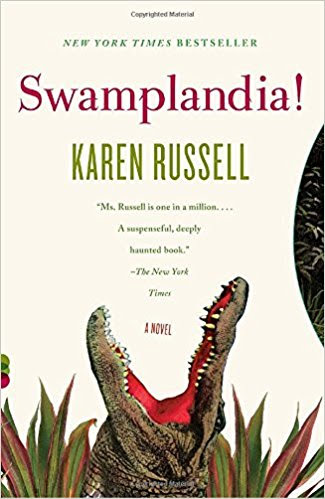
Swamplandia by Karen Russell - 2011- Plus my List of the Three Greatest Florida Novels


I give my great thanks to Max u for the provision of an Amazon Gift Card with which I acquired this book.


There are three great set in Florida Novels, all written by authors with deep ties to Florida, one was born there, two died  in the state.  All are by women.  

The first was Their Eyes Were Watching God by Zora Neal Hurston, 1937, set in rural south Florida, in the Lake Okechobee region, focusing on African-Americans.

The second is The Yearling by Marjorie Kinnan Rawlings, 1938, focusing on poor white rural people in North Florida, called at the time “Florida Crackers”.

Seventy three years will pass, a World War will be fought, millions will move to Florida, Disney World will open, the great influx of Cubans and others from Latin America will make it a nearly bilingual state until the next Great Florida novel is published, Swamplandia by Karen Russell, in 2011.  Like the first two great Florida novels, Swamplandia is set among marginalised people on the fringes of mainstream Florida, among people living in the Everglades, in the Ten Thousand Island Area In Collier County Florida. Collier County is one of the most affluent counties in America.


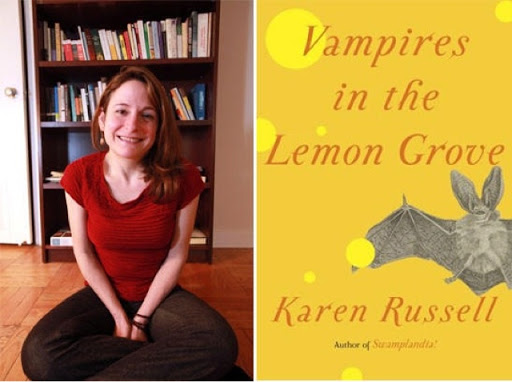
I really like Swamplandia.  I was expecting a lot based on the short stories in Vampires in the Lemon Grove and it exceeded my expectations.  Swamplandia is a once prosperous tourist attraction, an alligator farm and wrestling show.  Pure tack to the rich in Naples.  It is a brilliant celebration of a lost to most segment of Florida’s past.  I learned a good bit about the development of the Everglades, (it is set maybe in 1950), the ecological balance of the swamps.  The main characters are all part of the Bigtree family.  The father is an Indian, the mother white. Russell makes wonderful use of Florida Indian history explaining how the original Aboriginal occupants of Florida were nearly 100 percent wiped out by European diseases.  We learn of the origins of the non -Florida origins of the Seminoles.  

Swamplandia is very much a novel about a family struggling to keep going after the mother, who was the star of the wrestling show, dies.  It is also a voyage into the underworld.  

““Hopes were wallflowers. Hopes hugged the perimeter of a dance floor in your brain, tugging at their party lace, all perfume and hems and doomed expectation. They fanned their dance cards, these guests that pressed against the walls of your heart.” 
― Karen Russell, Swamplandia!

There is so much to love in Swamplandia, much more than I have touched upon.

Karen Russell (born July 10, 1981) is an American novelist and short story writer. Her debut novel, Swamplandia!, was a finalist for the 2012 Pulitzer Prize for Fiction. She was also the recipient of a MacArthur Foundation "Genius Grant" in 2013.  From publisher. 


Thursday, November 2, 2017

“Dougbert Shackleton’s Rules for Antarctic Tailgating” - A Short Story by Karen Russell (2013, in Vampires in the Lemon Grove and other Stories, 20


Karen Russell on The Reading Life - includes Links to several short stories


Karen Russell is the author of Swamplandia, and two highly regarded collections of short stories, St. Lucy’s Home for Girls Raised by Wolves and Vampires in the Lemon Grove.  I have posted upon eight of her short stories and her Novella, Sleep Donations.  Obviously I greatly enjoy and admire her work.  Today’s story, first published in Tin in Spring, 2010,  is a very funny story making use of The character of the famous anartic explorer Dougbert Shackelton in a delightfully comic fashion.

The story is narrated by Shackelton, he is telling us about contests between various species of wholes and near microscopic krill, their normal food.  He is explaining How one would, circa 1900 or so go about having a tailgate party to watch them.  It is sort of a satire on contemporary tailgate parties.  It takes about two years and if you are to have any hope of surviving you need to follow his eleven rules.

This story is fun and entertaining, maybe it is not among her best but that is ok.

ABOUT THE AUTHOR
Karen Russell, a native of Miami, won the 2012 National Magazine Award for fiction, and her first novel, Swamplandia!, was a finalist for the Pulitzer Prize in 2011. She is a graduate of the Columbia MFA program, a 2011 Guggenheim Fellow, and a 2012 Fellow at the American Academy in Berlin. Russell is also the author of St. Lucy’s Home for Girls Raised by Wolves, Vampires in the Lemon Grove: Stories, and Sleep Donation: A Novella. She lives in Philadelphia. - from the website of Penguin Random House


Monday, June 13, 2016

"The Bog Girl" A Short Story by Karen Russell (June 20, 2016, in The New Yorker)


My Posts on Karen Russell


"The Bog Girl" is the ninth short story by Karen Russell which I have featured on The Reading Life.  All of her stories are delightful, inventive and insightful.  I am doing this post largely to let my readers know that her latest story, "The Bog Girl" can be read for free on the webpage of The New Yorker.

"The Bog Girl" is set on a mythical Northern European island.  A primary source of heating fuel is  peat cut out of the bogs.  The chemical and enviormentental conditions in peat bogs are perfect for preserving bodies for sometimes thousands  of years.  Perfectly sealed off, a person buried in the peat bog would not decay very much.  The lead character is a young man of fifteen.  He is working cutting peat out of the bog when he uncovers the body of a girl around his age.  At first people thing she msybe a murder victim so the police are called but they quickly recognize it as a bog body, maybe two thousand years old.  The boy decides to take her home with him.  He begins to imagine her life, it looks like she might have been part of a ritual sacrifice.  He invests the girl with a personality and is soon in love with her.  She eats with the family and people treat her as if she were alive.

I will leave the rest of the plot untold.  

In the same issue as the story, there is a very interesting interview with Russell.  

Karen Russell, a native of Miami, won the 2012 National Magazine Award for fiction, and her first novel, Swamplandia! (2011), was a finalist for the Pulitzer Prize. She is a graduate of the Columbia MFA program, a 2011 Guggenheim Fellow, and a 2012 Fellow at the American Academy in Berlin. She lives in Philadelphia.  From webpage of Random House

Mel u

Wednesday, June 3, 2015

"The Prospectors" by Karen Russell (June 8, 2015, in The New Yorker)


Prior to reading "The Prospectors" I have read and posted on four delightful short stories by Karen Russell and her novella Sleep Donation.  I was very happy to learn the current issue of The New Yorker has a new story by Russell.  My main purpose today is to let my readers know of the opportunity to read a Karen Russell short story for free and to keep a reading journal for it.


The story is set in 1931, the terrible economic down turn known as the depression has  just begun. Our central characters are two young women from Florida.  One is from a prosperous hotel owning family and one used to be a maid the hotel.   They decided they might find better times in Oregon and moved there.  They make a living by stealing things from the houses and parties their good looks gets them invited to.  They are also border line prostitutes at times.  It is kind of an adventure and the girls are very bonded to each other.  The big thing in the town they are staying at is the construction of a new giant ski resort.  The government has programs to give jobs to all kind of workers.  The big day comes for the opening night party at the new ski.  Every big whig in the state will be there and the girl figure it could be a great opportunity for them.

They get on the ski ramp to the hotel, or do they?  Now things take a turn for the very strange.

I greatly enjoyed this story.

My Prior Posts on Karen Russell


Read the story here

Mel u

Tuesday, February 3, 2015

Sleep Donation by Karen Russell (2014, a novella, science fiction )


Prior to reading Karen Russell's science fiction novella Sleep Donation I read and posted on four of her short stories.  I liked them all very much.  I was a little disappointed in Sleep Donation, I did not enjoy it as much as the short stories but I am still glad I took the time (about 1.5 hours) to read it. 

It is about a future, not to distant, where many people have terrible insomnia,  when they do sleep they are unable to dream.  As this gets more and more wide spread, how this is done is never made, a method is found which allows those who can sleep to donate deep sleep to others.  The protagonist works for a nonprofit agency that connects those who can sleep with those who no longer can.  It all gets complicated and political.  I just found it hard to believe in the world of Sleep Donation.  I did not find characters of much interest.  

I read this solely because Karen Russell wrote it and that is what pushed me on to finish it.  It is not terrible and the description of the environmental corruption that might be at the root of the sleep is very good.  


Wednesday, September 3, 2014

"Madame Bovary's Greyhound" by Karen Russell (from Best American Short Stories 2014)

.


"Madame Bovary's Greyhound", included in the forthcoming anthology The Best American Short Stories 2014, is the story of the life of Emma Bovary's pet greyhound.  We see her go from pampered pet of Madame Bovary, brought to life just as I visualized her, to near feral dog living in the woods, to the pet of a woodsman.  Russell does a very good job of letting us into the head of the dog without overly athrophrmizing her.  I really enjoyed reading this story. 

I was kindly given a review copy of this collection of twenty stories  and it looks like it has great reading potential.  

Mel u


Saturday, August 2, 2014

"The Bad Graft" by Karen Russell (June 9, 2014, The New Yorker)


Karen Russell (Miami, 1981) is a frequent contributor to The New Yorker.  She is one of the true stars of the American short story world.  (I have read and posted on five of her short stories before today and there background information on her in those posts.) I was very glad to find two of her short stories in the Archives of The New Yorker.

My main purposes  in this post are to let other fans of her work know they can read this story online and to keep a record of my reading.  

As the story opens a young couple are in a desert in The Joshua Tree National Park in California. The trees can live to well over 1000 years and were believed by many in the past to have the ability to bond with a human.


The couple are in love and are kind of on an escapist road trip.  The woman steps on a thorn from the Joshua Tree and the tree somehow bonds with her, begins to cohabit her body.  Of course she may be experiencing psychosis of some sort.  They run out of money and rent a shack in the desert.  The man gets a job.  More and more the Joshua tree feels in revolt to its host. 

I love this description of what happens:

"When the Leap occurs, Angie does not register any change whatsoever. She has no idea what has just added its store of life to hers.
But other creatures of the desert do seem to apprehend what is happening. Through the crosshairs of its huge pupils, a tarantula watches Angie’s skin drink in the danger: the pollen from the Joshua mixes with the red blood on her finger. On a fuchsia ledge of limestone, a dozen lizards witness the Leap. They shut their gluey eyes as one, sealing their lucent bodies from contagion, inter-kingdom corruption.
During a season of wild ferment, a kind of atmospheric accident can occur: the extraordinary moisture stored in the mind of a passing animal or hiker can compel the spirit of a Joshua to Leap through its own membranes. The change is metaphysical: the tree’s spirit is absorbed into the migrating consciousness, where it lives on, intertwined with its host."
This is a very good story, a delight to read.  
Available until around October 1, 2014.
Mel u


Saturday, August 24, 2013

"St. Lucy's Home for Girls Raised by Wolves" by Karen Russell (2006)


It is easy to see Flannery O'Connor, Gabriel Marquez or Haruki Murakami in the stories of Karen Russell.   To me, she has built on these influences to create her own unique vision.  Many of her stories focus on adolescents, on monsters, on fringe people.   Some of the work is set in the backwoods of the Florida Everglades.       Russell grew up in south Florida, a test lab for all sorts of dsyfunctionality. 

The title story of the collection "St. Lucy's Home For Girls Raised by Wolves" (love the title) is a delightful story.  It is a school whose purpose is to teach adolescent female were wolves to relate to human society.  It is a five stage program run by nuns.  Maybe it sounds silly but it is a great story full of all kind of meaning which also shows a lot of insight into the developing years of teenage girls.  This is a very funny story.  

Mel u


"Ava Wrestles the Alligator" by Karen Russell (2006)


I am now a fervent member of the Karen Russell fan club.   Born in Miami, the stories in her first collection St Lucy's Home for Girls Raised by Wolves are set mostly in the Florida Everglades,  a vast swamp inhabited by people on the margins of society,swamp dwellers, half human monsters.   I see future academic conferences on the grotesque in Russell, I see unreadable academic papers on her work coming.  To me her stories are a pure joy to read.   There is a fierce intelligence, a love for those not at home in nightclubs and yacht basins in Miami in her stories.  There is a fascination with the monstrous, a desire to descend with Orpheus.  

I think "Ava Wrestled with Alligators" might be later incorporated into her novel Swamplandia but I am not sure.   If you have ever driven on a notoriously dangerous two lane road in south Florida called "Alligator Alley" you have seen tourist attractions that advertise alligator farms and air  boat rides through the Everglades.  This story is about a family that runs one of these tourist attractions. (swamp boat air rides are worth doing once).

The family consists of a man identified as an Indian chief (part of the tourist stuff), and two sisters, one 16 and one 20.   For them Miami might as well be the Moon. The chief has gone off for a few days, leaving the younger sister in charge.  The older sister is described as "special".   I really don't want to tell much of the plot.  There are all sorts of profound meanings one could read into this wonderful story.    I found reading it a marvelous experience on many levels.   


Mel u


"Reeling For the Empire" by Karen Russell (2013)


"Reeling For the Empire" is the second story in Karen Russell's collection of short stories, Vampires in the Lemon Grove".   In my 75 Q and A sessions with Irish writers I asked everyone who some of their favorite contemporary short story writers were.  Many named Karen Russell, some said she was among the very best.   Based on the three stories I have read so far, I fully agree.  

I loved and was really amazed by how creative "Reeling For the Empire" was.   It is set in late 19th century Japan.  It is about human silk worms.  It seems there
 is a special tea that turns women into silk producers.  Families lease  their daughters to the factory.  
I don't want to tell more of the plot of this story.  It is, strange as this may sound, a perfect Frank O'Connor story about human loneliness among people with no one to speak for them.  

Both this story and "Vampires in the Lemon Grove" are about people transformed into monsters.  There are six more stories in the collection.  I am looking forward very much to reading them.  

Mel u


Friday, August 23, 2013

""Vampires in the Lemon Grove" by Karen Russell (2023)


Karen Russell graduated from Columbia University's MFA program in 2006. Her stories have been featured inThe Best American Short Stories, Conjunctions, Granta, The New Yorker, Oxford American, and Zoetrope. Her first book of short stories, St. Lucy's Home for Girls Raised by Wolves, was published in September 2006. In November 2009, she was named a National Book Foundation "5 Under 35" honoree. In June 2010, she was named a New Yorker "20 Under 40" honoree. Her first novel, Swamplandia!, was published in February 2011.

She lives in Washington Heights, New York.


Everybody loves Karen Russell.  The future of the American short story is very secure.  She is the author of the novel Swamplandia and a prior collection of short stories, St. Lucy's Home for Girls Raised by Wolves. (She certainly has a knack for picking book titles.).  

"Vampires in the Lemon Grove", the lead and title story takes the vampire story, throws out a lot of the things we have been conditioned to believe.  These vampires can walk in the sun and don't have to sleep in coffins.  The vampires are a couple, they feel like long married people.  They have trying to get away from blood, they don't really like to kill.  They have lived all over the world and have found lemons   To be the best blood substitute.   The fun in the story is in the relationship of the two vampires.  The woman decides thirty years in an Italian grove is long enough.  The man really doesn't want to leave the grove.  Lurking under the story is an urge to go back to the roots of vampires, killing humans.  

This is just a perfect story, funny, and insightful.  Who would ever think of a pair of vampires as an old married couple.  

Mel u


Wednesday, February 13, 2013

"The Dredgeman's Revelation" by Karen Russell

"The Dredgeman's Revelation"  by Karen Russell    (2010, 11 pages)


This is my first short story by Karen Russell.  (1981, Miami, Florida, USA)She is the author of a short story collection St. Lucy's Home for Girls Raised by Wolves (I have not read it but I love the title) while her second book was a novel Swamplandia set in an amusement park in the swamps of the Florida Everglades.   She has won numerous awards.   I know she has a new collection book of short stories being published today, Vampires in the Lemon Grove:  Stories which I predict will get a lot of attention form those in the book blog world who love short stories, as I do.   I was looking through one of the short story anthologies I am in possession of, Twenty Under Forty:   Stories from the New Yorker and I was happy to find a story by Russell included.   The anthology is a collection short stories by authors under forty that the editor, Deborah Treisman feels show great promise.  Treisman has been a fiction editor for The New Yorker for 15 years so she is in a position of significant influence in the contemporary short story world.    The New Yorker has done more to advance the art of the short story than any other publication in at least the last 100 years and maybe ever.   It helped lots of Irish short story writers.   Some say it has also shaped the modern short story as people write works hoping their top paying editors will like.

"The Dredgeman's Revelation" is set in the Florida Everglades in the early 1930s.   The United States was in the grips of a terrible depression, much worse than the economic issues it has suffered in the last decade.  The story opens with the birth of Louis Thanksgiving in a New York City charity hospital.    His unwed mother whose name the hospital did not know named him Louis after his mother died.   He was sent to a foundlings home.   Along with other babies he was advertised as up for adoption and they were then put on a train to the middle west of the USA where he was adopted by a farmer who used him as a slave.  He ran away at 16.   The skipped around the country looking for work and he ended up in south Florida.  He got a job working on a crew that was draining parts of the Everglades for development.  Conditions were terrible, food was horrible and the work was dangerous but Louis did not mind as he had never known anything better.  The men on the crew were the closest to friends or family he ever had.      

Russell does a very good job of letting us see what life was like for the Dredgemen, as the workers were called.  Florida in the early 1930s was not  Miami Glitz and Disney world.  It was a very different world than most think of now and I really liked how Russell this story helps us understand just how hard life was for the people in those times.


"Florida, in those days, was a very odd place: a peninsula where the sky itself rode overland like a blue locomotive, clouds chuffing across marshes; where orange trees and orderly rows of vegetables gave way to deep woods and then, farther south, broke into an endless acreage of ten-foot grass. This, finally, was the vision that reached Louis through the boxcar door: a prairie that looked as vast as the African savanna."
Am amazing surreal event takes place at the end of the story.    It involves elements of Magic Realism and it is really powerful.

I enjoyed this story and will await curiously to see how her new collection is received.


Featured Post

Imperial Reckoning: The Untold Story of Britain’s Gulag in Kenya by Caroline Elkins - 2005 - 701 Pages

  Imperial Reckoning:     The Untold Story of Britain’s Gulag in Kenya by Caroline Elkins - 2005 - 701 Pages 2006 Pulitzer Prize Winner From...