Showing posts with label Zora Neale Hurston. Show all posts

Monday, September 20, 2021

Zora Neale Hurston on Florida Food- Recipes, Remedies, and Simple Pleasures by Fred Opie - 2015 - 167 Pages


 Zora Neale Hurston on Florida Food- Recipes, Remedies, and Simple Pleasures by Frederick  Opie - 2015 - 167 Pages 


Zora Neale Hurston 


Born - January 7, 1891. - Natasulag, Alabama 


1937- Their Eyes Were Watching God published 


Dies - January 28, 1960 - Fort Pierce, Florida 


Fred Opie, drawing on the fiction and anthropological studies of Zora Neale Hurston, has produced a very interesting highly informative account of the food heritage of African Americans in Florida.  Both of Hurston’s parents were born enslaved.  Hurston attended on a scholarship the very prestigious Bernard College.  While at Bernard she conducted ethnographic research under the noted anthropologist Franz Boaz. She also worked with Ruth Benedict and Margaret Mead.  She applied the methods she learned to field studies in Florida and Haiti.  Opie details why he found her an ideal subject to center a study of the African American food heritage of Florida upon.


Opie gives us an elegant intriguing synopsis of his efforts:


“There is enormous variety in American cookery. This book focuses on Florida cooking in Zora Neale Hurston’s early twentieth-century ethnographic research and writing. It emphasizes the essentials of cookery in Florida through simple dishes. It considers foods prepared for everyday meals as well as special occasions and looks at what shaped the eating habits of communities in early twentieth-century Florida. It investigates African, American, European and Asian influences in order to understand what they contributed to Florida’s culinary traditions.”


Opie begins with a chapter on corn bread.  No proper African American meal was complete without corn bread.  It was used to soak up the liquids remaining in pots of various stews.  Called “Pot Liquor” etiquette required it be soaked up with corn bread.  Here is his recipe for Collard Greens


“Collard Green Recipe - Collard greens and Bacon 


Wash collard leaves. They should not be too old and coarse. Cut finely. Boil until extremely tender, a matter of at least an hour, preferably longer—they can scarcely be cooked too long, and are equally good “warmed over”—in enough water barely to cover, with several thin slices of white bacon to each market bunch of the leaves. The water should almost cook away, leaving a delicious broth known to the South as “pot liquor.” Cornbread is always served with collard greens and it is etiquette to dunk the cornbread in the pot liquor.”


Fried chicken was very important in African American traditions.  Cooked by women and raised at home, chicken was the everyday main dish.  Opie devotes a chapter to barbecue as a food and as a social event.  African Americans often could not afford doctors so they drew on traditional food based remedies.  


I found this a fascinating book.  Anyone interested in Florida history will be grateful for the work of Opie.  It belongs in high school libraries in Florida for sure. I learned a lot from it and for sure want to try out several of the recipes.


Biography


Former Syracuse University and US National Lacrosse team player, Dr. Frederick Douglass Opie/AKA Fred Opie, is a Blogger, Podcaster, and Professor of History at Babson College. Visit his website and follow him on Twitter and Facebook:


Monday, September 17, 2018

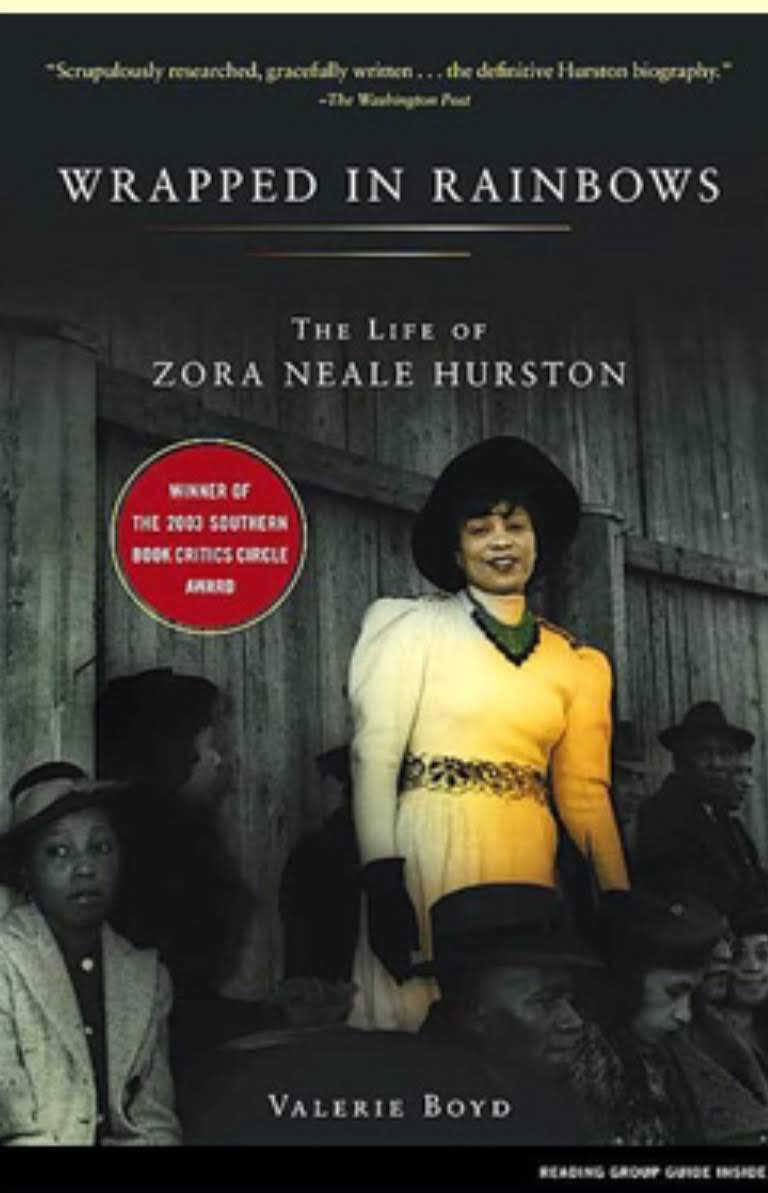
Wrapped in Rainbows: The Life of Zora Neale Hurston by Valerie Boyd, 2004, with an added PostScript 2016, 528 Pages


1891 Born in Alabama

1960 Dies Fort Pierce, Florida


1937 - Published Their Eyes Were Watching God - her acknowledged Master Work

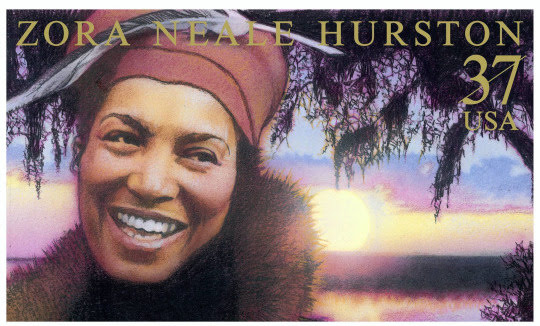
Zora Neale Hurston was a novelist, a master of the short story, an anthropologist, focusing mostly on the culture of African Americans in central Florida and on the influence of Voodoo on the religious and spiritual views of those in this area.  Her short stories are world class cultural treasures. She studied anthropology with Franz Boaz, mentor to Margaret Mead and Ruth Benedict. She was extremely well read and highly educated.  Tragically she died in poverty and obscurity.  Her work is vital to students of Florida history.


An Autodidactic Corner Selection.


Wrapped in Rainbows: The Life of Zora Neale Hurston by Valerie Boyd Is everything we hope a literary biography will be.  My exposure to Hurston began with her short stories (my posts include links to a few of the stories) and so far culminates in her acknowledged by all master work Their Eyes Were Watching God.

Before I read Wrapped in Rainbows: The Life of Zora Neale Hurston I had a vague idea of the life history of Hurston.  Boyd has brought her to life for me.  I don’t wish to repeat more of her life history than below, instead I will just talk a bit about some of the things I took away from this wonderful biography.

1891 Born in Alabama

1894 moves, with her family to Eatonville, Florida, near Orlando, which 
was one of the first self-governing municipalities in the country with a nearly all African American population. She was one of eight children.

1960 Dies Fort Pierce, Florida

1937 - Published Their Eyes Were Watching God - her acknowledged Master Work

Zora Neale Hurston was a novelist, a master of the short story, an anthropologist, focusing mostly on the culture of African Americans in central Florida and on the influence of Voodoo on the religious and spiritual views of those in this area.  Her short stories are world class cultural treasures. She studied anthropology with Franz Boaz, mentor to Margaret Mead and Ruth Benedict. She was extremely well read and highly educated.  Tragically she died in poverty and obscurity.  Her work is vital to students of Florida history.

The story and the stories of Hurston begins in Eatonville, Florida.  Many of the characters that populate her fiction are modelled on residents of Eatonville. The speech patterns of people from the town are replicated in her work.  The standard white stereotyping of her time suggested the speech patterns are a mark of ignorance and low intelligence.  When Boyd explained that these speech patterns were learned from whites in the colonial south, not obviously brought from Africa, it opened my mind up to how much prejudice based on speech patterns still permeates American society.  

In the public mind, Hurston is somehow seen as a tragic figure with a sad life.  She did have issues, who does not, but she also had a very rich, interesting life.  Being super intelligent she intrigued white liberals who, often with quite patronising undertones, helped her with cash subsidies. From Boyd I learned of a very wealthy older white widow from New York who gave subsidies to what she saw as promising African American writers and Artists.  She insisted those she help call her “Godmother”. For years she was Hurston’s primary financial life line.  There was a catch.  She insisted Hurston do reports on the customs, religion and speech patterns of African Americans from Florida.  She also had control over what Hurston could publish. She also supported Langston Hughes, a long time friend of Hurston until a falling out.  Boyd makes even the minor figures real.  


Hurston traveled, often by herself, throughout the south in a time when few hotels would accept African American guests.
 She dealt with racial ignorance with a shrug of her shoulder.

Hurston was a contradiction.  In someways she was very independent, marrying three times in relationships that did not last. Hurston needed her freedom to work while on the other hand being very dependent on white generosity.  We see her very much begging for money from her Godmother, applying for grants for research, borrowing from friends and relatives.

It was very exciting to go along with her to Honduras to do
studies there.  She was a student of a very important anthropologist, Francis Boas, and used his methods.  We see this same pattern of dependence in this relationship.  Hurston was fascinated by Voodoo.  She took instruction from Voodoo priests in New Orleans.  She analysed the faith as a blending of Catholic beliefs with West  African.  It was wonderful when Boyd took us along to Haiti. 

Boyd goes into a good bit of detail on traditional Black colleges of The period.  Later in Life she was often the only African American in attendance at Elite colleges.


Boyd gives a very detailed account of Hurston’s publishing history, both as to content and as a business.  Hurston wanted to live from her writings and her grants but this was so hard.  Boyd shows us how the Great American Depression of the 1930s impacted Harlem, where Hurston lived on and off and how it dried up the money that funded the Harlem Renaissance.  

Hurston seemed happiest living in rural central Florida, where she often returned.  Maybe she seemed a bit lonely.  She was probably so smart she scared most people.  Maybe her troubled relationship with her father made it hard for her to enter into lasting marriages.  Her relationships with Gay men like Langston Hughes lasted much longer than her three marriages.

There is much more in this great biography.  Hurston had a powerful Joie de vivre.  (I wished so much she could have lived to become rich from movies made from her works and buy an elegant apartment in Paris and a mansion on the Suwannee River.). 

There is a tremendous amount anyone into Florida history will love in this book. I can personally vouch for the fact you did not learn this history in school.

There is a comprehensive list of her copious publications and a bibliography of related works. There are lots on interesting pictures.

Boyd does a profound job of letting us ponder the well springs of creativity that gave rise to the work Hurston.

On a side note.  I bought the Kindle edition for the extreme bargain price of $0.95 on one day only flash sale I lucked into.  It is now back up to $14.95.

This book is very well written. Boyd gives us a full person. Hurston was a deep 
reader and was educated by her travels.  Whereever she went, she always carried some books.

I liked this book very much.  All teachers of American Literature should read this, all into Florida history and really anyone who loves a fine literary biography  love this book.


Valerie Boyd is the author of Wrapped in Rainbows: The Life of Zora Neale Hurston and the forthcoming Spirits in the Dark: The Untold Story of Black Women in Hollywood.

She is an Associate Professor and the Charlayne Hunter-Gault Distinguished Writer in Residence at the Grady College of Journalism at the University of Georgia, where she teaches magazine writing, arts reviewing and narrative nonfiction. 

She has taught creative nonfiction in the graduate writing program at Antioch University in Los Angeles.
Valerie earned a bachelor’s degree from the Medill School of Journalism at Northwestern University in 1985 and an MFA in Creative Nonfiction Writing from Goucher College in 1999.
An accomplished journalist and cultural critic, Valerie is the former arts editor at The Atlanta Journal-Constitution, and she has been published in numerous anthologies, magazines and newspapers. Her articles, essays and reviews have appeared in Step Into a World: A Global Anthology of the New Black Literature, Ms. magazine, Paste, The Oxford American, Book magazine, Essence, The Washington Post, The Los Angeles Times, Creative Nonfiction, African American Review, The Scholar and Feminist Online and other publications.
She founded EightRock, a cutting-edge journal of black arts and culture, in 1990. In 1992, she co-founded HealthQuest, the first nationally distributed magazine focusing on African-American health.
Wrapped in Rainbows—the first biography of Zora Neale Hurston in 25 years—was published to wide critical acclaim. It was hailed by Alice Walker as “magnificent” and “extraordinary”; by The Washington Post as  “definitive”; by the Boston Globe as “elegant and exhilarating”; and by the Denver Post as “a rich, rich read.”
For her work on Wrapped in Rainbows, Valerie received the Georgia Author of the Year Award in nonfiction as well as an American Library Association Notable Book Award. The Georgia Center for the Book named Wrapped in Rainbows one of the “25 Books That All Georgians Should Read,” and the Southern Book Critics Circle honored it with the 2003 Southern Book Award for best nonfiction of the year.
Valerie is currently finishing her next book, Spirits in the Dark: The Untold Story of Black Women in Hollywood, which will be published by Knopf. She lives in Atlanta.

From author’s website.


Tuesday, January 16, 2018

“Mother Catherine” by Zora Neal Hurston - A folk lore study by a master of the short story- 1929


1891 Born in Alabama

1960 Dies Fort Pierce, Florida

1937 - Published Their Eyes Were Watching God 

Zora Neale Hurston was a novelist, a master of the short story, an anthropologist, focusing mostly on the culture of African Americans in central Florida and on the influence of Voodoo on the religious and spiritual views of those in this area.  Her short stories are world class cultural treasures. She studied anthropology with Franz Boaz, mentor to Margaret Mead and Ruth Benedict. She was extremely well read and highly educated.  Tragically she died in poverty and obscurity.  Her work is vital to students of Florida history.

I began  reading her work years ago, quite by a happy accident.  Only a few of her short stories are online and her Collected Short Stories is not available in a kindle edition.  I was very happy to recently come upon one of her stories, “Mother Catherine” readable online.

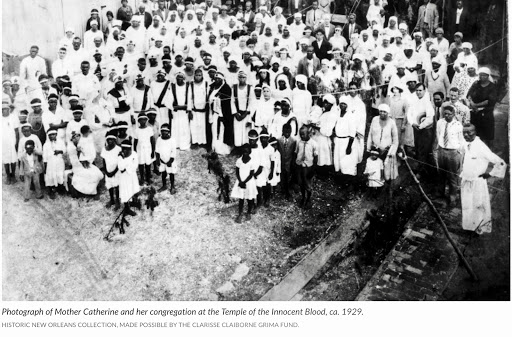
“Mother Catherine” is kind of a mixture of a folklore study written with the literary craftsmanship of a master of the short story. Set in New Orleans along the Industrial Canal, maybe 1929 or so, Mother Catherine is a combination street preacher, healer and spiritual advisor to the African American community, her ideology is a mishmash of her knowledge of West African teachings , Voodoo and Christianity.  You can read this in just a few minutes.  It really is a pure delight.

Mother Catherine was a real person, you can read more about her at this link


I will share a bit of the work with you so you can get a feel for the prose style of Hurston:


“Catherine of Russia could not have been more impressive upon her throne than was this black Catherine sitting upon an ordinary chair at the edge of the platform within the entrance to the tent. Her face and manner are impressive. There is nothing cheap and theatrical about her. She does things and arranges her dwelling as no occidental would. But it is not for effect. It is for feeling. She might have been the matriarchal ruler of some nomadic tribe as she sat there with the blue band about her head like a coronet; a white robe and a gorgeous red cape falling away from her broad shoulders, and the box of shaker salt in her hand like a rod of office. I know this reads incongruous, but it did not look so. It seemed perfectly natural for me to go to my knees upon the gravel floor, and when she signaled to me to extend my right hand, palm up for the dab of blessed salt, I hurried to obey because she made me feel that way.”

Mel u


Thursday, June 18, 2015

"Muttsy" by Zora Neale Hurston (1926, first published in Opportunity: Journal of Negro Life)


I was recently given a review copy of a very interesting anthology published by Dover Press, Great Short Stories by African American Writers, edited by Christina Rudisel and Bob Blaisdel.  The writers included range from contemporary stars, authors of classics like Raplh Ellison and Zora Hurston and writers who most likely will only be familiar names to specialists in the field.  The more I read on in short stories the more I see an endless ocean of yet to be explored wonderful works.  

I have read and posted on several of Hurston's wonderful short stories and her powerful novel Their Eyes Were Watching God (1937).  I was delighted to find one of her stories included in this new anthology.


Zora Hurston (1881 to 1960-Alabama, USA) was one of the leading writers of the  Harlem Renaissance.   Hurston had a very interesting life.     Born in relative poverty she attended   Howard University until she was offered a scholarship  to attend Barnard college, an elite women's college at which she was the only person of color in attendance at the time.    She graduated, along with her very famous co-student Margaret Mead, with a degree in anthropology.     Her anthropological focus was on  the customs and speech of African-Americans living in the rural south of the USA.    Hurston studied and wrote about people from small towns in the Alabama and Florida very much as her mentor and former professor, Ruth Benedict did in her famous studies of the customs of the people of Polynesia.    Hurston wrote and published a number of short stories and novels.    Her most famous work was her novel, Their Eyes Were Watching God. ( Halle Barry played the lead character in a recent movie based on this novel.    It is too bad Hurston who died in poverty did not live to see this book made into a movie and to get rich.

I know from my blog stats there is a significant world wide interest in her short stories.   There has been controversary concerning her portrayal of African Americans, the men in her work come across really bad.  Done by a Caucasian author in 1926, I think they might seem racist creations.   Hurston was trained as an anthropologist and that is how she approached the people in her stories, mostly set in small towns in Florida in the 1920s.  These stories are a very valuable resource for anyone interested in African American life in small town Florida in the 1920s and 30s.

The story of "Muttsy"  is to a large extent carried through dialogue and for most, including me, will find it necessary to slow down a bit to understand what is being said.  The story is about what happens to a young country girl, Pinkie, when on her first day in Harlam, she takes a room in a house that she does not realize is run by a once well known hooker.  Muttsy is a frequent visitor at the house, he is in the numbers game though he has work as a foreman over stevedores.  He becomes infatuated with Pinkie.  The story is very smart, very funny and a lot of fun to read.  I loved the ending.

Mel u


Tuesday, February 18, 2014

"Sweat" by Zora Neal Hurston (1926, 8 pages)


Zora Hurston (1881 to 1960-Alabama, USA) was one of the leading writers of the  Harlem Renaissance.   Hurston had a very interesting life.     Born in relative poverty she attended   Howard University until she was offered a scholarship  to attend Barnard college, an elite women's college at which she was the only person of color in attendance at the time.    She graduated, along with her very famous co-student Margaret Mead, with a degree in anthropology.     Her anthropological focus was on  the customs and speech of African-Americans living in the rural south of the USA.    Hurston studied and wrote about people from small towns in the Alabama and Florida very much as her mentor and former professor, Ruth Benedict did in her famous studies of the customs of the people of Polynesia.    Hurston wrote and published a number of short stories and novels.    Her most famous work was her novel, Their Eyes Were Watching God. ( Halle Barry played the lead character in a recent movie based on this novel.    It is too bad Hurston who died in poverty did not live to see this movie made!)   

I have previously posted on several of Hurston's short stories and her marvelous novel, set in south Florida, Their Eyes Were Watching God.  I know from my blog stats there is a significant world wide interest in her short stories.   There has been controversary concerning her portrayal of African Americans, the men in her work come across really bad.  Done by a Caucasian author in 1926, I think they might seem racist.   Hurston was trained as an anthropologist and that is how she approached the people in her stories, mostly set in small towns in Florida in the 1920s.  

There are two main characters in "Sweat", a married couple in a small town not far from Orlando.  They have been married fifteen years.  Two months into the marriage, the man gave her his first beating and he has now beaten much of the love and spirit out of her.  She works as a washer woman, washing the clothes of white people.  Her husband spends all the money he makes on drinking and a long list of other women.  No mention is made of any children.  One day her husband tells her he does not want "the white folks" dirty laundry in his house.  His wife tells him it is this dirty laundry that bought the house and kept him fed for years.  In a rage, he stomps his muddy feet all over the laundry.  

I hope you will take the time to read this story, you can easily find it online.  I don't want to tell more of the story other than to say events turn very dramatic when her husband brings home a six foot rattle snake and keeps it in the house in a cage.

I greatly enjoyed this story. The dialect required me to slow down a bit.  I am not sure if it could be taught in American schools.  

Please share your experience with Hurston with us.


Mel u


Thursday, August 29, 2013

Their Eyes Were Watching God by Zora Neale Hurston (1937)


Their Eyes Were Watching God by Zora Nora Hurston ( 1891 to 1960, Alabama, USA) is an American classic and historically an important book.    Many value it for the great insight it shows into the lives of African Americans in Florida in the 1930s.  I would say it is near must reading.  

Hurston graduated from a very elite women's college, Bernard, the first person of color to do so.  She majored in anthropology, studying under Francis Boas and with Margaret Mead.   Her anthropological field studies were among poor African Americans in rural central Florida and the Everglades.   She was criticized by some for making the people she wrote about, especially the men, seem like unintelligent, poorly educated people driven by their sex drive to self destructive life styles.  The men have nick names like "Tea Cake" and the women fall for any fast talking man who comes along.  As is accurate, society was very divided along racial lines.  Much of the lasting power of the book is in seeing how the savage legacy of racism has impacted the people in the story.

The conversations are meant to be in a dialect that mirrors the speech patterns of the people who lived in the world Hurston wrote about.  Some are going to be turned off by some or much of this and I can see why some found it patronizing.  I don't normally like dialect in fiction and I did get tired of it here sometimes.  Hurston can write exquisite prose and there is much to relish in this book.  

The heart of the book is in the character of Janie.  In her quest for love, she made some very bad decisions.  The story is told as if it were Janie relaying her story to a friend.  I thought one of the highlights of the book was in a description of a major hurricane in the Florida Everglades.    

Anyone into African American literature must read this, most probably already have.  If you want to learn some fascinating real Florida history, read this. If you are into post colonial literature read this.  Hurston died in obscurity and poverty in Fort Pierce, Florida.  One can only wish she would have benefitted from the movie made of her book, with Haley Barry in the starring role. 


Mel u

Thursday, October 4, 2012

"The Gilded Six-Bits" by Zora Hurston Banned Books Week Day Three

"The Gilded Six Bits" by Zora Neal Hurston (1934, 5 pages)

Banned Books Week 2012
September 30 to October 6
Day Three
Zora Hurston\
(1891 to 1960)


Banned Books Weeks, sponsored by the American Library Association, is in its 30th year.  I am observing the week in two ways.   I am hosting a series of five guests posts, courtesy of Open Road Media, one of America's most interesting and innovative publishers, in which distinguished authors talk about banned books.   I am also posting this week on short stories by authors whose work has been banned and trying to explain why and how this came about.   

Zora Hurston (1891 to 1960-born in Alabama, in the USA) was a folklorist focusing on African American people in rural Florida during the 1930s.   She was also a playwright,  the author of lots of wonderful short stories and is probably most famous now for her 1937 novel Their Eyes Were Watching God.   Her novel is now considered essential reading in feminists and African American studies but this recognition came only after her death, in total poverty.  (There is additional background information on Hurston in my prior post on her work.)

Hurston's work was banned because of social pressures from two seemingly incompatible directions.   She was trained as a field anthropologist by Frederick Boas and Ruth Benedict.   She was the only non white student at Barnard College and studied along side of Margaret Mead.   Her field work was done in rural Florida, where she grew up,  among descendants of  slaves.  Hurston tried very hard to duplicate the speech patterns and write accurately about the people she observed.   To those in charge of the publishing industry and schools (basically all whites) the people in her stories seemed to speak in a completely uneducated grossly ignorant fashion so they would not publish her work or sanction its teaching.    It was taken up by the literary movement known as The Harlem Renaissance and  affluent white  very educated people who cherished her work as folk tales.   Later she was attacked from another direction.   People turned on her and said she had turned the people in her stories to fools, with the women as near whores and the men as drunken abusers who all spoke in a fashion straight out of an old racist radio and TV show, Amos and Andy.  Hurston was considered to have sold out the people she grew up with for approval and financial support by wealthy whites who supported her work.   So was for many years scorned by black studies programs and by white Racists.   She ended up dying alone, in poverty in a nursing home after years of alcoholism.   

Since her death her stories and folk studies have come to be seen as the best real life glimpse of what it was like to be black in rural Florida in the 1930s.  

"The Gilded Six-Bits" is a great story, not such a historical document (If that was all it was I would not post on it).   It about the married life of an African American couple.   They seem to have a wonderful relationship.  The man works hard at his night job at a lumber mill and the wife works hard at home and in her vegetable garden.   They seem to really enjoy their relationship.   Some may still find the conversations of the characters offensive and think they are patronizing to the people of the milieu.   What I loved about this story so much is how it makes  person, no matter who they are, think about what would happen to their marriage if the husband were to walk in on his wife in bed with a man he hated.

   This is not Madame Bovary or Anna Karenina but it has a great deal to tell us about how adultery happens and the consequences of this for a happy marriage, something the great masterworks do not give us.   It is only a few pages long and I will leave the rest of the story untold (I will provide a link where you can read it at the end of the page.)   It made me wonder what I would do if I were the man in this story.   There is real wisdom in this story.  I think anyone who reads this story will want to read more of Hurston's work.   I know I do.  


The story would offend a lot of people today with its use of now totally unacceptable words, by African Americans on each other and probably might not be teachable in a general classroom in the USA.    She went from being banned by white racists, to being banned in black studies programs as pandering to the prejudices of racists to an icon of American literature and our best source into a lost culture.   She was also banned for the sexual content of her work.  One of her most famous stories, "Spunk" plays on the slang meaning of the time for this word, which is "semen".   Black men do often seem sexually rapacious in her stories and women may be seen by some as portrayed as of low sexual  morals to the conservatives of the times.   

My suggestion is to read "The Gilded Six-Bits" for yourself and make up your own mind on why it was banned or if it deserves to be read.   My guess it will leave you wanting to read her other 49 short stories.

You can read this story, and others by Hurston, here.


Please share your experience with Hurston with us. 

Mel u
The Reading Life
@thereadinglife

Thursday, October 6, 2011

"Black Death" by Zora Neale Hurston

A Powerfully Intelligent Gothic Tale
from the American South

Zora Hurston (1881 to 1960-Alabama, USA) was one of the leading writers of the Harlem Renaissance.   Hurston had a very interesting life.     Born in relative poverty she attended   Howard University until she was offered a scholarship  to attend Barnard college, an elite women's college at which she was the only person of color in attendance at the time.    She graduated, along with her very famous co-student Margaret Mead, with a degree in anthropology.     Her anthropological focus was on  the customs and speech of African-Americans living in the rural south of the USA.    Hurston studied and wrote about  people of color from small towns in Alabama and Florida very much as her mentor and former professor, Ruth Benedict did in her famous studies of the customs of the people of Polynesia.    Hurston also wrote and published a number of short stories, and novels.    Her most famous work was her novel, Their Eyes Were Watching God.    She co-wrote a play with Langston Hughes.   

"Black Death" (1921, 8 pages) is set in Orlando Florida USA in the 1910s.    It is a really brilliant account of race relations at the time.   It also goes right to the heart of the origin and role of paranormal stories in many cultures.    I have been having a lot of fun reading and posting on older paranormal short stories for Carl V's great paranormal reading event, The RIP Challenge (Sept 1 to Oct 31-the simple rules are on Carl's webpage).   One of the things I am discerning in the stories is that an interest in the occult is often an "escape valve" for people in an impoverished powerless situation who are oppressed by an exterior culture.   In Ireland it was the English.   In Japan it is a bit harder to see but it arises as a reaction of "country people" to the increasing westernization of Japan.     In "Black Death" Hurston directly  writes on this theme.   This is my second look at this story as I wanted to see again how it deals with the paranormal elements of African-American culture in the early part of the 20th century.

As the story opens we meet "Old Man Morgan", a black man who can kill anyone, he does it for money, with his magic.    We are told the whites of the community would laugh hysterically when told this and say "that just shows how ignorant the blacks are".   

Besides "Old Man Morgan"  (I think the name is being used as a mockery of the American financier J. P. Morgan) there are three central characters in the story.    A young beautiful pure hearted woman, her very protective mother and a man with a great reputation as a lady's man in the Black community.   I will compress the story and tell a bit of it (not to much as I really think anyone who reads this story will like it as lot).   The young woman gets pregnant.   Her mother confronts the man and he tells her that he only promised to marry her daughter to get her in bed and besides he is already married and he laughs.   To make it all much worse, he tells everyone that the daughter is just a common tramp trying to extort money from him.    The mother wants the man dead.  She goes to see Old Man Morgan.    He asks her how she wants the man who ruined her daughter to die.    She tells him she wants to shoot him but does not have the courage.    I will leave the rest of the plot unspoiled for you.


The passage below will give you a good feel for her prose style.


In the swamp at the head of the lake, she saw Jack-O-Lanterns darting here and there and three hundred years of America passed like the mist of morning. Africa reached out its dark hand and claimed its own. Drums, tom,tom,tom,tom,tom,beat in her ears. Strange demons seized her. Witch doctors danced before her, laid hands upon her alternately freezing and burning her flesh. She cried out in formless terror more than once before she found herself within the house of Morgan.


You can read the story HERE.


Please share your experience with Hurston with us.  If you have any suggestions for older paranormal short stories (that can be read online) please let me know.


Mel u


Featured Post

Imperial Reckoning: The Untold Story of Britain’s Gulag in Kenya by Caroline Elkins - 2005 - 701 Pages

  Imperial Reckoning:     The Untold Story of Britain’s Gulag in Kenya by Caroline Elkins - 2005 - 701 Pages 2006 Pulitzer Prize Winner From...