Saturday, March 19, 2011

William Trevor-Two Stories-Irish Short Story Week

""Men of Ireland"  (5 pages, 2005) and "The Woman of the House" (4 pages, 2008)


The New Yorker
Day Six
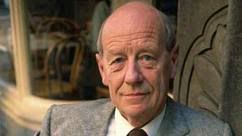
William Trevor
William Trevor is without any doubt is by far and away the consensus pick for best living Irish short story writer.
Most long time readers of short stories consider either Trevor or Alice Munto (Canada) as the best world wide of contemporary short story writers.   Trevor (1928-Mitchelstown, County Cork, Ireland) is a very prolific writer.    In addition to numerous novel,  he has written 100s of short stories.    The Collected Short Stories of William Trevor is 1280 pages.  I first encountered  Trevor this week and will just comment briefly on the two stories (both published in The New Yorker) I read.  

"The Woman of the House"  opens with a crippled man bargaining with two men over the price of painting his house.   (I have seen a good bit of bargaining in the Irish short stories I have read this week.)    Martina lives with the man.   There relationship is a bit unclear.   Martina once had hopes for a good happy life now she just strives to get by.   She lets the butcher fumble her body in meat locker and does not have to pay for her chicken and pork.   She takes the money this saves her from the funds the man gives her and hides it.   As the story plays out we learn more of the history of the two painters, displaced persons from Poland now often called Gypsies.  We come to try to understand the woman.   The story is perfectly written and for sure kept me interested and wanting more.   Like many an Irish short story, it deals with people on the fringes of society, outsiders, misfits and outcasts.   I saw in this story and elsewhere this week that one can be an exile without moving away.

You can read this story HERE.   (You will also get to see some of the famous cartoons as you are reading!)

"Men of Ireland"  is also about an outcast and a misfit.   The central character left Ireland 23 years ago for England to try is luck there.   He never found any.   He decides (we do no learn why)  to take the ferry back to Ireland to go to his home town.    All of his clothes are second or third hand and he stole the shoes he is wearing from a drunk.   I went along with him as hitched a ride with a truck driver.   I got a look inside the mind of the man.  There is no real plot, no resolution in the very brief story but there is a full world constructed in " Men of Ireland".   Trevor ties the life of this very unimportant man in with the world in a brilliant way.


You can read "Men of Ireland" HERE

I could see myself starting on his 1280 page collection soon.

It is not to late to join in-all you are asked to do is post on one Irish Short Story this week and leave me a comment so I can include it in the master post I will do next week.

"Please stay around for the Party"-Rory

My greatest thanks  those who participated so far.

Mel u


"Christmas Eve" by Maeve Brennan-Irish Short Stories Week

"Christmas Eve"  By Maeve Brennan (1972-Podcast-25 minutes)


The New Yorker
Day Six
Maeve Brennan

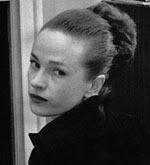
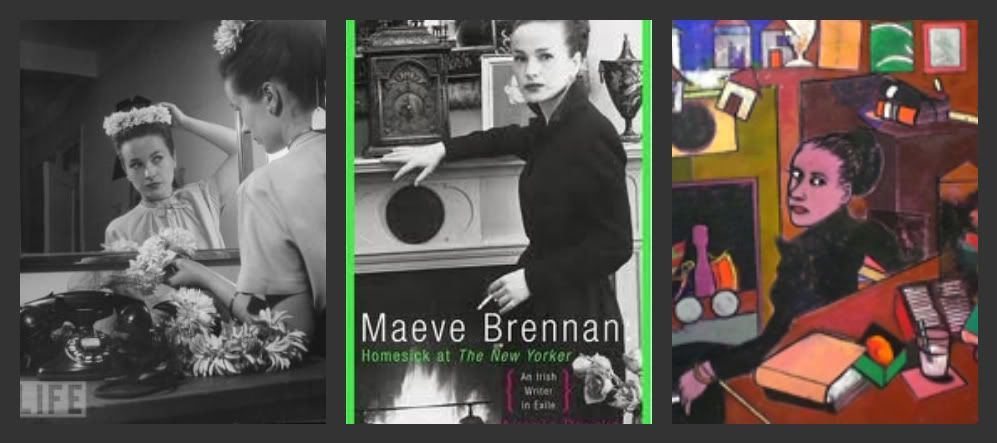
"Christmas Eve" by Maeve Brennan (Dublin-1917 to 1993) is just a wonderful story about a family on Christmas Eve.     I love this story so much I have already listened to the podcast of the story four times.   (The reader is Roddy Doyle.   Brennan was his second cousin and she lived with his family for a while.   He has an perfect accent for this story.)

After hearing the story, I read the Wikipedia article on her.     I will retell her life a bit as I think it is worth knowing and tells us something about  the millions of Irish who left Ireland never to return but never really found another home.   

Brennan's life should have been a fairy tale of one happy and exciting day followed by another.  It was not.

Brennan's father was the first Irish Ambassador to the United States.   Her father fought for freedom from British rule in  the Irish War for Independence.     The British imprisoned him for a while.    Brennan and her family lived in Washington DC until 1944 when her father returned to Ireland.   She stayed on in the US and moved to New York City where she got a job writing copy for Harper's Bazaar.   She also wrote a society column for an Irish publication.     She began to write occasional articles for The New Yorker.    In 1949 she was offered a job on the staff of the magazine.   She was incredibly beautiful, very intelligent, witty, petite, always perfectly dressed and made up.   She moved about frequently and had extravagant tastes.    Some people feel she was the inspiration for Holly Golightly, the lead character in Truman Capote's Breakfast at Tiffany's (1958).   In the 1960s people began to observe that she was now beginning to appear unkempt.    In the 1970s Brennan became paranoid and was an alcoholic.    She began to drift in and out of reality and was hospitalized   several times.    She ended up living either in transit hotels or in the ladies room at the offices of The New Yorker.   (I also read William Maxwell's introduction to one of her collections of short stories published posthumously and learned that to its great credit the magazine had secured for her a place where she could stay and be fed but she rarely went there.)    In  the 1980s she all but disappears.   She died in 1993 in the Lawrence hospital, a  ward of the state.    As I read this I could not help but be reminded of Jean Rhys but I think the story of Brennan is more tragic in that Rhys partially recovered from her years of darkness and was seen as a great writer while still alive.

"Christmas Eve"   is a very supple simply told in almost a child like way story (though it a daemon child as might be found in an Irish fairy tale) about a family on Christmas Eve.   The father has just gotten home from work.   The mother is preparing the house for tomorrow.   The young children are concerned with being sure there is a snack left out for Father Christmas.   The parents each have their own room.   The reason for this is that the father's job (we do not learn what it is) sometimes keeps him out late and he does not want to disturb his wife.    Or so they say but really each is quite happy to have their own room.    Somehow I could relate when I heard the father was happy he could have his books in his room with him.   Parts of the story are very moving.   When the parents kiss each other under the mistletoe plant, the children cheer  them on for more.  The parents are a bit embarrassed and pull apart.   This is a world of restrained emotions.   There are some wonderful touches in the story.   I really liked what the wife says about her cats and her dog.   "Christmas Eve" should be listed among the very best Christmas short stories of all time.


Google books has six or so of her stories online in their previews of her two short story collections.   I will go back and read them soon.    William Maxwell said her longest story, "Springs of Affection" should be included among the great short stories of the century.

PODCAST HERE


Resources for the Week
It is not to late to participate.  Just post on one Irish short story and link it to me in a comment anywhere on my blog.   I will keep the week open for a few days to let people join in before I do the master post.

Thanks VERY much to all those who have joined in.   I will say this has worked out better than I had ever hoped and I plan, providence willing, to make this an annual Reading Life event.

Mel u

Two Stories by Roddy Doyle-Irish Short Stories Week

"Sleep"  (2008, 4 pages)  and "Ash"  (2010, 2 pages)  both by Roddy Doyle


  The New Yorker 
Day Six
Roddy Doyle


The New Yorker magazine has had a very important role to play in the development of the Irish Short Story.   Most of the post WWII greats of the Irish Short Story have been published in the magazine.    Most stories are from four to six pages long.   The magazine also pays quite well and has helped writers devote themselves full time to their craft.   The magazine has very kindly allowed some of the stories to be read by anyone who cares to go to their online archives.    Most of the big names have been published in The New Yorker.   All of the stories I will post on today are from the archives of  the magazine (I will provide links).  

Roddy Doyle (1968-Dublin)  won the Booker Prize in 1993 for Paddy Clarke Ha Ha Ha.   He has published nine novels and  a number of short stories.   The two stories I will post on today are both about marriages, told from the point of view of the man.   One marriage is a wonderful success, a great love story.  The other is about a failed marriage that the husband does not quite fathom the reasons for it failure and neither did I.   I guess that is part of he mystery of life a very skilled writer can capture.

"Sleep" starts out with a young couple in the opening stages of their relationship.    The man loves looking at the woman sleeping.   She has the peace he needs.    In the next paragraph we jump 26 years ahead.   I really loved how Doyle got us through so many years in such a compressed fashion.   When the man learns he has colon cancer his first thought is that he is glad he has it and not his wife.    There is mystery at the heart of this story.   I liked it a lot and think others will also, especially those with long term relationships.

You can read it HERE

"Ash"  also center on a man whose wife has just left him.  We and he never learn why, really.   I really liked the conversations the man had with his brother about the breakup.   Doyle does a really good job with conversations.    "Ash"  is really a good read.   Doyle has at least several stories in the archives and I hope to read them soon.    I will post on them, probably in one post.

You can read "Ash" HERE 

Roddy Doyle's Official Web Page   -you can download for free a brand new short story by Doyle-


Mel u

Friday, March 18, 2011

Google Privacy Policy


Privacy Policy

We take your privacy seriously. This privacy policy describes what personal information we collect and how we use it.

Routine Information Collection
All web servers track basic information about their visitors. This information includes, but is not limited to, IP addresses, browser details, timestamps and referring pages. None of this information can personally identify specific visitors to this site. The information is tracked for routine administration and maintenance purposes, and lets me know what pages and information are useful and helpful to visitors.

Cookies and Web Beacons

Where necessary, this site uses cookies to store information about a visitor's preferences and history in order to better serve the visitor and/or present the visitor with customized content.

Advertising partners and other third parties may also use cookies, scripts and/or web beacons to track visitors to our site in order to display advertisements and other useful information. Such tracking is done directly by the third parties through their own servers and is subject to their own privacy policies.

Controlling Your Privacy

Note that you can change your browser settings to disable cookies if you have privacy concerns. Disabling cookies for all sites is not recommended as it may interfere with your use of some sites. The best option is to disable or enable cookies on a per-site basis. Consult your browser documentation for instructions on how to block cookies and other tracking mechanisms.

Special Note About Google Advertising

Any advertisements served by Google, Inc., and affiliated companies may be controlled using cookies. These cookies allow Google to display ads based on your visits to this site and other sites that use Google advertising services. Learn how to opt out of Google's cookie usage. As mentioned above, any tracking done by Google through cookies and other mechanisms is subject to Google's own privacy policies.

About Google advertising: What is the DoubleClick DART cookie? The DoubleClick DART cookie is used by Google in the ads served on publisher websites displaying AdSense for content ads. When users visit an AdSense publisher’s website and either view or click on an ad, a cookie may be dropped on that end user’s browser. The data gathered from these cookies will be used to help AdSense publishers better serve and manage the ads on their site(s) and across the web.Users may opt out of the use of the DART cookie by visiting the Google ad and content network privacy policy.

Some third-party advertisers used by Google may use a different cookie. You may opt out of most third-party advertising cookies by following this link  and visiting the Network Advertising Initiative opt-out page, or by visiting this Consumers page to opt out of all advertising cookies.

Contact Information

Concerns or questions about this privacy policy can be directed to us via our comment form on any post for further clarification.

"Foster" by Claire Keegan

"Foster" by Claire Keegan (2010, 12 pages)


Resources for the Week


Day Five
The Irish Short Story in 21th Century
Claire Keegan


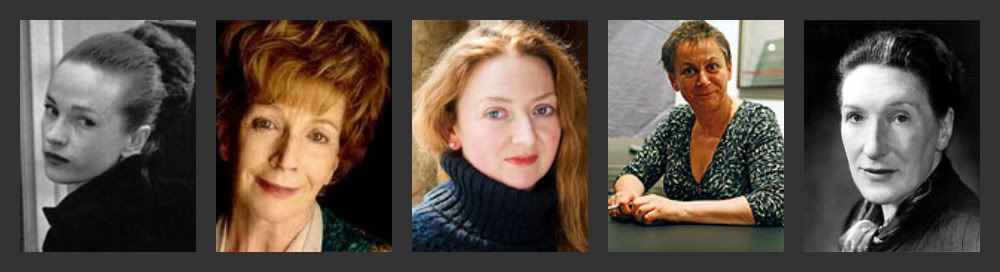
Claire Keegan (1968-County Wichlou, Ireland), along with Anne Enright,  has a very good claim to be considered one of the future stars of the Irish short story.   One reason I think the Irish short story is such a rich field is that the bar has been set very high.    Keegan has won a large number of prestigious Irish literary awards.    She attended college in the USA at Loyola University in New Orleans then returned home.   She has taught at universities and offers creative writing workshops.   Se has published two collection of short stories.

"Foster' (published in The New Yorker February 2010) won the David Byrnes Irish Writing Award for 2009.   This award, with a 25,000 pound prize, is sponsored by the Irish Times.  (In 2008 there were 1100 entries, Anne Enright won).   

"Foster" is a beautifully written story.   It is set in rural Ireland.    As I have
seen before in the stories this week,  Keegan makes sure she sets the story in an exact  place in Ireland using very Irish place names.   The word order in the speech of people in the stories I have read often seems to be somehow "out of order".    This gives the conversations a special quality I really like.


"Foster" is about  a girl from a family that has fallen difficult times.   They cope with it by dropping their daughter off with a wealthier relative and his wife, for an indefinite period.   Sadly they never seem to tell the girl what the plans are and the father just leaves her without a word of good bye or an idea when he will be back for her.    Her host family are wonderful caring people that I slowly grew to like, as did the girl.   All of the emotions are very under played.    There is a lot in these 12 pages about family ties, about growing up, and about life in rural Ireland.    The end is very interesting and brings up a lot of ethical issues around parenting.  I recommend it without reservations.   I am not ready yet to say   if I like her story or those I read by Enright best. I hope to read more stories by both writers this year.
"Hello, Claire, Welcome to my party, and who
let that cat in looks like a shape shifter to me"
Carmilla
si


You can read "Foster" online here.


If you want to participate in Irish Short Story  Week just read and post on any short story by an Irish author and leave me a comment.   At the end of the week I will do a master post with all the links.   


Please feel free to leave any comments or suggestion you may have.   


"Him I am new here, you will see more
of me"-Rupreket
 Mel u

"A Boy in the Forest" by Edna O'Brien-Irish Short Story Week

"A Boy in the Forest" by Edna O'Brien (2002, 12 pages)
"Paris Review Interview" (Summer of 1982)


Day Five
The Irish Short Story in the 21th Century
Edna O'Brien


Edna O'Brien (1930-Tuamgraney, County Clare, Ireland)   is one of the highest regarded contemporary Irish short story writers.    In addition to numerous short stories she has published several novels and won numerous awards for her writing, both in Ireland and internationally.     O'Brien was born into an extremely strict and harshly repressive religious home.     Her parents hated literature of any kind.   Once her mother caught her reading a novel by F. Scott Fitzgerald and went into a wild rage and tore the book from her hands and shredded it.   O'Brien was educated to be a pharmacist.      She married in her early twenties and her and  her husband moved to London.    O'Brien began to read widely and deeply in the classics and in Irish writers like Bowen and Joyce.    In London she went to work for a publishing house as a manuscript reader and from this she was eventually commissioned to write her own novel.   Almost all of her work is about Ireland.


"The Boy in the Forest" is look at the life of a very cursed and disturbed boy in his mid teens.   He watched his father almost beat his mother to death with an iron poker.   His mother then kills herself.   He is left in the care of his father.    He kills a man with man with a shot gun over a petty insult and is sent to reform school.   O'Brien talks a wonderful job of making is understand the world of the boy.   It is a stark, harsh story of a boy I felt sorry for but ended up really disliking a lot.   To me "The Boy in the Forest" is a masterpiece.  It is a work of  compelling beauty in a very ugly setting.     There is deep wisdom in this story.


You can read it HERE

Mel u


Literary Book Hop-March 17th to the 20th


"Maybe you will see me,3/14 to 3/20"

To me the Literary Book Blog Hop is a great international community building  event.    This week I want to be sure that all participants in The Literary Book Blog Hop know about an event I am hosting on my blog.     I know not everyone likes short stories.    (The rules are ultra-simple-just read and post on an Irish Short Story and leave me a comment.   I have a resources page on my blog for ideas and links to read online)


Please consider participating in Irish Short Stories Week-3/14 to 3/20
"Hi, I will be a co-host for the week-I was
born in an Irish Story but I am alive now!"-Carmilla

This week's question for on the literary book blog hop is:

What book would like to read before you  die?

Many years ago I read James Joyce's Ulysses.  I would like to read it again, especially after this week

If you have any questions comments or interest in Irish Short Stories Week, please leave me a comment.   

Thanks


Mel u

Featured Post

Imperial Reckoning: The Untold Story of Britain’s Gulag in Kenya by Caroline Elkins - 2005 - 701 Pages

  Imperial Reckoning:     The Untold Story of Britain’s Gulag in Kenya by Caroline Elkins - 2005 - 701 Pages 2006 Pulitzer Prize Winner From...